 PDF(7128 KB)

Organic Electrode Materials: Classification and Typical Modification Applications in Metal-Ion Batteries
Mengyuan Hao, Qing Meng, Yachao Yan, Yingzhi Chen, Jiantao Wang, Luning Wang
Prog Chem ›› 2025, Vol. 37 ›› Issue (10) : 1479-1512.
PDF(7128 KB)
PDF(7128 KB)
Organic Electrode Materials: Classification and Typical Modification Applications in Metal-Ion Batteries
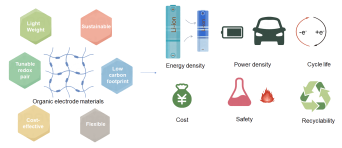
The pursuit of green and sustainable development has become a global consensus, also prompting the vigorous exploration of novel electrode materials within the realm of battery technology. As a result, organic electrode materials have garnered widespread attention. Compared to traditional electrode materials, organic electrode materials offer advantages such as high structural flexibility, tunable electrical properties, and being environmentally friendly and low-cost. These benefits make them versatile in battery applications. However, during the application process, issues such as the molecular structure and conjugated system of the material can lead to difficulties in electron transport, resulting in poor conductivity. Additionally, due to their chemical structure and polarity, many organic electrode materials have high solubility in electrolytes, causing loss of active material and leading to poor cycling stability and capacity fade in batteries. Therefore, it is necessary to modify the molecular structure design of the material. This review provides an in-depth analysis of the development of organic electrode materials in the field of batteries. Comparing them with inorganic electrode materials, it reveals their unique application advantages. It also elaborates on the electrochemical mechanisms of different types of organic electrode materials and explores in detail the applications of various organic electrode materials in different metal-ion batteries and the further improvement measures. The review focuses on modifying various organic electrode materials, such as carbonyl compounds, organic sulfides, and organic radicals, for their applications in metal-ion batteries. This is achieved through perspectives like molecular design, polymerization, compositing with different materials, and regulating micro/nanostructures. These modifications aim to enhance conductivity and cycling stability, thereby realizing the long-life development of batteries. Finally, the review looks forward to the future development of organic electrode materials, hoping that by summarizing different modification measures and controlling various optimization methods, electrode materials with higher performance and fewer defects can be developed. It is believed that through continuous summarization and improvement, organic electrode materials can achieve higher performance upgrades, make greater breakthroughs in future applications, reach more diverse application levels, and contribute to green and sustainable development.
1 Introduction
2 OEMs vs IEMs
3 Electrochemical mechanism
4 Types of OEMs
4.1 N-type OEMs
4.2 P-type OEMs
4.3 Bipolar OEMs
5 Structure, classification, and modification
5.1 Carbonyl compound
5.2 Organic sulfide
5.3 Heterocyclic compound
5.4 Organic radical
5.5 Other OEMs
6 Conclusion and outlook
organic electrode materials / metal-ion battery / application advantages / electrochemical mechanism / modification strategies
| [1] |
|
| [2] |
|
| [3] |
|
| [4] |
|
| [5] |
|
| [6] |
|
| [7] |
|
| [8] |
|
| [9] |
|
| [10] |
|
| [11] |
|
| [12] |
|
| [13] |
|
| [14] |
|
| [15] |
|
| [16] |
|
| [17] |
|
| [18] |
|
| [19] |
|
| [20] |
|
| [21] |
|
| [22] |
|
| [23] |
|
| [24] |
|
| [25] |
|
| [26] |
|
| [27] |
|
| [28] |
|
| [29] |
|
| [30] |
|
| [31] |
|
| [32] |
|
| [33] |
|
| [34] |
|
| [35] |
|
| [36] |
|
| [37] |
|
| [38] |
|
| [39] |
|
| [40] |
|
| [41] |
|
| [42] |
|
| [43] |
|
| [44] |
|
| [45] |
|
| [46] |
|
| [47] |
|
| [48] |
|
| [49] |
|
| [50] |
|
| [51] |
|
| [52] |
|
| [53] |
|
| [54] |
|
| [55] |
|
| [56] |
|
| [57] |
|
| [58] |
|
| [59] |
|
| [60] |
|
| [61] |
|
| [62] |
|
| [63] |
|
| [64] |
|
| [65] |
|
| [66] |
|
| [67] |
|
| [68] |
|
| [69] |
|
| [70] |
|
| [71] |
|
| [72] |
|
| [73] |
|
| [74] |
|
| [75] |
|
| [76] |
|
| [77] |
|
| [78] |
|
| [79] |
|
| [80] |
|
| [81] |
|
| [82] |
|
| [83] |
|
| [84] |
|
| [85] |
|
| [86] |
|
| [87] |
|
| [88] |
|
| [89] |
|
| [90] |
|
| [91] |
|
| [92] |
|
| [93] |
|
| [94] |
|
| [95] |
|
| [96] |
|
| [97] |
|
| [98] |
|
| [99] |
|
| [100] |
|
| [101] |
|
| [102] |
|
| [103] |
|
| [104] |
|
| [105] |
|
| [106] |
|
| [107] |
|
| [108] |
|
| [109] |
|
| [110] |
|
| [111] |
|
| [112] |
|
| [113] |
|
| [114] |
|
| [115] |
|
| [116] |
|
| [117] |
|
| [118] |
|
| [119] |
|
| [120] |
|
| [121] |
|
| [122] |
|
| [123] |
|
| [124] |
|
| [125] |
|
| [126] |
|
| [127] |
|
| [128] |
|
| [129] |
|
| [130] |
|
| [131] |
|
| [132] |
|
| [133] |
|
| [134] |
|
| [135] |
|
| [136] |
|
| [137] |
|
| [138] |
|
| [139] |
|
| [140] |
|
| [141] |
|
| [142] |
|
| [143] |
|
| [144] |
|
| [145] |
|
| [146] |
|
| [147] |
|
| [148] |
|
| [149] |
|
| [150] |
|
| [151] |
|
| [152] |
|
| [153] |
|
| [154] |
|
| [155] |
|
| [156] |
|
| [157] |
|
| [158] |
|
/
| 〈 |
|
〉 |








