PDF(3660 KB)

New Strategies for Flame Retardancy in Polyurethane Composites:A Review of Biomimetic and Smart Flame Retardants
Yuanyuan Kang, Zun Gao, Yangyang Cui, Shuting Wu, Fei Xin
Prog Chem ›› 2026, Vol. 38 ›› Issue (6) : 1085-1092.
PDF(3660 KB)
PDF(3660 KB)
New Strategies for Flame Retardancy in Polyurethane Composites:A Review of Biomimetic and Smart Flame Retardants
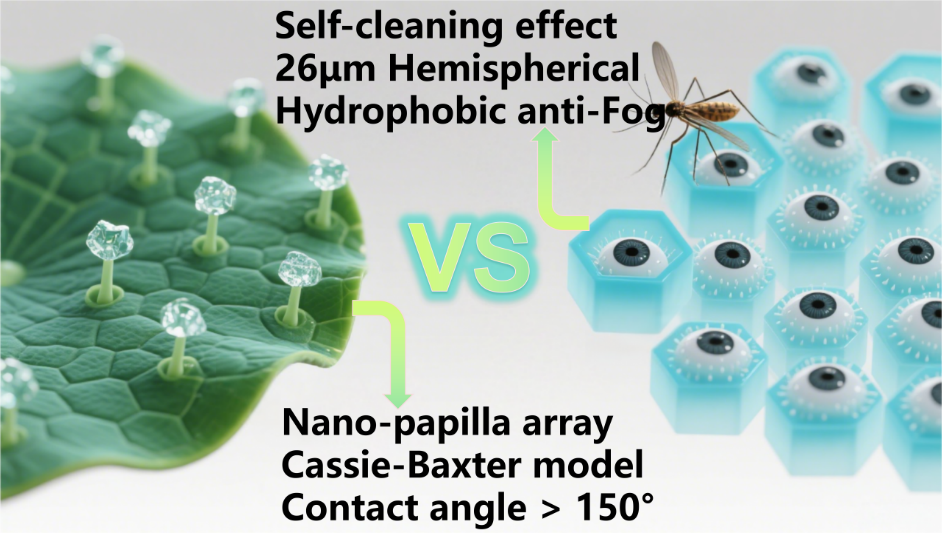
Polyurethane(PU)is an indispensable polymer material widely used in daily life. However,its flammability(limiting oxygen index LOI < 20%)and release of toxic smoke during combustion restrict its application in emerging fields such as smart wearables and robotic skins. Therefore,overcoming the limitations of traditional flame-retardant strategies has become an urgent issue in materials science. This review systematically summarizes key advances from 2021 to 2025,focusing on new flame-retardant paradigms based on biomimetic structural design and intelligent response mechanisms. Multiscale biomimicry includes macro-shape mimicry,such as sunflowers and cacti,and micro-structural mimicry,such as nacre-like layering and lotus-leaf superhydrophobic surfaces. This approach effectively balances flame retardancy with mechanical properties and introduces additional functions like oil-water separation,solar ice melting,and underwater antibacterial performance. Furthermore,this paper presents the concept of intelligent active protection. Integrating self-healing,fire early warning,and shape memory creates a synergistic system that forms a closed-loop protection mechanism covering sensing,alerting,and action. This advances flame-retardant technology from static,passive defense toward dynamic,adaptive response. Nevertheless,this field still faces three major challenges. First,environmental adaptability is limited,as most self-healing and shape memory behaviors require specific activation conditions. Second,complex biomimetic nanostructures are difficult to fabricate on a large scale at low cost. Third,the long-term cyclic stability and durability of coatings and composites need improvement. To address these challenges,future work should integrate artificial intelligence for material pre-design,combine animal and plant features to build multi-level defense systems,and develop biomass-based green closed-loop solutions across the material life cycle. These efforts will promote the development of biomimetic intelligent flame-retardant polyurethanes that can coexist sustainably with the environment.
1 Introduction
2 Bionic flame retardant
2.1 Shape bionics
2.2 Structural bionics
2.3 Surface coating
3 Intelligent flame retardant
3.1 Self-healing
3.2 Fire warning
3.3 Shape memory
4 Conclusion and outlook
polyurethane / bionic flame retardancy / structural biomimicry / intelligent flame retardancy
| [1] |
|
| [2] |
|
| [3] |
|
| [4] |
|
| [5] |
|
| [6] |
|
| [7] |
|
| [8] |
|
| [9] |
|
| [10] |
|
| [11] |
|
| [12] |
|
| [13] |
|
| [14] |
|
| [15] |
|
| [16] |
|
| [17] |
|
| [18] |
|
| [19] |
|
| [20] |
|
| [21] |
|
| [22] |
|
| [23] |
|
| [24] |
|
| [25] |
|
| [26] |
|
| [27] |
|
| [28] |
|
| [29] |
|
| [30] |
|
| [31] |
|
| [32] |
|
| [33] |
|
| [34] |
|
| [35] |
|
| [36] |
|
| [37] |
|
| [38] |
|
| [39] |
|
| [40] |
|
| [41] |
|
| [42] |
|
| [43] |
|
| [44] |
|
| [45] |
|
| [46] |
|
| [47] |
|
/
| 〈 |
|
〉 |