 PDF(12412 KB)

Confined Synthesis of One-Dimensional Carbon Materials
Zehua Zhou, Lei Shi
Prog Chem ›› 2026, Vol. 38 ›› Issue (6) : 989-1006.
PDF(12412 KB)
PDF(12412 KB)
Confined Synthesis of One-Dimensional Carbon Materials
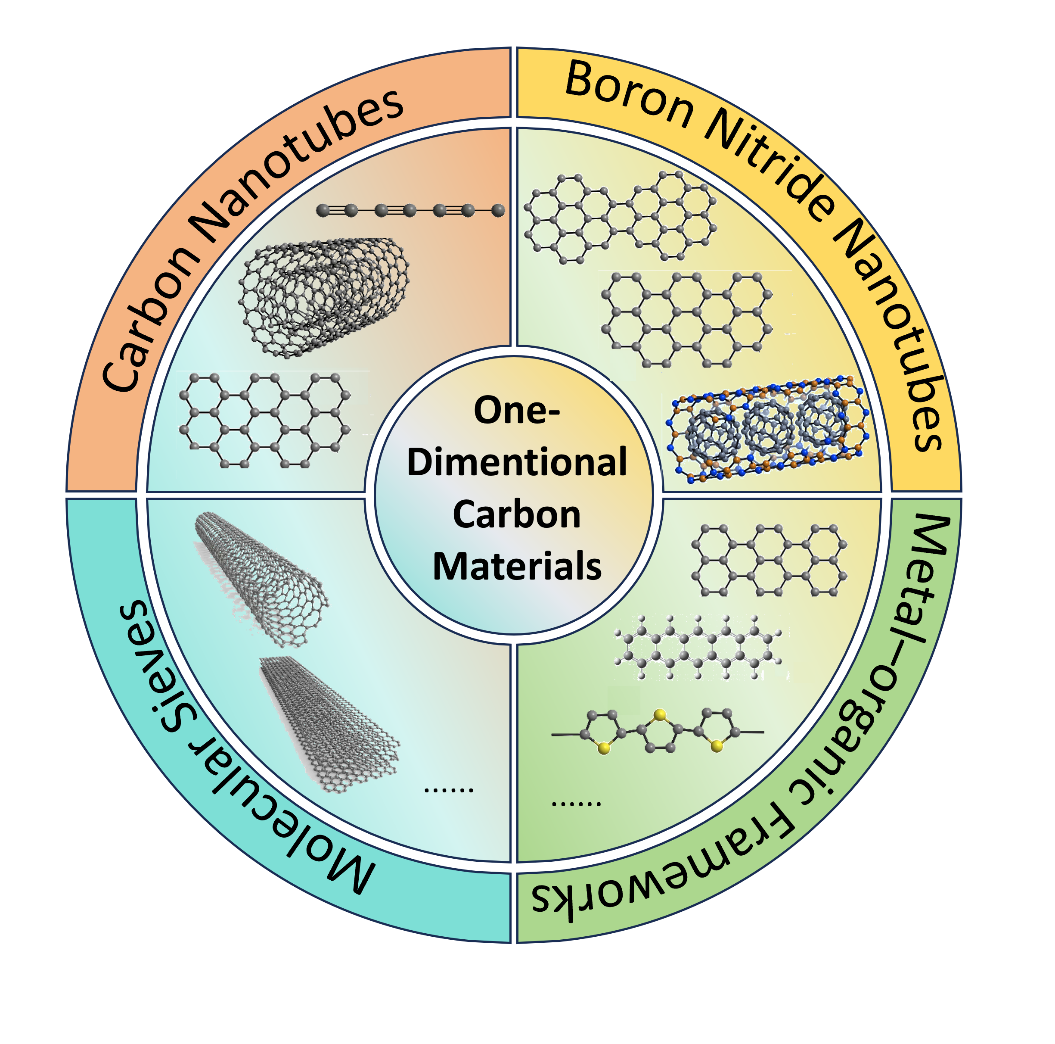
Confined synthesis is a template-based method that precisely guides and controls the directional assembly or reaction of precursor molecules within the template cavities by virtue of the specific structures and physicochemical properties of hard templates. This approach enables accurate structural regulation of target products, expands the structural boundaries of synthesizable materials, and holds significant research value and application prospects in the field of one-dimensional carbon material synthesis. This review focuses on three typical hard templates including carbon nanotubes, boron nitride nanotubes and metal-organic frameworks, and systematically elaborates the technical routes and research progress of confined synthesis of one-dimensional carbon materials such as graphene nanoribbons, carbon chains, carbon nanotubes and polythiophene using these templates. In addition, the similarities and differences between confined synthesis and on-surface synthesis in the preparation of one-dimensional carbon materials are compared and analyzed, and the potential of molecular sieves as new templates for the confined synthesis of one-dimensional carbon materials is discussed. Finally, the advantages and existing problems of confined synthesis technology in the preparation of one-dimensional carbon materials are summarized, and the future research directions of this field are prospected, aiming to provide references for relevant research.
1 Introduction
2 Confined synthesis using carbon nanotubes
2.1 Carbon nanotube-confined synthesis of graphene nanoribbons
2.2 Confined synthesis of small-diameter carbon nanotubes in carbon nanotubes
2.3 Carbon nanotube-confined synthesis of carbon chains
2.4 Carbon nanotube-confined synthesis of carbides
3 Confined synthesis using boron nitride nanotubes
4 Confined synthesis using metal-organic frameworks
4.1 Metal-organic framework-confined synthesis of graphene nanoribbons
4.2 Metal-organic framework-confined synthesis of polyacene
4.3 Metal-organic framework-confined synthesis of one-dimensional polymers
5 Confined synthesis using molecular sieves
6 Conclusion and outlook
confined synthesis / carbon nanotubes / boron nitride nanotubes / metal-organic frameworks / molecular sieves / graphene nanoribbons / carbon chains / Raman spectroscopy
| [1] |
|
| [2] |
|
| [3] |
|
| [4] |
(靳钧, 林梓恒, 石磊. 化学进展, 2021, 33(2): 188.)
|
| [5] |
|
| [6] |
|
| [7] |
|
| [8] |
|
| [9] |
|
| [10] |
|
| [11] |
|
| [12] |
|
| [13] |
|
| [14] |
|
| [15] |
|
| [16] |
|
| [17] |
|
| [18] |
|
| [19] |
|
| [20] |
|
| [21] |
|
| [22] |
|
| [23] |
|
| [24] |
|
| [25] |
|
| [26] |
|
| [27] |
|
| [28] |
|
| [29] |
|
| [30] |
|
| [31] |
|
| [32] |
|
| [33] |
|
| [34] |
|
| [35] |
|
| [36] |
|
| [37] |
|
| [38] |
|
| [39] |
|
| [40] |
|
| [41] |
|
| [42] |
|
| [43] |
|
| [44] |
|
| [45] |
|
| [46] |
|
| [47] |
|
| [48] |
|
| [49] |
|
| [50] |
|
| [51] |
|
| [52] |
|
| [53] |
|
| [54] |
|
| [55] |
|
| [56] |
|
| [57] |
|
| [58] |
|
| [59] |
|
| [60] |
|
| [61] |
|
| [62] |
|
| [63] |
|
| [64] |
|
| [65] |
|
| [66] |
|
| [67] |
|
| [68] |
|
| [69] |
|
| [70] |
|
| [71] |
|
| [72] |
|
| [73] |
|
| [74] |
Rusznyák,
|
| [75] |
|
| [76] |
|
| [77] |
|
| [78] |
|
| [79] |
|
| [80] |
|
| [81] |
|
| [82] |
|
| [83] |
|
| [84] |
|
| [85] |
|
| [86] |
|
| [87] |
|
| [88] |
|
| [89] |
|
| [90] |
|
| [91] |
|
| [92] |
|
| [93] |
|
| [94] |
|
| [95] |
|
| [96] |
|
| [97] |
|
| [98] |
|
| [99] |
|
| [100] |
|
| [101] |
|
| [102] |
|
| [103] |
|
| [104] |
|
| [105] |
|
| [106] |
|
| [107] |
|
| [108] |
|
| [109] |
|
| [110] |
|
| [111] |
|
| [112] |
|
| [113] |
|
| [114] |
|
| [115] |
|
| [116] |
|
| [117] |
|
| [118] |
|
| [119] |
|
| [120] |
|
| [121] |
|
| [122] |
|
| [123] |
|
| [124] |
|
| [125] |
|
| [126] |
|
| [127] |
|
| [128] |
|
| [129] |
|
| [130] |
|
| [131] |
|
| [132] |
|
/
| 〈 |
|
〉 |








