Home Journals Progress in Chemistry
Progress in Chemistry

Abbreviation (ISO4): Prog Chem      Editor in chief: Jincai ZHAO

About  /  Aim & scope  /  Editorial board  /  Indexed  /  Contact  / 
Review

The Enhancing Mechanism of Binders,“Behind-the-Scenes Hero”,for the Performance of Micro-Electrolysis Fillers

  • Shiying Yang , 1, 2, 3, * ,
  • Ximiao Ma 3
Expand
  • 1 The Key Laboratory of Marine Environment & Ecology,Ministry of Education,Qingdao 266100,China
  • 2 Shandong Provincial Key Laboratory of Marine Environment and Geological Engineering (MEGE),Qingdao 266100,China
  • 3 College of Environmental Science and Engineering,Ocean University of China,Qingdao 266100,China

Received date: 2024-12-19

  Revised date: 2025-04-09

  Online published: 2025-08-08

Supported by

the National Natural Science Foundation of China(52370089)

Natural Science Foundation of Shandong Province(ZR2024ME131)

Abstract

For halogenated organic compounds,antibiotics,and other emerging contaminants that are persistent and highly toxic,micro-electrolysis fillers can effectively disrupt the chemical structures of these contaminant molecules and achieve the effect of deep mineralization through direct electron reduction and electrochemical oxidation. However,although the traditional micro-electrolysis process has achieved certain results,there are still many thorny problems. For example,the stability of the fillers is poor,their service life is short,and they are prone to caking and passivation,which leads to clogging of the reactor,requiring frequent replacement of the fillers. To overcome these problems,granulation is usually employed to increase the interfacial bonding strength between iron powder and activated carbon powder. However,previous studies have often focused on the influence of the composition or preparation methods of the fillers on their performance,while the role of the binders has been subtle and difficult to detect. Through in-depth investigations,it has been found that binders play a key role as the 'unsung heroes' in enhancing the performance of micro-electrolysis fillers and that their functional groups and chemical structures have a profound effect on the performance of the fillers. They can not only strengthen the mechanical strength of fillers,improve their stability and anti-passivation ability,promote the mass transfer process,prevent filler caking,and prolong the service life of fillers,but also increase the utilization rate of electrons and catalyze the occurrence of reactions,thereby further enhancing the degradation activity of emerging pollutants. Given this,this paper systematically summarizes the interfacial bonding mechanisms of commonly used binders in different granulation methods,analyses the deep action mechanisms of binders in enhancing the performance of micro-electrolysis fillers,discusses the influence laws of binder types and contents on the fillers,and looks forward to the development of new fillers,and looks forward to the development of new high-performance binder materials,the optimizing of the process parameters of binders in the filler preparation process,and the in-depth exploration of the action mechanisms between binders and active components of fillers,with the expectation of promoting the development of micro-electrolysis fillers in the field of environmental management.

Contents

1 Introduction

2 Interfacial bonding mechanism during granulation of commonly used binders

2.1 Inorganic binder

2.2 Organic binder

2.3 Composite binder

2.4 Comparison of the performance of binders

3 The main methods of binder granulation

3.1 Sintering

3.2 Carbothermal reduction

3.3 Gelation

3.4 Liquid phase reduction

3.5 Burden

3.6 Comparison of granulation methods

4 Extended life cycle

4.1 Optimization of filler mechanical strength

4.2 Improved filler stability

5 Enhanced electronic utilization

5.1 Broadening the path of e-transfer

5.2 Modulation of electron transfer

6 Improvement of reaction efficiency

6.1 Catalytic activation

6.2 Promotion of micro-electrolysis

6.3 Adsorption and flocculation

7 Factors affecting binder granulation

7.1 Types of binders

7.2 Content of binders

8 Conclusion and outlook

Cite this article

Shiying Yang , Ximiao Ma . The Enhancing Mechanism of Binders,“Behind-the-Scenes Hero”,for the Performance of Micro-Electrolysis Fillers[J]. Progress in Chemistry, 2025 , 37(8) : 1117 -1130 . DOI: 10.7536/PC241209

1 Introduction

Emerging contaminants are highly toxic, persistent, and bioaccumulative, posing serious threats to the environment and human health[1-3]. To address this issue, the country has successively issued the "List of Key Controlled Emerging Contaminants (2023 Edition)" and the "Action Plan for the Governance of Emerging Contaminants," strengthening the control and management of emerging contaminants[4-7]. Among existing emerging contaminant treatment technologies, micro-electrolysis technology has demonstrated great potential due to its advantages such as low cost, high efficiency, simple operation, and wide applicability[8-11]. Existing studies have shown that micro-electrolysis technology can effectively degrade antibiotics[9,12], per- and polyfluoroalkyl substances (PFAS)[13], chlorophenols[14], and other emerging contaminants.
In the micro-electrolysis system, metal materials serve as the anode and carbon materials as the cathode, forming a primary battery system based on the potential difference between the two electrodes[15-17]. At the anode, electrons are released, generating metal ions, while at the cathode, electrons are accepted to directly reduce pollutants or transferred to oxygen to accelerate reduction reactions, producing highly chemically active species such as [H], ·O2 -, and ·OH[12,18-20]. These active species can effectively break down chemical structures in pollutants, including carbon chains[21], C≡N bonds[22], and C—F bonds[13], leading to their complete mineralization. Additionally, metal ions generated at the anode can interact with pollutant surface charges through electrostatic neutralization[23], followed by hydrolysis to form hydroxyl complexes (such as Fe(OH)3colloids), which further enhance pollutant removal efficiency through combined mechanisms like adsorption bridging, net capture, sweeping, and co-precipitation[18-19,21]. Therefore, micro-electrolysis fillers can efficiently and rapidly synergistically degrade emerging contaminants through multiple mechanisms, including direct electron reduction, electrochemical oxidation, adsorption, and coagulation[21,24-27].
The traditional micro-electrolysis process involves mixing iron powder with activated carbon according to a predetermined ratio to create a packing material, which is then placed in a fixed-bed reactor for wastewater treatment[28-33]. Although certain achievements have been made, some issues still remain: (1) The packing material is prone to caking and passivation[24,34-37]. After caking, the packing material can block the reactor[24,30], necessitating frequent replacement of the packing material[25]; (2) Low electron utilization efficiency. Excessive iron release leads to electron waste[26], and the passivation layer on the packing material also reduces the efficiency of electron transfer outward. Additionally, after caking, the effective contact area between the metal and carbon materials decreases, further hindering electron transfer. (3) Rapid decline in packing material activity. Under the scouring of water flow, the packing material tends to disperse, making it difficult to form an effective primary cell reaction[38], thereby impeding the continuation of the reaction and limiting pollutant degradation efficiency.
To address the aforementioned issues and ensure that micro-electrolytic fillers perform better in complex environmental media, one key approach is to use binders for granulation treatment of the micro-electrolytic fillers, thereby enhancing the interfacial bonding between metal and carbon materials. Studies have shown that binders play a "behind-the-scenes" role in strengthening the performance of micro-electrolytic fillers. Binders can: (1) optimize the mechanical strength of the filler[19,33,39], enhance the filler's resistance to passivation and stability, and improve mass transfer processes[37], prevent reactor blockage[40], and extend the service life of the filler; (2) broaden electron transfer pathways[24], form a coating layer on the filler surface to regulate electron transport, enhance filler conductivity, and thus improve electron utilization efficiency; (3) catalyze reactions, promote the generation of active species, increase reaction active sites, maintain the long-term effectiveness of micro-electrolytic reactions, and finally, further enhance pollutant degradation efficiency through adsorption and flocculation. However, previous researchers have mainly focused on optimizing the composition of the filler (e.g., introducing a second metal[41-43], using nanoscale materials[44], optimizing preparation raw materials[14,45], etc.) or preparation methods (such as pre-magnetization[43,46]) to enhance the performance of micro-electrolytic fillers, often overlooking the critical role of binders. Currently, research on binders in the granulation process of micro-electrolytic fillers lacks systematic review and summarization, and calls for in-depth academic investigation.
Therefore, this article reviews the current research and development status of multi-field micro-electrolysis fillers both domestically and internationally, systematically summarizing: (1) the interfacial bonding mechanisms during the granulation process using common binders; (2) the impact of different granulation methods on the structure, performance, and interfacial bonding strength of micro-electrolysis fillers; (3) the reinforcement mechanisms of binders in terms of filler service life, electron utilization rate, and reaction efficiency; (4) the influence patterns of granulation parameters (type and content of binders) on the performance of micro-electrolysis fillers. Additionally, the article provides a prospect on future development directions for binder-based preparation of micro-electrolysis fillers in environmental applications.

2 Interface Bonding Mechanism in Granulation Process Using Common Binders

If we classify the binders frequently used by researchers in the field of micro-electrolysis packing granulation technology in recent years according to the chemical properties of their main components, they can be divided into two major categories: inorganic binders and organic binders. Inorganic binders mainly include clay-based binders[43,47-52]and water glass[33,53], which exhibit excellent stability and structural support capabilities. Organic binders mainly include carboxymethyl cellulose (CMC)[54-58], sodium alginate (SA)[59], and polyvinyl alcohol (PVA)[60], which demonstrate outstanding binding and plasticity properties.

2.1 Inorganic Binder

2.1.1 Clay type

Clay minerals are primarily phyllosilicate minerals, characterized by one or two tetrahedral silica sheets bonded to an octahedral alumina sheet[61]. It is precisely this unique structure that endows clay with strong cation exchange and adsorption capabilities[62], making it an efficient binding material[63]. The surface charge and functional groups (such as hydroxyl and aluminol groups) carried by clay particles[64]can form hydrogen bonds with active quinone/hydroquinone and hydroxyl groups on the surface of biochar[65]. Some researchers have found that the Si—O bonds in binders can chemically react with Fe during high-temperature sintering to form Fe2SiO4, thereby enhancing the interfacial bonding strength between materials[24,66]. Among clay-based binders, bentonite is a commonly used material for granulation. It can reduce the distance between particles, enhance van der Waals forces between particles, and promote the formation of stable bridges between particles[67], improving the impact resistance and fracture strength of composite materials[63]. Researchers have reported that fillers prepared using bentonite exhibit a rich pore structure and excellent mechanical properties, maintaining good stability even after 20 cycles[24]. Additionally, fillers made from clay have been shown to increase the B/C ratio of wastewater from 0.21 to 0.43 after 20 days of operation, making pollutants more readily biodegradable[68].

2.1.2 Water glass

Water glass, also known as sodium silicate solution, primarily relies on dehydration and chemical reactions to exert its adhesive effectiveness[69]. When the water content in the sodium silicate solution decreases to a certain extent, hydroxyl groups (—OH) of silicate ions undergo dehydration reactions to form silicon-oxygen-silicon (Si—O—Si) bonds, achieving adhesion. Meanwhile, when sodium silicate comes into contact with acidic substances, silicic acid (H2SiO3) is formed, and subsequent polymerization of silicic acid molecules creates a silica gel network structure, which can also achieve adhesive effects. Furthermore, silicate ions in sodium silicate can react with certain heavy metal ions to produce insoluble silicate precipitates. These precipitates fill the surface pores of the bonded materials, forming mechanical interlocking and thereby enhancing the adhesive effect[69]. Moreover, after curing, silicon-oxygen (Si—O) bonds are formed between silica gel particles, acting as negative ion bridges that facilitate the connection of gel particles with active components of the filler, forming a complex network structure[70].

2.2 Organic Binder

2.2.1 carboxymethyl cellulose

Carboxymethyl cellulose (CMC) is a representative binder with strong non-covalent and hydrogen-bonding interactions[71]. The molecular structure of CMC contains abundant polar groups such as hydroxyl groups (—OH) and carboxymethyl groups (—CH2COOH). These polar groups can form strong interactions with bonded materials through hydrogen bonding or covalent bonds, achieving efficient bonding performance[72]. Due to its long molecular chains, in solution, CMC molecules can fully extend and entangle with each other, forming a complex three-dimensional internal network structure[73]. This network structure effectively encapsulates the bonded materials, increasing the contact area and friction between them, thereby further enhancing the bonding effect. Most researchers use high-temperature granulation, employing CMC as a pore-forming agent to increase the surface area of fillers[25,55,57], without participating in pollutant removal. For example, Zhang et al.[25]used CMC as a binder and prepared iron-carbon micro-electrolysis filler by a pelletization-carbothermal reduction process from Fenton iron sludge. This filler exhibits high stability and shows no passivation phenomenon after 60 days of continuous operation. Some researchers have also used CMC-based micro-electrolysis fillers as carriers for biofilms[58]. Since CMC is biodegradable[74], the carrier can gradually release its carbon skeleton while enriching pollutants, providing a dynamic carbon source for microbial attachment and metabolism, thus improving the biodegradability of wastewater[58].

2.2.2 Sodium Alginate

Sodium alginate (SA) has numerous free hydroxyl (—OH) and carboxyl (—COOH) groups distributed along its main chain[71]. In aqueous solutions, these carboxyl groups can partially dissociate into carboxylate ions (—COO⁻), giving the sodium alginate molecules a negative charge. This property enables SA to form stable solid materials through electrostatic interactions with divalent or trivalent metal ions[75]. When cross-linked in metal ion electrolytes, the functional groups on the surface of SA can form strong hydrogen bonds and ionic bonds with hydroxyl (-OH) groups on the filler surfaces[76], thereby linking different sodium alginate molecular chains together and constructing a three-dimensional network structure[77-78]. Wang et al.[59] found that Fe or carbon can interact with the carboxyl groups within the alginate chains to form complex structures, enhancing bead stability. Some researchers have added Fe to SA and protocatechuic acid (PCA), and characterization revealed hydrogen bonds formed between the —COOH groups of SA and the catechol -OH groups of PCA, as well as coordination bonds formed between Fe3+ and both SA and PCA[79]. However, SA's low adsorption capacity and weak mechanical strength greatly limit its further application; therefore, inorganic or organic fillers are typically introduced into the SA matrix to overcome these limitations[80].

2.2.3 Polyvinyl alcohol

PVA is the hydrolysis product of polyvinyl acetate, a highly hydrophilic water-soluble polymer with high adhesive strength, heat resistance, and excellent mechanical properties. Its molecules contain numerous hydroxyl groups (—OH)[71]. These hydroxyl groups can form exceptionally strong hydrogen bonds with active materials and current collectors[81]. Composite materials prepared using PVA granulation can meet the mechanical stability requirements for wastewater treatment[82]. Existing studies have confirmed that PVA can form strong chemical bonds with the active components of fillers[82], and it can also ensure uniform attachment of carbon nanotubes (CNTs) to aluminum particles[83], indirectly demonstrating the feasibility and superiority of PVA as a binder in the granulation process of micro-electrolysis fillers. Some researchers have introduced Fe0into an interpenetrating network of PVA and chitosan (CS), where part of the Fe0precipitates within the network, while another portion is oxidized into Fe2+and Fe3+, connecting the hydroxyl groups of PVA and the amino groups of CS via flexible chelating bonds (—NH2—Fe2+/3+—OH—)[84].

2.3 composite adhesive

With the continuous optimization of the micro-electrolysis process, a single binder can no longer meet the needs of researchers. Therefore, researchers typically use an inorganic binder as the skeleton, supplemented by an organic binder to enhance the mechanical strength of the material[58], thereby giving the packing material higher stability[54,59,80,85-87]. Some researchers have used clay and sodium carboxymethyl cellulose as binders for granulation, and coated the surface of the packing material with a sulfur shell, enabling it to maintain activity for 80 consecutive days without deactivation[88]. Zhu et al.[54]used kaolin and carboxymethyl cellulose as binders; the kaolin can disperse Fe0and prevent its aggregation, resulting in granules with sufficient mechanical strength. A 40-day column experiment showed an average removal rate of trichloroethane exceeding 88%.

2.4 Comparison of Adhesive Performance

Using clay granulation offers distinct cost advantages, and the filler material features a rich pore structure and a large specific surface area[52]. Additionally, it can slow down filler passivation, giving it enhanced stability[24], and significantly improving the biodegradability of wastewater[10,68]. Granules prepared from water glass have a relatively robust crystal structure and good stability[53], but their cost is higher than that of clay, making them less widely used in practical studies compared to clay-based binders. Furthermore, sodium silicate forms silica gel in acidic wastewater, which limits its application scenarios[69].
Carboxymethyl cellulose (CMC) is low-cost and the most commonly used organic binder in granulation processes[54-58]. The packing material prepared with CMC has a stable structure and large surface area[25,55,74], which can enhance the biodegradability of wastewater[58]. Sodium alginate (SA) is low-cost and biocompatible[89]. The packing material prepared with SA has abundant pores and almost no iron ion leaching[79,90], significantly improving the biodegradability of wastewater and maintaining stable performance over a wide pH range, thereby reducing metal passivation[59,80]. PVA is low-cost, durable, and highly biocompatible, often used together with SA as a raw material for hydrogels[89,91]. The packing material prepared with PVA has a large surface area and stable structure, facilitating microbial attachment and growth[89], making it suitable for coupling with biological treatment technologies to treat wastewater[84].

3 Main methods for binder granulation

Differences in granulation methods can alter the morphology, microstructure, and interfacial coupling strength of the anode and cathode phases in micro-electrolysis fillers, significantly impacting their performance. Therefore, in various application fields, people select appropriate filler preparation methods based on specific usage requirements. Among these, high-temperature sintering and carbothermal reduction are currently the most widely used granulation methods; in addition, there are also gel methods, liquid-phase reduction, and loading methods.

3.1 High-temperature sintering method

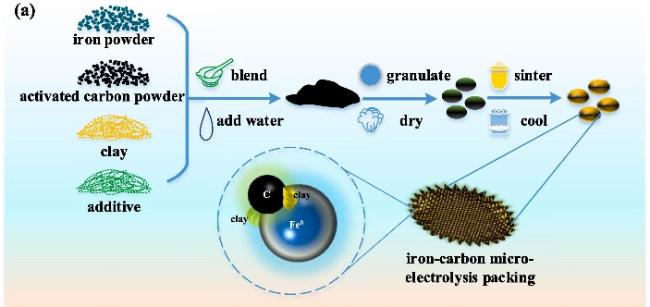
High-temperature sintering is a commonly used method in the preparation of composite materials, which can enhance the interfacial bonding strength between the components. During the sintering process, each component gains sufficient energy for diffusion and migration, reducing the distance between particles and strengthening their interaction forces, thereby establishing a tighter connection[37]. This not only effectively improves the overall mechanical strength of the filler, enabling it to avoid the risk of disintegration or breakage during long-term use, but also optimizes the pore size and connectivity, making their distribution more reasonable and preventing the aggregation and deactivation of active components[37,43,92]. Moreover, the sintering process can alter the crystal structure or surface state of the active components, enhancing their catalytic activity. Some researchers have used clay as a binder and employed sintering to prepare iron-carbon fillers. As shown in Figure 1, they found that sintering can enhance the stability of the filler, prevent iron aggregation, promote the formation of stable primary cells between iron powder and activated carbon, and improve the service life and cycling performance of the filler. Additionally, defects appear on the filler surface, with numerous oxygen vacancies distributed throughout, further enhancing its catalytic activity[52].
图1 烧结法合成铁-碳微电解填料示意图[52]

Fig. 1 Schematic diagram of iron carbon micro-electrolytic filler synthesized by sintering method[52]. Copyright 2020,Elsevier

3.2 Carbon thermal reduction method

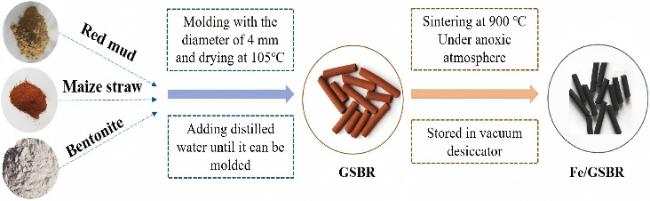
The carbothermal reduction method involves the reaction of carbon with metal oxides or metal ions under high-temperature, oxygen-deficient or oxygen-free conditions to produce highly reductive metallic elements (such as zero-valent iron)[92]. This method has attracted considerable attention due to its simple operating conditions and low cost. As the concept of sustainable development takes root, some researchers have begun using metal-containing industrial wastes or ores, such as red mud[92-93, pyrite slag[94, blast furnace dust[36,55, copper slag[39,56,95, as raw materials in the granulation process. These raw materials typically contain metals in oxide form. By employing the carbothermal reduction method, highly reactive zero-valent metals (primarily zero-valent iron) are produced and embedded within porous granular materials, as shown in Figure 2. This not only achieves resource recycling but also effectively prevents iron agglomeration[33,92. Using waste materials as feedstock may also introduce certain catalytic components, enhancing the performance of the packing material. For example, zinc-containing dust, after high-temperature reduction, yields a packing material that, in addition to iron, also contains catalytic components such as Pb and Zn, which facilitate electron transfer[18. Some researchers have used blast furnace dust as an iron source to prepare ceramic packing materials via carbothermal reduction. Compared to packing materials made from iron powder, this approach increased the pollutant removal rate from 65% to 79%[36.
图2 碳热还原法合成铁-碳微电解填料示意图[92]

Fig. 2 Schematic diagram of iron carbon micro-electrolytic filler synthesized by carbothermal reduction method[92]. Copyright 2023,Elsevier

3.3 Gel method

The gelation method is a widely used technique in polymer chemistry. Its principle involves forming chemical bonds (cross-links) between polymer molecular chains, transforming linear or branched polymers into a three-dimensional network structure. This restricts the mobility of polymer chains, converting liquid polymers into a "solid" or "gel" state while imparting enhanced mechanical strength as well as resistance to heat, abrasion, and solvent erosion[96].
The surface of the filler during crosslinking generally undergoes three stages: (1) crosslinking spots appear and become more pronounced over time; (2) after a certain period, the filler surface becomes smooth and forms a thin film; (3) the thin film further crosslinks, forming pores, eventually resulting in a porous surface, and the particles also exhibit high mechanical stability[82]and a broad pH applicability range[89]. Some researchers have used sodium alginate (SA) crosslinked with CaCl2to obtain iron-carbon bentonite-alginate microspheres, effectively suppressing excessive iron leaching during the micro-electrolysis process[59].

3.4 Liquid-phase reduction method

The liquid-phase reduction method is a chemical technique used in liquid-phase systems to prepare nanomaterials and other substances by reducing metal ions from metal salts or metal compounds into metallic elements using an appropriate reducing agent. The use of the liquid-phase reduction method for material preparation can also effectively prevent material passivation and deactivation[42].Some researchers used sodium alginate (SA) as a binder and prepared Fe-Mn-BC micro-electrolysis filler via the NaBH4liquid-phase reduction method. The results showed that the Fe-Mn-BC filler could simultaneously remove acetamiprid (Ace) and cadmium (Cd), with removal rates both exceeding 85.0%[22].Other researchers employed the liquid-phase reduction-gel method for granulation, further enhancing the mechanical strength and stability of the filler[82].

3.5 Load method

The loading method involves depositing active substances (such as metals, activated carbon, etc.) onto another material (the support) through physical or chemical means, thereby creating a composite material with new properties[97]. Some researchers have employed the loading method, using fast-curing epoxy resin as a binder and volcanic rock as a support, to develop manganese-carbon micro-electrolysis packing material, which enhances the dispersion and stability of manganese and carbon and strengthens the micro-electrolysis effect[98]. However, this method can lead to passivation of the packing material during granulation. Other researchers have used phenolic resin as a binder, loading Fe0and acidified activated carbon onto ceramic pellets; however, the Fe0in the support material is highly susceptible to rapid oxidation into metal oxides, thus limiting its reducing capacity[99].

3.6 Comparison of Granulation Methods

In summary, different granulation methods each have their own advantages and disadvantages, which can be compared and analyzed from perspectives such as energy consumption, service life, and application scenarios. The high-temperature sintering method and the carbothermal reduction method both use high temperatures to produce fillers with high mechanical strength and strong resistance to impact loads[33,88], where Fe and C form a dense bonding structure[18,32,37]. However, these granulation processes require high temperatures and result in high energy consumption. The carbothermal reduction method uses waste materials as raw materials, resulting in lower costs, and these wastes may contain catalytic components. Yet, reducing waste materials requires even higher temperatures and longer processing times, further increasing energy consumption. The gel method and liquid-phase reduction method require more chemical reagents and longer preparation times; the mechanical strength and service life of the materials produced may not be as good as those from the sintering method. However, they do not require high temperatures, consume less energy, and ensure good dispersion of active components such as Fe0in the filler, which can slow down passivation[42,74,80,89]. Moreover, fillers prepared by the gel method have surfaces rich in active functional groups, providing strong adsorption capacity for pollutants and promoting microbial attachment[59,80,89]. The loading method offers a simple granulation process with low energy consumption, but the active components of the filler tend to distribute unevenly and are exposed on the surface, making them prone to passivation[99].

4 Extend the service life of the packing

Traditional micro-electrolysis packing materials, due to the separation of anode and cathode, tend to become passivated and agglomerated, resulting in a short service life and requiring frequent replacement. Binders, however, not only optimize the interfacial bonding strength between the cathode and anode of the packing material, enhancing its resistance to passivation, but also improve mass transfer processes and prevent agglomeration. This ensures that the packing material remains intact and effective even under harsh flow conditions and corrosive media.

4.1 Optimizing the mechanical strength of the packing material

4.1.1 New skeleton

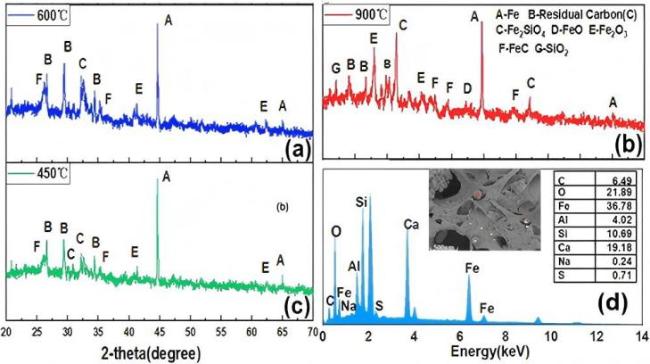
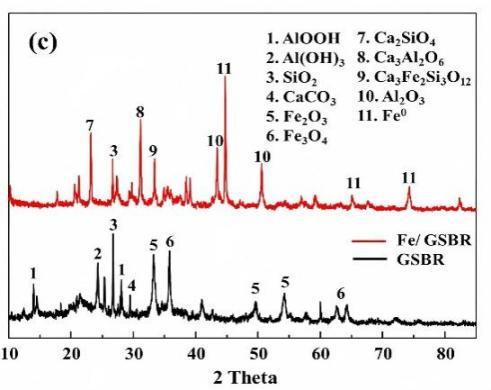
Different types of binders have significantly different mechanisms for enhancing the mechanical strength of micro-electrolysis fillers. Among them, inorganic binders primarily improve the mechanical properties and overall performance of the filler by forming new substances or crystalline structures through chemical reactions with the active components of the filler during the sintering process, thus serving as a new framework for the filler[9,100]. Li et al.[66]found that during sintering, the Si element in kaolin reacts chemically with Fe in the raw materials, generating a large amount of Fe2SiO4, as shown in Figure 3. These Fe2SiO4act as a skeleton, enhancing the bonding strength of the entire Fe—C matrix and promoting the long-term usability of the filler. Yang et al.[24]also discovered Fe2SiO4in the filler prepared by granulating bentonite. Du et al.[92]used bentonite to prepare micro-electrolysis fillers via carbothermal reduction of red mud, finding that elements such as Si and Al in bentonite reacted chemically with components in the red mud, forming substances like Ca3Al2O6and Ca3Fe2Si3O12, as illustrated in Figure 4, thereby endowing the filler with certain strength and allowing it to maintain particle integrity during reactions in aqueous solutions. Fu et al.[33]prepared micro-electrolysis fillers using sodium silicate and carbothermal reduction of magnetite, discovering that sodium silicate reacts chemically with magnetite to produce a new substance with high mechanical strength: 2CaO·Al2O3·SiO2, resulting in a compressive strength of the filler reaching 53.9 MPa. Additionally, some researchers have used waste manganese slag and clay as binders to prepare manganese-carbon fillers, observing during sintering that the binder undergoes crystallization, forming a lattice-like structure within the filler. This not only optimizes the filler's microstructure but also enhances its mechanical strength[51].
图3 微电解填料的XRD图谱:(a) 600 ℃,(b) 900 ℃,(c) 450 ℃,以及(d) 填料在900 ℃下的SEM-EDS图谱[66]

Fig. 3 XRD patterns of micro-electrolytic fillers:(a) 600 ℃,(b) 900 ℃,and (c) 450 ℃,and (d) SEM-EDS pattern of filler at 900 ℃[66]. Copyright 2024,American Chemical Society

图4 未烧(GSBR)和烧结(Fe/GSBR)填XRD图谱[92]

Fig. 4 XRD patterns of unfired (GSBR) and sintered (Fe/GSBR) fillers[92]. Copyright 2023,Elsevier

4.1.2 Cage—Cross-linked Network

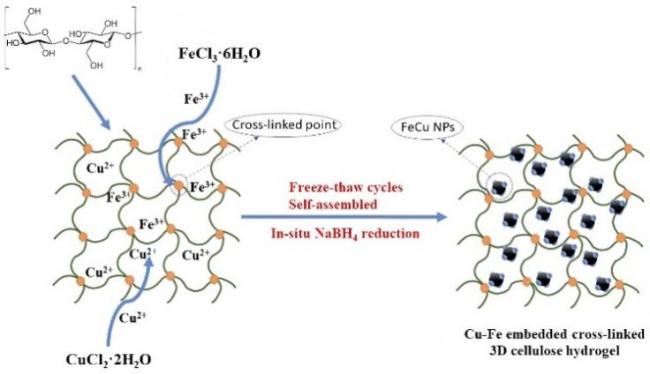
Organic binders form a "cage"-like structure on the surface of the filler through chemical bonds such as hydrogen bonds and cross-linking bonds, as well as a three-dimensional cross-linked network, fixing the cathode and anode of the micro-electrolysis filler and forming stable gel beads, thereby enhancing the mechanical properties of the filler[19,59,80,82,86,101]. As shown in Figure 5, researchers have used the liquid-phase reduction-gel method to prepare fillers with iron as the anode and copper as the cathode, discovering a three-dimensional gel network resembling a "cage" structure. This structure not only imparts high mechanical strength to the filler but also maintains high dispersibility of the anode and cathode, preventing filler agglomeration[101]. In addition, organic binders can penetrate into the small gaps between particles, and after drying and curing, they generate mesh forces at the interface, enhancing the molding strength of the filler[70].
图5 Cu-Fe包埋交联3D水凝胶结构示意图[101]

Fig. 5 Schematic structure of Cu-Fe embedded cross-linked 3D hydrogel[101]. Copyright 2021,Elsevier

4.2 Enhance the stability of the filler

4.2.1 Enhance anti-passivation capability

Binders can form a physical barrier on the surface of fillers, keeping their active components highly dispersed, reducing metal agglomeration, and enhancing the filler's resistance to passivation[102]. Some researchers have found that during gel-based granulation, the active components in the filler, such as Fe and C, can strongly interact with functional groups like hydroxyl and carboxyl groups in the binder, forming complex structures such as chemical bonds or cross-linked networks. This not only improves the stability of the filler but also effectively slows down metal passivation, inhibits grain growth and agglomeration of metal particles, and enables them to maintain high reactivity over an extended period[59,82,101].
When using inorganic binders for sintering and granulation, the newly formed substances, such as Fe2SiO4, serve as a filler skeleton that neither dissolves nor oxidizes, and also inhibit the agglomeration and passivation of Fe[24]. Additionally, during granulation using carbothermal reduction, iron-containing materials such as iron ore, red mud, and copper slag are reduced to Fe0, which is evenly distributed on the carrier surface, further reducing the agglomeration and oxidation of Fe0and enhancing the filler's resistance to passivation, allowing it to fully exert its reducing effect[93,103-104].

4.2.2 Improve mass transfer

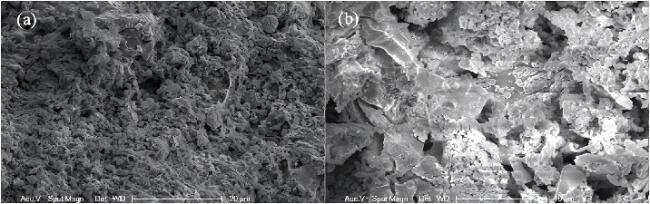
Fillers prepared using binders not only exhibit lower bulk density and particle density but also possess a well-developed pore structure and a larger specific surface area[37]. Due to the numerous gaps between fillers, as well as the rough surface morphology and complex internal porous network structure of the fillers themselves[37,50], as shown in Figure 6, this significantly reduces the mass transfer resistance experienced by wastewater as it flows through the fillers, increases the contact area between solid and liquid phases, and enhances the mass transfer process[37,85], thereby promoting the migration and adsorption of pollutants onto the filler surfaces[50]. At the same time, it effectively avoids the risks of filler short-circuiting and reactor blockage, addressing the issue of filler caking[50,85]. This further improves the stability and service life of the fillers. Additionally, the binder strengthens the interfacial bonding between the anode and cathode, shortening the mass transfer distance and enhancing mass transfer efficiency[105].
图6 Fe-Ni-CCF显微组织分析(a:表面,b:内部)[50]

Fig. 6 Microstructure analysis of Fe-Ni-CCF (a:surface,b:fracture surface)[50]. Copyright 2017,Elsevier

5 Increase the utilization rate of electronics

The metallic materials in the micro-electrolysis filler exhibit high reduction activity, enabling them to rapidly release a large number of electrons and efficiently degrade pollutants during the initial stage of wastewater treatment. However, this process also carries the risk of filler passivation and deactivation, which reduces the availability of electrons and compromises the long-term effectiveness of treatment. In contrast, fillers modified with binders possess a porous structure that expands multiple electron transfer pathways. Additionally, the binder can form a coating layer on the filler surface, regulating the rate of electron release and enhancing the filler's conductivity, thereby preventing premature passivation and deactivation. This allows the filler to continuously transfer electrons and improve electron utilization efficiency.

5.1 Broaden the electron transfer pathway

5.1.1 Pore-forming effect

The micro-electrolysis packing prepared using a binder possesses a unique porous network structure, which not only facilitates sufficient contact between the packing and pollutants but also provides multiple electron transfer pathways. During the granulation process using high-temperature sintering or carbothermal reduction, organic binders serve not only as binders but also as pore-forming agents[106]. At high temperatures, the binder volatilizes and releases gases, thereby creating numerous microporous structures on the surface of the packing[25,56,105,107]. The presence of these micropores increases the specific surface area of the packing, widens the electron transfer channels, and reduces the impedance during electron transfer, allowing pollutants to penetrate more rapidly into the active components of the packing, thus accelerating electron transfer and reaction kinetics[105]. In packing prepared by carbothermal reduction, waste materials such as copper slag generate Fe0during the reduction process, which becomes embedded within the porous structure[39], facilitating direct electron transfer to pollutants. Hu et al.[105]found that the mesoporous structure accelerates electron transfer and promotes the conversion of Fe3+to Fe2+, thereby enhancing the occurrence of the electro-Fenton reaction.

5.1.2 Porous network

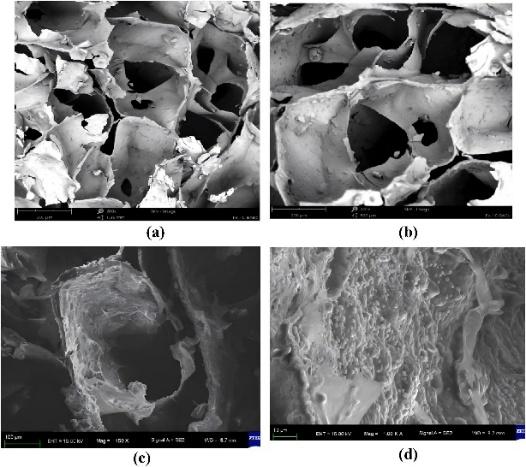
Inorganic binders possess a porous structure that can interact with other components in the filler, regulating the electronic conduction pathways and mass diffusion rates within the filler[102]. When using inorganic binders for granulation, their inherent porous structure can be effectively retained in the filler, providing a more convenient pathway for electron transport. Fu et al.[33]used sodium silicate for granulation and found that the resulting filler exhibited a rich pore structure, which not only optimized the micro-morphology of the filler but also broadened the pathways for electron transfer, creating favorable conditions for rapid electron transport within the filler. Wang et al.[59]aimed to overcome the poor mechanical strength and adsorption capacity of fillers prepared from sodium alginate (SA) by introducing bentonite into the SA matrix. Characterization revealed that the resulting filler had a porous structure with internal folds and hollow structures, as shown in Figure 7, increasing the surface area of the filler and optimizing the electronic conduction pathways.
图7 干燥Fe/C-BAB的FESEM图像[59]

Fig. 7 FESEM images of the dry Fe/C-BABs[59]. Copyright 2018,Elsevier

5.2 Regulating electron transfer

5.2.1 encapsulation layer

Fillers prepared by the gel method have a binder layer formed on their surface[80,86], which slows down the contact between the metal and the external environment, thereby regulating the release rate of electrons[59]. Some researchers used polyvinyl alcohol-vinyl acetate copolymer-itaconic acid copolymer as a binder to directly coat Fe0for granulation, and found that a membrane was formed on the filler surface. Although this reduced the reactivity of Fe0to some extent, it allowed Fe0to maintain its reduction potential for a long time, continuously and stably releasing electrons, thus avoiding rapid deactivation[108]. In addition, other researchers have discovered that SA can serve as a carrier and framework for Fe immobilization, precisely controlling the release rate of Fe and enabling continuous and stable electron output[59,86].

5.2.2 Enhance conductivity

The network structure formed by organic binders after drying may help improve the electronic conduction pathways within the filler[80], enabling electrons to transfer more smoothly inside the filler and enhancing its conductivity. Some researchers have found that the binder polyvinylidene fluoride (PVDF) can reduce the ohmic resistance of the filler, enhance its conductivity, and increase the migration rates of electrons and oxygen[109].

6 Improve reaction efficiency

Traditionally, after the passivation and caking of micro-electrolysis fillers, their activity rapidly declines, limiting the efficiency of pollutant removal. After granulation with a binder, the binder not only directly participates in pollutant removal, increasing the number of active sites for the reaction, but also promotes the generation of active species, catalyzing (quasi-)Fenton reactions. Furthermore, the binder facilitates the micro-electrolysis reaction, accelerating the reaction rate, and subsequently enhances the degradation rate of pollutants through adsorption and flocculation.

6.1 Catalytic activation

6.1.1 catalytic reaction occurs

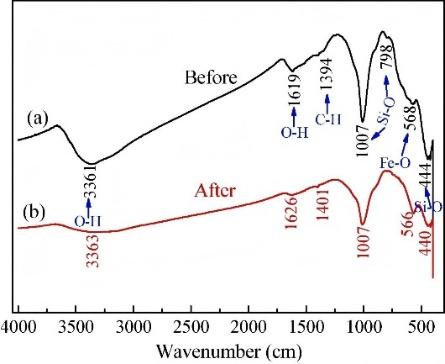
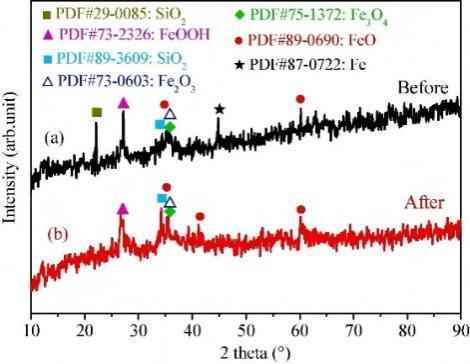
The binder increased the specific surface area of the filler, providing active centers for pollutant enrichment and promoting the catalytic process[95]. Some researchers have found that kaolin undergoes crystalline phase changes during high-temperature sintering and granulation, enhancing the reactivity between the filler and pollutants[110]. As shown in Figure 8and Figure 9, Wu et al.[52]further revealed the unique role of clay as a binder in the preparation of iron-carbon fillers, discovering that silicate compounds in the clay directly participate in the removal process of uranium U(Ⅵ) pollutants.
图8 吸收U(Ⅵ)之前(a)和(b)之后填料的FTIR透射光谱[52]

Fig. 8 FTIR transmission spectra of stuffing before (a) and after (b) absorption of U(Ⅵ)[52]. Copyright 2020,Elsevier

图9 吸收U(Ⅵ)之前(a)和(b)之后填料的XRD图谱[52]

Fig. 9 XRD patterns of stuffing before (a) and after (b) absorption of U(Ⅵ)[52]. Copyright 2020,Elsevier

6.1.2 Promote the generation of active species

Some researchers have found that using bentonite for granulation can generate Fe2SiO4during the sintering process, which promotes the generation of ·OH and catalyzes the (heterogeneous) Fenton reaction[24]. Hydrophobic binders, such as polytetrafluoroethylene (PTFE), can ensure the stable presence of O2on the filler surface, not only improving the utilization efficiency of O2but also promoting the generation of H2O2and ·OH[105]. The increased abundance of these reactive oxygen species further enhances the occurrence of (quasi-)Fenton reactions, providing more favorable conditions for the deep oxidation of pollutants. Some researchers have also found[43]that fillers prepared using bentonite exhibit a strong adsorption capacity for O2. The iron releases electrons, creating a large electron cloud around the O-O bond, making it easier to break in aqueous solutions and generating reactive oxygen species (·OH, ·O2 , and1O2), thereby enhancing the degradation rate of pollutants.

6.1.3 Increase active sites

The binder increases the porosity of the packing material, maintaining a high degree of dispersion of its active components and thus providing more active sites for pollutant enrichment[82,87,95]. The porous structure of the packing material provides channels for pollutant diffusion, enhancing electron transfer efficiency and facilitating the exchange and transport of substances during adsorption[82]. Some researchers have found that packing materials prepared with binders introduce defects during sintering, resulting in numerous oxygen vacancies on the surface of the packing material and increasing the number of reactive active sites[111]. Additionally, an appropriate pore structure helps reduce pressure drop and improves the hydraulic conductivity of the packed bed, ensuring that in practical water treatment applications, water flow can smoothly pass through the packed bed, making full contact with the packing material and thereby achieving efficient pollutant removal[82].

6.2 Promote microelectrolysis reactions

6.2.1 Maintain the integrity of the packing

The binder holds together the various components of the filler to form a stable, regularized material, ensuring its structural integrity during wastewater treatment. This stable structure helps maintain the effective distribution of active ingredients (such as Fe, C, and certain additives) throughout the reaction process, preventing their detachment or agglomeration, thus enabling the micro-electrolysis reaction to proceed continuously and efficiently[87].

6.2.2 Form more primary batteries

Mineral residues such as pyrite slag and rare earth tailings, if not properly treated, not only result in significant resource waste but also harm the ecological environment. Therefore, some researchers have utilized these wastes as binders to prepare fillers[9,94]. Although these wastes themselves do not exhibit high binding performance, chemical reactions or lattice transformations occur during sintering, forming a highly durable supporting framework. Moreover, these binders contain abundant metal elements, especially iron. Using these binders for granulation increases the content of metallic anodes in the filler, generating more primary cells and enhancing the micro-electrolysis reaction[94].
In addition, organic binders are also ideal carbon materials; during pyrolysis, their decomposition not only increases the porosity of the filler but also enhances the carbon content within the filler, thereby forming more primary battery cathodes. Our research group[112]used a gel-pyrolysis method, employing sodium alginate (SA) as both a binder and carbon source, to obtain an Al@Alg-C composite material with controllable electron release rates and an extended reaction lifespan.

6.3 Adsorption and flocculation

Micro-electrolysis fillers may release heavy metals during the reaction process, posing potential environmental hazards. However, researchers found through leaching toxicity tests that the concentrations of heavy metals in wastewater treated with binder-aided granulated fillers were relatively low, not exceeding national standards and thus unlikely to cause secondary pollution[39,92-93,95,111]. This is because inorganic binders themselves possess a porous structure and polar functional groups (such as Si―O―Si, ―OH, ―COOH, etc.), which exhibit excellent adsorption capacity. They can enrich pollutants on the filler surface, synergistically enhancing the pollutant removal efficiency of the micro-electrolysis filler[52,54,110-111]. Additionally, they can adsorb metal ions released into the environment during the micro-electrolysis reaction process[87,93], preventing secondary pollution. Moreover, the abundant oxygen-containing functional groups on the surface of organic binders also contribute to pollutant adsorption[113]. Zhang et al.[80]found that the functional groups of sodium alginate (SA) can form hydrogen bonds and π-π stacking interactions with pollutants, further enhancing the adsorption capacity of the filler.
Inorganic binders such as kaolin and bentonite often contain metal elements like Ca, Mg, and Al in their composition[27,106]. During the reaction between the filler and pollutants, these metals dissolve in the form of ions, which not only increases the porosity of the filler, facilitating direct contact with wastewater, but also endows the dissolved metal ions with strong coagulation, precipitation, or complexation capabilities[25,110], thereby further enhancing the removal efficiency of pollutants.

7 Factors affecting binder granulation

The binder granulation process can effectively address the issues of hardening and recycling difficulties encountered by micro-electrolysis fillers during long-term operation[114].Additionally, as shown in Table 1, binders can also simultaneously enhance the service life, electron utilization rate, and reaction efficiency of micro-electrolysis fillers. Therefore, the selection of binder type and control of its content become critical parameters determining the performance of micro-electrolysis fillers.
表1 基于黏结剂强化微电解填料性能的作用机制典型案例汇总

Table 1 A summary of typical cases of the mechanism of action of binders to enhance the performance of micro-electrolytic fillers

Mechanism Binder Methods Results Ref
Extended life cycle PVA Gelation FAC and PVA had formed a chemical bond,which made the FAC tightly loaded on the porous structure of PVA. And the granules an adsorption capacity of fluoride ions of 4.46 mg/g. 82
PTFE Sintering MO (∼80.2%) was removed within 90 min in three cycles using the pre-Fe—C process,which the Fe—C process achieved after two cycles. 114
PTFE Sintering The MO removal efficiency decreased from 98.3% to 86.4% after four cycles,which demonstrates the promise of Fe—C for practical application to wastewater treatment. 107
Sodium silicate Carbothermal reduction The maximum Pb(Ⅱ) adsorption capacity of the FCC reached 112.36 mg/g at initial pH 3.0 and at 25 °C. 33
Bentonite Carbothermal reduction Porous and zero-valent iron-rich adsorbent material with high strength and adsorption activity. the regeneration effect of Fe/GSBR is good and has great potential to be applied to actual wastewater treatment. 92
Bentonite Carbothermal reduction Fe/GSBR was 305.98 mg/kg,which is a superior performance compared to with the same type of adsorbent. 92
Bentonite Carbothermal reduction The results indicated that Fe@GRM/PS had a higher AO7 removal capacity. 93
Bentonite Sintering A key achievement of this study is the dramatic reduction in COD levels from 90 000 mg/L to 30 000 mg/L,a 66.9% efficiency,by employing iron-carbon micro-electrolysis in tandem with Fenton oxidation. 10
Bentonite Sintering After 32 h of continuous operation,the degradation rate of IBX was about 85%,indicating that the filler has good stability. 24
CMC,Kaolin Sintering The removal rate of methyl blue in the dye wastewater reached 92.21%,Cu(Ⅱ),Cd(Ⅱ),and Pb(Ⅱ) heavy metal ions at rates of up to 97.32%,96.58%,and 99.38%,respectively. 66
Enhanced electronic utilization SA,Bentonite Gelation The catalyst effectively inhibited excessive iron leaching and iron sludge production during the reaction and removed significant amounts of BAC (93.3%). 59
SA,Bentonite Gelation Approximately 86.3% APAP degradation efficiency and only 5.3% Fe release were achieved. 86
Sodium carboxymethyl Carbothermal reduction The removal rate of OG remained about 100% in the fourth run,indicating that the prepared PSi@ZVI was reusable and maintained the high activity. 95
Improved reaction efficiency Clay Sintering The maximum of the U(Ⅵ) removal efficiency was 94.0% near 90 min. High uranium removal rate could be obtained in a short time,which is one of the important advantages of IMP. 52
CMC,Bentonite Sintering In the treatment of oil refinery wastewater using an Fe-BC-Cu filler,around 80% COD removal efficiency was attained,even after running over 10 cycles. 87
Bentonite Sintering The degradation of SCN- (including oxidation and reduction) accounted for 71.41% in the Fe/Cu/C system. 43
Bentonite Sintering Fe-SS could maintain >94.7% removal efficiency in response to wide pH (pH = 3~11) and higher concentration of antimony pollution shock. 111
CMC,Kaolin Liquid phase reduction,Sintering A remarkable TCE removal efficiency of 88.15% in a 40-day column test using NIMP. 54

7.1 Types of Adhesives

Inorganic binders primarily enhance the mechanical strength of micro-electrolysis fillers, enabling them to maintain their integrity over long-term operation and addressing issues such as filler caking and passivation, while having relatively little impact on the electronic utilization rate of the fillers. Although organic binders are less effective than inorganic binders in improving the mechanical strength of the fillers, they can form a coating layer on the filler surface to regulate electron transfer, thereby enhancing the conductivity of the fillers and increasing their electronic utilization rate.
Inorganic binders have advantages such as abundant resources, low cost, good heat resistance, strong bonding strength, and excellent hydrophilicity. However, inorganic binders tend to dissolve or decompose, producing viscous substances that adhere to the surface of active components, thereby restricting the entry of larger molecules into the interlayer spaces[54], hindering the microelectrolysis reaction and also making sludge-water separation difficult. Organic binders, on the other hand, offer benefits such as good bonding properties, environmental friendliness, and a wide variety of options; composites prepared using organic binders exhibit high mechanical strength. Nevertheless, organic binders have poor thermal stability and are relatively expensive[70]. Therefore, there is a need for us to develop new, high-performance binder materials.

7.2 The content of the binder

The content of the binder determines the number and strength characteristics of the primary cells formed by the filler[10]. When the binder content is too low, it results in poor bonding between filler particles, making it difficult for the filler to form a stable structure or exhibiting lower mechanical strength[110]. It can also lead to the formation of large pores and cavities in the filler, causing leakage of its active components[82]. However, if the binder content is too high, it occupies excessive space, reducing the proportion of active components in the filler and limiting the number of primary cells, thereby decreasing the filler's performance in treating pollutants[24]. Therefore, in actual preparation processes, it is essential to strike a balance between filler strength and reactive activity.

8 Conclusion and Outlook

Binders play a crucial "behind-the-scenes" role in enhancing the performance of micro-electrolysis fillers. Binders can (1) optimize the mechanical strength of the filler, improve its resistance to passivation, enhance mass transfer processes, and prevent caking, thereby extending the service life of the filler; (2) broaden electron transfer pathways, forming a coating layer on the filler surface to regulate electron transfer and increase conductivity, thus improving electron utilization efficiency; (3) catalyze reactions, promote the generation of active species, increase reactive sites, and intensify the micro-electrolysis reaction. Finally, through adsorption and flocculation, they further enhance the degradation rate of pollutants. Although research on micro-electrolysis fillers has made significant progress in recent years, insufficient attention has been paid to binders, and several challenging issues still need to be addressed.
(1) Development of novel high-performance adhesive materials
Currently used binders all have their own drawbacks, necessitating the development of new high-performance binder materials. One approach is to combine different types of binders[115-116]. Researchers have already employed composite binders such as bentonite and carboxymethyl cellulose (CMC)[85,87], as well as bentonite and sodium alginate (SA)[59,86], for granulation. Studies have shown that this indeed reduces the production cost of fillers and yields fillers with superior performance; however, the coupling mechanism between inorganic and organic binders still requires further investigation. Additionally, conductive solids such as biochar can be incorporated into binders to enhance the compressive strength and conductivity of fillers[117-119]. Biochar, acting as an electron shuttle, exhibits excellent conductivity, and its combination with binders can impart or enhance the electron-conducting function of the binders. Research has found that incorporating biochar into red clay building materials increases their compressive strength by 51%, due to biochar providing more connectivity between particles, thereby enhancing strength[117]. Furthermore, conductive polymer adhesives can also be developed[76,120-123], improving the stability and electron utilization efficiency of fillers. Conductive polymers can inhibit hydrogen evolution, corrosion, and passivation of metals, and through the "electric field sponge effect" (where Coulombic attraction/repulsion regulates metal ion plating/stripping behavior similar to a sponge absorbing/squeezing water), they enhance the kinetics and stability of metals[76,121].
(2) Optimize the process parameters of the binder during the filler preparation process
Optimizing the process parameters of the binder during filler preparation can bring the interaction between the binder and the active ingredient to an optimal state. By precisely controlling parameters such as the amount of binder added, mixing time, stirring speed, and mixing temperature, it is possible to ensure that the active ingredient is uniformly distributed within the filler particles and is not covered or isolated due to excessive binder. The granules produced may require post-processing steps such as drying and sintering. Optimizing the drying temperature and time ensures that the binder fully cures while avoiding excessively high temperatures that could lead to binder decomposition or particle cracking. Process parameters can be optimized through single-factor experiments, followed by performance testing and feedback adjustments via various characterization experiments.
(3) Conduct in-depth research on the interaction mechanism between binders and active ingredients of fillers
The role of binders in the granulation of micro-electrolysis fillers is often overlooked. Currently, the mechanisms by which binders enhance the performance of micro-electrolysis fillers are mainly derived from characterization studies of the fillers themselves, and no systematic research has yet been conducted. Questions remain unanswered regarding how binders interact with the active components of the fillers during sintering, whether binders, similar to carbon materials, can act as electron shuttles, how binders catalyze the generation of free radicals, and why binders can reduce filler resistance and improve conductivity. These issues warrant further investigation.
[1]
Liu H, Ji D W, Mei Y K, Liu Y, Liu C H, Wang X Y, Chen Q A. Nat. Chem., 2024, 16(9): 1505.

[2]
Coccia M, Bontempi E. Environ. Res., 2023, 229: 115938.

[3]
Zheng Z, Yu H J, Geng W C, Hu X Y, Wang Y Y, Li Z H, Wang Y F, Guo D S. Nat. Commun., 2019, 10: 5762.

[4]
Xu J H, Liu J G. Environ. Health, 2023, 1(6): 360.

[5]
Wang B, Sui Q, Liu H J, Yu G, Qu J H. Engineering, 2024, 37: 13.

[6]
Zhou J Y, Wu Z R, Wang S, Wu H, Shi L H, Tian S L, Hou L. J. Clean. Prod., 2023, 410: 137289.

[7]
Ding S, Li X, Qiao X C, Liu Y, Wang H Y, Ma C M. Environ. Pollut., 2024, 362: 124938.

[8]
Lyu P, Guo W, Qi H, Yuan X, Ma J Q, Xu X M, Zhou H M. Sci. Rep., 2023, 13: 1951.

[9]
Zhang F L, Yue Q Y, Gao Y, Wang W G, Gao B Y, Wang C. Ecotoxicol. Environ. Saf., 2018, 164: 641.

[10]
Wang Z, Zeng Y S, Tan Q Y, Shen Y, Shen L G, Sun J H, Zhao L H, Lin H J. J. Environ. Manag., 2024, 354: 120383.

[11]
Dai M X, Wu Y M, Wang J, Lv Z, Li F, Zhang Y J, Kong Q. Chemosphere, 2022, 305: 135377.

[12]
Sun S S, Yang K L, Zhang Z S, Gu P, Miao H F, Xu X H. J. Clean. Prod., 2023, 396: 136480.

[13]
Lu D N, Sha S, Luo J Y, Huang Z R, Zhang Jackie X. J. Hazard. Mater., 2020, 386: 121963.

[14]
Ma Y S, Gu Y X, Jiang D, Mao X H, Wang D H. J. Hazard. Mater., 2021, 413: 125381.

[15]
Yu H Y, Liu Y Z, Xu M, Cong S B, Liu M J, Zou D L. J. Clean. Prod., 2021, 316: 128136.

[16]
Li C, Hao L S, Cao J S, Zhou K, Fang F, Feng Q, Luo J Y. Chemosphere, 2022, 304: 135410.

[17]
Kang Y, Sun H L, Gao B L, Dang J, Zhang M X, Li M, Dong J H, Wu H M, Zhang J, Guo Z Z. Chem. Eng. J., 2022, 439: 135742.

[18]
Guo Z Q, Zhan R N, Shi Y, Zhu D Q, Pan J, Yang C C, Wang Y G, Wang J. Chem. Eng. J., 2023, 456: 141157.

[19]
Hu Z F, Yao H, Deng S H, Zhang C, Peng S, Zhang Z G, Li D S. J. Environ. Manag., 2023, 335: 117528.

[20]
Chen Z H, Feng M Q, Wang Y B, Ma Q. J. Environ. Eng., 2023, 149(12): 04023088.

[21]
Yang Z M, Ma Y P, Liu Y, Li Q S, Zhou Z Y, Ren Z Q. Chem. Eng. J., 2017, 315: 403.

[22]
Kong F L, Chen D L, Zhai T Y, Wang W P, Yang G X, Dai Y L, Cui Y Q, Wei B Y, Wang S. Chem. Eng. J., 2024, 502: 157815.

[23]
Liu C G, Chen X E, Cai H T. Chem. Eng. J., 2020, 400: 125954.

[24]
Yang S Z, Sun H N, Su S P, Han G H, Huang Y F. J. Hazard. Mater., 2021, 403: 123640.

[25]
Zhang F L, Yue Q Y, Gao Y, Gao B Y, Xu X, Ren Z F, Jin Y. Chemosphere, 2017, 182: 483.

[26]
Zhang P Y, Xie C, Li Y L, Sun B, Yao S, He J, Zhang K S, Zhu S G, Kong L T. Sep. Purif. Technol., 2023, 314: 123639.

[27]
Huong D, Nguyen V, Ha X, Thi H, Duong T, Nguyen D, Thi H. Processes, 2020, 8(10): 1258.

[28]
Liu H Y, Li X H, Zhang X H, Wang K, Wang L M. Chem. Eng. Sci., 2023, 280: 119038.

[29]
Li Q Y, Wang Y F, Chang Z, El K, Fan F L, Li M. J. Water Process. Eng., 2024, 58: 104746.

[30]
Ma H Y, Zhou W Y, Xu X J, Zhu X, Wang L R, Shi X D, Jiang M, Li C X, Li T G. Sep. Purif. Technol., 2023, 317: 123874.

[31]
Wei S Y, Jia L X, Tan J C, Zhang J, Guo Z Z, Hu Z, Dai P, Wu H M. Chem. Eng. J., 2023, 470: 144367.

[32]
Cui X Q, Li N, Chen G D, Zheng H, Li X C. J. Colloid Interface Sci., 2019, 534: 490.

[33]
Fu P F, Lin X F, Chen Z H. RSC Adv., 2018, 8(45): 25445.

[34]
Cui X J, Zhang M P, Ding Y J, Sun S S, He S B, Yan P. Sci. Total Environ., 2022, 815: 152800.

[35]
Ma H Y, Jiang C, Zhu X, Zheng X, Zhou W Y, Wang L R, Zhao M, Feng L H, Xu X J, Kong C M, Li T G. J. Clean. Prod., 2024, 468: 142908.

[36]
Zhang L L, Gao Y, Yue Q Y, Zhang P, Wang Y, Gao B Y. J. Hazard. Mater., 2020, 383: 121215.

[37]
Wang Y B, Feng M Q, Liu Y H. J. Environ. Eng., 2018, 144(4): 04018016.

[38]
Song D P, Huang T, Feng Y X, Chen K, Cui J L, Pu J, Wang C L, Xie S H, Wu M Y, Wang B J, Chen Q, Fang Q. Sep. Purif. Technol., 2025, 356: 129923.

[39]
Wang M, Yu W, Zeng D L, Zhu L L, Gao C Q, Hu M S, Le C T, Qiu T S. Chemosphere, 2022, 288: 132596.

[40]
Cheng J X, Yang H T, Li H T, Hu C Q, Yu X H, Li R X. Chem. Eng. J., 2022, 428: 132529.

[41]
Xiong M M, Gu S Y, Gu H, Zhang D F, Ma C Y, Xu Z H. J. Colloid Interface Sci., 2022, 612: 308.

[42]
Xu Z H, Sun Z H, Zhou Y W, Zhang D F, Gao Y Q, Chen W F. J. Hazard. Mater., 2020, 398: 123122.

[43]
Zhang M, Wang J, Zhan X Y, Xu W S, He M L, Ma D, Yue Z B. Environ. Res., 2024, 252: 118833.

[44]
Song N F, Xu J, Cao Y P, Xia F, Zhai J, Ai H N, Shi D Z, Gu L, He Q. Chemosphere, 2020, 248: 125986.

[45]
Wang H B, Cui T, Chen D X, Luo Q, Xu J W, Sun R, Zi W H, Xu R, Liu Y, Zhang Y. Sci. Rep., 2022, 12: 14242.

[46]
Zhao H X, Zhao H D, Huang X, Zhu S Q, Liu Y H, Ye Q, Xu H, Wang Y Q, Lu J F, Zhang J. Sep. Purif. Technol., 2021, 257: 117887.

[47]
Huang X, Yang X M, Zhu J, Yu J H. Bioresour. Technol., 2020, 315: 123814.

[48]
Gao Y Y, Huang X, Yang X M. J. Water Process. Eng., 2024, 64: 105586.

[49]
Zhou Y N, Yao X F, Liu S G. J. Environ. Chem. Eng., 2024, 12(5): 113341.

[50]
Wu S Q, Qi Y F, Fan C Z, Dai B B, Huang J, Zhang X, Chen T, Zhou W L, He S B, Gao L. J. Clean. Prod., 2017, 156: 679.

[51]
Jiang Y H, Li M, Yan A P. Environ. Eng. Sci., 2017, 34(4): 291.

[52]
Wu X Y, Lv C X, Yu S F, Li M, Ye J, Zhang X W, Liu Y. Sep. Purif. Technol., 2020, 234: 116104.

[53]
Sun Y J, Chen A W, Zhu S C, Sun W Q, Shah K J, Zheng H L. Water Environ. Res., 2019, 91(8): 756.

[54]
Zhu J Y, Zhang L S, Liu J Y, Zhong S, Wei Z X, Gao P, Shen J Y. J. Environ. Chem. Eng., 2024, 12(2): 112146.

[55]
Wang Y, Qi X X, Qin Y T, An C Y, Guo J H, Wang J. Environ. Pollut., 2023, 337: 122574.

[56]
Han G H, Cai B G, Yang S Z, Ding X, Liu B B, Huang Y F. J. Environ. Chem. Eng., 2024, 12(4): 113151.

[57]
Lu C L, Sun W, Yue T, Han H S, Yu W, Nguyen A V, Wang L. J. Hazard. Mater., 2020, 400: 123210.

[58]
Deng S H, Li D S, Yang X, Cai Q Q, Peng S, Peng X N, Yao H, Xie B H. Chem. Eng. J., 2020, 387: 123409.

[59]
Wang B H, Zhang Q, Hong J M, Li L. Process. Saf. Environ. Prot., 2018, 119: 75.

[60]
Zhang W W, He Y C, Li C, Hu X X, Yang S, You X Y, Liang W Y. Appl. Catal. B Environ., 2021, 285: 119848.

[61]
Zhang T T, Wang W, Zhao Y L, Bai H Y, Wen T, Kang S C, Song G S, Song S X, Komarneni S. Chem. Eng. J., 2021, 420: 127574.

[62]
Sanavada K, Shah M, Gandhi D, Unnarkat A, Vaghasiya P. Environ. Nanotechnol. Monit. Manag., 2023, 20: 100784.

[63]
Adeleke A A, Odusote J K, Ikubanni P P, Olabisi A S, Nzerem P. Sci. Rep., 2022, 12: 8716.

[64]
Ardant D, Brumaud C, Perrot A, Habert G. Cem. Concr. Res., 2023, 172: 107207.

[65]
Fan Y Y, Sun S S, Gu X S, Yan P, Zhang Y, Peng Y J, He S B. Water Res., 2025, 275: 123169.

[66]
Li K X, Cui Z Y, Wan K J, Miao Z Y. Langmuir, 2024, 40(43): 23041.

[67]
Jo J Y, Choi J H, Tsang Y F, Baek K. Environ. Pollut., 2021, 277: 116747.

[68]
Zhang L L, Yue Q Y, Yang K L, Zhao P, Gao B Y. J. Hazard. Mater., 2018, 342: 705.

[69]
Matinfar M, Nychka J A. Adv. Colloid Interface Sci., 2023, 322: 103036.

[70]
Zhang G J, Sun Y H, Xu Y. Renew. Sustain. Energy Rev., 2018, 82: 477.

[71]
Lingappan N, Kong L X, Pecht M. Renew. Sustain. Energy Rev., 2021, 147: 111227.

[72]
Wang Z C, Huang T, Yu A S. J. Power Sources, 2021, 489: 229530.

[73]
Roy S, Rhim J W. Int. J. Biol. Macromol., 2020, 148: 666.

[74]
Qiao H Y, Hu J, Xu H C, Zhao Y S. Sep. Purif. Technol., 2025, 353: 128494.

[75]
Ding Y Y, Zhong X, Yuan C M, Duan L F, Zhang L, Wang Z, Wang C S, Shi F W. ACS Appl. Mater. Interfaces, 2021, 13(17): 20681.

[76]
Zheng Z M, Gao H W, Ke C Z, Li M, Cheng Y, Peng D L, Zhang Q B, Wang M S. ACS Appl. Mater. Interfaces, 2021, 13(45): 53818.

[77]
Mao Z F, Wang R, He B B, Jin J, Gong Y S, Wang H W. Small, 2023, 19(11): 2207224.

[78]
Cui S R, Li W Y, Hu H K, Wang T C, Xing Y J, Yin J X, Zhang M H, Liu W, Myung S T, Jin Y C. Small, 2024, 20(50): 2405823.

[79]
Mao S F, Ren Y M, Chen S G, Liu D H, Ye X Q, Tian J H. Carbohydr. Polym., 2023, 320: 121234.

[80]
Zhang H, Chu L, Wang J L, Guo Q L, Zhang W B. Chem. Eng. Res. Des., 2023, 190: 106.

[81]
Park H K, Kong B S, Oh E S. Electrochem. Commun., 2011, 13(10): 1051.

[82]
Wu H X, Wang T J, Chen L, Jin Y, Zhang Y, Dou X M. Powder Technol., 2011, 209(1/3): 92.

[83]
Huang C J, Zhao S, Chen R Q, Johansson E, Aqeel M, Klement U, Andersson A M, Taher M, Palermo V, Sun J H. iScience, 2024, 27(4): 109429.

[84]
Wang J X, Liang J D, Sun L, Li G G, Temmink H, Rijnaarts H. Bioresour. Technol., 2020, 309: 123448.

[85]
Liang Y Q, Li H, Mao X M, Wu L T, Li Y, Wang F, Liang L Q, Ma Z H. Desalin. Water Treat., 2020, 202: 295.

[86]
Wang B H, Zhang Q, Hong J M. J. Ind. Eng. Chem., 2018, 67: 301.

[87]
Wang G H, Qian L N, Yong X Y, Wang Y J, An W, Jia H H, Zhou J. Sep. Purif. Technol., 2021, 275: 119131.

[88]
Han Y H, Wang J, Liu T, Wei M X, Wang S Z, Guo J X, Ma X J, Li Z X, Wang N N, Sang Y M. J. Hazard. Mater., 2025, 486: 137030.

[89]
Liu X H, Wei J, Wu Y D, Zhang J, Xing L Y, Zhang Y F, Pan G P, Li J M, Xu M D, Li J. Bioresour. Technol., 2022, 345: 126523.

[90]
Liu D, Gu W Y, Zhou W Q, Xu Y, He W J, Liu L Z, Zhou L, Lei J Y, Zhang J L, Liu Y D. J. Clean. Prod., 2022, 369: 133239.

[91]
Wang Y, Su J F, Ali A, Chang Q, Bai Y H, Gao Z H. Bioresour. Technol., 2022, 348: 126818.

[92]
Du Y F, Yang Z G, Xu L X, Shen X, Shao M R, Chen F Y, Wang J. Environ. Technol. Innov., 2023, 32: 103376.

[93]
Du Y F, Dai M, Cao J F, Peng C S, Ali I, Naz I, Li J Y. Chemosphere, 2020, 244: 125522.

[94]
Dong T, Guo Z Q, Zhu D Q, Pan J, Ma W Z, Li S W, Shi Y. J. Environ. Chem. Eng., 2024, 12(5): 113502.

[95]
Gao C Q, Yu W, Zhu Y C, Wang M, Tang Z Z, Du L, Hu M Y, Fang L, Xiao X C. Sci. Total Environ., 2021, 754: 142131.

[96]
Maitra J, Shukla V. ACS J. Polym. Sci., 2014, 4(2): 25.

[97]
Zhao J, Gao J Q, Liu J Z. Materials, 2020, 13(21): 4739.

[98]
Wang Y F, Li D P, Song X S, Cao X, Gao C T, Xu Z S, Huang W, Wang Y H. Chem. Eng. J., 2023, 471: 144661.

[99]
Wu R F, Jeyakumar P, Bolan N, Zhai X, Wang H L, Pan M H, Lian J P, Cheng L P, Li J Z, Hou M H, Cui Y H, Yang X E, Dai K. Biochar, 2024, 6: 5.

[100]
Saini V K, Pinto M, Pires J. Green Chem., 2011, 13(5): 1251.

[101]
Wang Y, Lin N P, Gong Y S, Wang R T, Zhang X D. Chemosphere, 2021, 280: 130663.

[102]
Zhang B G, Hou Y P, Yu Z B, Liu Y X, Huang J, Qian L, Xiong J H. Sep. Purif. Technol., 2019, 210: 60.

[103]
Liu J W, Mwamulima T, Wang Y M, Fang Y, Song S X, Peng C S. J. Mol. Liq., 2017, 243: 205.

[104]
Liu J W, Wang Y M, Fang Y, Mwamulima T, Song S X, Peng C S. J. Mol. Liq., 2018, 250: 468.

[105]
Hu Y, Wang Y Q, Kou L H, Gao X Y, Wang Y X, Guo Y T, Li X. Chem. Eng. J., 2024, 481: 148427.

[106]
Zhang P, Cheng X X, Lian J F, Chen Y L, Wang L. Chem. Ind. Eng. Prog., 2020, 39(11): 4708

(张鹏, 成先雄, 连军锋, 陈于梁, 王磊. 化工进展, 2020, 39(11): 4708).

[107]
Li X, Qin Y, Jia Y, Wang R, Ye Z Y, Zhou M H. Sep. Purif. Technol., 2022, 281: 119962.

[108]
Shih Y J, Chen C W, Hsia K F, Dong C D. Sep. Purif. Technol., 2015, 156: 1073.

[109]
Yang Z, Gong X B, Wang B Q, Yang D, Fu T, Liu Y. RSC Adv., 2018, 8(61): 35179.

[110]
Zeng X P, Yang Z Q, Ding W C, Zeng X L. Environ. Sci. Technol., 2023, 46(8): 209

(曾祥平, 杨占强, 丁文川, 曾晓岚. 环境科学与技术, 2023, 46(8): 209).

[111]
Xu X Y, Yu F, Bao Y Z, Jiang N, Yan M Y, Hu Y, Wang R Z, Li Q, Huang M H. J. Water Process. Eng., 2024, 65: 105732.

[112]
Liu S J, Yang S Y, Bao X J, Li Y, Wang M Q, Zhao D Y. J. Clean. Prod., 2022, 366: 133013.

[113]
Zhang X R, Yan L, Liu J F, Zhang Z Y, Tan C H. Appl. Sci., 2019, 9(20): 4213.

[114]
Li X, Zhang J J, Qin Y, Zhang X L, Zou W, Ding L J, Zhou M H. Chemosphere, 2022, 303: 135060.

[115]
Zhang J H, Wang N, Zhang W, Fang S, Yu Z L, Shi B M, Yang J Y. J. Colloid Interface Sci., 2020, 578: 452.

[116]
Sanghvi M R, Tambare O H, More A P. Polym. Bull., 2022, 79(12): 10491.

[117]
Yang S, Wi S, Lee J, Lee H, Kim S. J. Hazard. Mater., 2019, 373: 844.

[118]
Lu X H, Liu J, Shu C, Zhang S C, Zhao H Y, Zhang Y, Wang Q L, Yu Z Z, Li X F. Adv. Funct. Mater., 2025, 35(11): 2417324.

[119]
Lwin T T A, Chen X, Zaw M, Aung S K K, Lwin N W, Oo T Z, Zarifzoda A Q, Hui K S, Chen F M. Carbon, 2025, 231: 119703.

[120]
Zou F, Manthiram A. Adv. Energy Mater., 2020, 10: 2002508.

[121]
Jiao Y D, Li F Y, Jin X, Lei Q S, Li L H, Wang L, Ye T T, He E, Wang J C, Chen H, Lu J, Gao R, Li Q M, Jiang C, Li J W, He G J, Liao M, Zhang H G, Parkin I P, Peng H S, Zhang Y. Adv. Funct. Mater., 2021, 31(49): 2107652.

[122]
Wang D K, Zhang N, Zhang Y, Chang L, Tang H H, Zhang W M, Zhu Q C. Adv. Energy Mater., 2025, 15(11): 2404090.

[123]
Roh H, Kim D H, Cho Y, Jo Y M, del Alamo J A, Kulik H J, Dincă M, Gumyusenge A. Adv. Mater., 2024, 36(27): 2312382.

Outlines

/