Home Journals Progress in Chemistry
Progress in Chemistry

Abbreviation (ISO4): Prog Chem      Editor in chief: Jincai ZHAO

About  /  Aim & scope  /  Editorial board  /  Indexed  /  Contact  / 
Review

Advancing Production of Sweet-Tasting Proteins Driven by Synthetic Biology

  • Qian Liu 1 ,
  • Zichang Peng 1 ,
  • Yameng Wang 1 ,
  • Yao Geng 1 ,
  • Xiaomin Ren 1 ,
  • Xiaole Xia , 1, 2, *
Expand
  • 1 College of Food Science and Engineering,Tianjin University of Science & Technology,Tianjin 300457,China
  • 2 School of Biotechnology,Jiangnan University,Wuxi 214122,China

Received date: 2024-12-30

  Revised date: 2025-04-06

  Online published: 2025-08-08

Supported by

the National Key Research and Development Program of China(2023YFF1103700)

Abstract

Sweet-tasting proteins,characterized by their low calorie and high sweetness attributes,demonstrate significant potential in the food industry. They not only satisfy the demand of consumers for healthy and safe sweeteners but also have the potential to replace traditional high-calorie sweeteners,thus driving innovation in the food industry. However,their commercialization process still faces challenges such as restrictions on the origin of raw materials,low yield,high extraction costs,and poor stability. In this review,the basic characteristics of sweet-tasting proteins were examined,their taste mechanisms and the relationship between their structure and sweet taste activity were investigated. Precise design and modification of sweet-tasting proteins and host through synthetic biology and artificial intelligence methods to enhance their sweetness,stability and yield were proposed. Additionally,optimizing host,expression and secretion strategies,as well as precise control of the fermentation process,can further improve the yield and activity of sweet-tasting proteins. These approaches provide a theoretical basis and technical references for addressing the existing problems in the commercial application of sweet-tasting proteins and have positive implications for promoting their widespread use in the food industry.

Contents

1 Introduction

2 Taste mechanism and structure-function relationship

2.1 Recognition and signal transduction of sweet taste receptors

2.2 Structure-function relationship analysis

3 Customized optimization and production strategies

3.1 Protein precision design and modification

3.2 Optimization of strategies for host cell selection

3.3 Optimization of expression and secretion strategies

3.4 Precise control and optimization of the fermentation process

4 Conclusion and outlook

Cite this article

Qian Liu , Zichang Peng , Yameng Wang , Yao Geng , Xiaomin Ren , Xiaole Xia . Advancing Production of Sweet-Tasting Proteins Driven by Synthetic Biology[J]. Progress in Chemistry, 2025 , 37(8) : 1131 -1141 . DOI: 10.7536/PC241215

1 Introduction

With the significant increase in global health awareness, consumers are increasingly opting for food choices that are low-calorie, highly sweet, and healthy and harmless. This trend has not only driven innovation in the food industry but has also accelerated the rapid growth of the low-calorie sweetener market[1]. Traditional artificially synthesized sweeteners, such as aspartame, acesulfame, saccharin, neotame, and sucralose, once dominated the market due to their high sweetness and low cost; however, their safety concerns have become increasingly prominent[2], including potential health risks such as obesity, metabolic syndrome, cardiovascular diseases, and type 2 diabetes[3], drawing widespread attention and concern from both the public and the scientific community.
Against this backdrop, natural sweeteners, especially sweet proteins, have become the new favorites in the food industry due to their unique advantages[4-5]. Compared with artificial sweeteners, sweet proteins not only possess higher sweetness and extremely low caloric content, but also feature clear metabolic pathways and high safety. Moreover, they demonstrate great potential for "programmable" sweetness, meaning that through structural modification and rational design, their sweetness characteristics can be customized to meet consumers' increasingly diverse taste preferences[6]. To date, a total of eight sweet proteins and sweetness-modifying proteins have been identified, including Thaumatin[7], Brazzein[8], Monellin[9], Curculin[10], Mabinlin[11], Pentadin[12], Miraculin[13], and Neoculin[14]. Among these, Thaumatin, extracted from African plants, was approved for use in food products in China as early as 2014. Additionally, Brazzein and Monellin produced by the American sweet protein company Oobli through precision fermentation have also received approval from the U.S. Food and Drug Administration (FDA). Even sweelin, a novel sweet protein optimized by artificial intelligence from the protein design company Amai Proteins, has obtained multiple regulatory approvals, including GRAS status (Generally Recognized as Safe) and GRAS certification from the Flavour Extract Manufacturers Association (FEMA).
However, despite the promising application prospects of sweet proteins, their commercialization process still faces numerous challenges, including limitations in raw material sources, low yield, high extraction costs, and poor stability. Therefore, based on a review of the basic properties of sweet proteins, this article will delve into their taste-mimicking mechanisms and structural characteristics, aiming to better understand their functional attributes. At the same time, it will focus on exploring customized optimization and production strategies, including enhancing sweetness and production efficiency through precise design modifications, optimizing gene expression systems, and precisely controlling fermentation processes to increase yield. The implementation of these strategies will provide a solid theoretical foundation and technical support for the in-depth research and industrial application of sweet proteins, thereby promoting their widespread use in the food industry.

2 Flavor Mechanism and Structure-Function Relationship

Sweet taste perception, as an essential component of the mammalian gustatory system, is a complex process involving multiple molecular and cellular interactions. At its core, it involves the detection of sweet-tasting molecules by taste receptor cells located on the tongue and soft palate, as well as the subsequent transmission of signals. A deeper exploration of the interaction mechanisms between sweet proteins and sweet receptors can enhance our understanding of how the gustatory system functions, providing theoretical insights and practical guidance for the development of novel sweet proteins.

2.1 Recognition and Signal Transduction of Sweet Taste Receptors

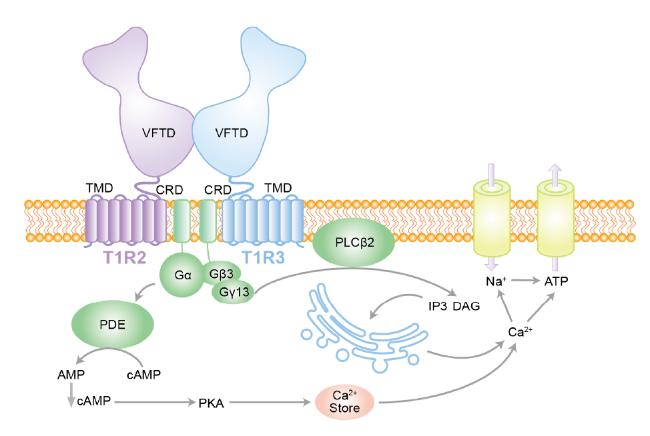
Sweet perception begins with the binding of sweet molecules to receptors on the taste bud cell membrane, which triggers a cascade of intracellular signaling molecules. Ultimately, electrochemical signals are transmitted via sensory nerves to the brain, forming the sensation of sweetness (Figure 1)[15-16].
图1 甜味受体的识别与信号转导机制[17-19]

Fig. 1 Mechanism of sweet taste receptor recognition and signal transduction[17-19]

The core structure of the sweet taste receptor consists of two heterodimers formed by T1R subunits, T1R2 and T1R3, which act as key G protein-coupled receptors (GPCRs) responsible for recognizing and binding sweet substances[17-18]. These receptor subunits exhibit unique structural features, including a large (55 kDa) N-terminal Venus flytrap domain (VFTD), which is connected via a short cysteine-rich domain (CRD) to a C-terminal seven-transmembrane domain (TMD) (Figure 1)[20]. Notably, different sweet substances are specifically recognized by distinct regions of the sweet taste receptor. However, although the interaction between sweet proteins and sweet taste receptors is crucial, the precise spatial structure after their binding has not yet been resolved, and the exact mechanism of their interaction remains incompletely elucidated[21]. Fortunately, the tertiary structures of the extracellular ligand-binding domains of medaka fish[22], fruit flies[23], and insects[24]sweet taste receptors have been successively revealed, providing valuable structural and functional information for further elucidating the interaction mechanisms between sweet proteins and sweet taste receptors.
After sweet proteins bind to and activate the T1R2/T1R3 heterodimer in type II taste buds, the signal is transmitted through the GPCR-Gβγ-IP3 pathway (Figure 1)[25]. Sweet proteins first couple with the heterodimeric G protein (α-gustducin, Gβ3, and Gγ13), activating the G protein and leading to the dissociation of the Gβ3/Gγ13 heterodimer. Subsequently, this change stimulates phospholipase Cβ2 (PLCβ2) to hydrolyze phosphatidylinositol 4,5-bisphosphate (PIP2), generating 1,4,5-trisphosphate (IP3) and diacylglycerol (DAG)[19]. IP3 further activates type III IP3 receptor (IP3R3), inducing the endoplasmic reticulum (ER) to release calcium ions, thereby triggering a series of downstream reactions[26]. The increase in intracellular calcium levels can trigger the opening of transient receptor potential channel (TRPM5), causing depolarization of taste receptor cells (TRCs) and subsequent neurotransmitter release[27]. Ultimately, the released neurotransmitters stimulate afferent nerves, generating electrical signals corresponding to sweetness in the gustatory cortex of the brain. As a result, the body perceives sweetness and responds to sweet stimuli by initiating a series of physiological reactions and behavioral feedback.
It is worth noting that, in addition to the classic GPCR-Gβγ-IP3 pathway mentioned above, other sweet taste perception pathways also exist. For example, gustducin-knockout mice can still perceive sweetness, indicating the presence of additional sweet taste pathways. Studies have shown that sweet taste receptors may activate cAMP-dependent pathways, resulting in a longer-lasting sweet taste sensation, while the PLC-β2 pathway may induce shorter-term perception[19,28-29]. α-gustducin can also regulate cAMP levels by activating phosphodiesterase (PDE), inhibiting phosphorylation, and desensitizing Ca2+signal effectors[19]. Furthermore, human tongues exhibit individual differences in both structure and function, and genetic variations in taste receptors can further influence people's perception of sweetness and their preference for sweetener intake[30].

2.2 Structure-function relationship analysis

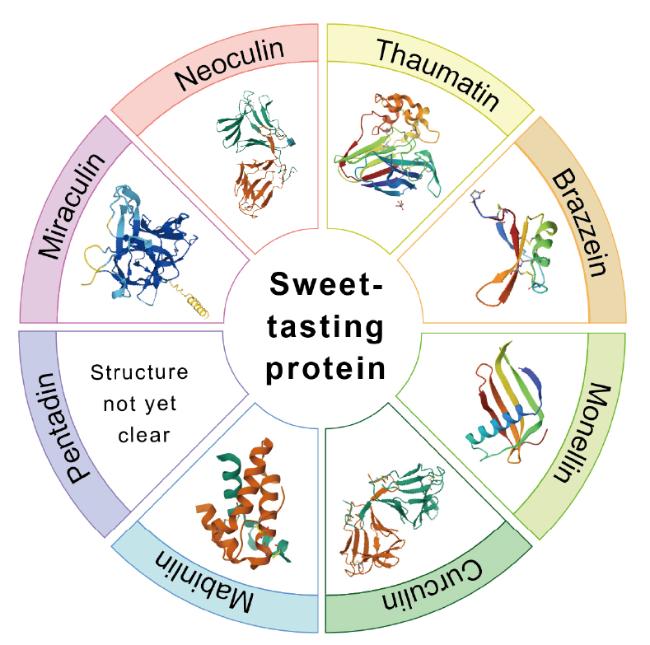
The interaction between sweet proteins and sweet taste receptors is a key step in the mechanism of sweet taste perception. In recent years, with the rapid advancement of structural biology and molecular biology, the structures of various sweet proteins have been resolved, providing valuable structural information for elucidating the interaction mechanisms between sweet proteins and sweet taste receptors. Currently, the structures of several sweet proteins have been partially resolved, including Thaumatin (PDB ID: 1LR2, PDB ID: 3AOK)[31-32],Brazzein (PDB ID: 2BRZ)[33],Monellin (PDB ID: 1MOL)[34],Curculin (PDB ID: 2DPF)[10],Mabinlin (PDB ID: 2DS2)[11],Miraculin (UniProt ID: P13087) and Neoculin (PDB ID: 2D04) (Figure 2)[35].
图2 7种甜味蛋白的结构

Fig. 2 Structure of seven sweet-tasting proteins

Currently, Thaumatin, Monellin, and Brazzein are the three major research subjects. Although they each have unique molecular structures with no direct similarities, and none of them achieve their taste activity through the "sweet finger" mechanism like Neoculin[35-37], enthusiasm for elucidating their interaction mechanisms with sweet taste receptor proteins has never waned[38].To further explore the interactions between sweet proteins and sweet taste receptors, scientists have proposed various theoretical models. Among these, the so-called "wedge model" is considered the most plausible in revealing the potential interactions between sweet proteins and sweet taste receptors[39-40]. This model was derived from computer docking studies based on a T1R2/T1R3 receptor model constructed using the mGlu receptor template. It reveals a common interaction mechanism: a relatively large area of positive charge density on the surface of sweet proteins binds to complementary charged patches on the receptor, thereby stabilizing the active conformation of the receptor[41-42].Further research has provided strong experimental support for the wedge model. For instance, mutation studies on Monellin single-chain derivatives MNEI and Brazzein have shown that sweeter mutants often correlate with increased positive charges[43-44].
The taste mechanism of sweet proteins is also closely related to specific chemical groups, such as disulfide bonds and sulfhydryl groups. Studies by Iyengar et al.[45]have shown that the loss of disulfide bonds in Thaumatin results in a loss of its sweetness. Similarly, disruption of the four disulfide bonds in Brazzein also leads to a disappearance of sweetness, further confirming the importance of disulfide bonds in maintaining the stability and sweetness of sweet proteins. In addition, disulfide bonds are considered a key factor in ensuring protein stability under high-temperature and acidic/alkaline conditions[46]. Cagan et al.[47]found that altering the sulfhydryl groups in Monellin can disrupt its 3D structure, resulting in a loss of sweetness, indicating that sulfhydryl groups also play an indispensable role in maintaining the spatial conformation and sweetness characteristics of sweet proteins.
In addition to chemical groups, the local conformation and flexibility of sweet proteins also play a crucial role in enhancing sweetness. The flexible conformations of side chains near key residues in sweet proteins such as thaumatin are considered one of the factors that enhance sweetness. For example, the side chains of residues 67 and 82 in Thaumatin Ⅱ exhibit high flexibility, and these flexible conformations are thought to be conducive to inducing sweetness. Furthermore, in the super-sweet mutant D21N of Thaumatin Ⅰ, the relative B-factor of the side chain at position 21 is higher than that of the wild type, and an alternative conformation of Lys19 is observed only in the mutant, further indicating that the flexible conformations near positions 19 and 21 play an important role in enhancing sweetness[48]. On the other hand, the Brazzein mutant D40K increases protein flexibility by eliminating the hydrogen bond between the side chains of residues Gln46 and Asp40 in the wild type, thereby increasing the sweetness intensity to three times that of the wild type[49]. However, when two residues are inserted between positions 18 and 19, the resulting mutant ins18RI19loses its sweetness. This may be due to the Arg-Ile insertion within Loop9~19, which causes distortion of this loop, leading to rigidity and loss of flexibility at adjacent sites, thus affecting sweetness generation[49].
For certain sweetness-modifying proteins that produce sweetness only under acidic conditions, such as miraculin and neoculin, histidine plays an important role in taste-modifying activity[50]. When alanine at positions 30 and 60 in miraculin is replaced by histidine, its ability to modulate pH-induced sweetness is lost[51]. Moreover, when all five histidine residues in neoculin variants are substituted with alanine, strong sweetness is produced at both neutral and acidic pH levels, but taste-modulating activity is completely absent[52]. Further studies have revealed that His11 in the basic subunit of neoculin (Neoculin basic subunit, NBS) is the primary pH sensor responsible for inducing taste alterations. Additionally, position 11 of NBS requires aromatic amino acids (such as Phe and Tyr) to trigger pH-dependent activity[52]. These findings highlight the critical role of histidine in acid-sweet taste conversion and taste modulation.

3 Customized optimization and production strategies

Although sweet proteins have attracted considerable attention as a novel sweetener due to their low-calorie and high-sweetness characteristics, optimizing their production efficiency, sweetness properties, and stability still presents numerous challenges. In the context of today's rapidly advancing synthetic biology technologies, customized optimization and biomanufacturing strategies have become key approaches to enhancing the production efficiency and quality of sweet proteins. Through precise protein design modifications, host selection, expression and secretion optimization, and precise control of fermentation processes, we can not only improve the properties and biosynthetic pathways of sweet proteins but also provide strong technical support and innovative ideas for their industrial-scale production (Table 1).
表1 甜味蛋白异源生产策略和产量比较

Table 1 Heterologous production strategies and yield comparison of sweet-tasting proteins

Sweet-tasting protein Host Carbon source Strategies Yield Ref
Thaumatin Aspergillus awamori Glucose and sucrose Expression with strong fungal promoters and high gene dosage 14 mg/L 75
Thaumatin Aspergillus awamori Sucrose and dextrin Six copies of protein disulfide isomerase 150 mg/L 77
Thaumatin Ⅰ Pichia pastoris Glycerol; Methanol A co-expression strategy with the molecular chaperone,PDI 50.7 mg/L 100
Thaumatin Ⅰ Pichia pastoris Glycerol; Methanol Three copies of gene 100 mg/L 83
Thaumatin Ⅱ Pichia pastoris Glycerol; Methanol Optimal culture conditions 62.79 mg/L 95
Thaumatin Ⅱ Pichia pastoris Glycerol; Methanol Optimal culture medium selection and supplementation 68.60 mg/L 94
Thaumatin Ⅱ Escherichia coli Tryptone and yeast extract Refolding using a reduced/oxidized glutathione system 40 mg/L 69
Brazzein Escherichia coli Tryptone and yeast extract Lower induction temperature (30°C) 15.3 mg/L 70
Brazzein Bacillus licheniformis Tryptone and soybean peptone The Sec type signal peptide SPSAC guided the secretion expression 57 mg/L 70
Brazzein Pichia pastoris Glycerol; Methanol Expression using AOX1 promotor,secretion using α-factor secretion signal 90 mg/L 63
Brazzein Pichia pastoris Glycerol; Methanol Efficient secretion lysozyme using signal peptide 345 mg/L 84
Brazzein Kluyveromyces lactis Glucose; Galactose Codons optimal,expression using pKLAC2 and secretion using yeast prepropeptide secretion signal 135 mg/L 93
Brazzein Kluyveromyces lactis Glycerol; Glucose and galactose Defined medium and optimized culture conditions 107 mg/L 87
Brazzein Lactococcus lactis Glucose L. lactis NZ9000 harbouring plasmid pNZ8148 1.65 mg/L 72
Monellin Pichia pastoris Glucose GAPDH constitutive promoter and modified N-terminus 0.15 g/L 107
Monellin Pichia pastoris Glycerol; Methanol Initiating induction at lower cells concentration and 30 ℃ 2.71 g/L 86
Monellin Pichia pastoris Glycerol; Methanol and sorbitol Fed-batch fermentation through an efficient on-line methanol/sorbitol co-feeding strategy 2.45 g/L 85
Monellin Saccharomyces cerevisiae Sucrose; Galactose Multi-copy-number integration and feed batch fermentation 675 mg/L 101
Monellin derivative (MNEI) Lactococcus lactis Lactose in cheese whey L. lactis NZ9000 harbouring plasmid pNZ8148-MNEI-ll grow on the ac-CW-based medium 0.49 mg/L 73
Mabinlin Ⅱ Escherichia coli Tryptone and yeast extract The inclusion body proteins were denatured and refolded 59.1 mg/L 71
Mabinlin Ⅱ Lactococcus lactis Glucose Optimization of inducible expression conditions 2.72 mg/L 71
Miraculin Escherichia coli Tryptone and yeast extract Improved solubilization of recombinant miraculin by the addition of arginine 0.48 mg/L 74
Neoculin Aspergillus oryzae Dextrin Constitutive induction of the unfolded protein response 2 mg/L 78

3.1 Precision Design and Modification of Proteins

Precision design and modification of sweet proteins represent an important approach for enhancing their performance. By employing synthetic biology, protein engineering, and integrating computer simulations or AI-assisted design, sweet proteins can be modified and optimized to improve their sweetness, stability, and reduce production costs, making this a key research direction for the future.
In terms of sweetness improvement, the strategy is mainly based on the "wedge model" theory, aiming to optimize the interaction between sweet proteins and taste receptors by eliminating negatively charged residues or increasing positively charged residues, thereby enhancing the sweetness intensity of sweet proteins[53-54]. Masuda et al.[55]performed site-directed mutagenesis on Thaumatin, targeting the Asp21 site and replacing the negatively charged D with N, resulting in the super-sweet mutant D21N with a sweetness enhancement of approximately 1.65 times. Meanwhile, Esposito et al.[56]modified single-chain Monellin by substituting the neutral residue Y with the basic residue R, increasing its sweetness to 1.67 times that of the original protein. The Thaumatin mutant D21N and the single-chain Monellin mutant Y65R are currently the two sweetest known proteins. This charge-modulation strategy has also been further validated in the modification of Brazzein. Lee et al.[44]successfully obtained Brazzein mutants with significantly enhanced sweetness by employing strategies that either reduced negative charges or increased positive charges. In particular, the double mutant H31R/E36D, which increased positive charges, exhibited a sweetness approximately 2.5 times greater than that of the double mutant E36D/E41A, which reduced negative charges, demonstrating that enhancing positive charges is more effective than reducing negative charges, thus providing valuable insights for further optimization of sweet protein sweetness.
Sweet-tasting proteins often face the issue of insufficient thermal stability during heating and storage, which limits their application in food products. The complex three-dimensional structure and specific amino acid sequences of sweet-tasting proteins are crucial for their thermal stability and sweetness activity. For example, Brazzein contains four intramolecular disulfide bonds, and hydrogen-deuterium exchange coupled with mass spectrometry analysis has shown that the Cys16-Cys37 disulfide bond among the four plays an important role in the protein's thermal stability and sweetness activity[57]. Traditional methods based on random mutagenesis to enhance protein thermal stability are not only costly but also inefficient, often making it difficult to precisely identify amino acid sites that substantially contribute to stability[58]. In recent years, computational simulation methods, characterized by relatively high accuracy and lower costs for high-throughput screening, have gained increasing attention for improving protein stability. Tang et al.[59]performed saturation mutagenesis on four sweet-tasting proteins—Brazzein, Curculin, Monellin, and Thaumatin—and combined this with FoldX algorithm-based predictive analysis of thermal stability, concluding that mutating negatively charged residues into other non-negatively charged amino acids is an effective approach to enhancing the thermal stability of sweet-tasting proteins. Liu et al.[60]focused on single-chain Monellin, also employing a saturation mutagenesis strategy and utilizing PyRosetta for predictive screening of mutants with high thermal stability. Ultimately, experimental validation identified four mutants whose thermal stability was improved by at least 20℃, demonstrating outstanding stability in alkaline, acidic, and neutral environments.
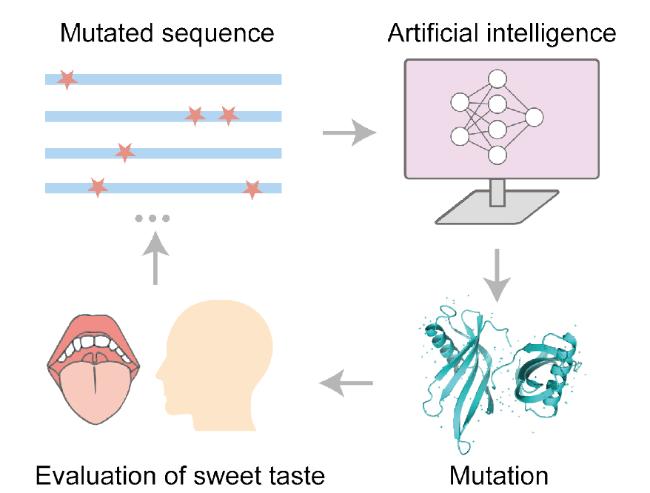
With the rapid development of artificial intelligence technology, it is expected that in the future, algorithms such as deep learning and machine learning will enable the precise design of mutants, leading to the development of more sweet proteins with high sweetness and thermal stability (Figure 3). Chua et al.[61]used protein language models to design novel Brazzein homologs with improved thermal stability and potentially higher sweetness. Amai Proteins has already developed sweelin, a sweet protein that remains stable after treatment at 110 ℃ for 10 minutes, through Pro-Design AI-CPD (computational protein design), Pro-Planet microbial precision fermentation, and Pro-Taste food technology. Meanwhile, Shiru, an AI-driven protein manufacturer, is collaborating with Ajinomoto to leverage the Flourish AI platform for designing and producing highly stable sweet proteins. However, there are still some challenges and obstacles regarding market approval. As a novel food additive, these proteins require rigorous safety assessments, including toxicological testing and allergenicity evaluations, a process that can be quite time-consuming.
图3 甜味蛋白的设计与改造策略

Fig. 3 Design and modification strategies of sweet-tasting proteins

3.2 Host Cell Preference Strategy

Currently, various biological systems have been developed for the heterologous expression of proteins, including bacteria[8,62],yeast[63],mammals[64],and plants[65-66].Among these, microbial systems, particularly bacteria and yeast, stand out due to their rapid growth, ease of cultivation, simple genetic manipulation, and well-defined genetic backgrounds, making them ideal choices for the heterologous expression of sweet proteins.

3.2.1 Bacteria

In bacterial systems, Escherichia coli (Escherichia coli, E. coli) is the most commonly used expression host[67-68]. However, E. coli faces significant challenges in producing proteins with disulfide bonds and complex folding structures, especially sweet proteins. E. coli lacks post-translational modification systems such as glycosylation, which prevents it from producing modified proteins. Moreover, the expressed sweet proteins typically exist as insoluble inclusion bodies, resulting in a loss of sweetening activity[69-70]. Additionally, during high-cell-density cultivation of E. coli, large amounts of acetic acid, which is toxic to cells, are produced. This not only inhibits cell growth and protein expression but also increases the difficulty and cost of subsequent purification[68]. To overcome these limitations, researchers have developed a series of optimization strategies. Among them, reducing the induction temperature has been proven effective in significantly increasing the expression level of soluble Brazzein protein; lowering the induction temperature from 37℃ to 30℃ can increase the soluble protein yield by approximately 4.37-fold[70]. Furthermore, the reduced/oxidized glutathione system can be utilized to refold Thaumatin Ⅱ protein from inclusion bodies[69].
In addition to Escherichia coli, other bacteria also have their own characteristics and limitations in protein expression. There is relatively little research on the production of sweet proteins by Lactococcus lactis (Lactococcus lactis, L. lactis). Currently, only three sweet proteins—Brazzein, Monellin derivatives (MNEI), and Mabinlin Ⅱ—have been heterologously expressed in this organism, but at very low levels[71-73]. With further research and development of genetic manipulation tools for Lactococcus lactis, it may be possible to enhance the expression levels of sweet proteins through strain modification and optimization of fermentation conditions. Bacillus subtilis (Bacillus subtilis) faces limitations in protein secretion when producing proteins containing disulfide bonds. Recently, Bacillus licheniformis (Bacillus licheniformis) has emerged as a novel host for extracellular heterologous protein expression, offering advantages such as strong secretion capacity, rapid growth, and cost-effectiveness[74]; however, its application in the expression of sweet proteins still requires further exploration.

3.2.2 fungi

Currently, numerous studies have utilized molds such as Aspergillus awamori (Aspergillus awamori, A. awamori) and Aspergillus niger (Aspergillus niger) for bioproduction[75-78]. However, due to the complex growth of molds, species such as yeast have greater advantages in heterologous protein expression.
Saccharomyces cerevisiae (Saccharomyces cerevisiae, S. cerevisiae) is a widely used eukaryotic expression system capable of efficiently performing post-translational modifications of proteins, which is crucial for the production of sweet-tasting proteins with complex structures[79-80]. However, S. cerevisiae is difficult to culture at high densities, has low secretion efficiency, and cannot properly glycosylate expressed exogenous proteins. Additionally, the C-terminus of the expressed proteins is often truncated, limiting its application in the production of sweet-tasting proteins[81].
In contrast, Pichia pastoris (P. pastoris) demonstrates significant advantages in the field of heterologous expression of sweet proteins. P. pastoris not only possesses a rich repertoire of inducible and constitutive promoters, providing more options for regulating gene expression levels and optimizing production processes[82], but also allows cultivation at high cell densities, significantly enhancing production efficiency. Moreover, P. pastoris exhibits excellent post-translational modification capabilities, enabling it to correctly perform complex processes such as protein folding, disulfide bond formation, and glycosylation, which are crucial for maintaining the sweetness activity and stability of sweet proteins. P. pastoris also shows efficient secretion characteristics for foreign proteins, facilitating easy separation and purification of the product. Currently, Thaumatin[83], Brazzein[84], and Monellin[85-86] have been efficiently expressed and produced in P. pastoris, with Monellin achieving a maximum expression titer of up to 2.45 g/L, fully demonstrating the potential of P. pastoris in sweet protein production[85]. However, P. pastoris poses certain safety concerns in food applications, primarily due to the potential toxicity associated with the use of methanol in its induction expression system.
Other non-traditional yeasts, such as Kluyveromyces lactis (Kluyveromyces lactis, K. lactis)[87], Yarrowia lipolytica (Yarrowia lipolytica, Y. lipolytica)[88], Hansenula polymorpha (Hansenula polymorpha, H. polymorpha)[89], and Candida boidinii (Candida boidinii, C. boidinii)[90], may also be potential candidates for the efficient production of sweet proteins[91]. For example, K. lactis has already achieved expression of Thaumatin Ⅱ and Brazzein; although the secretion efficiency of Thaumatin Ⅱ is relatively low, Brazzein can be expressed in soluble form, with a yield reaching up to 135 mg/L[92-93]. H. polymorpha, on the other hand, has been widely used for the production of commercially available proteins. The research and development of these non-traditional yeasts provide more options and possibilities for the heterologous expression of sweet proteins.

3.3 Optimize expression and secretion strategies

P. pastorisis currently the most mature sweet protein expression system. Its powerful expression and secretion capabilities make it the preferred platform for heterologous protein production. The heterologous expression and synthesis strategies for sweet proteins discussed in this section primarily focus on P. pastoris.

3.3.1 Development of Efficient Gene Integration Tools

Free plasmids cannot stably exist in the P. pastoris system and are easily lost; therefore, stable integration and efficient expression of exogenous genes are crucial for achieving industrial-scale production. Currently, the integration of sweet protein genes largely relies on homologous recombination between linearized vectors and the genome, including pPICZαA[85],pPICZαB[94-95],pPIC6αA[83],pPIC9[63], andpPpT4_Alpha_S[84], among others. However, this method is often inefficient. Moreover, when faced with DNA double-strand breaks, cells typically prefer non-homologous end joining as the repair pathway. To enhance the frequency of homologous recombination, it is necessary to knock out the homologous proteins KU70 or KU80 involved in non-homologous end joining[96].
To improve gene editing efficiency, a CRISPR-Cas9 system targeting P. pastoris has been developed. By overexpressing the key gene PpRAD52 involved in homologous recombination repair, knockout efficiency can be increased by more than 54-fold[97]. Furthermore, combining this with the knockout of the helicase gene MPH1 can enhance the ability to simultaneously assemble multiple fragments by 13.5-fold, enabling the concurrent integration of multiple gene cassettes into the genome[97-98], thereby further improving the flexibility and efficiency of gene integration. Cai et al.[97] identified 46 genomic integration sites for stable gene expression, providing valuable resources for precise and efficient gene integration.

3.3.2 Efficient Expression Strategies for Sweet Proteins

Gene copy number and codon preference significantly affect the expression efficiency of foreign genes. A high copy number seems to favor strong gene expression, but there is not always a direct linear correlation between gene copy number and protein yield, especially in the case of secreted production of recombinant proteins[99]. Masuda et al.[83]successfully achieved high-level production of Thaumatin Ⅰ, reaching a yield of 100 mg/L, by utilizing three copies of the Thaumatin Ⅰ gene. Optimizing the use of synonymous codons to better match the host organism's codon usage can enhance the translation efficiency of heterologous genes. Codon optimization has become a standardized tool for improving heterologous gene expression. In studies on the heterologous expression of Thaumatin, Brazzein, and Monellin, most have adopted codon optimization strategies[87,100-101].
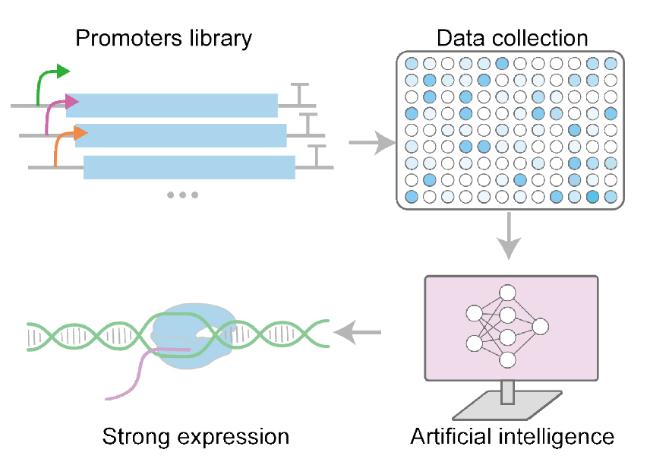
Efficient transcription is a key stage in gene expression regulation. Robust and regulated promoters are indispensable tools for enhancing protein synthesis levels[102]. In P. pastoris, the methanol-inducible Alcohol oxidase 1 (AOX1) promoter is widely used due to its strong and tightly regulated characteristics. The AOX1 promoter plays an important role in driving the high-level expression of sweet proteins such as Thaumatin[83], Brazzein[84], and Monellin[85]. However, the use of toxic and flammable methanol poses potential threats to food safety and industrial production safety. Therefore, identifying safer and more efficient promoters is crucial for the high-efficiency expression of sweet proteins. Through engineering approaches such as random mutagenesis, the Glyceraldehyde 3-phosphate dehydrogenase (GAP) promoter has been successfully modified, resulting in a promoter with stringent transcriptional regulatory capabilities[103]. Computer-aided design and artificial intelligence technologies have injected new vitality into the rapid development of promoter engineering and have already been applied in Escherichia coli and Saccharomyces cerevisiae (Figure 4). For example, Kotopka et al.[104] developed a Convolutional neural networks (CNNs) model to predict promoter activity in yeast promoter libraries. The introduction of these methods provides strong support for achieving efficient transcription of sweet protein genes in P. pastoris, and also lays a solid foundation for the future development of more high-performance and safer promoters.
图4 基于计算机辅助及人工智能的启动子工程

Fig. 4 Promoter engineering based on computer-assisted and artificial intelligence

3.3.3 Post-translational modification and secretion

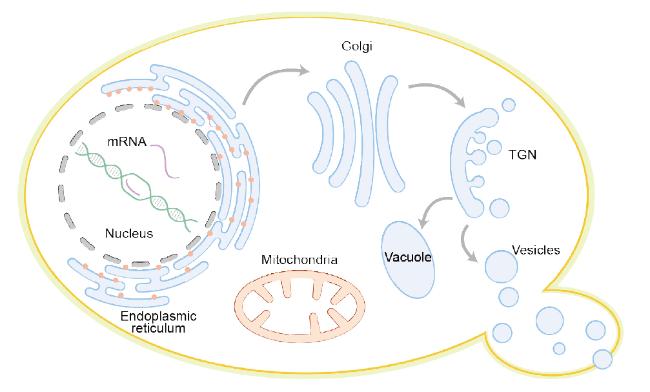
P. pastorisIts robust secretion capability is crucial for enhancing the expression of sweet-tasting proteins and simplifying the separation and purification process. After transcription and translation, the polypeptide is translocated into the endoplasmic reticulum. Molecular chaperones assist in protein folding and modification, such as disulfide bond formation and the addition of central glycan chains, ensuring proper structure and stability. Subsequently, the protein precursor is transported via membrane vesicles to the Golgi apparatus, where further processing and modifications, such as glycan chain elongation, occur. Finally, the mature and active protein is exported from the cell or transported to the cell surface via membrane vesicles (Figure 5) [105]. However, protein secretion may be hindered by low secretion efficiency, abnormal post-translational modifications, or retention in a cell-associated form within the secretory pathway or cell wall space. Therefore, modifying the protein secretion pathway is essential for improving the yield and activity of sweet-tasting proteins.
图5 毕赤酵母蛋白分泌示意图

Fig. 5 Diagram of protein secretion in Pichia pastoris

Secretory proteins enter the endoplasmic reticulum lumen via co-translational or post-translational translocation, which marks the beginning of the secretory pathway. In co-translational translocation, the signal peptide of the newly synthesized protein is recognized by the signal recognition particle as it emerges from the ribosome during translation, and is then directed to the endoplasmic reticulum membrane, initiating the protein translocation process[106]. Therefore, the efficiency of the signal peptide is one of the key factors determining the final yield of secretory proteins. To enhance the secretion efficiency of heterologous proteins, the pre-pro leader sequence of the α-mating factor protein from Saccharomyces cerevisiae is often used as a signal sequence for heterologous proteins, and has already been applied in the biomanufacturing of Thaumatin, Brazzein, and Monellin[63,83,107]. Studies have shown that a pre-pro leader sequence with N-linked glycosylation sites removed can enhance secretion more effectively than the original sequence[108]. Neiers et al.[84]compared the effects of seven different signal peptides on the efficient secretion of Brazzein in P. pastoris, ultimately achieving a yield of 345 mg/L using the lysozyme signal peptide derived from the red junglefowl (Gallus gallus).
In the endoplasmic reticulum, proper protein folding is crucial for proteins to enter the secretory pathway[109]. Misfolding of nascent peptides or an overload of secretory proteins increases the luminal burden, leading to endoplasmic reticulum stress and subsequently activating the unfolded protein response[110]. Overexpression of protein folding factors (molecular chaperones) and enzymes can enhance the secretion capacity of target proteins. For sweet-tasting proteins containing multiple disulfide bonds, such as Thaumatin and Brazzein, disulfide bond formation is a critical rate-limiting step in the secretion process. Protein disulfide isomerase (PDI), as a key enzyme involved in disulfide bond formation, plays an important role in the correct folding of sweet-tasting proteins and reducing their insoluble expression. By overexpressing the molecular chaperone PDI, the yield of Thaumatin I can be increased by more than two-fold[100].

3.4 Precise Control and Optimization of Fermentation Processes

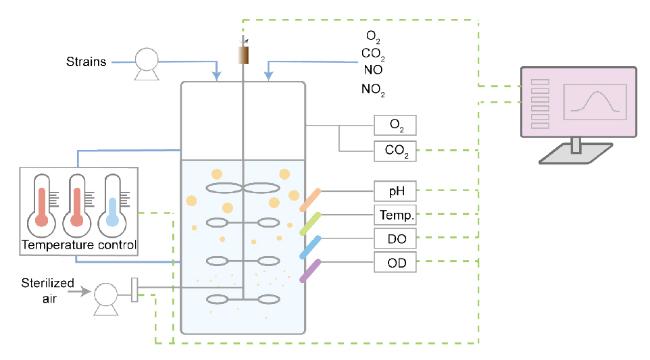
P. pastorishigh-cell-density fermentation essentially comprises two stages: the cell growth phase, where high-cell-density cultivation is achieved by using glycerol as a carbon source; and the continuous methanol induction phase, during which fed-batch methanol is used to initiate recombinant protein expression. Fermentation optimization is an important approach to enhance the production efficiency of sweet proteins and reduce costs. By adjusting key parameters during the fermentation process, it is possible to significantly influence microbial growth rates, metabolic pathways, and product accumulation. For example, Joseph et al.[95]achieved a Thaumatin Ⅱ yield of 62.79 mg/L in P. pastorisin 2022 by optimizing culture temperature and pH; in 2023, by adding vitamins to the BMGY medium, the Thaumatin Ⅱ yield was further increased to 68.60 mg/L[94]. Real-time monitoring and automated control systems play a crucial role in precisely controlling the fermentation process and enhancing protein expression levels (Figure 6). Jia et al.[85]proposed an online co-feeding strategy of methanol/sorbitol, which, by maintaining adequate DO levels, reduced the methanol metabolic flux toward the methanol dissimilation pathway, ultimately achieving a maximum Monellin titer of 2.45 g/L. Moreover, the development of artificial intelligence has provided new solutions for precision fermentation. Pow.Bio, a U.S.-based company specializing in intelligent continuous fermentation technology, has developed an AI-driven continuous fermentation platform that integrates SOFe, an AI-controlled automated fermentation software, with innovative hardware systems, enabling a 5- to 10-fold increase in raw material productivity.
图6 蛋白质精准发酵示意图

Fig. 6 Diagram of protein precision fermentation

4 Conclusion and Outlook

This article systematically reviews the basic properties, taste-mimicking mechanisms, and structure-function relationships of sweet proteins, providing a theoretical foundation for the customized optimization and production of sweet proteins. Customized optimization and production strategies for sweet proteins based on synthetic biology—including precise design and modification of sweet proteins, enhancement of protein expression and secretion efficiency, and optimization of fermentation conditions—have achieved preliminary expression and production of sweet proteins to some extent. However, there is still considerable room for improvement before commercial application can be realized.
With continuous advancements in synthetic biology, protein engineering, computer simulation, and artificial intelligence, unprecedented opportunities will emerge for the research and development of sweet proteins. By leveraging high-throughput screening, computer-aided design, and AI technologies, we can discover more sweet proteins with superior properties and enhance their sweetness and stability through precise modifications. Furthermore, by optimizing protein expression and secretion capabilities as well as fermentation processes, we can increase the yield of sweet proteins and reduce costs, thereby meeting the demands of large-scale industrial production.
It is worth noting that the sweet-tasting proteins, which have been engineered and produced through heterologous expression, still face a series of regulatory approval issues before they can be marketed, including but not limited to safety assessments, functional validation, market authorization, and intellectual property protection. Researchers and manufacturers need to closely monitor relevant regulatory changes and enhance communication and collaboration with regulatory agencies to ensure the compliance and market competitiveness of sweet-tasting protein products.
In conclusion, the research and production of sweet proteins represent a field full of challenges and opportunities. With continuous technological advancements and gradually improving regulations, sweet proteins will play an increasingly important role in the food industry, offering consumers healthier, safer, and more efficient sweetener options.
[1]
Magnuson B A, Carakostas M C, Moore N H, Poulos S P, Renwick A G. Nutr. Rev., 2016, 74(11): 670.

[2]
Riboli E, Beland F A, Lachenmeier D W, Marques M M, Phillips D H, Schernhammer E, Afghan A, Assuno R, Caderni G, Corton J C. Lancet Oncol., 2023, 24(8): 848.

[3]
Swithers S E. Trends Endocrinol. Metab., 2013, 24(9): 431.

[4]
Sharififar F, Ashrafzadeh A, Kavirimanesh Khanaman M. Int. J. Pept. Res. Ther., 2022, 28(6): 158.

[5]
Farag M A, Rezk M M, Hamdi Elashal M, El-Araby M, Khalifa S A M, El-Seedi H R. Food Res. Int., 2022, 162: 111853.

[6]
Carocho M, Morales P, Ferreira I C F R. Food Chem. Toxicol., 2017, 107: 302.

[7]
Van der Wel H. FEBS Lett., 1972, 21(1): 88.

[8]
Assadi-Porter F M, Aceti D J, Markley J L. Arch. Biochem. Biophys., 2000, 376(2): 259.

[9]
Kondo K, Miura Y, Sone H, Kobayashi K, Lijima H. Nat. Biotechnol., 1997, 15(5): 453.

[10]
Kurimoto E, Suzuki M, Amemiya E, Yamaguchi Y, Nirasawa S, Shimba N, Xu N C, Kashiwagi T, Kawai M, Suzuki E I, Kato K. J. Biol. Chem., 2007, 282(46): 33252.

[11]
Li D F, Jiang P H, Zhu D Y, Hu Y L, Max M, Wang D C. J. Struct. Biol., 2008, 162(1): 50.

[12]
Van der Wel H, Larson G, Hladik A, Hladik C M, Hellekant G, Glaser D. Chem. Senses, 1989, 14(1): 75.

[13]
Misaka T. Semi. Cell Dev. Biol., 2013, 24(3): 222.

[14]
Shirasuka Y, Nakajima K, Asakura T, Yamashita H, Yamamoto A, Hata S, Nagata S, Abo M, Sorimachi H, Abe K. Biosci. Biotechnol. Biochem., 2004, 68(6): 1403.

[15]
Spaggiari G, Di Pizio A, Cozzini P. Trends Food Sci. Technol., 2020, 96: 21.

[16]
Barlow L A. Development, 2015, 142(21): 3620.

[17]
Zhao S L, Zheng H Y, Lu Y J, Zhang N, Soladoye O P, Zhang Y H, Fu Y. J. Agric. Food Chem., 2023, 71(38): 13950.

[18]
Jiao Y L, Wang Y. J. Food Bioact., 2018, 4: 107.

[19]
Kinnamon S C. Acta Physiol., 2012, 204(2): 158.

[20]
Fernstrom J D, Munger S D, Sclafani A, de Araujo I E, Roberts A, Molinary S. J. Nutr., 2012, 142(6): 1134S.

[21]
Picone D, Temussi P A. Plant Sci., 2012, 195: 135.

[22]
Nuemket N, Yasui N, Kusakabe Y, Nomura Y, Atsumi N, Akiyama S, Nango E, Kato Y, Kaneko M K, Takagi J, Hosotani M, Yamashita A. Nat. Commun., 2017, 8: 15530.

[23]
Ma D M, Hu M Q, Yang X T, Liu Q, Ye F, Cai W J, Wang Y, Xu X M, Chang S H, Wang R Y, Yang W, Ye S, Su N N, Fan M R, Xu H X, Guo J T. Science, 2024, 383(6685): eadj2609.

[24]
Gomes J V, Singh-Bhagania S, Cenci M, Chacon Cordon C, Singh M, Butterwick J A. Nature, 2024, 629(8010): 228.

[25]
Ahmad R, Dalziel J E. Front. Pharmacol., 2020, 11: 587664.

[26]
Behrens M, Meyerhof W. Physiol. Behav., 2011, 105(1): 4.

[27]
Kojima I, Nakagawa Y, Ohtsu Y, Medina A, Nagasawa M. Endocrinol. Metab., 2014, 29(1): 12.

[28]
Behrens M, Meyerhof W, Hellfritsch C, Hofmann T. Angew. Chem. Int. Ed., 2011, 50(10): 2220.

[29]
Laffitte A, Neiers F, Briand L. Curr. Opin. Clin. Nutr. Metab. Care, 2014, 17(4): 379.

[30]
Belloir C, Neiers F, Briand L. Curr. Opin. Clin. Nutr. Metab. Care, 2017, 20(4): 279.

[31]
Charron C, Robert M C, Capelle B, Kadri A, Jenner G, Giegé R, Lorber B. J. Cryst. Growth, 2002, 245(3/4): 321.

[32]
Masuda T, Ohta K, Tani F, Mikami B, Kitabatake N. Biochem. Biophys. Res. Commun., 2011, 410(3): 457.

[33]
Caldwell J E, Abildgaard F, Džakula Ž, Ming D, Hellekant G, Markley J L. Nat. Struct. Biol., 1998, 5(6): 427.

[34]
Somoza J R, Jiang F, Tong L, Kang C H, Cho J M, Kim S H. J. Mol. Biol., 1993, 234(2): 390.

[35]
Shimizu-Ibuka A, Morita Y, Terada T, Asakura T, Nakajima K I, Iwata S, Misaka T, Sorimachi H, Arai S, Abe K. J. Mol. Biol., 2006, 359(1): 148.

[36]
Tancredi T, Pastore A, Salvadori S, Esposito V, Temussi P A. Eur. J. Biochem., 2004, 271(11): 2231.

[37]
Shimizu-Ibuka A, Nakai Y J, Nakamori K, Morita Y, Nakajima K I, Kadota K, Watanabe H, Okubo S, Terada T, Asakura T, Misaka T, Abe K. J. Agric. Food Chem., 2008, 56(13): 5338.

[38]
Kashani-Amin E, Faraji H, Nouriyengejeh S, Ebrahim-Habibi A. Moscow Univ. Biol.Sci. Bull., 2021, 76(4): 175.

[39]
Morini G, Bassoli A, Temussi P A. J. Med. Chem., 2005, 48(17): 5520.

[40]
Temussi P A. Cell. Mol. Life Sci., 2006, 63(16): 1876.

[41]
Guex N, Peitsch M C. Electrophoresis, 1997, 18(15): 2714.

[42]
Peitsch M C. Biochem. Soc. Trans., 1996, 24(1): 274.

[43]
Xue W-F, Szczepankiewicz O, Thulin E, Linse S, Carey J. Biochim. Biophys. Acta BBA Proteins Proteom., 2009, 1794(3): 410.

[44]
Lee J W, Cha J E, Jo H J, Kong K H. Food Chem., 2013, 138(2/3): 1370.

[45]
Iyengar R B, Smits P, Van Der Ouderaa F, Van Der Wel H, Van Brouwershaven J, Ravestein P, Richters G, Van Wassenaar P D. Eur. J. Biochem., 1979, 96(1): 193.

[46]
Ming D, Hellekant G. FEBS Lett., 1994, 355(1): 106.

[47]
Cagan R H, Morris J A. Exp. Biol. Med., 1976, 152(4): 635.

[48]
Masuda T, Okubo K, Murata K, Mikami B, Sugahara M, Suzuki M, Temussi P A, Tani F. Biochimie, 2019, 157: 57.

[49]
Singarapu K K, Tonelli M, Markley J L, Assadi-Porter F M. Protein Sci., 2016, 25(3): 711.

[50]
Gibbs B F, Alli I, Mulligan C. Nutr. Res., 1996, 16(9): 1619.

[51]
Ito K, Asakura T, Morita Y, Nakajima K I, Koizumi A, Shimizu-Ibuka A, Masuda K, Ishiguro M, Terada T, Maruyama J I, Kitamoto K, Misaka T, Abe K. Biochem. Biophys. Res. Commun., 2007, 360(2): 407.

[52]
Nakajima K I, Yokoyama K, Koizumi T, Koizumi A, Asakura T, Terada T, Masuda K, Ito K, Shimizu-Ibuka A, Misaka T, Abe K. PLoS One, 2011, 6(4): e19448.

[53]
Masuda T, Kigo S, Mitsumoto M, Ohta K, Suzuki M, Mikami B, Kitabatake N, Tani F. Front. Mol. Biosci., 2018, 5: 10.

[54]
Ghanavatian P, Khalifeh K, Jafarian V. Biochimie, 2016, 131: 20.

[55]
Masuda T, Ohta K, Ojiro N, Murata K, Mikami B, Tani F, Temussi P A, Kitabatake N. Sci. Rep., 2016, 6: 20255.

[56]
Esposito V, Gallucci R, Picone D, Saviano G, Tancredi T, Temussi P A. J. Mol. Biol., 2006, 360(2): 448.

[57]
Zuo J N, Zheng W, Shi N, Song R, Han F, Yang C, Li J W, Peng C, Li B, Chen Y J. J. Agric. Food Chem., 2024, 72(13): 7374.

[58]
Song X D, Yi Y T, Liu L, He M J, Deng S W, Tian H, Yao W B, Gao X D. Process. Biochem., 2020, 89: 29.

[59]
Tang N, Liu J C, Cheng Y Q. Food Chem., 2021, 345: 128750.

[60]
Liu Y M, Xu J Y, Ma M X, You T J, Ye S, Liu S. Food Chem., 2024, 440: 138279.

[61]
Nicholas Chua B, Guo W M, Teng Wong H, Siak-Wei Ow D, Leng Ho P, Koh W, Koay A, Tian Wong F. Food Chem., 2023, 426: 136580.

[62]
Berlec A, Tompa G, Slapar N, Fonović U P, Rogelj I, Štrukelj B. Lett. Appl. Microbiol., 2008, 46(2): 227.

[63]
Poirier N, Roudnitzky N, Brockhoff A, Belloir C, Maison M, Thomas-Danguin T, Meyerhof W, Briand L. J. Agric. Food Chem., 2012, 60(39): 9807.

[64]
Yan S, Song H, Pang D X, Zou Q J, Li L, Yan Q M, Fan N N, Zhao X J, Yu H, Li Z J, Wang H J, Gao F, Ouyang H S, Lai L X. PLoS One, 2013, 8(10): e76769.

[65]
Firsov A, Shaloiko L, Kozlov O, Vinokurov L, Vainstein A, Dolgov S. Protein Expr. Purif., 2016, 123: 1.

[66]
Lamphear B J, Barker D K, Brooks C A, Delaney D E, Lane J R, Beifuss K, Love R, Thompson K, Mayor J, Clough R, Harkey R, Poage M, Drees C, Horn M E, Streatfield S J, Nikolov Z, Woodard S L, Hood E E, Jilka J M, Howard J A. Plant Biotechnol. J., 2005, 3(1): 103.

[67]
Lozano Terol G, Gallego-Jara J, Sola Martínez R A, Martínez Vivancos A, Cánovas Díaz M, de Diego Puente TFront. Microbiol., 2021, 12: 682001.

[68]
Jiang R Z, Yuan S T, Zhou Y L, Wei Y W, Li F L, Wang M M, Chen B, Yu H M. Biotechnol. Adv., 2024, 75: 108417.

[69]
Daniell S, Mellits K H, Faus I, Connerton I. Food Chem., 2000, 71(1): 105.

[70]
Hung C Y, Cheng lee-hao, Yeh C M. Food Biotechnol., 2019, 33(3): 251.

[71]
Gu W L, Xia Q Y, Yao J, Fu S P, Guo J C, Hu X W. World J. Microbiol. Biotechnol., 2015, 31(4): 557.

[72]
Berlec A, Trukelj B. Lett. Appl. Microbiol., 2009, 48(6): 750.

[73]
Boumaiza M, Colarusso A, Parrilli E, Garcia-Fruitós E, Casillo A, Arís A, Corsaro M M, Picone D, Leone S, Tutino M L. Microb. Cell Fact., 2018, 17: 126.

[74]
Muras A, Romero M, Mayer C, Otero A. Crit. Rev. Biotechnol., 2021, 41(4): 609.

[75]
Moralejo F J, Cardoza R E, Gutierrez S, Martin J F. Appl. Environ. Microbiol., 1999, 65(3): 1168.

[76]
Li K, Zheng J W, Yu L Y, Wang B, Pan L. J. Fungi, 2023, 9(5): 528.

[77]
Moralejo F, Watson A, Jeenes D, Archer D, Martín J. Mol. Genet. Genom., 2001, 266(2): 246.

[78]
Nakajima K I, Asakura T, Maruyama J I, Morita Y, Oike H, Shimizu-Ibuka A, Misaka T, Sorimachi H, Arai S, Kitamoto K, Abe K. Appl. Environ. Microbiol., 2006, 72(5): 3716.

[79]
Tyo K E J, Liu Z H, Magnusson Y, Petranovic D, Nielsen J. Appl. Microbiol. Biotechnol., 2014, 98(16): 7149.

[80]
Tang H T, Bao X M, Shen Y, Song M H, Wang S H, Wang C Q, Hou J. Biotechnol. Bioeng., 2015, 112(9): 1872.

[81]
De Pourcq K, De Schutter K, Callewaert N. Appl. Microbiol. Biotechnol., 2010, 87(5): 1617.

[82]
Yang Z L, Zhang Z S. Biotechnol. Adv., 2018, 36(1): 182.

[83]
Masuda T, Ide N, Ohta K, Kitabatake N. Food Sci. Technol. Res., 2010, 16(6): 585.

[84]
Neiers F, Belloir C, Poirier N, Naumer C, Krohn M, Briand L. Life, 2021, 11(1): 46.

[85]
Jia L Q, Li T, Yang Z Q, Li T Y, Ding J. J. Clean. Prod., 2022, 369: 133350.

[86]
Jia L Q, Tu T Y, Huai Q Q, Sun J W, Chen S S, Li X, Shi Z P, Ding J. PLoS One, 2017, 12(10): e0184602.

[87]
Park S W, Kang B H, Lee H M, Lee S J, Kim H S, Choi H W, Park T J, Kong K H. Bioprocess Biosyst. Eng., 2021, 44(4): 913.

[88]
Madzak C. Appl. Microbiol. Biotechnol., 2015, 99(11): 4559.

[89]
Manfrão-Netto J H C, Gomes A M V, Parachin N S. Front. Bioeng. Biotechnol., 2019, 7: 94.

[90]
Yurimoto H, Sakai Y. Biotechnol. Appl. Biochem., 2009, 53(2): 85.

[91]
De Brabander P, Uitterhaegen E, Delmulle T, De Winter K, Soetaert W. Biotechnol. Adv., 2023, 64: 108121.

[92]
Edens L, van der Wel H. Trends Biotechnol., 1985, 3(3): 61.

[93]
Jo H J, Noh J S, Kong K H. Protein Expr. Purif., 2013, 90(2): 84.

[94]
Joseph J A, Akkermans S, Cornillie E, Deberlanger J, Van Impe J F M. Food Bioprod. Process., 2023, 139: 190.

[95]
Joseph J A, Akkermans S, Van Impe J F M. Foods, 2022, 11(10): 1438.

[96]
Näätsaari L, Mistlberger B, Ruth C, Hajek T, Hartner F S, Glieder A. PLoS One, 2012, 7(6): e39720.

[97]
Cai P, Duan X P, Wu X Y, Gao L H, Ye M, Zhou Y J. Nucleic Acids Res., 2021, 49(13): 7791.

[98]
Liu Q, Shi X N, Song L L, Liu H F, Zhou X S, Wang Q Y, Zhang Y X, Cai M H. Microb. Cell Fact., 2019, 18: 144.

[99]
Aw R, Polizzi K M. Microb. Cell Fact., 2013, 12(1): 128.

[100]
Healey R D, Lebhar H, Hornung S, Thordarson P, Marquis C P. Food Chem., 2017, 237: 825.

[101]
Liu J, Yan D Z, Zhao S J. J. Sci. Food Agric., 2015, 95(13): 2646.

[102]
Portela R M C, Vogl T, Kniely C, Fischer J E, Oliveira R, Glieder A. ACS Synth. Biol., 2017, 6(3): 471.

[103]
Qin X L, Qian J C, Yao G F, Zhuang Y P, Zhang S L, Chu J. Appl. Environ. Microbiol., 2011, 77(11): 3600.

[104]
Kotopka B J, Smolke C D. Nat. Commun., 2020, 11: 2113.

[105]
Delic M, Valli M, Graf A B, Pfeffer M, Mattanovich D, Gasser B. FEMS Microbiol. Rev., 2013, 37(6): 872.

[106]
Berndt U, Oellerer S, Zhang Y, Johnson A E, Rospert S. Proc. Natl. Acad. Sci. U. S. A., 2009, 106(5): 1398.

[107]
Cai C G, Li L, Lu N, Zheng W W, Yang L, Liu B. Biotechnol. Lett., 2016, 38(11): 1941.

[108]
Kjeldsen T, Hach M, Balschmidt P, Havelund S, Pettersson A F, Markussen J. Protein Expr. Purif., 1998, 14(3): 309.

[109]
Klausner R D. The New Biologist, 1989, 1(1): 3.

[110]
Payne T, Hanfrey C, Bishop A L, Michael A J, Avery S V, Archer D B. FEBS Lett., 2008, 582(4): 503.

Outlines

/