Home Journals Progress in Chemistry
Progress in Chemistry

Abbreviation (ISO4): Prog Chem      Editor in chief: Jincai ZHAO

About  /  Aim & scope  /  Editorial board  /  Indexed  /  Contact  / 
Review

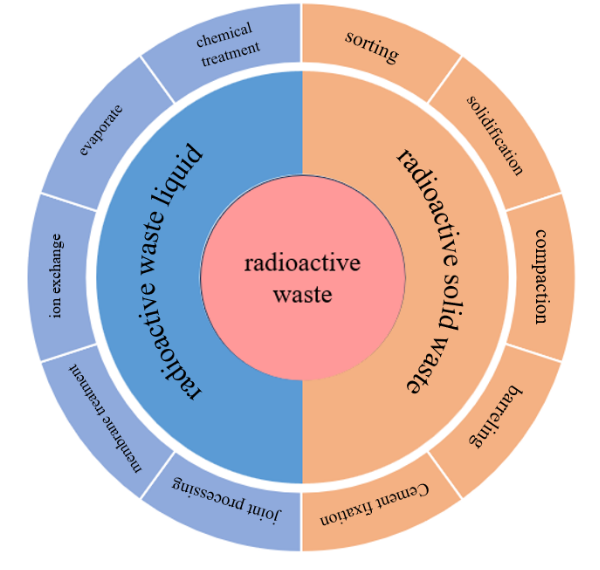
The Treatment and Disposal of Radioactive Liquid Waste and Solid Waste in Nuclear Power Plants

  • Yang Jingyuan 1, 2 ,
  • Yao Xiaoqi 1 ,
  • Ye Li 3 ,
  • Jin Hairui 3 ,
  • Wang Yi , 1, *
Expand
  • 1 Nuclear Environmental Engineering Technology Research Center, School of Environment, Tsinghua University,Beijing 100084,China
  • 2 Nuclear and Radiation Safety Center,Ministry of Ecology and Environment , Beijing 100082, China
  • 3 Sanmen Nuclear Power Co., Ltd, Taizhou 317100, China

Received date: 2025-01-26

  Revised date: 2025-03-31

  Online published: 2025-09-01

Abstract

The increasing proportion of nuclear energy in China’s energy resources has brought about a series of difficulties and challenges. Nuclear power plants generate a large amount of radioactive liquid and solid waste during operation, and how to effectively treat and dispose of them has become a research focus. For radioactive liquid waste, the current main treatment processes in China are ion exchange and barrel evaporation drying. In addition, chemical precipitation, membrane technology, and other emerging technologies are also the current research directions for combined treatment. For solid waste, radioactive ions are tightly bound to solid materials, making it difficult for decontamination and regulatory release. Currently, solidification and compression are used for disposal in China, especially for mixed waste resins, which have large output and high radiation dose, as well as water absorption and elasticity, the main method in China is to use hot state overpressure technology to improve the volume reduction ratio, and then package and dispose of it geologically.

Contents

1 Background

2 Treatment of radioactive liquid waste

2.1 Radioactive wastewater

2.2 Treatment methods of radioactive liquid waste

3 Disposal of radioactive solid waste

4 Summary

4.1 Treatment technologies for liquid waste

4.2 Disposal of solid waste

5 Prospect

5.1 Research directions for the treatment of radioactive liquid waste

5.2 Research directions for radioactive solid waste
Cite this article

Yang Jingyuan , Yao Xiaoqi , Ye Li , Jin Hairui , Wang Yi . The Treatment and Disposal of Radioactive Liquid Waste and Solid Waste in Nuclear Power Plants[J]. Progress in Chemistry, 2025 , 37(9) : 1373 -1383 . DOI: 10.7536/PC20250108

1 Introduction

Currently, China is a major global player in the development of nuclear energy and nuclear technology applications. As of the end of 2024, mainland China (excluding Taiwan Province) has 57 commercially operating nuclear power units and 30 under construction, with an installed capacity of 59.76 million kilowatts (rated capacity)[1]. The number of nuclear reactors under construction and planned ranks first in the world. Compared to thermal, hydro, wind, photovoltaic, tidal, and biomass power generation, nuclear power offers significant advantages in ecological protection, technological maturity, and national self-reliance and controllability, as well as competitive strengths in economic efficiency, grid stability, industrial chain support, and contributions to national defense technology. From January to December 2024, the nation's cumulative electricity generation totaled 9,418.34 billion kilowatt-hours, with thermal power accounting for 67.36%, hydropower for 13.53%, wind power for 9.94%, nuclear power for 4.73%, and solar and other sources for 4.44%[1]. In 2024, the cumulative electricity generated by nuclear power units reached 445.175 billion kilowatt-hours, an increase of 2.72% compared to the same period in 2023[1]. Compared to traditional coal-fired power generation, nuclear power generation has resulted in savings equivalent to 127.5283 million tons of standard coal, reduced CO2 emissions by 334.1241 million tons, SO2 emissions by 1.084 million tons, and nitrogen oxide emissions by 943,700 tons[1]. Under the broader context of profound adjustments in China's economic development model and increasing pressure on ecological and environmental protection, nuclear power is gradually gaining a favorable position in the energy structure adjustment and holds considerable potential for development in the energy transition.
Radioactive waste disposal is a long-term challenge for human society, ranking alongside nuclear accidents as one of the two major constraints on the safe development of nuclear energy, and thus receiving widespread attention from countries around the world. As China continues to develop a more comprehensive nuclear industry system, the generation of radioactive waste has steadily increased, and the unexpectedly large amounts of stored radioactive waste are increasingly posing significant safety, social, and environmental concerns. China's radioactive waste management follows the principle of categorized management, with producers taking responsibility, and requires that the amount of radioactive waste generated and released into the environment adhere to the ALARA (As Low As Reasonably Achievable) principle: high-level waste is disposed of centrally in deep geological repositories; intermediate-level waste is disposed of in medium-depth geological repositories; and low-level or very low-level waste is disposed of through near-surface or surface burial. Reducing the volume of radioactive waste not only helps power plants lower waste treatment and disposal costs and improve efficiency, but also contributes to protecting the health and environment of current and future generations, avoiding placing an excessive burden on future generations.
The volume of waste packages generated by nuclear power plants depends on their waste management policies, solid waste treatment processes, unit overhaul strategies, control values for liquid effluent discharge, and the level of plant management. According to data from "Minimization of Radioactive Waste from Nuclear Facilities—Nuclear Safety Guideline HAD 401/08-2016," representative annual waste package generation figures for pressurized water reactors in major nuclear-energy-using countries around the world are shown in Table 1.According to data from the report of the Seventh Review Meeting of the Joint Convention on the Safety of Spent Fuel Management and on the Safety of Radioactive Waste Management, as of December 31, 2019, the inventory and list of prepared radioactive waste at nuclear power plants are presented in Table 2.Differences in reactor types, gaps in management levels, and relatively underdeveloped treatment technologies and processes are all factors contributing to the higher volume of waste packages produced by China's nuclear power plants.
表1 主要利用核能国家的压水堆单机组产生废物包年产生量的代表数据

Table 1 Representative data of annual waste packages generated by a single unit PWR in the main countries that use nuclear energy

Country USA France Japan Spain Belgium Republic of South Korea
Median value of waste package generation per unit (m³) 20 84 8 46 23 52
Optimal level of waste package generation per unit (m³) 7 45 6 30 21 11
表2 核电厂已整备放射性废物存量清单

Table 2 Inventory list of prepared radioactive waste of a nuclear power plant

No. Nuclear Power Plant Waste volume (m³)
Evaporative residue Spent resin Sediment Water filter Technical waste Total
1 Qinshan NPP 1371.6 0.0 0.0 99.4 778.9 2249.9
2 Qinshan No.2 NPP 394.4 466.8 0.0 128.9 2342.0 3332.1
3 Qinshan No.3 NPP 0.0 0.0 0.0 0.0 0.0 0.0
4 Dayawan NPP 108.0 370.0 14.0 83.7 1441.8 2017.5
5 Ling'ao NPP (Phase I) 106.0 416.0 4.0 138.1 618.6 1282.7
6 Ling'ao NPP (Phase II) 70.4 122.8 0.0 38.4 346.0 577.6
7 Jiangsu Tianwan NPP 475.4 1086.4 0.0 0.0 653.6 2215.4
8 Hongyanhe NPP 24.8 97.2 0.0 73.2 726.0 921.2
9 Ningde NPP 67.2 90.8 0.0 66.4 426.0 650.4
10 Yangjiang NPP 72.8 69.6 0.0 27.4 65.2 235.0
11 Fuqing NPP 102.4 77.2 8.8 0.0 457.6 646
12 Fangjiashan NPP 66.4 33.6 0.0 17.4 206.6 324
13 Changjiang NPP 36.0 20.8 0.0 2.0 112.0 170.8
14 Fangchenggang NPP 8.0 40.4 0.0 14.8 2.4 65.6
15 Haiyang NPP 0.0 0.0 0.0 0.0 1.0 1.0
16 Taishan NPP 0.0 0.0 0.0 0.0 0.0 0.0
17 Sanmen NPP 0.0 0.0 0.0 0.1 0.0 0.1
Total 2903.4 2891.6 26.8 689.8 8177.7 14 689.3
Currently, China recommends 50 m3as the target volume for waste packages per unit. Based on the current operational and under-construction scale, the annual production of low- and intermediate-level radioactive waste per unit is 50 m3. It is estimated that by 2025, approximately 3,100 m3of low- and intermediate-level radioactive waste will be generated annually, with a cumulative total of about 100,000 m3. If we project forward to 2035, when the national nuclear power capacity is predicted by relevant authorities to reach 150 million kW, and assuming the construction of 6 new units each year, the number of operating units by 2050 will increase to 128. At that time, the annual generation of low-level radioactive waste from nuclear power will reach 6,300 m3, bringing the cumulative total to nearly 170,000 m3 [2]. China's radioactive waste disposal capacity is currently mismatched with the development of nuclear energy. If this issue is not properly addressed, it will hinder the sustainable development of China's nuclear energy sector.
At the Qinshan Nuclear Power Plant, a large amount of low- and intermediate-level radioactive waste has not been disposed of in a timely manner and has been stored beyond its intended duration. Waste storage tanks and steel drums have exhibited varying degrees of issues, which have already affected normal storage and handling. The space available for waste storage within the nuclear power plant is limited; when storage capacity is insufficient, operations must be halted[3].Overseas, radioactive waste disposal has undergone decades of development, and many technologies have already been implemented in engineering practice in countries such as Europe and the United States. However, China's engineering processes largely rely on relatively traditional and conservative technologies. To actively promote radioactive waste minimization and reduce waste disposal costs, it is necessary to conduct process optimization research specifically targeting the treatment of radioactive waste from China's nuclear power plants.

2 Radioactive Waste Treatment

2.1 Radioactive wastewater

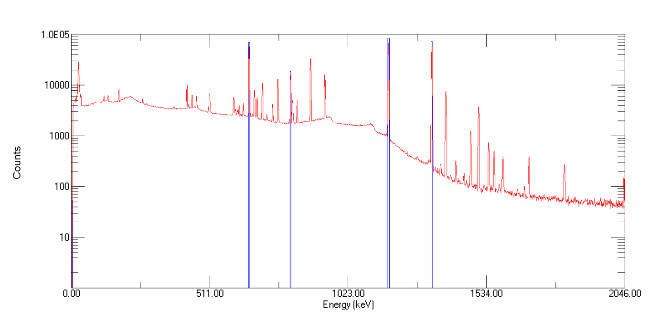
The radioactivity in nuclear power plant wastewater originates from the nuclear fuel used in the reactor. For reactors that use water as a coolant, radioactive fission products (such as 90Sr, 137Cs, and 133Cs) and neutron activation products (such as 3H, 14C, 60Co, 63Ni, and 110mAg) accumulate in the coolant and the system equipment and pipelines containing the coolant during operation. Drainage from containment systems, leaked water, sampled water, and treated wastewater from the reactor contain certain amounts of these radiation sources. Different gamma-emitting radionuclides release gamma rays with varying energies, and high-purity germanium detectors can sensitively capture these energy signals and convert them into electrical signals. Figure 1shows the gamma spectrum detected by a high-purity germanium spectrometer for the waste liquid. The horizontal axis represents the energy intensity of gamma rays, with different peak intensities corresponding to different gamma-emitting radionuclides. The vertical axis reflects the activity of the energy peaks corresponding to different gamma-emitting radionuclides, which can indicate the concentration of the respective radionuclides. When these waters are no longer reused, they are collected as radioactive wastewater and processed by the nuclear power plant's radioactive wastewater management system. After treatment, the wastewater must undergo radioactivity level testing; any wastewater that does not meet emission limit requirements will be reprocessed by the wastewater treatment system until it complies before being discharged.
图1 某电厂放射性废液的γ谱图

Fig. 1 γ Spectrum of radioactive waste liquid of a power plant

Nuclear power plant liquid radioactive effluents must be discharged via a sump system. If the measured activity concentration exceeds the required limits, discharge is permitted only after approval[4].Radioactive liquid waste generated during nuclear power plant operation generally includes process drainage, chemical drainage, ground drainage, detergent-containing drainage, and conventional island drainage. The characteristics, primary sources, and estimated generation volumes of these different types of wastewater are shown in Table 3.
表3 放射性废水情况统计

Table 3 Statistics of radioactive wastewater

Type Characteristics Radioactivity Main Source Estimated Wastewater Volume per Unit per Year
Process Wastewater Low conductivity, good water quality, few impurities Potentially high radioactive activity Discharged and flushing water, or leakage from the primary loop, flushing and drainage from the desalter 2250 m3/a
Chemical Wastewater High conductivity, poor water quality, and many impurities Potentially high radioactive activity Drainage from chemical cleaning and decontamination, and drainage from the radioactive analysis laboratory 1500 m3/a
Ground Drainage Poor water quality, many impurities Low radioactive activity Equipment drainage and leakage are collected within the radioactive control area 6250 m³/a (including 1250 m³/a of service drainage)
Detergent-Containing Drainage Poor water quality, many impurities Extremely low radioactive activity Decontamination water at the sanitation entrance and exit, drainage from the laundry for contaminated suits 4000 m3/a
Conventional Nuclear Island Drainage Few impurities Radioactive activity possibly exceeds discharge limits Discharge water from the second loop system in the turbine building, effluent of the secondary loop water purification system -

2.2 Methods for Treating Radioactive Waste Liquids

2.2.1 Ion exchange method

Ion exchange refers to the phenomenon in which ions in a solution are exchanged or adsorbed onto exchangeable ions (active groups) in another phase, such as a solid-phase ion exchange material. Leveraging the high selectivity of ion exchange materials for specific types of ions, this method is widely used to remove radioactive nuclides existing in solution either in ionic or colloidal form, thereby achieving the effect of purifying waste liquids. Ion exchange is suitable for treating relatively clean radioactive liquids with low levels of soluble substances (typically less than 4 mg/L in insoluble content and less than 1 g/L in soluble content). The decontamination factor for radioactive liquids is generally between 10 and 100 (per single ion exchange bed).
Ion exchange technology is commonly used in pressurized water reactor nuclear power plants for preparing make-up water for the reactor primary loop, purifying primary coolant and fuel storage pool water, adjusting the concentration of chemical additives, treating blowdown water from steam generators, and handling radioactive liquid waste. Based on the matrix of ion exchange materials, these materials are mainly divided into two major categories: organic ion exchange materials (such as various types of ion exchange resins) and inorganic ion exchange materials (such as clay minerals and zeolites). In the treatment of radioactive liquids in pressurized water reactor nuclear power plants, the ion exchange materials most commonly used are artificially synthesized, granular organic ion exchange resins.
When treating high-salinity waste liquids, non-radioactive salt ions occupy a large number of functional groups in ion exchange resins, thereby increasing treatment costs and reducing efficiency. Therefore, the ion exchange method is more suitable for waste liquids with lower salinity and typically requires pretreatment of the incoming liquid to ensure normal operation of the ion exchange resin bed and maximize its service life. Currently, many ion exchange processes for treating radioactive waste liquids are combinations of several methods, such as coagulation-ion exchange, coagulation-electrodialysis-ion exchange, distillation-ion exchange, reverse osmosis-selective adsorption, ultrafiltration-reverse osmosis-electrodialysis, etc. These combined processes can achieve high decontamination factors and are relatively economical and reasonable[5].

2.2.2 Evaporation-drying method

Evaporation and drying is currently one of the primary methods used in nuclear power plants for treating radioactive wastewater. During this process, the vast majority of radionuclides exist in the form of crystalline salts. The evaporation and drying method boasts high decontamination factors and removal rates, making it suitable for treating high-, medium-, and low-level radioactive wastewater. However, it also has certain drawbacks: it is not appropriate for wastewater containing volatile radionuclides; complete vaporization of all water results in significant thermal energy consumption, thereby increasing operational costs; and as the concentration of salt ions increases, the evaporator becomes prone to corrosion and scaling, with additional safety concerns such as explosions at high temperatures[6]. Given the widespread use of evaporation and drying in nuclear power plants both domestically and internationally, some progress has been made in addressing its limitations. Shao Yanjiang et al.[7]studied the effects of pH, evaporation temperature, Ca2+concentration, and feed flow rate on the scaling rate of evaporators, and developed an immersion-based acidic descaling method, achieving good results. Li Ming et al.[8]improved the design and process structure of evaporators, increasing the system's decontamination factor to the order of 105to 106. To address the high energy consumption associated with traditional evaporation techniques, utilizing low-cost heat sources such as geothermal and industrial waste heat for low-temperature evaporation has also become a research hotspot. Guo Lingfei et al.[9]constructed a self-made packed-tower low-temperature evaporation experimental setup, achieving a wastewater volume reduction ratio of 4% and an ion removal efficiency of 89.5% when the evaporation rate was 80.6 kg/h. Zhang Weiyu and Jin Chang et al.[10-11]used a hydrophobic microporous membrane-based air-gap membrane distillation device to treat actual low-level radioactive liquid waste from the nuclear industry, with total α activity concentration of 868 Bq/L and total β activity concentration of 5610 Bq/L. The average retention rates of trace amounts of Sr2+and Cs+in the wastewater were both greater than 99.99%, and the decontamination factor reached above 104. Moreover, this method exhibits low sensitivity to flow rate and temperature differences.

2.2.3 Chemical Precipitation Method

Chemical precipitation primarily involves adding chemical reagents that combine with radioactive ions in the waste liquid to form precipitate products, thereby transferring the radioactive nuclides from the waste liquid into a small volume of sludge, achieving the effect of wastewater purification. The main factors affecting the efficiency of chemical precipitation include the selection of precipitant, solution pH, temperature, and the type of radioactive ions. Additionally, the amount of precipitant used must be appropriate for the types and concentrations of radioactive metal ions present in the waste water to achieve effective purification of radioactive wastewater. Chemical precipitation is simple, cost-effective, capable of removing a wide range of elements, and benefits from mature technology and equipment; it is often employed for purifying large volumes of waste liquids with less stringent decontamination requirements and as a pretreatment technique for membrane processes. If the wastewater contains short-lived radioactive nuclides, a large amount of stable isotope carriers must be added to meet discharge standards, resulting in significant precipitate production. Moreover, some precipitates tend to form colloids, making solid-liquid separation difficult, necessitating the addition of flocculants to ease this process. According to literature, the United States has developed a chemical additive combined with filtration and ion exchange technologies, which has been adopted by over 20 nuclear power plants, treating 265,000 m3annually, achieving a decontamination factor of 104, with each cubic meter of medium capable of treating 800–1,000 m3of wastewater[12]. Luo et al.[13]improved the efficiency of Sr-90 precipitation using the PCM (Pellet coprecipitation micro-filtration) mechanism. When the strontium concentration was 12.0 mg/L, the decontamination factor reached 577, the precipitate separated easily from the liquid phase, and the concentration factor was 1958. Fang Xianghong et al.[14]studied the removal of simulated radionuclides Cs, Sr, and Co using aluminum chloride, ferric sulfate, ammonium phosphate, and mixtures of these three reagents. The results showed that at a pH of 8, all precipitants exhibited good removal efficiency for Co and Sr.

2.2.4 Membrane Technology

Membrane treatment technologies for radioactive wastewater mainly include microfiltration, ultrafiltration, nanofiltration, and reverse osmosis. Microfiltration primarily treats groundwater contaminated with radioactivity, with membrane pore sizes and separation ranges between 0.1 and 1 μm. Ultrafiltration can remove proteins and smaller colloids but cannot retain ions, with membrane pore sizes and separation ranges between 0.01 and 0.1 μm. Nanofiltration can retain small-molecule substances and high-valence ions while allowing monovalent ions and water molecules to pass through, with membrane pore sizes and separation ranges between 0.001 and 0.01 μm. In nuclear power plants, nanofiltration technology is often used for the recovery of boric acid. Reverse osmosis technology has high decontamination efficiency and produces less secondary waste, commonly used in seawater desalination and the treatment of wastewater such as ground drainage from the nuclear island, reactor shutdown maintenance wastewater, and spent resin rinse water. According to the literature, the average decontamination factor of reverse osmosis membranes for Co-60 and Co-58 is around 150, for Sb-125 it reaches an average of 1000, and for Cs-134 and Cs-137 it is about 10. Reverse osmosis membrane separation technology offers significant advantages in terms of economy and operation[15-16]. Wei Xinyu et al.[17]reviewed the application of reverse osmosis membranes in the treatment of radioactive wastewater from nuclear facilities both domestically and internationally, analyzed the feasibility of applying current commercial reverse osmosis design evaluation models to the removal of trace radioactive nuclides from water, and suggested conducting analytical research on aspects such as the removal efficiency of Ag-110m and Mn-54 and their compounds, the mechanism of reverse osmosis membranes in removing trace radioactive nuclides from water, and the correlation evaluation model between nuclide concentration and membrane area.

2.2.5 New technologies and combined treatment techniques

With the development of the nuclear industry, new types of nuclear fuels and equipment are continuously being introduced, leading to increasingly complex pollutants in waste liquids and a growing number of recalcitrant substances, thereby increasing the difficulty of treatment. The radioactive waste treatment processes in nuclear power plants are also constantly being upgraded; for instance, new technologies such as oxidation treatment and microbial methods, as well as combined process technologies, have become promising directions for future advancements. Nuclear power plants typically employ multiple wastewater treatment techniques simultaneously to specifically address radioactive wastewater with different chemical characteristics.
(1) Adsorption method
Adsorption methods are characterized by low energy consumption, simple operation, and high efficiency. Some studies have shown that carbon-based nanomaterials, silicon-based adsorbents, MOFs materials, and COFs materials exhibit excellent adsorption performance for radionuclides. Graphene oxide, with its unique structure, numerous surface-active groups, and high stability, has attracted widespread attention in environmental remediation. Liu Hongjuan, Li et al.[18-19]conducted a comparative study on the adsorption performance of various graphene oxide materials and their composites for radionuclides, finding that these materials can achieve a maximum adsorption capacity of up to 718 mg/g. Solution pH, reaction temperature, solution ionic strength, and adsorption time all influence the adsorption performance. The research results of Yu Jing et al.[20]indicate that silica gel and mesoporous silica, due to their abundant pores, large specific surface area, and uniform surface functional groups, can serve as matrix materials for inorganic adsorbents. Carbon nanotubes and graphene, which have high chemical activity, demonstrate good volume reduction effects; however, their inherent chemical toxicity introduces additional environmental pollution[21]. MOFs materials and COFs materials represent emerging crystalline porous materials in recent years and are also ideal candidate materials in the field of membrane separation[22]. In recent years, many studies have focused on utilizing MOFs materials for the separation and adsorption of metal ions[23]. Due to their selectively controllable pore size and specific functional group effects, MOFs materials significantly enhance the selectivity and adsorption capacity for radioactive metal ions[24-26]. COFs materials are organic crystalline porous polymers formed in two or three dimensions through reversible polymerization and irreversible tautomerization reactions involving light organic elements such as C, O, N, and B[27]. Their stable structure, high surface area, and controllable pore size enable efficient treatment of radioactive waste liquids even under conditions of strong acid and intense irradiation[28]. Currently, both domestically and internationally, significant progress has been made in using these materials to treat radioactive nuclides such as uranium[29-31].
(2) Biological method
Microalgae adsorption technology has been a research hotspot in the field of radioactive wastewater treatment in recent years. The key to microalgae adsorption lies in screening advantageous algal strains with good adsorption performance and recovering and treating microalgae cells. Kalin et al.[32]studied the U(Ⅵ) adsorption capacity of 23 different algal species and found that 13 strains, accounting for 56.5% of the total, had adsorption capacities ranging from 100 to 600 mg/g. Li Xin et al.[33]carried out a screening process for superior algal strains among 11 candidate species and discovered that Scenedesmus LX1 exhibited the highest uranium adsorption capacity at 40.7 mg/g, followed by Chlorella vulgaris, which showed better settling performance during the stationary growth phase, with a settling rate of 45.3%. Jiang Zheng et al.[34]found that amino, hydroxyl, and carboxyl groups on the cell walls of baker's yeast and Escherichia coli were involved in the chemical adsorption of I-, with theoretical maximum adsorption capacities of 120.7 and 37.2 μmol/g, respectively. Since radioactivity can induce strong mutations in biological genetic material, potentially leading to unforeseen consequences for ecosystems, this poses a challenge in developing bioremediation technologies for radioactive pollutants.
(3) Combined treatment
With the continuous maturation of new technologies, selecting a combination of various techniques tailored to the characteristics of radioactive liquid waste often improves overall efficiency and brings significant economic and effectiveness benefits. Research in this area can generally be categorized into three types. The first category involves combinations of precipitation, adsorption, and membrane technologies. In the United States, a complete treatment process combining precipitation filtration, membrane technology, and ion exchange has gradually been developed and is already applied in several nuclear power plants[35-36]. Ren Meng and Dulama et al.[37-38]mentioned in their literature that adding a certain amount of flocculant to the waste liquid promotes flocculation and sedimentation. After sedimentation, the waste liquid is treated with an ultrafiltration membrane to remove suspended solids, and the resulting ultrafiltrate is further subjected to adsorption using inorganic adsorbents, reducing the specific radioactivity of the radioactive waste liquid from 2.18×10⁴to 0.29 Bq/L. Wu et al.[39]used a combined co-precipitation and microfiltration technique to remove strontium from radioactive wastewater, designing a hydraulic rotary flow mixing reactor coupled with a microfiltration filter. Experimental results showed that the purification coefficient for strontium could reach 842 to 1000. The Radiochemistry Laboratory of China Nuclear Power Engineering and Design Institute studied the use of an ultrafiltration-reverse osmosis (UF-RO) membrane combination process for treating low-level radioactive wastewater. Results indicated that desalination rates for Cs+, Sr2+, Co2+, Ni2+, and Fe3+all exceeded 95%, with a decontamination efficiency reaching 95.7%[40]. The second category involves combinations of organic and inorganic treatments. The Faculty of Nuclear Chemistry at the Czech University of Technology published research on a combined technique that uses photocatalytic degradation of organic ligands in conjunction with adsorption to remove radionuclides. The adsorbent used was either inorganic or composite, while the organic ligands subjected to photocatalytic degradation primarily included citric acid, oxalic acid, and ethylenediaminetetraacetic acid (EDTA). The catalytic material used in heterogeneous photocatalysis under UV irradiation was TiO2 [41]. The third category involves combinations of non-traditional technologies. The French Atomic Energy Commission has developed a new combined plasma pyrolysis-photocatalytic oxidation technology for treating radioactive organic waste liquids. The primary method involves immersing a plasma torch into the waste liquid, breaking down organic compounds into small-molecule organic fragments, which are then further oxidized and degraded by ultraviolet light, ultimately decomposing completely into clean water and carbon dioxide. Results indicate that when the pyrolysis temperature is approximately 2700 K and the gas flow rate at the nozzle reaches 400 m/s, the degradation rate can reach 99.8%. The entire process produces neither smoke nor secondary waste liquid, making it a clean and highly efficient treatment method[42].

3 Radioactive Solid Waste Disposal

In the process of radioactive waste disposal, waste forms and waste packages serve as the first barrier to prevent the release of radionuclides, directly affecting the long-term safety of waste disposal. The "Safety Regulations for Near-Surface Disposal of Low- and Intermediate-Level Solid Radioactive Waste" (GB9132-2018) sets out general requirements for the performance of waste packages. Radioactive waste forms include cemented waste forms and immobilized waste forms, which refer to radioactive waste intended for near-surface disposal and should be solidified or immobilized through appropriate processing methods to form waste forms that meet disposal requirements. The safety characteristics of waste forms (packages) generally include physical stability, chemical stability, thermal stability, irradiation stability, and biological stability[43].
In summary, existing scoring systems have limited predictive capabilities for bleeding events, and their results are inconsistent[25,30,33].
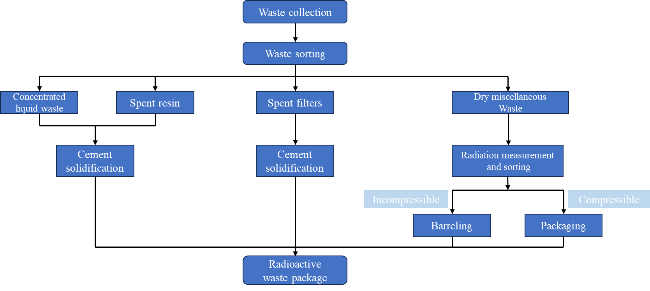
图2 核电厂典型固体废物处理工艺流程

Fig.2 Typical solid waste treatment process flow of a nuclear power plant

表4 部分电厂废液和固废处理方式

Table 4 Waste liquid and solid waste treatment methods of some power plants

No. Nuclear Power Plant Waste Liquid Treatment Spent Resin Treatment Concentrate Treatment Filter Core Treatment Dry Miscellaneous Waste Treatment
1 Qinshan NPP Evaporation, Ion Exchange Temporary Storage Cement Solidification Overpressure + Cement Fixation Pre-pressure and Barreling
2 Qinshan No.2 NPP Filtration, Evaporation, Ion Exchange Cement Solidification Cement Solidification Overpressure + Cement Fixation Pre-pressure and Barreling
3 Qinshan No.3 NPP Filtration, Ion Exchange Temporary Storage Cement Solidification Cement Fixation Pre-pressure and Barreling
4 Dayawan NPP Filtration, Evaporation, Ion Exchange Cement Solidification Cement Solidification Overpressure + Cement Fixation Pre-pressure and Barreling
5 Ling'ao NPP Filtration, Evaporation, Ion Exchange Cement Solidification Cement Solidification Overpressure + Cement Fixation Pre-pressure and Barreling
6 Jiangsu Tianwan NPP Filtration, Evaporation, Ion Exchange Hot State Overpressure Evaporation and Compaction Overpressure + Cement Fixation Pre-pressure and Barreling
7 Yangjiang NPP Ion Exchange + Evaporation, RO Membrane + Ion Exchange Cement Solidification, Dehydration + HIC Cement Solidification, Dehydration + HIC Overpressure + Cement Fixation, Dehydration + HIC Pre-pressure and Barreling
8 Fuqin NPP Filtration, Evaporation, Ion Exchange Cement Solidification Cement Solidification Overpressure + Cement Fixation Temporary Bagging
9 Fangjiashan NPP Filtration, Evaporation, Ion Exchange Cement Solidification Cement Solidification Overpressure + Cement Fixation Pre-pressure and Barreling
10 Changjiang NPP Filtration, Evaporation, Ion Exchange Cement Solidification Cement Solidification Overpressure + Cement Fixation Pre-pressure and Barreling
11 Sanmen NPP RO Membrane + Ion Exchange Hot State Overpressure Cement Solidification Overpressure + Cement Fixation Temporary Bagging
12 Haiyang NPP Filtration + Ion Exchange Dehydration + HIC Dehydration + HIC Dehydration + HIC Pre-pressure and Barreling
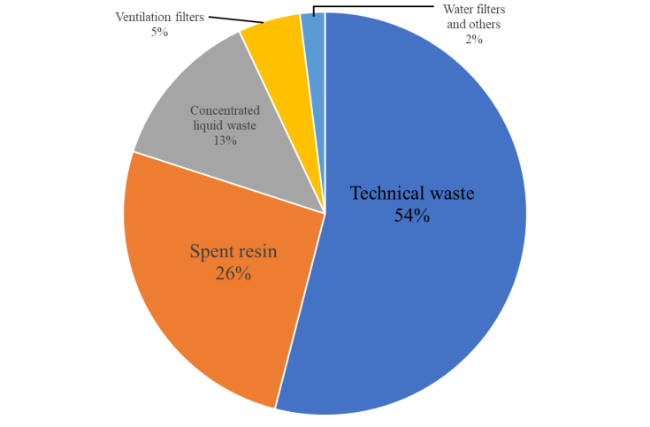
After conducting research and analyzing historical data, we have compiled statistics on the average annual solid waste generation per unit at some nuclear power plants in China, as shown in Table 5. Due to the diverse reactor types, varying lifespans, and significant differences in utilization levels, volume reduction measures, and management practices, there is considerable variation in waste generation among different nuclear power plants in China. Following several years of management optimization and the widespread commercialization of advanced reactor technologies, the average annual waste generation per reactor in China has now decreased to 45 m3 per reactor-year, with technical waste accounting for the largest share at approximately 53%; spent resins rank second, accounting for about 26%; and solidified concentrated liquid waste ranks third, accounting for roughly 13%. The average estimated solid waste generation at selected plants is presented in Table 5, and the proportion of each type of waste is illustrated in Figure 3.
表5 部分电厂平均预估固废产生量

Table 5 Average estimated solid waste generation of some power plants

Nuclear Power Plant Qinshan Qinshan(Ⅱ) Qinshan
(Ⅲ)
Fangjiashan Fuqing Hainan Tianwan Sanmen Average
(m3/Reactor)
Number of Units 1 4 2 2 4 2 4 2
Technical Waste 32.8 141.8 56.8 37.4 121.1 24 54.6 28.1 23.6
Air Filter 1.2 24.4 2.7 8.7 11.4 0.6 0.9 0.7 2.4
Water Filter 0.7 3.9 12.2 1 3.1 0 0 0.7 1.0
Spent Resin 3.3 25.8 14 10.9 52.8 35.6 93.7 4.3 11.4
Concentrated Liquid 25.3 5.8 0 18 16 17 36 0.4 5.6
Membrane Waste -- -- -- -- -- -- -- 0.2 0.0
Molecular Sieve -- -- 3.6 -- -- -- -- -- 0.2
Total 63.3 201.7 89.3 76 204.4 77.2 185.2 34.4 44.2
Average (m3/ Reactor) 63.3 50.4 44.7 38 51.1 38.6 46.3 17.2
图3 我国核电厂年度平均固体废物产生量占比图

Fig.3 Proportion of annual average solid waste generated by nuclear power plants in China

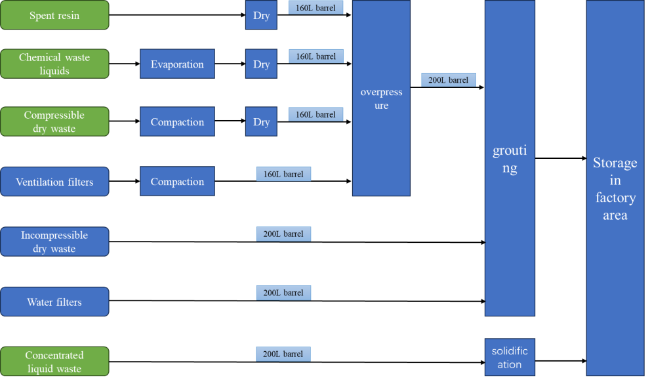
For spent resins, advanced nuclear power plants currently employ a treatment process that involves first dehydrating and drying the spent resin, then applying superpressure while hot, and finally grouting and solidifying the compressed cakes—this is known as the hot superpressure technology. This technology first dehydrates and dries the spent resin in a conical dryer, reducing its volume to approximately one-third of the original spent resin volume. The dried spent resin and waste filter media are then loaded into compressible drums and compacted using a super compactor while still hot. Preferably, several compacted cakes are placed into a single 200 L waste drum and fixed with cement slurry, achieving a good overall volume reduction effect. China's Sanmen Nuclear Power Plant was the first nuclear power station to adopt this process, and the Tianwan Nuclear Power Plant introduced this technology for treating spent resins during its second-phase construction, though with slight variations in the process. As for concentrated liquids, due to improvements in AP1000 technology, the amount of chemical wastewater generated in the nuclear island is very small, and no evaporator system is installed there. The small quantity of chemical wastewater is sent to a dedicated Radioactive Waste Treatment Facility (SRTF) or treated using mobile processing units, with cement solidification remaining the preferred treatment method. Taking Sanmen Nuclear Power Plant as an example, the schematic diagram of its various radioactive solid waste treatment processes is shown in Figure 4.
图4 三门核电站废物处理工艺示意图

Fig.4 Waste treatment process diagram of Sanmen Nuclear Power Station

4 Summary

4.1 Liquid Waste Treatment Technology

In summary, traditional liquid waste treatment methods primarily involve separating radioactive materials from wastewater using appropriate techniques. When selecting a method, both decontamination efficiency and operational costs should be comprehensively considered, followed by the development of a specific plan. A summary of liquid waste treatment technologies is presented in Table 6.
表6 液体废物处理技术总结

Table 6 Summary of liquid waste treatment technology

Treatment Method Applicable Objects Decontamination Factor Characteristics Main Application Situations
Filtration Radioactive wastewater with uncertain chemical components and usually radioactive activity lower than the discharge limit Relatively low Usually used as a pretreatment Almost all nuclear power plants
Ion Exchange Radioactive wastewater with low chemical content and radioactive activity higher than the discharge limit 10~100, the decontamination factor will increase to some extent when a multiple-level combination is used Widely applied Almost all pressurized water reactor nuclear power plants
Evaporation Radioactive wastewater with high chemical content or complex components and radioactive activity higher than the discharge limit 103~106 High volume reduction, high cost for equipment, construction and operation USA, Russia, France, Germany, Japan, China
Chemical Precipitation Radioactive wastewater with low requirements for purification, and radioactive activity higher than the discharge limit Up to104 High requirements for radiation detection and reagent addition equipment USA
Membrane filtration Radioactive wastewater with low chemical content and radioactive activity higher than the discharge limit 10~103 Membranes need to be cleaned regularly USA, Canada

4.2 Solid Waste Disposal

Radioactive solid waste, due to the difficulty in effectively separating the attached radioactive ions, requires processes that separate radionuclides to achieve clearance levels, which also consume significant financial resources and energy and may even lead to an increase in waste volume. Therefore, nuclear power plants primarily handle such solid waste by sealing it through cement solidification and compression. To minimize hazards and promote sustainable development, the sealed waste is placed at different disposal depths according to the varying surface doses. For radioactive waste resins, given their strong water absorption and elasticity, as well as high radiation doses and large production volumes, the preferred method for volume reduction is hot overpressure treatment, which reduces resource waste and enhances safety.

5 Outlook

5.1 Research directions for radioactive waste liquid treatment

Currently, one of the research hotspots in the treatment of radioactive liquid waste generated by nuclear power plants and nuclear facilities is mobile treatment equipment and its supporting technologies, followed by tritium extraction technology. There are clear limits on the concentration of tritium when radioactive liquid waste is discharged. For light-water reactors, the annual total discharge is limited to ≤7.5×10¹³ Bq, while for heavy-water reactors, the annual total discharge is limited to ≤3.5×10¹⁴ Bq. For routine discharges, the tritium concentration in the receiving water body 1 km downstream of the discharge point must not exceed 100 Bq/L. Tritium is a product of neutron activation of water molecules and is primarily generated in the primary loop of nuclear power plant reactors. Although the tritium yield varies among different reactor types, overall, tritium concentrations tend to be relatively high. Reducing the tritium concentration in wastewater is thus a significant challenge in radioactive wastewater treatment. Furthermore, the removal of Ag-110m from the primary loop is also an urgent issue that nuclear power plants currently need to address. The reactor's water loop is welded from nuclear-grade stainless steel, and the welding agents used contain silver, which is activated by neutrons in the reactor to produce Ag-110m. When the concentration accumulates to a certain level, it easily forms precipitates, affecting the water loop. Therefore, when Ag-110m accumulates to a certain concentration, appropriate purification measures must be taken. The primary loop has high radioactivity levels and a complex composition of radionuclides, making purification of the primary loop another major challenge in water treatment at nuclear power plants.

5.2 Research Direction in Radioactive Solid Waste

Currently, China has proposed several approaches for treating radioactive solid waste, such as incineration and chemical decontamination. Incineration involves burning combustible radioactive waste using incineration equipment, resulting in most radioactive ions being retained in the ash as crystalline salts. This method can effectively handle combustible organic radioactive waste, but it is not suitable for non-combustible radioactive waste such as water filter cartridges, mixed waste resins, and metals. Additionally, there are practical challenges in its application, such as how to efficiently capture dust carrying radioactive ions, and ensuring the safety and durability of equipment operating at high temperatures. Further research and problem-solving efforts are still needed. Chemical decontamination uses chemical reagents to wash and soak solid waste, allowing radioactive ions to enter the solution and thus achieving decontamination of the solid waste. However, this method also faces numerous challenges, including how to leach radioactive ions embedded in the crystal lattice, leaching efficiency, and cost considerations.
[1]
China Nuclear Energy Association.National nuclear power operation situation (January-December 2024). 2025

( 中国核能行业协会.全国核电运行情况(2024年1-12月). 2025).

[2]
Gao Y F, Shi X S, Lv G. China Nucl. Power, 2020, 13(6): 774

( 高彦锋, 石西森, 吕钢. 中国核电, 2020, 13(6): 774).

[3]
Wu H, Xu C Y, Liu X H, Wei F X. Nucl. Saf., 2013, 12(S1): 155

( 吴浩, 徐春艳, 刘新华, 魏方欣. 核安全, 2013, 12(S1): 155).

[4]
Ministry of Environmental Protection of the People’s Republic of China, General Administration of Quality Supervision, Inspection and Quarantine of the People’s Republic of China. Technical requirements for discharge of radioactive liquid effluents from nuclear power plant (GB14587-2011). Beijing: China Environmental Science Press, 2011

环境保护部,国家质量监督检验检疫总局. 核电厂放射性液态流出物排放技术要求( GB 14587-2011). 北京: 中国环境科学出版社, 2011).

[5]
Li Y Q, Chen Q, Xue M, Peng X H.In Proceedings of the 2009 Annual Meeting of the Chinese Society for Environmental Sciences (Volume 2), 2009 Annual Meeting of the Chinese Society for Environmental Sciences. Beijing: Beihang University Press, 2009, 46

李永青, 陈勤, 薛明,彭小红. 中国环境科学学会2009年学术年会论文集

( 第二卷),中国环境科学学会2009年学术年会. 北京: 北京航空航天大学出版社, 2009, 46 ) .

[6]
Sun S H, Ran M D, Lin L, Liu W L, Li Z C, Li W Y. Nucl. Power Eng., 2019, 40(6): 1

( 孙寿华, 冉洺东, 林力, 刘文磊, 李振臣, 李文钰. 核动力工程, 2019, 40(6): 1).

[7]
Shao Y J, Li L, Mu J B, Zhao D P, Long B K, Che J Y. Radiat. Prot., 2020, 40(2): 137

( 邵延江, 李莉, 穆建波, 赵大鹏, 龙泊康, 车建业. 辐射防护, 2020, 40(2): 137).

[8]
Li M, Ma X J, Chen L, Gao F, Li B L, Sha S. Nucl. Power Eng., 2018, 39(2): 37

( 李明, 马兴均, 陈莉, 高峰, 李炳林, 沙沙. 核动力工程, 2018, 39(2): 37).

[9]
Guo L F, He Z Z, Xiao D T, Li S C, Lin S J. J. Nucl. Radiochem., 2021, 43(2): 163

( 过灵飞, 何正忠, 肖德涛, 黎世铖, 林姝婧. 核化学与放射化学, 2021, 43(2): 163).

[10]
Zhang W Y, Jin C, Xiao D T. J. Nucl. Radiochem., 2017, 39(2): 183

( 张玮钰, 金畅, 肖德涛. 核化学与放射化学, 2017, 39(2): 183).

[11]
Jin C, Yu C Y, Xiao D T, Feng X, Li C. J. Nucl. Radiochem., 2015, 37(1): 45

( 金畅, 喻翠云, 肖德涛, 冯旭, 李超. 核化学与放射化学, 2015, 37(1): 45).

[12]
Zhang Z Y, Yan C S, Huang L X. Minimization of radioactive waste in nuclear power plants. Beijing: Atomic Energy Press, 2013

张志银, 严沧生, 黄来喜. 核电厂放射性废物最小化. 北京: 中国原子能出版社, 2013).

[13]
Luo X, Zhang G, Xue W. J. Radioanal. Nucl. Chem., 2013, 298(2): 931.

[14]
Fang X H, Ma R X, Yang B. Shandong Chem. Ind., 2016, 45(16): 197

( 方祥洪, 马若霞, 杨彬. 山东化工, 2016, 45(16): 197).

[15]
Zakrzewska-Trznadel G. Desalination, 2013, 321: 119.

[16]
Ambashta R D, Sillanpää M E T. J. Environ. Radioact., 2012, 105: 76.

[17]
Wei X Y, Ma H B, Xiong X W, Wang Y C, Tan C J, Fang Y, Wang Z. Technol. Water Treat., 2015, 41(12): 10

( 魏新渝, 马鸿宾, 熊小伟, 王一川, 谭承军, 方圆, 王志. 水处理技术, 2015, 41(12): 10).

[18]
Liu H J, Wu R J, Xie S B, Liu Y J. J. Mater. Eng., 2019, 47(10): 22

( 刘红娟, 吴仁杰, 谢水波, 刘迎九. 材料工程, 2019, 47(10): 22).

[19]
Li F, Yang Z, Weng H, Chen G, Lin M, Zhao C. Chem. Eng. J., 2017, 340.

[20]
Yu J, Wang J L. J. Nucl. Radiochem., 2018, 40(2): 81

( 于静, 王建龙. 核化学与放射化学, 2018, 40(2): 81).

[21]
Yu J, Wang J L, Jiang Y Z. J. Tsinghua Univ. (Sci. Technol.), 2016, 56(3): 312

( 于静, 王建龙, 蒋翼周. 清华大学学报(自然科学版), 2016, 56(3): 312).

[22]
Liu C Y. Doctoral Dissertation of East China Normal University, 2021

刘传耀. 华东师范大学博士论文, 2021).

[23]
Zhou Y P, Wang X W, Jia M C, Du Z H, Liang C Q. Mod. Chem. Ind., 2022, 42(2): 117

( 周义朋, 王晓伟, 贾铭椿, 杜志辉, 梁成强. 现代化工, 2022, 42(2): 117).

[24]
Xie L B, Meng X P. Chem. Eng. Equip., 2024, (12): 173

( 谢林蓓, 孟笑鹏. 化学工程与装备, 2024, (12): 173).

[25]
Hong Y, Zhang H, Wang H. Isotopes, 2022, 35(4): 324

( 洪业, 张华, 王浩. 同位素, 2022, 35(4): 324).

[26]
Liu S Y. Master’s Dissertation of North China Electric Power University, 2024

刘舒雅. 华北电力大学硕士论文硕士论文, 2024).

[27]
Zhang A R, Ai Y J. Prog. Chem., 2020, 32(10): 1564

( 张安睿, 艾玥洁. 化学进展, 2020, 32(10): 1564).

[28]
Zhang H D, Li Z J, Shi W Q. Prog. Chem., 2023, 35(3): 475

( 张慧迪, 李子杰, 石伟群. 化学进展, 2023, 35(3): 475).

[29]
Yang Y T, Tu C Z, Yin H J, Liu J J, Cheng F X, Luo F. Molecules, 2022, 27(24): 9045.

[30]
Huang X S, Zhang N, Guo H, Sun Y B. Sci. China, Chem., 2020, 50(8): 882

( 黄鑫水, 张宁, 郭涵, 孙玉兵. 中国科学(化学), 2020, 50(8): 882).

[31]
Liu X L, Xiao M L, Li Y, Chen Z S, Yang H, Wang X K. Eco-Environ. Health, 2023, 2(4): 252.

[32]
Kalin M, Wheeler W N, Meinrath G. J. Environ. Radioact., 2005, 78(2): 151.

[33]
Li X, Hu H Y, Yu J Y, Zhao W Y. Environ. Sci., 2016, 37(5): 1858

( 李鑫, 胡洪营, 余骏一, 赵文玉. 环境科学, 2016, 37(5): 1858).

[34]
Jiang Z, Feng J D. Technol. Water Treat., 2014, 40(9): 34

( 姜筝, 丰俊东. 水处理技术, 2014, 40(9): 34).

[35]
Pabby AK, Swain B, Sonar NL, Pradhan S. Sep. Purif. Rev., 2021, (7): 1.

[36]
Gunderson P, Jamieson T, Cox B, Jensen C. Radwaste Solut., 2008, 15(1): 10.

[37]
Dulama M, Pavelescu M, Deneanu N C, Dulama N. Radiochimica Acta, 2010, 98(7): 413.

[38]
Ren M, Liu X L, Kang W, Li J.In Proceedings of the 2019 National Academic Conference on Environmental Engineering, 2019 National Academic Conference on Environmental Engineering. Beijing: Editorial Board of Environmental Engineering, Industrial Construction Magazine Co., Ltd., 2019

任萌, 刘小龙, 康武, 李佳. 《环境工程》2019年全国学术年会论文集, 《环境工程》2019年全国学术年会. 北京: 《环境工程》编委会、 工业建筑杂志社有限公司, 2019).

[39]
Wu L Y, Zhang G H, Wang Q Z, Hou L A, Gu P. Desalination, 2014, 349: 31.

[40]
Lu Y Y, Cao Q R, Chen Y M, Huang L J, Bai X F, Li B, Feng L. Nucl. Power Eng., 2013, 34(6): 161

( 鲁芸芸, 曹其如, 陈云明, 黄立娟, 白晓峰, 李兵, 冯亮. 核动力工程, 2013, 34(6): 161).

[41]
Rosíková K, John J, Šebesta F. Journal of Radioanalytical and Nuclear Chemistry, 2003, 255(2): 397.

[42]
Milelli D, Lemont F, Ruffel L, Barral T, Marchand M. Chem. Eng. J., 2017, 317: 1083.

[43]
Safety regulations for near surface disposal of low and medium level radioactive solid waste( GB 9132-2018). Beijing: Ministry of Ecology and Environment, State Administration for Market Regulation, 2018

生态环境部, 国家市场监督管理总局. 低、 中水平放射性固体废物近地表处置安全规定( GB 9132-2018). 北京: 中国环境科学出版社, 2018).

[44]
Jiang L, Wang Z, Luo J S. Radiat. Prot. Bull., 2020, 40(2): 35

( 蒋磊, 王昭, 罗劲松. 辐射防护通讯, 2020, 40(2): 35).

[45]
Zhao Y K. Sci. Technol. Vis., 2020, (2): 188

( 赵亚珂. 科技视界, 2020, (2): 188).

[46]
Yu D W, Xu H M, Zhou C H, Guo X L, Yu D Y, Jiang C H. Radiat. Prot., 2019, 39(3): 213

( 余达万, 徐宏明, 周辰昊, 郭喜良, 余达宇, 姜春辉. 辐射防护, 2019, 39(3): 213).

[47]
Li Q, Gou Q L, Yu X D. Radiat. Prot., 2018, 38(1): 80

( 李琦, 苟全录, 余小东. 辐射防护, 2018, 38(1): 80).

[48]
Liu T J, Sun X Q. Radiat. Prot., 2018, 38(1): 58

( 刘铁军, 孙学强. 辐射防护, 2018, 38(1): 58).

[49]
Lu X H, Zhang H J, Wei F X, Cui C, Liu T. Nucl. Saf., 2017, 16(3): 55

( 逯馨华, 张红见, 魏方欣, 崔聪, 刘婷. 核安全, 2017, 16(3): 55).

[50]
Lu K F, Zhong X B, Li C, Zhang P, Lu Z C. Radiat. Prot., 2015, 35(4): 243

( 陆科峰, 钟香斌, 李超, 张鹏, 卢忠诚. 辐射防护, 2015, 35(4): 243).

Outlines

/