Home Journals Progress in Chemistry
Progress in Chemistry

Abbreviation (ISO4): Prog Chem      Editor in chief: Jincai ZHAO

About  /  Aim & scope  /  Editorial board  /  Indexed  /  Contact  / 
Review

Application of Carbon-based Nanozymes in Disease Treatment and Prevention

  • Meimei Liu ,
  • Shiyao Song ,
  • Zhihan Qu ,
  • Biyao Zhao ,
  • Runkun Zhang , * ,
  • Zhiming Huo , *
Expand
  • College of Public Health, Guangdong Pharmaceutical University, Guangzhou 510310, China
* (Zhiming Huo);
* (Runkun Zhang)

Received date: 2025-03-07

  Revised date: 2025-05-01

  Online published: 2025-10-15

Supported by

National Natural Science Foundation of China(22074023)

Medical Scientific Research Foundation of Guangdong Province, China(A2024469)

Scientific Research Project of Traditional Chinese Medicine Bureau of Guangdong Province, China(20251213)

Abstract

As a new generation of biomimetic enzyme catalytic materials, carbon-based nano-mimetic enzymes (CNEs) demonstrate significant value in the fields of sample analysis, environmental remediation and biomedicine, which is due to their multi-enzyme activity characteristics, such as peroxidase/oxidase. Compared with natural enzymes, CNEs exhibit advantages such as facile preparation, low cost, excellent stability, and, more importantly, the tailorable catalytic activity through structural modulation. These merits make them a promising next-generation alternative to the enzyme. Based on recent research progress over the past five years, this review summarizes the relationship between structural and catalytic activity from CNEs and elucidates the regulatory mechanism of their active site distribution and electronic structure on catalytic performance. It also discussed the strategies of heteroatom doping, secondary chemical modification, and environmental optimization factors for the influence on CNEs’ enzyme activity, and pointed out the effective enhancement approaches among them. Moreover, the application cases of enzyme-targeted therapy and preventive intervention in disease are reviewed. At the end of this paper, the future research prospect of new structural design and intelligent response system construction of CNEs is proposed, aiming to expand the application boundary of CNEs in the field of precision medicine and public health, and provide innovative ideas and strategies for solving global health problems. Finally, prospects for CNEs are proposed, focusing on novel structural designs and intelligent responsive system development. Hopefully, we can expand CNEs’ applications in precision medicine and public health domains, thereby providing innovative solutions for addressing global health challenges.

Contents

1 Introduction

2 Classification of structure and activity of carbon-based nanozymes

2.1 Carbon nano-spheres enzyme

2.2 Carbon nanotubes enzyme

2.3 Carbon quantum dot enzymes

2.4 Porous organic frameworks

2.5 Single-atom carbon-based nanozymes

2.6 Other

3 The influent factors the catalytic activity of carbon-based nanozymes

3.1 Heteroatom doping

3.2 Secondary chemical modification

3.3 Environmental condition control

4 Biomedicine application of carbon-based nanozymes

4.1 Small molecule screening

4.2 Regulates oxidative stress

4.3 Antimicrobial therapy

4.4 Oncology treatment

5 Conclusion and prospects
Cite this article

Meimei Liu , Shiyao Song , Zhihan Qu , Biyao Zhao , Runkun Zhang , Zhiming Huo . Application of Carbon-based Nanozymes in Disease Treatment and Prevention[J]. Progress in Chemistry, 2025 , 37(10) : 1540 -1554 . DOI: 10.7536/PC20250306

1 Introduction

Artificial nanoenzymes are emerging nanomaterials with enzyme-mimicking properties. Compared with natural enzymes, they offer advantages such as high stability, low cost, and a wide range of applications, and have developed rapidly in recent years. Since 2007, when Gao et al.[1]first reported peroxidase-like (POD) activity of Fe3O4nanoparticles, various metal-based nanoenzymes—such as single-metal nanoenzymes[2],metal-complex nanoenzymes[3],and metal-oxide nanoenzymes[4]—have exhibited a flourishing and diverse development trend. Although these metal-based nanoenzymes demonstrate excellent catalytic performance, the metallic elements they contain are toxic to living organisms, and their extensive use poses risks to the ecological environment. Therefore, researchers have begun seeking safe and environmentally friendly alternatives to mitigate the potential threats posed by the use of artificial nanoenzymes to both the environment and human health. Against this backdrop, carbon-based nanoenzymes (CNEs), with their outstanding biocompatibility and environmental friendliness, have come to the fore. Common CNEs are carbon-centered and include carbon nanospheres[5],carbon nanotubes[6],carbon quantum dots[7], andporous organic frameworks[8]. These materials generally exhibit low toxicity, good biocompatibility, and biodegradability. In addition, CNEs demonstrate high sensitivity and selectivity in the field of biosensing, enabling them to detect biomarkers for early disease diagnosis[9]and therapeutic applications[10]. Some CNEs exhibit catalytic efficiency comparable to, or even higher than, that of natural enzymes[11],and can also be chemically modified to acquire additional functions, such as photothermal conversion[12-13],endowing them with great potential in disease treatment applications. As research deepens, the clinical therapeutic potential of CNEs is gradually becoming apparent, and they may in the future emerge as a standard medical intervention.
Currently, research on CNEs still faces limitations in elucidating catalytic mechanisms, systematically summarizing and analyzing enzyme-like activities, and developing practical applications. In light of this, this article systematically reviews the most recent hot literature from the past five years, explores how enzyme-like structures and multi-level influencing factors affect the types and intensity of catalytic activity in CNEs, summarizes their applications in disease treatment and prevention, and offers a forward-looking perspective on their future development. This study aims to provide robust theoretical support for the further advancement of CNEs, promote their in-depth application across multiple fields, and offer innovative ideas and strategies for addressing global health challenges.

2 Classification of Carbon-Based Nanoenzymes Based on Structure and Activity

CNEs are carbon-based nanomaterials with enzyme-mimicking activity, encompassing carbon nano-spheres enzymes (CS-E)[14],carbon nanotube enzymes (CT-E)[15],carbon quantum dot enzymes (CQDs-E)[16],porous organic framework nanozymes[17], andsingle-atom carbon-based nanozymes (SCNEs)[18], among others. They feature a high specific surface area and abundant surface functional groups, such as carboxyl and amino groups. These characteristics not only enhance their catalytic activity but also provide diverse active binding sites, facilitating secondary functionalization and customized tuning of enzymatic performance. Moreover, CNEs are easy to prepare, with some able to use bio-waste as raw materials, reducing costs and promoting environmental sustainability. Many CNEs also exhibit good biocompatibility, allowing them to be used in biological systems without disrupting normal functions. Given the numerous advantages they demonstrate, CNEs have thus shone brightly in multiple fields.
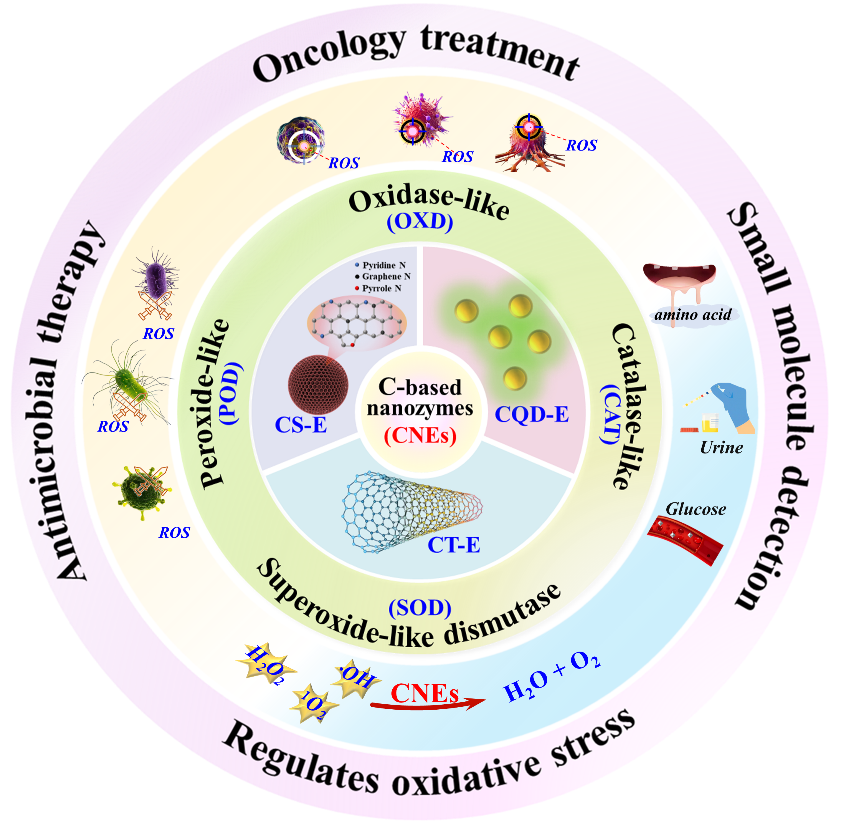
The enzyme-mimicking activity of CNEs is related to their own structure and the types of dopant elements. In pure carbon-based materials such as CQDs-E and CT-E, the enzyme-mimicking activity is generally manifested by defects, edge sites, or functional groups (such as carboxyl and hydroxyl groups) on the surface of the carbon material. When these materials are doped with non-metal heteroatoms such as N, S, or P, the enzyme-mimicking activity is typically manifested by the active centers formed through heteroatom doping. If metal elements are doped or if the material involves chemical bonds between carbon and metal, the enzyme-mimicking activity is usually manifested by metal nanoparticles or single atoms supported on the carbon material. Overall, CS-E typically exhibits oxidase-like (OXD) activity and peroxidase-like (POD) activity; the enzyme-mimicking activity of CT-E is mainly peroxidase-like, but under specific conditions, it can also exhibit oxidase-like activity; CQDs-E have generally been observed to possess peroxidase-like activity (Table 1).
表1 CNEs的 类酶活性分类

Table 1 Characteristics and classification of CNEs

Enzyme-like activity Abbreviation Catalytic mechanism Relevant CNEs
Peroxidase POD Oxidize the substrate to oxidated products and H2O, by utilizing H2O2 as oxidant CS-E[5,30-31]、CT-E[32-33]、CQDs-E[16,34-42]、SCNEs[18,29,43-44]
Oxidase OXD Oxidize the substrate in the presence of O2 SCNEs[45]、CS-E[14,46-47]、CT-E[6,15]、CQDs-E[7]
Catalase CAT Decomposes H2O2 into water and oxygen CS-E[48]、MOF[49]、SCNEs[29]
Superoxide dismutase SOD Catalyzes the generation of O2 and H2O2 by O2- C-Dots[50]、CS-E[51]、Fullerene[52]
Catechol oxidase - Cu2+ coordinates with the -OH of catechols. The interconversion between Cu2+ and Cu+ catalyzes the oxidation of catechols MOF[53-57]
Hydrolase - (1) Phosphatase: hydrolyzes the PO43- from organophosphorus pesticides to produce alcohols or phenolic compounds and phosphate ions
(2) Esterases: hydrolyze esters to produce alcohols and carboxylic acids
Others like uricase and aminoacylase share similar mechanisms
COF[58]、CS-E[59]
Photo-excited oxidase - Photoexcitation produces excited electrons and holes that react with dissolved oxygen to form ROS oxidation substrates CQDs-E[60]、COF[61]
It is important to emphasize that single-type CNEs exhibit multiple enzyme-like activities, with the most common being those that simultaneously display both POD-like and OXD-like activities[19-21].Most researchers previously considered this to be undesirable, as different enzyme activities can interfere with each other during reactions. However, recent studies have shown that by adjusting environmental conditions (such as pH and light), enzyme activities can be “switched,” effectively avoiding interference while enabling specific enzymatic reactions to be carried out in different environments, thus achieving a dual-purpose effect. For example, Chen et al.[22]reported that Ni-MOF can switch between POD-like and SOD-like activities based on pH. Li et al.[23]reported that YbGd-CDs can switch between OXD-like and POD-like activities under light and dark conditions. Similarly, Yang et al.[24]synthesized oxygen-nitrogen-functionalized carbon quantum dots (O/N-CQDs) in which POD-like activity can be reversibly converted to catalase (CAT)-like activity under visible light irradiation, and both enzyme-like activities can be precisely controlled by light intensity.
Such CNEs can load multiple enzymatic activities in several ways: (1) By doping multiple elements into the enzyme-mimicking structure, new enzyme-mimicking substructures may form through interactions between metal-metal or metal-nonmetal elements (such as synergistic effects), thereby exhibiting multiple enzyme-mimicking activities[25-26]. (2) Using carbon sources containing catecholamine structures as precursors to prepare CNEs helps more effectively introduce laccase-like and/or superoxide dismutase (SOD)-like activities into the product[27-28]. (3) Using substances that inherently possess a specific fixed enzymatic activity as precursors allows for further expansion and enhancement of the types and intensities of their enzyme-mimicking activities during synthesis, yielding CNEs with multiple enzymatic activities[27]. (4) Integrating different metal-based active sites with specific functions to mimic multiple natural enzymatic activities[29]. These tunable multi-enzyme-active nanoenzymes can efficiently perform multiple catalytic tasks in complex environments, providing new insights for the design of next-generation CNEs.

2.1 Carbon nanosphere nanoenzymes

CS-E is a class of carbon materials with a highly porous structure, typically featuring pore sizes in the range of 100–250 nm. This porous structure provides a high specific surface area and abundant active sites, facilitating thorough substrate contact and enhancing catalytic rates[47].Furthermore, the graphitic carbon framework of CS-E endows it with excellent electrical conductivity and stability, while the doping of nitrogen elements—such as pyridinic nitrogen (N-6) and pyrrolic nitrogen (N-5)—further modulates its electronic structure, introduces additional defect sites, and thereby significantly enhances its catalytic activity. In the absence of metal doping, CS-E primarily exhibits OXD-like and POD-like activities, efficiently catalyzing the decomposition reactions of oxygen molecules and hydrogen peroxide, thereby endowing CS-E with broad application potential in areas such as biosensing, environmental catalysis, and disease treatment. In 2018, Fan et al.[62]reported on nitrogen-doped porous nanospheres (N-PCS) with OXD-like activity. The study found that the higher the level of nitrogen doping, the greater the enzymatic catalytic activity, a finding confirmed through X-ray photoelectron spectroscopy (XPS) characterization. This suggests that certain specific forms of nitrogen play a crucial role in catalytic activity. Wei et al.[47]embedded PtCu alloy nanoparticles within mesoporous carbon nanospheres (PtCu/MCN), which also contain N-6 structures and exhibit OXD-like activity. Fan et al.[12]reported that hollow carbon nanospheres (HCNs) display both OXD-like and POD-like enzyme-like catalytic activities; regardless of whether Au is doped, the material exhibits similar enzymatic activity, and no significant differences are observed in the crystal structures of the two. This further suggests that the enzyme-like activity exhibited by HCNs is attributable to the presence of specific nitrogen forms such as N-6 and N-5. Numerous studies have also indicated that the enzyme-like catalytic activity of CS-E is related to the content of N-6 and N-5[14,30,63].However, in addition to these two nitrogen forms, graphitic nitrogen (G-N) also serves as a key site for activating enzyme-like catalytic activity. Fan et al.[12]found that N-containing products after carbonization exhibit enzyme-like activity, whereas N-containing intermediates that have not undergone carbonization do not display significant enzyme-like activity, indicating that G-N may represent a critical step in the manifestation of enzyme-like activity in CS-E. The C—N bonds in the graphitic nitrogen structure may form active sites, thereby exhibiting pronounced enzyme-like catalytic activity.
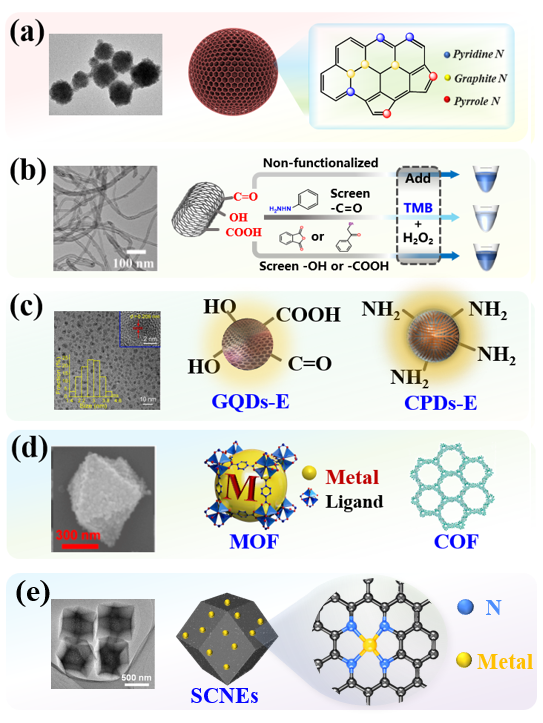
Based on this, it is speculated that the enzyme-like activity of CS-E may be closely related to the content ratio of N-6 to N-5 and the G-N structure (Fig. 1a). The edge N-6 can form more active sites, and its lone pair electrons are more readily coordinated with metal ions, thereby forming new catalytic active sites and exerting synergistic catalytic effects; meanwhile, N-5 forms a conjugated structure with the surrounding carbon atoms, significantly regulating the material’s electron distribution and altering its electronic properties and catalytic activity. The synergistic effect of these nitrogen-doped structures may be a key factor underlying the high OXD- and POD-like activities exhibited by CS-E.
图1 (a) 富氮CS-E的结构及位点示意图及TEM图[59]。(b) 经钝化的CT-E催化活性变化图及O-CNTs-7的TEM图[33]。(c) CQD-E 分类:GQDs-E和CPDs-E 。插图为His-GQD(例)的尺寸分布(左下)和HRTEM图(右上)[66]。(d) MOF和COF示意图,及MOF-818@PMOF(Fe)[53]的SEM图。(e) SCNEs的结构示意图及RhN4的TEM图[29]

Fig. 1 (a) Schematic diagram and TEM diagram of the structure and loci of nitrogen-rich CS-E[59]. Copyright 2023, Springer Nature; (b) changes in catalytic activity of passivated CT-E and TEM of O-CNTs-7[33]. Copyright 2022 Elsevier; (c) the classification of CQD-E: GQDs-E and CPDs-E. The inset is the size distribution of His-GQD (bottom left) and the HRTEM plot (top right)[66]. Copyright 2020 Springer Nature; (d) schematic diagram of MOF and COF, and SEM plot of MOF-818@PMOF(Fe)[53]. Copyright 2023 American Chemical Society; (e) schematic diagram of the structure of SCNEs and TEM diagram of RhN4[29]. Copyright 2022 Springer Nature

2.2 Carbon nanotube nanozymes

CT-E is a nanoscale tubular material with a hexagonal structure formed by carbon atoms via sp2hybridization. Due to its relatively weak intrinsic enzymatic activity, it is typically used as a carrier or auxiliary material, with active sites introduced through doping with heteroatoms (such as nitrogen or metal elements) to exhibit catalytic activity that mimics natural enzymes. Among these, nitrogen doping is the most common approach for eliciting enzyme-like activity. Similar to CS-E, in nitrogen-doped CT-E, N-6 and N-5 are considered key sites responsible for the enzyme-like activity. Song et al.[64]prepared carbon nanotubes with POD-like activity (Fe-NC NTs) using polypyrrole and an iron source, which exhibited an enzymatic activity more than 2900 times higher than that of a typical Fe3O4nanozyme. Chen et al.[6]doped nitrogen into the carbon framework, creating positively charged sites on nearby carbon atoms that facilitate the adsorption of dissolved oxygen and its transfer to the N-6 and N-5 catalytic sites for further decomposition into reactive oxygen species (ROS), thereby manifesting OXD-like activity. He et al.[15]synthesized bamboo-like nitrogen-doped carbon nanotubes encapsulating cobalt nanoparticles (N-CNTs@Co), whose observed OXD-like activity can also be attributed to the roles of the N-6 and N-5 sites.
CT-E is easily surface-functionalized; after reaction with an oxidant, it can introduce a wealth of oxygen-containing functional groups, which serve as active sites. Wang et al.[32]used concentrated nitric acid as an oxidant to treat carbon nanotubes, thereby introducing groups such as —C—O, —COOH, and —C=O. The resulting carbon nanotubes (o-CT) exhibited POD-like activity, catalyzing the oxidation of 3′,3′,5,5′-tetramethylbenzidine (TMB) in the presence of H2O2. The authors also investigated the contribution of oxygen-containing functional groups to enzymatic activity. After passivation of these groups, shielding the —C=O significantly reduced the o-CT's enzyme-like activity by 85%, indicating that —C=O plays a decisive role in the catalytic process; when both —C—O and —COOH were simultaneously shielded, their enzyme-like activities were higher than that of o-CT. Based on this, it is inferred that —C=O serves as the active activation site, while —C—O and —COOH are competitive inhibition sites (Fig. 1b). Furthermore, the amount of oxidant used can significantly influence the number of oxygen-containing functional groups, thereby regulating the enzyme-like catalytic activity. Li et al.[33]used multi-walled carbon nanotubes as a precursor and reacted them with an oxidant to prepare oxidized carbon nanotubes (O-CT) with POD-like activity. When the amount of the oxidant NaClO3was seven times that of the multi-walled carbon nanotubes, the enzyme-like activity of O-CT was at its highest. CT-E can be chemically modified, for example by introducing carbonyl, carboxyl, and other oxygen-containing functional groups, to enhance its interaction with substrates and improve catalytic efficiency. This may be an effective approach to enhancing enzyme-like activity.
By precisely controlling the types and content of oxygen-containing functional groups, the catalytic performance of CT-E can be selectively optimized to meet specific application requirements. In the field of small-molecule detection, CT-E can be used in the development of highly sensitive and highly selective biosensors, such as for the rapid detection of small molecules like glucose and hydrogen peroxide.

2.3 Carbon Quantum Dot Nanoenzymes

CQDs-E is a zero-dimensional carbon spherical or near-spherical nanomaterial with abundant surface functional groups such as —COOH and —NH2. These functional groups, together with their quantum confinement effects, endow CQDs-E with superior POD-like and OXD-like activities, enabling it to efficiently catalyze the decomposition of H2O2. Das et al.[65] demonstrated that the surface —COOH and —NH2 groups of CQDs can significantly enhance their POD-like activity through acid-base synergy and proton-coupled electron transfer mechanisms. Through theoretical calculations and experimental studies, they showed that —COOH serves as a highly effective active site for binding and degrading H2O2, while —NH2, via an electron-donating effect, stabilizes neighboring —COOH groups by reducing their degree of ionization, thereby further enhancing their affinity for H2O2 binding and catalytic activity. Xin et al.[66] prepared histidine-functionalized graphene quantum dots (His-GQDs) and combined them with heme to construct highly efficient POD-like mimics. In this system, the histidine functional groups form complexes with the heme iron center via coordination and π–π stacking interactions, mimicking the function of histidine residues in natural enzymes, stabilizing the active structure, facilitating substrate recognition and catalytic reactions, and enabling highly sensitive detection of H2O2 and glucose. The presence of these functional groups promotes interactions between substrates and CQDs-E, enhances electron transfer processes, provides a favorable chemical environment for redox reactions, and endows CQDs-E with enzyme-like activity.
According to differences in synthesis methods and structure, CQDs-E can be classified into two categories: graphene quantum dot nanoenzymes (Graphene quantum dots, GQDs-E)[67]and carbonized polymer dot enzymes (Carbonized polymer dots enzymes, CPDs-E)[68](Fig. 1c). GQDs-E possess a highly ordered graphene flake structure, and their POD-like activity relies more on the flake size and the functional group active sites at the edge structure[69]. Wang et al.[67]used carbon nanotubes as precursors and prepared o-GQDs with abundant oxygen-containing groups such as —C=O and —COOH through oxidation with concentrated nitric acid. The study also found that —C=O and —COOH serve as catalytic active sites and substrate binding sites, respectively. Compared with carbon quantum dots prepared by cutting and oxidizing graphene, the contents of —C=O and —COOH in o-GQDs are about six and two times higher, respectively, resulting in stronger POD-like activity and a smaller Kmvalue. Fan et al.[70]found that it is difficult for conventionally acid-modified products to introduce only —C=O; they may also introduce —OH, which inhibits enzyme-like activity. Therefore, they developed a method using hydroxyl radicals (·OH) as oxidants to increase the relative content of —C=O in the product, which can significantly enhance its enzyme-like activity. This work was the first to elucidate the effects of three oxygen-containing functional groups on the GQDs surface on POD-like activity. Yuan et al.[71]also reported that the POD-like activity of CQDs can be attributed to the introduction of —C=O. On the other hand, CPDs-E are mainly formed by the carbonization of cross-linked polymers, possessing abundant surface functional groups and a disordered carbon structure. Due to the greater abundance of surface functional groups (such as —COOH and —OH) and defect sites, CPDs-E typically exhibit higher POD-like and OXD-like activities. Compared with GQD-E, the chemical composition and surface properties of CPDs-E are easier to regulate through precursor selection and carbonization conditions, and their synthesis is also more convenient.
In addition, CQDs-E also exhibits excitation wavelength-dependent luminescence, where the emission wavelength increases as the excitation wavelength redshifts—a property often leveraged in conjunction with its enzyme-mimicking activity for various applications. Dadkhah et al.[72]synthesized Zn/Cl-CQDs via co-doping with Zn and Cl, which exhibited OXD-like catalytic performance. By integrating their fluorescent properties, they achieved sequential detection of riboflavin, copper ions, and thiamine. In the future, further integration of the excitation properties of CQDs-E with their enzyme-mimicking activity could be explored to develop colorimetric and fluorescent dual-mode nanoenzyme sensors, enhancing the selectivity and sensitivity of analyte detection and enabling applications for monitoring specific intracellular biochemical processes or real-time health monitoring.

2.4 Porous Organic Framework Nanozymes

Among porous organic framework nanoenzymes, the most common are metal-organic frameworks (MOFs) and covalent-organic frameworks (COFs) (Figure 1d).MOFs are materials with highly ordered porous structures, formed by the strong coordination bonding of metal ions or metal clusters with organic ligands. They can exhibit various mimetic enzymatic activities, such as POD-like and OXD-like activities, with the specific activity determined by the type of metal element. MOFs that exhibit POD-like activity typically contain Fe[73-77],while MOFs that display OXD-like activity often contain other transition metal elements such as Ce[78],Co[79],and Mn[80].The outermost electron orbitals of these elements are not fully filled, enabling them to catalyze redox reactions of substrates through changes in oxidation states, thereby endowing the supported nanoenzymes with OXD-like activity.
Compared to MOFs, COFs are organic porous framework crystalline materials composed entirely of light elements such as hydrogen, boron, carbon, nitrogen, oxygen, and halogens. Since the active sites primarily originate from electronegative functional groups within them (such as amino and carboxyl groups), the types of enzyme-like activities exhibited by COFs are similar to those of CS-E and CQD-E. Therefore, by selecting different monomers and linking strategies, the electronic structure and surface properties of COFs can be precisely tuned to optimize their catalytic activity[17]. For example, introducing nitrogen- or metal-containing monomers can enhance enzyme-like activity[58]. Tang et al.[17]constructed a nanoenzyme (Cu-Cys@COF-OMe) via a confined coordination strategy of Cu/amino acids within a porous COF-OMe, which exhibited laccase-like activity 1.9 times higher than that of natural laccase and a degradation kinetics for phenolic pollutants 1.4 times faster than that of natural laccase. In addition, COFs prepared by Zhang et al.[58]exhibit phosphatase-mimicking activity and can detect organophosphorus pesticides with ultra-high sensitivity.

2.5 Single-atom carbon-based nanoenzymes

Single-atom carbon-based nanoenzymes (SCNEs) feature metal active sites (such as Fe, Cu, Co, etc.) that are stably anchored on the surface of a support (such as carbon-based materials or MOFs) in the form of individual atoms, forming specific coordination structures—such as M-N-C-type structures—that resemble the metal center structures of natural enzymes.
The metal atoms in SCNEs exhibit strong interactions with the carbon-based support, enabling single atoms to be stably anchored onto the support. SCNEs are typically formed by high-temperature calcination of metal precursors with nitrogen-containing ligands, resulting in a metal-N4tetrahedral ring structure, where the metal atom within the ring serves as the active site and exerts its catalytic function[18,29,43-45](Fig. 1e). Their enzyme-mimicking activity exceeds that of the corresponding natural enzymes. This is because single-atom nanoenzymes form unique intermediate and transition states during reactions, thereby lowering the activation energy and accelerating the reaction rate. RhN4and VN4synthesized by Zhang et al.[29]exhibit a distinctive “bidentate oxygen-bridged” reaction pathway. This unique reaction mechanism reduces the energy barrier of the reaction, enabling the POD- and CAT-like activities of RhN4and the glutathione oxidase activity of VN4to surpass those of the corresponding natural enzymes. Unlike CNEs prepared via metal doping, the metal atoms in SCNEs are uniformly distributed on the carbon substrate and each functions as an independent catalytic center, achieving 100% utilization of the metal atoms.
In catalytic reactions, non-metal sites in SCNEs (such as π-conjugated ligand structures and simple N- or O-containing ligands) can also work synergistically with metal sites to enhance catalytic efficiency and selectivity. Wang et al.[45]prepared Ni-DAB nanoenzymes, in which the Ni metal center and the β-carbon atoms in the ligand interact synergistically to precisely mimic the dual-substrate binding site of natural xanthine oxidase. As a result, Ni-DAB exhibits highly efficient catalytic oxidation activity toward uric acid. Chen et al.[43]constructed a dynamic, high-catalytic-antioxidant cascade system based on Fe-NC SCNEs. During catalysis, the Fe-N xactive sites of this nanoenzyme generate ROS, while the π-conjugated structure of the ligand can convert excess ROS into H2O2and re-supply it to the Fe-N xactive sites. This synergistic effect significantly enhances the catalytic performance of Fe-NC SCNEs while preventing excessive ROS accumulation in cells that could lead to oxidative stress-induced damage.
Strictly speaking, SCNEs do not belong to an independent category of CNEs. Rather, they use CNEs as carriers or template precursors, and achieve single-atom dispersion of metal active sites through subsequent high-temperature pyrolysis. This structural characteristic dictates that the enzyme-like catalytic activity of SCNEs primarily stems from the highly dispersed single-atom metal active centers, rather than the intrinsic nanoparticle properties of traditional CNEs.

2.6 Others

In addition to the common classifications mentioned above, materials such as fullerenes[52],nanosheets[81],and hydrogen-bonded organic frameworks[82]also exhibit unique advantages and potential in mimicking the catalytic properties of natural enzymes. The derivative C3 of fullerene C60 clears superoxide radicals (·O2-) through catalytic disproportionation, effectively mimicking SOD activity in vivo; the mechanism underlying this disproportionation has also been investigated[83]. Zhao et al.[81] used wool as a protein precursor to synthesize nitrogen- and sulfur-rich carbonized wool nanosheets (CW). After high-temperature treatment, these nanosheets exhibit intrinsic OXD- and POD-like activities and a proposed high-temperature-triggered catalytic mechanism: appropriate high temperatures can maximize the degree of graphitization, thereby preserving most catalytic active sites. Zhou et al.[84] found that copper/nitrogen-codoped two-dimensional carbon nanosheets (Cu/NC NS) exhibit high affinity for H2O2 and TMB under acidic conditions, enabling them to induce a distinct color change in TMB even at low concentrations of H2O2.
In summary, different CNEs possess unique structural characteristics and can efficiently mimic the activity of single or multiple enzymes, such as POD, OXD, and SOD, through targeted functionalization design. These materials hold significant application potential in fields such as biomedicine, environmental catalysis, and energy conversion. The development of these materials has opened up new directions and possibilities for research on carbon-based nanoenzymes.

3 Factors Influencing the Catalytic Activity of Carbon-Based Nanoenzymes

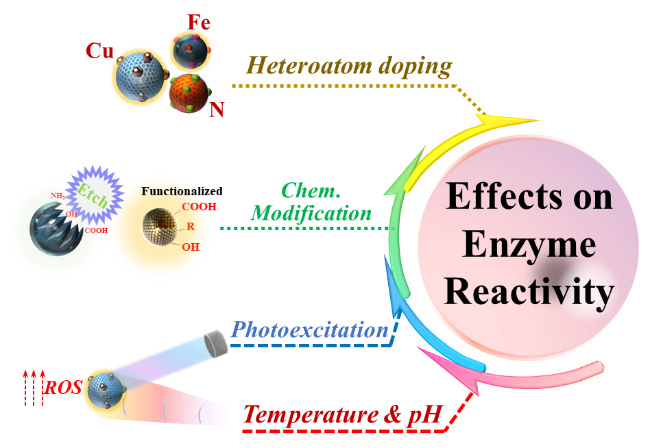
The enzyme-like activity of CNEs is influenced by a variety of complex factors, primarily including heteroatom doping[85],secondary chemical modification[32],and environmental conditions[86].These factors affect enzyme-like activity by modulating the interaction between the enzyme-like material and the substrate. Specifically, heteroatom doping may alter the selectivity or activity type of the enzyme-like material, enabling it to accommodate different types of substrates; secondary chemical modification enhances activity by increasing the affinity between the enzyme-like material and the substrate or by altering the conformation of the enzyme-like material; and environmental conditions such as light excitation, temperature, and pH serve as optimizing factors that enable the enzyme-like material to function at its optimal activity level (Figure 2).
图2 类酶活性的影响因素

Fig.2 Conditional control of enzyme activity

3.1 Heteroatom doping

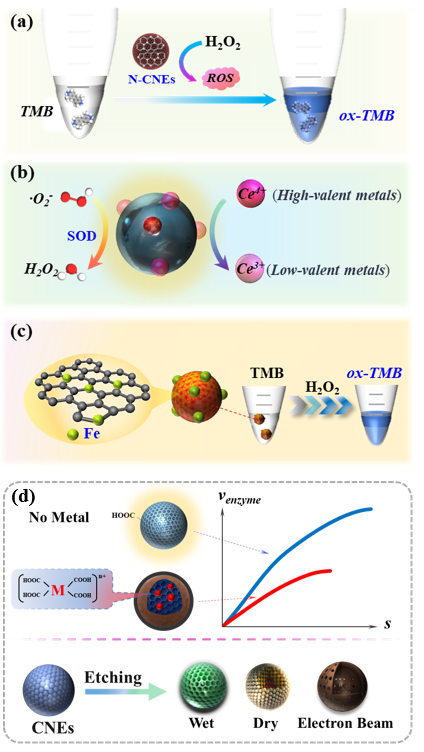
Doping CNEs with heteroatoms such as N and S, and/or heavy metal elements such as Ce and Cu, can increase active sites, optimize the electronic structure, and trigger synergistic effects among the heteroatoms, thereby significantly enhancing catalytic efficiency. In addition, the type and amount of dopants can be precisely controlled, enabling the customization of CNE performance and resulting in higher specificity in various fields, including early disease biomarker detection, antibacterial applications, and cancer therapy. Among these, materials doped with a single nitrogen source typically exhibit POD-like activity. Introducing different nitrogen species into carbon nanomaterials—such as N-5, N-6, and G-N—can reconstruct the electronic structure of the carbon nanomaterials, create active sites, and enhance their catalytic performance (Figure 3a).Lou et al.[85] reported that nitrogen-doped CP600-6 exhibits enhanced POD-like activity: glucose is first oxidized to H2O by glucose oxidase, and then the enzyme-like activity of CP600-6 catalyzes the generation of ·OH from H2O2, which oxidizes TMB to produce a colorimetric reaction for the indirect detection of glucose levels. Hu et al.[87] also incorporated nitrogen into reduced graphene oxide and mesoporous carbon, resulting in 100- and 60-fold increases in POD-like activity, respectively.
图3 杂原子掺杂和二次化学改性对纳米酶种类和活性的影响。(a) 具类POD活性的氮掺杂CNEs。(b) 具类SOD活性的过渡金属(如Ce、Cu、Co等)掺杂CNEs。(c) 具类POD活性的金属-N元素共掺杂CNEs。(d) CNEs的二次化学改性:功能化修饰及刻蚀技术

Fig.3 Effects of heteroatom doping and secondary chemical modification on the types and activities of nanozymes. (a)N-doped nanomaterials exhibit peroxidase-like activity. (b) Transition metals (e.g., Ce, Cu, Co, etc.) doped nanomaterials exhibit SOD-like enzyme activity. (c) Some metals co-doped with N elements exhibit peroxidase-like activity. (d) Secondary chemical modification of CNEs: functionalization and etching techniques.

Compared with single non-metal element doping, CNEs co-doped with multiple non-metal elements generally exhibit superior catalytic activity, likely due to the synergistic effects of multiple elements that enhance the material’s catalytic performance. Chen et al.[88]prepared S and N co-doped SNC nanoenzymes, which showed higher POD-like activity than single nitrogen-doped carbon (NC) nanoenzymes. The specific activity of SNC was 17.5 U/mg, significantly higher than that of NC nanoenzymes at 4.5 U/mg, and also exhibited a higher V maxand a lower Kmvalue. Raman spectroscopy analysis revealed that the I D/I Gratio (an indicator of defect degree) of SNC nanoenzymes was higher than that of NC nanoenzymes, indicating that the SNC nanoenzymes had more defects due to the co-doping of S and N. Luo et al.[89]prepared N and B co-doped graphene nanoribbons (NB-GNRs). The introduction of co-doping and edge structures endowed NB-GNRs with a highly defective structure and abundant active sites, resulting in higher POD-like activity compared to materials doped with N or B alone. It has also been found that materials co-doped with multiple non-metal elements exhibit higher POD-like activity than those doped with a single element[90-91].
Transition metals such as Cu, Ce, Fe, and Mn-doped CNEs exhibit excellent SOD-mimetic activity. Zhang et al.[92]investigated the effect of copper active sites in Cu-MOF nanoenzymes on the adsorption capacity for ·O2- and their ability to dissociate H2O2. Higher-valence Cu2+ exhibits stronger oxidizing power, more effectively converting ·O2- into O2 and H2O, thereby demonstrating enhanced SOD-mimetic activity. Sun et al.[93]prepared Ce NPs nanoenzymes, whose SOD-mimetic activity arises from redox reactions between Ce3+ and Ce4+ within the enzyme-like core. Liu et al.[94]also found that high-oxidation-state products in Ce-MOFs exhibit stronger SOD-mimetic activity.
In addition to the above elements, tin is also considered to possess similar catalytic capabilities. Li et al.[95]prepared a Sn-based metal–organic framework nanozyme (Sn-PCN222), which exhibits exceptionally high SOD-mimetic catalytic activity, even surpassing that of natural enzymes under specific pH and temperature conditions. The authors attribute this unprecedented catalytic behavior to the redox state transition of Sn(IV)/Sn(II) at the material’s core, with the higher oxidation state Sn(IV) playing a particularly crucial role. In summary, in their high oxidation states, these metal ions demonstrate superior SOD-mimetic activity through electron transfer in redox reactions, leveraging their ability to donate or accept electrons, thereby significantly accelerating catalytic reactions (Fig. 3b).
Co-doping with metal and N elements can further enhance enzyme-mimetic catalytic activity by forming new active sites. Liu et al.[96]encapsulated heme within ZIF-8 (zeolite imidazolate framework) and obtained Fe-N co-doped porous carbon (Fe-N-C) nanoenzymes via high-temperature calcination. XPS analysis confirmed the presence of Fe-N xstructures in the Fe-N-C nanoenzymes, which contribute to enhanced POD-mimetic activity. The CQDs co-doped with Fe and N prepared by Liang et al.[37]exhibit higher POD-mimetic activity than those doped solely with Fe. In the study by Zhou et al.[84], Cu and N co-doping enhances the POD-mimetic activity of Cu/NC NS, and a KSCN blocking experiment verified that Cu-N xsites are the primary catalytic sites. Hao et al.[97]reported that Fe and N co-doped ultrathin hollow carbon frameworks (Fe,N-UHCF) exhibit exceptionally high POD-mimetic activity, and Fe-N xactive sites are considered to play a central role in Fe,N-UHCF. These sites significantly enhance the material's enzyme-mimetic catalytic performance, resulting in higher efficiency in catalytic reactions. Numerous studies have confirmed that Metal-N xstructures in metal–N co-doped nanomaterials play a crucial role in exhibiting POD-mimetic activity[98-100](Fig. 3c).

3.2 Secondary chemical modification

Secondary chemical modification refers to the process of modifying or altering the surface structure and properties of a material through subsequent chemical treatments after synthesis. Functionalization is the most commonly used strategy in secondary chemical modification to enhance the enzymatic activity of CNEs. Among various functionalization methods, carboxyl functionalization is widely adopted due to its ease of operation and significant effects. Shukla et al.[31]prepared —COOH-functionalized carbon nanospheres (LC-CNS@NTA). Compared with unmodified carbon nanospheres, LC-CNS@NTA exhibited stronger fluorescence, lower Kmvalues, and higher V maxvalues, clearly demonstrating that the introduction of —COOH enhances the CAT-like and POD-like activities of carbon nanospheres. Similarly, Yang et al.[101]synthesized Fe2O3-hybrid nanoenzymes supported on carbon nanotubes using atomic layer deposition technology. They found that the introduction of —COOH increased the oxygen content on the nanoenzyme surface, providing more chemical binding sites for the anchoring of Fe2O3, resulting in a POD-like activity approximately 4.76 times higher than that of unmodified Fe2O3nanoenzymes, reaching 24.5 U/mg.
Interestingly, introducing the same oxygen/nitrogen-containing functional groups into different CNEs results in significantly substrate-dependent regulatory effects on their enzyme-mimetic activity, with differences in both the direction and magnitude of these effects. For example, the same functional group can enhance POD-like activity on sp2-hybridized carbon substrates, while it suppresses catalytic performance on sp-hybridized carbon substrates. This opposing effect may be attributed to differences in the electronic structure of the various carbon substrates, such as differing proton transfer pathways and variations in the energy barriers for the adsorption of active intermediates. Wang et al.[32]found that introducing —COOH into carbon nanotubes enhances POD-like activity, whereas Zhu et al.[5]reported the opposite effect when —COOH was introduced into Cu-modified hollow carbon nanospheres (Cu2+-HCNSs-COOH). This is because the primary active sites in the latter system originate from the metal, and the oxygen-containing functional groups form stable coordination bonds with the metal, thereby reducing the enzyme-mimetic activity, as shown in Figure 3d. The impact of functional group introduction on enzyme-mimetic activity may also be related to hydrophobicity. Shen et al.[102]found that Pt@ZIF-8 coated with tetraethoxysilane (TMS) exhibits significantly higher POD-like activity than Pt@ZIF-90 functionalized with —COOH on its surface, even surpassing that of natural horseradish peroxidase (HRP). Moreover, the activity of this TMS-coated enzyme is closely correlated with the water content in the solvent, possibly because the hydrophobic TMS interacts very weakly with water, thereby facilitating the adsorption of H2O2and enhancing enzymatic activity.
Etching is also a commonly used strategy for regulating enzyme-like activity in secondary chemical modification, including wet etching, dry etching, and electron-beam etching. Li et al.[103]synthesized a two-dimensional nanozyme (2D V2O5@C) through high-temperature calcination and etching treatment. The etching process increased its specific surface area and pore structure, thereby enhancing its POD-like activity. Tao et al.[104]used NaCl molten salt etching to introduce chlorine elements and increase the defect density of sp3-hybridized carbon, thereby enhancing POD-like activity. These techniques remove the outer structural layers of the material through chemical reactions, creating specific defect pore structures that expose previously buried enzyme-like active centers or form hollow or porous morphologies that significantly increase the specific surface area, introduce defect states, and enhance enzyme-like catalytic activity[6,105](Fig. 3d).
Pyrolysis is widely used to synthesize SCNEs, enabling the thermal decomposition of precursors under mild conditions. This allows metal precursors to react with carbon-based supports and nitrogen sources, forming single-atom-dispersed M-N-C structures. This preparation method is extensively employed to ensure high dispersion of metal atoms and introduces a rich microporous structure through the pyrolysis of the carbon substrate, increasing the specific surface area and thereby enhancing the adsorption and reaction efficiency of substrates[29,44]..

3.3 Environmental Condition Control

Like natural enzymes, temperature, pH environment, and light stimulation significantly affect the catalytic activity of CNEs. Determining the conditions for maximum CNE activity and the range of effective activity conditions is particularly important for small-molecule detection and disease treatment. The optimal temperature for CNEs is generally around 40 ℃[10,106-107],with a few CNEs retaining good catalytic activity at higher temperatures[10,66,88,108]. On the other hand, most CNEs exhibit optimal POD-like activity in environments with a pH of approximately 4.0–4.5[5,30-31,38,86,106,108-110],and the catalytic activity of some CNEs can effectively operate over a broader pH range[9,66,108].
Light irradiation can activate the enzyme-like activity of CNEs, enabling them to generate more ROS and enhancing their application efficacy in areas such as antibacterial and tumor therapy. The most commonly used excitation lights include visible light, ultraviolet light, and near-infrared light. Wang et al.[111]synthesized metal-free nitrogen-doped carbon nanodots (N-CNDs), which exhibited inactivation rates of 59.72% and 37.15% against Escherichia coli and Staphylococcus aureus, respectively. When combined with 365 nm light irradiation, the OXD-like activity of N-CNDs was enhanced, and the sterilization rates increased to 97.91% and 80.02%, respectively. However, visible light has a short wavelength and poor tissue penetration; ultraviolet light also poses potential damaging effects on the skin. In contrast, non-invasive near-infrared light offers superior tissue penetration and lower phototoxicity, making it suitable for deep-tissue treatment in living organisms. When combined with CNEs materials, near-infrared light can precisely confine the treatment area while minimizing damage to normal tissues, thereby enhancing treatment safety[112].
CNEs containing abundant conjugated groups are commonly used as near-infrared light absorbers to convert light energy into heat energy, a phenomenon known as the photothermal effect. At the same time, the temperature in the near-infrared irradiation area increases, enhancing the collision probability between substrates and enzymes and thereby boosting enzymatic catalytic activity. Xu et al.[86]modified the surface of Pt/C composites with the photosensitizer Ce6 (HCS@Pt-Ce6 NPs) to treat CT26 mouse colon cancer cells, and found that cells in this treatment group exhibited a stronger capacity to generate ROS under 660 nm laser irradiation. Due to the small irradiation area, the treatment generally does not cause a large-scale temperature change throughout the entire system[113].Fan et al.[12]encapsulated single gold nanoparticles within porous hollow carbon shell nanospheres to construct a core–shell composite (Au@HCNs). This nanoenzyme exhibits POD-like activity; after 10 minutes of 808 nm near-infrared irradiation, the temperature increased by approximately 17 ℃, indicating that Au@HCNs possesses photothermal conversion capability under laser irradiation, with a photothermal conversion efficiency of 26.8%. Zhang et al.[13]constructed carbon–gold hybrid nanocomposites (MCAPs), which, under 808 nm laser irradiation, showed a significant temperature increase only in the irradiated area within 5 minutes, with the temperature continuing to rise as irradiation time increased, demonstrating that the PTT effect of this nanomaterial can damage tumor cells. Compared with direct heating, light excitation enables localized temperature elevation without raising the temperature of the surrounding environment; it allows for more precise targeting of the desired nanoenzyme without affecting other components.
In summary, to enhance the enzyme-like activity of CNEs, the following approaches can be employed: (1) introducing N-5, N-6, and G-N through nitrogen doping; (2) doping with transition metal elements to provide additional redox pairs that accelerate catalytic reactions; (3) co-doping with two or more elements to generate more defect sites through synergistic effects, or using metal-N co-doping to create new active catalytic sites; (4) introducing oxygen-containing functional groups or creating more defect structures through etching to significantly enhance enzyme-like activity; (5) appropriately regulating conditions such as pH and temperature to improve enzyme-like activity; (6) combining with infrared-sensitive materials and using infrared light to excite the enzyme, thereby generating a photothermal effect.

4 Applications of Carbon-Based Nanoenzymes in Biomedicine

As a novel type of nanomaterial with unique physicochemical properties and enzyme-like activity, CNEs have demonstrated significant application potential in various biomedical fields, including small-molecule screening[109],oxidative stress regulation[114],antibacterial therapy[106],and cancer therapy[86].The underlying mechanisms are illustrated in Table 2.These applications not only expand the scope of nanomaterials in biomedicine but also provide innovative solutions and research perspectives for the diagnosis and treatment of related diseases.
表2 CNEs在生物医学中应用及机制

Table 2 Biomedical Applications and Mechanistic of CNEs

Classification Mechanism Mechanism diagrams Ref
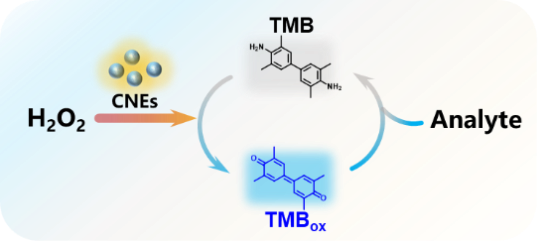
Small molecule screening (4.1) In the presence of CNEs, substrate is oxidized to form a colored product (e.g., TMB → TMBox), which can be quenched quantitatively by the analytes. 9,109~110
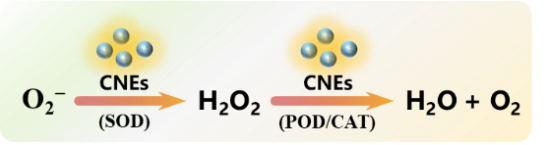
Regulates oxidative stress (4.2) CNEs quench free radicals such as ·O2-, H2O2 and •OH produced by metabolism to maintain oxidative-antioxidant balance. 31,107,114~115
Antimicrobial therapy
(4.3)
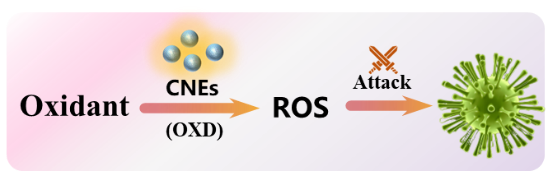
CNEs catalyze the decomposition of oxidants to produce ROS, which destroys bacterial cell structure. 32,36,50,106,111
Oncology treatment
(4.4)
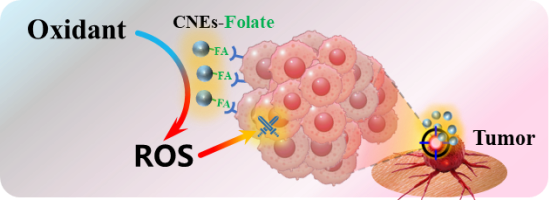
CNEs specifically bind to the FA receptors on the surface of the tumor. Oxidant was catalyzed and transformed to ROS, which activates the immune system and promotes the infiltration of immune cells into tumors, leading to the apoptosis of tumor cells. 7,11,30,6,86

4.1 Small-molecule screening

In the early stages of certain diseases, the concentration levels of specific small molecules in the body may become abnormal—for example, elevated glucose levels in the urine of diabetic patients or increased uric acid levels in the urine of gout patients. Based on this, diagnosis and intervention can be carried out in the early stages of disease by monitoring the types and concentration changes of these abnormal small molecules. Under normal circumstances, urine does not contain glucose; therefore, a positive urine glucose test is a key indicator of diabetes. Wang et al.[9]prepared PtAu composite nanoparticles loaded on nanotubes with glucose oxidase-like activity (PtAu/CNTs nanoenzyme), which can catalyze the oxidation of glucose to gluconic acid and H2O2. The surface of PtAu/CNTs is modified with diboronic acid (SDBA) molecules, which contain boronic acid groups capable of forming reversible complexes with the cis-diol groups in glucose molecules, thereby enhancing selectivity for glucose. The effectiveness of this sensor array in detecting glucose levels in morning urine from healthy individuals has been confirmed, with recovery rates ranging from 97.7% to 104.0%, suggesting its potential for home-based urine glucose monitoring.
Uric acid is a waste product generated during purine metabolism in the human body and is normally excreted through urine. However, elevated levels may result from increased purine metabolism or other diseases (such as gout). Sun et al.[110]By mimicking the catalytic active center of the natural enzyme HRP, a histidine-aminated sodium lignosulfonate-iron nanoenzyme with a heme-like active center (His-SL-Fe) was constructed. Compared to HRP, the His-SL-Fe nanoenzyme exhibits stronger affinity for TMB and H2O2and demonstrates higher catalytic efficiency. A sensing system based on His-SL-Fe has been successfully applied for highly sensitive and specific quantitative detection of uric acid in complex human urine matrices, showcasing its potential for applications in the field of uric acid detection. Both of the aforementioned sensors demonstrate application potential in home health monitoring, offering convenience for early disease diagnosis and health management.
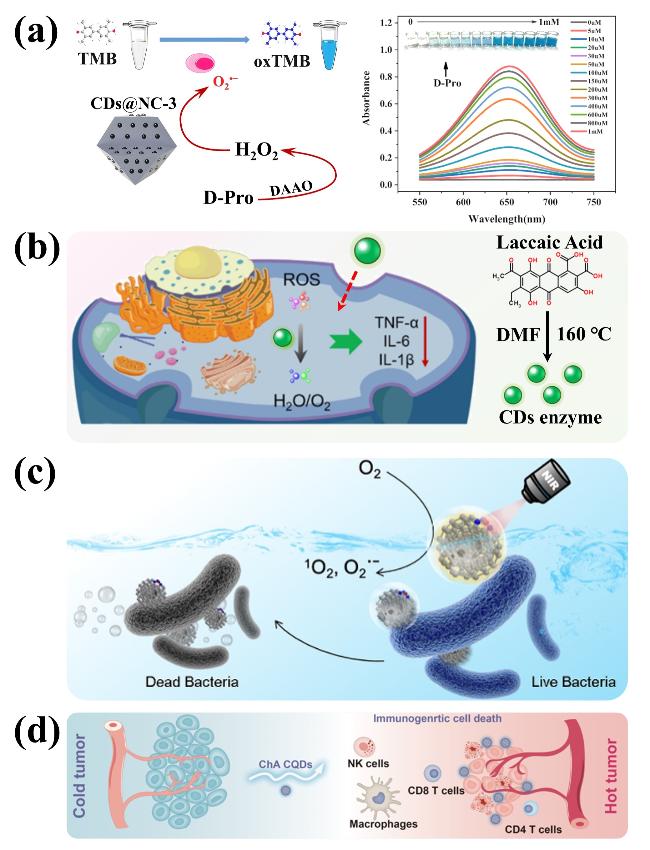
In the early stages of various diseases such as phenylketonuria, type 2 diabetes, and tumors, the concentration levels of specific amino acids exhibit abnormal fluctuations. Monitoring these amino acid concentration levels can effectively enable early diagnosis of potential diseases. Li et al.[109]prepared pyrolytic carbon dot nanoenzymes (CDs@NC) with POD-like activity via a two-step pyrolysis method. D-amino acid oxidase oxidizes D-amino acids to produce H2O2, which CDs@NC further catalyzes into highly oxidative ·O2 -, oxidizing colorless TMB to blue; the color intensity is proportional to the concentration of D-amino acids. Based on this, a colorimetric assay was established for detecting D-proline and D-alanine in clinical saliva samples (Figure 4a). The concentrations of these two substances in the saliva of patients with early gastric cancer are significantly higher than those in healthy individuals, suggesting that this detection method holds promise for rapid screening and diagnosis of early gastric cancer.
图4 (a) 含有不同浓度D-Pro的反应体系的吸收光谱[109]。(b) 具有抗ROS清除能力的CDs纳米酶用于抗感染治疗的示意图[114]。(c) 氧化酶样活性的FeSA-OLC应用于抗菌治疗[119]。(d) 通过ChA CQDs将免疫冷肿瘤转化为热肿瘤的拟议机制示意图[7]

Fig.4 (a) Schematic diagram and absorption spectra of enzyme reaction systems on detecting D-Pro[109], Copyright 2022, Elsevier. (b) Schematic illustration of CDs nanozyme with scavenging ability against ROS for anti-inflammatory therapy[114], Copyright 2022, Frontiers Media S.A. (c) Oxidase-like activity of FeSA-OLC used for antimicrobial therapy[119], Copyright 2025 Elsevier. (d) Schematic diagram of the proposed mechanism for converting immunologically cold into hot tumors by ChA CQDs[7], Copyright 2022, American Chemical Society.

4.2 Regulating oxidative stress

ROS such as ·O2-, H2O2, and ABTS·+ are important molecules generated during biological metabolic processes. They participate in physiological processes such as cell signaling and immune defense, but under pathological conditions can also trigger oxidative stress. When the balance between ROS generation and clearance is disrupted due to factors such as unhealthy lifestyles, metabolic disorders, or abnormal immune responses, excess ROS attacks cells, triggering pathological changes such as DNA damage, lipid peroxidation, and protein denaturation, ultimately leading to cellular dysfunction or even cell death[116].CNEs, owing to their unique enzyme-like activities (such as mimicking SOD, CAT, and POD), can efficiently catalyze the reduction reactions of ROS, scavenge excess free radicals, and restore redox balance, thereby alleviating oxidative stress-induced damage (Fig. 4b). Therefore, CNEs can serve as promising new drug candidates for preventing ROS imbalance and treating oxidative stress–related diseases.
Shukla et al.[31]prepared a metal-free carbon-based nanozyme (LC-CNS@NTA) with dual POD and OXD mimetic enzyme activities. Compared to cells treated with H2O2, the LC-CNS@NTA–treated group showed a significant reduction in malondialdehyde levels, a marker of lipid peroxidation, demonstrating its ability to alleviate oxidative stress at the cellular level. Zhang et al.[107]reported a platinum-coated nitrogen-doped carbon dot nanozyme (Pt@CNDs) with dual SOD and CAT mimetic enzyme activities. In the nanozyme-treated cell group, the ESR signal intensity of the DMPO/•OOHESR adduct was significantly reduced, confirming that Pt@CNDs possess a highly efficient ROS-scavenging capability. When Pt@CNDs were added at 25 μg/mL, the absorbance of bleached methylene blue recovered by 80% (i.e., 80% of ROS were scavenged), indicating great potential for Pt@CNDs as a novel therapeutic candidate for ROS-related diseases. Dong et al.[114]reported that carbon dot enzymes can efficiently scavenge various free radicals, including ABTS·+and ·OH, thereby protecting cells from oxidative stress damage by regulating intracellular ROS levels. In an inflammatory cell model, these carbon dots were found to significantly reduce levels of interleukin-1β (IL-1β), interleukin-6 (IL-6), and TNF-α, producing a potent anti-inflammatory effect. Geng et al.[115]prepared C-dots with SOD-like activity, which can effectively scavenge ·O2 -. In an in vitro experiment in which lipopolysaccharide was used to induce an inflammatory response in cells, a significant reduction in green fluorescence was observed, indicating that C-dots are highly effective at lowering ROS levels. Meanwhile, in MTT assays (where H2O2treatment resulted in approximately 50% cell death), cells pre-treated with different concentrations of C-dots (0–80 µg/mL) exhibited concentration-dependent enhancement of cell viability, suggesting that C-dots have a protective effect against oxidative stress. In addition, C-dots were found to exhibit mitochondrial targeting, with mitochondria being the primary site of intracellular ROS production[117], thereby enabling the reduction of ROS generation at the mitochondrial source.

4.3 Antimicrobial therapy

With the widespread and often inappropriate use of antibiotics, bacterial resistance has become increasingly severe, leading to a significant decline or even complete loss of efficacy of many traditional antibiotics against common pathogens. This phenomenon has emerged as a major challenge in global public health that urgently needs to be addressed. As an emerging class of antimicrobial agents, CNEs offer a new strategy for tackling bacterial resistance. Their antimicrobial mechanism primarily relies on mimicking the catalytic activity of natural enzymes, generating highly reactive free radicals that disrupt the integrity of bacterial cell membranes and cell walls, resulting in leakage of cellular contents and bacterial death, thereby achieving efficient and broad-spectrum antimicrobial effects[50](Figure 4c). In addition, CNEs can further enhance their antimicrobial efficacy by interfering with bacterial metabolic processes or by disrupting biomolecules such as proteins and DNA.
Wang et al.[111]prepared N-CNDs with OXD-like activity using tea polyphenols and ethylenediamine. This nanoenzyme inherits the antibacterial activity of tea polyphenols, which is further enhanced under 365 nm light excitation, leading to inactivation rates of 97.91% and 80.02% against Escherichia coli and Staphylococcus aureus, respectively. Jiang et al.[118]reported that P-doped carbon dots (P-CDs) generate electrons under light irradiation; these electrons react with oxygen in the air to produce oxidative ·O2-, thereby exhibiting OXD-like activity. P-CDs can effectively inhibit the growth of Escherichia coli and Staphylococcus aureus. Scanning electron microscopy (SEM) reveals that the morphology of bacteria treated with P-CDs changes, with wrinkles, collapse, and rupture observed on the cell walls, indicating that bacteria are killed by disrupting their cellular structure. As the concentration increases and the duration of light exposure extends, the bacterial survival rate decreases significantly. Feng et al.[119]developed a single-atom iron–multilayer onion carbon nanoenzyme with both OXD-like activity and photothermal effects. Through the synergistic action of ROS generation and localized heating over 10 minutes, this nanoenzyme reduces the survival rate of Escherichia coli to 2.5%, achieving highly efficient antibacterial activity at low doses. Li et al.[10]prepared Fe/N-doped chitosan-chelated carbon dot-based nanoenzymes (CS@Fe-N CDs), which exhibit POD-like activity and can catalyze the conversion of peroxides into ·OH, thereby disrupting bacterial cell structures and achieving antibacterial effects. In in vivo wound healing experiments, CS@Fe-N CDs significantly shortened the healing time in a rat wound model and demonstrated better therapeutic efficacy than the commonly used drug penicillin. By combining antibacterial and wound-healing-promoting properties, CS@Fe-N CDs offer a practical and biocompatible strategy for antibacterial wound healing.

4.4 Oncology Treatment

According to the World Health Organization's global cancer statistics, cancer is the second leading cause of death, surpassed only by cardiovascular diseases. Conventional cancer treatments typically include surgery, conventional chemotherapy, and radiotherapy, all of which may cause significant side effects.
In summary, existing scoring systems have limited predictive capabilities for bleeding events, and their results are inconsistent[25,30,33].
Traditional tumor-site injection may be affected by various factors in clinical practice, including the operator's experience and tumor location. Therefore, functional modification can enhance the targeting of nanoenzymes to tumors, enabling their site-specific release at the tumor site, increasing local concentration and therapeutic efficacy while reducing potential damage to other tissues. The folate receptor is a well-recognized biomarker for tumor cells and is overexpressed on many tumors[120].Folate (FA) is a small molecule that can specifically bind to folate receptors on the surface of tumor cells and can be used as a modifying group to enhance the targeting of probes to tumor cells. At the same time, folate receptor–mediated endocytosis enables more efficient uptake of nanoenzyme materials by tumor cells. Zhang et al.[13]prepared acid-treated porous carbon nanospheres doped with gold nanoparticles (OMCAPs), then conjugated FA-modified rBSA to the surface of OMCAPs, thereby enhancing the targeting of the nano-probe to tumor cells and reducing damage to normal cells. This probe exhibits excellent targeted therapeutic effects, showing significant efficacy in treating gastric cancer tumors and even having a tumor ablation effect. Similarly, Liang et al.[30]synthesized a dual enzyme-mimetic phosphorus-nitrogen co-doped porous hollow carbon sphere nanoenzyme (PNCNzyme) with both POD and OXD activities. With its unique structural advantages, it can effectively load the prodrug indole-3-acetic acid (IAA) and target acidic lysosomes, where IAA is activated to generate large amounts of ROS, triggering apoptosis of tumor cells. The authors further enhanced the probe's targeting and endocytic uptake in tumor cells through surface FA modification, thereby improving the efficiency of catalyzing the prodrug IAA.

5 Conclusion and Outlook

Compared with natural enzymes, CNEs exhibit significant multidimensional advantages. First, CNEs possess high stability, low biotoxicity, and low preparation costs, thereby overcoming the drawbacks of natural enzymes, such as easy deactivation and complex purification processes. Second, CNEs not only demonstrate excellent catalytic activity but can also have their enzyme-mimetic activity type and intensity precisely tuned through methods such as heteroatom doping, secondary chemical modification, or laser irradiation, thereby meeting the diverse catalytic application requirements. Third, the carbon substrate features a tunable and rich pore structure that allows for targeted design based on substrate molecule size, effectively enhancing mass transfer efficiency and increasing the contact area between substrates and catalytic sites. These three characteristics endow CNEs with broad application prospects in areas such as early disease diagnosis and targeted therapy.
However, CNEs still face several challenges. (1) The catalytic activity of most CNEs remains lower than that of natural enzymes and metal-based nanoenzymes; therefore, identifying new materials with high enzyme-mimicking activity remains crucial. (2) Existing CNEs typically exhibit multiple enzyme-mimicking activities. Solution one: Designing nanoenzymes with tunable enzyme-mimicking activity to reduce cross-reactions and avoid unnecessary side reactions is key; solution two: Designing nanoenzymes with switchable multi-enzyme activity to adapt to different catalytic applications in various scenarios. (3) Research on the biological properties of CNEs in living organisms—such as in vivo distribution, metabolic mechanisms, whether they are recognized as foreign substances triggering immune responses, and whether cumulative effects may lead to potential or long-term toxicity—still lacks comprehensive evaluation metrics across multiple dimensions, and the safety assessment system needs further refinement. (4) While CNEs have demonstrated promising therapeutic effects in cell and mouse experiments, more robust experimental data are still needed to fully establish their efficacy. In addition, the effectiveness of CNEs in organisms with the same type of disease but differing health statuses must be evaluated. This means that the practical application of CNEs in the biomedical field still faces numerous challenges, and the path toward their widespread implementation remains long and arduous.
In summary, this article offers the following outlook on future research on CNEs: First, research must focus on the structure–activity relationship of CNEs. On this basis, it is expected that by introducing new materials, innovating synthesis methods, and precisely designing enzyme-like structures, the catalytic efficiency of CNEs can be further enhanced, bringing them closer to or even surpassing natural enzymes. Moreover, the biocompatibility of CNEs should be improved, and their metabolic pathways and biodegradability in living organisms should be studied to ensure their safety in clinical applications. The development of nanoenzymes that respond to specific biomarkers will enable precise treatment and monitoring. With advances in nanotechnology, carbon-based nanoenzymes are expected to play an important role in future biomedicine.
[1]
Gao L Z, Zhuang J, Nie L, Zhang J B, Zhang Y, Gu N, Wang T H, Feng J, Yang D L, Perrett S, Yan X Y. Nat. Nanotechnol., 2007, 2(9): 577.

[2]
Weerathunge P, Behera B K, Zihara S, Singh M, Prasad S N, Hashmi S, Mariathomas P R D, Bansal V, Ramanathan R. Anal. Chim. Acta, 2019, 1083: 157.

[3]
Song C, Wang F F, Zhang X, Ma Y X, Wu Y Y, He M X, Niu X H, Sun M M. Biosensors, 2024, 14(4): 178.

[4]
Meng F J, Wei K Z, Li Y N, Zhang L, Xu S J, Shi X F, Tang B. Chem. Eng. J., 2024, 498: 155225.

[5]
Zhu J L, Luo G, Xi X X, Wang Y J, Selvaraj J N, Wen W, Zhang X H, Wang S F. Microchim. Acta, 2021, 188: 8.

[6]
Chen T, Cao J M, Bao X F, Peng Y, Liu L, Fu W S. RSC Adv., 2021, 11(63): 39966.

[7]
Yao L, Zhao M M, Luo Q W, Zhang Y C, Liu T T, Yang Z, Liao M, Tu P F, Zeng K W. ACS Nano, 2022, 16(6): 9228.

[8]
Yang P, Zheng Y, Wang Y F, Yue J Y, Gao G R, Ma Y, Tang B. Sens. Actuat. B Chem., 2021, 348: 130680.

[9]
Wang F, Zhang J H, Zhang M D, Xu C Y, Cheng S Q, Wang Q J, Zhang F, He X, He P G. Anal. Chim. Acta, 2023, 1237: 340598.

[10]
Li L L, Wang D F, Ren L K, Wang T, Tan X Q, Cui F C, Li T T, Li J R. Int. J. Biol. Macromol., 2024, 258: 129098.

[11]
Tao N, Jiao L, Li H H, Deng L, Wang W, Zhao S F, Chen W S, Chen L M, Zhu C Z, Liu Y N. ACS Nano, 2023, 17(22): 22844.

[12]
Fan L, Xu X D, Zhu C H, Han J, Gao L Z, Xi J Q, Guo R. ACS Appl. Mater. Interfaces, 2018, 10(5): 4502.

[13]
Zhang A M, Pan S J, Zhang Y H, Chang J, Cheng J, Huang Z C, Li T L, Zhang C L, de la Fuentea J M, Zhang Q, Cui D X. Theranostics, 2019, 9(12): 3443.

[14]
Chen Y W, Zhao L, Zhang B S, Guan Y Q, Yao C, Xu X. Anal., 2023, 148(12): 2825.

[15]
He S Y, Huang J Q, Zhang Q, Zhao W, Xu Z A, Zhang W. Adv. Funct. Mater., 2021, 31(41): 2105198.

[16]
Mahmoud A M, El-Wekil M M, Ali R, Batakoushy H A, Shahin R Y. Microchim. Acta, 2022, 189(5): 183.

[17]
Tang Y, Jiang S L, Li W Y, Jalil Shah S, Zhao Z X, Pan L, Zhao Z X. Chem. Eng. J., 2022, 448: 137701.

[18]
Zhu Y, Wang W Y, Cheng J J, Qu Y T, Dai Y, Liu M M, Yu J N, Wang C M, Wang H J, Wang S C, Zhao C, Wu Y E, Liu Y Z. Angew. Chem. Int. Ed., 2021, 60(17): 9480.

[19]
Xiong X Q, Tang Y H, Xu C J, Huang Y Y, Wang Y P, Fu L L, Lin C X, Zhou D F, Lin Y H. Small, 2020, 16(42): 2004129.

[20]
Wang J, Zhao C L, Zhou F J, Lu H, Huang Z H, Yao C, Song C. Anal., 2022, 148(1): 146.

[21]
Zhao N, Song J Q, Zhao L S. Colloids Surf. A Physicochem. Eng. Aspects, 2022, 648: 129390.

[22]
Chen Z H, Shan J, Niu Q, Chen H R, Zhang W, Cao D S, Wang X W. J. Colloid Interface Sci., 2024, 657: 250.

[23]
Li G M, Yang J, Zhang Y Y, Li H Y, Deng K Q, Huang H W. Anal. Chem., 2024, 96(33): 13455.

[24]
Yang W, Leng T C, Miao W C, Cao X, Chen H R, Xu F F, Fang Y M. Angew. Chem. Int. Ed., 2024, 63(22): e202403581.

[25]
Yi S W, Zhao H Y, Xu X N, Guan B W, Zhao H F, Zhang R P. Appl. Surf. Sci., 2024, 655: 159568.

[26]
Ning G B, Liang H, Guo L J, Lu X K, Xiao L, Qi T L, Zhao H, Li C P. J. Environ. Chem. Eng., 2024, 12(6): 114471.

[27]
Zhang H Y, Chen Y T, Wei Y H, Zhang X K, Ma H C. ACS Appl. Mater. Interfaces, 2025, 17(10): 15886.

[28]
Sun J H, Wu J, Zhao W J, Zhang L Y, Han Y H, Dong J, Zhang R P, Shi Y W. Mater. Today Bio, 2025, 31: 101609.

[29]
Zhang S F, Li Y H, Sun S, Liu L, Mu X Y, Liu S H, Jiao M L, Chen X Z, Chen K, Ma H Z, Li T, Liu X Y, Wang H, Zhang J N, Yang J, Zhang X D. Nat. Commun., 2022, 13: 4744.

[30]
Liang Q, Xi J Q, Gao X J, Zhang R F, Yang Y L, Gao X F, Yan X Y, Gao L Z, Fan K L. Nano Today, 2020, 35: 100935.

[31]
Shukla A K, Sharma C, Acharya A. ACS Appl. Mater. Interfaces, 2021, 13(13): 15040.

[32]
Wang H, Li P H, Yu D Q, Zhang Y, Wang Z Z, Liu C Q, Qiu H, Liu Z, Ren J S, Qu X G. Nano Lett., 2018, 19(12): 9173.

[33]
Li Z, Liu F N, Zhu S C, Liu Z, Zhang F F, Ni P J, Chen C X, Jiang Y Y, Lu Y Z. Biosens. Bioelectron. X, 2022, 11: 100190.

[34]
Zhong Q M, Chen Y Y, Su A M, Wang Y L. Sens. Actuat. B Chem., 2018, 273: 1098.

[35]
Chandra S, Singh V K, Yadav P K, Bano D, Kumar V, Pandey V K, Talat M, Hasan S H. Anal. Chim. Acta, 2019, 1054: 145.

[36]
Tripathi K M, Ahn H T, Chung M, Le X A, Saini D, Bhati A, Sonkar S K, Kim M I, Kim T. ACS Biomater. Sci. Eng., 2020, 6(10): 5527.

[37]
Liang C F, Lan Y W, Sun Z H, Zhou L Y, Li Y Z, Liang X Y, Qin X Z. Microchim. Acta, 2020, 187(7): 405.

[38]
Zhao L J, Wu Z P, Liu G N, Lu H Y, Gao Y, Liu F M, Wang C G, Cui J W, Lu G Y. J. Mater. Chem. B, 2019, 7(44): 7042.

[39]
Zhu Y Y, Deng X, Chen J M, Hu Z Y, Wu F S. Food Chem., 2023, 429: 136957.

[40]
Yuan C L, Qin X, Xu Y J, Li X P, Chen Y Y, Shi R, Wang Y L. J. Photochem. Photobiol. A Chem., 2020, 396: 112529.

[41]
Tan W, Yao G X, Yu H, He Y Z, Lu M R, Zou T R, Li X P, Yin P Y, Na P, Yang W R, Yang M, Wang H B. Food Chem., 2024, 447: 139020.

[42]
Sun Q J, Xu X Y, Yu J, Yin C H, Wu M, Niu N, Chen L G. Appl. Surf. Sci., 2022, 602: 154372.

[43]
Chen S, Lu W, Xu R, Tan J, Liu X. Carbon, 2023, 201: 439.

[44]
Cheng N, Li J C, Liu D, Lin Y, Du D. Small, 2019, 1901485.

[45]
Wang K Y, Hong Q, Zhu C X, Xu Y, Li W, Wang Y, Chen W H, Gu X, Chen X H, Fang Y F, Shen Y F, Liu S Q, Zhang Y J. Nat. Commun., 2024, 15: 5705.

[46]
Zhang J Y, Zhong Y J, Zhang C Y, Zhang J Y, Zhuang Z J. J. Phys. Chem. Lett., 2022, 13(9): 2137.

[47]
Wei N, Li X Y, Yin H J, Sun Y Y, Jia H M, Guan H J, Gao Y H. J. Mater. Sci., 2023, 58(12): 5244.

[48]
Shukla A K, Randhawa S, Saini T C, Acharya A. Int. J. Biol. Macromol., 2023, 233: 123466.

[49]
Han Z X, Fu Q J, Lv Y T, Wang N, Su X G. Talanta, 2024, 272: 125704.

[50]
Dai X H, Liu H, Du W X, Su J, Kong L S, Ni S Q, Zhan J H. Nano Res., 2023, 16(5): 7237.

[51]
Li J, Zhang M, Wang Y, Lv W, Xu Z, Wang B, Huang R, Mei B, Wang Y. ACS Nano, 2024, 18(52): 35606.

[52]
Wu G, Berka V, Derry P J, Mendoza K, Kakadiaris E, Roy T, Kent T A, Tour J M, Tsai A L. ACS Nano, 2019, 13(10): 11203.

[53]
Chai H N, Yu K, Zhao Y M, Zhang Z Y, Wang S S, Huang C N, Zhang X J, Zhang G Y. Anal. Chem., 2023, 95(28): 10785.

[54]
Sha M, Rao L, Xu W Q, Qin Y, Su R N, Wu Y, Fang Q, Wang H J, Cui X W, Zheng L R, Gu W L, Zhu C Z. Nano Lett., 2023, 23(2): 701.

[55]
Wang J H, Huang R L, Qi W, Su R X, He Z M. Chem. Eng. J., 2022, 434: 134677.

[56]
Zhang D X, Du P Y, Chen J, Guo H X, Lu X Q. Sens. Actuat. B Chem., 2021, 341: 130000.

[57]
Wang L, Sun Y, Zhang H, Shi W Q, Huang H, Li Y X. Spectrochim. Acta Part A Mol. Biomol. Spectrosc., 2023, 302: 123003.

[58]
Zhang X, Hao N, Liu S C, Wei K, Ma C C, Pan J M, Feng S. Sens. Actuat. B Chem., 2024, 417: 136068.

[59]
Nurtay L, Benassi E, Nazir F, Dastan D, Utupova A, Dautov A, Dukenbayev K, Xie Y Q, Pham T T, Fan H Y. Discov. Nano, 2023, 18: 76.

[60]
Li J Q, Zhou Y, Xiao Y, Cai S, Huang C S, Guo S, Sun Y Q, Song R B, Li Z H. Food Chem., 2023, 405: 134749.

[61]
Yuan M Y, Xiao S J, Wu Y N, Qiu A T, Guo J, Zhong Z Q, Zhang L. Microchem. J., 2022, 175: 107080.

[62]
Fan K L, Xi J Q, Fan L, Wang P X, Zhu C H, Tang Y, Xu X D, Liang M M, Jiang B, Yan X Y, Gao L Z. Nat. Commun., 2018, 9: 1440.

[63]
Zhou X B, Wang M K, Su X G. Sens. Actuat. B Chem., 2021, 338: 129777.

[64]
Song N, Zhong M X, Xu J Q, Wang C, Lu X F. Sens. Actuat. B Chem., 2022, 351: 130969.

[65]
Das S, Ngashangva L, Mog H, Gogoi S, Goswami P. Opt. Mater., 2021, 115: 111017.

[66]
Xin Q, Jia X R, Nawaz A, Xie W J, Li L T, Gong J R. Nano Res., 2020, 13(5): 1427.

[67]
Wang H, Liu C Q, Liu Z, Ren J S, Qu X G. Small, 2018, 14(13): 1703710.

[68]
Feng tanglue, Zhu S J, Zeng Q S, Lu S Y, Tao S Y, Liu J J, Yang B. ACS Appl. Mater. Interfaces, 2018, 10(15): 12262.

[69]
Sk M A, Ananthanarayanan A, Huang L, Lim K H, Chen P. J. Mater. Chem. C, 2014, 2(34): 6954.

[70]
Fan H Z, Yang W, Dai Y, Huang L X, Zhang Q, Zhang H S, Liu J, Zhu W Y, Hong J L. Anal. Chim. Acta, 2024, 1318: 342931.

[71]
Yuan C L, Qin X, Xu Y J, Jing Q Q, Shi R, Wang Y L. Microchem. J., 2020, 159: 105365.

[72]
Dadkhah S, Mehdinia A, Jabbari A, Manbohi A. Sci. Rep., 2022, 12: 18276.

[73]
Gao H F, Yu H T, Yang S, Chai F, Wu H B, Tian M M. Microchim. Acta, 2024, 191(8): 482.

[74]
Mu Z, Guo J J, Li M Y, Wu S, Zhang X, Wang Y. Microchim. Acta, 2023, 190(3): 81.

[75]
Jiang M Q, Xu Z X, Li L J, Li M, He G H, Zhang W J. Microchim. Acta, 2024, 191(8): 478.

[76]
Chang J F, Hu R X, Zhang J Y, Hou T, Li F. Biosens. Bioelectron., 2024, 255: 116271.

[77]
Yu J, Sun Q J, Sun J M, Wang X C, Niu N, Chen L G. Sens. Actuat. B Chem., 2023, 390: 134024.

[78]
Xie Y M, Sun F L, Chang K, Li G, Song Z J, Huang J Y, Cheng X Q, Zhuang G L, Kuang Q. Adv. Sci., 2024, 11(11): 2306911.

[79]
Ren M Z, Zhang Y J, Yu L L, Qu L B, Li Z H, Zhang L. Talanta, 2023, 255: 124219.

[80]
Mohammad Ameen S S, Omer K M. Food Chem., 2025, 462: 141027.

[81]
Zhao J, Yu D, Chen J, Li S, Tang Y, Fa C, Zhou D, Lin Y. Chin. Chem. Lett., 2023, 35(3): 109080.

[82]
Li H Y, Wang X, Chen Y F, Leng H, Bai J J, Lu Y, Wang N, Du C, Wang J H, Chen M L. Anal. Chem., 2025, 97(3): 1758.

[83]
Ali S S, Hardt J I, Quick K L, Sook Kim-Han J, Erlanger B F, Huang T T, Epstein C J, Dugan L L. Free.Radic. Biol. Med., 2004, 37(8): 1191.

[84]
Zhou X B, Wang M J, Chen J Y, Su X G. Talanta, 2022, 245: 123451.

[85]
Lou Z P, Zhao S, Wang Q, Wei H. Anal. Chem., 2019, 91(23): 15267.

[86]
Xu Z L, Sun P Z, Zhang J J, Lu X M, Fan L, Xi J Q, Han J, Guo R. Chem. Eng. J., 2020, 399: 125797.

[87]
Hu Y H, Gao X J, Zhu Y Y, Muhammad F, Tan S H, Cao W, Lin S C, Jin Z, Gao X F, Wei H. Chem. Mater., 2018, 30(18): 6431.

[88]
Chen Y F, Jiao L, Yan H Y, Xu W Q, Wu Y, Wang H J, Gu W L, Zhu C Z. Anal. Chem., 2020, 92(19): 13518.

[89]
Luo S Y, Sha M, Tian F, Li X L, Fu L J, Gu Y Q, Qu L L, Yang G H, Zhu C Z. Chin. Chemical Lett., 2022, 33(1): 344.

[90]
Chen L Y, Hou T, Tan Y L, Guo C X, Wang B K, Ge L, Li F. ACS Sustainable Chem. Eng., 2022, 10(8): 2750.

[91]
Zhu Y Y, Zhang R L, Hu Z Y, Wu F S. Talanta, 2024, 278: 126471.

[92]
Zhang J, Guo M L, He Q K, Zhang Z S, Wu B D, Wu H J, Li R Z, Zhang Q Y, Tang Y H, Lin Y H, Jin Y P. Small, 2024, 20(32): 2310675.

[93]
Sun Y X, Liu X, Wang L, Xu L, Liu K L, Xu L, Shi F F, Zhang Y, Gu N, Xiong F. Bioact. Mater., 2022, 10: 117.

[94]
Liu Y, Li H, Liu W, Guo J, Yang H Y, Tang H K, Tian M Y, Nie H M, Zhang X D, Long W. ACS Appl. Mater. Interfaces, 2022, 14(49): 54587.

[95]
Li L, Li H, Shi L, Shi L L, Li T. Langmuir, 2022, 38(23): 7272.

[96]
Liu W D, Chu L, Zhang C H, Ni P J, Jiang Y Y, Wang B, Lu Y Z, Chen C X. Chem. Eng. J., 2021, 415: 128876.

[97]
Hao J Y, Zhang C, Feng C X, Wang Q, Liu Z Y, Li Y, Mu J S, Yang E C, Wang Y. Chin. Chem. Lett., 2023, 34(3): 107650.

[98]
Le P G, Le X A, Duong H S, Jung S H, Kim T, Kim M I. Biosens. Bioelectron., 2024, 255: 116259.

[99]
Wu M L, Lv Y T, Lin Z H. Spectrochim. Acta Part A Mol. Biomol. Spectrosc., 2022, 282: 121683.

[100]
Zhou C Y, Wang N, Su Y, Liu J X, Lv Y T, Su X G. Sens. Actuat. B Chem., 2024, 418: 136246.

[101]
Yang Y C, Li T, Qin Y, Zhang L B, Chen Y. Front. Chem., 2020, 8: 564968.

[102]
Shen B Q, Wu Q, Guo Y G, Qin J, Chen H L, Yang Y, Liu Z J, Li L H, Li W B, Zhu C Z. Adv. Funct. Mater., 2025, 35(8): 2415854.

[103]
Li H Y, Zhao S X, Wang Z X, Li F. Talanta, 2024, 278: 126490.

[104]
Tao C Y, Liu W D, Zhang J Q, Yan J H, Jiang Y Y, Lu Y Z. J. Colloid Interface Sci., 2025, 678: 427.

[105]
Ye X X, Zhang X W, Wang C C, Xu R H, Li Y, Wei W, Zhang Y J, Liu S Q. Sens. Actuat. B Chem., 2024, 418: 136130.

[106]
Xi J Q, Wei G, Wu Q W, Xu Z L, Liu Y W, Han J, Fan L, Gao L Z. Biomater. Sci., 2017, 5(3): 343.

[107]
Zhang Y J, Gao W H, Ma Y N, Cheng L L, Zhang L, Liu Q G, Chen J Y, Zhao Y R, Tu K S, Zhang M Z, Liu C. Nano Today, 2023, 49: 101768.

[108]
Tao N, Xu Y, Wang L Q, Yang W J, Liu Y N. Microchem. J., 2021, 166: 106206.

[109]
Li Z, Liu W D, Ni P J, Zhang C H, Wang B, Duan G B, Chen C X, Jiang Y Y, Lu Y Z. Chem. Eng. J., 2022, 428: 131396.

[110]
Sun Q J, Xu X Y, Wu M, Niu N, Chen L G. Talanta, 2024, 271: 125657.

[111]
Wang H P, Wang Q X, Wang Q W, Dong W J, Liu Y, Hu Q, Song X L, Shuang S M, Dong C, Gong X J. J. Clean. Prod., 2023, 411: 137337.

[112]
Chen G, Cao Y, Tang Y, Yang X, Liu Y, Huang D, Zhang Y, Li C, Wang Q. Adv. Sci., 2020, 7(8): 1903783.

[113]
Wang C P, Zhang Q, Wang X Y, Chang H, Zhang S J, Tang Y K, Xu J H, Qi R J, Cheng Y Y. Angew. Chem. Int. Ed., 2017, 56 (24): 6767.

[114]
Dong C, Ma X H, Huang Y, Zhang Y J, Gao X. Front. Bioeng. Biotechnol., 2022, 10: 943399.

[115]
Geng H G, Chen J Y, Tu K S, Tuo H, Wu Q S, Guo J H, Zhu Q W, Zhang Z, Zhang Y J, Huang D S, Zhang M Z, Xu Q R. J. Nanobiotechnol., 2023, 21: 500.

[116]
Srinivas U S, Tan B W Q, Vellayappan B A, Jeyasekharan A D. Redox Biol., 2019, 25: 101084.

[117]
Hoye A T, Davoren J E, Wipf P, Fink M P, Kagan V E. Acc. Chem. Res., 2008, 41(1): 87.

[118]
Jiang G Y, Fan J W, Wan Y Q, Li J K, Pi F W. Chem. Eng. J., 2024, 480: 148216.

[119]
Feng Y C, Shi Y X, Zhao Q, Gao G Y, Wang Z Q, Zhi J F. J. Colloid Interface Sci., 2025, 681: 205.

[120]
Fernández M, Javaid F, Chudasama V. Chem. Sci., 2018, 9(4): 790.

Outlines

/