Home Journals Progress in Chemistry
Progress in Chemistry

Abbreviation (ISO4): Prog Chem      Editor in chief: Jincai ZHAO

About  /  Aim & scope  /  Editorial board  /  Indexed  /  Contact  / 
Review

Visible-Light-Driven Palladium-Catalyzed Cross-Coupling and C—H Functionalization Reactions

  • Jiahao Tao 1 ,
  • Ziyi Zhou 1 ,
  • Liang Liu 2 ,
  • Xiaoyan Song 2 ,
  • Baoli Zhao , 1, * ,
  • Kai Cheng , 1, *
Expand
  • 1 Shaoxing University, Shaoxing 312000, China
  • 2 Zhejiang Xieshi New Materials Co., Ltd., Shaoxing 312300, China
*(Baoli Zhao);
(Kai Cheng)

Revised date: 2025-09-28

  Online published: 2026-02-04

Supported by

Zhejiang Province “Leading Geese” R&D Projects(2024C03253)

National Natural Science Foundation of China(21402123)

Laboratory Operations Research Project for Higher Education Institutions in Zhejiang Province(YB202525)

Abstract

In recent years,visible-light-promoted palladium-catalyzed coupling reactions and C—H functionalization have witnessed remarkable advances in the field of organic synthesis. By utilizing photoexcited palladium complexes to mediate single-electron transfer (SET) processes,researchers have effectively addressed challenges associated with the activation of inert bonds in conventional thermal catalytic systems. This strategy has notably expanded the scope of applicable substrates and improved compatibility with diverse functional groups. This review highlights recent developments in visible-light-induced palladium-catalyzed Negishi coupling,Suzuki-Miyaura coupling,Heck reaction,three-component coupling,as well as C—H functionalization. Particular emphasis is placed on the distinct advantages of photoexcited palladium catalysis in enabling inert bond activation,regioselective control,and stereoselective transformations. This Pd/photoredox dual catalytic strategy significantly enhances reaction regioselectivity and stereocontrol,substantially broadening the substrate scope and functional group tolerance. It demonstrates particular utility in the construction of fluorinated molecules,strained rings,and heterocyclic architectures,offering a novel and efficient green pathway for the synthesis of pharmaceuticals,functional materials,and natural products,thereby revealing considerable application potential.

Contents

1 Introduction

2 Coupling reaction

2.1 Negishi coupling reaction

2.2 Suzuki-Miyaura coupling reaction

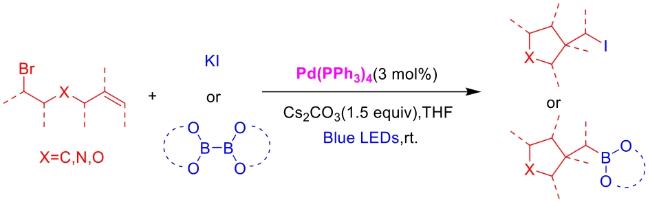
2.3 Heck-type coupling reactio

2.4 Cross-coupling reaction

2.5 Three-component coupling reaction

2.6 Palladium-catalyzed cyclization reaction

3 Palladium-catalyzed C—H functionalization

3.1 Palladium-catalyzed C—H functionalization/cyclization reaction

3.2 Palladium-catalyzed directed sp3 C—H functionalization

3.3 Palladium-catalyzed directed sp² C—H functionalization

3.4 Palladium-catalyzed non-directed sp3 C—H alkylation

3.5 Palladium-catalyzed non-directed sp3 C—H arylation

3.6 Palladium-catalyzed non-directed sp² C—H alkylation

3.7 Palladium-catalyzed hydrogen atom transfer (HAT) reaction

3.8 Other palladium-catalyzed C—H functionalization reactions

4 Conclusion and outlook
Cite this article

Jiahao Tao , Ziyi Zhou , Liang Liu , Xiaoyan Song , Baoli Zhao , Kai Cheng . Visible-Light-Driven Palladium-Catalyzed Cross-Coupling and C—H Functionalization Reactions[J]. Progress in Chemistry, 2026 , 38(2) : 252 -273 . DOI: 10.7536/PC20250620

1 Introduction

Transition metal-catalyzed C—H bond functionalization has become a core strategy for constructing C—C and C—X bonds in modern organic synthesis. However, traditional thermodynamically controlled catalytic systems are often limited by high energy consumption and a narrow scope of applicable substrates.[1]In recent years, visible light-driven palladium catalytic systems have provided a novel pathway for the activation of inert chemical bonds through the formation of excited-state palladium species. The photochemical activation mechanism not only overcomes the energy barrier obstacles in traditional catalytic cycles but also achieves efficient transformation under mild conditions, significantly enhancing the atomic economy and step simplicity of the reactions.[2-3], against this background, the research groups of Shaohua Huang and Jing Zhang[4-5]conducted a systematic review of light-driven palladium catalytic systems. Subsequently, in-depth studies on their reaction mechanisms have further promoted the rapid development of this field. This article reviews the research progress in visible light-driven palladium-catalyzed coupling and C—H functionalization reactions from 2017 to 2025.
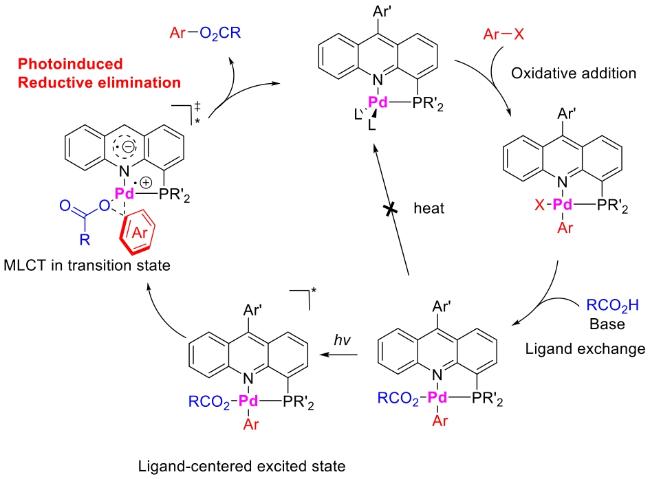
In 2022, the Iwasawa group[6]designed a photosensitive bidentate phosphine-acridine ligand and conducted an in-depth study on the monometallic catalytic mechanism (Scheme 1), proposing a metal-ligand charge transfer (MLCT) mechanism. By isolating the key intermediate ArPd(II)OAc, it was confirmed that reductive elimination is the rate-determining step of the reaction, which proceeds efficiently only under blue light excitation; no reaction occurs under heating conditions. The catalytic process mainly includes the following four steps: (1) Oxidative addition—Pd(0) reacts with aryl halide (ArX) to generate ArPd(II)X; (2) Ligand exchange—X-is replaced by carboxylate (RCOO-) to form ArPd(II)OOCR; (3) Photoexcitation induces MLCT, creating an electron-deficient state at the Pd(II) center, thereby accelerating reductive elimination to generate ArOOCR; (4) Pd(II) is reduced to regenerate Pd(0), completing the catalytic cycle.
图式1 金属-配体电荷转移(MLCT)辅助的可见光驱动还原消除[6]

Scheme 1 MLCT-assisted Visible-light-driven reductive elimination[6]

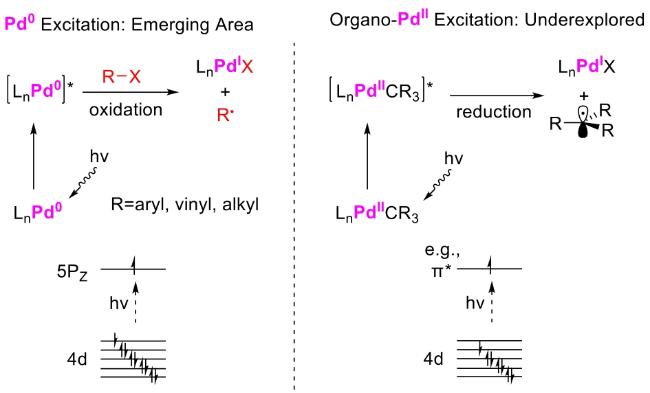
Carrow group[7]systematically investigated the mechanism of Pd(II) complexes containing T-shaped monophosphine ligands in light-driven catalytic coupling reactions (Scheme 2). Through TD-DFT calculations and radical trapping experiments, they elucidated the single-electron transfer (SET) pathway occurring in this system under blue light (approx. 440 nm) excitation. Photoexcitation promotes electron transition from the Pd d-orbitals (e.g., d²) to the antibonding orbital (σ) of the Pd—C bond, forming a metal-to-ligand charge transfer (MLCT)-like state, thereby reducing the electron density of the Pd—C bond and weakening its bond order. Subsequently, homolytic cleavage of the Pd—C bond generates a methyl radical (CH3·) and a Pd(I) intermediate. The generated radical can be captured by another Pd(II) aryl complex to form a Pd(III) intermediate, which finally undergoes reductive elimination to yield the coupling product.
图式2 Pd(0)对Pd(II)的光化学激发[7]

Scheme 2 Photochemical excitation of Pd(0) versus Pd(II)[7]

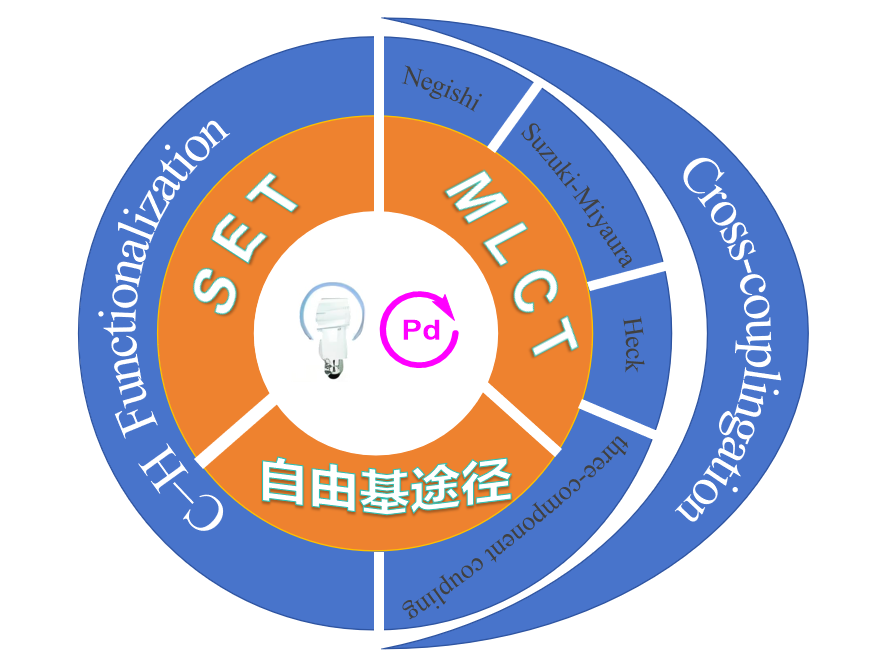
Through mechanistic analyses by the Iwasawa and Carrow research groups, it can be concluded that in light-driven transition metal catalysis, different photoexcitation pathways exhibit significant differences in electron transfer modes and reaction mechanisms. The metal-to-ligand charge transfer (MLCT) pathway involves the excitation of an electron from the metal center to the π* orbital of the ligand upon photoexcitation, forming a charge-separated state that promotes key steps such as reductive elimination. The single-electron transfer (SET) pathway generates radical species via light driving, involving single-electron transfer to or from the metal center, often accompanied by homolytic bond cleavage and the formation of radical intermediates. In contrast, pure radical pathways typically do not rely on direct excitation of the metal center; instead, they initiate chain reactions through photogenerated radicals or involve radicals produced after light absorption by ligands or substrates. These pathways each possess distinct characteristics regarding excitation methods, intermediate properties, and reaction kinetics, collectively expanding the mechanistic diversity of photocatalytic reactions.
This article aims to systematically review the latest research progress in visible-light-driven palladium catalysis for coupling reactions and C—H functionalization. It focuses on the unique advantages of photoexcited palladium species in activating inert bonds and regulating selectivity through mechanisms such as single electron transfer (SET) and metal-to-ligand charge transfer (MLCT). This strategy offers significant environmental benefits by using visible light as a clean energy source, avoiding the high temperature and pressure conditions of traditional thermal catalysis, significantly reducing energy consumption, and achieving efficient conversion under mild conditions while minimizing byproducts and the use of toxic reagents. Furthermore, it enables the efficient activation of inert chemical bonds via single electron transfer (SET) processes, featuring high atom economy and step simplicity, aligning with the principles of green chemistry.[8-11]. Compared with existing reviews, this paper not only covers photochemical variants of classic coupling reactions such as Negishi, Suzuki-Miyaura, and Heck, but also deeply explores frontier directions including three-component couplings, cyclization reactions, and non-directed C—H functionalization. It particularly emphasizes mechanistic breakthroughs and application expansions of excited-state palladium catalysis in regioselectivity and stereocontrol, providing a more timely and systematic theoretical reference and practical guidance for the green synthesis of complex molecules such as pharmaceutical intermediates, natural products, and functional materials.

2 Coupling reaction

2.1 Negishi coupling reaction

Transition metal-catalyzed cross-coupling reactions have greatly enriched the methodology system of organic synthesis, providing key tools for the construction of complex molecules. Among them, the Negishi coupling reaction, with its high stereoselectivity, plays a crucial role in constructing C(sp3)—C(sp2) bonds. With the introduction of visible light photocatalysis mechanisms, this reaction can initiate a single electron transfer (SET) process via photosensitizer excitation, promoting carbon-carbon bond formation between alkylzinc reagents and electrophiles[12].
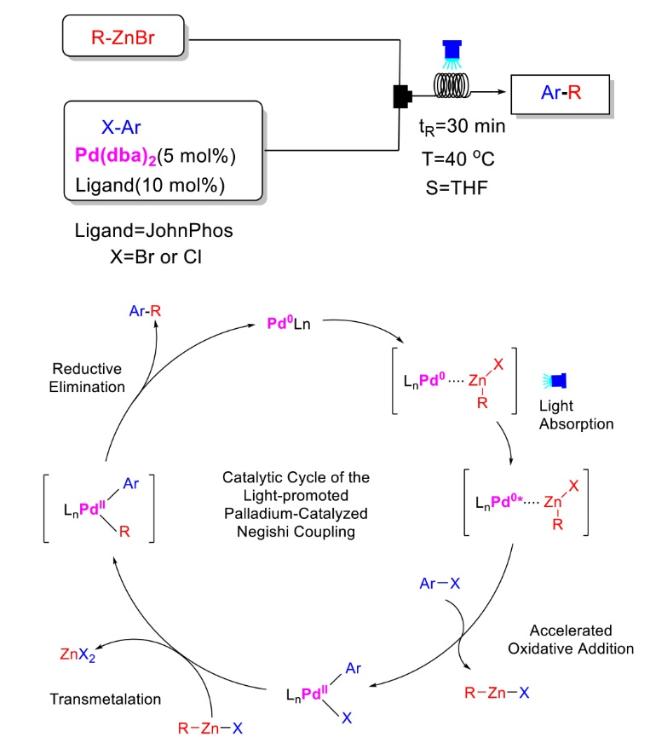
In 2018, the Alcázar group[13]first reported a new mechanism for visible-light-driven Negishi coupling reactions based on Pd0-Zn complexes (Scheme 3). This strategy successfully expanded the scope of such reactions to include electron-rich aryl bromides and aryl chlorides, substrates traditionally difficult to activate. Studies indicate that visible light can excite the Pd0-Zn complex into a high-energy state, thereby significantly promoting the critical oxidative addition step in the catalytic cycle. Combined with kinetic analysis, spectroscopic characterization, and NMR experiments, the feasibility of this photoactivation mechanism was further verified. This research not only deepens the understanding of the photochemical behavior of palladium catalysis but also provides theoretical support for developing novel and efficient photocatalytic systems.
图式3 可见光驱动钯催化的Negishi偶联反应[13]

Scheme 3 Visible-light-driven palladium-catalyzed Negishi coupling[13]

2.2 Suzuki-Miyaura coupling reaction

As another core strategy of transition metal-catalyzed cross-coupling reactions, the Suzuki-Miyaura coupling reaction (SMC) is widely used in the synthesis of fine chemicals and pharmaceutical intermediates due to its broad substrate compatibility and operational simplicity.[14]. Compared to the Negishi coupling reaction's advantages in stereoselectivity, the Suzuki-Miyaura reaction highlights its efficiency in constructing biaryl C—C bonds. In recent years, the introduction of photocatalytic systems has provided a viable pathway for the activation of inert C(sp3)—X (X = Cl, F) bonds.
In 2018, the Lang Jianping research group[15]reported a visible-light photocatalytic system based on conjugated nanoporous polycarbazole-supported palladium nanoparticles (Pd/CNP) (Scheme 4), used for the Suzuki-Miyaura coupling reaction of aryl chlorides with arylboronic acids. The system exhibited excellent catalytic performance under blue LED irradiation, particularly achieving effective activation of aryl chlorides under ambient aqueous conditions. Due to the high stability of C—Cl bonds, their activation in Suzuki-Miyaura coupling reactions has remained a challenging problem. The study found that CNP not only provides photogenerated electrons to enhance the electron density of palladium nanoparticles but also activates arylboronic acids through hole generation, thereby achieving efficient catalysis. Furthermore, the Pd/CNP catalyst demonstrates good cyclic stability, maintaining high catalytic activity after multiple uses, showing potential for industrial applications. This work provides an important reference for designing sustainable catalytic systems driven by green energy and expands the application boundaries of photocatalysis in organic synthesis.
图式4 可见光驱动Pd/CNP催化的Suzuki-Miyaura反应[15]

Scheme 4 Visible-light-mediated Pd/CNP-catalyzed Suzuki-Miyaura coupling[15]

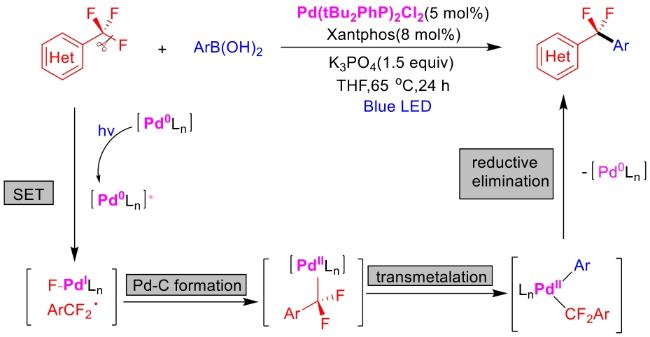
In 2021, the research group of Zhang Xingang[16]proposed a novel photocatalytic strategy based on excited-state palladium complexes (Scheme 5), achieving the selective defluorinative arylation of trifluoromethylarenes (ArCF3) with arylboronic acids. This method utilizes excited-state Pd(0) complexes to effectively activate ArCF3 via a single electron transfer (SET) pathway, targeting the high-bond-energy C(sp3)—F bond, thereby avoiding the common issue of excessive defluorination in traditional metal-catalyzed processes. The reaction conditions are mild and applicable to substrate systems containing heterocycles and various functional groups. Mechanistic studies indicate that the photoexcited palladium complex first generates an α,α-difluorobenzyl radical and an [F-Pd(I)Ln] intermediate, which subsequently undergo oxidative addition to form an [ArCF2-Pd(II)FLn] intermediate. Furthermore, this palladium complex undergoes a transmetalation reaction to generate [ArCF2-Pd(II)Ln-Ar], finally yielding the target product ArCF2-Ar via reductive elimination while regenerating the Pd(0) catalyst. This study not only provides new insights into the functionalization of inert C(sp3)—F bonds but also advances the development of efficient synthetic methods for fluorinated organic molecules.
图式5 可见光驱动钯催化的三氟甲基芳烃与芳基硼酸的选择性脱氟芳基化反应[16]

Scheme 5 Visible-light-driven palladium-catalyzed selective defluorinative arylation of trifluoromethylarenes with arylboronic acids[16]

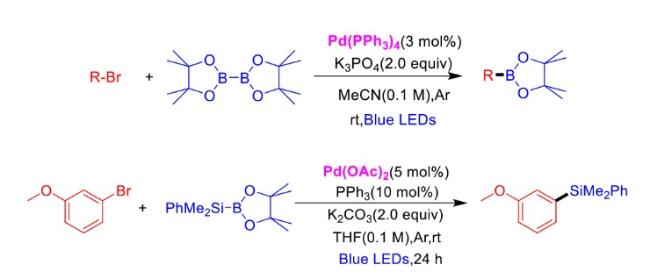
In 2020, the Liang Yongmin group[17]first reported a visible-light-driven palladium-catalyzed dehaloborylation reaction (Scheme 6), utilizing blue light to excite Pd(PPh3)4to its excited state, achieving efficient activation of inert C(sp3)—X (X = Br, Cl) bonds. This method employs B2Pin2as the boron source to successfully construct C—B bonds under mild conditions, demonstrating broad substrate scope and good functional group tolerance, applicable to aryl, alkenyl, and primary/secondary/tertiary alkyl bromides. Mechanistic studies indicate that the reaction proceeds via single electron transfer (SET) to generate radical intermediates, which add to B2Pin2, ultimately completing the homolytic cleavage of the B—B bond under the action of a base. After further optimization of conditions, this strategy can also be used for the selective synthesis of aryl silicates, expanding its application prospects.
图式6 可见光驱动钯催化的脱卤硼酸化反应[17]

Scheme 6 Visible-light-driven palladium-catalyzed deborylative halogenation[17]

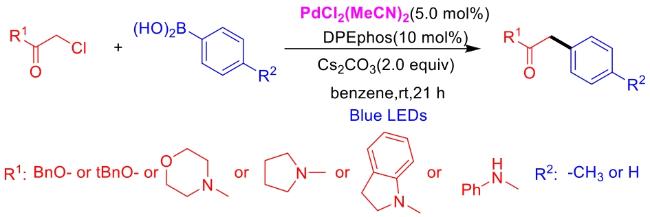
In the same year, the Miura group[18]reported a visible-light-driven palladium-catalyzed Suzuki-Miyaura cross-coupling reaction (Scheme 7), achieving the selective coupling of α-chloro carbonyl compounds with arylboronic acids. By exciting active palladium species ([Pd(0)]*) with blue light, inert C(sp3)—Cl bonds were effectively activated to construct α-aryl acetate and α-aryl acetamide skeletons under mild conditions. This method breaks through the limitations of traditional reactions regarding the applicability of α-chloro substrates, demonstrating excellent functional group compatibility. It is applicable to various electron-rich/electron-deficient arylboronic acids, heteroarylboronic acids, and diverse α-chloro carbonyl compounds, providing a new pathway for the synthesis of α-aryl carboxylic acid derivatives. Furthermore, by combining iridium-catalyzed C—H borylation with a photo-palladium synergistic catalytic coupling strategy, the team efficiently synthesized key intermediates of the plant hormone indole-3-acetic acid (IAA) in two steps, verifying the practicality of this method in complex molecule synthesis.
图式7 可见光驱动钯催化的α-氯代羰基化合物与芳基硼酸的选择性偶联[18]

Scheme 7 Visible-light-driven palladium-catalyzed selective coupling of α-chlorocarbonyl compounds with arylboronic acids[18]

2.3 Heck coupling reaction

As another important means of carbon-carbon bond construction, the Heck coupling reaction possesses unique advantages in drug modification and functional material synthesis due to its distinctive olefin functionalization capability. In recent years, photo-driven Pd(0) excited states have achieved C(sp3)—Br bond activation and suppression of β-hydride elimination via a SET mechanism under conditions where traditional methods struggle.[19].
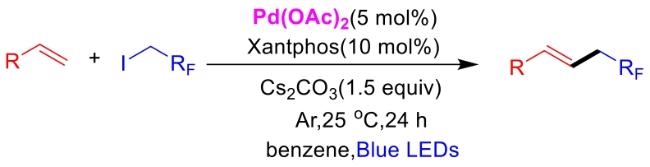
In 2020, the Novák group[20]developed a visible-light-driven palladium-catalyzed Heck-type fluoroalkylation reaction (Scheme 8), successfully achieving efficient coupling of styrene derivatives with various fluoroalkyl iodides (such as trifluoroethyl iodide, difluoroethyl iodide, etc.) at room temperature. This method employs blue light (440~445 nm) to excite the Xantphos-Pd(0) complex, generating key intermediates via a SET mechanism, thereby overcoming the difficulties of oxidative addition of alkyl halides and β-hydride elimination side reactions in traditional Heck reactions, providing an efficient pathway for the diversified synthesis of fluorinated alkenyl compounds.
图式8 可见光驱动钯催化的Heck型氟烷基化反应[20]

Scheme 8 Visible-light-driven palladium-catalyzed Heck-type fluoroalkylation[20]

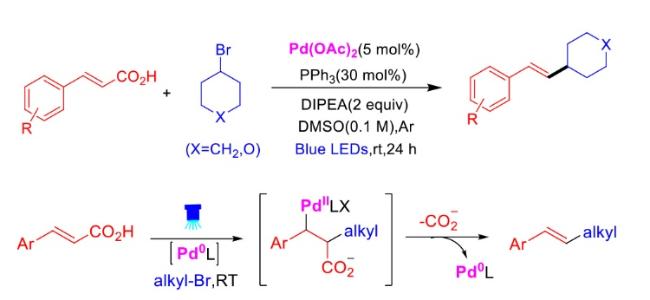
In 2018, the Rueping group[21]reported a visible-light-driven excited-state palladium-catalyzed decarboxylative alkylation reaction (Scheme 9), enabling efficient transformation of α,β-unsaturated carboxylic acids with inert alkyl bromides. This study broke through the energy barrier limitations of traditional photoredox dual catalysis, proposing a new mechanism based on barrierless oxidative addition via SET, where a Pd(0) complex serves simultaneously as both photosensitizer and cross-coupling catalyst. Density functional theory (DFT) calculations verified the feasibility of the light-driven inner-sphere mechanism, indicating that the SET process from alkyl halides to Pd(0) is the key step of the reaction. This method requires no external photosensitizer and achieves activation of C(sp3)—Br bonds and construction of complex olefins under mild conditions, providing new theoretical basis and practical strategies for related fields.
图式9 可见光驱动钯催化的脱羧烷基化反应[21]

Scheme 9 Visible-light-driven palladium-catalyzed decarboxylative alkylation[21]

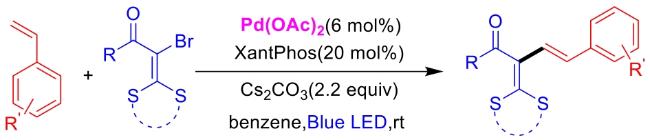
Although photocatalytic Heck reactions have attracted widespread attention in recent years, cross-coupling between internal alkenyl halides and terminal olefins remains rarely reported. Achieving such reactions requires overcoming the challenge of low reactivity of internal alkenyl C–halogen bonds. In 2021, the research group of Zhengkun Yu[22]reported aS,S-functionalized internal alkenyl bromides with styrene under mild conditions for Heck coupling (Scheme 10), successfully constructing functionalized 1,3-diene compounds. This reaction exhibits broad functional group compatibility, yielding target products via a radical pathway with moderate to excellent yields. Notably, the resulting 1,3-dienes can be further transformed into 2,3,5-trisubstituted furan derivatives, significantly expanding their application potential in heterocyclic synthesis and providing new insights for regioselective control of inert internal alkenyl C–Br bonds.
图式10 可见光驱动钯催化的SS-官能化的内烯基溴化物与苯乙烯的Heck反应[22]

Scheme 10 Visible-light-driven palladium-catalyzed Heck reaction of SS-functionalized internal alkenyl bromides with styrenes[22]

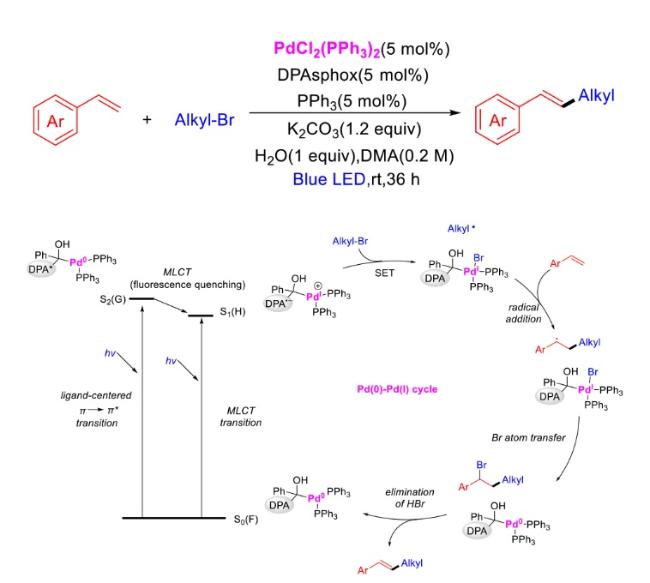
In 2022, the Nemoto group[23]based on the metal-to-ligand charge transfer (MLCT) process of palladium(0) complexes with DPAsphox ligands (Scheme 11), achieved efficient β-alkylation of unactivated tertiary alkyl bromides with styrenes. Under visible light excitation, the excited state of the DPA moiety oxidizes palladium(0) to palladium(I) via an MLCT pathway, subsequently initiating single-electron reduction of the alkyl bromide to generate radicals, which then undergo a cascade addition-bromine atom transfer process to couple with styrenes. The reaction exhibits excellent functional group tolerance under low-power blue light (5 W) conditions and is applicable to various substituted styrenes and complex alkyl bromides (such as adamantyl and cyclohexyl groups), with yields up to 99%. Furthermore, reaction selectivity can be further improved by tuning the electronic effects of phosphine ligands, demonstrating the broad application prospects of this method in synthesizing complex molecular structures.
图式11 可见光驱动钯催化非活化溴代烷烃的Heck反应[23]

Scheme 11 Visible-light-driven palladium-catalyzed Heck reaction of unactivated alkyl bromides[23]

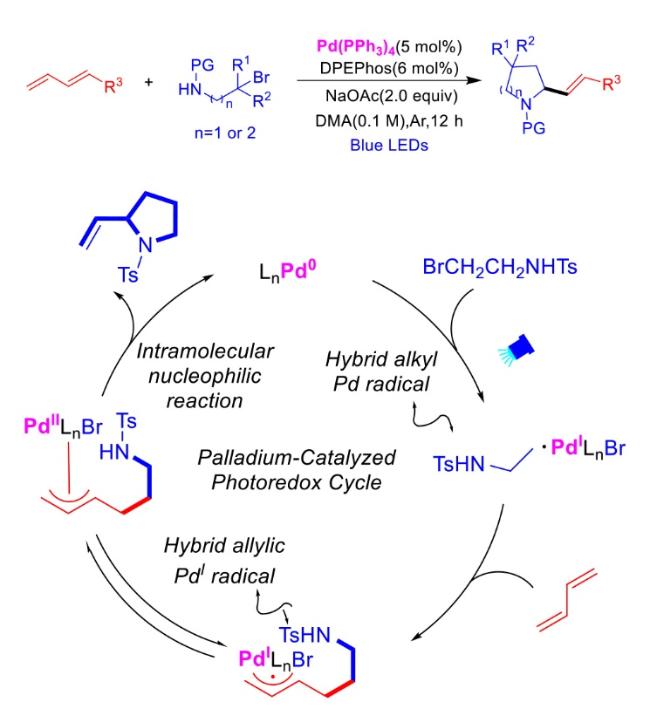
In 2022, the Yang Hua research group[24]reported a visible-light-driven palladium-catalyzed system (Scheme 12), which efficiently constructs vinylpyrrolidines and sila-azaheterocycles via the cyclization of 1,3-dienes with bifunctional haloalkylamines. This method employs a Pd(PPh3)4/DPEPhos catalytic system to generate Pd(0) species under photoexcitation, achieving 1,2-regioselective aminocyclization of 1,3-dienes through a radical-polar crossover mechanism. Studies indicate that the reaction initially undergoes homolysis of the haloalkane to generate an alkyl radical, which then adds to the 1,3-diene to form a π-allylpalladium intermediate, followed by intramolecular nucleophilic cyclization to construct the C—N bond. Mechanistic analysis further reveals the key role of light-driven Pd-alkyl homolysis, providing a new strategy for the modular synthesis ofN-heterocycles. Furthermore, this method has been successfully extended to the construction of six-membered rings and sila-azaheterocycles, demonstrating good practicality in gram-scale reactions. It is also applicable to the late-stage modification of drug molecules, highlighting its application potential in synthetic chemistry and drug development.
图式12 可见光驱动钯催化的1,3-二烯与双官能团卤代烷基胺的环化反应[24]

Scheme 12 Visible-light-driven palladium-catalyzed cyclization of 1,3-dienes with bifunctional haloalkylamines[24]

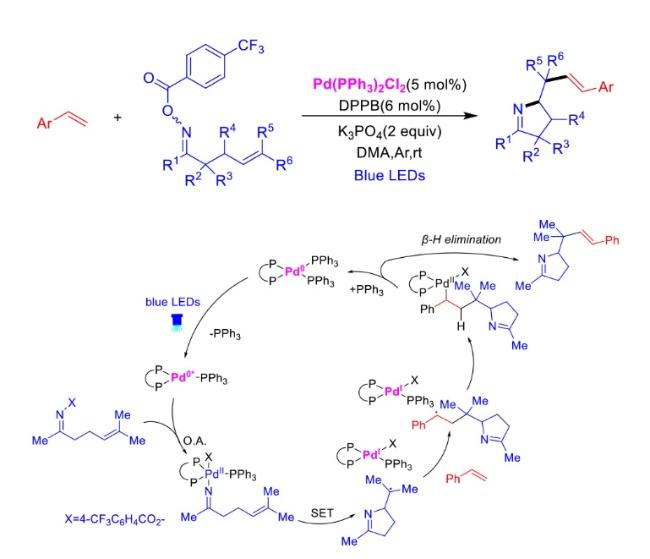
Since Narasaka and colleagues proposed the Narasaka-Heck reaction, this type of transformation has attracted widespread attention due to its extensive application in the construction of N-heterocycles. In 2020, the research group of Wu-Jiong Xia [25]reported a palladium-catalyzed Narasaka-Heck reaction driven by blue LED light under room temperature conditions (Scheme 13), achieving efficient domino cross-coupling transformations of aromatic alkenes with oxime esters. The study employed Pd(PPh3)2Cl2 modified with bidentate phosphine ligands (such as dppb) as the catalyst. Under blue light excitation, it undergoes oxidative addition to generate an imino-palladium complex (III), followed by 5-exo-trig radical cyclization and a SET process, forming a hybrid alkyl-Pd(I)/radical intermediate. This further undergoes selective coupling with alkenes to efficiently construct various nitrogen-containing heterocyclic skeletons (such as dihydropyrrole compounds). This method demonstrates excellent regio- and stereoselectivity (E/Z>99:1), features a broad substrate scope compatible with aryl/alkyl-substituted alkenes and various functionalized oxime esters (such as cyclopropyl, piperidinyl, etc.). Notably, this strategy exhibits good scalability on a gram scale, not only enabling late-stage modification of drug molecules but also achieving the synthesis of complex nitrogen-containing tricyclic structures with high diastereoselectivity. This achievement not only provides new insights into the green synthesis of complex nitrogen-containing heterocycles but also expands the application potential of photocatalytic palladium chemistry in inert bond activation, laying the foundation for the modular assembly of complex alkaloids.
图式13 可见光驱动钯催化的Narasaka-Heck反应[25]

Scheme 13 Visible-light-driven palladium-catalyzed Narasaka-Heck reaction[25]

In recent years, ternary and quaternary strained carbon-ring compounds have attracted widespread attention in synthetic chemistry and bioconjugation fields due to their unique chemical and physical properties, demonstrating potential value as non-traditional bioisosteres in drug development. However, traditional ring-closing reactions are limited by factors such as high ring strain, unfavorable entropy effects, and high transition state energy barriers, resulting in low reaction efficiency; meanwhile, common β-hydride elimination side reactions during transition metal catalysis also reduce the selectivity of target products. In 2022, the Gevorgyan group[26]first reported a visible-light-driven palladium hydride (PdH) catalytic system (Scheme 14), successfully achieving efficient coupling reactions of highly strained molecules such as bicyclo[1.1.0]butanes and cyclopropenes with olefins. Under room temperature conditions, this method generates alkylpalladium intermediates via regio- and chemoselective hydropalladation steps, followed by a light-driven radical alkyl Heck reaction to construct a series of vinylated cyclopropane and cyclobutane derivatives. Its innovation lies in combining the classic two-electron Pd(II) hydropalladation process with light-driven single-electron radical chemistry, effectively suppressing β-hydride elimination side reactions while accommodating various functional groups (such as fluoro, ester, and boronate ester groups). This strategy not only provides a new pathway for the synthesis of complex molecules but also expands the application boundaries of light-driven palladium catalysis, laying the foundation for the preparation of high-value strained ring compounds.
图式14 可见光驱动钯催化的高张力分子与烯烃的高效偶联反应[26]

Scheme 14 Visible-light-driven palladium-catalyzed efficient coupling of strained molecules with alkenes[26]

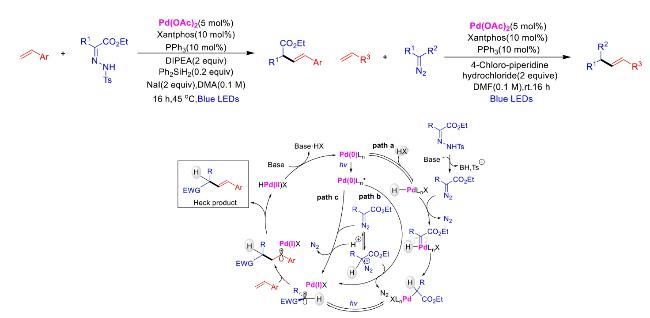
In the same year, the research group[27]further developed a visible-light-driven palladium-catalyzed alkylation Heck reaction involving diazo compounds andN-tosylhydrazones (Scheme 15), achieving efficient coupling of alkenes with diazo compounds. This method features broad substrate scope and excellent functional group tolerance. Brønsted acid assistance generates radical intermediates centered on Pd—C(sp3), thereby promoting novel selective C—H functionalization reactions. This approach significantly expands the substrate scope of alkylation Heck reactions, provides new insights for the functionalization of inert C(sp3)—H bonds, and enriches the application of photoexcited palladium catalysis in radical chemistry.
图式15 可见光驱动钯催化的重氮化合物与N-对甲苯磺酰腙的烷基Heck反应[27]

Scheme 15 Visible-light-driven palladium-catalyzed alkyl-Heck reaction of diazo compounds with N-tosylhydrazones[27]

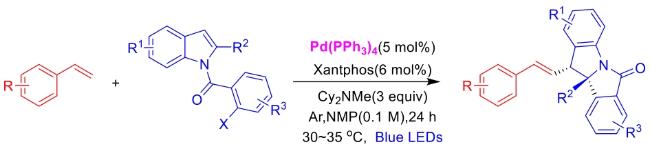
In 2022, the Sharma group[28]developed a mild visible-light-driven palladium catalytic system (Scheme 16), achieving radical tandem dearomatization of indoles with unactivated alkenes to synthesize 2,3-disubstituted dihydroindole derivatives in moderate to good yields with excellent diastereoselectivity. Under visible light excitation, the palladium complex generates via single electron transferN- (2-bromobenzoyl) indole radicals, thereby initiating a hybrid palladium radical reaction pathway. This method features broad substrate compatibility, providing an efficient and atom-economical new route for constructing the 2,3-disubstituted indoline scaffold.
图式16 可见光驱动钯催化的吲哚与未活化烯烃的自由基串联去芳构化反应[28]

Scheme 16 Visible-light-driven palladium-catalyzed radical cascade dearomatization of indoles with unactivated alkenes[28]

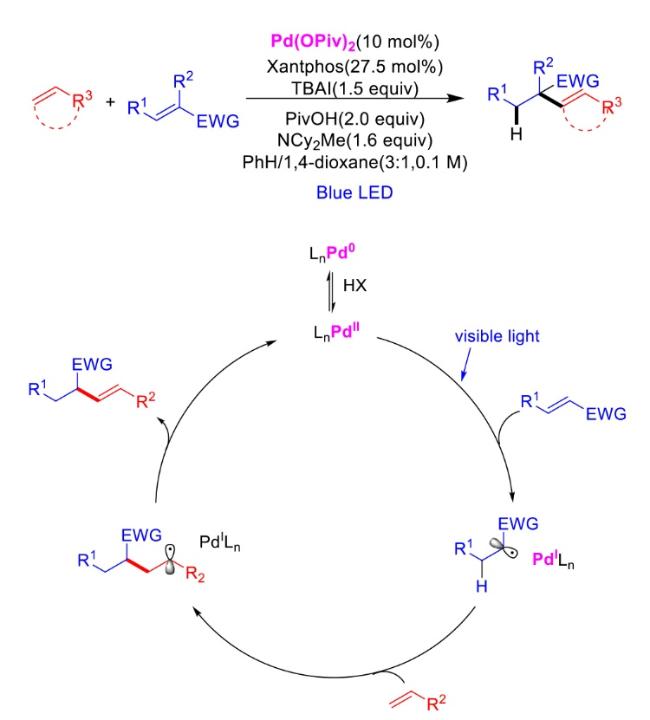
In 2023, the Gevorgyan group[29]reported a visible-light-driven palladium-catalyzed cross-hydrovinylation reaction (Scheme 17). This method successfully achieves efficient, regioselective, and chemoselective head-to-tail cross-coupling between electron-deficient and electron-rich alkenes by enhancing the hydridic character of excited-state Pd—H species. The reaction mechanism involves a selective hydropalladation process mediated by photoexcited palladium-hydride species, which activates electron-deficient alkenes to generate mixed-valent Pd(I) alkyl radical intermediates; subsequently, these intermediates undergo polarity-matched radical addition with electron-rich alkenes, ultimately yielding high-value vinylation products. This method features mild conditions (no strong Lewis acids required) and broad functional group compatibility, making it suitable for cross-Friedel-Crafts alkylation reactions of various substituted and complex alkenes. Notably, this strategy enables the cross-Friedel-Crafts alkylation of electronically diverse vinyl arenes (including heteroarenes) with high chemoselectivity, providing a new pathway for the precise functionalization of alkenes. These research findings not only expand the application boundaries of light-driven palladium catalysis but also develop more selective and practical tools for the field of synthetic chemistry.
图式17 可见光驱动钯催化的交叉氢烯基化反应[29]

Scheme 17 Visible-light-driven palladium-catalyzed cross-hydroalkenylation[29]

2.4 Cross-coupling reaction

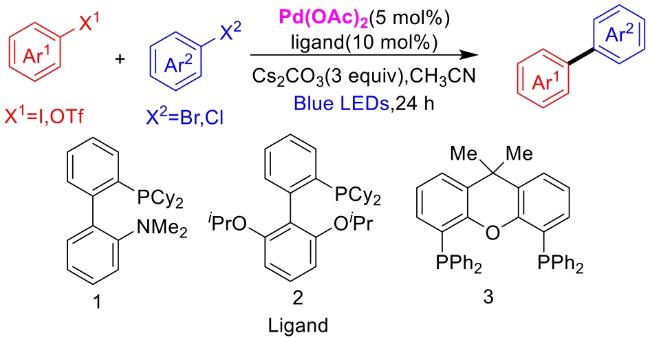
The traditional Heck reaction demonstrates unique advantages in the vinylation modification of complex molecules through the coupling of alkenes with aryl/vinyl halides; whereas the cross-electrophilic coupling (CEC) system achieves direct coupling of (hetero)aryl halides with pseudohalides by overcoming limitations in the transmetalation step, providing a more streamlined pathway for the modular synthesis of biaryl scaffolds. In 2024, the Maiti group[30]developed a visible-light-driven palladium-catalyzed single-metal system (Scheme 18), successfully achieving C(sp2)—C(sp2) cross-electrophilic coupling reactions without the need for traditional transmetalation steps. This method efficiently converts (hetero)aryl halides and pseudohalides directly into asymmetric (hetero)biaryl compounds under mild conditions, exhibiting excellent functional group tolerance and broad substrate applicability. Through this strategy, not only were key (hetero)biaryl core scaffolds in various drug molecules constructed, but selective modification and structural diversity expansion of peptide compounds were also achieved. This innovative technology breaks the dependence of traditional coupling reactions on transmetalation steps, providing a general solution for the cross-coupling of (hetero)aryl halides with pseudohalides, significantly simplifying synthetic pathways for complex molecules and laying the foundation for their widespread application.
图式18 可见光驱动钯催化的C(sp2)—C(sp2)交叉亲电偶联反应[30]

Scheme 18 Visible-light-driven palladium-catalyzed C(sp2)—C(sp2) cross-electrophile coupling[30]

2.5 Three-component coupling reaction

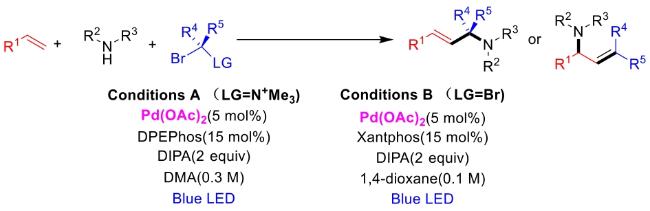
As an efficient synthetic strategy, three-component coupling reactions enable the selective integration of alkenes, amines, and bis-electrophiles in a single reaction, significantly enhancing the efficiency of molecular complexity construction. Such reactions typically rely on transition metal catalysts (e.g., palladium) and may combine photocatalysis or radical mechanisms to achieve efficient tandem multi-step transformations.
In 2024, the Yang Hua research group[31]reported for the first time a visible-light-driven enantioselective 1,2-bifunctionalization three-component coupling strategy for 1,3-dienes (Scheme 19), achieving the efficient construction of chiral allylic sulfonylation derivatives. This method utilizes inexpensive and readily available (S)-tol-BINAP as a soft chiral ligand, which not only rapidly generates target skeletons with high molecular complexity and structural diversity, but also provides a new pathway for the modular synthesis of chiral sulfonylation frameworks. Furthermore, this technology has been successfully applied to the late-stage modification of drug molecules, demonstrating significant synthetic value and application potential.
图式19 可见光驱动钯催化的1,3-二烯对映选择性1,2-双官能化三组分偶联反应[31]

Scheme 19 Visible-light-driven palladium-catalyzed enantioselective 1,2-difunctionalization of 1,3-dienes via three-component coupling[31]

In 2023, the Gevorgyan group[32]reported a visible-light-driven palladium-catalyzed three-component tandem reaction (Scheme 20) for the highly selective synthesis of allylamine compounds. This method is based on a unique dual catalytic cycle mechanism: first, a key intermediate is generated via a light-driven radical alkyl Heck reaction between a 1,1-bielectrophile and styrene; subsequently, a classic Tsuji-Trost-type allylic substitution reaction occurs under dark conditions to complete the transformation. The reaction exhibits excellent substrate generality, accommodating various primary/secondary amines, aryl alkenes, and bielectrophiles, and achieves enantioselectivity (er) of up to 95:5 by regulating the stereochemistry of the π-allylpalladium intermediate. Notably, this represents the first realization of synergistic light/dark dual cycles within a single Pd(0) catalytic system, providing an innovative pathway for the modular synthesis of complex allylamine compounds.
图式20 可见光驱动钯催化的三组分同系化反应合成烯丙胺[32]

Scheme 20 Visible-light-driven palladium-catalyzed three-component homologative synthesis of allylic amines[32]

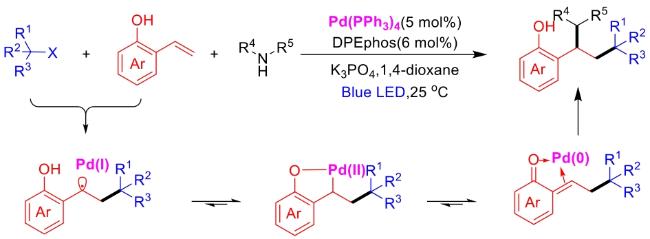
Pd(I)-alkyl radical intermediates, due to their unique electronic structure, offer possibilities for diverse transformation pathways. However, in such systems, secondary Pd(I)-alkyl radicals are prone to β-H elimination, generating Pd(II)-alkyl species and thereby leading to the formation of traditional Heck-type products, which limits their application scope in radical-polar crossover reactions. In 2024, the research group of Li Lixin[33]reported a visible-light-driven palladium-catalyzed three-component 1,2-aminoalkylation reaction (Scheme 21), which uses alkenes, alkyl halides, and amines as starting materials to successfully achieve the generation of Pd(I)-alkyl radicals and their addition to alkenes, followed by the formation of Pd(II)-alkyl species via a SET process. In this process, the hydroxyl group, acting as a directing group, not only stabilizes the Pd(II)-alkyl intermediate and effectively suppresses β-H elimination but also promotes the formation of ortho-quinone methide-Pd(0) complexes, ultimately completing the transformation upon nucleophilic attack by the amine. This method exhibits broad substrate scope and excellent functional group compatibility, providing a novel strategy for the difunctionalization of alkenes and further highlighting the potential of photoexcited palladium catalysts in constructing complex molecular scaffolds.
图式21 可见光驱动钯催化三组分1,2-氨基烷基化反应[33]

Scheme 21 Visible-light-driven palladium-catalyzed three-component 1,2-aminoalkylation[33]

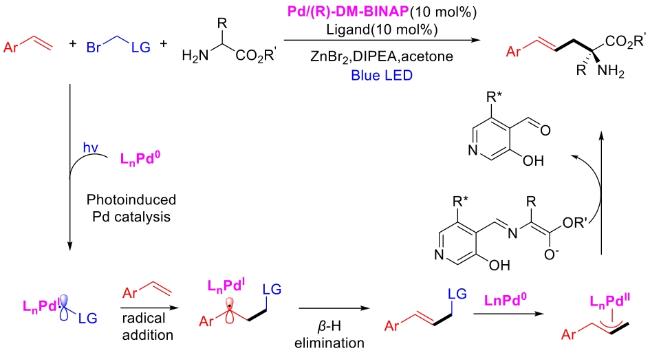
In light-driven palladium-catalyzed systems, expanding reaction types and achieving high enantioselective control remain key focuses and challenges in current research. In contrast, organocatalysis demonstrates unique advantages in stereochemical regulation; therefore, combining organocatalysis with light-driven palladium catalysis is considered an effective strategy for developing novel enantioselective reactions. In 2024, the research group of Zhao Baoguo[34]reported a light-driven palladium/carbonyl synergistic catalytic system (Scheme 22), which achieved a highly enantioselective three-component α-allylic alkylation reaction among α-amino esters, styrenes, and alkyl bromides. This reaction integrates a triple mechanism involving excited-state Pd catalysis, ground-state Pd catalysis, and carbonyl catalysis, successfully addressing issues such as the limited scope of nucleophiles and difficulties in stereocontrol inherent in traditional Tsuji-Trost reactions. Mechanistic studies indicate that the reaction is initiated by single-electron transfer (SET) from an alkyl bromide catalyzed by excited-state Pd(0) to generate a Pd(I)-alkyl radical, which forms a π-allylpalladium species via Heck addition and β-H elimination; simultaneously, a chiral pyridoxal catalyst activates the α-amino ester to generate a carbanion. These two components undergo stereoselective coupling under the regulation of the (R)-DM-BINAP ligand, constructing quaternary carbon α-amino acid esters with yields ranging from 47% to 95% and 90% to 99% ee. This method has been successfully applied to gram-scale preparation (87% yield, 98% ee) and the derivatization of various drug-related molecules, such as the construction of scaffolds including β-amino alcohols and oxazolidinones. It opens a new pathway for the modular synthesis of chiral quaternary carbon amino acids and expands the application prospects of multi-catalytic systems in constructing complex stereocenters.
图式22 可见光驱动钯催化的高对映选择性三组分α-烯丙基烷基化反应[34]

Scheme 22 Visible-light-driven palladium-catalyzed highly enantioselective three-component α-allylic alkylation[34]

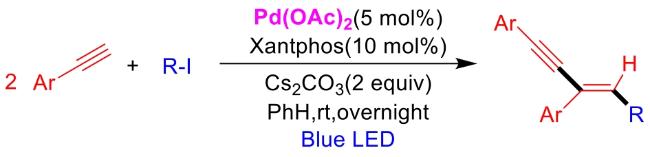
In 2021, the Koenigs group[35]proposed an innovative light-driven strategy (Scheme 23), achieving dicarbofunctionalization of alkynes. Using aryl alkynes and alkyl iodides as starting materials, this reaction constructs C(sp2)—C(sp3)/C(sp2)—C(sp) bonds in a single step at room temperature without external photosensitizers or oxidants, accomplishing for the first time a light-driven palladium-catalyzed alkyne difunctionalization reaction. This method not only expands the application boundaries of palladium catalysis in photochemistry but also provides new insights for the development of tandem and multifunctionalization reactions.
图式23 可见光驱动钯催化的炔烃的双碳官能团化反应[35]

Scheme 23 Visible-light-driven palladium-catalyzed dicarbofunctionalization of alkynes[35]

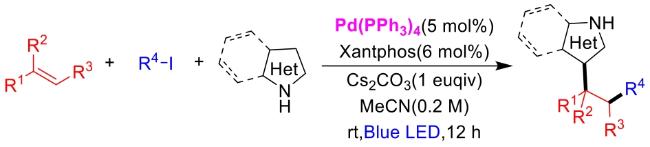
Building on this, in 2023, the Koenigs team[36]further conducted systematic experiments and theoretical studies, reporting a light-driven palladium-catalyzed 1,2-difunctionalization reaction of styrenes with alkyl halides and heterocyclic compounds (Scheme 24). This reaction is based on a reductive radical-polar crossover mechanism, generating alkyl radicals and Pd(I) intermediates via visible light excitation. The Pd(I) complex plays a key role in the second single electron transfer (SET) process, accompanied by the formation of carbocations, which subsequently facilitates their efficient alkylation withN-heterocyclic compounds to construct 1,2-difunctionalized products. This method overcomes the limitations of traditional thermal reaction conditions for primary, secondary, and tertiary alkyl halides, is applicable to the coupling of various electron-rich olefins and heterocyclic compounds, provides a new strategy for the synthesis of asymmetric 1,1-bis(heterocycle)alkanes, and demonstrates broad application prospects in the synthesis of natural products and pharmaceutical molecules.
图式24 可见光驱动钯催化的苯乙烯与卤代烷及杂环化合物的1,2-双官能化反应[36]

Scheme 24 Visible-light-driven palladium-catalyzed 1,2-difunctionalization of styrenes with alkyl halides and heterocycles[36]

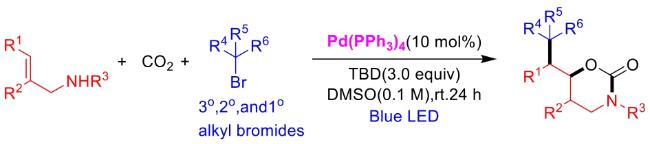
Furthermore, as a non-toxic, non-flammable, and sustainable one-carbon (C1) resource, carbon dioxide has attracted significant attention in the field of green chemistry in recent years. Its efficient conversion into high-value-added chemicals has become an important direction for driving a paradigm shift in synthetic chemistry. In 2018, the research group of Yu Dagang[37]reported a visible-light-driven palladium-catalyzed three-component oxyalkylation reaction (Scheme 25), successfully achieving the efficient conversion of allylamines, unactivated alkyl bromides, and CO2. This method employs commercially available Pd(PPh3)4 as a single catalyst to highly selectively construct 2-oxazolidinone compounds under mild conditions. It is compatible with allylamines substituted by various functional groups (such as fluoro, ether, and ester groups) and primary, secondary, and tertiary alkyl bromides, and can be smoothly scaled up to gram-scale synthesis and subsequent derivatization operations (such as reduction and hydrolysis). This strategy breaks through the dependence of traditional methods on activated alkyl reagents, providing an efficient and sustainable new pathway for the modular construction of drug candidate molecules (such as 11β-HSD1 inhibitor analogs), demonstrating the great application potential of CO2 in organic synthesis.
图式25 可见光驱动钯催化的三组分氧烷基化反应[37]

Scheme 25 Visible-light-driven palladium-catalyzed three-component oxyalkylation[37]

The synergistic optimization of oxidative addition and reductive elimination steps in traditional palladium-catalyzed cycles has long been constrained by their inherent kinetic and thermodynamic contradictions. In 2020, the research group of Liu Yi[38]proposed an innovative strategy based on a multifunctional palladium catalyst (Scheme 26) for carbonylative coupling reactions. By regulating different oxidation states of palladium via visible light excitation to drive oxidative addition and reductive elimination processes respectively, this approach effectively overcomes the mutual constraints between these two key reaction steps. This dual-photo-driven mechanism demonstrates broad substrate generality under ambient temperature and pressure, applicable to low-activity halides and weak nucleophiles, and successfully achieves the efficient construction of important carbonyl compounds such as acyl chlorides, amides, esters, and ketones. This method replaces traditional thermodynamic regulation with light energy, providing a novel perspective for designing efficient and versatile transition metal catalytic systems.
图式26 可见光驱动钯催化的羰基化偶联反应[38]

Scheme 26 Visible-light-driven palladium-catalyzed carbonylative coupling[38]

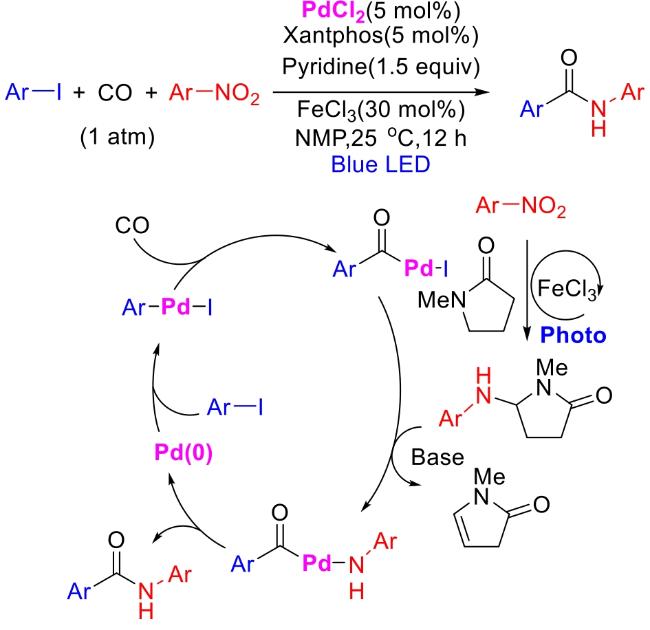
In 2025, the Lee group[39]reported a new strategy for the efficient synthesis of amides based on a palladium/iron dual catalytic system under photochemical conditions (Scheme 27). Studies show that the reaction proceeds via FeCl3-catalyzed formation of an adduct from nitroarenes and NMP, which is further converted into aniline intermediates. These then couple with acyl-palladium complexes generated via palladium catalysis to afford the target products in high yields. This method eliminates the need for stoichiometric reductants or harsh reaction conditions, demonstrating excellent functional group compatibility, particularly towards sensitive groups such as aldehydes and ketones, thereby providing a new pathway for the green synthesis of amide compounds.
图式27 NMP介导的光化学条件下钯催化硝基芳烃的氨基羰基化反应[39]

Scheme 27 Palladium-catalyzed aminocarbonylation using nitroarenes under NMP-mediated photochemical conditions[39]

2.6 Palladium-catalyzed cyclization reaction

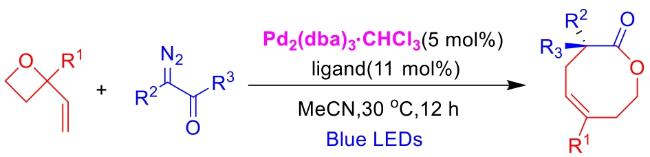
As an important means for constructing complex molecular skeletons, palladium-catalyzed cyclization reactions exhibit unique advantages under light-driven conditions. Such reactions utilize photoexcited palladium species generated by light excitation to achieve selective activation of inert chemical bonds, thereby overcoming ring strain and unfavorable entropic effects, realizing the transformation from linear structures to cyclic skeletons with specific spatial configurations. Medium-sized heterocyclic compounds, represented by eight-membered lactones, are widely present in bioactive natural products, making their efficient construction highly significant. In 2022, the research group of Lu Liangqiu[40]reported a palladium-catalyzed asymmetric (6+2) dipolar cyclization strategy (Scheme 28), which efficiently constructs enantiomer-enriched eight-membered lactones through the photoactivated reaction of vinyl oxetanes with α-diazoketones. The developed chiral P,S-type ligands demonstrated high enantioselectivity in constructing all-carbon quaternary stereocenters. This strategy breaks through the limitations of unfavorable entropy and transannular interactions in traditional medium-ring synthesis, providing an efficient pathway for the precise construction of eight-membered lactone modules in natural products and pharmaceutical molecules.
图式28 可见光驱动钯催化的不对称(6+2)偶极环化反应[40]

Scheme 28 Visible-light-driven palladium-catalyzed asymmetric (6+2) dipolar cyclization[40]

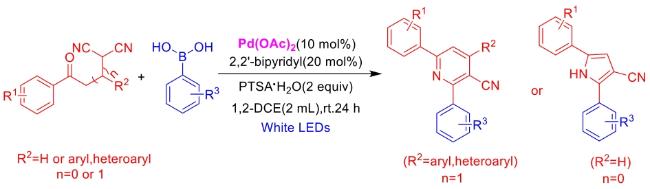
In 2020, the Patel group[41]developed a visible-light-driven palladium-catalyzed cascade reaction (Scheme 29) for the efficient synthesis of 3-cyanopyridine and 3-cyanopyrrole derivatives. Using γ-ketomalononitrile or β-ketomalononitrile as starting materials, this method achieves selective carbon-carbon bond formation via oxidative redox transmetalation of arylboronic acids in the presence of a Pd(OAc)₂/2,2'-bipyridine catalytic system and PTSA·H₂O additive, followed by intramolecular cyclization and aromatization. The cyano functional group in the resulting products can be further derivatized, demonstrating promising application prospects.
图式29 可见光驱动钯催化合成3-氰基吡啶及3-氰基吡咯衍生物[41]

Scheme 29 Visible-light-driven palladium-catalyzed synthesis of 3-cyanopyridine and 3-cyanopyrrole derivatives[41]

In 2020, the Liang Yongmin group[42]reported a palladium-catalyzed photochemical tandem cyclization reaction (Scheme 30), which is used for the efficient construction of five- and six-membered ring structures. This method proceeds under redox-neutral conditions, using unactivated alkyl halides as electrophiles to achieve tandem cyclization and dicarbon functionalization via radical intermediates, demonstrating excellent regioselectivity and stereocontrol. The reaction conditions are mild, compatible with various functional groups, and possess gram-scale scalability, providing an efficient and practical new pathway for constructing complex cyclic skeletons.
图式30 可见光驱动钯催化的串联环化反应[42]

Scheme 30 Visible-light-driven palladium-catalyzed tandem cyclization[42]

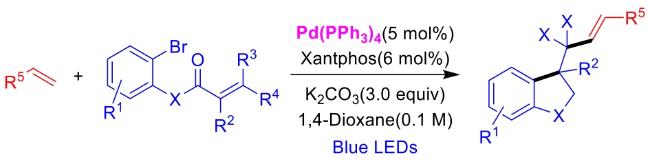
In 2019, the Glorius group[43]reported a strategy using Pd as a non-classical photocatalyst (Scheme 31), achieving dicarbon functionalization of tri- and tetrasubstituted alkenes via open-shell intermediates to efficiently synthesize various (hetero)cyclic compounds. This method employs Pd(PPh3)4as the catalyst, applicable to the coupling of aryl or alkyl bromides with styrenes or acrylamides (>50 examples), capable of constructing one or two adjacent all-carbon quaternary centers in a single step. The reaction conditions are mild, the substrate scope is broad, and the resulting products are amenable to further derivatization. Importantly, this strategy was successfully applied to the synthesis of neuroactive hydroxyindole analogs, providing a viable route for constructing highly sterically hindered cyclic scaffolds.
图式31 可见光驱动钯催化的三取代与四取代烯烃的双碳官能化反应[43]

Scheme 31 Visible-light-driven palladium-catalyzed dicarbofunctionalization of tri- and tetrasubstituted alkenes[43]

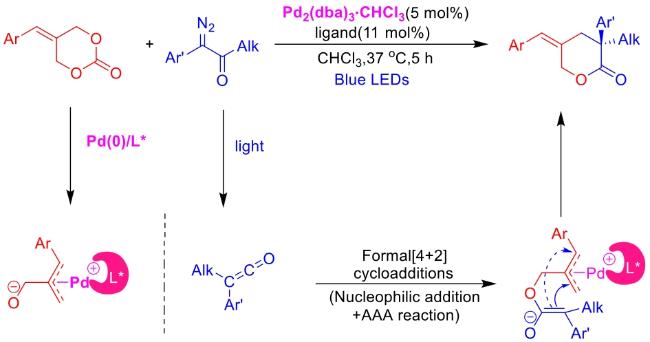
In 2021, the Lu Liangqiu group[44]developed a Pd-catalyzed, visible-light-driven asymmetric [4+2] cycloaddition reaction (Scheme 32), achieving efficient coupling of ADTMCs with α-diazo ketones. This method exhibits excellent stereoselectivity under mild conditions and is applicable to various ADTMCs and α-diazo ketone substrates with diverse electronic properties. This strategy not only provides a new synthetic route for lactone compounds containing chiral all-carbon quaternary centers but also expands research ideas for the stereoselective construction of complex oxygen-containing heterocyclic skeletons, demonstrating significant synthetic value and application potential.
图式32 可见光驱动钯催化的不对称[4+2]环加成反应[44]

Scheme 32 Visible-light-driven palladium-catalyzed asymmetric [4+2] cycloaddition[44]

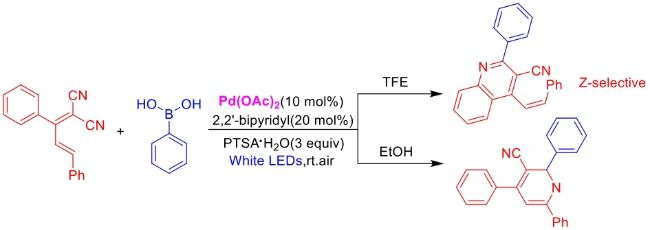
In 2023, the Patel group[45]reported a visible-light-driven, solvent-controlled palladium(II)-catalyzed multicomponent reaction (Scheme 33), which achieved the selective synthesis of polysubstituted quinoline and pyridine derivatives via a tandem addition/cyclization process of (E)-2-(1,3-diarylallylidene)malononitrile with arylboronic acids. This method operates efficiently under air without the need for an external photosensitizer, and its practicality was validated through gram-scale experiments and subsequent derivatization.
图式33 可见光驱动钯催化的多取代喹啉与吡啶衍生物的选择性合成[45]

Scheme 33 Visible-light-driven palladium-catalyzed selective synthesis of polysubstituted quinoline and pyridine derivatives[45]

3 Palladium-catalyzed C—H functionalization reactions

Although visible light-driven palladium-catalyzed C—H functionalization and coupling reactions differ in target products and bond formation modes, their reaction mechanisms exhibit a high degree of unity. As a core area of organometallic chemistry, palladium-catalyzed reactions play a pivotal role in the efficient construction of carbon-carbon and carbon-heteroatom bonds, with widespread applications in drug synthesis, functional material development, and biological sciences.

3.1 Palladium-catalyzed C—H functionalization/cyclization reactions

Palladium-catalyzed C—H bond functionalization cyclization reactions provide an efficient strategy for constructing cyclic molecules. This method directly activates inert C—H bonds, avoiding traditional substrate pre-functionalization steps and significantly improving reaction efficiency. Such reactions typically rely on a directing group (DG)-assisted C—H bond activation mechanism; under the coordination of the palladium catalyst and the directing group, the target C—H bond is selectively cleaved and undergoes intramolecular or intermolecular cyclization with alkenes, alkynes, or other π-components, thereby generating heterocyclic compounds such as indoles, lactones, or carbocycles.
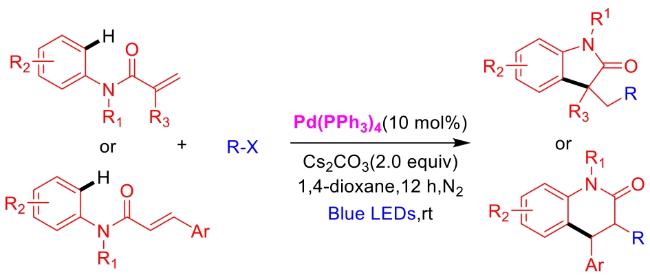
In 2021, the Zhang Junmin group[46]reported an intermolecular radical cascade reaction ofN-arylacrylamides with unactivated alkyl bromides driven by visible light and palladium catalysis under mild conditions (Scheme 34). This process initiates SET via photoexcitation of a palladium complex to generate a key alkyl-palladium radical intermediate, thereby efficiently constructing structurally diverse 3,3-disubstituted oxindole derivatives. Using inexpensive and readily available Pd(PPh3)4as the sole catalyst, it exhibits excellent substrate compatibility without the need for additional photosensitizers or oxidants, providing a new pathway for the synthesis of oxindole-based bioactive molecules.
图式34 可见光驱动钯催化的分子间自由基级联反应[46]

Scheme 34 Visible-light-driven palladium-catalyzed intermolecular radical cascade reaction[46]

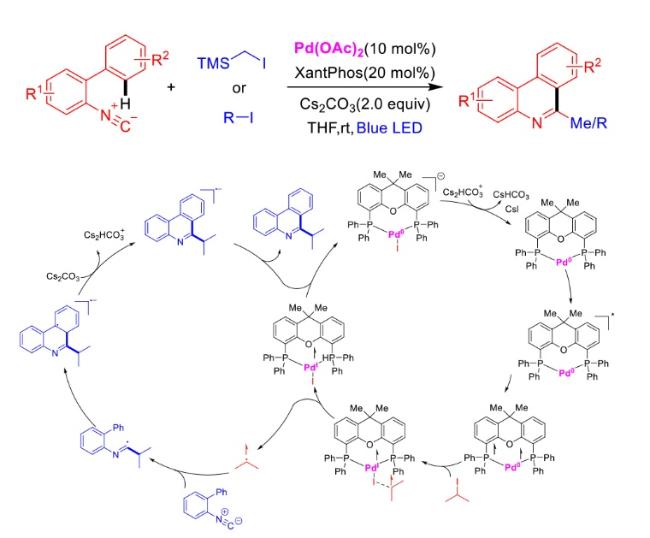
Palladium-catalyzed photochemical strategies have been proven effective in promoting cross-coupling and multifunctionalization reactions of alkenes. In 2022, the Koenigs group[47]introduced isonitriles as radical acceptors to participate in further radical cascade cyclizations for the synthesis of phenanthridine derivatives (Scheme 35). This reaction involves a light-driven Pd(0)/Pd(I) catalytic cycle, generating alkyl radicals via SET, and DFT calculations verified the reaction pathway of radical addition-cyclization-deprotonation. Furthermore, this strategy was successfully applied to the desilylative methylation of TMSCH2I, providing a mild and efficient method for the modular synthesis of phenanthridine skeletons and demonstrating its application potential in the synthesis of complex bioactive molecules (such as steroid derivatives).
图式35 可见光驱动钯催化合成菲啶衍生物[47]

Scheme 35 Visible-light-driven palladium-catalyzed synthesis of phenanthridine derivatives[47]

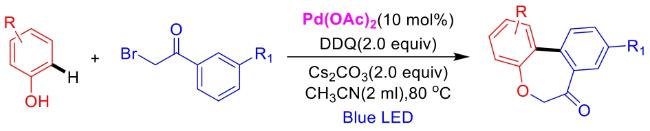
Benzoheterocyclic scaffolds are widely present in natural products and have become important lead structures for drug design due to their diverse biological activities. In 2019, the Chuyi Wen research group[48]developed a visible-light-driven palladium-catalyzed cascade reaction (Scheme 36), which synthesized a series of dibenzo[b,d]oxepin-7(6H)-one derivatives with good yields. This method features simple operation, broad substrate scope, and high reaction efficiency, and has been successfully applied to the synthesis of the natural product protoglycoside A, providing a new strategy for constructing benzoxacyclic scaffolds.
图式36 可见光驱动钯催化合成二苯并[bd]氧杂庚- 7(6H)-酮衍生物[48]

Scheme 36 Visible-light-driven palladium-catalyzed synthesis of dibenzo[bd]oxepin-7(6H)-one derivatives[48]

The hydrodehalogenation of organic halides holds both fundamental synthetic value and industrial detoxification significance. In 2019, the research group of Liang Yongmin[49]reported a novel photo-driven amine radical-mediated reductive dehalogenation strategy (Scheme 37), successfully achieving selective dehalogenation of non-activated aryl/alkyl bromides and chlorides. This method exhibits excellent functional group tolerance and broad substrate applicability, while also being extendable to various transformations such as reductive cyclization, deuteration, and intramolecular/intermolecular radical additions. Mechanistic studies indicate that the reaction proceeds via a SET-based photoredox catalytic mechanism, utilizing inert solvents as hydrogen sources for the protonation process. This research not only provides new insights for the efficient dehalogenation of organic halides but also opens up potential application directions for complex molecule synthesis and industrial detoxification.
图式37 可见光驱动钯催化的胺自由基介导的还原脱卤反应[49]

Scheme 37 Visible-light-driven palladium-catalyzed amine-radical-mediated reductive dehalogenation[49]

3.2 Palladium-catalyzed directed sp3 C—H functionalization reaction

Palladium-catalyzed directed sp3 C—H functionalization is an efficient transformation strategy that achieves selective activation of aliphatic C—H bonds through chelation of coordinating directing groups (such as pyridine, pyrimidine, amide, or quinoline) with the palladium center. Due to the sp3 C—H bond having high bond dissociation energy and steric hindrance, it often requires light-driven Pd(III)/Pd(IV) high-valent cycles or radical relay strategies to overcome thermodynamic barriers. The key to the reaction lies in the precise positioning and coordination ability of the directing group, while simultaneously regulating the oxidation state of palladium to promote C—H bond cleavage and subsequent functionalization.
The continuous development in the field of homogeneous palladium catalysis has provided efficient and versatile pathways for the selective functionalization of C—H bonds. In 2020, the Polyzos group[50]reported a novel strategy for the halogenation of C(sp3)—H bonds based on photoexcited palladium(III) auxiliaries (Scheme 38). Spectroscopic, electrochemical, and theoretical calculations indicated that palladacycle complexes formed from 8-aminoquinoline-derived ligands undergo mixed ligand-to-metal charge transfer (LLCT/MLCT) under visible light excitation, generating synthetically valuable Pd(III)/Pd(IV) redox pairs. Online photochemical electrospray ionization mass spectrometry (ESI-MS) analysis confirmed the involvement of mononuclear Pd(III) species and revealed that they promote C—X bond formation via a unique Pd(III)/Pd(IV) pathway. This auxiliary-directed C—H activation strategy, leveraging visible light-driven Pd(III)/Pd(IV) redox pairs, achieves predictable and controllable modulation of different reaction pathways, providing new theoretical support and developmental insights for related research.
图式38 可见光驱动钯催化的C(sp3)—H键卤化[50]

Scheme 38 Visible-light-driven palladium-catalyzed C(sp3)—H halogenation[50]

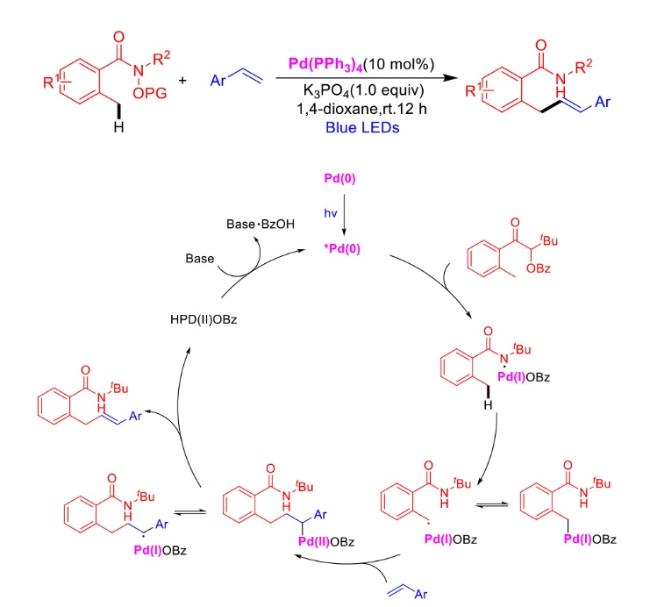
In modern organic synthesis, the selective functionalization of terminal C—H bonds remains a highly challenging topic. In recent years, metal-activated C—H insertion reactions have been widely applied to the direct transformation of terminal C—H bonds, while radical-mediated C—H functionalization has attracted increasing attention due to its relatively mild reaction conditions. In 2023, the Chen Ming group[51]developed a light-drivenN-alkyl radical relay palladium-catalyzed Heck coupling reaction of ortho-alkylbenzamides with vinyl arenes (Scheme 39). This method features mild reaction conditions, strong functional group compatibility, and enables the efficient construction of azepinone drug scaffolds via intramolecular hydroamination. Mechanistic studies indicate that the reaction follows a hybrid Pd/radical pathway involving an "N-alkyl radical relay", providing a new strategy for the precise functionalization of inert C(sp3)—H bonds.
图式39 可见光驱动N-烷基自由基接力钯催化的邻烷基苯甲酰胺与乙烯基芳烃的Heck偶联反应[51]

Scheme 39 Visible-light-driven N-alkyl radical relay palladium-catalyzed Heck coupling of ortho-alkylbenzamides with vinylarenes[51]

3.3 Palladium-catalyzed directed sp2 C—H functionalization reaction

Palladium-catalyzed directed sp2 C—H and sp3 C—H functionalization reactions together constitute an important branch of the modern field of C—H bond activation. Both form key cyclopalladated intermediates through coordination directing groups (such as 8-aminoquinoline, pyridine, or amides) with the palladium center, but there are significant differences in reaction mechanisms and selectivity control. sp2 C—H activation primarily relies on the Pd(II)/Pd(0) catalytic cycle and achieves efficient functionalization of aromatic rings or alkenes via the concerted metalation-deprotonation (CMD) mechanism.
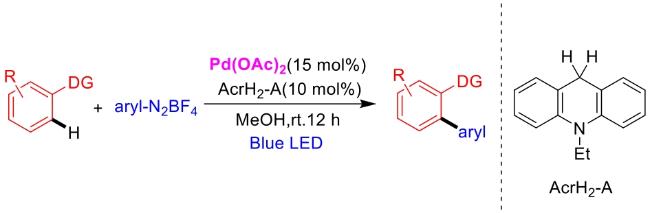
In 2017, the Xu Huajian research group[52]reported a novel palladium/9,10-dihydroacridine (AcrH2) dual catalytic system (Scheme 40), achieving direct arylation of sp2 C—H bonds under mild conditions. In this system, AcrH2 serves as an organic photocatalyst, working synergistically with the palladium catalyst. Under blue LED irradiation and at room temperature, using aryl diazonium salts as coupling reagents, it successfully achieved site-selective C—H arylation of various arenes such as acetanilide and benzamide. This method exhibits good substrate generality and is compatible with functional groups including halogens, esters, and carbonyls. This research not only provides a new pathway for constructing biaryl scaffolds but also further expands the application boundaries of organic photocatalysts in modern synthetic chemistry.
图式40 可见光驱动钯催化的sp2 C—H键的直接芳基化[52]

Scheme 40 Visible-light-driven palladium-catalyzed direct arylation of sp2 C—H bonds[52]

In 2023, our research group[53]utilized a visible-light-driven palladium catalytic system (Scheme 41) to successfully achieve C-8 selective C—H alkylation of naphthylamine compounds with α-diazo esters. This method constructs C—C bonds under solvent-free and mild conditions, efficiently synthesizing α-naphthyl functionalized acetates. Experimental results indicate that visible light irradiation is crucial for the reaction, promoting the formation of active carbene species from α-diazo esters to drive the process. Through cooperative catalysis, this method achieves C—H alkylation, avoiding compatibility issues potentially present in multi-catalyst systems and significantly enhancing reaction efficiency. This strategy provides a new approach for the highly selective green synthesis of naphthylamines, demonstrating broad application potential under environmentally friendly conditions.
图式41 可见光与钯协同催化1-萘胺与α-重氮酯的C—H烷基化反应[53]

Scheme 41 Synergistic visible light and Pd-catalyzed C—H alkylation of 1-naphthylamines with α-diazoesters click to copy article link[53]

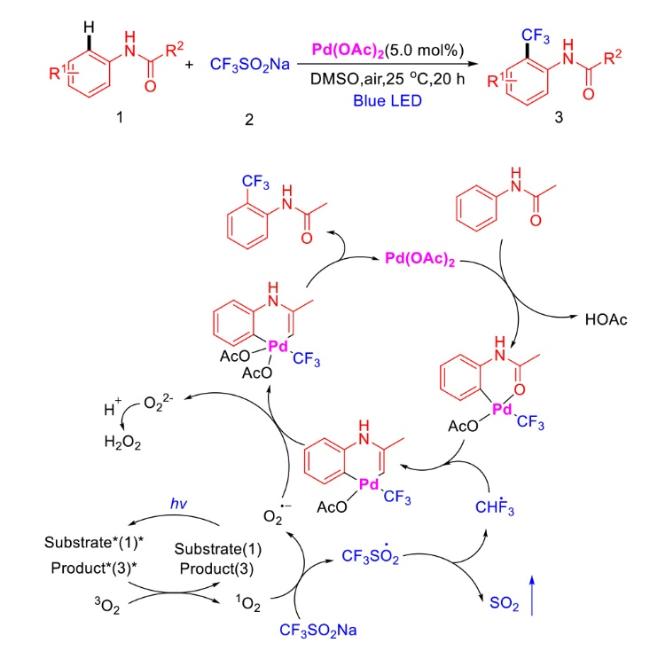
Developing efficient catalytic systems to achieve direct sp2 C—H bond activation and functionalization is currently a research hotspot, as it provides concise and efficient synthetic routes for constructing carbon-carbon and carbon-heteroatom bonds. In 2019, the Wang Lei group[54]reported a visible-light-driven palladium-catalyzed ortho-trifluoromethylation reaction (Scheme 42), successfully achieving the selective transformation of acetanilide derivatives. This method uses stable and readily available CF3SO2Na as the trifluoromethyl source. Under room temperature and air conditions, without the need for additional photocatalysts or additives, only 5% (molar fraction) Pd(OAc)2and blue LED irradiation are required to efficiently complete the sp2 C—H bond direct trifluoromethylation. This strategy features mild reaction conditions, simple operation, good substrate scope, and practicality, providing a new pathway for the green synthesis of fluorinated functional molecules.
图式42 可见光驱动钯催化的乙酰苯胺类化合物的选择性转化[54]

Scheme 42 Visible-light-driven palladium-catalyzed selective transformation of acetanilides[54]

3.4 Palladium-catalyzed non-directed sp3 C—H alkylation reaction

Palladium-catalyzed non-directed sp3 C—H alkylation reactions and the aforementioned directed C—H functionalization represent two complementary strategies in the field of C—H bond activation. Despite significant differences in reaction design, both jointly expand the synthetic boundaries of inert C—H bond transformation. Non-directed sp3 C—H alkylation typically relies on weak coordination between the palladium catalyst and the substrate or a radical-mediated hydrogen atom transfer (HAT) process, achieving selective functionalization of unactivated aliphatic hydrocarbons via Pd(0)/Pd(II) or Pd(I)/Pd(III) cycles, with the core challenge lying in the precise control of regioselectivity.
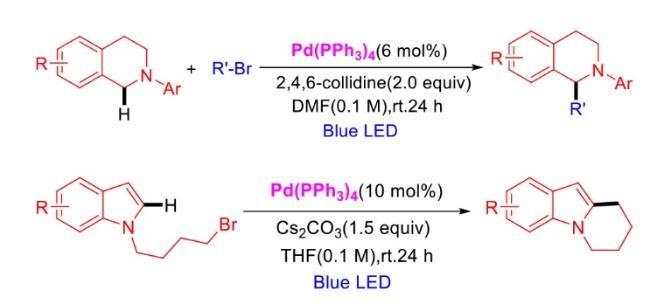
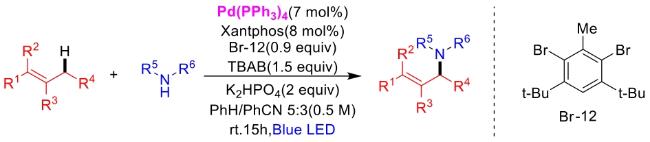
In 2017, the Yu Dagang group[55]reported a novel visible-light-driven palladium-catalyzed radical alkylation reaction based on a single Pd(PPh3)4 catalyst (Scheme 43). This method achieved for the first time the direct cross-coupling of spN-aryl tetrahydroisoquinolines at the sp3 C—H bond with unactivated alkyl bromides. The reaction proceeds efficiently under mild conditions and exhibits excellent compatibility with various unactivated alkyl bromides (including tertiary, secondary, and primary), selectively generating C(sp3)—C(sp3) and C(sp2)—C(sp3) bonds in moderate to good yields. Such redox-neutral reactions not only feature broad substrate scope and good functional group tolerance but also facilitate the construction of quaternary carbon centers, providing an efficient and mild new strategy for the direct alkylation of sp3 C—H bonds without the need for external photosensitizers.
图式43 可见光驱动钯催化的sp3 C—H键与未活化烷基溴化物的直接交叉偶联[55]

Scheme 43 Visible-light-driven palladium-catalyzed direct cross-coupling of sp3 C—H bonds with unactivated alkyl bromides[55]

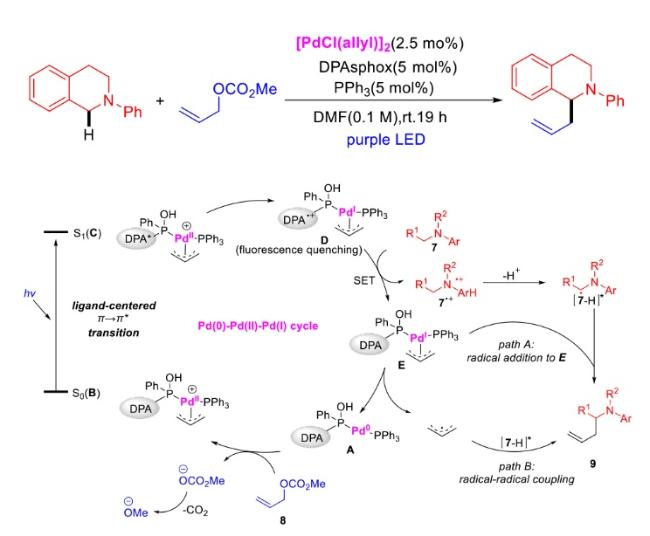
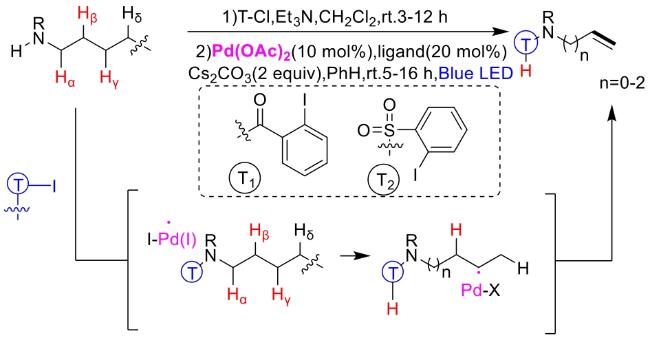
In recent years, with continuous advancements in ligand design, transition metal-catalyzed organic transformations have achieved significant development. Nevertheless, research on ligands for palladium-catalyzed photochemical reactions remains relatively limited. In 2022, the Nemoto group[23]developed a unique secondary phosphine oxide ligand (Scheme 44), which incorporates a visible light-sensitive moiety into its structure and was successfully applied to palladium-catalyzed radical cross-coupling reactions. The trivalent phosphorus species formed via tautomerization of this ligand coordinates in situ with the palladium center, facilitating a quasi-intramolecular SET between the ligand and the metal. Using the visible light-activated phosphine oxide ligand DPAsphox as a carrier, the reaction proceeds via a ligand-to-metal charge transfer (LMCT) mechanism to achieve selective allylation at the α-position of amine compounds. Under irradiation with visible light at wavelengths of 400–450 nm, the DPA group within the palladium(II) complex undergoes π→π* excitation, triggering a single-electron reduction process that generates an allyl radical intermediate, which then undergoes radical coupling with amine substrates such as tetrahydroisoquinolines. This system demonstrates broad substrate scope under mild conditions and enables efficient transformation through the modulation of base additives.
图式44 可见光驱动钯催化的自由基交叉偶联反应[23]

Scheme 44 Visible-light-driven palladium-catalyzed radical cross-coupling[23]

Further research indicates that ligand-centered π→π* transitions can effectively promote the SET process, thereby achieving the following three types of transformations: (1) α-selective allylation of amine compounds; (2) light-driven Heck-type reactions between unactivated alkyl bromides and alkenes; (3) dehalogenative hydrogenation of aryl halides and pyrrole coupling reactions. These transformations break through the traditional palladium catalysis dependence on directing groups and strong oxidants, providing green and efficient solutions for C—H bond activation and radical chemistry. Furthermore, this novel ligand design concept lays an important foundation for the development of targeted photocatalytic ligands and the expansion of mechanisms in palladium-catalyzed radical reactions.

3.5 Palladium-catalyzed non-directed sp3 C—H arylation reaction

Palladium-catalyzed non-directed sp3 C—H arylation is a method that directly activates unfunctionalized aliphatic sp3 carbon-hydrogen bonds and couples them with aryl reagents to construct C(sp3)—C(sp2) bonds. Compared to traditional strategies relying on directing groups, such reactions achieve selective cleavage of specific C—H bonds through carefully designed ligands, oxidant regulation, or photo/electrocatalytic methods, eliminating the need for pre-installation and subsequent removal of directing groups, thus offering higher efficiency and atom economy.
As key substrates in palladium-catalyzed reactions, aryl halides typically enter Pd(II) intermediates via two-electron oxidative addition. In 2020, the Gevorgyan group[56]reported a visible-light-driven palladium-catalyzed intramolecular C—H arylation of amides (Scheme 45). This method generates aryl-palladium radical intermediates by cleaving C(sp2)—O bonds, followed by 1,5-hydrogen atom transfer (HAT), intramolecular cyclization, and rearomatization processes, efficiently synthesizing oxindole and isoindolin-1-one scaffolds. Notably, this system tolerates easily enolizable functional groups under mild conditions, greatly expanding the substrate scope and providing new insights for constructing complex molecules.
图式45 可见光驱动钯催化的酰胺分子内C—H芳基化反应[56]

Scheme 45 Visible-light-driven palladium-catalyzed intramolecular C—H arylation of amides[56]

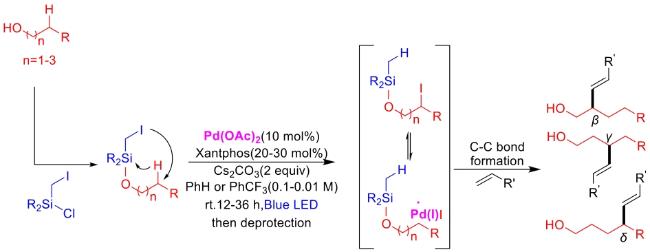
The Mizoroki-Heck reaction is one of the important methods for achieving the alkenylation of aryl, alkenyl, and alkyl halides. In 2018, the Gevorgyan team[57]developed a visible-light-driven palladium-catalyzed radical relay Heck reaction (Scheme 46), successfully achieving remote selective alkenylation of unactivated C(sp3)—H bonds at the β-, γ-, and δ-positions of aliphatic alcohols. This strategy utilizes an easily introduced and removable silyl directing group to facilitate iodine atom or radical migration at distal C—H sites, acting synergistically with the Heck reaction. Notably, this reaction requires no external photocatalyst or oxidant; under room temperature conditions, it can start from simple alcohol precursors to highly selectively synthesize structurally diverse and easily modifiable enol products.
图式46 可见光驱动钯催化的自由基接力Heck反应[57]

Scheme 46 Visible-light-driven palladium-catalyzed radical relay Heck reaction[57]

3.6 Palladium-catalyzed non-directed sp2 C—H alkylation reaction

Palladium-catalyzed non-directed sp2 C—H alkylation reactions and non-directed sp3 C—H arylation reactions jointly expand the application boundaries of direct functionalization of inert C—H bonds catalyzed by transition metals. Despite differences in the hybridization states of the active sites, both face similar catalytic challenges, requiring the overcoming of aromatic ring electronic effects and steric hindrance, as well as the exploration of design strategies applicable to multiple reaction pathways. Such reactions typically achieve alkylation modification of alkenes or arenes via concerted metalation or radical addition mechanisms mediated by Pd(0)/Pd(II) catalytic cycles.
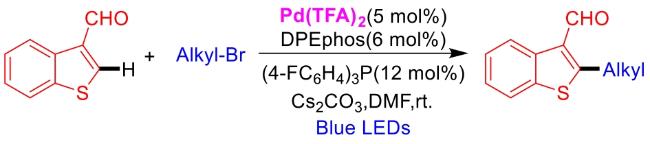
In 2018, the Fu Yao research group[58]proposed a new strategy based on photoexcited palladium catalysts (Scheme 47), successfully achieving direct C—H alkylation of heteroarenes with secondary/tertiary alkyl bromides. Via a single-electron transfer (SET) mechanism, the excited-state palladium complex generates stable alkyl-palladium radical intermediates, effectively suppressing the β-hydride elimination side reactions common in traditional systems. This method efficiently constructs C(sp3)—C(sp2) bonds containing quaternary carbon centers at room temperature, providing a new pathway for the remote functionalization of inert C—H bonds. Furthermore, this study expands the application prospects of photo/palladium synergistic catalysis in the late-stage modification of complex molecules, demonstrating its broad value in modern synthetic chemistry.
图式47 可见光驱动钯催化的杂芳烃与仲/叔烷基溴化物的直接C—H烷基化反应[58]

Scheme 47 Visible-light-driven palladium-catalyzed direct C—H alkylation of heteroarenes with secondary/tertiary alkyl bromides[58]

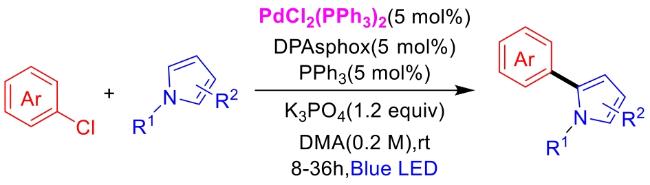
In 2022, the Nemoto group[23]achieved single-electron reduction of aryl chlorides/bromides using a palladium/DPAsphox system under visible light irradiation, subsequently accomplishing cross-coupling with pyrroles and selective dehalogenative hydrogenation (Scheme 48). In the reaction, the excited-state palladium(0) complex generates a highly reducing intermediate via a metal-to-ligand charge transfer (MLCT) pathway, promoting the cleavage of aryl halides to form aryl radicals, which then undergo coupling with pyrroles or solvents such asN-methylpyrrolidone via coupling or hydrogen atom transfer. This strategy is applicable to various aryl chlorides/bromides containing electron-withdrawing groups (such as cyano and trifluoromethyl groups), achieving coupling yields up to 86% and dehalogenation yields up to 93%. More importantly, this system achieves highly selective dehalogenation while preserving sensitive functional groups such as alkenes and benzyl ethers, providing a powerful tool for the late-stage modification of pharmaceutical molecules and natural products.
图式48 可见光驱动钯催化的联芳基合成及脱卤氢化反应[23]

Scheme 48 Visible-light-driven palladium-catalyzed biaryl synthesis and hydrodehalogenation[23]

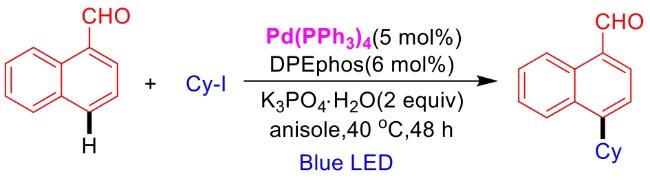
In 2018, the Zhou Jianrong group[59]reported a novel para-selective alkylation method for electron-deficient arenes (Scheme 49). This strategy breaks through the limitations of traditional Friedel-Crafts alkylation, efficiently constructing C(sp2)—C(sp3) bonds at the para position of electron-withdrawing groups via a radical addition mechanism. The method successfully achieved the transformation of tertiary alkyl iodides (such as adamantyl iodide) and cyclic secondary alkyl bromides, demonstrating excellent selectivity and functional group compatibility. Compared with classic Friedel-Crafts reactions, it has a broader scope of aromatic substrates, especially suitable for electron-rich systems, providing a new pathway for the synthesis of related compounds.
图式49 可见光驱动钯催化的对位选择性烷基化反应[59]

Scheme 49 Visible-light-driven palladium-catalyzed para-selective alkylation[59]

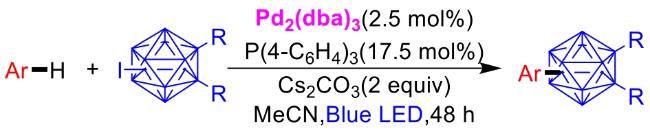
Carboranes are a unique class of boron-carbon molecular clusters characterized by three-dimensional aromaticity, icosahedral geometry, high boron content, and excellent thermal and chemical stability. These properties make them key building blocks in functional materials and drug development. In 2022, the Xie Zuowei research group[60]developed a visible-light-driven palladium-catalyzed cross-coupling reaction (Scheme 50), using readily available iodo-o-carborane as the starting material. Leveraging a visible-light-driven Pd(0)/Pd(I) catalytic cycle, this method efficiently generates boron-centered cage carboranyl radicals at the B3, B4, and B9 positions. These radicals can further react with (hetero)arenes to construct a series of B-(hetero)arylated o-carborane derivatives. This approach not only provides a mild and efficient strategy for carborane functionalization but also significantly expands the application boundaries of photocatalytic palladium chemistry in the field of boron cluster modification.
图式50 可见光驱动钯催化的交叉偶联反应[60]

Scheme 50 Visible-light-driven palladium-catalyzed cross-coupling[60]

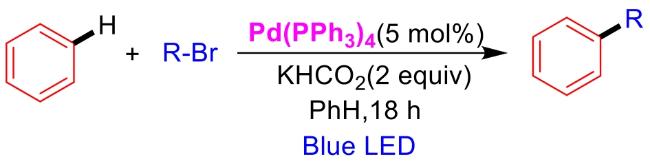
Although the efficient and selective synthesis of widely used arene side chains is fundamentally important, direct catalytic C(sp2)—H alkylation of unactivated arenes with inexpensive alkyl halides remains challenging. In 2020, the Hong group[61]reported a visible-light-driven palladium-catalyzed C(sp2)—H alkylation reaction (Scheme 51), achieving direct coupling of unactivated arenes with alkyl bromides. This reaction features simple operation, high efficiency, strong functional group tolerance, and mild conditions, avoiding common rearrangement side reactions observed in traditional Friedel-Crafts alkylations. It is applicable for late-stage functionalization of complex molecules and one-pot sequential Pd-catalyzed C—C bond formation, providing new strategies for the efficient and highly selective synthesis of linear and branched alkylarenes. Furthermore, this system enables a tandem reaction combining photocatalysis with thermally driven Suzuki-Miyaura coupling via an orthogonal one-pot approach, broadening its synthetic application prospects.
图式51 可见光驱动钯催化的非活化芳烃与烷基溴的C(sp2)—H烷基化反应[61]

Scheme 51 Visible-light-driven palladium-catalyzed C(sp2)—H alkylation of unactivated arenes with alkyl bromides[61]

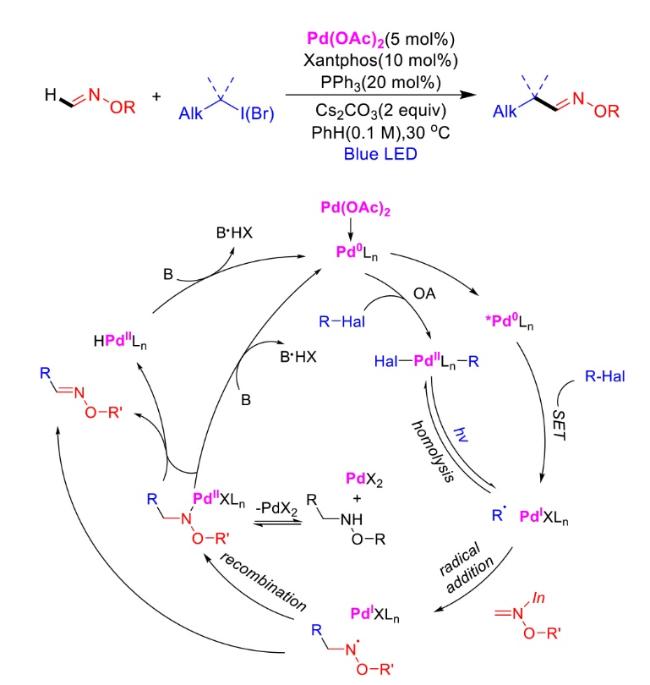
The addition of alkyl radicals to imines is an important method for constructing polysubstituted amine compounds, typically relying on the synergistic activation of imines by stoichiometric radical mediators and Lewis acids. Although the development of photoredox catalysis and metal-catalyzed hydrogen atom transfer technologies has enabled some catalytic systems, most methods are limited to reductive processes, constraining the diversity of subsequent product functionalization. In 2021, the Gevorgyan group[62]reported a visible-light-driven palladium-catalyzed C—H alkylation reaction of oximes (Scheme 52), which achieved efficient and selective coupling of oximes with alkyl halides (bromides and iodides) via a Heck-type coupling mechanism. Based on a Pd(0)/Pd(I) redox cycle, the reaction generates an alkyl-Pd radical intermediate through single-electron transfer (SET), followed by radical addition to the imine unit of the oxime and a β-hydride elimination process, yieldingE/Zmixed substituted imine compounds in high yields. This method provides a mild and highly atom-economical new pathway for the C—H functionalization of oxime compounds, further expanding the application potential of photocatalytic palladium chemistry in the field of imine synthesis, demonstrating good generality and synthetic utility.
图式52 可见光驱动钯催化的肟氧化C—H烷基化反应[62]

Scheme 52 Visible-light-driven palladium-catalyzed oxime-directed C—H alkylation[62]

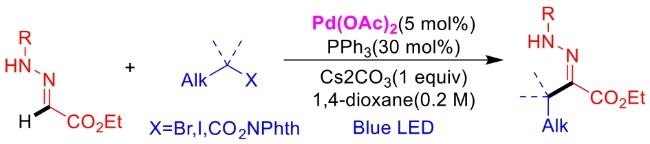
The following year, the team[63]developed a new method for visible-light-driven palladium-catalyzed stereoselective synthesis of alkylated ester hydrazones (Scheme 53). Using alkyl bromides, iodides, or redox-active esters as starting materials, the reaction generates nucleophilic carbon-centered radicals, which subsequently add to hydrazones and undergo a palladium-mediated dehydrogenation process, efficiently constructing E-configured products that are difficult to achieve via traditional condensation methods. The system is applicable to a broad substrate scope, including various primary, secondary, and tertiary alkyl halides as well as multiple glyoxylate-derived hydrazones, and exhibits good tolerance toward distal functional groups such as phenyl, olefin, and ester groups. Furthermore, this strategy can be extended to sequential C,N-dialkylation reactions of 1,3-dihalides, enabling the one-pot construction of tetrahydropyridazine heterocycles. This method not only provides a new pathway with high stereoselectivity and atom economy for the C—H functionalization of hydrazone compounds but also significantly enriches the application scope of photocatalytic palladium chemistry in the synthesis of imine derivatives.
图式53 可见光驱动钯催化的立体选择性合成烷基化酯基腙[63]

Scheme 53 Visible-light-driven palladium-catalyzed stereoselective synthesis of alkyl hydrazonoates[63]

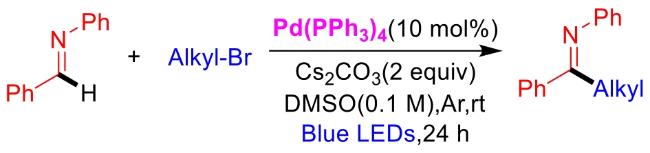
The addition of organometallic reagents to imines is considered one of the effective methods for constructing alkylamines. However, due to the high sensitivity of organometallic reagents to water and the instability of imines, such reactions typically require strictly anhydrous conditions, thereby limiting their application in the synthesis of complex molecules. In 2022, the Rueping group[64]reported a visible-light-driven palladium-catalyzed reductive alkylation of imines (Scheme 54), using alkyl bromides as alkylating agents to achieve excellent substrate compatibility under mild conditions. This method is not only applicable to primary, secondary, and tertiary alkyl bromides but can also be extended to three-component one-pot reactions involving aldehydes, amines, and alkyl bromides, opening new pathways for the green synthesis of amine compounds and demonstrating significant synthetic potential and application prospects.
图式54 可见光驱动钯催化的亚胺还原烷基化反应[64]

Scheme 54 Visible-light-driven palladium-catalyzed reductive alkylation of imines[64]

3.7 Palladium-catalyzed HAT reaction

Palladium-catalyzed HAT reactions and non-directed sp2 C—H alkylation reactions constitute two complementary strategies in the field of C—H bond activation, both expanding the reaction dimensions for functionalizing inert C—H bonds through different mechanistic pathways. The core of HAT reactions lies in the fact that hybrid palladium radical species (such as alkyl/vinyl/aryl-Pd·) generated under photoexcitation or redox conditions can selectively abstract hydrogen atoms from remote C—H bonds, thereby triggering subsequent transformation processes such as cyclization, functionalization, or rearrangement.
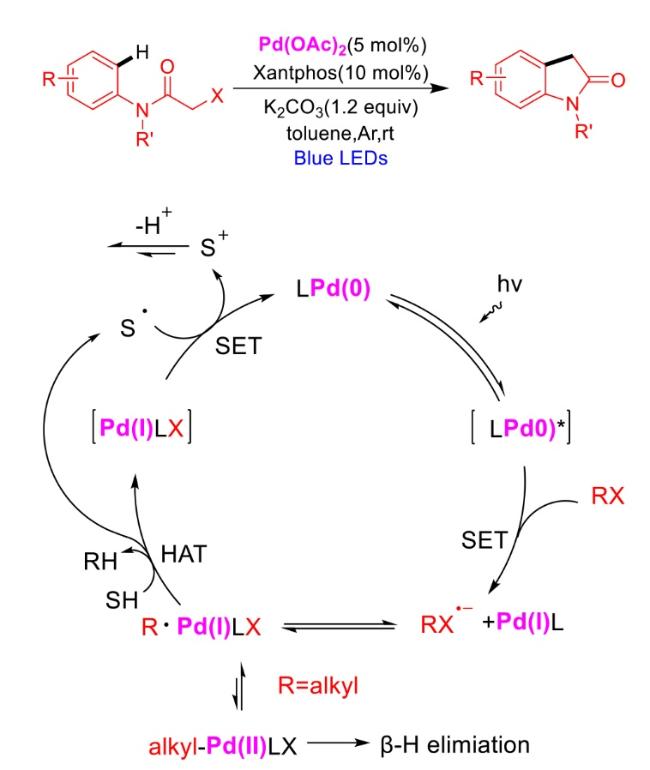
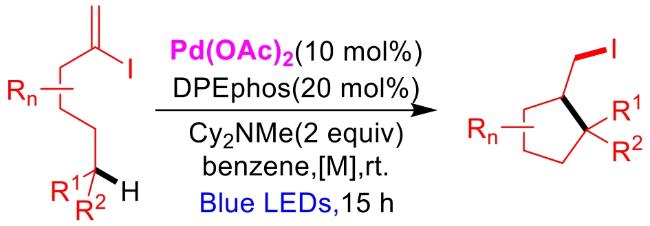
In 2017, the Gevorgyan group[65]developed a mild, visible-light-driven palladium-catalyzed cascade reaction involving hydrogen atom transfer/atom transfer radical cyclization (HAT/ATRC) (Scheme 55). This method utilizes vinyl palladium radicals as mediators to efficiently construct carbocyclic and heterocyclic structures containing iodomethyl groups via a 1,5-hydrogen atom transfer process. The reaction is applicable to various linear and cyclic substrates, and the resulting iodomethyl groups can be further derivatized, providing a new pathway for constructing complex cyclopentane skeletons and significantly expanding the potential applications of palladium-catalyzed HAT reactions in the synthesis of diverse molecular frameworks.
图式55 可见光驱动钯催化的氢原子易位/原子转移自由基环化级联反应[65]

Scheme 55 Visible-light-driven palladium-catalyzed hydrogen atom transfer/atom transfer radical cyclization cascade[65]

Over the past few decades, stable carbon nucleophiles have been widely used in allylation reactions; whereas unstable carbon nucleophiles typically rely on pre-formed metal enolates under highly basic conditions, inevitably generating stoichiometric amounts of metal salt waste, which limits their development in green chemistry. In 2021, the research group of Wang Pusheng[66]reported a three-component coupling reaction combining hydrogen atom transfer photocatalysis with palladium-catalyzed allylic alkylation (Scheme 56), successfully achieving the direct functionalization of inert C(sp3)—H bonds. This method requires neither strong bases nor pre-metalation, featuring excellent atom economy, mild reaction conditions, and a broad substrate scope. The reaction proceeds via a radical/ionic relay mechanism, wherein carbanions act as nucleophiles attacking π-allylpalladium intermediates through a classic two-electron pathway. This study not only provides an environmentally friendly, atom-economical transition metal-catalyzed method for the in situ generation of unstable nucleophiles but also opens new avenues for the functionalization of inert C—H bonds and the efficient construction of complex molecules.
图式56 可见光驱动钯催化的惰性C(sp3)—H键的直接官能化[66]

Scheme 56 Visible-light-driven palladium-catalyzed direct functionalization of inert C(sp3)—H bonds[66]

Unsaturated amines are key structural units in natural products and bioactive molecules, possessing significant synthetic value. In 2018, the Gevorgyan group[67]reported a novel desaturation strategy (Scheme 57), which efficiently converts aliphatic amines into enamines, allylamines, and homoallylamines. This method is based on aryl-hybridized palladium radical intermediates initiating 1,n-HAT (n = 5~7), followed by palladium-catalyzed β-H elimination to achieve C$\stackrel{\mathrm{ }\mathrm{ }\mathrm{ }\mathrm{ }}{̿}$=C bond selective construction. Notably, the selectivity of the HAT process can be regulated by additives, and the reaction requires no external photosensitizer or oxidant, demonstrating excellent functional group compatibility and broad application prospects.
图式57 可见光驱动钯催化的胺的定向去饱和反应[67]

Scheme 57 Visible-light-driven palladium-catalyzed directed desaturation of amines[67]

3.8 Other Pd-catalyzed C—H functionalization reactions

In 2022, the Gevorgyan group[68]developed a new strategy for asymmetric allylic C—H amination via synergistic photocatalysis and palladium catalysis (Scheme 58). This method employs aryl bromides as atypical oxidants. Through a blue-light-driven Pd(0/I/II) catalytic cycle, it achieves aryl-palladium-radical-mediated HAT, selectively cleaving allylic C(sp3)—H bonds. Subsequently, a radical-polar crossover process forms a π-allyl palladium intermediate, which couples with aliphatic amines to generate branched allylamines. This method breaks the limitations of traditional Pd(II) catalytic systems regarding monosubstituted olefins; it is applicable to internal olefins and primary/secondary aliphatic amines, demonstrating excellent enantioselectivity (up to 97:3 er) and diastereoselectivity (>95:5 dr). Its high efficiency in the late-stage functionalization of drug molecules provides an efficient and novel synthetic route for complex allylamines.
图式58 可见光驱动钯催化的不对称烯丙位C—H胺化[68]

Scheme 58 Visible-light-driven palladium-catalyzed asymmetric allylic C—H amination[68]

In the past decade, visible-light-driven palladium-catalyzed reactions have attracted widespread attention due to their unique reaction pathways and excellent selectivity. Unlike traditional non-palladium-based photocatalytic systems, palladium complexes absorb photons to enter an excited state and leverage their triplet characteristics to achieve bond cleavage or formation. However, related research has primarily focused on the activation of organic halides (especially alkyl halides), as ground-state palladium catalysis of such substrates suffers from slow oxidative addition rates and the propensity of Pd(II)-alkyl intermediates to undergo β-hydride elimination. In 2025, the Murphy group[69]reported a study on the mechanism of aryl radical generation in the photocatalytic palladium-catalyzed coupling of aryl halides with arenes (Scheme 59). Using 2-halo-m-xylene as a model substrate, under blue light irradiation and palladium catalysis, the existence of aryl radical intermediates was verified through product distribution characteristics and deuterium kinetic isotope effects. Compared to thermal catalytic reactions, photoactivation exhibited significant differences: (1) All tested phosphine ligands promoted the radical pathway, whereas thermal reactions were limited to specific ligands; (2) Light irradiation induced homolysis of the palladium-aryl bond (Ar—Pd), generating biaryl products from oxidative addition complexes via radical intermediates; (3) The photoreaction was compatible with mild bases such as Cs2CO3, while thermal reactions required strong bases such as KOtBu. Furthermore, deuterated solvent kinetic isotope effect (KIE) analysis and photolysis experiments of stoichiometric oxidative addition complexes further confirmed the involvement of aryl radicals in the Pd⁰/PdI/PdIIcatalytic cycle. The above results reveal the mechanism of aryl radical generation in photoexcited palladium catalysis from multiple dimensions, providing important theoretical support for related fields.
图式59 可见光驱动钯催化的芳基卤化物与芳烃的偶联反应[69]

Scheme 59 Visible-light-driven palladium-catalyzed coupling of aryl halides with arenes[69]

4 Conclusion and Outlook

The development of light-driven palladium-catalyzed coupling and C—H functionalization reactions has provided new tools and strategies for modern organic synthesis. By leveraging photochemical excitation of palladium catalysts, researchers have successfully overcome the limitations of traditional thermal catalysis regarding inert bond activation and selectivity control. From Negishi coupling to multicomponent reactions, photo-palladium synergistic catalysis has not only expanded the scope of applicable substrates but also achieved regio- and stereoselectivity that is difficult to attain with conventional methods. It demonstrates unique advantages particularly in the construction of fluorinated compounds, strained rings, and complex heterocyclic skeletons. The core mechanism lies in the fact that photoexcited palladium complexes (such as Pd(0) or Pd(I)) can generate highly active radicals or low-valent palladium species via pathways like single-electron transfer (SET) or metal-to-ligand charge transfer (MLCT); these intermediates, which are difficult to stabilize under traditional conditions, efficiently participate in C—H bond activation and oxidative addition in photocatalysis. Furthermore, photocatalysis typically proceeds at room temperature or under mild conditions, enhancing compatibility with sensitive functional groups. Despite significant progress, several key challenges remain: first, the precise regulation mechanism of photoexcited palladium species needs further elucidation, especially regarding its potential in asymmetric catalysis; second, existing systems exhibit low efficiency in utilizing long-wavelength light (such as red or near-infrared light), limiting biocompatible applications; third, multimetallic synergistic photocatalysis and its application in tandem reactions require further exploration.
[1]
Yi H, Zhang G T, Wang H M, Huang Z Y, Wang J, Singh A K, Lei A W. Chem. Rev., 2017, 117(13): 9016.

[2]
Ye H, Xiao C, Lu L Q. Chin. J. Org. Chem., 2018, 38(8): 1897.

(叶辉, 肖聪, 陆良秋. 有机化学, 2018, 38(8): 1897.)

[3]
Xuan J, Xiao W J. Angew. Chem. Int. Ed., 2012, 51(28): 6828.

[4]
Li Z L, Jin J, Huang S H. Chin. J. Org. Chem., 2020, 40(3): 563.

(李祯龙, 金健, 黄莎华. 有机化学, 2020, 40(3): 563.)

[5]
Li X, Zhang J. J. Nanjing Norm. Univ. Nat. Sci. Ed., 2021, 44(3): 45.

(李轩, 张敬. 南京师大学报(自然科学版), 2021, 44(3): 45.)

[6]
Toriumi N, Inoue T, Iwasawa N. J. Am. Chem. Soc., 2022, 144(42): 19592.

[7]
Waddell P M, Tian L, Scavuzzo A R, Venigalla L, Scholes G D, Carrow B P. Chem. Sci., 2023, 14(48): 14217.

[8]
Han Y, Zhou L Y, Wang C Y, Feng S T, Ma R, Wan J P. Chin. Chem. Lett., 2024, 35(2): 108977.

[9]
Tang E R, Zhou Q Q, Wan J P. Chem. Commun., 2024, 60(58): 7471.

[10]
Tang W H, Wu L Y, Zhou Q Q, Wan J P. Org. Chem. Front., 2025, 12(7): 2340.

[11]
Pang B S, Xing Y Y, Gao R H, Fang Y H, Zhang H J, Huang L. Prog. Chem., 2024, 36(8): 1237.

(庞百胜, 邢盈盈, 高瑞鸿, 方要华, 张海军, 黄亮. 化学进展, 2024, 36(8): 1237.)

[12]
Price G A, Hassan A, Chandrasoma N, Bogdan A R, Djuric S W, Organ M G. Angew. Chem. Int. Ed., 2017, 56(43): 13347.

[13]
Abdiaj I, Huck L, Mateo J M, De la Hoz A, Gomez M V, Díaz-Ortiz A, Alcázar J. Angew. Chem. Int. Ed., 2018, 57(40): 13231.

[14]
Maluenda I, Navarro O. Molecules, 2015, 20(5): 7528.

[15]
Guo B, Li H X, Zha C H, Young D J, Li H Y, Lang J P. ChemSusChem, 2019, 12(7): 1421.

[16]
Luo Y C, Tong F F, Zhang Y X, He C Y, Zhang X G. J. Am. Chem. Soc., 2021, 143(34): 13971.

[17]
Zhao J H, Zhou Z Z, Zhang Y, Su X, Chen X M, Liang Y M. Org. Biomol. Chem., 2020, 18(23): 4390.

[18]
Oku N, Murakami M, Miura T. Org. Lett., 2022, 24(8): 1616.

[19]
Cheung K P S, Sarkar S, Gevorgyan V. Chem. Rev., 2022, 122(2): 1543.

[20]
Adamik R, Földesi T, Novák Z. Org. Lett., 2020, 22(20): 8091.

[21]
Kancherla R, Muralirajan K, Maity B, Zhu C, Krach P E, Cavallo L, Rueping M. Angew. Chem. Int. Ed., 2019, 58(11): 3229.

[22]
Li Y L, Liu H B, Huang Z L, He Y, Xu B H, Wang H M, Yu Z K. J. Org. Chem., 2021, 86(12): 8402.

[23]
Kuribara T, Nakajima M, Nemoto T. Nat. Commun., 2022, 13: 4052.

[24]
Zheng Y, Lu W D, Xie Z Z, Chen K, Xiang H Y, Yang H. Org. Lett., 2022, 24(29): 5407.

[25]
Feng L Y, Guo L, Yang C, Zhou J, Xia W J. Org. Lett., 2020, 22(10): 3964.

[26]
Zhang Z Y, Gevorgyan V. J. Am. Chem. Soc., 2022, 144(45): 20875.

[27]
Zhang Z Y, Kvasovs N, Dubrovina A, Gevorgyan V. Angew. Chem. Int. Ed., 2022, 61: e202110924.

[28]
Chen S, Van Meervelt L, Van der Eycken E V, Sharma U K. Org. Lett., 2022, 24(5): 1213.

[29]
Sarkar S, Ghosh S, Kurandina D, Noffel Y, Gevorgyan V. J. Am. Chem. Soc., 2023, 145(22): 12224.

[30]
Maiti S, Ghosh P, Raja D, Ghosh S, Chatterjee S, Sankar V, Roy S, Lahiri G K, Maiti D. Nat. Catal., 2024, 7(3): 285.

[31]
Liu Z L, Ye Z P, Liao Z H, Lu W D, Guan J P, Gao Z Y, Chen K, Chen X Q, Xiang H Y, Yang H. ACS Catal., 2024, 14(5): 3725.

[32]
Kvasovs N, Fang J, Kliuev F, Gevorgyan V. J. Am. Chem. Soc., 2023, 145(33): 18497.

[33]
Yang J, Li C R, Guo X, Chen Z, Hu K, Li L X. Org. Lett., 2024, 26(24): 5110.

[34]
Han H H, Yi W Q, Ding S J, Ren X Y, Zhao B G. Angew. Chem. Int. Ed., 2025, 64(5): e202418910.

[35]
Yang Z, Koenigs R M. Chem., 2021, 27(11): 3694.

[36]
Fang H, Empel C, Atodiresei I, Koenigs R M. ACS Catal., 2023, 13(9): 6445.

[37]
Sun L, Ye J H, Zhou W J, Zeng X, Yu D G. Org. Lett., 2018, 20(10): 3049.

[38]
Torres G M, Liu Y, Arndtsen B A. Science, 2020, 368(6488): 318.

[39]
Park M, Rajamanickam K R, Lee S. Org. Lett., 2025, 27(25): 6617.

[40]
Wang B C, Wei Y, Xiong F Y, Qu B L, Xiao W J, Lu L Q. Sci. China Chem., 2022, 65(12): 2437.

[41]
Rakshit A, Kumar P, Alam T, Dhara H, Patel B K. J. Org. Chem., 2020, 85(19): 12482.

[42]
Ma J W, Chen X, Zhou Z Z, Liang Y M. J. Org. Chem., 2020, 85(14): 9301.

[43]
Koy M, Bellotti P, Katzenburg F, Daniliuc C G, Glorius F. Angew. Chem., 2020, 132(6): 2395.

[44]
Li M M, Qu B L, Xiao Y Q, Xiao W J, Lu L Q. Sci. Bull., 2021, 66(17): 1719.

[45]
Dhara H N, Rakshit A, Alam T, Sahoo A K, Patel B K. Org. Lett., 2023, 25(3): 471.

[46]
Du J, Wang X, Wang H L, Wei J H, Huang X, Song J, Zhang J M. Org. Lett., 2021, 23(15): 5631.

[47]
Pei C, Yang Z, Koenigs R M. Tetrahedron, 2022, 123: 132939.

[48]
Fu W Y, Yu A X, Jiang H S, Zuo M H, Wu H F, Yang Z W, An Q, Sun Z Z, Chu W Y. Org. Biomol. Chem., 2019, 17(13): 3324.

[49]
Zhou Z Z, Zhao J H, Gou X Y, Chen X M, Liang Y M. Org. Chem. Front., 2019, 6(10): 1649.

[50]
Czyz M L, Weragoda G K, Horngren T H, Connell T U, Gomez D, O’Hair R A J, Polyzos A. Chem. Sci., 2020, 11(9): 2455.

[51]
Sheng X X, Du Y J, Li J H, Teng Q Q, Chen M. Org. Lett., 2023, 25(20): 3664.

[52]
Jiang J, Zhang W M, Dai J J, Xu J, Xu H J. J. Org. Chem., 2017, 82(7): 3622.

[53]
Zhao B L, Li H F, Jiang F X, Wan J P, Cheng K, Liu Y Y. J. Org. Chem., 2023, 88(1): 640.

[54]
Zou L, Li P H, Wang B, Wang L. Chem. Commun., 2019, 55(26): 3737.

[55]
Zhou W J, Cao G M, Shen G, Zhu X Y, Gui Y Y, Ye J H, Sun L, Liao L L, Li J, Yu D G. Angew. Chem., 2017, 129(49): 15889.

[56]
Ratushnyy M, Kvasovs N, Sarkar S, Gevorgyan V. Angew. Chem. Int. Ed., 2020, 59(26): 10316.

[57]
Chuentragool P, Yadagiri D, Morita T, Sarkar S, Parasram M, Wang Y, Gevorgyan V. Angew. Chem. Int. Ed., 2019, 58(6): 1794.

[58]
Shang R, Fu Y, Wang G Z. Synthesis, 2018, 50(15): 2908.

[59]
Jiao Z W, Lim L H, Hirao H, Zhou J S. Angew. Chem. Int. Ed., 2018, 57(21): 6294.

[60]
Li S M, Zhang J, Xie Z W. Org. Lett., 2022, 24(41): 7497.

[61]
Kim D, Lee G S, Kim D, Hong S H. Nat. Commun., 2020, 11: 5266.

[62]
Kvasovs N, Iziumchenko V, Palchykov V, Gevorgyan V. ACS Catal., 2021, 11(6): 3749.

[63]
Kvasovs N, Gevorgyan V. Org. Lett., 2022, 24(23): 4176.

[64]
Kancherla R, Muralirajan K, Rueping M. Chem. Sci., 2022, 13(29): 8583.

[65]
Ratushnyy M, Parasram M, Wang Y, Gevorgyan V. Angew. Chem. Int. Ed., 2018, 57(10): 2712.

[66]
Shen Y, Dai Z Y, Zhang C, Wang P S. ACS Catal., 2021, 11(12): 6757.

[67]
Chuentragool P, Parasram M, Shi Y, Gevorgyan V. J. Am. Chem. Soc., 2018, 140(7): 2465.

[68]
Pak Shing Cheung K, Fang J, Mukherjee K, Mihranyan A, Gevorgyan V. Science, 2022, 378(6625): 1207.

[69]
Tyerman S, MacKay D G, Clark K F, Kennedy A R, Robertson C M, Evans L, Edkins R M, Murphy J A. ACS Catal., 2025, 15(2): 917.

Outlines

/