Metal-Organic Frameworks as Next-Generation Chemiresistive Sensors: From Fundamental Design to Advanced Applications
Received date: 2025-12-11
Revised date: 2026-01-14
Online published: 2026-03-21
Supported by
Scientific Research Project of Anhui Higher Education Institution(2024AH051843)
Scientific Research Project of Anhui Higher Education Institution(2024AH051839)
Accurate and real-time sensing is fundamental to advancements in health diagnostics, environmental monitoring, and industrial safety. However, conventional sensing materials such as metal oxides, conducting polymers, and carbon-based composites are constrained by intrinsic trade-offs between sensitivity, selectivity, and operational stability. To address these limitations, metal-organic frameworks (MOFs) have emerged as a transformative class of materials, offering unparalleled structural tunability, ultrahigh surface areas, and programmable pore chemistry. This comprehensive review provides an in-depth analysis of MOF-based chemiresistive sensors, moving beyond a simple catalog of examples to establish a mechanistic understanding of how molecular-level design dictates sensing performance. We systematically deconstruct the evolution from often-insulating pristine MOFs to advanced composites where MOFs synergize with conductive fillers like graphene, carbon nanotubes, and polymers and to MOF-derived porous carbons and metal oxides. Each category is critically examined to highlight strategies for overcoming inherent challenges in electrical conductivity, response kinetics, and long-term stability. The review is structured to guide the researcher in the field from fundamental design principles and charge transport mechanisms to performance benchmarking against key metrics such as sensitivity, limit of detection, selectivity, and response/recovery times. A significant focus is placed on the integration of MOFs into next-generation applications, including flexible and wearable electronics, multi-parameter sensor arrays, and intelligent systems that leverage artificial intelligence for pattern recognition and drift compensation. Furthermore, we critically address the pivotal challenges hindering practical deployment, such as hydrothermal/chemical stability, mechanical robustness for wearable formats, and the urgent need for standardized testing protocols. By synthesizing insights from fundamental research and cutting-edge applications, this review serves as a rational design guide and a forward-looking perspective, outlining a concrete roadmap for harnessing the full potential of MOFs in the development of intelligent, reliable, and commercially viable next-generation chemiresistive sensing technologies.
1 Introduction
2 Design principles of MOFs
3 MOFs in chemiresistive sensing
3.1 Basic principles
3.2 Pristine MOF-based sensors
3.3 MOF composites and hybrids
3.4 MOF-derived materials
3.5 Challenges in stability and practical deployment
4 Future outlook & emerging applications
4.1 Integration with novel transduction mechanisms and flexible electronics
4.2 The path to intelligent and cognitive sensing systems
4.3 Multi-modal and extreme-performance sensing
4.4 The path to commercialization
5 Conclusion and future perspectives
Shihzad Shakil , Fan Wang , Pengyu Sun , Zhihan Zhou , Xiaojing Lu , Jun Du , Jiarui Huang . Metal-Organic Frameworks as Next-Generation Chemiresistive Sensors: From Fundamental Design to Advanced Applications[J]. Progress in Chemistry, 2026 , 38(3) : 502 -531 . DOI: 10.7536/PC20251208
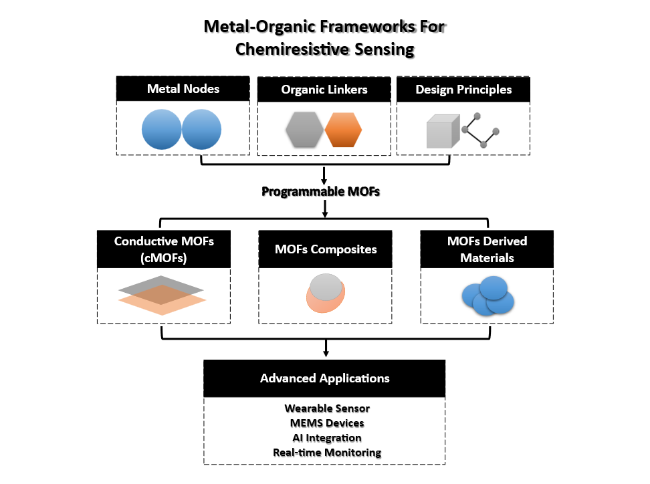
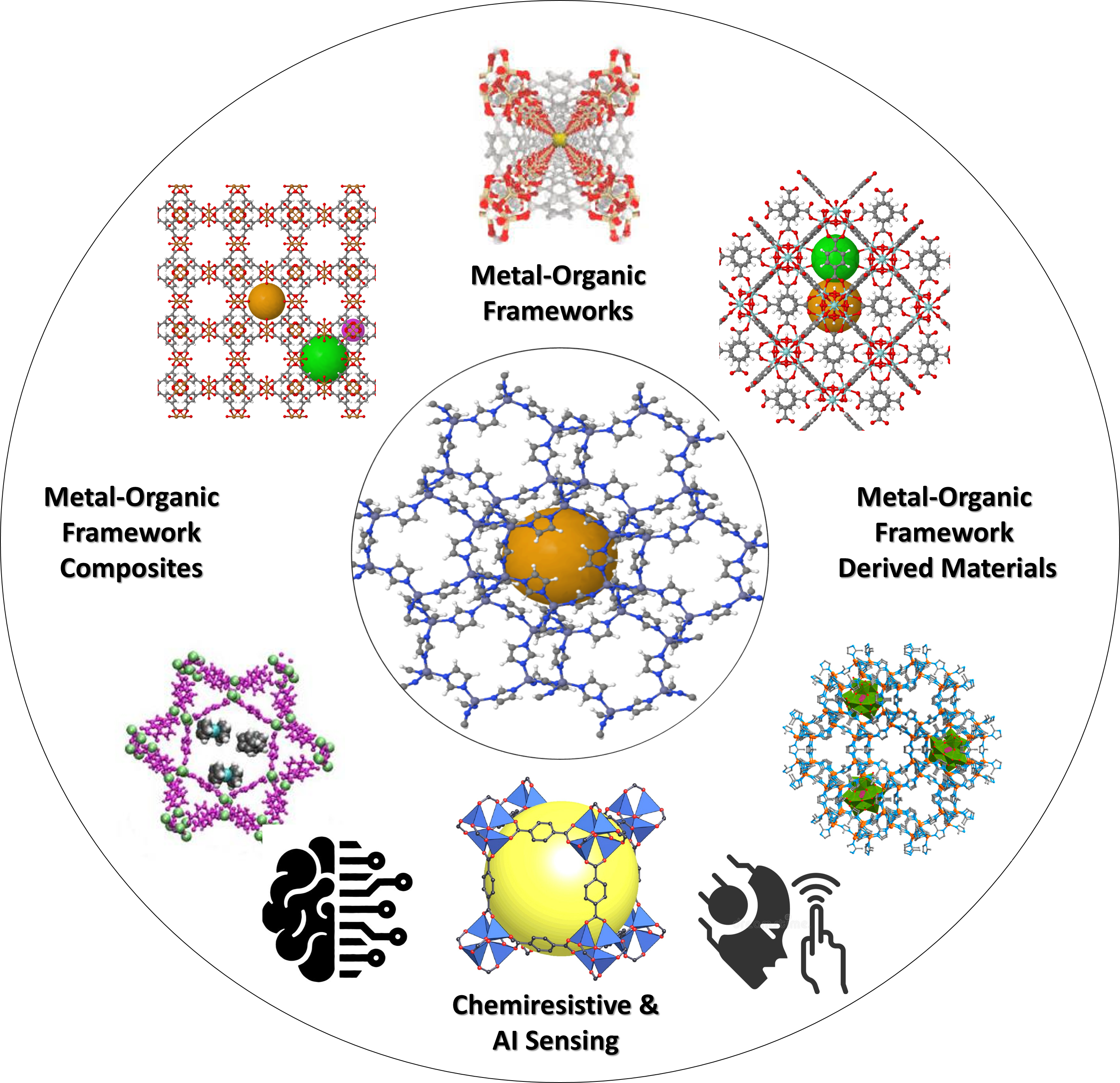
图1 MOF基化学电阻传感器的路线图:展示了从MOF基本结构单元(金属节点和有机连接体)到各种传感材料(原始MOF、复合材料、衍生材料)的构建过程,及其在可穿戴设备和人工智能电子鼻等先进智能应用中的集成Fig.1 Roadmap of MOF-based chemiresistive sensing. This schematic illustrates the journey from fundamental MOF structural components (metal nodes and organic linkers) to the creation of various sensing materials (pristine MOFs, composites, derived materials) and their integration into advanced, intelligent applications such as wearable devices and AI-enabled E-noses |
图2 次级结构单元(SBU)的关键作用:金属簇(SBU)的选择直接决定了所得MOF的几何结构、孔道化学性质及其在气体储存、分离和传感等应用中的适用性[17]Fig.2 The pivotal role of secondary building units (SBUs). The choice of metal cluster (SBU) directly dictates the resulting MOF’s geometry, pore chemistry, and its suitability for applications such as gas storage, separation, and sensing[17]. Redesigned by the authors, based on concepts from ref. [17]. Copyright 2018 American Association for the Advancement of Science |
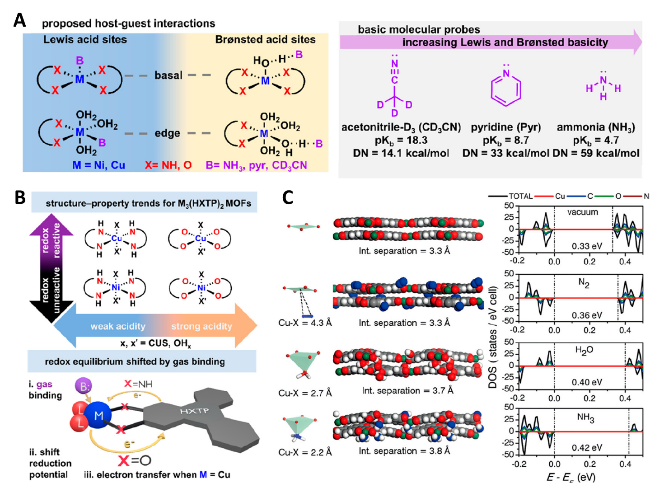
图3 MOF中的传感机制示意图:(A) 金属节点处的主客体相互作用,展示其作为Lewis和Brønsted酸位点用于分析物结合的作用;(B) 分析物、金属节点和有机连接体之间的氧化还原平衡和电荷转移示意图,展示了分析物结合如何转化为电导率变化;(C) Cu3(HHTP)2与各种气体(N2、H2O、NH3) 相互作用的DFT优化结构及相应的态密度 (DOS)图,突出了对化学电阻响应有贡献的电子结构和层间距的相关变化[30]Fig.3 Sensing mechanism in MOFs. (A) Proposed host-guest interactions at metal nodes, illustrating their role as Lewis and Brønsted acid sites for analyte binding. (B) Schematic of the redox equilibrium and charge transfer between the analyte, metal node, and organic linker, demonstrating how analyte binding is transduced into a conductivity change. (C) DFT-optimized structures and corresponding density of states (DOS) plots showing the interaction of Cu3(HHTP)2 with various gases (N2, H2O, NH3), highlighting the associated changes in electronic structure and interlayer spacing that contribute to the chemiresistive response[30]. Copyright 2013 Royal Society of Chemistry |
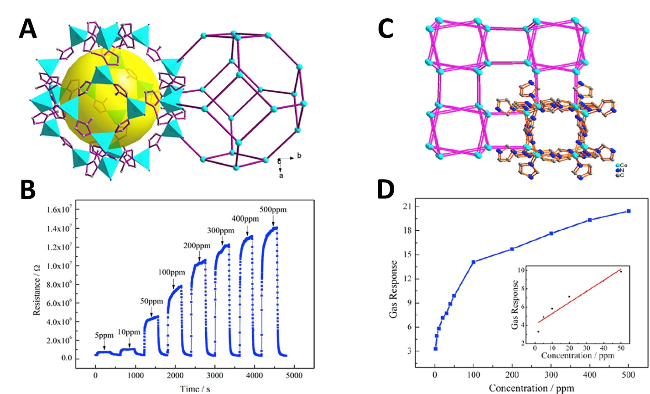
图4 基于3D MOF的传感器及其传感性能:(A) ZIF-67的晶体结构[38];(B) ZIF-67在150 ℃下对5~500 ppm甲醛的动态电阻变化[38];(C) [Co(IM)2]n的晶体结构[41];(D) 在75 ℃下响应与三甲胺浓度的关系(插图为对2~50 ppm的响应[41]Fig.4 3D MOF-based sensors and their sensing properties. (A) Crystal structure of ZIF-67[38]. (B) Dynamic resistance changes of ZIF-67 to 5~500 ppm of formaldehyde at 150 ℃[38]. (C) Crystal structure of [Co(IM)2]n[41]. (D) Response versus trimethylamine concentration (inset is response to 2~50 ppm) at 75 ℃[41]. Copyright 2012 Royal Society of Chemistry, 2025 American Chemical Society |
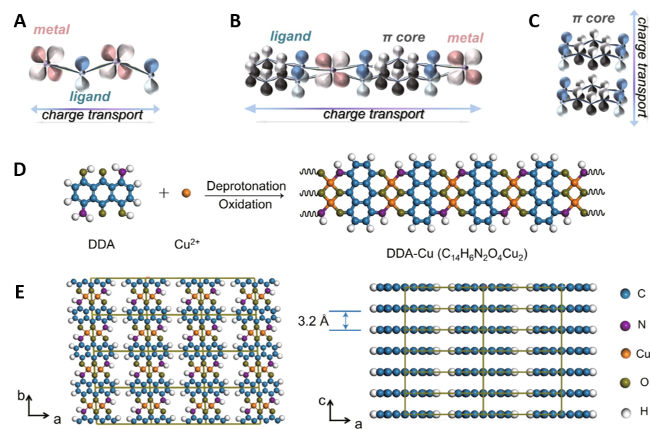
图5 MOF的电荷传输路径及DDA-Cu MOF的合成过程:(A) 扩展共轭平面;(B) 空间电荷传输;(C) “金属”指金属的d轨道,“配体”指配体的p轨道,“π核”表示配体的共轭π平面;(D) DDA-Cu的合成示意图;(E) DDA-Cu的晶体结构[47]Fig.5 Charge transport pathways of MOFs and the synthesis process of DDA-Cu MOF. (A) Extended conjugation planes. (B) Charge transport through-space. (C) The “metal” means the d orbitals of metals, “ligand” is the p orbitals of ligand and “π core” represents the conjugated π plane of ligand. (D) Synthetic schematic diagram of DDA-Cu. (E) Crystal structure of DDA-Cu[47]. Copyright 2022 Springer Nature |
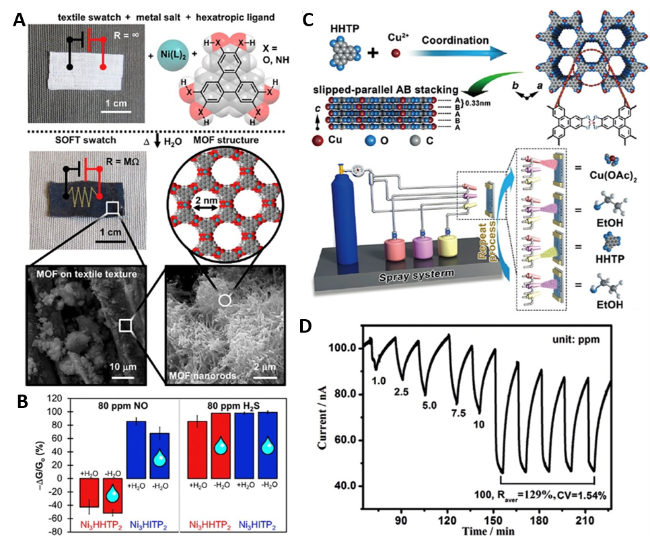
图7 基于2D导电MOF的传感器件:(A) MOF组装棉织物的制备过程及其照片和SEM图像[57];(B) 基于MOF-棉花复合材料的传感器传感性能[57];(C) 采用逐层喷涂法制备Cu3(HHTP)2薄膜气体传感器的示意图[58];(D) Cu3(HHTP)2纳米薄膜的NH3传感性能[58]Fig.7 2D Conductive MOF-based sensing devices. (A) Fabrication process of MOF-assembled cotton fabrics and their photos and SEM images[57]. (B) Sensing properties of MOF-cotton composites-based sensors[57]. (C) Schematic illustration of synthesis of Cu3(HHTP)2 thin film gas sensors by using the layer-by-layer spray-coating method[58]. (D) NH3-sensing properties of Cu3(HHTP)2 nanofilms[58]. Copyright 2017 American Chemical Society, 2017 Wiley-VCH |
表1 纯MOF用于化学电阻传感器的传感性能总结Table 1 The summary of the sensing properties in recent studies on pure MOFs for chemiresistive sensors |
| Gases | Materials | Operating temperature | Response | Detection limit | Ref |
|---|---|---|---|---|---|
| Trimethylamine | [Co(imidazole)2]n | 150 ℃ | Rgas/Rair = 15 at 100 ppm | 2 ppm | 41 |
| Formaldehyde | ZIF-67 | 150 ℃ | Rgas/Rair = 15 at 100 ppm | 5 ppm | 38 |
| Sulfur dioxide | NH2-UiO-66 | RT | |ΔR/R0| = 22% at 10 ppm | 1 ppm | 42 |
| Cu-BTC/graphene | ΔRgas/Rair = 4% at 100 ppm | 100 ppm | 68 | ||
| Ammonia | Cu3(HITP)2 | RT | ΔG/G0 = 2.5% at 10 ppm | 500 ppb | 23 |
| Cu3(HHTP)2 nanofilms (thickness = 20 nm) | |ΔR/R0| = 45% at 10 ppm | 500 ppb | 58 | ||
| Methanol | Cu3(HHTP)2 | RT | ΔG/G0 = 9% at 200 ppm | N/A | 52 |
| Cu3(HITP)2 | ΔG/G0 = 4% at 200 ppm | N/A | 52 | ||
| Ethanol | Ni3(HITP)2 | RT | ΔG/G0 = 4% at 200 ppm | N/A | 52 |
| Cu3(HHTP)2 nanorods | |ΔI/I0|= 1.8% at 80 ppm | 2.5 ppm | 56 | ||
| Co3(HHTP)2/graphite | ΔG/G0 = 10% at 80 ppm | 5 ppm | 69 | ||
| Nitrogen monoxide | Fe3(HHTP)2/graphite | RT | ΔG/G0 = 10% at 80 ppm | 5 ppm | 69 |
| Hydrogen sulfide | Ni3(HITP)2 on cotton | RT | ΔG/G0 = 81% at 80 ppm | 160 ppb | 57 |
| Ni3(HHTP)2 nanorods | ΔI/I0 = 4.2% at 80 ppm | 2.5 ppm | 56 | ||
| Ni3(HHTP)2 on cotton | ΔG/G0 = 98% at 80 ppm | 230 ppb | 57 | ||
| Ni3(HITP)2 on cotton | ΔG/G0 = 97% at 80 ppm | 520 ppb | 57 |
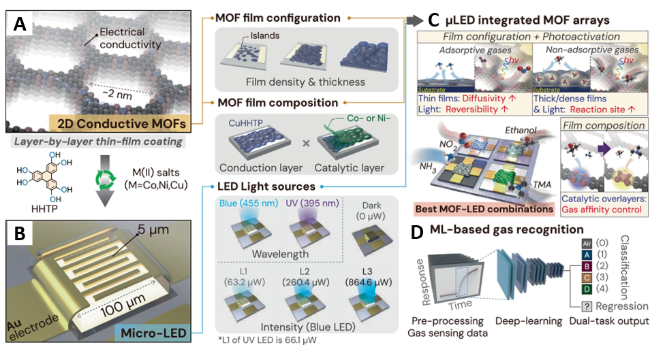
图8 本研究示意图,展示了在超低功耗微发光二极管(μLED)气体传感器顶部使用2D导电金属有机框架(cMOF)层,该装置既用作气体传感器又用作电子鼻:(A) 用于气体传感的优化2D cMOF薄膜示意图,显示了薄膜构型(密度和厚度)和组成(导电层和催化覆盖层)的变化;(B) μLED光波长和强度优化过程示意图,以最大化cMOF的气敏能力(电极宽度和间距:5 μm);(C) 由不同传感器(不同的μLED类型、光强度和cMOF类型)组成的cMOF阵列;(D) 集成深度学习电子鼻系统的光激活cMOF化学电阻气体传感器阵列[1]Fig.8 Schematic overview of this study, illustrating the use of a 2D conductive metal-organic frameworks (cMOF) layer atop an ultra-low power micro light-emitting diode (μLED) gas sensor, which is employed as both a gas sensor and an e-nose. (A) An illustration of the optimized 2D cMOF films for gas sensing, showing variations in film configuration (density and thickness) and composition (conduction layers and catalytic overlayers). (B) An illustration of the optimization process of the light wavelength and intensity of μLED to maximize the gas-sensing capability of the cMOFs (width and spacing of electrodes: 5 μm). (C) An array of cMOFs composed of different sensors (varying μLED types, light intensities, and cMOF types). (D) Light-activated cMOF chemiresistive gas sensor array integrated with a deep learning-enabled e-nose system[1]. Copyright 2025 Springer Nature |
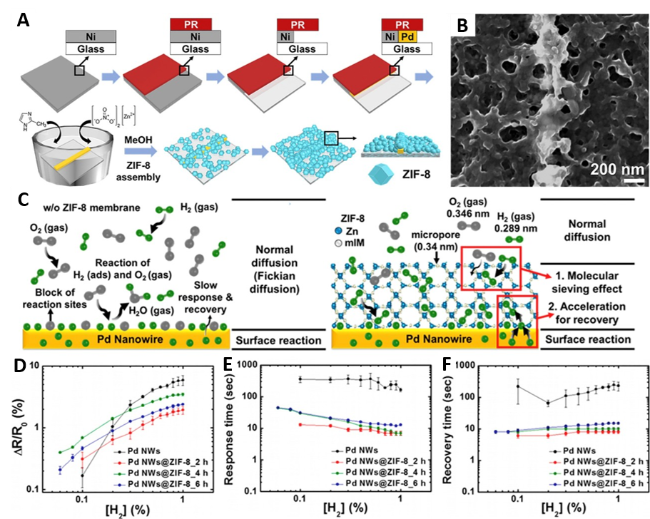
图9 MOF-Pd复合材料及相应的H2传感性能:(A) ZIF-8包覆Pd纳米线的合成示意图;(B) Pd NWs@ZIF-8的SEM图像;(C)有/无ZIF-8层的Pd NWs传感模型示意图,传感器在室温空气中的H2传感特性:(D) 响应,(E) 响应时间,(F) 恢复时间[75]Fig.9 MOF-Pd composites and corresponding H2-sensing performance. (A) Schematic illustration of the synthesis of Pd NWs covered by ZIF-8. (B) SEM image of Pd NWs@ZIF-8. (C) Schematic illustration of the sensing model of the Pd NWs with and without the ZIF-8 layer. H2-sensing properties of the sensors at room temperature in air: (D) response, (E) response time, and (F) recovery time[75]. Copyright 2017 American Chemical Society |
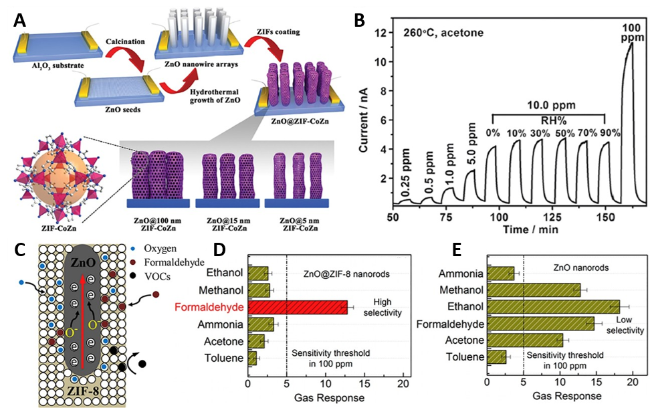
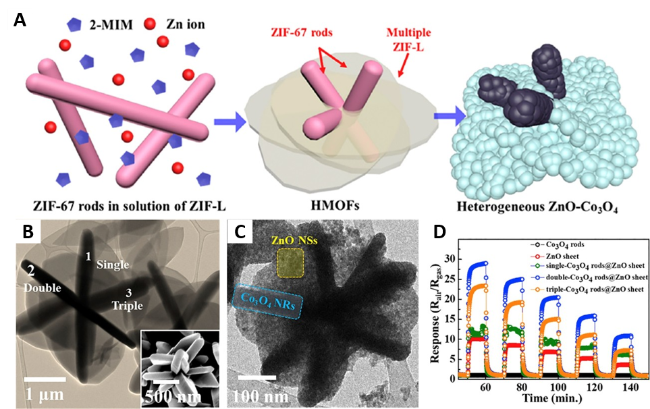
图10 MOF-金属氧化物复合材料及相应的气敏性能:(A) ZIF-CoZn包覆ZnO纳米线的合成示意图[84];(B) ZIF-CoZn包覆ZnO在260 ℃下的丙酮传感性能[84];(C) ZIF-8包覆ZnO纳米线的分子筛效应示意图[85];(D) ZIF-8包覆ZnO纳米线在300 ℃下的选择性特性[85];(E) ZnO纳米线在300 ℃下的选择性特性[85]Fig.10 MOF-metal oxide composites and corresponding gas-sensing performance. (A) Schematic illustration for synthesis of ZIF-CoZn coated ZnO nanowires[84]. (B) Acetone-sensing properties of ZIF-CoZn coated ZnO at 260 ℃[84]. (C) Schematic illustration of the molecular sieving effect of ZIF-8-coated ZnO nanowires[85]. (D) Selectivity property of ZIF-8 coated ZnO nanowires at 300 ℃[85]. (E) Selectivity property of ZnO nanowires at 300 ℃[85]. Copyright 2016 Wiley-VCH, 2016 American Chemical Society |
表2 近年来报道的用于化学电阻传感器的MOF膜的传感性能总结Table 2 The summary of the sensing properties reported in recent literature of MOF membranes for chemiresistive sensors |
| Gases | Materials | Operating temperature | Sensing property | Ref |
|---|---|---|---|---|
| Acetone | ZnO@ZIF-CoZn (T = 5 nm) | 250 ℃ | ΔR/Rgas = 27.5 at 10 ppm independent to 0%~90% RH | 84 |
| Formaldehyde | ZnO@ZIF-8 nanowire | 300 ℃ | Rgas/Rair = 12.5 at 100 ppmSratio: improved from 0.74 to 2 | 85 |
| Carbon dioxide | SnO2@ZIF-67 | 205 ℃ | ΔR/R0 = 16.5% at 0.5% 2-fold higher than pristine SnO2 | 86 |
| Hydrogen | Pd nanowires@ZIF-8 (T = 160 nm) | RT | tres = 7 s & trec = 8 s at 1%20-fold faster than pristine Pd | 75 |
| ZnO@ZIF-8 nanowire (T = ∼150 nm) | 300 ℃ | Rgas/Rair = 1.44 at 50 ppm, no response to some gases | 88 | |
| ZnO@ZIF-8 nanorods (T = ∼ 85 nm) | 250 ℃ | ΔI/I0 = 80% at 50 ppm, Sratio: improved from 0.45 to 2.0 | 89 | |
| ZnO@Pd@ZIF-8 nanowires | 200 ℃ | Rgas/Rair = 6.7 at 50 ppm, no response to some gases | 90 |
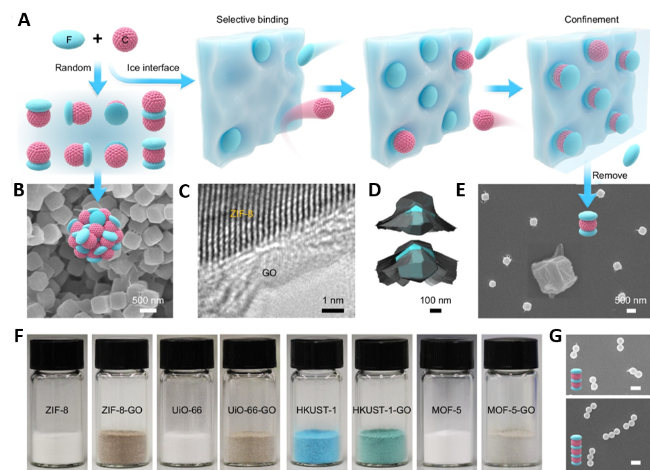
图11 (A) 通过受限冷冻组装制备纳米三明治的过程;(B) 随机组装的MOF-GO复合材料的SEM图像;(C) 用于TEM研究的ZIF-8-GO超薄切片;(D, E) ZIF-8-GO纳米三明治的电子断层扫描和SEM图像;(F) 4个MOF-GO纳米三明治的数码照片,验证该策略的普适性和放大潜力;(G) 不同组装程度的有序纳米颗粒[94]Fig.11 (A) The fabrication process of nano-sandwiches by confined freeze assembly. (B) SEM images of the randomly assembled MOF-GO composites. (C) Ultramicrotomy of ZIF-8-GO for TEM study. (D, E) Electron tomography and SEM images of the ZIF-8-GO nano-sandwich. (F) Digital photographs of four MOF-GO nano-sandwiches to verify the generality of the strategy and potential for upscaling. (G) Ordered nanoparticles with different degrees of assembly[94].Copyright 2025 Springer Nature |
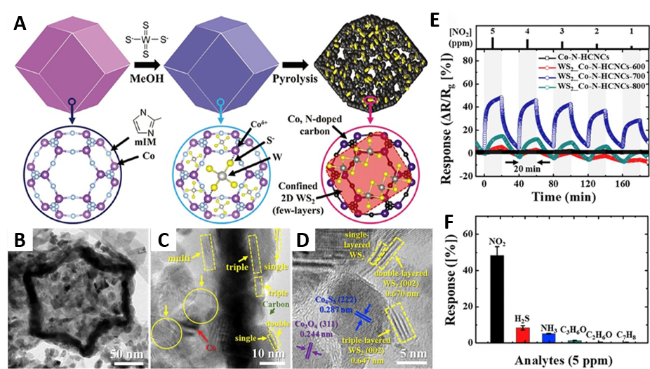
图12 MOF衍生碳复合材料及相应的传感性能:(A) MOF衍生碳/WS2复合材料的合成示意图;(B) TEM图像;(C) 放大TEM图像;(D) WS2纳米片功能化的MOF衍生碳复合材料的HRTEM图像;(E) 传感器在室温下对1~5 ppm NO2的动态响应变化;(F) 传感器对各种分析物的响应[98]Fig. 12 MOF-derived carbon composites and corresponding sensing performances. (A) Illustration of the synthesis of MOF-derived carbon/WS2 composites, (B) its TEM image, (C) magnified TEM image, and (D) HRTEM image of MOF-derived carbon composites functionalized with WS2 nanoplates. (E) Dynamic response transitions of the sensors toward 1~5 ppm of NO2 at room temperature. (F) Response of the sensors to various analytes[98]. Copyright 2018 Wiley-VCH |
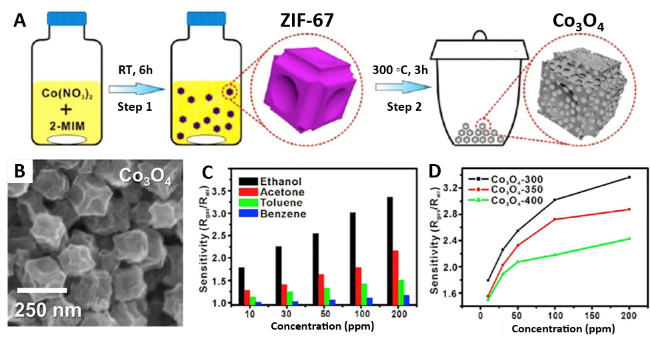
图13 (A) ZIF-67衍生Co3O4凹面纳米立方体的合成示意图,(B) 其SEM图像,(C) 其在300 ℃下对4种气体的响应,(D)其在300 ℃下对不同浓度乙醇的响应[103]Fig.13 (A) Schematic illustration for the synthesis of ZIF-67 derived Co3O4 concave nanocubes, (B) its SEM image, (C) its response to four gas species at 300 ℃, and (D) its response to various concentrations of ethanol at 300 ℃[103]. Copyright 2014 American Chemical Society |
图14 分级和异质MOF衍生金属氧化物及相应的传感性能:(A) 分级MOF及其衍生物的合成示意图;(B) 其TEM图像;(C) MOF衍生的ZnO-Co3O4的TEM图像;(D) MOF衍生的ZnO-Co3O4在450 ℃下的丙酮传感性能[107]Fig.14 Hierarchical and heterogeneous MOF-derived metal oxides and corresponding sensing performance. (A) Illustration of the synthesis of hierarchical MOFs and their derivatives, (B) its TEM image, (C) TEM image of MOF-derived ZnO-Co3O4, and (D) acetone-sensing properties of MOF-derived ZnO-Co3O4 at 450 ℃[107]. Copyright 2018 American Chemical Society |
表3 近年来MOF衍生物用于化学电阻传感器的传感性能Table 3 The sensing properties in the recent papers on MOF derivatives for chemiresistive sensors |
| Gases | Materials | Operating temperature | Response | Detection limit | Ref |
|---|---|---|---|---|---|
| Nitrogen dioxide | ZIF-67-derived carbon composites-loaded MWCNTs | RT | |ΔR/R0| = 1% at 5 ppm | 100 ppb | 108 |
| ZIF-67-derived WS2 functionalized carbon composites | RT | ΔR/Rgas = 18% at 1 ppm | 100 ppb | 98 | |
| SWCNTs loaded PdO-Co3O4 derived from Pd@ZIF-67 | RT | ΔR/Rair = 27.3% at 20 ppm | 10 ppm | 109 | |
| ZIF-67 templated Co3O4 concave nanocubes | 300 ℃ | Rgas/Rair = 3.25 at 200 ppm | 10 ppm | 103 | |
| Ethanol | HKUST-1 templated Cu2O/CuO cages | 150 ℃ | Rgas/Rair = 6.5 at 200 ppm | - | 110 |
| In/Ga-MOF-68 derived In/Ga oxides | 235 ℃ | Rair/Rgas = 80 at 200 ppm | 2 ppm | 111 | |
| MOF-5 templated ZnO nanocages | 300 ℃ | ΔR/Rair = 1.28 at 0.1 ppm | 100 PPB | 106 | |
| Benzene | ZIF-8 templated hollow ZnO | 450 ℃ | ΔR/Rgas = 1.9 at 5 ppm | - | 112 |
| Formaldehyde | MOF templated mesoporous In2O3 nanorod | 210 ℃ | ΔR/Rgas = 7.5 at 10 ppm | - | 104 |
| p-Xylene | ZIF-67 derived hollow Co3O4 nanocages | 225 ℃ | Rgas/Rair = 78.6 at 5 ppm | 250 ppb | 113 |
| ZIF-67 derived hollow Co3O4 nanocages | 225 ℃ | Rgas/Rair = 43.8 at 5 ppm | - | 113 | |
| Toluene | Pd@ZIF-8 templated Pd@ZnO-WO3 nanofibers | 350 ℃ | Rair/Rgas = 22.22 at 1 ppm | 0.1 ppm | 114 |
| Pd@ZIF-ZnCo derived PdO@ZnO/ZnCo2O4 hollow spheres | 250 ℃ | ΔR/Rair = 69% at 5 ppm | 400 ppb | 115 | |
| Pd@ZIF-67 derived PdO@Co3O4 nanocubes | 350 ℃ | Rgas/Rair = 2.51 at 5 ppm | 100 ppb | 116 | |
| Acetone | Pd@ZIF-8 templated PdO@ZnO-SnO2 nanotubes | 400 ℃ | Rair/Rgas = 5.06 at 1 ppm | 100 ppb | 117 |
| Pd@ZIF-67 templated Co3O4-PdO loaded SnO2 nanocubes | 450 ℃ | Rair/Rgas = 22.8 at 5 ppm | 5 ppb | 118 | |
| Hierarchical MOF-derived ZnO-Co3O4 | 450 ℃ | Rair/Rgas = 29 at 5 ppm | 1 ppm | 107 |
表4 MOF基化学电阻传感器的主要挑战与缓解策略概述Table 4 Summary of key challenges and mitigation strategies for MOF-based chemiresistive sensors |
| Challenges category | Specific challenge | Proposed mitigation strategies | Ref |
|---|---|---|---|
| Stability | Hydrolytic degradation: water molecules attack metal-linker bonds, leading to framework collapse, especially in humid environments. Chemical/redox degradation: framework degradation or irreversible adsorption by aggressive (NO2, SO2) or redox-active analytes | Use metals forming high-energy bonds: employ Zr(IV), Cr(III), or Fe(III) clusters to form robust M―O bonds resistant to hydrolysis. Hydrophobic pore engineering: Post-synthetically graft hydrophobic groups (e.g., ―CF3, ―CH3) or use hydrophobic linkers to create water-repellent pores. Apply impermeable protective coatings: Encapsulate MOF crystals or films with stable matrices like graphene oxide (GO) or atomic layer deposition (ALD) oxides to create a physical barrier. Employ redox-inert or stable metal nodes: Utilize Zr(IV), Al(III), or Ti(IV) centers less prone to redox reactions. Design robust linkers: Use chemically stable organic struts (e.g., perfluorinated or aromatic carboxylates) resistant to oxidation. | 128-129 |
| Mechanical strength & processability | Intrinsic brittleness: MOF powders or crystalline films are fragile, prone to cracking/delamination, and difficult to process into devices | Fabricate composite architectures: Embed MOF particles into flexible, stress-dissipating polymer matrices (e.g., PDMS, polyurethane). In-situ growth on flexible substrates: Directly grow MOF films on textiles, polymers, or paper to form interpenetrated, adhesive interfaces. Construct nano-sandwich or core-shell structures: Confine MOF nanoparticles between GO sheets or within polymer shells to enhance cohesion and flexibility. | 128 |
| Scalability & reproducibility | Batch-to-batch variability: Inconsistent sensor performance due to difficulties in controlling MOF synthesis (crystallinity, defect density, particle size) at scale Device integration hurdles: Challenges in forming low-resistance, stable electrical contacts with MOF active layers and integrating them into full sensor systems. | Develop standardized, scalable fabrication protocols: Implement techniques like continuous flow synthesis, spray coating, or chemical vapor deposition for uniform thin films. Adopt machine learning (ML)-guided synthesis: Use ML models to optimize synthesis parameters and predict outcomes for consistent material quality. Engineer dedicated interfacial layers: Introduce conductive adhesion layers or employ direct photolithographic patterning on MOF films to improve contact. Engineer dedicated interfacial layers: Introduce conductive adhesion layers or employ direct photolithographic patterning on MOF films to improve contact. | 129 |
| Standardization & benchmarking | Lack of unified testing protocols: Performance data collected under idealized lab conditions (dry air, single analyte) prevents fair comparison and obscures real-world viability. | Establish benchmark testing under realistic conditions: Advocate for tests at standard temperature/humidity levels (e.g., 25 ℃, 50% RH) and in complex gas mixtures. Report long-term stability metrics: Mandate reporting of continuous baseline drift, response decay over weeks/months, and cycle-to-cycle reproducibility. Define common interferent sets for selectivity: Propose benchmark gas mixtures (e.g., for a benzene sensor, test against toluene, xylene, CO, NO2) to quantify selectivity. | 129 |
| Signal integrity & data management | Signal drift & environmental interference: Sensor baseline and sensitivity shift over time due to aging, humidity fluctuations, or temperature changes. Data security in networked systems: Risk of data interception or manipulation when sensor networks are connected to the cloud for IoT applications | Integrate on-sensor compensation: Co-fabricate humidity/temperature sensors or use built-in micro-heaters for active compensation. Implement machine learning for drift correction: Apply AI algorithms (e.g., adaptive filters, neural networks) to raw sensor data to differentiate drift from true analyte signal. Employ robust encryption protocols: Implement end-to-end encryption for all data transmitted from sensor nodes to central hubs. | 129 |
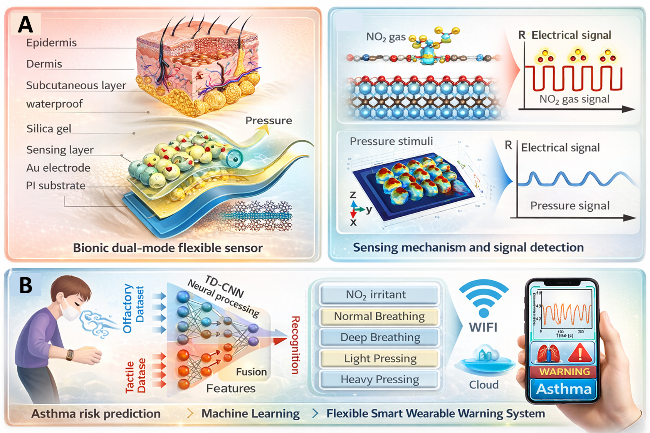
图15 本研究的概念设计:(A, B) 受生物触觉感官结构和神经形态系统的启发,开发了一种具有多功能仿生传感器的柔性智能可穿戴警报系统,用于哮喘患者生理信号的无线监测和区分,并辅以基于一维CNN的机器学习算法[131]Fig.15 Conceptual design of this study. (A-B) Inspired by the biological tactile sensory structure and neuromorphic system, a flexible smart wearable alarming system with a multifunctional bionic sensor is developed for wireless monitoring and differentiating for the asthma patients’ physiological signals, as assisted by a machine learning algorithm based on 1-D CNNs[131]. Redesigned by the authors, based on concepts from ref. [131] |
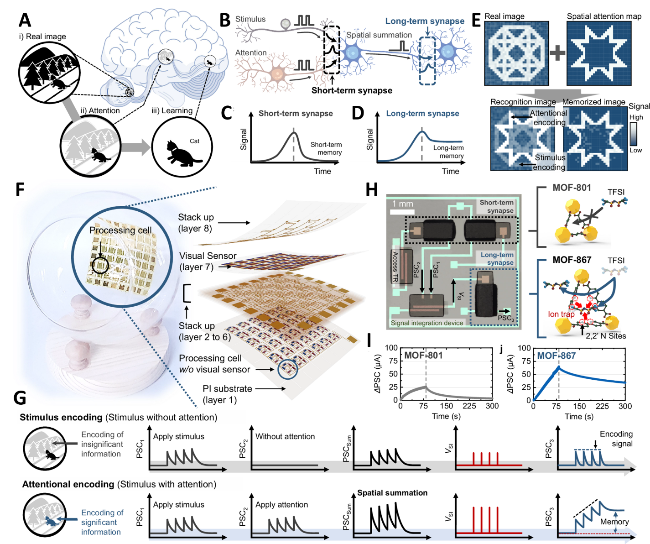
图16 带有MOF层的信息可过滤人工视网膜系统示意图:(A) 人类信息处理;(B) 神经元信号总和;(C, D) 突触信号(短/长期);(E) 编码模式(注意/刺激);(F) 系统图像;(G) 信号流示意图;(H) MOF层及离子渗透;(I, J) LTP后的保留[138]Fig.16 Schematic of the information-filterable artificial retina system with MOF layers. (A) Human information processing. (B) Neuronal signal summation. (C, D) Synaptic signals (short/long-term). (E) Encoding modes (attentional/stimulus). (F) System images. (G) Signal flow schematics. (H) MOF layers & ion penetration. (I, J) Retention post-LTP[138].Copyright 2025 Springer Nature |
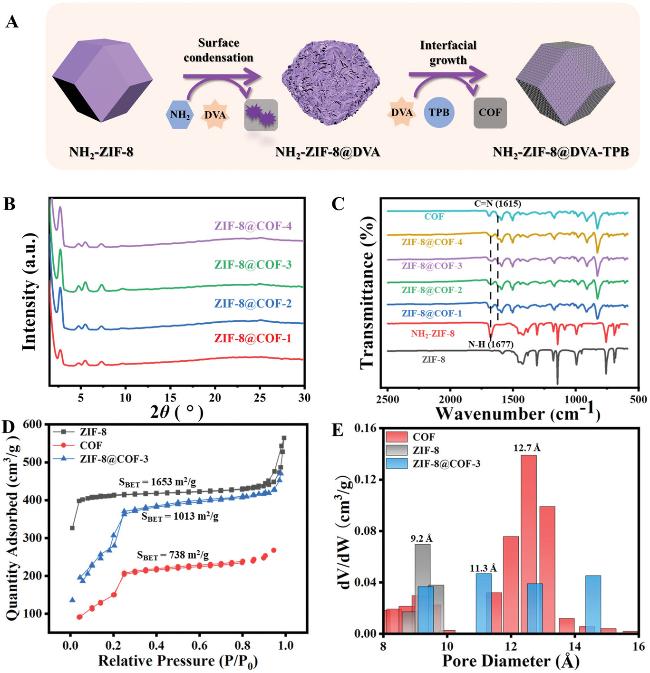
图17 (A) 核壳ZIF-8@COF复合材料的制备示意图;(B) ZIF-8@COF材料的XRD图谱;(C) 复合材料的FT-IR光谱;(D) N2吸附-脱附等温线;(E) 复合材料的孔径分布[140]Fig.17 (A) Schematic illustration for the preparation of the core-shell ZIF-8@COF composites. (B) XRD patterns of ZIF-8@COF materials. (C) FT-IR spectra of the composite materials. (D) N2 adsorption-desorption isotherms, and (E) pore-size distribution of the composite materials[140]. Copyright 2025 Wiley-VCH |
| [1] |
|
| [2] |
|
| [3] |
|
| [4] |
|
| [5] |
|
| [6] |
|
| [7] |
|
| [8] |
|
| [9] |
|
| [10] |
|
| [11] |
|
| [12] |
|
| [13] |
|
| [14] |
|
| [15] |
|
| [16] |
|
| [17] |
|
| [18] |
|
| [19] |
|
| [20] |
|
| [21] |
|
| [22] |
|
| [23] |
|
| [24] |
|
| [25] |
|
| [26] |
|
| [27] |
|
| [28] |
|
| [29] |
|
| [30] |
|
| [31] |
|
| [32] |
|
| [33] |
|
| [34] |
|
| [35] |
|
| [36] |
|
| [37] |
|
| [38] |
|
| [39] |
|
| [40] |
|
| [41] |
|
| [42] |
|
| [43] |
|
| [44] |
|
| [45] |
|
| [46] |
|
| [47] |
|
| [48] |
|
| [49] |
|
| [50] |
|
| [51] |
|
| [52] |
|
| [53] |
|
| [54] |
|
| [55] |
|
| [56] |
|
| [57] |
|
| [58] |
|
| [59] |
|
| [60] |
|
| [61] |
|
| [62] |
|
| [63] |
|
| [64] |
|
| [65] |
|
| [66] |
|
| [67] |
|
| [68] |
|
| [69] |
|
| [70] |
|
| [71] |
|
| [72] |
|
| [73] |
|
| [74] |
|
| [75] |
|
| [76] |
|
| [77] |
|
| [78] |
|
| [79] |
|
| [80] |
|
| [81] |
|
| [82] |
|
| [83] |
|
| [84] |
|
| [85] |
|
| [86] |
|
| [87] |
|
| [88] |
|
| [89] |
|
| [90] |
|
| [91] |
|
| [92] |
|
| [93] |
|
| [94] |
|
| [95] |
|
| [96] |
|
| [97] |
|
| [98] |
|
| [99] |
|
| [100] |
|
| [101] |
|
| [102] |
|
| [103] |
|
| [104] |
|
| [105] |
|
| [106] |
|
| [107] |
|
| [108] |
|
| [109] |
|
| [110] |
|
| [111] |
|
| [112] |
|
| [113] |
|
| [114] |
|
| [115] |
|
| [116] |
|
| [117] |
|
| [118] |
|
| [119] |
|
| [120] |
|
| [121] |
|
| [122] |
|
| [123] |
|
| [124] |
|
| [125] |
|
| [126] |
|
| [127] |
|
| [128] |
|
| [129] |
|
| [130] |
|
| [131] |
|
| [132] |
|
| [133] |
|
| [134] |
|
| [135] |
|
| [136] |
|
| [137] |
|
| [138] |
|
| [139] |
|
| [140] |
|
| [141] |
|
| [142] |
|
| [143] |
|
| [144] |
|
| [145] |
|
| [146] |
|
| [147] |
|
| [148] |
|
| [149] |
|
| [150] |
|
/
| 〈 |
|
〉 |