Numerical study and application for detection depth of gpr early-time signal
Received date: 2024-04-07
Online published: 2024-12-19
Copyright
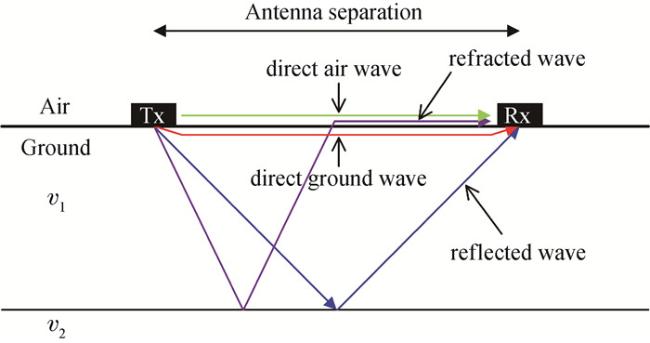
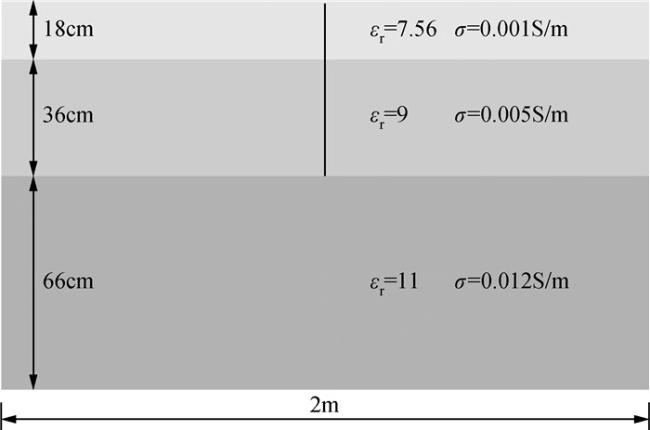
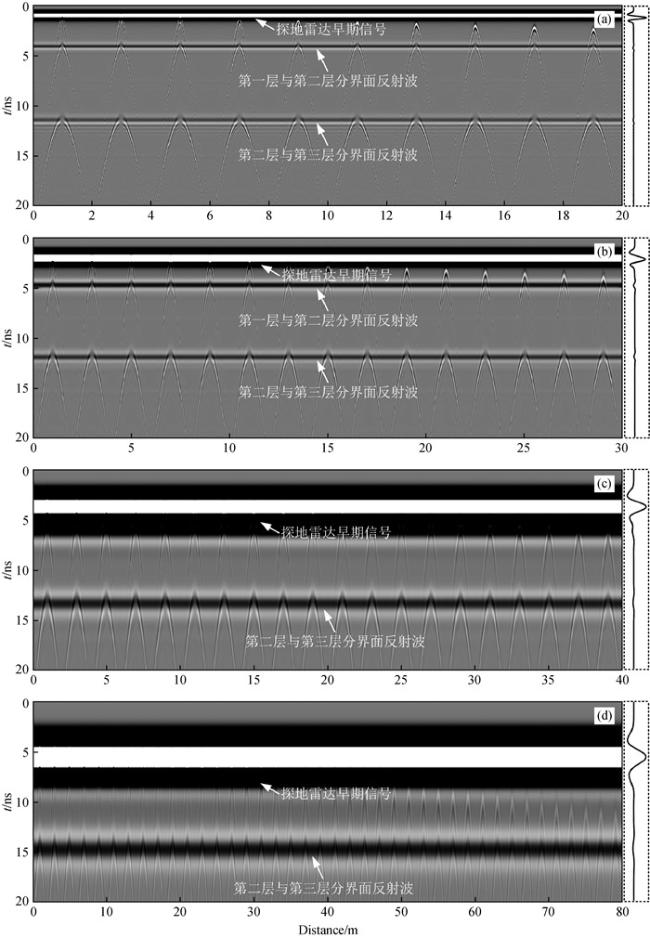
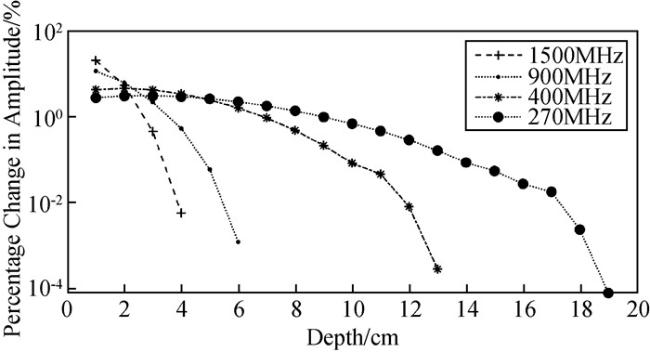
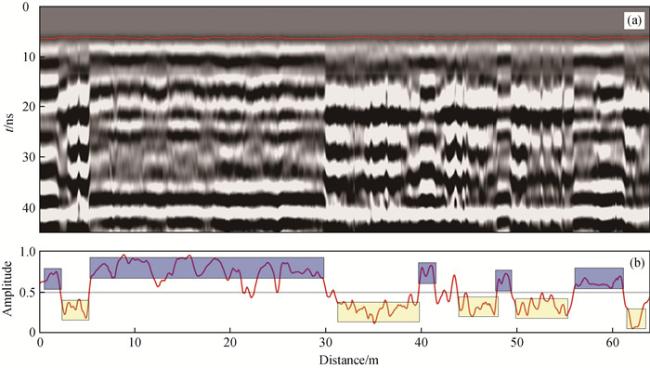
The Ground Penetrating Radar (GPR) Early-Time Signals (ETS) generated by ground-coupled antennas operating in close proximity to the ground exhibit characteristics such as early arrival, strong energy, stable waveform, and clear phase. Their duration is approximately one signal cycle, causing significant interference with signals such as reflections, diffractions, and scatterings from near-surface media occurring within the same time frame. Artificially constructed structures are typically designed as layered structures with fixed layer thicknesses. To this end, a series of vertical cracks with different burial depths are set up in a layered medium model to numerically investigate the detection depth of GPR ETS from antennas with different operating frequencies, as well as the relationship between the dielectric constant of the medium within the detection depth and the amplitude intensity of the GPR ETS. The research results indicate that, compared to multi-offset measurement methods, the fixed-offset profiling method provides a more convenient and intuitive approach to measuring the detection depth of GPR ETS. The detection depth of GPR ETS is inversely proportional to the operating frequency of the antenna, meaning that a lower operating frequency results in a deeper detection depth. Furthermore, the amplitude intensity of GPR ETS is closely related to the dielectric constant of the medium within the detection depth; the higher the dielectric constant, the lower the corresponding amplitude intensity of the GPR ETS, which aligns with the verification results obtained from actual radar data. This study provides an important basis for utilizing the amplitude intensity of GPR ETS to judge abnormal changes in the dielectric constant of media within the detection depth.
YongLiang FAN , ShiLi GUO , Dong LIANG , GongZheng DAI , MingYu YU . Numerical study and application for detection depth of gpr early-time signal[J]. Progress in Geophysics, 2024 , 39(5) : 2069 -2077 . DOI: 10.6038/pg2024II0143
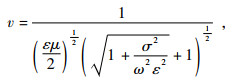

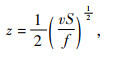
表1 数值模拟关键参数Table 1 Key parameters for numerical simulation |
| 模型编号 | 主频/MHz | 偏移距/cm | 裂缝数量 | 裂缝设置 |
| 1 | 1500 | 6 | 10 | 顶点埋深依次增加1 cm,第10个裂缝顶点埋深为10 cm |
| 2 | 900 | 13 | 15 | 顶点埋深依次增加1 cm,第15个裂缝顶点埋深为15 cm |
| 3 | 400 | 16 | 20 | 顶点埋深依次增加1 cm,第20个裂缝顶点埋深为20 cm |
| 4 | 270 | 24 | 40 | 顶点埋深依次增加1 cm,第40个裂缝顶点埋深为40 cm |
感谢审稿专家提出的修改意见和编辑部的大力支持!
|
|
|
|
|
|
|
|
|
|
|
|
|
|
|
|
|
|
|
|
|
|
|
|
|
|
|
|
|
|
|
|
|
|
|
|
|
|
|
|
|
|
|
|
|
|
/
| 〈 |
|
〉 |