Home Journals Progress in Chemistry
Progress in Chemistry

Abbreviation (ISO4): Prog Chem      Editor in chief: Jincai ZHAO

About  /  Aim & scope  /  Editorial board  /  Indexed  /  Contact  / 
Review

Lithium Phosphorus Sulfur Chlorine Sulfide (LPSC) Composite Solid Electrolyte

  • Yifan Tang ,
  • Jutang Hu ,
  • Qianying Song ,
  • Guichao Kuang , * ,
  • Libao Chen
Expand
  • State Key Laboratory of Powder Metallurgy, Central South University, Changsha 410083,China

Received date: 2024-07-30

  Online published: 2025-05-15

Supported by

National Natural Science Foundation of China(U1904216)

National Natural Science Foundation of China(52473204)

Natural Science Foundation of Hunan Province(2023JJ50012)

Abstract

All-solid-state batteries have the characteristics of high energy density, long cycle lifeand high safety, which is the development direction of the next generation of electrochemical energy storage. Solid-state electrolytes are the core components of all-solid-state batteries, and sulfide electrolytes have attracted extensive attention due to their advantages of high ionic conductivity and good mechanical ductility. As one of the most studied sulfide electrolytes in recent years, lithium-phosphorus-sulfur-chloride sulfide (LPSC) has high ionic conductivity and relatively low cost, but its practical application is limited by shortcomings such as poor stability and poor compatibility of positive and negative electrode materials. The composite solid-state electrolyte has good electrochemical and mechanical properties, and the composite solid-state electrolyte is prepared by modifying the LPSC with polymers, aiming to improve the interfacial compatibility and electrochemical stability of the LPSC. In this paper, the basic composition, recombination mode, modification strategy and ion transport mechanism of LPSC composite solid electrolyte are reviewed, and the future research direction and application prospect of LPSC composite electrolyte are prospected.

Contents

1 Introduction

2 Ion transport mechanism in LPSC composite solid electrolyte

3 Classification of LPSC composite solid electrolytes

3.1 LPSC-CSSE based on polymers

3.2 LPSC-CSSE based on sulfides

4 Conclusion and outlook

Cite this article

Yifan Tang , Jutang Hu , Qianying Song , Guichao Kuang , Libao Chen . Lithium Phosphorus Sulfur Chlorine Sulfide (LPSC) Composite Solid Electrolyte[J]. Progress in Chemistry, 2025 , 37(6) : 858 -867 . DOI: 10.7536/PC240725

1 Introduction

Lithium-ion secondary batteries have become the primary energy storage devices due to their high energy density, long cycle life, and low cost, and are widely applied in fields such as electric vehicles. However, the use of organic electrolytes in traditional lithium-ion batteries poses safety risks such as leakage and combustion[1-3]. Additionally, the adoption of graphite anodes results in low energy density. There is an increasing demand for higher safety and energy density in lithium batteries. Replacing commercial electrolytes and separators with solid-state electrolytes improves the spatial utilization within batteries, thereby enabling compatibility with lithium metal anodes. This approach can effectively enhance battery safety while further increasing energy density[4-5]. Therefore, the development of solid-state electrolytes has become one of the research hotspots in the field of energy storage both domestically and internationally.
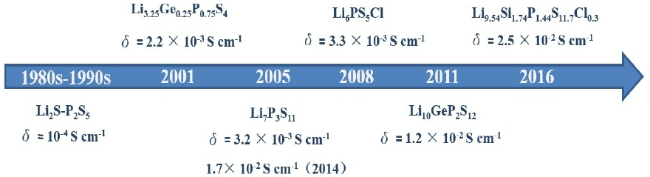
Common solid-state electrolytes can be classified into polymer solid-state electrolytes, inorganic solid-state electrolytes, and organic-inorganic composite solid-state electrolytes (Composite Solid-State Electrolyte, CSSE)[6-8]. Among them, polymer solid-state electrolytes possess excellent flexibility and processability, but exhibit low ionic conductivity at room temperature. Inorganic solid-state electrolytes can be divided into oxides[9], halides[10], and sulfides[11] according to their composition. Oxide-based solid-state electrolytes have high air stability and a wide electrochemical window; however, they suffer from large grain boundary impedance and usually require high-temperature heat treatment to reduce the grain boundary impedance and improve ionic conductivity. Halide-based solid-state electrolytes possess high ionic conductivity and compatibility with oxide cathodes, but show poor compatibility with lithium metal and higher preparation costs. Sulfide electrolytes exhibit the highest ionic conductivity (Figure 1)[12] and also possess softness and ease of cold pressing, making them promising candidates for all-solid-state batteries. However, sulfides are unstable toward lithium metal anodes and demonstrate poor electrochemical stability. Organic-inorganic composite solid-state electrolytes combine the advantages of inorganic and polymer electrolytes, achieving both high ionic conductivity and electrochemical stability, and have become one of the current research hotspots.
图1 硫化物固态电解质发展历史及室温离子电导率[12]

Fig.1 History of sulfide solid electrolytes and room temperature ionic conductivity[12]

According to the composition of raw materials, sulfide-based solid electrolytes can be divided into two major categories: binary sulfides and ternary sulfides. Binary sulfide electrolytes mainly include three types of systems: Li2S-P2S5[13-14], Li2S-SiS2[15-16], and Li2S-GeS2[17-18]. Ternary sulfide electrolytes mainly include two categories: Li10MP2S12 (M = Si[19], Ge[20], Sn[21]) and Li6PS5X[22] (X = Cl, Br, I). Ternary sulfide electrolytes are materials obtained by high-energy ball milling and doping modification based on binary sulfides and usually exhibit higher ionic conductivity. Among them, the most representative are Li10GeP2S12 (LGPS) and Li6PS5Cl (LPSC). The room-temperature ionic conductivity of LGPS-type sulfides can reach 1.2×10⁻² S·cm-1, but the high cost of Ge restricts its further development. In contrast, LPSC-type sulfides have attracted more attention due to their relatively lower production cost, simple synthesis process, and high room-temperature ionic conductivity (1×10⁻² S·cm-1). However, pure LPSC sulfides also face issues such as instability in air, moisture absorption, and the generation of toxic gases. These issues can be addressed through composite modification with polymers by preparing composite solid-state electrolytes (CSSE) to improve their practicality. This paper elaborates on the classification and ion transport mechanisms of LPSC-CSSE, discusses their composition, composite methods, and modification strategies, and finally summarizes and prospects the future development direction of LPSC-CSSE.

2 Ion Transport Mechanism in LPSC Composite Solid-State Electrolytes

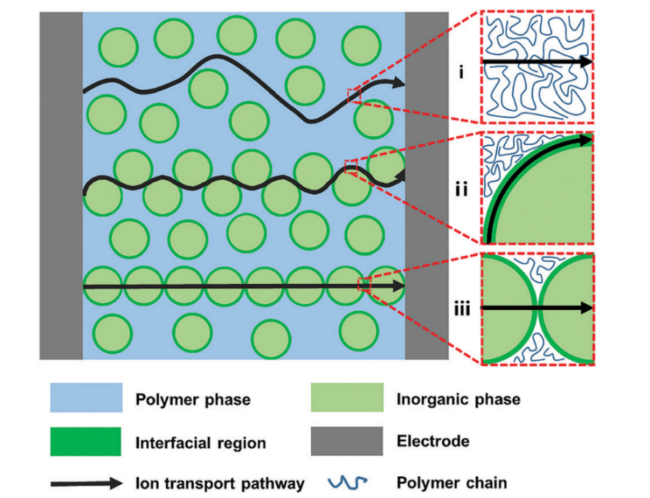
Currently, there are typically three transport pathways for lithium ions in CSSE: the polymer organic phase pathway, the interfacial space charge region pathway formed between the polymer and inorganic electrolyte, and the inorganic phase pathway of the electrolyte[23] (Fig. 2).
图2 锂离子在复合固态电解质中可能的传输途径[23]

Fig.2 Possible transport pathways of lithium ions in composite solid-state electrolytes[23]

Polymers in CSSE primarily serve to connect inorganic particles and provide flexibility. The transport mechanism of lithium ions follows the free volume theory, mainly through the movement of organic chain segments in the amorphous regions of the polymer; mobile functional groups on the chain segments allow lithium ions to migrate via a "hopping" mechanism, thus enabling lithium ion conduction[24]. In addition, the microporous and nanoporous structures inherent to both the polymer and the inorganic phase can also act as transport channels for lithium ions.
In composite electrolytes composed of polymers and inorganic electrolytes, a space charge region forms at the interface between the two due to significant differences in their physical and chemical properties. Lithium-ion transport is achieved through the synergistic effect of both components within this region[25]. In certain cases, lithium ions may need to adsorb onto the interface first before passing through it into another material; in other cases, lithium ions may migrate directly across the interface. Due to the complex transport mechanisms of lithium ions at the organic-inorganic interface in CSSE, a systematic understanding is currently lacking.
In CSSE, the inorganic phase of the electrolyte is typically the main channel for lithium ion conduction. Macroscopically, functional groups on the surface of inorganic phase particles can coordinate with lithium ions, thereby reducing the energy barrier for lithium ions during migration[26]. Microscopically, the transport mechanism of lithium ions mainly follows the direct gap mechanism and vacancy mechanism. Within the inorganic phase of the electrolyte, lithium ions are primarily transported through lattice channels. These channels are determined by the crystal structure of the inorganic electrolyte and are typically interstitial sites or specific crystal planes within the lattice. In addition to lattice channel transport, vacancies can also assist in lithium ion transport. These vacancies can act as "traps" for lithium ions, enabling their migration.

3 Classification of LPSC Composite Solid-State Electrolytes

LPSC-CSSE typically consists of LPSC sulfides and organic polymers. Depending on the specific roles of the polymer and sulfide in the CSSE, they can be categorized into two types: polymer-based and sulfide-based. The former uses a polymer network as the supporting framework to construct an efficient percolation network, while the latter employs sulfides as the matrix, with the polymer serving a modifying function.

3.1 LPSC-CSSE with Polymer as Matrix

3.1.1 Hot Pressing Method

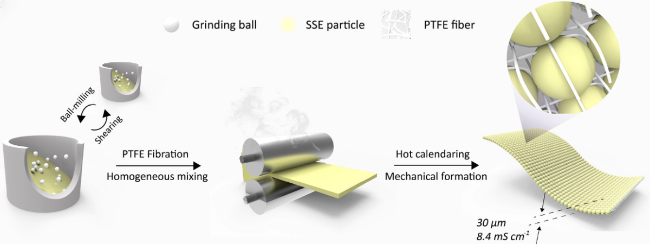
In the field of sulfide-based solid-state electrolytes, the dry-hot pressing method has been widely applied in percolation networks using polymers as the matrix, among which polytetrafluoroethylene (PTFE) and thermoplastic polyamide (TPA) are commonly used. Yao Xiayin et al.[27] employed a low-speed ball milling method to fully mix Li5.4PS4.4Cl1.6 with polytetrafluoroethylene, and subsequently fabricated a Li5.4PS4.4Cl1.6-PTFE composite electrolyte membrane via dry-hot rolling. The electrolyte membrane has a thickness of 30 µm and an ambient temperature ionic conductivity of approximately 8.4 mS·cm-1 (Fig. 3). The results indicate that the full battery using LiNi0.5Co0.2Mn0.3O2 as the cathode exhibits stable cycling performance at 60 °C. Under a current density of 0.05 C, it delivers a discharge specific capacity of 135.3 mAh·g-1 during the first cycle, and after 150 cycles, the capacity retention rate reaches 80.2%.
图3 热压制备LPSC-PTFE复合电解质膜示意图[27]

Fig.3 Schematic diagram of the preparation of LPSC-PTFE composite electrolyte membranes by hot pressing[27]

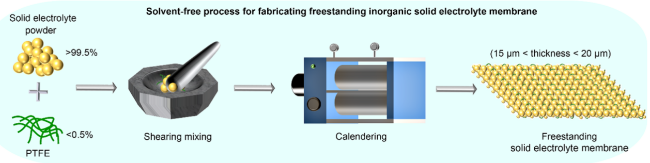
Sun Xueliang et al.[28] also prepared a Li6PS5Cl-PTFE composite electrolyte membrane using the hot-pressing method, with a thickness of only 20 μm and a room-temperature ionic conductivity exceeding 1 mS·cm-1 (Fig. 4). The results showed that the initial discharge capacity of the all-solid-state pouch cell using LiCoO2 as the cathode was 121.2 mAh·g-1 with a coulombic efficiency of 71.8%. After 50 cycles, the capacity remained at 83.1 mAh·g-1.
图4 硫化物薄膜制造工艺示意图[28]

Fig.4 Schematic diagram of the sulfide film manufacturing process[28]

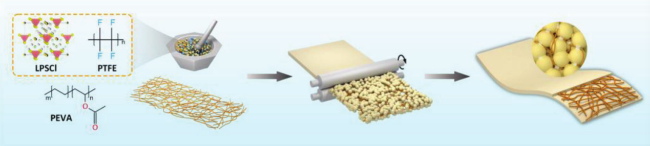
Qiang Zhang from Tsinghua University and Lizhen Fan from University of Science and Technology Beijing et al.[29] prepared an LPSC-CSSE thin film (Fig. 5) using a porous viscoelastic polyethylene vinyl acetate (PEVA) scaffold and polytetrafluoroethylene (PTFE) binder. The film exhibited a thickness of 40 μm, an ionic conductivity of 1.1 mS·cm-1, and a high tensile strength of up to 74 MPa. Results indicated that the symmetric battery based on this CSSE demonstrated excellent cycling stability, maintaining stable operation for 800 h at a current density of 0.2 mA·cm-2. A full battery assembled using an NCM811 cathode composited with Li2ZrCl5F exhibited a discharge specific capacity of 183.2 mAh·g-1 in the first cycle under conditions of 0.1 C and 25 °C, and after 100 cycles, the capacity retention rate reached 95.3%.
图5 硫化物CSSE制备工艺示意图[29]

Fig.5 Schematic diagram of the preparation process of sulfide CSSE[29]

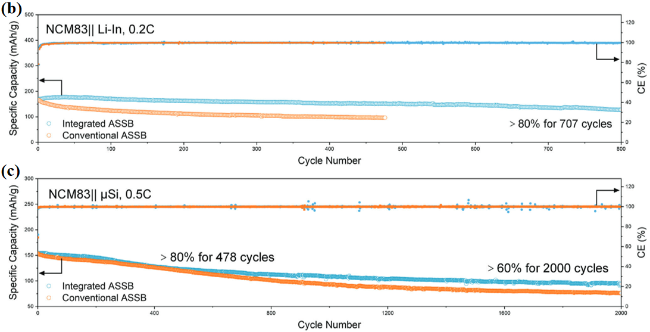
Cui Guanglei et al.[30] constructed a percolation network by hot pressing a low-viscosity thermoplastic polyamide (TPA) binder with Li6PS5Cl, preparing an ultra-thin LPSC film with a thickness less than 25 μm (Figure 6). The results indicated that the composite sulfide film exhibited excellent mechanical properties, high room-temperature ionic conductivity (2.1 mS·cm-1), and unique stress dissipation characteristics, thereby facilitating the formation of a stable interface. Using this solvent-free method, a thick LiNi0.83Co0.11Mn0.06O2 cathode was fabricated and firmly adhered to the CSSE via interfacial fusion with TPA. The full battery assembled with a Li-In alloy delivered an initial discharge specific capacity of 169.6 mAh·g-1 at 0.2 C, maintaining over 80% capacity retention after 707 cycles. The full battery paired with a silicon anode exhibited a discharge specific capacity of 154 mAh·g-1 in the first cycle under 0.5 C and 30 °C, maintaining over 80% capacity retention after 478 cycles and demonstrating cyclability up to 2000 cycles.
图6 干法熔融技术制备硫化物电解质膜示意图(a)及全电池循环性能(b, c)[30]

Fig.6 Schematic diagram of preparation of sulfide electrolyte membrane by dry melting technology (a) and cycling performance of whole battery (b, c)[30]

3.1.2 Electrospinning Method

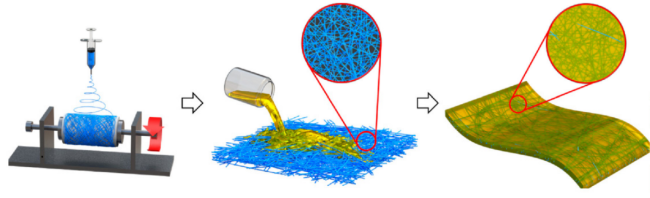
Electrospinning is a method in which a prepared nonwoven fabric or polymer binder network serves as a supporting substrate. A sulfide electrolyte slurry is either infiltrated into the pores or doctor blading onto the substrate, followed by cold pressing to obtain a composite electrolyte membrane. This method avoids complete coverage of the sulfide electrolyte by the polymer, achieving a higher room-temperature ionic conductivity[31-33]. Kim et al.[34] prepared porous polyimide (PI) via electrospinning technology and infiltrated it with a Li6PS5Cl0.5Br0.5-ethanol solution. After evaporating the slurry and heat treatment at 400 °C, a composite solid-state electrolyte (CSSE) film (Figure 7) was fabricated. The CSSE film has a thickness of 40 µm and a room-temperature ionic conductivity of 0.2 mS·cm-1. The all-solid-state battery assembled using this CSSE exhibited a discharge capacity of 146 mAh·g-1 at 0.1 C and 30 °C, along with excellent thermal stability.
图7 静电纺丝法制备柔性复合电解质示意图[34]

Fig. 7 Schematic diagram of the preparation of flexible composite electrolytes by electrospinning[34]

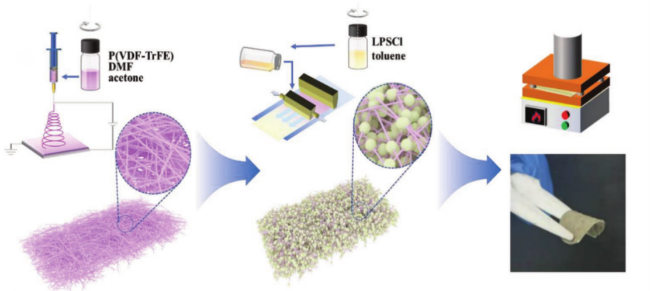
Nan et al.[35] prepared a poly(vinylidene fluoride-trifluoroethylene) (PVDF-TrFE) mat via electrospinning and infiltrated it with a Li6PS5Cl suspension in toluene to fabricate a flexible CSSE membrane under pressure (Figure 8). The CSSE membrane had a thickness of 30 µm and an ionic conductivity of 1.2 mS·cm-1 at room temperature. The assembled coin cell exhibited stable cycling over 20,000 cycles at a current density of 1.0 mA·cm-2, achieving a capacity retention of 71%.
图8 基于LPSC@P(VDF-TrFE)的柔性CSSE的制备示意图[35]

Fig.8 Schematic diagram of the preparation of flexible CSSE based on LPSC@P(VDF-TrFE)[35]

3.2 LPSC-CSSE with Sulfide as the Matrix

LPSC has advantages such as high ionic conductivity and soft texture, but it still suffers from environmental sensitivity and poor interfacial stability, which can lead to various side reactions when in contact with electrode materials, resulting in degraded battery performance. This section will discuss research progress in polymer modification of LPSC-CSSE, focusing on improvements in interfacial compatibility, enhancement of mechanical properties, regulation of interfacial self-discharge, and increased ionic conductivity.

3.2.1 Improving Interface Compatibility

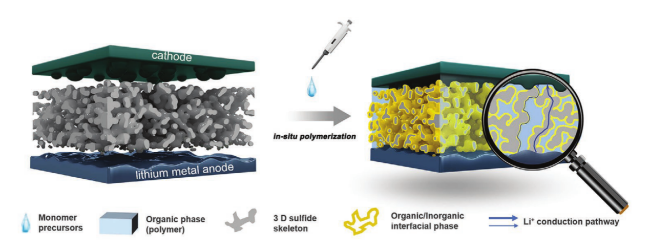
Improving interfacial compatibility mainly focuses on enhancing the stability of both cathode and anode interfaces with LPSC sulfide. Under thermodynamic conditions, metallic lithium anodes are chemically unstable with LPSC sulfide, undergoing reactions that produce mixed ion-electron conducting interfacial products (such as Li2S and Li3P), leading to sulfide decomposition and consequently reducing battery cycling stability. To enhance electrolyte-anode interfacial stability, Cui Guanglei et al.[36] fabricated a self-supporting three-dimensional porous argyrodite (Li6PS5Cl) framework and in situ polymerized poly(ethylene glycol) methyl ether acrylate within this framework (shown in Figure 9), resulting in a high-performance solid-state electrolyte. The in situ polymerization effectively integrated the poor solid-solid electrolyte/electrode interface, significantly reducing the interfacial resistance. Results indicated that the in situ polymerized 3D composite electrolyte paired with NCM811 cathode and lithium metal anode exhibited a high capacity of 193 mAh·g-1 at 0.05 C and a discharge capacity of 157 mAh·g-1 at 0.1 C under ambient temperature. After 90 cycles, the battery still retained a discharge capacity of 128 mAh·g-1, achieving a capacity retention rate of 84%.
图9 具有3D硫化物骨架的原位聚合的全固态电池示意图[36]

Fig.9 Schematic diagram of all-solid-state battery with in-situ polymerization of 3D sulfide skeleton[36]

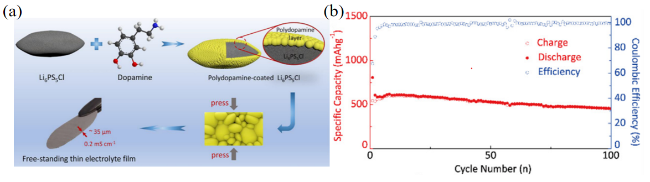
In addition to the in-situ polymerization method, polymer coating on sulfide particles can also improve interfacial compatibility. Yao Xiayin et al.[37] uniformly coated polydopamine onto the surface of Li6PS5Cl electrolyte particles in an organic alkaline solution, forming a coating layer approximately 5 nm thick. Subsequently, a 35 μm thick LPSC-CSSE film was prepared using a cold-pressing method (Figure 10). An all-solid-state lithium battery was assembled using the polydopamine-coated Li6PS5Cl film and exhibited a discharge capacity of 485.1 mAh·g-1 after 100 cycles at 0.1 C and 25 °C, with a capacity retention rate of 78.5%. The battery also demonstrated stable lithium plating/stripping for 150 h at 25 °C under a current density of 0.1 mA·cm-2, indicating that the polymer coating strategy can enhance interfacial stability and compatibility.
图10 硫化物固体电解质薄膜制造示意图(a)及全固态电池的循环性能(b)[37]

Fig.10 Schematic diagram of sulfide solid electrolyte film manufacturing (a) and cycling performance of all-solid-state battery (b)[37]

3.2.2 Improving Mechanical Properties

To construct high-performance all-solid-state batteries, the CSSE is generally required to have high ionic conductivity and good chemical stability, as well as excellent mechanical properties. On one hand, the superior mechanical properties of CSSE can buffer the volume changes of the cathode active materials, achieving good solid-solid interfacial contact and ensuring stable battery cycling. On the other hand, due to the addition of polymers, CSSE possesses certain ductility and the ability to disperse mechanical stress, which can more effectively suppress the growth of lithium dendrites.
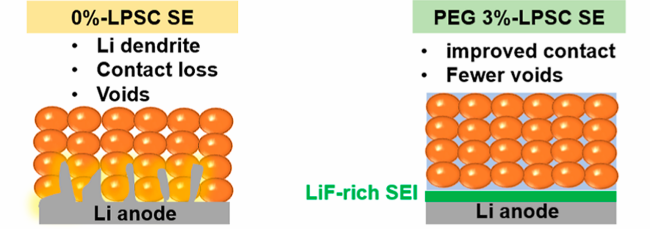
Su et al.[38] prepared a novel sulfide-based CSSE by using polyethylene glycol (PEG) as an additive to enhance the mechanical strength through improved interactions between sulfide particles, and to enhance the interfacial compatibility between LPSC-CSSE and the lithium anode (·Figure 11). Additionally, it acted as a protective barrier to prevent direct contact between LPSC and the lithium anode, thereby suppressing electrolyte decomposition and reducing the electronic conductivity of the composite CSSE. The assembled lithium symmetric battery exhibited remarkable cycling stability, maintaining stability for over 3000 h at a current density of 0.1 mA·cm-2, with a critical current density reaching 4.75 mA·cm-2. The full battery assembled with PEG3%-LPSC delivered a specific capacity of 130.85 mAh·g-1 and an initial Coulombic efficiency of 94.5% under 0.2 C during the first discharge. After 50 cycles, the full battery retained a specific capacity of 99.2 mAh·g-1, achieving a capacity retention rate of 75.8%.
图11 PEG聚合物电解质LPSC改性示意图[38]

Fig.11 Schematic diagram of LPSC modification of PEG polymer electrolyte[38]

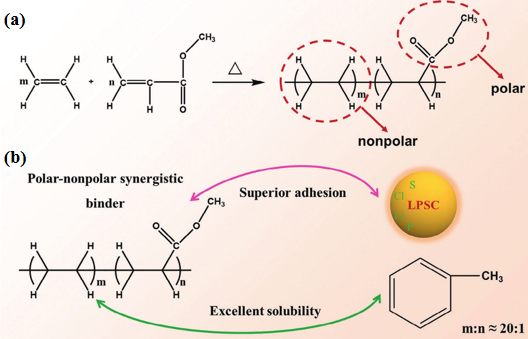
Ou Yang Ming Gao et al.[39] designed an ethylene-methyl methacrylate (EMA) copolymer binder (Fig. 12), by adjusting the ratio of polar groups to nonpolar groups, the binder can effectively dissolve in toluene-based slurry while also ensuring good adhesion between the EMA binder and sulfide particles, thereby improving the flexibility and mechanical properties of the electrolyte membrane. The sulfide electrolyte membrane prepared using the EMA binder exhibits an ultra-thin thickness (36 µm), with an ionic conductivity reaching up to 1.43 mS·cm-1. The full battery assembled from CSSE demonstrates an excellent capacity retention rate of 92.9% after 120 cycles under conditions of 45 °C and 0.5 C.
图12 EMA黏合剂的合成(a)及其协同作用机理(b)[39]

Fig.12 Synthesis of EMA adhesives (a) and its synergistic mechanism (b)[39]

3.2.3 Mitigating Self-discharge

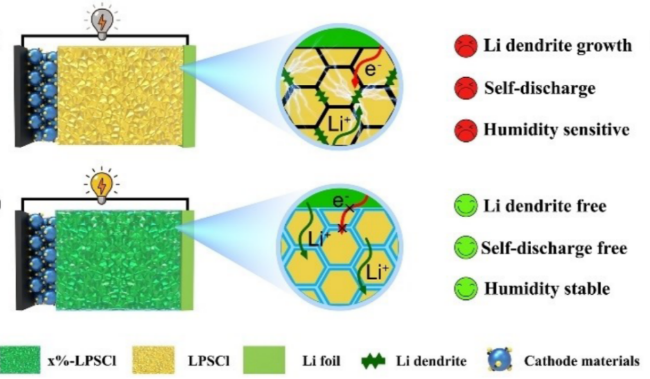
Due to the high intrinsic electronic conductivity of sulfide electrolytes (~10-5 mS·cm-1), lithium dendrites tend to directly deposit at the grain boundaries (GBs) during battery cycling, leading to severe self-discharge behavior. Based on this phenomenon, Sun Xue-Liang's team[40] proposed a Grain-Boundary Electronic Insulation (GBEI) strategy, which employs a low-conductivity polyethylene glycol dimethyl ether-based solid polymer electrolyte (PEGME-SPE) to modulate the electronic energy level distribution at the grain boundaries (Figure 13). The results indicate that the excellent electronic insulating properties of PEGME-SPE can effectively suppress electron transport at the grain boundaries, significantly alleviating the leakage current issue caused by the inherently high electronic conductivity of sulfide CSSE, while also inhibiting lithium dendrite growth at the GBs. In terms of electrochemical performance, a symmetric battery assembled using the GBEI-LPSC electrolyte can cycle stably for over 1000 h under a current density of 1 mAh·cm-2, representing more than a 30-fold extension compared to the original LPSC system. Under a current density of 0.5 mA·cm-2, a Li/LCO all-solid-state battery retained 80.1% of its initial capacity after 650 cycles and demonstrated stable cycling beyond 2600 cycles.
图13 LPSC与GBEI-LPSC性能对比图[40]

Fig.13 Comparison of LPSC and GBEI-LPSC performance[40]

3.2.4 Enhancing Ionic Conductivity

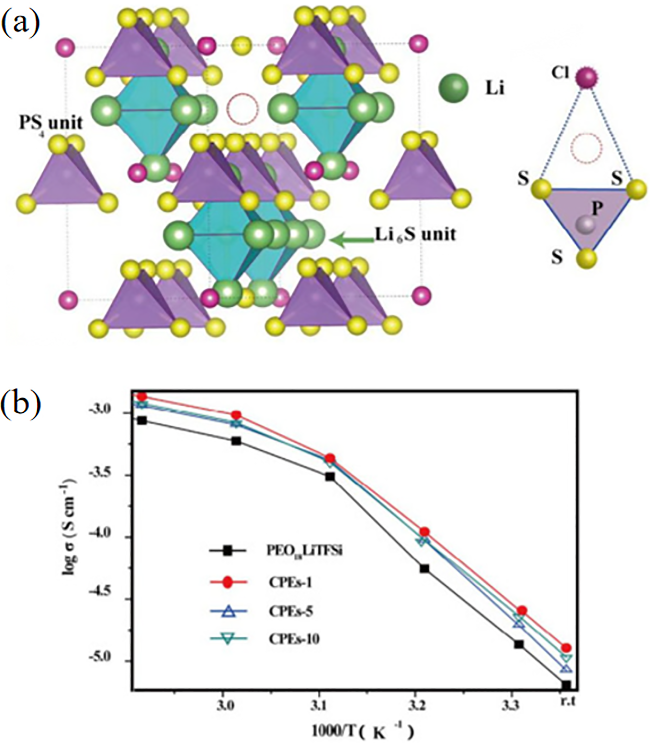
With the development of electrochemical energy storage systems, there is currently a higher demand for the rate performance of solid-state batteries. How to further enhance the ionic conductivity of solid electrolytes has become one of the current research hotspots. Shao Guosheng et al. at Zhengzhou University prepared a novel sulfide, Li6.25PS5.25Cl0.75 (Figure 14), which differs from Li6PS5Cl. This sulfide contains a slight excess of Li2S and insufficient LiCl. After compounding with PEO, its room-temperature ionic conductivity can reach 1.2×10⁻⁴ S·cm-1, showing a certain improvement compared to the intrinsic ionic conductivity of Li6PS5Cl (<10-4 S·cm-1). The effect of sulfide content on the crystallinity of PEO was investigated using small-angle X-ray diffraction. As the sulfide content increases, the amorphous region in the PEO polymer also increases, which is beneficial for polymer chain segment movement, thus facilitating lithium ion conduction.
图14 Li6.25PS5.25Cl0.75晶格(a)和Arrhenius曲线(b)[41]

Fig.14 Li6.25PS5.25Cl0.75 lattice (a) and Arrhenius curves (b)[41]

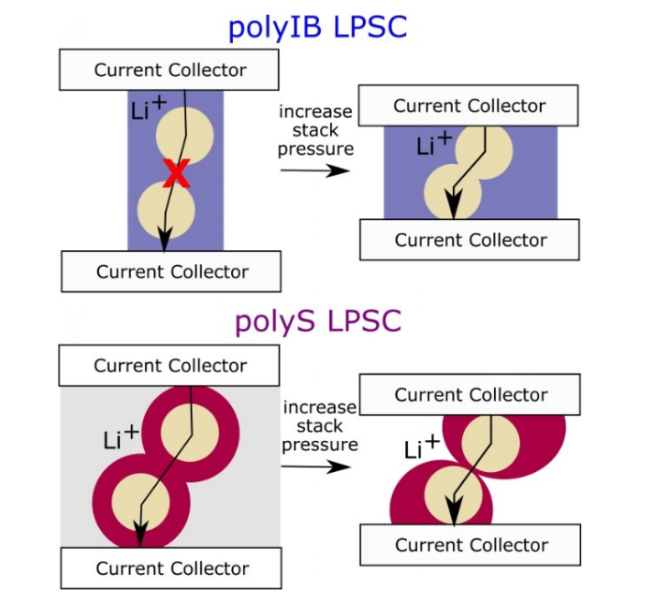
Sulfide-based solid-state batteries typically require large external pressure to maintain effective interfacial contact and high lithium-ion mobility. To address this issue, Martin et al.[42] developed a novel sulfur polymer (polyS), which can combine with LPSC to form a stable composite solid-state electrolyte (CSSE), thereby enhancing its ionic conductivity under low battery stack pressure (Figure 15). The results indicate that combining LPSC particles with polyS improves interfacial contact under low pressure. Compared with conventional LPSC combined with polyisobutylene (polyIB), this new CSSE significantly enhances ionic conductivity when the battery stack pressure is below 2.0 MPa. This work provides a new strategy for developing CSSEs with high conductivity under low external pressure.
图15 低堆叠压力下两种SSE界面接触示意图[42]

Fig.15 Schematic diagram of the contact between the two SSE interfaces at low stacking pressures[42]

4 Conclusion and Prospect

With the continuous development of the lithium battery industry, research on solid-state batteries has entered a new round of popularity. All-solid-state batteries are widely recognized as one of the preferred solutions for next-generation batteries. Sulfide all-solid-state batteries have attracted significant attention in the industry due to their excellent overall performance. This review summarizes the research work on LPSC-CSSE, briefly introduces the basic properties, characteristics, and development history of sulfide electrolytes, and discusses the composite methods and modification strategies of LPSC sulfides with polymers. LPSC composite solid-state electrolytes possess not only high ionic conductivity, high energy density, and excellent rate performance, but also good solid-solid contact, achieving remarkable results in the field of solid-state lithium batteries. Future research should focus on the following aspects.
(1) Reduce the production cost of electrolytes. Currently, sulfide electrolytes generally face issues such as high raw material costs, complex synthesis processes, and low yields, which are also one of the main reasons why solid-state batteries are difficult to mass produce. Therefore, developing novel low-cost sulfide electrolytes and optimizing the synthesis and preparation processes of electrolytes are crucial for the mass production of sulfide-based solid-state batteries.
(2) Enhancing electrolyte stability. Sulfide electrolytes exhibit sensitivity to air and moisture, and tend to generate toxic hydrogen sulfide gas, which hinders their industrialization to some extent. Currently, researchers have explored strategies involving functional nanolayer coatings on electrolyte particles and the development of phosphorus-free sulfide systems. Studies have shown that these strategies and systems significantly improve the air and chemical stability of the electrolytes. Enhancing the stability of sulfide electrolytes is of great significance for their commercial application.
(3) Interface improvement. In the field of solid-state batteries, the interface has always been a complex and challenging issue. Sulfide electrolytes, due to their soft texture, exhibit relatively good solid-solid contact. However, unstable physicochemical reactions still occur at the interfaces between sulfides and both the anode and cathode, which can lead to a sharp increase in interfacial impedance, thereby affecting Li+ migration and conduction. Therefore, for LPSC-CSSE, comprehensive and multidimensional interfacial modification techniques are crucial.
[1]
Hou J X, Lu L G, Wang L, Ohma A, Ren D S, Feng X N, Li Y, Li Y L, Ootani I, Han X B, Ren W N, He X M, Nitta Y, Ouyang M. Nat. Commun., 2020, 11: 5100.

[2]
Feng X N, Ren D S, He X M, Ouyang M G. Joule, 2020, 4(4): 743.

[3]
Wang J H, Yamada Y, Sodeyama K, Watanabe E, Takada K, Tateyama Y, Yamada A. Nat. Energy, 2018, 3(1): 22.

[4]
Zhou L D, Minafra N, Zeier W G, Nazar L F. Acc. Chem. Res., 2021, 54(12): 2717.

[5]
Janek J, Zeier W G. Nat. Energy, 2023, 8(3): 230.

[6]
Ohno S, Banik A, Dewald G F, Kraft M A, Krauskopf T, Minafra N, Till P, Weiss M, Zeier W G. Prog. Energy, 2020, 2(2): 022001.

[7]
Huo H Y, Luo J, Thangadurai V, Guo X X, Nan C W, Sun X L. ACS Energy Lett., 2020, 5(1): 252.

[8]
Jia M Y, Zhao N, Huo H Y, Guo X X. Electrochem. Energy Rev., 2020, 3(4): 656.

[9]
Liu X Z, Ding L, Liu Y Z, Xiong L P, Chen J, Luo X L. Rare Met., 2021, 40(8): 2301.

[10]
Asano T, Sakai A, Ouchi S, Sakaida M, Miyazaki A, Hasegawa S. Adv. Mater., 2018, 30(44): 1803075.

[11]
Peng L F, Yu C, Zhang Z Q, Ren H T, Zhang J Z, He Z Y, Yu M, Zhang L, Cheng S J, Xie J. Chem. Eng. J., 2022, 430: 132896.

[12]
Zhang Z R. Doctoral Dissertation of Huazhong University of Science and Technology , 2021.

(张卓然. 华中科技大学博士论文, 2021).

[13]
Lu S T, Kosaka F, Shiotani S, Tsukasaki H, Mori S, Otomo J. Solid State Ion., 2021, 362: 115583.

[14]
Liu Z Q, Tang Y F, Wang Y M, Huang F Q. J. Power Sources, 2014, 260: 264.

[15]
Tokuda Y, Uchino T, Yoko T. J.Non Cryst. Solids, 2003, 3301-3: 61.

[16]
Zhao R, Hu G T, Kmiec S, Gebhardt R, Whale A, Wheaton J, Martin S W. ACS Appl. Mater. Interfaces, 2021, 13(23): 26841.

[17]
Itoh K, Sonobe M, Mori K, Sugiyama M, Fukunaga T. Phys. B Condens. Matter, 2006, 385-386: 520.

[18]
Ito Y, Sakuda A, Ohtomo T, Hayashi A, Tatsumisago M. Solid State Ion., 2013, 236: 1.

[19]
Whiteley J M, Woo J H, Hu E Y, Nam K W, Lee S H. J. Electrochem. Soc., 2014, 161(12): A1812.

[20]
Kamaya N, Homma K, Yamakawa Y, Hirayama M, Kanno R, Yonemura M, Kamiyama T, Kato Y, Hama S, Kawamoto K, Mitsui A. Nat. Mater., 2011, 10(9): 682.

[21]
Bron P, Johansson S, Zick K, Schmedt auf der Günne J, Dehnen S, Roling B. J. Am. Chem. Soc., 2013, 135(42): 15694.

[22]
Deiseroth H J, Kong S T, Eckert H, Vannahme J, Reiner C, Zaiß T, Schlosser M. Angew. Chem. Int. Ed., 2008, 47(4): 755.

[23]
Fu J L, Li Z, Zhou X Y, Guo X. Mater. Adv., 2022, 3(9): 3809.

[24]
Vincent C A. Prog. Solid State Chem., 1987, 17(3): 145.

[25]
Zheng J, Tang M X, Hu Y Y. Angew. Chem. Int. Ed., 2016, 55(40): 12538.

[26]
Xu S J, Sun Z H, Sun C G, Li F, Chen K, Zhang Z H, Hou G J, Cheng H M, Li F. Adv. Funct. Mater., 2020, 30(51): 2007172.

[27]
Zhang Z H, Wu L P, Zhou D, Weng W, Yao X Y. Nano Lett., 2021, 21(12): 5233.

[28]
Wang C H, Yu R Z, Duan H, Lu Q W, Li Q Z, Adair K R, Bao D N, Liu Y, Yang R, Wang J T, Zhao S Q, Huang H, Sun X L. ACS Energy Lett., 2022, 7(1): 410.

[29]
Li D B, Liu H, Wang C, Yan C, Zhang Q, Nan C W, Fan L Z. Adv. Funct. Mater., 2024, 34(27): 2315555.

[30]
Hu L, Ren Y L, Wang C W, Li J D, Wang Z H, Sun F, Ju J W, Ma J, Han P X, Dong S M, Cui G L. Adv. Mater., 2024, 36(29): 2401909.

[31]
Nam Y J, Cho S J, Oh D Y, Lim J M, Kim S Y, Song J H, Lee Y G, Lee S Y, Jung Y S. Nano Lett., 2015, 15(5): 3317.

[32]
Zhu G L, Zhao C Z, Peng H J, Yuan H, Hu J K, Nan H X, Lu Y, Liu X Y, Huang J Q, He C X, Zhang J, Zhang Q. Adv. Funct. Mater., 2021, 31(32): 2101985.

[33]
Cao D X, Li Q, Sun X, Wang Y, Zhao X H, Cakmak E, Liang W T, Anderson A, Ozcan S, Zhu H L. Adv. Mater., 2021, 33(52): 2105505.

[34]
Kim D H, Lee Y H, Song Y B, Kwak H, Lee S Y, Jung Y S. ACS Energy Lett., 2020, 5(3): 718.

[35]
Liu S J, Zhou L, Han J, Wen K H, Guan S D, Xue C J, Zhang Z, Xu B, Lin Y H, Shen Y, Li L L, Nan C W. Adv. Energy Mater., 2022, 12(25): 2200660.

[36]
Wang Y T, Ju J W, Dong S M, Yan Y Y, Jiang F, Cui L F, Wang Q L, Han X Q, Cui G L. Adv. Funct. Mater., 2021, 31(28): 2101523.

[37]
Liu G Z, Shi J M, Zhu M T, Weng W, Shen L, Yang J, Yao X Y. Energy Storage Mater., 2021, 38: 249.

[38]
Serbessa G G, Taklu B W, Nikodimos Y, Temesgen N T, Muche Z B, Merso S K, Yeh T I, Liu Y J, Liao W S, Wang C H, Wu S H, Su W N, Yang C C, Hwang B J. ACS Appl. Mater. Interfaces, 2024, 16(8): 10832.

[39]
Li R, Chen N, Liu S N, Mao Y Q, Liao Z Q, Qiu K, Wang P B, Zhang T S, Hao S, Zhu G L, Guo C L, Liu X, Ren D S, Lu L G, Ouyang M G. Adv. Funct. Mater., 2024, 34(49): 2409403.

[40]
Yang X F, Gao X J, Jiang M, Luo J, Yan J T, Fu J M, Duan H, Zhao S Q, Tang Y F, Yang R, Li R Y, Wang J T, Huang H, Veer Singh C, Sun X L. Angew. Chem. Int. Ed., 2023, 62(5): e202215680.

[41]
Li D B, Cao L Y, Liu C D, Cao G Q, Hu J H, Chen J B, Shao G S. Appl. Surf. Sci., 2019, 493: 1326.

[42]
Martin T R, Teeter G, Jiang C S, Park K. Batter. Supercaps, 2023, 6(10): e202300255.

Outlines

/