Home Journals Progress in Chemistry
Progress in Chemistry

Abbreviation (ISO4): Prog Chem      Editor in chief: Jincai ZHAO

About  /  Aim & scope  /  Editorial board  /  Indexed  /  Contact  / 
Review

Environmental Persistent Radicals in Atmospheric Particulate Matters

  • Chungang Yuan 1 ,
  • Mingyu Li 1 ,
  • Jiaojiao Xie , 1, * ,
  • Yiran Fu 1 ,
  • Yiwen Shen 2 ,
  • Songyao Liu 1 ,
  • Huiying Gao 1
Expand
  • 1 Hebei Key Laboratory of New Energy Environmental Safety and Resource Utilization, Department of Environmental Science & Engineering,North China Electric Power University, Baoding 071003, China
  • 2 Institute of Geographical Sciences, Hebei Academy of Sciences, Shijiazhuang/Hebei Technology Innovation Center for Geographic Information Application, Shijiazhuang 050011, China

Received date: 2024-09-09

  Revised date: 2024-12-24

  Online published: 2025-06-20

Supported by

the National Natural Science Foundation of China(22206049)

the Fundamental Research Funds for Central Universities(2024MS174)

Abstract

Compared with short-lived radicals, environmentally persistent free radicals (EPFRs) can exist in the environment for a long time and have long-distance migration ability. They mainly derive from vehicle emissions, industry emissions and biomass combustion. They are usually generated on the surface of particles. EPFRs exist widely in various environmental media like atmospheric particulate matters (PMs). Because the composition, source and formation mechanism of PMs varies in different regions, different seasons and different particle sizes, the characteristics of EPFRs are also different. Electron Paramagnetic Resonance (EPR) is an effective method to determine EPFRs in PMs. EPFRs on PMs can induce reactive oxygen species (ROS), cause oxidative stress in the cell and oxidative DNA damage. However, the assessment of their health risks is not perfect yet. Concentrated on the EPFRs in PMs, this paper summarized the occurrence characteristics of EPFRs in PMs in different regions, different seasons and different particle sizes, analyzed its source and generation mechanism, compared the advantages and disadvantages of existing determination methods, and discussed its health risk and related evaluation models. The related research work in the future is also prospected.

EPFRs in PMs mainly derive from the vehicle emission, industry emission and biomass combustion. Typically, EPFRs form through electron transfer from organic compounds to transition metals during thermal processes, they are generated on the surface of the PMs. Transition metals and transition metal oxides can promote the formation of EPFRs. The characteristics of EPFRs in PMs varies in different regions, different seasons and different particle sizes. EPR is the most effective method to determine EPFRs in PMs. EPFRs can induce health risk and the equivalent cigarette model usually used to assess the exposure dose. However, the assessment of their health risk is not perfect yet.

Contents

1 Introduction

2 Characteristics of EPFRs in PMs

2.1 Characteristics of EPFRs in PMs in different regions

2.2 Characteristics of EPFRs in PMs in different seasons

2.3 Characteristics of EPFRs in PMs with different particle sizes

3 Sources and formation mechanisms of EPFRs in PMs

4 Determination methods of EPFRs in PMs

4.1 Determination after solvent extraction

4.2 Determination directly using EPR

5 Health risks of EPFRs in PMs

5.1 Toxicological study

5.2 Exposure risk assessment

6 Conclusion and prospects

Cite this article

Chungang Yuan , Mingyu Li , Jiaojiao Xie , Yiran Fu , Yiwen Shen , Songyao Liu , Huiying Gao . Environmental Persistent Radicals in Atmospheric Particulate Matters[J]. Progress in Chemistry, 2025 , 37(7) : 1025 -1034 . DOI: 10.7536/PC240817

1 Introduction

Environmentally Persistent Free Radicals (EPFRs) were proposed in contrast to traditional short-lived free radicals. In 1958, persistent paramagnetism was first detected in cigarette smoke using Electron Paramagnetic Resonance (EPR) spectroscopy[1-2]. In 1985, Church et al.[3] identified several relatively stable free radicals in cigarette smoke tar. Subsequent research and analysis confirmed that the main components of these free radicals were mixtures of quinones or hydroquinones, which were later recognized as some of the earliest EPFRs discovered in environmental media. Compared to short-lived free radicals with lifetimes ranging from microseconds to milliseconds, EPFRs can have half-lives of days or even years in the environment[4-6]. Therefore, no trapping agents need to be added prior to measurement, allowing their unpaired electrons to remain stably intact, which facilitates the detection of free radical signals by EPR.
EPFRs primarily originate from thermal processes such as vehicle exhaust, waste incineration, coal combustion, and metal smelting[7]. In 2001, Dellinger and William et al.[8]detected stable semiquinone radicals in PM2.5particles using EPR. Semiquinone radicals are intermediates generated during the reduction of quinone compounds and belong to a class of EPFRs[9]. PMs containing EPFRs can enter the lungs through respiration, inducing reactive oxygen species (ROS) that cause oxidative stress, thereby leading to respiratory diseases and cardiovascular and cerebrovascular disorders. EPFRs can also form covalent bonds with DNA, causing DNA damage[3,7,10-11]. This article reviews the occurrence characteristics, detection methods, sources, formation mechanisms, and health effects of EPFRs on PMs, and provides an overview and analysis of EPFRs on PMs, while also offering insights into future research directions.

2 Occurrence characteristics of EPFRs in PMs

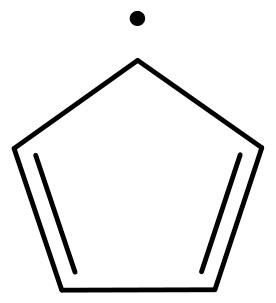
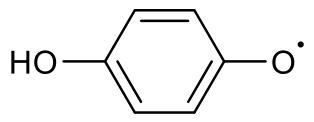
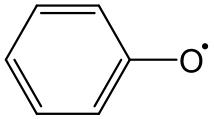
In PMs, EPFRs are classified according to the location of unpaired electrons into carbon-centered radicals (such as cyclopentadienyl), oxygen-centered radicals (phenoxyl radicals), and carbon-centered radicals containing oxygen atoms (such as semiquinone radicals) (Table 1), which are reflected in EPR measurements by differences in the spectral splitting factor, or g factor. The g factors of these three types of EPFRs range from <2.0030, 2.0030~2.0040, and >2.0040, respectively[12]. Additionally, there are differences in the stability of EPFRs, typically manifested as carbon-centered radicals being more stable than oxygen-centered radicals13]. The concentration range of EPFRs in PMs is 1013~1016 spins/m3; under severe pollution conditions such as smog and sandstorms, EPFR concentrations can reach 1017 spins/m3 [14]. However, EPFRs in PMs also exhibit regional differences as well as patterns in temporal and particle size distribution.
表1 EPFRs的分类

Table1 EPFRs category

g factor Types of EPFRs Typical structural formula
<2.0030 Carbon-centered EPFRs
Cyclopentadienyl
2.0030~
2.0040
Carbon-centered and adjacent oxygen EPFRs
Semiquinone radicals
>2.0040 Oxygen-centered EPFRs
Phenoxy radicals

2.1 Occurrence characteristics of EPFRs in PMs from different regions

The spatial distribution of PM2.5 shows a clear trend of "higher in the north and lower in the south, higher inland and lower along the coast"[15]. In different regions, the concentrations of EPFRs in PMs generally follow a pattern where heavy industrial cities have higher levels than light industrial cities, and sites near highways have higher levels than urban sites. The types of EPFRs in PM2.5 are primarily carbon-centered radicals containing oxygen atoms, mainly semiquinone radicals with a g factor ranging from 2.0030 to 2.0040[16-18]. The average concentration of EPFRs in PMs from the Three Gorges Reservoir area in Wanzhou is 7.0×10¹³ spins/m3, with an average g factor ranging from 2.0032 to 2.0038 across different seasons, predominantly consisting of carbon-centered radicals with adjacent oxygen atoms, such as semiquinone and phenoxy radicals[16]. In Nanjing, EPFRs in PM2.5 are also mainly carbon-centered radicals with adjacent oxygen atoms, with concentrations ranging from 2.78×10¹² to 1.72×10¹³ spins/m3[17]. Wanzhou is a smaller city primarily focused on hydraulic engineering development, especially in the Three Gorges Reservoir area, resulting in lower pollution levels. In contrast, Nanjing, as an important industrial base in China, has more complex PM sources and more severe pollution, leading to significantly higher concentrations of EPFRs in PM2.5[17]. In Xi'an, the concentration range of EPFRs in PM2.5 is 1.23×10¹⁸ to 2.56×10¹⁹ spins/g, with a g factor around 2.0023[18]. Compared to Xi'an, the g factor of EPFRs in PMs from Jinzhong is higher, ranging from 2.00437 to 2.00429. However, unlike most studies that use direct EPR measurement, the study in Jinzhong includes an extraction step, which may lead to significant differences in the g factor[9]. As a heavily industrialized city in Northeast China with relatively severe air pollution, the concentration of EPFRs in PM2.5 in Harbin reaches 3.01×10¹⁴ spins/m3 during winter, posing a high potential health exposure risk[19]. In Beijing, the average concentration of EPFRs in PM2.5 samples is 2.30×10¹³ spins/m3, with a g factor of 2.00339±0.00025. Combined with the single unstructured signal obtained from EPR measurements, this indicates that the EPFRs in particulate matter are semiquinone radicals centered on oxygen and carbon[20]. In Zhoukou, the g factor range of EPFRs in road dust from different areas is 2.0032 to 2.0039, mainly consisting of carbon-centered radicals with oxygen atoms. The average concentration of EPFRs in highway road dust is 2.20×10¹⁹ spins/g, while the average concentration in residential street dust is 8.15×10¹⁷ spins/g, indicating that the concentration of EPFRs in highway particulate matter is significantly higher than that in residential areas[21].
In summary, the gfactor range of EPFRs in PMs is generally between 2.0030 and 2.0040, primarily consisting of carbon-centered free radicals containing oxygen atoms, such as semiquinone radicals. The concentration of EPFRs in particles from traffic sources is usually higher than in other urban areas, but their gfactor is relatively lower. In heavy industrial cities like Harbin, where reliance on fossil fuel combustion is high, PM2.5pollution is severe, and EPFR concentrations are also relatively high.

2.2 Occurrence characteristics of EPFRs in PMs across different seasons

PM2.5EPFR concentrations show a trend of higher levels in winter and lower levels in summer[12,16,19], with carbon-centered radicals predominating in winter and oxygen-centered radicals dominating in summer[12,22]. In Xi'an, the g factor for EPFRs in PMs during winter is 2.0033, while in spring and summer it is 2.0034, primarily consisting of radicals with oxygen atoms adjacent to carbon centers. The concentration of EPFRs shows a trend of winter (1.79×10¹⁴ spins/m3) > spring (1.65×10¹⁴ spins/m3) > autumn (1.04×10¹⁴ spins/m3) > summer (9.52×10¹³ spins/m3)[6]. In Wanzhou District, Chongqing, the concentrations of EPFRs in PM2.5 across different seasons, from highest to lowest, are: autumn (8.4×10¹³ spins/m3), winter (8.1×10¹³ spins/m3), spring (6.5×10¹³ spins/m3), and summer (4.8×10¹³ spins/m3). The g factor ranges from 2.0031 to 2.0039, mainly comprising carbon-centered radicals adjacent to oxygen atoms, such as semiquinone and phenoxy radicals[16]. Although the g values of EPFRs in PM2.5 vary little across seasons, there are differences in the linewidth (∆Hp-p) of the EPR spectra. The ∆Hp-p for EPFRs in summer and autumn is similar, at 4.67 G and 4.63 G respectively; that for winter and spring is also similar, at 4.37 G and 4.49 G respectively. A higher ∆Hp-p indicates a greater variety and complexity of radical species[16]. The g factor and ∆Hp-p characteristics suggest that the EPFRs bound to PM2.5 in spring and winter have similar carbon-centered structures, but their chemical compositions may differ significantly[16]. In Zhengzhou, the concentration range of EPFRs in PM2.5 is 1.73×10¹² spins/m3 to 7.182×10¹⁴ spins/m3. In autumn (g factor: 2.0031~2.0036) and summer (g factor: 2.0031~2.0035), only semiquinone radicals were detected in PM2.5, whereas in winter (g factor: 2.0029~2.0035) and spring (g factor: 2.0032~2.0041), carbon-centered radicals, carbon-centered radicals adjacent to oxygen atoms, and oxygen-centered radicals were all detected[22]. Coal and biomass combustion can produce carbon-centered radicals with adjacent oxygen atoms (g=2.0030~2.0033). As a typical heavy industrial megacity in central China, Zhengzhou relies heavily on coal and biomass combustion for energy supply, especially during winter heating when energy demand increases, leading to a continuous presence of large amounts of carbon-centered radicals with adjacent oxygen atoms in PM2.5 [22-23]. In Beijing, the average concentration of EPFRs in PM2.5 during spring, autumn, and winter is 6.00×10¹⁷ spins/m3, and during severe winter smog, the maximum concentration of EPFRs in PM2.5 can reach 2.95×10¹⁸ spins/m3, about four orders of magnitude higher than the concentrations in PM2.5 from Wanzhou Three Gorges Reservoir Area and Zhengzhou[16,20,22,24]. Additionally, EPFR concentrations in particulate matter during dust storms are generally lower than those during non-dust days. During dust storms in Erlianhot and Jinan, EPFR concentrations were 3.40×10¹³ spins/m3 and 5.50×10¹³ spins/m3, respectively, lower than those in particulate matter from cities like Wanzhou, Xi'an, and Zhengzhou during non-dust days[12,25]. This may be related to the lower levels of organic precursors and metal ions in dust. Besides sources, meteorological conditions such as precipitation and humidity also affect the concentration of EPFRs in the atmosphere. From July to September in Beijing, abundant rainfall reduces the concentration of EPFRs in the air, resulting in no detectable EPFRs in PM2.5 during summer[20]. Xu et al.[12] found in their study on individual inhalation exposure to EPFRs on PM2.5 in Beijing that the daily human exposure in summer was 4.79×10¹⁴~7.76×10¹⁶ spins/m3, and in winter heating season it was 1.11×10¹⁷~7.42×10¹⁷ spins/m3. The difference between the lowest concentration in summer and the highest in winter is three orders of magnitude. The g value of EPFRs during the winter heating season is 2.0038 (range: 2.0033~2.0046), indicating that carbon-centered radicals with adjacent heteroatoms predominate; the average g value during the non-heating season is higher, at 2.0041 (range: 2.0032~2.0051), with an increased proportion of oxygen-centered radicals. This may be due to the strong atmospheric oxidation capacity in summer. Atmospheric Oxidation Capacity (AOC) in the troposphere is mainly reflected in
In summary, EPFR concentrations in winter PM2.5 are higher and dominated by carbon-centered radicals, whereas EPFR concentrations in summer PM2.5 are lower and primarily consist of more stable oxygen-centered radicals[12,13]. The primary reasons for this difference are the extensive coal combustion during the winter heating season and the stronger atmospheric oxidation capacity in summer.

2.3 Occurrence characteristics of EPFRs in PMs of different particle sizes

Particulate matter with smaller particle sizes contains higher concentrations of EPFRs, predominantly oxygen-centered free radicals[5,19,26]. Wang et al.[26]conducted experiments to collect PMs of different particle sizes and found that the g factor of EPFRs in PMs ranged from 2.0031 to 2.0038, with a ∆H p-p range of 8.28 to 9.78 G, mainly consisting of carbon-centered free radicals containing oxygen atoms. A distinct single peak was observed in the EPR spectrum of PM<2.1, with EPFR concentrations in PM<2.1ranging from 8.01×10¹³ to 24.49×10¹³ spins/m3. In contrast, the peaks in PM>2.1showed slight fluctuations, with EPFR concentrations ranging from 1.60×10¹³ to 8.64×10¹³ spins/m3. The highest EPFR content was found in PM0.4-0.7, reaching 5.1×10¹⁴ spins/m3, approximately 27.0 to 38.9 times higher than the average EPFR concentration (1.6±0.29×10¹³ spins/m3) in PM5.8-9.0. Jia et al.[19]obtained PMs of different particle sizes through graded sampling and determined that the g factor in Harbin's PM0.056-1.8was 2.0034, higher than the g factor of 2.0033 in PM1.8-10. During the heating season, EPFRs were primarily distributed in PM0.18-1.8 and PM1.8-10, with average concentrations of 1.49×10¹⁴ spins/m3 and 8.42×10¹³ spins/m3, respectively. In the non-heating season, EPFRs were mainly distributed in PM1.8-10 and PM>10, with average concentrations of 2.14×10¹³ spins/m3 and 1.97×10¹³ spins/m3, respectively. This indicates that smaller particles contain more EPFRs. The composition of PM2.5-10mainly originates from the Earth's crust, such as dust and soil, while PM2.5is primarily composed of carbonaceous aerosols generated by anthropogenic combustion, containing abundant EPFRs[27-28]. Smaller-sized PM2.5has a larger specific surface area, providing more adsorption sites and oxidative reaction active sites, resulting in a higher distribution of EPFRs on fine particulate matter[26]. Yang et al.[5]found that the g factor of EPFRs in TSP extracts ranged from 2.00316 to 2.00371, with concentrations from 3.1×10¹⁹ to 6.2×10²⁰ spins/g, while the g factor of EPFRs in PM<1μmranged from 2.00323 to 2.00371, with concentrations from 7.4×10¹⁹ to 3.9×10²⁰ spins/g, indicating that more oxygen-containing free radicals with higher g values exist in the extracts of PM<1μm. Wang et al.[26]reported that the g factor of EPFRs in PM<2.1ranged from 2.0031 to 2.0035, mainly consisting of carbon-centered EPFRs with adjacent oxygen atoms; the g factor of PM>2.1ranged from 2.0025 to 2.0039, higher than that of PM<2.1, suggesting that the g factor range of EPFRs in PM>2.1is wider and more complex, potentially influenced by particle surface morphology and metal content. Researchers measured EPFR concentrations in various types of particulate matter from the Xuanwei region of Kunming, where TSP contained significant amounts of transition metals that react with polycyclic aromatic hydrocarbons (PAHs) under strong ultraviolet light to generate stable EPFRs at a concentration of 4.74×10¹⁸ spins/g, with a g factor of 2.0041, identified as oxygen-centered free radicals[25]. In summary, particulate matter with smaller particle sizes mainly originates from anthropogenic combustion emissions, has a more complex composition, and features more surface adsorption sites and oxidative reaction active sites, leading to more active free radical reactions. Consequently, it contains higher concentrations of EPFRs and is more prone to generating oxygen-centered free radicals.

3 Sources and Generation Mechanisms of EPFRs in PMs

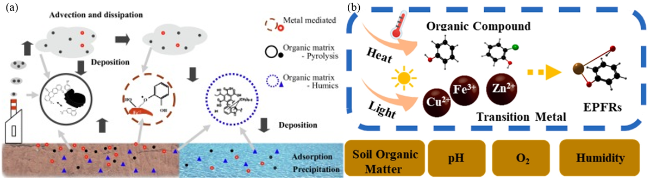
In PMs, EPFRs mainly originate from vehicle emissions, biomass combustion, and fossil fuel combustion[19]. Their formation is a joint effect of organic precursors (such as PAHs and pentachlorophenol) and transition metals[29-32]. Results from chemical analysis combined with the PMF model indicate that EPFRs in Xi'an's PM2.5primarily come from coal combustion, motor vehicle emissions, and dust, accounting for approximately 76.12%[6]. As shown in Figure 1a, the formation pathways of EPFRs are complex, but all require the participation of metals and organic precursors. The resulting EPFRs can migrate in the atmosphere, soil, and water[33]. Currently, research on the formation mechanisms of EPFRs in PMs is mainly categorized into two types: studies on metal-mediated reactions[22]and studies on organic precursor substances[34]. The composition of these two categories of substances is closely related to the sources of particulate matter. Additionally, the influence of atmospheric conditions on EPFRs cannot be ignored; for example, photochemical reactions may enhance the generation of free radicals[20].
图1 (a)EPFRs在多种环境介质中的形成[33];(b)多种因素对EPFRs形成的影响[35]

Fig.1 (a) Occurrence and formation of EPFRs in multiple environmental media. (b) Effect of multiple factors on the formation of EPFRs. Copyright(a) Environmental Pollution 2019 [33], (b) Journal of Hazardous Materials 2023 [35]

Transition metals and their oxides have been shown by numerous studies to promote the formation of EPFRs. As illustrated in Figure 1b, ions of transition metals such as Zn, Cu, and Fe mediate and facilitate the generation of EPFRs to varying degrees[35].Jia et al.[34], by comparing the degradation of PAHs on modified montmorillonite, found that the presence of metal cations can enhance the photodegradation efficiency of PAHs in clay minerals. The concentration of EPFRs formed through charge transfer between PAHs and Fe3+ was higher than that formed with Cu2+. Yang et al.[14] discovered that SiO2 and organic precursors do not produce EPFRs at high temperatures, but the addition of Al2O3 resulted in EPFRs with a half-life of up to 108 days, highlighting the significant role of metal oxides in EPFR formation. Vejerano et al.[36] further confirmed this conclusion, showing that EPFRs generated on the surface of Zn(II)O/SiO2 particles could last up to 73 days. Yang et al.[14], through experimental studies, demonstrated that among polyaromatic hydrocarbons with chlorine and hydroxyl substituents, the ability of supported metal oxides to promote EPFR formation followed the order Al2O3 > ZnO > CuO > NiO, correlating with the oxidation strength of the metal cations. He et al.[22], through data analysis, found a positive correlation between Fe and EPFRs in PM2.5 (r = 0.802, p < 0.01). To further investigate the role of different iron forms (iron oxides or Fe3+) in the secondary formation of EPFRs, they conducted simulation experiments using catechol as an organic precursor, mediated by iron oxides and Fe3+, proving that both iron oxides and Fe3+ can promote EPFR production, with iron oxides and Fe3+ generating more EPFRs. Correlation analysis between water-soluble ion concentrations and EPFR concentrations from biomass combustion revealed a significant positive correlation between EPFR concentrations and Fe3+ (r = 0.72, p < 0.01), indicating that the presence of Fe3+ promotes EPFR formation[17,37]. In addition to Fe, Cu also showed a positive correlation with EPFRs (r = 0.56, p < 0.05), suggesting that Cu may also promote the formation of EPFRs in PM2.5[38]. The presence of copper oxide has been proven to favor EPFR production[14]. Density functional theory calculations indicated that Cu can mediate the formation of oxygen-centered EPFRs[39]. During urban lockdowns, although industrial and traffic emissions significantly decreased, household coal heating led to higher concentrations of Cu, resulting in a trend of increasing rather than decreasing EPFR concentrations in PMs. Cu promotes the secondary formation of EPFRs in PM2.5[38,40]. Furthermore, researchers have found that the presence of sulfates inhibits EPFR formation, as sulfate formation suppresses or poisons the active sites of transition metals[29], further emphasizing the critical role of metal ions in EPFR formation. Besides studying the role of metals in the EPFR formation mechanism, research has also revealed that the organic chemical components of PM2.5, such as PAHs, are crucial for EPFR generation[29]. In four cities in Shanxi Province, 16 types of PAHs were present in PM2.5, with concentrations of PAHs and their derivatives significantly higher during the heating season compared to the non-heating season, consistent with the seasonal distribution characteristics of EPFRs[41]. PAHs, acting as organic precursors, exhibit a high capacity for EPFR formation under the influence of Cu and Fe[29-32]. Additionally, some scholars detected oxygen-centered free radicals (g = 2.0048) during lignin hydrolysis under metal-free conditions[42]. Different sources of PMs have varying chemical compositions, with differences in the types and amounts of metals and organic precursors, ultimately leading to variations in EPFRs on particulate matter. For example, particulate matter from coal combustion, gasoline combustion, and biomass combustion contains abundant organic substances and metal ions, resulting in higher EPFR levels[19]. In contrast, dust particles contain fewer organic precursors and metal ions, leading to lower EPFR levels[12,25].
In addition to metals and organic precursors influenced by their sources, the impact of common atmospheric pollutants and meteorological conditions on EPFRs also deserves investigation. Gehling et al.[43]conducted a correlation analysis between EPFR concentrations and data on conventional pollutants collected from environmental monitoring stations, as well as solar and ultraviolet (UV) radiation measurements, when studying the formation mechanisms of EPFRs. They found that EPFR concentrations were positively correlated with O3(r=0.28, p<0.05), solar radiation (r=0.14, p<0.05), and UV radiation (r=0.12, p<0.05). This suggests that photochemical reactions involving O3promote the generation of EPFRs, and both solar and UV radiation can also increase EPFR concentrations. The study by Chen et al.[20]also indicates that photoexcitation can generate secondary EPFRs[43-44], while summer precipitation can reduce the concentration of EPFRs in PM2.5.

4 Determination methods for EPFRs in PMs

Electron paramagnetic resonance spectrometers are commonly used to detect and study paramagnetic substances containing unpaired electrons, providing quantitative information as well as the numerical value of the g factor. The principle is based on the electron Zeeman splitting of the electron magnetic moment in an external magnetic field and the resonant transitions between energy levels caused by the interaction with electromagnetic fields. It is a commonly used method for detecting EPFRs[9]. Methods for detecting EPFRs in PMs using EPR can be divided into two categories: solvent extraction followed by measurement, and direct measurement, as shown in Table 2.
表2 PMs中EPFRs测定方法汇总表

Table 2 Determination methods of EPFRs in PMs

Methods Sampling membrane type Sampling location Pre-treatment methods Instrument Model g-factor Concentration of EPFRs Ref
Direct assay PM2.5
Quartz film
Beijing Place the strip sample(5 mm × 28 mm) into a quartz tube EPR EMX-plus,Burker Range of g-factor:2.0024~2.0030 2018/1/22:4.36×1013 spins·m-3;2018/7/22:5.03×1012 spins·m-3 49
Winter, Spring, Autumn: 2.0038;Summer:2.0035 Spring:2.63×10¹³ spins·m-3 Summer:2.92×10¹³ spins·m-3 Autumn:1.50×10¹³ spins·m-3 Winter:2.13×10¹³ spins·m-3 50
Place the strip sample(2~3 cm) into a quartz tube Bruker EMX nano continuous wave (CW)
X-band
Range of g-factor:2.00339±0.00025 The average concentration of EPFRs in Spring、3Autumn、Winter:6.00 ×10¹⁷ spins·m-3
The average concentration of EPFRs in cold mouth: 5.22×10²¹ spins·g-1
20
Zheng-
zhou
Place the 1/8 PM2.5 filter (ΦA =90mm) into a quartz tube Spring:2.0032~2.0041;Summer:2.0031~2.0035;Autumn:2.0031~2.0036;Winter:2.0029~2.0035 1.73×10¹²~7.18×10¹⁴ spins·m-3 22
Place the strip sample(7 mm×20 mm) into a quartz tube Bruker EPR EMX plus
(X-band)
Spring,2019:2.0032~2.0041;Summer,2020:2.0030~2.0035;Autumn,2020:2.0031~2.0036;Winter,2020:2.0029~2.0035 Spring:1.73×10¹²~6.48×10¹³ spins·m-3 Summer:1.76×10¹²~5.25×10¹³ spins·m-3;Autumn:9.23×10¹⁴~1.32×10¹⁶ spins·m-3;Winter:9.98×10¹⁵~2.22×10¹⁷ spins·m-3 51
Xi'an Place two strip sample(5 mm×28 mm) into a quartz tube EPR Burker MS5000 Not detected Spring:1.65×10¹⁴ spins·m-3;Summer:9.52×10¹³ spins·m-3;Autumn:1.04×10¹⁴ spins·m-3;Winter:1.79×10¹⁴ spins·m-3;Annual average concentration:1.36×10¹⁴ spins·m-3 52
Place two strip sample(5 mm×28 mm) onto a quartz plate EPR Burker MS5000 Average g-factor:2.0034 Range:1.23×10¹⁸~2.56×10¹⁹ spins·g-1
Average concentration:3.97×10¹⁴ spins/m3
48
Xiamen Place the 1/16 PM2.5 filter (ΦA =81mm) into a quartz tube EPR Bruker EMX nano
Bruker
Range of g-factor:2.0031~2.0038 1.60×10¹³~2.448×10¹⁴ spins·m-3 26
PM2.5
PTFE film
Colorado,
USA
Roll the entire filter membrane (Φ A=47 mm) into a cylindrical shape and place it in a quartz tube EMX nano continuous wave X-band Average g-factor:2.0016 1.04~1.47×10¹² spins·m-3 53
Solvent extraction method PM2.5
Quartz film
Beijing Shake 20ml DCM for 3 minutes, let it stand in the dark for 6 hours, and concentrate it to 100mL by nitrogen blowing EPR EMX
plus(X-band)
TSP:2.00316~2.00371
PM<1μm:2.00323~2.00371
PM<1 μm:7.4×10¹⁹~3.9×10²⁰ spins·g-1;PM1.0-2.5 μm:4.7×10¹⁹~6.5 ×10²⁰ spins·g-1;PM2.5-10 μm:Not detected~8.2×10¹⁹spins/g;
TSP:3.1×10¹⁹~6.2×10²⁰ spins·g-1
5
Xi'an Single solvent extraction: Soak the filter membrane in 30ml DCM for 3 minutes and leave it in the dark for 10 hours
Multi solvent extraction: Wash the filter membrane with 10mL MeOH, 10mL DCM, and 10mL n-hexane in three sequential pressure washes
Burker MS5000 EPR Average g-factor:2.0038 Single solvent extraction:Not detected
Multi solvent extraction: The average extraction efficiency is 6.8%; Average concentration:0.27×10¹⁴ spins·m-3
48
10mL MeOH, 10mL DCM, and 10mL n-hexane were sequentially pressurized to wash the filter membrane, then nitrogen blown to concentrate to 0.1mL and transferred to a 5×28mm quartz filter membrane. Original sample:2.0028~2.0033
Extract samples:2.0027~2.0032
Original sample:2.58×10¹⁴~5.41× 10¹⁴ spins·m-3
2.58×10¹⁴~9.17×10¹⁸ spins·g-1;Extraction efficiency:88±10%
45

4.1 EPR measurement after solvent extraction

Since EPFRs were not detected in highly polar or water-soluble extracts, researchers typically use non-polar organic solvents to extract EPFRs from PM2.5, with dichloromethane (DCM) being the most commonly employed extraction agent[45]. Yang et al.[5] mixed 20 mL of DCM with PM2.5 samples, followed by shaking, light-protected soaking, and centrifugation. The mixture was then evaporated under a gentle nitrogen stream down to approximately 100 μL before being analyzed. To verify the extraction efficiency of EPFRs, researchers performed a secondary extraction on the remaining residue, finding that the EPR signal in the secondary extract was about 2.5% of that from the primary extraction, indicating that a single extraction with DCM was relatively complete[5]. Using DCM to extract semiquinone radicals from PMs collected in Jinzhong and Beijing, recovery rates of 75.42% to 86.99% were achieved[9]. However, some studies have reached different conclusions. Truong et al.[46] extracted EPFRs from 5%CuO/silica particle samples with a particle size of 125~150 μm using 1.5 mL each of methanol (MeOH), isopropanol (IPA), dichloromethane, toluene (TOL), and tert-butylbenzene (TBB), followed by ultrasonic treatment for 1 hour and centrifugal separation. The results showed that the recovery rates of EPFRs using the polar organic solvents IPA and MeOH exceeded 90%, whereas the extraction efficiencies of non-polar solvents (TBB and TOL) were less than 20%. The extraction efficiency of DCM ranged from 20% to 55%, demonstrating significant variations in extraction efficiency among different solvents, with differences reaching up to 70%. Furthermore, these extractable EPFRs can participate in various molecular reactions in solution, generating molecular reaction products such as catechol, hydroquinone, phenol, and chlorophenols. Chen et al.[45] extracted EPFRs from PM2.5 samples collected on polytetrafluoroethylene (PTFE) filters, sequentially washing the samples with 10 mL of MeOH, 10 mL of DCM, and 10 mL of n-hexane under pressure to obtain the extracts. The extracts were then concentrated using a rotary evaporator and transferred to quartz filters for EPFR analysis. Comparison with direct measurement results indicated that the g-factor range of EPFRs in the original sample was 2.0028~2.0033, with concentrations ranging from 2.58×10¹⁴ to 5.41×10¹⁴ spins/m3, primarily consisting of carbon-centered organic radicals with heteroatoms. After extraction, the g-factor range of EPFRs was 2.0036~2.0040, predominantly higher-g-factor semiquinone radicals, and the concentration of EPFRs was only 12% of that in the original sample, suggesting that organic solvents struggle to effectively extract EPFRs. Solvent extraction methods involve cumbersome procedures, exhibit large variations in recovery rates among different solvents, and may damage EPFRs during the extraction process, thereby affecting measurement results[47]. Additionally, the safety of organic solvents is another issue that needs consideration. In contrast, direct measurement methods offer greater advantages.

4.2 Direct determination of EPR

Currently, direct measurement using EPR is the primary method for determining EPFRs in PM2.5. Before measurement, researchers first cut the filter membrane into an appropriate size and place it in a quartz tube or quartz plate for analysis[48]. This method is simple to operate, can fully preserve the sample, and facilitates recovery.
Xu et al[12]quantitatively analyzed EPFRs in PM2.5 collected on PTFE filters using a portable personal aerosol exposure monitoring device (microPEM 3.2 A, USA) for 24 hours, employing EPR (Bruker EMXPlus X-band, Billerica, MA, USA). The results indicated that the daily average individual exposure of urban residents in Beijing during the heating period (winter) was 1.11×10¹⁷~7.42×10¹⁷ spins/m3, and during the non-heating period (summer) was 4.79×10¹⁴~7.76×10¹⁶ spins/m3. Qian et al[16]collected a total of 111 PM2.5 samples from Wanzhou District, Chongqing, in April, July, October 2017, and February 2018. Custom-made wedges were used to cut the sampled quartz filters into 28mm×5mm strips, which were then placed in quartz tubes for EPR measurement (EPR MS5000 Freiberg Instruments Co., Ltd., Germany). The magnetic field strength was set at 332~341 mT, detection time at 60 s, modulation amplitude at 0.2 mT, and microwave frequency at 8 mW. The results showed that the annual average concentration of EPFRs in PM2.5 in Wanzhou District was 7.0 ×10¹³ spins/m3 [16]. He et al[22]collected 28 PM2.5 samples from Zhengzhou during spring, summer, autumn, and winter seasons in 2019 using quartz fiber filters. Using Bruker EPR EMX plus (X-band) with a dual-cavity model, 1/8 of each sample was placed in a quartz tube for detecting EPFRs on PM2.5. The results indicated that the concentration range of EPFRs in Zhengzhou PM2.5 was 1.73×10¹²~7.18×10¹⁴ spins/m3. In addition to using quartz tubes, Chen et al[48]proposed an electron paramagnetic resonance spectroscopy method based on quartz plates, comparing it with quartz tubes and DCM extraction methods. By replacing the quartz tubes used in EPR measurements with custom-made quartz grooves, placing the filter membrane inside the groove, and fixing it with a custom cover slip before analysis, they found that the EPR spectra obtained using quartz plates were more complete and standardized compared to those from quartz tubes, although the signal intensity was slightly lower; meanwhile, the signals obtained were stronger than those from solvent extraction methods[48].

5 Health Risks of EPFRs in PMs

5.1 Toxicology research

It is estimated that by 2050, the number of global premature deaths caused by PMs will reach 5.84 million. Toxicological studies have confirmed that PM2.5can cause DNA damage[54-55]. Multiple studies have shown that redox-active transition metals and EPFRs in PM2.5can synergistically generate ROS. Excessive ROS can induce oxidative stress, and these free radicals can disrupt mucopolysaccharides and lipid membranes in connective tissues within the human body, leading to oxidative damage of lipids and tissues[7,56-59]. Semiquinone radicals in PMs can also exert damaging effects on human lung epithelial cells and myeloid leukemia cells[60]. Researchers simulated the preparation of EPFRs by adding iron oxide/SiO2and Fe3+/SiO2matrices with different concentrations into catechol solutions, followed by stirring, drying, and heating, and conducted in vitro toxicological experiments. The results showed that EPFRs can increase endogenous hydroxyl radicals (⋅OH) in human alveolar cells, causing DNA damage, promoting tumorigenesis, and triggering inflammatory responses[8,20,22]. A study by Hwang et al.[28]indicated that the endogenous ⋅OH induced by highway PM2.5in aqueous phase showed a strong correlation with EPFRs (r 2=0.73, p<0.05), further demonstrating that EPFRs can induce the generation of ⋅OH.

5.2 Exposure Risk Assessment

Currently, there is still a lack of standardized models for assessing the exposure risk of EPFRs, resulting in limited related research. The most commonly used risk assessment model available is the cigarette exposure model, which converts the exposure level of EPFRs in PM2.5 into the number of cigarettes[43,61-63], as shown in Equation (1):
N c i g = C E P F R s V R C c i g C t a r
in the formula: C EPFRsrepresents the average concentration of EPFRs in PM2.5(spins/m3), Vis the daily air volume inhaled by an adult male (20 m3/day), RCcigis the concentration of free radicals in cigarette tar, approximately 4.75×10¹⁶ spins/g[64], and C tarindicates the tar content per cigarette, approximately 0.013 g/cig[63]. The 24-hour average PM2.5concentration in Louisiana, USA, is 26.9 μg/m3, with an average EPFRs concentration of 3.84×10¹⁷ spins/g. The amount of EPFRs inhaled per person per day is equivalent to 0.3 cigarettes. Based on the annual average PM2.5concentration in the USA of 10.6 μg/m3, the equivalent number of cigarettes inhaled per person annually due to EPFRs is 47[43]. In Wanzhou, the daily average EPFRs concentration is 1.73×10¹² spins/m3, and the average daily EPFRs inhalation per person is equivalent to 2.3 cigarettes, totaling 840 cigarettes annually[16].
Additionally, the concentration used for calculating the equivalent number of cigarettes for EPFRs can also be expressed as EPFRs per gram of PMs. Xu et al.[20]used another more detailed assessment formula in their study, combining body weight and lung deposition fraction. They first estimated the daily exposure to EPFRs in PM2.5 using Equation (2), and then calculated it based on the concentration of EPFRs in cigarette tar, as shown in Equation (3), to assess the equivalent number of cigarettes inhaled for health risk evaluation.
I n h P M = R C P M F P C P M I R F r B W
E Q = I n h P M R C c i g C t a r
in equation (2): InhPM represents the daily exposure to EPFRs from inhaled PM2.5 (spins/kg/day); RCPM denotes the average concentration of EPFRs in unit mass of PM2.5 (spins/g); F is the conversion factor from g to μg (1×10⁶); PCPM is the concentration of PM2.5 (μg/m3); IR is the adult inhalation rate (20 m3/day); F r is the fraction of alveolar particles retained in the lungs (0.75); body weight is 70 kg for adults; in equation (3), EQ represents the equivalent number of cigarettes smoked per day by a 70-kg adult due to EPFR exposure from inhaled PM2.5; RCcig is the concentration of EPFRs in cigarette tar (9×10⁶ spins/g), and C tar denotes the tar content per cigarette, approximately 0.013 g/cigarette[63]. Xu et al. found that during winter, the daily exposure to EPFRs from PM2.5 for adults ranged from 1.47×10¹⁸ to 6.33×10²⁰ spins/g, with an average equivalent of smoking between 0.53 cigarettes per day on non-haze days in spring, autumn, and winter, up to 226.9 cigarettes per day on haze days, resulting in an average daily exposure equivalent to 33.1 cigarettes' worth of EPFRs from tar[20]. In Shihezi City, the concentration range of EPFRs in PM2.5 was 1.35×10¹³ to 4.65×10¹³ spins/g, with a daily inhalation exposure equivalent to 0.66 to 8.40 cigarettes' worth of EPFRs from tar. Specifically, the number of cigarettes inhaled varied by season: 1.69 to 4.61 cigarettes per day in spring, 0.66 to 4.47 cigarettes per day in summer, 1.49 to 4.37 cigarettes per day in autumn, and 2.26 to 8.40 cigarettes per day in winter. The winter exposure levels were significantly lower than the 226.9 cigarettes observed during severe haze events in Beijing[20,65].
Although the cigarette exposure model can assess the exposure levels of EPFRs, it remains imperfect. The material composition and chemical components of PMs differ from those of cigarette particles; therefore, the types of EPFRs in cigarettes differ from those in PMs, resulting in varying exposure risks. Moreover, this model only focuses on exposure levels, lacking further health risk assessments and standardized health risk reference values.

6 Conclusion and Outlook

This article reviews the occurrence characteristics, generation mechanisms, detection methods, and health risks of EPFRs in PMs. EPFRs in PMs include carbon-centered radicals (such as aromatic hydrocarbon radicals), oxygen-centered radicals, and carbon-centered radicals containing oxygen atoms (such as semiquinone radicals). The g factor ranges from 2.0020 to 2.0050, and the concentration ranges from 1013 to 1016 spins/m3, with concentrations reaching up to 1017 spins/m3 under severe pollution conditions. Compared to other urban areas, traffic-related particulate matter has higher concentrations of EPFRs, primarily carbon-centered radicals. In heavy industrial cities that rely on fossil fuel combustion, PM2.5 pollution is severe, and EPFR concentrations are also relatively high. Compared to summer, winter PM2.5 exhibits higher concentrations of EPFRs, dominated by carbon-centered radicals, whereas summer PM2.5 has lower concentrations of EPFRs, mainly consisting of more stable oxygen-centered radicals. Particles with smaller diameters contain higher concentrations of EPFRs, with a greater proportion of oxygen-centered radicals compared to larger particles. The regional distribution, seasonal variations, and particle size differences of EPFRs in PMs are closely related to their sources. EPFRs in PMs mainly originate from vehicle emissions, biomass combustion, and fossil fuel combustion, and their formation results from the combined action of organic precursors and transition metals. Atmospheric environmental factors (such as temperature, humidity, and atmospheric oxidation conditions) also influence the generation of EPFRs. Electron paramagnetic resonance (EPR) is used to detect EPFRs, which can be categorized into solvent extraction followed by measurement and direct measurement. The solvent extraction method involves cumbersome steps, has varying recovery rates, and may damage EPFRs during extraction. In contrast, the direct measurement method is safer and simpler to operate, fully preserves the sample, and facilitates recovery. Currently, the most commonly used exposure risk assessment model for EPFRs is the cigarette exposure model, but it remains incomplete and lacks necessary health risk thresholds. Future research should continue to refine and improve EPFR detection methods and establish a scientific, standardized, and normative health risk assessment model for EPFRs.
[1]
Heimer N E. J. Org. Chem., 1977, 42(23): 3767.

[2]
Lyons M J, Gibson J F, Ingram D J E. Nature, 1958, 181(4614): 1003.

[3]
Church D F, Pryor W A. Environ. Health Perspect., 1985, 64: 111.

[4]
Sigmund G, Santín C, Pignitter M, Tepe N, Doerr S H, Hofmann T. Commun. Earth Environ., 2021, 2: 68.

[5]
Yang L, Liu G, Zheng M, Jin R, Zhu Q, Zhao Y, Xu Y. Environ. Sci. Technol., 2017, 51(14): 7936.

[6]
Chen Q C, Sun H Y, Mu Z, Wang Y Q, Li Y G, Zhang L X, Wang M M, Zhang Z M. Environ. Pollut., 2019, 247: 18.

[7]
Valavanidis A, Fiotakis K, Vlahogianni T, Papadimitriou V, Pantikaki V. Environ. Chem., 2006, 3(3): 233.

[8]
Gehling W, Khachatryan L, Dellinger B. Environ. Sci. Technol., 2014, 48(8): 4266.

[9]
Wang L Y, Xiao R, Mo J H. Sustain. Cities Soc. 2019, 49: 101614.

[10]
Valavanidis A, Fiotakis K, Bakeas E, Vlahogianni T. Redox Rep., 2005, 10(1): 37.

[11]
Khachatryan L, Vejerano E, Lomnicki S, Dellinger B. Environ. Sci. Technol., 2011, 45(19): 8559.

[12]
Xu Y, Qin L, Liu G, Zheng M, Li D, Yang L. J. Hazard. Mater., 2021, 409: 125014.

[13]
Maskos Z, Dellinger B. Energy Fuels, 2008, 22(3): 1675.

[14]
Yang L, Liu G, Zheng M, Jin R, Zhao Y, Wu X, Xu Y. Environ. Sci. Technol., 2017, 51(21): 12329.

[15]
Zhang S P, Han L J, Zhou W Q, Li W F. J. Ecol., 2016, 36(16): 5049.

[16]
Qian R Z, Zhang S M, Peng C, Zhang L Y, Yang F M, Tian M, Huang R J, Wang Q Y, Chen Q C, Yao X J, Chen Y. Chemosphere, 2020, 252: 126425.

[17]
Guo X, Zhang N, Hu X, Huang Y, Ding Z, Chen Y, Lian H. Atmos. Environ., 2020, 224: 117355.

[18]
Shaltout A A, Boman J, Shehadeh Z F, Al-Malawi D R, Hemeda O M, Morsy M M. J. Aerosol Sci., 2015, 79: 97.

[19]
Jia S M, Wang D Q, Liu L Y, Zhang Z F, Ma W L. J. Hazard. Mater., 2023, 443: 130263.

[20]
Xu Y, Yang L L, Wang X P, Zheng M H, Li C, Zhang A Q, Fu J J, Yang Y P, Qin L J, Liu X Y, Liu G R. Ecotoxicol. Environ. Saf., 2020, 196: 110571.

[21]
Feng W, Zhang Y, Huang L, Li Y, Guo Q, Peng, H, Shi L. Environ. Pollut., 2022, 298: 118861.

[22]
He Q Y, Zhao W D, Luo P R, Wang L Y, Sun Q N, Zhang W F, Yin D, Zhang Y H, Cai Z W. Ecotoxicol. Environ. Saf., 2023, 264: 115437.

[23]
Geng N B, Wang J, Xu Y F, Zhang W D, Chen C, Zhang R Q. Particuology, 2013, 11(1): 99.

[24]
Lv F, Yang Y Z, Yang J. J. Ecol., 2023, 43(1): 153.

[25]
Wang P, Pan B, Li H, Huang Y, Dong X D, Ai F, Liu L Y, Wu M, Xing B S. Environ. Sci. Technol., 2018, 52(3): 1054.

[26]
Wang Y, Yao K, Fu X, Zhai X, Jin L, Guo H. Atmos. Environ., 2022, 276: 119059.

[27]
Kwak J, Kim H, Lee J, Lee S. Sci. Total Environ., 2013, 458: 273.

[28]
Hwang B, Fang T, Pham R, Wei J L, Gronstal S, Lopez B, Frederickson C, Galeazzo T, Wang X L, Jung H, Shiraiwa M. ACS Earth Space Chem., 2021, 5(8): 1865.

[29]
Feld-Cook E E, Bovenkamp-Langlois L, Lomnicki S M. Environ. Sci. Technol., 2017, 51(18): 10396.

[30]
Dellinger B, Lomnicki S, Khachatryan L, Maskos Z, Hall R W, Adounkpe J, McFerrin C, Truong H. Proc. Combust. Inst., 2007, 31(1): 521.

[31]
Jia H, Zhao S, Shi Y, Zhu L, Wang C, Sharma V K. Environ. Sci. Technol., 2018, 52(10): 5725.

[32]
Li H H, Zhao Z, Luo X S, Fang G D, Zhang D, Pang Y T, Huang W J, Mehmood T, Tang M W. Ecotoxicol. Environ. Saf., 2022, 234: 113356.

[33]
Pan B, Li H, Lang D, Xing B. Environ. Pollut., 2019, 248: 320.

[34]
Jia H Z, Li L, Chen H X, Zhao Y, Li X Y, Wang C Y. J. Hazard. Mater., 2015, 287: 16.

[35]
Xu Y L, Lu X F, Su G J, Chen X, Meng J, Li Q Q, Wang C X, Shi B. J. Hazard. Mater., 2023, 456: 131674.

[36]
Vejerano E, Lomnicki S, Dellinger B. J. Environ. Monit., 2012, 14(10): 2803.

[37]
Guo X, Wang X Q, Dai W T, Ho K F, Liu S X, Wang Q Y, Shen M X, Liu Y L, Zhang Y F, Cao Y, Qi W N, Li L, Li L, Li J J. Atmos. Environ., 2022, 288: 119322.

[38]
Wang L, Zhao W, Luo P, He Q, Zhang W, Dong C, Zhang Y. J. Environ. Sci., 2024, 135: 424.

[39]
Ahmed O H, Altarawneh M, Al-Harahsheh M, Jiang Z T, Dlugogorski B Z. Chemosphere, 2020, 240: 124921.

[40]
Li Y F, Liu B S, Xue Z G, Zhang Y F, Sun X Y, Song C B, Dai Q L, Fu R C, Tai Y G, Gao J Y, Zheng Y J, Feng Y C. Environ. Pollut., 2020, 263: 114532.

[41]
Li H, Chen Q, Wang C, Wang R, Sha T, Yang X, Ainur D. J. Hazard. Mater., 2023, 442: 130087.

[42]
Khachatryan L, Barekati-Goudarzi M, Asatryan R, Ozarowski A, Boldor D, Lomnicki S M, Cormier S A. ACS Omega, 2022, 7(34): 30241.

[43]
Gehling W, Dellinger B. Environ. Sci. Technol., 2013, 47(15): 8172.

[44]
Chen Q, Sun H, Wang M, Wang Y, Zhang L, Han Y. Environ. Sci. Technol., 2019, 53(17): 10053.

[45]
Chen Q, Sun H, Wang M, Mu Z, Wang Y, Li Y, Zhang Z. Environ. Sci. Technol., 2018, 52(17): 9646.

[46]
Truong H, Lomnicki S, Dellinger B. Environ. Sci. Technol., 2010, 44(6): 1933.

[47]
Vejerano E P, Rao G Y, Khachatryan L, Cormier S A, Lomnicki S. Environ. Sci. Technol., 2018, 52(5): 2468.

[48]
Chen Q, Wang M, Wang Y, Zhang L, Xue J, Sun H, Mu Z. Atmos. Environ., 2018, 184: 140.

[49]
Wang Z, Zhang X H, Zhang Y J, Huo P, Zhang Y X, Zhang Y. Environ. Chem., 2020, 39(02): 317.

[50]
Zhang Xing H, Wang Z, Huo P, Zhang Y J, Chen Q C, Zhang Y. Environ. Chem., 2022, 41(03): 813.

[51]
He Q Y. Master's Dissertation of Zhengzhou University, 2021

(何清云. 郑州大学硕士论文, 2021).

[52]
Li S P. Master's Dissertation of Shaanxi University of Science and Technology, 2021

(李升苹. 陕西科技大学硕士论文, 2021).

[53]
Runberg H L, Mitchell D G, Eaton S S, Eaton G R, Majestic B J. Atmos. Environ., 2020, 240: 117809.

[54]
Dellinger B, Pryor WA, Cueto R, Squadrito G L, Hegde V, Deutsch W A. Chem. Res. Toxical., 2001, 14(10): 1371

[55]
Lelieved J, Evans J S, Frais M, Giannadaki D, Pozzer A. Nature, 2015, 525(7569): 367.

[56]
Zhang Z, Weichenthal S, Kwong J C, Burnett R T, Hatzopoulou M, Jerrett M, Chen H. Int. J. Epidemiol., 2021, 50(2): 589.

[57]
Fang T, Lakey P S J, Weber R J, Shiraiwa M. Environ. Sci. Technol., 2019, 53(21): 12784.

[58]
Lakey P S J, Berkemeier T, Tong H J, Arangio A M, Lucas K, Pöschl U, Shiraiwa M. Sci. Rep., 2016, 6: 32916.

[59]
Winterbourn C C. Nat. Chem. Biol., 2008, 4(5): 278.

[60]
Wang L, Li M, Yu S, Chen X, Li Z, Zhang Y, Seinfeld J H. Environ. Chem. Lett. 2020, 18(5): 1713.

[61]
Squadrito G L, Cueto R, Dellinger B, Pryor W A. Free. Radic. Biol. Med., 2001, 31(9): 1132.

[62]
Pryor W A, Hales B J, Premovic P I, Church D F. Science, 1983, 220(4595): 425.

[63]
Pryor W A, Prier D G, Church D F. Environ. Health Perspect., 1983, 47: 345.

[64]
Baum S L, Anderson I G M, Baker R R, Murphy D M, Rowlands C C. Anal. Chim. Acta, 2003, 481(1): 1.

[65]
He F, Lu J, Li Z, Li M, Liu Z, Tong Y. Toxics, 2022, 10(7): 341.

Outlines

/