Home Journals Progress in Chemistry
Progress in Chemistry

Abbreviation (ISO4): Prog Chem      Editor in chief: Jincai ZHAO

About  /  Aim & scope  /  Editorial board  /  Indexed  /  Contact  / 
Review

Laser Additive Manufacturing Inconel 718 Matrix Composites and Their Mechanical Performances

  • Zhong Qiaofang ,
  • Li Mengjie ,
  • Hu Yanqiu ,
  • Qu Chao ,
  • Zhang Haijun ,
  • Liu Jianghao , *
Expand
  • State Key Laboratory of Advanced Refractories, Wuhan University of Science and Technology, Wuhan 430081, China
* (Jianghao Liu)

Received date: 2025-01-01

  Revised date: 2025-03-31

  Online published: 2025-09-01

Supported by

National Natural Science Foundation of China(U23A20559)

National Natural Science Foundation of China(52272021)

National Natural Science Foundation of China(52232002)

The Major Program (JD) of Hubei Province(2023BAA023)

Abstract

Owing to its high temperature strength, high ductility and good corrosion resistance, Inconel 718 (IN718) alloy had broad application prospects in aerospace, military and energy fields. However, the low hardness and wear resistance of IN718 alloy severely limited its application. To solve these problems, one of the feasible strategies was to modify the composition/microstructure of IN718 alloy. Laser additive manufacturing methods had the capabilities of effectively regulating the composition and microstructure of composite materials, so as to enhance their mechanical performances. Herein, the intrinsic properties and compositional modification strategies of IN718-matrix composites were first introduced, and then the advantages and limitations of laser-additive-manufactured IN718-matrix composites were summarized, respectively. Subsequently, the evolution laws of microstructural morphologies and mechanical performances of IN718-matrix composites prepared by laser additive manufacturing methods were summarized. Finally, the key scientific problems in modifying the preparation method, regulating microstructure and optimizing mechanical performances of IN718-matrix composites were respectively clarified, and the future developments were prospected.

Contents

1 Introduction

2 Modification of IN718 alloy

2.1 Surface modification

2.2 Matrix modification

3 Laser additive manufacturing methods for IN718 matrix composites

3.1 Laser Powder Bed Fusion

3.2 Laser Directed Energy Deposition

3.3 Laser Cladding

4 Microstructure and mechanical performances of laser additive manufacturing IN718 matrix composites

4.1 Surface modification

4.2 Matrix modification

5 Conclusion and outlook
Cite this article

Zhong Qiaofang , Li Mengjie , Hu Yanqiu , Qu Chao , Zhang Haijun , Liu Jianghao . Laser Additive Manufacturing Inconel 718 Matrix Composites and Their Mechanical Performances[J]. Progress in Chemistry, 2025 , 37(9) : 1384 -1396 . DOI: 10.7536/PC20250101

1 Introduction

IN718 alloy, as a representative nickel-based superalloy, exhibits outstanding high-temperature strength, high ductility, and excellent corrosion resistance, making it widely used in structural components for applications in aerospace, energy, and chemical industries[1-4]. However, IN718 alloy has relatively low hardness and insufficient high-temperature wear resistance, thus failing to meet the demands of severe service environments characterized by high contact stress and intense high-temperature wear[5-6].
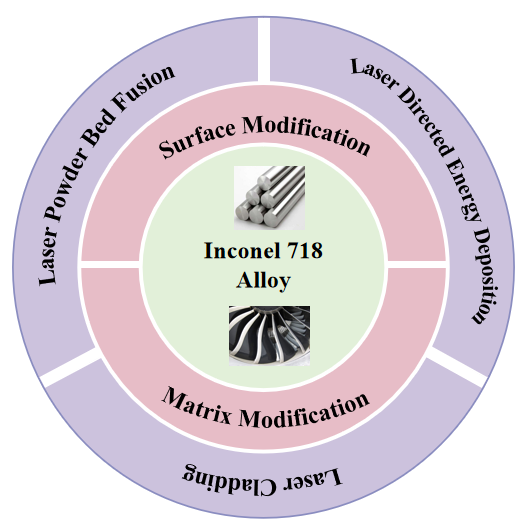
To improve the mechanical properties of IN718 alloy, two strategies can be employed: surface modification and matrix modification. (1) Surface modification involves introducing a coating on the surface of the IN718 alloy substrate. On one hand, this leverages the specific properties of the coating to compensate for deficiencies in the substrate's performance; on the other hand, it promotes the formation of a chemical or physical bonding interface between the coating and the substrate, thereby enhancing interfacial bonding strength. (2) Matrix modification refers to introducing reinforcing phases with specific properties into the IN718 alloy matrix, thus improving the corresponding properties of the matrix. By applying either surface modification or matrix modification to IN718 alloy, IN718-based composite materials with superior mechanical properties can be obtained.
The traditional preparation methods for IN718-based composites include powder metallurgy, forging, and casting, which fall under the category of subtractive manufacturing. Therefore, they have drawbacks such as complex processes, low efficiency, and high costs. In contrast, laser additive manufacturing demonstrates significant advantages in producing novel and complex components using composite materials[7-8], specifically in the following aspects: (1) low energy consumption; (2) high efficiency; (3) simple processes; (4) low processing costs; and (5) near-net-shape forming of complex structural components. Researchers have reported the use of various laser additive manufacturing techniques to produce IN718-based composites, including laser powder bed fusion, laser directed energy deposition, and laser cladding.
Based on this, this paper summarizes the approaches for compositional and structural modifications of IN718 alloy as well as additive manufacturing methods, outlines the advantages and disadvantages of its preparation techniques, and clarifies the effects of surface modification and matrix modification on the microstructure and mechanical properties of IN718-based composites. On this basis, we provide a prospect on the future development direction of IN718-based composites.

2 Modification of IN718 Alloy

IN718 alloy is a nickel-based superalloy containing significant amounts of nickel, chromium, and iron, as well as trace amounts of niobium, molybdenum, titanium, and aluminum. The primary strengthening phase and secondary strengthening phase of IN718 alloy are the γ″ phase (Ni3Nb) and the γ' phase Ni3(Al, Ti), respectively. The intrinsic hardness of IN718 alloy is relatively low, due to the following three factors[9-10]: (1) The primary matrix phase γ (Ni, Fe) solid solution cannot increase hardness through phase transformation; (2) The content of the primary strengthening phase (γ″ phase) and the secondary strengthening phase (γ' phase) in IN718 alloy is relatively low; (3) Under conditions of elemental segregation, IN718 alloy tends to form Laves phase, which not only increases material brittleness but also further reduces the content of the primary strengthening phase (γ″ phase) by consuming Nb elements.
To address the aforementioned performance shortcomings of IN718 alloy, two approaches can be employed: First, surface modification of IN718 alloy can be carried out by introducing coating layers on its surface using various methods to form layered composite materials. This approach enhances the hardness, wear resistance, and other properties (such as high-temperature resistance, corrosion resistance, wear resistance, fatigue resistance, radiation resistance, and electrical conductivity) of IN718 alloy by altering the elemental composition or microstructure of its surface. Second, matrix modification of IN718 alloy can be conducted by using IN718 alloy as the base material and introducing one or more reinforcing phases to improve specific properties of the IN718 alloy matrix.

2.1 Surface modification

Surface modification is one of the most effective methods for improving the hardness and wear resistance of IN718 alloy and other high-temperature alloys[11]. The technical challenge lies in comprehensively considering the physicochemical compatibility and interfacial bonding strength between the coating material and IN718 alloy when selecting the coating material. Among these factors, good interfacial bonding between the substrate and reinforcing materials is a key factor in preparing high-density and high-strength IN718-based composites.
Materials that can be used for surface modification of IN718 alloy include metallic materials such as Ti6Al4V (TC4), 316L, and W7Ni3Fe, among which Ti6Al4V has been the most extensively studied. Ji et al.[12]used laser directed energy deposition to investigate the effects of varying IN718 mass fractions on the microstructural evolution, mechanical properties, and high-temperature performance of Ti6Al4V/IN718 composite materials. The results showed that as the IN718 content increased layer by layer, the hardness of the composite gradually rose to 1030 HV. Additionally, after heat treatment, a metallurgical bonding layer formed between Ti6Al4V and IN718, with its thickness increasing as the heat treatment temperature and holding time increased. The presence of this metallurgical bonding layer facilitated the formation of a layered composite material with high density, strong bonding strength, and low residual stress, thereby further enhancing the material's hardness.
Regarding surface modification of IN718 alloy, potential issues include: (1) Significant differences in thermal physical parameters between the substrate and the coating can lead to high residual stresses in the layered composite material, causing cracks and resulting in coating delamination. (2) Poor wettability between the substrate and the coating can hinder metallurgical bonding, leading to defect formation at the interface.

2.2 Matrix modification

Another feasible approach to improving the mechanical properties of IN718 alloy is to use materials with high hardness, wear resistance, high-temperature resistance, and excellent corrosion resistance as reinforcing phases. Reinforcing materials that have been used to modify the IN718 alloy matrix include carbides (TiC, WC, B4C), borides (TiB2, ZrB2), oxides (Al2O3 and Y2O3), and other categories such as graphene nanoplatelets (GNPs) and Al[13-15].

2.2.1 Carbide reinforcement phase

Common carbide reinforcement phases in IN718 alloy include TiC, WC, and B4C, which generally exhibit high hardness and chemical stability, significantly enhancing the wear resistance and corrosion resistance of IN718 alloy.
TiC exhibits high hardness (20.23 GPa), a high melting point (3067 ℃), excellent room-temperature/high-temperature wear resistance, good electrical and thermal conductivity, low density (4.95 g·cm-3), a low friction coefficient (0.125), outstanding thermal shock resistance, and high-temperature stability (above 1100℃)[16-19]. Therefore, TiC is one of the commonly used ceramic reinforcement phases in metal matrix composites. Yu et al.[20] prepared IN718-TiC composites using reaction hot-pressing sintering with Ti3AlC2 as the precursor. The resulting composites achieved a flexural strength of 2141±46 MPa and a fracture toughness of 60.44 MPa·m1/2, with hardness continuously increasing as the amount of Ti3AlC2 added increased.
WC possesses a high hardness (19.6 GPa) comparable to that of diamond, as well as excellent electrical and thermal conductivity, and generally exhibits good affinity with metallic materials, making it advantageous for preparing IN718-based composites with uniformly distributed reinforcing phases and strong bonding with the matrix[21]. For example, Rong et al.[22]prepared WC-IN718 composites with a gradient functional interface. The results indicated that the addition of WC significantly enhanced the hardness of the composite, reaching as high as 393.2 HV0.1when the WC content was 25 wt%, and confirmed that the gradient functional interface could markedly improve the wear resistance of the composite.
B4C is widely used in wear-resistant components due to its extremely high hardness (35~45 GPa) and excellent wear resistance[23]. Niu Xin et al.[24]prepared an in-situ synthesized B4C particle-reinforced B4C-Ni60 composite coating on the surface of A3 steel, which achieved a hardness as high as 1400 HV0.3and exhibited twice the wear resistance compared to the Ni60 coating.

2.2.2 Boride-reinforced phase

Boride ceramics possess high hardness, high strength, excellent oxidation resistance, and good chemical stability, making them an ideal reinforcing phase for various metal matrix composites such as IN718[25-28]. Boride reinforcing phases that can be used in IN718 alloys include TiB2and ZrB2, among others.
Zhang et al.[29]prepared TiB2-reinforced Hastelloy-X nickel-based composites, which exhibited hardness increases of 43.4% and 50.8% at room temperature and high temperature (850 ℃), respectively, compared to the Hastelloy-X alloy. This indicates that the addition of TiB2 has a more pronounced effect on the high-temperature mechanical properties of nickel alloys than at room temperature. ZrB2, due to its relatively low density and excellent mechanical properties, holds promise for enhancing the mechanical performance of high-temperature alloys[30]. Compared to TiB2, there are significantly fewer reports on ZrB2-reinforced IN718-based composites. Therefore, ZrB2-reinforced IN718-based composites have greater potential for research and application.

2.2.3 Oxide-reinforced phase

Compared with carbide ceramics, oxide ceramics generally have lower hardness but exhibit good wear resistance as well as excellent corrosion resistance and high-temperature oxidation resistance, thus effectively improving the overall performance of IN718-based composites[31]. Oxide ceramic reinforcement phases that have been used in IN718 alloys include Al2O3and Y2O3, among others.
On the one hand, Al2O3can be used as a ceramic reinforcement phase in IN718 alloy due to its advantages of high hardness, high strength, and high stability[32]. Vasudev et al.[33]prepared IN718-based composites with different Al2O3contents using the High-Velocity Oxygen Fuel (HVOF) spraying method. The results showed that as the Al2O3content increased from 10 wt% to 30 wt%, the hardness of the composite gradually increased from 229 HV0.2to 801 HV0.2.
On the other hand, rare earth oxides have been proven to inhibit the formation of microcracks and enhance the hardness of alloys. Among them, Y2O3, as a rare earth oxide with excellent chemical stability, can be introduced into the IN718 alloy matrix as a reinforcing phase to suppress the formation of cracks and porosity during material processing[34].

2.2.4 Other enhancement phases

Introducing GNPs or Al into IN718 alloy is also beneficial for improving its mechanical properties. Specifically, on one hand, GNPs possess excellent mechanical performance and self-lubricating characteristics, which can enhance the strength, wear resistance, and corrosion resistance of metallic materials[35-37], making them an ideal reinforcing phase for IN718-based composites. On the other hand, as one of the primary constituent elements of the precipitation-strengthening phase in IN718 alloy, the content of Al directly affects the precipitation strengthening/hardening effects of γ' and γ″ phases in IN718 alloy[15]. Therefore, controlling the Al content in IN718 alloy is one feasible approach to improve its mechanical properties.
In summary, both surface modification and matrix modification of IN718 alloy can effectively address its shortcomings in mechanical properties such as hardness, strength, and wear resistance.

3 Laser Additive Manufacturing Method for IN718 Matrix Composites

Laser additive manufacturing, as a rapid manufacturing method based on the discrete-accumulation principle, enables material-structure integrated net-shaping of complex structural components, thereby saving materials, time, and energy costs, simplifying process flows, and enhancing the stability of product performance. It is widely used in the fabrication of polymers, metals, ceramics, and composite materials, providing new process technology pathways for the design and manufacturing of advanced materials[38-39].The laser additive manufacturing methods for IN718-based composites include laser powder bed fusion, laser directed energy deposition, and laser cladding, with their principles and advantages and disadvantages described below.

3.1 Laser Powder Bed Fusion

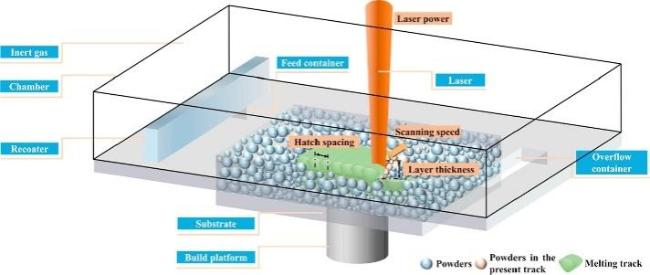
Laser powder bed fusion (LPBF), as a representative laser additive manufacturing method, produces three-dimensional material components by layer-by-layer powder spreading and selective laser melting or sintering, as illustrated in Figure 1[40-41]. Compared with traditional castings and forgings, LPBF can fabricate components with complex structures, achieving a material utilization rate of over 90%, meeting personalized and customized design requirements, and yielding products with finer structures and superior mechanical properties[42-43]. Jia Qingbo[44] used LPBF to prepare TiC-IN718 composites, whose hardness, wear resistance, and high-temperature oxidation resistance were all superior to those of the corresponding properties of IN718 alloy. However, LPBF has the following drawbacks[45-47]: (1) Significant shrinkage or warping is prone to occur during the liquid-solid transition, thereby reducing the dimensional accuracy of the components; (2) The surface of the components tends to adhere to a large number of incompletely melted powder particles, resulting in lower density and higher roughness in the surface area; (3) Under excessively high laser energy densities, defects such as porosity and cracks are likely to appear in the components.
图1 激光粉末床熔化法示意图[41]

Fig.1 Schematic diagram of laser powder bed fusion[41]

3.2 Laser Directed Energy Deposition

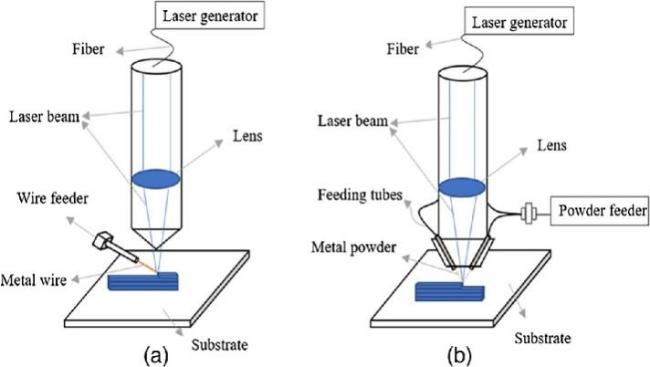
Laser directed energy deposition (LDED) typically uses wire or powder materials as feedstock, with lasers and electron beams serving as energy sources. During operation, the feedstock is delivered onto a substrate focused by the energy source, forming a molten pool and continuously depositing material layer by layer, as illustrated in Figure 2[48-50]. LDED offers the following advantages: (1) high deposition rate; (2) suitability for repairing damaged components; (3) capability to process various heterogeneous materials, such as composites and gradient functional materials. Zhang Hao et al.[51] used LDED to fabricate 316L/IN718 layered composite materials, investigating the effects of laser power and scanning speed on interfacial thermal behavior, defect evolution, and interfacial bonding strength. However, LDED also presents certain challenges during the forming process. For instance, during the layer-by-layer deposition in LDED, the workpiece is exposed to rapid heating-cooling cycles, which can easily lead to issues such as high-density solidification cracks, significant residual stresses, high porosity, and delamination[52].
图2 激光定向能量沉积法示意图:(a) 线材原料; (b) 粉材原料[50]

Fig.2 Schematic diagram of laser directed energy deposition: (a) Wire-like raw materials; (b) powder-like raw materials[50]

3.3 Laser cladding

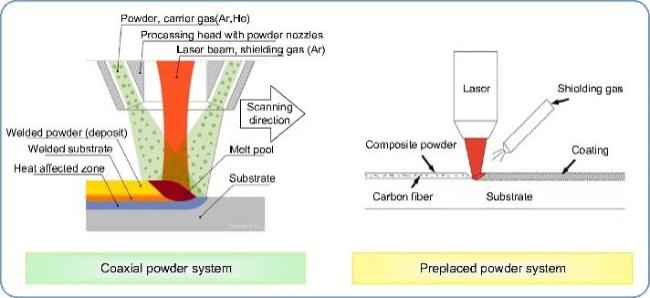
The principle of laser cladding (LC) is to use laser as an energy source and processing medium, enabling rapid melting and sintering of powder materials on the substrate surface (Figure 3). LC offers advantages such as low dilution rate, small dimensional deformation of the product, a narrow heat-affected zone, and excellent bonding between the cladding layer and the substrate. Additionally, it can refine grain size, suppress the formation of segregation phases, and enhance the hardness, wear resistance, and corrosion resistance of the product[53-55]. Therefore, LC has significant advantages in remanufacturing precision parts, microstructural control, and preparation of functional coatings. In particular, for issues such as low hardness, poor wear resistance, and inadequate high-temperature oxidation resistance of metallic materials, LC provides a new approach for surface modification[56]. Chen Yao et al.[57]studied the microstructure and mechanical properties of TiC particle-reinforced metal matrix composites prepared by LC, finding that their wear resistance improved with increasing volume fraction of the TiC reinforcement phase. However, it should be noted that products formed by laser cladding are prone to defects such as porosity, cracks, and elemental segregation[54].
图3 激光熔覆法示意图[54]

Fig.3 Schematic diagram of laser cladding[54]

The use of laser additive manufacturing methods such as laser powder bed fusion, laser directed energy deposition, and laser cladding to prepare IN718 alloys and their composites offers significant advantages in many aspects. Since the principles underlying these various laser additive manufacturing techniques differ, it is essential to select an appropriate preparation method based on the type, morphology, and laser absorption capability of the raw materials. Moreover, these additive manufacturing methods still have certain limitations in terms of composite material forming and performance optimization, necessitating active process improvements to further advance the development of high-performance IN718-based composites and gradually reduce manufacturing costs.

4 Microstructure and Mechanical Properties of IN718-Based Composites Fabricated by Laser Additive Manufacturing

The use of laser additive manufacturing to produce IN718-based composites offers significant advantages in multiple aspects, and by optimizing process parameters, the microstructure of the composites can also be controlled, thereby improving their mechanical properties. The following section introduces the research progress on preparing IN718-based composites using laser additive manufacturing, summarizing the effects of preparation methods and process conditions on the phase composition, microstructure, and mechanical properties of IN718-based composites.

4.1 Surface modification

4.1.1 Ti6Al4V/IN718 laminated composite

The Ti6Al4V/IN718 layered composite system embodies the design concepts of "performance customization" and "integration of material, structure, and function," representing an innovative direction for structural materials in extreme service environments. Onuike et al.[58]prepared Ti6Al4V/IN718 layered composites using the LDED method and investigated the influence of deposition methods on the microstructure and mechanical properties of the composites. The results showed that directly deposited layered composites exhibited delamination and cracking due to significant differences in thermal physical properties between IN718 and Ti6Al4V, as well as the formation of highly brittle intermetallic compounds such as TiNi3and Ti2Ni at their interface. To address this issue, the authors adopted a strategy of introducing a transition interfacial layer (VC-Ti6Al4V-IN718). The introduction of the transition interfacial layer effectively enhanced the interfacial bonding strength of the composite, preventing interlayer cracking, and increased the hardness of the composite to 7.99 GPa after the addition of the transition layer.
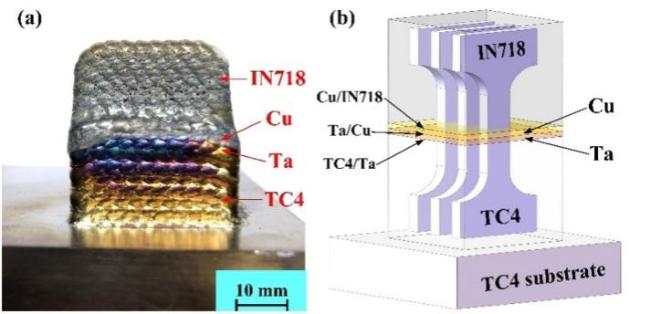
In addition to introducing a VC-Ti6Al4V-IN718 transition layer, some studies have also adopted the strategy of introducing a Ta-Cu transition layer. For example, Wang et al.[59]used Ti6Al4V, IN718, Ta, and Cu powders as raw materials, with Ta-Cu as the transition layer, and successfully fabricated Ti6Al4V/IN718 layered composites without macroscopic cracks or porosity using the LDED method (Figure 4). The results indicated that the introduction of the Ta-Cu transition layer effectively inhibited the formation of intermetallic compounds such as Ti-Cu or Ti-Ni, and promoted the formation of high-strength metallurgical bonding interfaces between heterogeneous phases like Ti6Al4V/Ta, Ta/Cu, and Cu/IN718. Furthermore, Wang Chenyang[60]took advantage of the fact that the Ti-Ta, Ta-Cu, and Cu-Ni systems are less prone to forming highly brittle intermetallic compounds, and prepared Ti6Al4V/IN718 layered composites containing one or two Ta/Cu transition layers, respectively. The research results showed that the introduction of transition layers suppressed the formation of brittle intermetallic compounds, thereby reducing the crack sensitivity of the Ti6Al4V/IN718 layered composites and effectively overcoming their interlayer cracking issues.
图4 (a) TC4/IN718叠层复合材料照片;(b) TC4/IN718叠层复合材料拉伸强度测试试样形状示意图[59]

Fig.4 (a) Image of the TC4/IN718 laminated composite; (b) diagram of TC4/IN718 laminated composite tensile strength test sample shape[59]

4.1.2 316L/IN718 Laminated Composite Material

316L stainless steel, with excellent corrosion resistance and mechanical properties, is widely used in the nuclear industry; however, its high-temperature stability is relatively poor. Therefore, combining IN718 with 316L to form a layered composite material can meet the stringent application requirements of high-temperature resistance and repeated thermal shock resistance under large temperature differences, such as those found in nuclear reactor and engine combustion liners[50]. Li et al.[61]prepared 316L/IN718 layered composites using the LDED method and investigated the effect of deposition sequence on the mechanical properties of the layered composites (Figure 5). The results showed that the tensile strength and flexural strength of the IN718/316L layered composite were 813 MPa and 1350 MPa, respectively, both higher than those of the 316L/IN718 layered composite (611 MPa and 1127 MPa).
图5 316L/IN718叠层复合材料界面的形成机理[61]

Fig.5 Formation mechanism of the interface of 316L/IN718 laminated composites[61]

Mei et al.[62]prepared 316SS/IN718/316SS laminated composites using the LPBF method and investigated their microstructure and mechanical properties. The results showed that the composite interface exhibited high mechanical performance (elastic modulus of 103 ± 3 MPa, elongation of 28.1% ± 2%, and ultimate tensile strength of 596 ± 10 MPa), demonstrating good metallurgical bonding between 316SS and IN718 at the interface (≈100 μm). However, cracks and porosity defects were observed at the composite interface, attributed to energy and material mismatches at the interface. Therefore, it is necessary to obtain optimal printing process parameters for each material and further optimize the printing parameters at the interface, such as laser power, laser scanning speed, laser scanning spacing, and layer thickness, to reduce defects at the composite interface.

4.1.3 W7Ni3Fe/IN718 laminated composite

Tungsten alloys are renowned for their high thermal conductivity, hardness, strength, and high-temperature performance[63], making them an attractive material option for enhancing the properties of IN718 alloy. Groden et al.[64] prepared W7Ni3Fe/IN718 layered composites using IN718 powder and W7Ni3Fe powder as raw materials via the LDED process, and investigated the effects of tungsten alloy coatings on the thermal and mechanical properties of IN718 alloy. The results showed that, compared to IN718 alloy, the thermal conductivity and yield strength of the W7Ni3Fe/IN718 layered composite were both improved by 100%.
Compared to IN718 alloy, IN718-based laminated composites exhibit improved properties such as hardness, strength, wear resistance, and thermal conductivity, with reduced defects like porosity and cracks in the microstructure. Research on surface modification of IN718 alloy has primarily focused on Ti6Al4V; combining IN718 with Ti6Al4V can fully leverage the advantages of each material, thereby extending the service life of products in harsh environments.

4.2 Matrix modification

When using additive manufacturing to modify the matrix of IN718 alloy for composite material preparation, the reinforcing particles and the matrix metal powder melt and solidify together under laser irradiation. After the reinforcing phase particles melt or dissolve and diffuse into the matrix, they alter the melting and solidification characteristics of the matrix powder, thereby affecting the material's forming process, microstructure, and mechanical properties.

4.2.1 Carbide-reinforced phase

(1) TiC reinforcement phase
By leveraging the complementary performance effects of the matrix and the reinforcing phase, TiC-reinforced IN718-based composites can achieve higher strength and elastic modulus compared to the matrix[65].Li Hui et al.[66]prepared TiC-IN718 composites using LPBF and investigated the influence of TiC content on their microstructure and mechanical properties. The results showed that both the IN718 alloy and its composites exhibited epitaxial growth characteristics, with the TiC phase uniformly distributed within the IN718 matrix in the composite material. Compared to the IN718 alloy, the hardness of the 1 wt% TiC-IN718 composite increased from 273 HV to 302 HV, and its tensile strength and yield strength improved by 66 MPa and 45 MPa, respectively. Therefore, adding an appropriate amount of TiC to IN718 is beneficial for enhancing its hardness and strength.
Due to the significant differences in thermal and physical properties between the TiC reinforcement phase and IN718 alloy, considerable thermal stress is often generated during the cladding process. When the TiC content is too high, crack defects are more likely to form at the interface between the reinforcement phase and the matrix[67-68].To investigate the reinforcing effect of TiC particles, Wu Jun et al.[69]prepared (5 wt%~25 wt%) TiC/IN718 composite coatings using the LC method and studied the influence of TiC content on the microstructure and mechanical properties of the IN718-based composite coatings. The results showed that the fine-grained TiC reinforcement phase prepared by the LC method can refine the microstructure of the composite material, and its hardness increases accordingly with the increase in TiC content. During wear tests, the TiC/IN718 composite coating exhibited excellent wear resistance.
To meet the application requirements, in addition to the rational selection of reinforcement materials and processing parameters, adopting an appropriate heat treatment process is also crucial. Wang et al.[70]prepared IN718-based composites reinforced with 0.5 wt% nano-TiC particles using the LPBF method, and investigated the effect of solution treatment temperature on the microstructure and tensile properties of the fabricated material. The results showed that TiC nanoparticles could effectively refine the microstructure of the composite, thereby enhancing its tensile strength. Under a solution heat treatment at 980 ℃, the tensile strength of the TiC-IN718 composite reached as high as 1370 MPa, representing a 16% improvement compared to the IN718 alloy.
Introducing carbide ceramic reinforcements such as TiC and B4C into IN718 alloy can effectively enhance its mechanical properties[71-72]. Vijay et al.[73] used TiC, B4C, and IN718 powders as raw materials, and prepared TiC- and B4C-reinforced IN718 matrix composites via LPBF under varying reinforcement contents (0~30 vol%) and laser scanning speeds (500~800 mm/s). The results showed that TiC-IN718 composites generally exhibited high density and well-bonded phase interfaces, whereas microcracks appeared at the interface of B4C-IN718 composites due to the significant difference in thermal expansion coefficients between B4C and the metal matrix. When the TiC content was 30 vol% and the scanning speed was 500 mm/s, the hardness of the composite reached its peak value (619 ± 32.2 HV). Meanwhile, the wear rate of the composite initially decreased and then increased with the rise of TiC content.
(2) WC enhanced phase
In addition to excellent mechanical properties, WC ceramics also exhibit good high-temperature stability and chemical stability, as well as favorable wettability with Ni-based materials[74]. He et al.[75]used the LDED method to fabricate WC-IN718 composites on a 316L stainless steel substrate, investigating the evolution of the microstructure and the performance enhancement mechanisms of IN718-based composites as a function of WC content and size. The results showed that when the WC content reached 60 wt%, macroscopic cracks appeared on the composite surface, caused by internal stresses resulting from significant differences in thermal expansion coefficients. When the WC particle size was 90 μm, the composite exhibited the highest wear resistance. In-situ precipitated WC-W2C phases and uniformly distributed WC particles contributed to solid solution strengthening and dispersion strengthening, respectively.
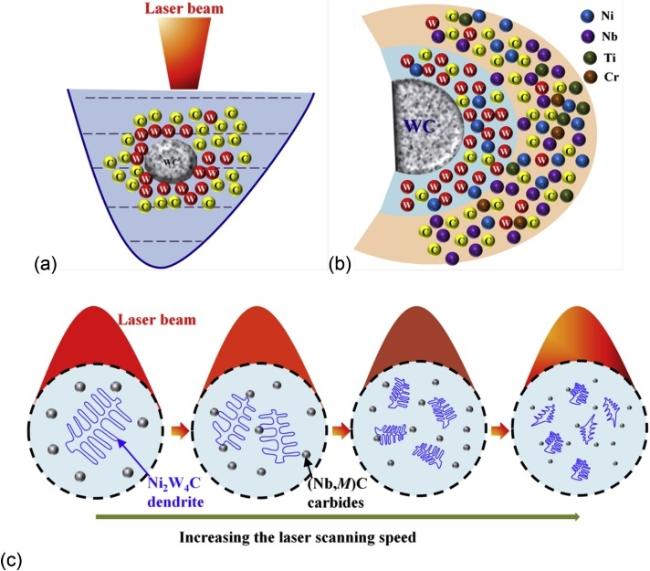
Xia et al.[76]To investigate the relationship between composition/structure and mechanical properties of WC particle-reinforced IN718-based composites prepared by laser powder bed fusion, IN718 powder and WC ceramic powder were used as raw materials. Through a combination of experiments and microstructural simulations, the effects of laser scanning speed on the microstructure and mechanical properties of the composites were analyzed. Experimental results showed that as the laser scanning speed increased to 700 mm/s, both the microhardness and tensile strength of the WC-IN718 composite significantly improved, while the ultimate elongation slightly decreased. This was attributed to the synergistic strengthening effect of Ni2W4C dendrites and particulate (Nb,M)C (Figure 6).
图6 不同扫描速度下WC-IN718复合材料在LPBF过程中的微观结构演变机理:(a) WC颗粒表面微熔时碳原子和钨原子在WC颗粒周围的扩散行为;(b) 原子扩散区的放大图;(c) 随着激光扫速的增加,凝固过程中熔池内一次枝晶和(Nb,M)C碳化物的变化[76]

Fig.6 Schematics illustrating the evolution mechanism of microstructure of WC-IN718 composite with variable scanning speed during LPBF: (a) diffusion behavior of carbon and tungsten atoms surrounding the incorporating WC particles during the slight surface melting; (b) large magnification of diffusion regions of atoms; (c) development of primary dendrite and (Nb, M)C carbides within molten pool as increasing the laser scanning speed during solidification[76]

Wang et al.[77]prepared WC-IN718-based composites using the LPBF method, followed by heat treatment through a direct dual aging regime (720℃/8 h + 620 ℃/10 h, furnace cooling). They investigated the microstructural evolution and surface oxidation behavior of the composites during the heat treatment process. The results indicated that the WC-IN718 composite exhibited a uniform microstructure with distinct weld bead features and fine-sized dendrites on its surface. After the two-stage aging heat treatment, the weld bead structure disappeared. The heat-treated composite demonstrated significantly improved high-temperature oxidation resistance, which was attributed to the formation of dense Cr2O3, NiCr2O4, and NiFe2O4oxide layers.
The size, content, and preparation process (laser process parameters) of WC particles are key factors in controlling the mechanical properties of the composite material. Subsequent heat treatment can further enhance the high-temperature stability of the composite by optimizing its microstructure and forming an oxide layer. The synergistic effects of different strengthening mechanisms (solid solution, dispersion, and composite strengthening) determine the overall performance of the composite material.

4.2.2 Boride-reinforced phase

(1) TiB2Reinforcing phase
Tang et al.[78]investigated the effects of laser cladding process parameters on the microstructure and friction and wear properties of TiB2-IN718 composites. When the laser energy density decreased from 200.0 J/mm to 80.0 J/mm, the hardness of the composite increased from 333.1 HV0.2to 443.3 HV0.2, while the friction coefficient and wear rate decreased from 0.49 and 3.3 × 10⁻⁶ g/(N·m) to 0.37 and 1.72 × 10⁻⁶ g/(N·m), respectively. The wear mechanism shifted from severe adhesive and oxidative wear to mild abrasive wear.
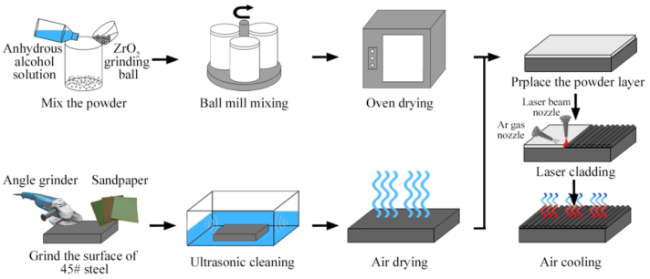
In addition, Tang et al.[79]also used the LC method to prepare TiB2particle-reinforced IN718 composites on the surface of 45 steel (Figure 7), and investigated the effect of TiB2phase content on the microstructure and mechanical properties of the composites. The results showed that as the TiB2phase content increased from 10 wt% to 30 wt%, the dendrite size in the TiB2-IN718 composite gradually decreased, the TiB2phases became more uniform, and the hardness and wear resistance of the composite improved.
图7 激光熔覆TiB2-IN718复合涂层的制备工艺示意图[79]

Fig.7 Schematic diagram of the preparation process of laser cladding the TiB2-IN718 composite coating[79]

Zheng et al.[80]prepared TiB2-IN718 composites using the LPBF method and investigated the effects of varying nano-TiB2 content on the microstructural evolution, phase precipitation behavior, and hardness trends of IN718 alloy. The results showed that the microstructure of IN718 alloy consisted of coarse columnar crystals. When the TiB2 content was 3 wt%, the columnar crystals were significantly refined. Further increasing the TiB2 content to 5 wt% resulted in complete transformation of the columnar crystals into equiaxed crystals. The hardness of the TiB2-IN718 composite increased from 276 HV to 578 HV. Heat treatment promoted the precipitation of high-density γ′ and γ″ strengthening phases, increasing the hardness of IN718 alloy by 87% to 516 HV. However, the hardness of the TiB2-IN718 composite changed little, due to partial dissolution of borides during heat treatment.
TiB2reinforced IN718 alloy exhibits significant advantages in hardness and wear resistance through a multi-scale strengthening mechanism (fine-grain strengthening, second-phase strengthening, and interfacial synergy). These characteristics give it broad application prospects in fields such as aerospace wear-resistant components (e.g., turbine blades and combustion chamber liners).
(2) ZrB2Reinforcing phase
Emre et al.[81]used IN718 powder and ZrB2nanoceramic powder as raw materials to prepare a 2 vol% ZrB2-IN718 composite via LPBF. The results showed that during the laser printing process, ZrB2decomposed, leading to the formation of intermetallic compounds and boride nanoparticles in the matrix. Compared with the IN718 alloy, the ZrB2-IN718 composite exhibited lower porosity and smaller grain size, with its hardness increasing by 49% (476 HV), indicating that the introduction of ZrB2is beneficial for enhancing the mechanical properties of the IN718-based composite. This study provides new insights into designing high-performance IN718-based composites through in-situ reactions; however, a systematic investigation is needed to explore the regulatory mechanisms of ZrB2content on decomposition behavior and material performance.

4.2.3 Oxide-reinforced phase

(1) Al2O3Reinforcing phase
Oxides such as Al2O3and Y2O3are commonly used as strengthening phases for modifying the IN718 alloy matrix. Luna et al.[82]prepared a gradient-structured Al2O3-IN718 composite material using the LC method. The results showed that some Al2O3particles aggregated on the surface of the composite. Grain refinement occurred in the Al2O3-IN718 composite, significantly improving its hardness and wear resistance. Additionally, Nie et al.[83]fabricated Al2O3-IN718 composites using the LPBF method, resulting in significant improvements in the composite's hardness, tensile strength, and yield strength.
(2) Y2O3Reinforced phase
Currently, research on Al2O3-reinforced IN718-based composites is still limited, whereas Y2O3-reinforced IN718-based composites have become a research hotspot. Y2O3is an inert refractory oxide with excellent chemical stability. Luu et al.[84]mixed Y2O3nanoparticles with IN718 powder at different weight percentages (0 wt%, 0.4 wt%, 1.0 wt%, and 1.5 wt%), and prepared Y2O3-IN718 composites using the LPBF method. They investigated the in-situ synthesis mechanism of Ti-Nb-Y-N-C-O composite precipitate phases. The results showed that adding 1.0 wt% Y2O3nanoparticles helped refine the grain size of IN718 and improved its ultimate elongation (up to 25.5%).
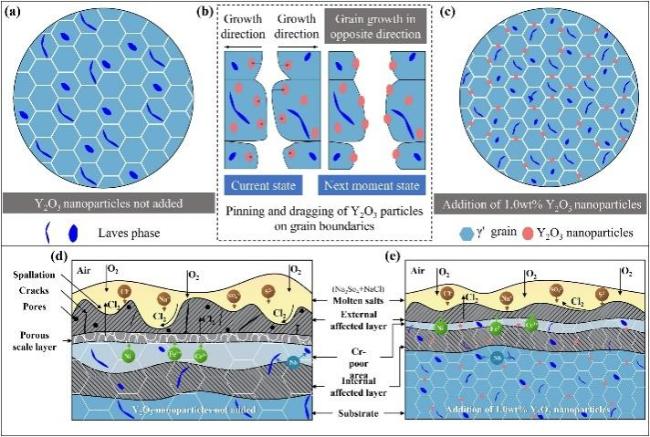
Lin et al.[85]studied the microstructural evolution and high-temperature corrosion resistance of IN718 composites with different contents (0 wt%, 0.5 wt%, 1.0 wt%, 1.5 wt%, 2.0 wt%, and 3.0 wt%) of Y2O3added via laser cladding (Figure 8). The results showed that adding 1.0 wt% of Y2O3nanoparticles to IN718 could effectively reduce the internal porosity and crack density of the material, and was beneficial to enhancing its high-temperature corrosion resistance.
图8 (a) 未添加Y2O3纳米颗粒的IN718涂层晶粒; (b) 添加Y2O3后的晶粒细化过程; (c) 含1.0 wt% Y2O3的涂层晶粒; (d) 未添加Y2O3时的热腐蚀机理; (e) 添加1.0 wt% Y2O3时的腐蚀机理[85]

Fig.8 (a) The IN718 coating grains without the addition of Y2O3 nanoparticles; (b) the grain refinement process after the addition of Y2O3; (c) the coating grains with 1.0 wt% Y2O3; (d) the hot corrosion mechanism for not added Y2O3; (e) The corrosion mechanism for the addition of 1.0 wt% Y2O3[85]

Y2O3can control the nanoscale microstructure and mechanical behavior by forming Y-Ti-O nanoscale oxides within the microstructure. Additionally, relatively unstable oxygen carriers at high temperatures, such as iron oxide, dissolve and promote the nucleation of Y-Ti-O. Furthermore, the addition of Hf facilitates the refinement of nanoscale oxide sizes and particle separation, thereby enhancing the strength of the composite material. Therefore, Yalcin et al.[86]prepared IN718-based composites with compositions of IN718-0.67 wt%Y2O3-0.33 wt%FeO and IN718-0.67 wt%Y2O3-0.33 wt%FeO-0.84 wt%Hf using the LPBF method. When the laser power and scanning speed were 350 W and 750 mm/s, respectively, the hardness of the IN718-based composite reached as high as 348 HV.

4.2.4 Other enhancement phases

Other reinforcing phases that can be used for modifying the IN718 alloy matrix include GNPs and Al. GNPs possess characteristics such as high strength, low density, and high electrical conductivity, making them an ideal reinforcing material for metal matrix composites[87-88]. Xiao et al.[89]prepared GNPs-IN718 composites using IN718 powder and GNPs as raw materials via LPBF, and characterized their microstructure. The results showed that after adding 1.0 wt% GNPs to the IN718 alloy, the yield strength (1175 MPa), tensile strength (1417 MPa), and hardness (508 HV) of the composite increased by 42%, 53%, and 34%, respectively, compared to the unmodified material. Meanwhile, the friction coefficient and wear rate decreased by 22.4% and 66.8%, respectively. The excellent wear resistance of the above-mentioned GNPs-IN718 composite was attributed to the formation of a graphene nanosheet protective layer on its surface.
Wang et al.[87]By using ultrasonic stirring technology to mix GNPs with the matrix metal powder, GNPs-reinforced IN718-based composites with GNPs contents of 0.25 wt% and 1.0 wt% were successfully fabricated via LPBF. The results showed that the addition of GNPs significantly improved the ultimate tensile strength and Young's modulus of the composite. The ultimate tensile strength values of the composites with GNPs contents of 0 wt%, 0.25 wt%, and 1.0 wt% were 997.8, 1296.3, and 1511.6 MPa, respectively, while their Young's modulus values were 475, 536, and 675 GPa, respectively. Load transfer, mismatch in thermal expansion coefficients, and dislocation hindrance are considered the primary strengthening mechanisms in GNPs-IN718 composites.
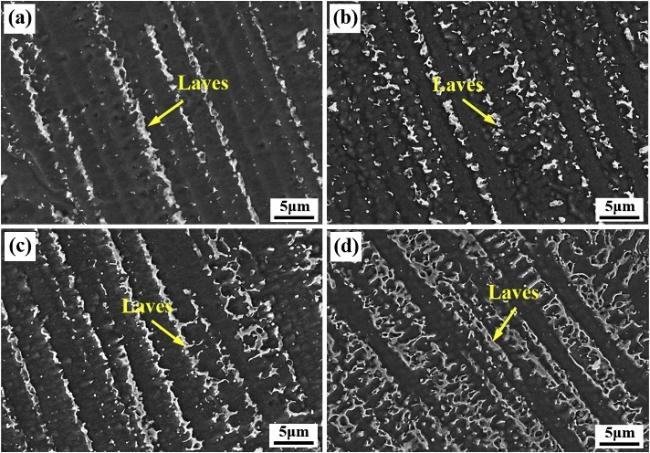
The content of Al element affects the precipitation strengthening/hardening effect of γ' and γ″ phases in IN718 alloy, thereby influencing the hardness of the alloy. Zhang et al[15]investigated the impact of Al powder addition on the microstructure and hardness of IN718 alloy fabricated by laser additive manufacturing (Figure 9). The results indicated that the addition of Al had little effect on grain morphology and orientation, but the segregation of Nb elements intensified with increasing Al content, promoting the formation of Laves phase between dendrites. As the Al content increased to 5 wt%, the hardness of the samples rose to 325 HV, and the hardness of the samples before and after heat treatment both increased with the rise in Al content.
图9 不同Al加入量的IN718合金的扫描电子显微镜图像:(a) 原始IN718,(b) 1 wt% Al-IN718,(c) 3 wt% Al-IN718,(d) 5 wt% Al-IN718[15]

Fig.9 SEM images of IN718 alloy with different Al additions: (a) original IN718, (b) 3 wt% Al-IN718, (c) 3 wt% Al-IN718, (d) 5 wt% Al-IN718[15]

表1 各类增强相对IN718基复合材料力学性能的影响

Table 1 Effects of various reinforcement on mechanical properties of IN718-matrix composites

Reinforcement Hardness
(GPa)
Tensile strength
(GPa)
Yield strength
(GPa)
Elongation
(%)
ref
TiC 2.96 1.46 1.18 7.08 66
4.00 - - - 69
- 1.37 - - 70
6.07 - - - 73
WC 3.88 - - - 75
4.66 1.46 - 19.74 76
TiB2 4.35 - - - 78
8.28 - - - 79
5.67 - - - 80
ZrB2 5.65 1.16 1.09 5.00 81
Al2O3 4.98 1.26 1.11 13.40 83
Y2O3 - 1.19 0.86 27.60 84
GNPs 4.98 1.42 1.18 4.30 89
- 1.51 1.45 - 87
Al 5.43 - - - 15
To enhance the mechanical properties of IN718 alloy, such as hardness and wear resistance, researchers have introduced various types of reinforcing materials. For instance, adding an appropriate amount of carbides, borides, oxides, or other reinforcing phases into IN718 alloy can improve both its microstructure and mechanical performance. However, there are significant differences in physicochemical properties between some reinforcing phases and the matrix. During additive manufacturing, the high cooling rate and steep temperature gradient can easily lead to the formation of porosity and crack defects at the composite interface, severely weakening the bonding between the reinforcing phase and the matrix, which ultimately results in the failure of metal matrix composites during service. Therefore, it is necessary to investigate the interfacial bonding issues between the reinforcing phase and the matrix, aiming to suppress the formation of defects such as porosity and cracks at the reinforcing phase/matrix interface, thereby enhancing the interfacial bonding strength between the reinforcing phase and the matrix.
Good interfacial bonding can effectively transfer external loads to the reinforcing phase, thereby fully leveraging the load-bearing, strengthening, and toughening effects of the reinforcing phase and significantly enhancing the mechanical properties of the composite material. Additionally, strong interfacial bonding can effectively address the mismatch in thermal properties such as the coefficient of thermal expansion between the matrix and the reinforcing phase, reducing residual stresses and inhibiting microcrack propagation, thus significantly improving the mechanical performance and service stability of the composite material.

5 Conclusion and Outlook

With the rapid development of modern industry, higher demands have been placed on enhancing the structural complexity, dimensional accuracy, and mechanical properties of IN718 alloy-based composites. Compared to traditional casting and forging techniques, laser additive manufacturing, with its unique advantages such as personalized design and near-net shaping, holds great promise for the preparation of IN718-based composites.
The modification strategies for IN718 alloy include surface modification and matrix modification. IN718-based layered composites prepared through surface modification can achieve complementary advantages of multiple materials. Matrix modification, by introducing reinforcing phase particles, can significantly enhance the mechanical properties of IN718 alloy, such as hardness, strength, and wear resistance, with the enhancement effect closely related to factors like the type, size, microstructure, distribution, and interfacial bonding characteristics of the reinforcing phase.
The laser additive manufacturing methods commonly used for preparing IN718-based composites include laser powder bed fusion, laser directed energy deposition, and laser cladding. All three methods use a high-energy laser beam as the heat source, enabling micrometer-level precision machining and the fabrication of components with complex structures, thus overcoming the geometric limitations of traditional processes. In addition, these laser additive manufacturing methods share some common challenges in preparing IN718-based composites, such as elemental segregation, irradiation-induced evaporation, and accumulated thermal stress. Combining the optimization of laser additive manufacturing process parameters with post-processing techniques is an important approach to achieving high-quality additive manufacturing of IN718-based composites.
Preparing IN718-based composites using laser additive manufacturing is an important method for enhancing their mechanical properties. The introduction of reinforcing phases leads to microstructural changes in the composite, thereby improving its performance. For instance, the addition of reinforcing phases such as TiC, TiB2, ZrB2, Al2O3, and Y2O3 helps refine the grain size of IN718-based composites and promotes the precipitation of strengthening phases. The refinement of the microstructure and the increase in the content of strengthening phases contribute to improved strength, hardness, wear resistance, and chemical stability of the material.
Based on the above discussion of research progress in IN718-based composites, we propose potential future research trends for laser additive manufacturing of IN718-based composites.
(1) Development of composition/structure design principles for IN718-based composites. The degree of physicochemical property matching at the interface between the reinforcing material and the IN718 alloy is one of the key factors in composite design. High physicochemical property matching at the interface helps form a strong interfacial bond, which in turn enhances the mechanical properties, corrosion resistance, and chemical stability of the composite. This matching degree is closely related to the density, crystal structure, lattice constants, and thermal expansion coefficients of both the matrix and reinforcing phase materials; however, the relative importance of these influencing factors remains unclear.
(2) Development and application of intelligent additive manufacturing systems. With the rapid advancement of digital manufacturing technologies, future systems can integrate computer simulation, artificial intelligence (AI), and machine learning (ML) to create more intelligent additive manufacturing systems. This will facilitate the optimization of alloy compositions, processing parameters, and material properties through smart algorithms, enabling more efficient and precise preparation of composite materials with superior performance. Digital manufacturing technologies can also help researchers gain a more intuitive and profound understanding of how various processing parameters influence material properties, while enabling real-time monitoring and precise control in actual production.
(3) Comprehensive performance optimization. During the laser additive manufacturing of IN718-based composites, high undercooling can easily lead to segregation and the formation of brittle phases. By selecting an appropriate reinforcing phase to reduce the undercooling of the laser melt pool, the formation of brittle phases can be suppressed, and the content of strengthening phases can be enhanced. Therefore, in the future, the laser additive manufacturing process conditions and the overall performance of the products should be effectively optimized based on the elemental composition of the IN718 alloy matrix, strengthening phase, and brittle phase, as well as the thermodynamic conditions of phase transformation reactions and the evolution rules of microstructure.
(4) Simulation of multiphysics coupling effects. Currently, many field simulation studies on material processing are limited to modeling and simulating a single physical field, without considering the mutual coupling effects among multiple physical fields. For example, in laser additive manufacturing, the thermal field, force field, phase field, and stress field influence each other, collectively determining the physicochemical properties of the laser melt pool and significantly affecting the type and magnitude of residual stresses in the final product. Future research should focus on developing multiphysics coupling simulation methods, establishing more accurate mathematical-physical models and numerical simulation techniques, and thereby more effectively predicting and optimizing the composition, structure, and properties of IN718-based composite materials.
[1]
Huang J X, Shun Z G, Chang H, Chang L L, Xin F, Zhou L. Rare Met. Mater. Eng., 2020, 49(08): 2813

( 黄金鑫, 孙中刚, 常辉, 唱丽丽, 邢飞, 周廉. 稀有金属材料与工程, 2020, 49(08): 2813 ).

[2]
Zhuang J Y, Du J H, Deng Q, Qu J L, Lv X D. Deformed Superalloy GH4169. Beijing: Metallurgical Industry Press, 2006

庄景云, 杜金辉, 邓群, 曲敬龙, 吕旭东. 变形高温合金GH4169. 北京: 冶金工业出版社, 2006).

[3]
Safdar S, Pinkerton A J, Li L, Sheikh M A, Withers P J. Appl. Math. Model., 2013, 37(3): 1187.

[4]
De Bartolomeis A, Newman S T, Jawahir I S, Biermann D, Shokrani A. J. Mater. Process. Technol., 2021, 297: 117260.

[5]
Liu Y C, Zhang H J, Guo Q Y, Zhou X S, Ma Z Q, Huang Y, Li H J. Acta Metall. Sin., 2018, 54(11): 1653.

[6]
Ma W H, Xie Y C, Chen C Y, Fukanuma H, Wang J, Ren Z M, Huang R Z. J. Alloys Compd., 2019, 792: 456.

[7]
Dadkhah M, Tulliani J M, Saboori A, Iuliano L. J. Eur. Ceram. Soc., 2023, 43(15): 6635.

[8]
Xie H B, Zhang J L, Li F L, Yuan G Q, Zhu Q, Jia Q L, Zhang H J, Zhang S W. Ceram. Int., 2021, 47(21): 30826.

[9]
Cao G H, Sun T Y, Wang C H, Li X, Liu M, Zhang Z X, Hu P F, Russell A M, Schneider R, Gerthsen D, Zhou Z J, Li C P, Chen G F. Mater. Charact., 2018, 136: 398.

[10]
Xiao H, Li S M, Han X, Mazumder J, Song L J. Mater. Des., 2017, 122: 330.

[11]
Meng R G. Master’s Dissertation of Northeastern University, 2021

孟贵如. 东北大学硕士论文, 2021 ).

[12]
Ji S W, Sun Z G, Zhang W S, Chen X L, Xie G L, Chang H. J. Alloys Compd., 2020, 848: 156255.

[13]
Yang Q T, Xu Z W, Li L L, Li P F. Metals, 2023, 13(9): 1525.

[14]
Chu Y, Shi H C, Zhang P L, Yu Z S, Yan H, Lu Q H, Song S J, Yu K C. Intermetallics, 2024, 170: 108307.

[15]
Zhang W J, Liu F G, Liu F C, Huang C P, Liu L X, Zheng Y S, Lin X. J. Mater. Res. Technol., 2022, 16: 1832.

[16]
Shi C X, Liu Y F, Li Y, Shun G B, Zhang Z, Feng Z C. Rare Metal Mater. Eng., 2019, 48(5): 1497

( 石晨晓, 刘元富, 李勇, 孙广宝, 张政, 冯志成. 稀有金属材料与工程, 2019, 48(5): 1497).

[17]
Wilson J M, Shin Y C. Surf. Coat. Technol., 2012, 207: 517.

[18]
Hong C, Gu D D, Dai D H, Gasser A, Weisheit A, Kelbassa I, Zhong M L, Poprawe R. Opt. Laser Technol., 2013, 54: 98.

[19]
Tang M K, Zhang L C, Zhang N. Mater. Sci. Eng. A, 2021, 814: 141187.

[20]
Yu Q, Huang Z Y, Hu W Q, Wang Y B, Wang H J, Li X, Zhuang W C, Wang L, Zhou Y. J. Alloys Compd., 2022, 920: 165962.

[21]
Jia X H, Hu Y B, Song X L, Fang Y, Lei J B. Surf. Technol., 2022, 51(12): 329

( 贾晓慧, 胡亚宝, 宋欣灵, 方艳, 雷剑波. 表面技术, 2022, 51(12): 329).

[22]
Rong T, Gu D D, Shi Q M, Cao S N, Xia M J. Surf. Coat. Technol., 2016, 307: 418.

[23]
Yang G D, Zhang J L, Xie H B, Li F L, Huang Z, Yuan G Q, Zhang J Z, Jia Q L, Zhang H J, Yeprem H A, Zhang S W. Materials, 2022, 15(23): 8340.

[24]
Niu X, Chao M J, Zhou X W, Wang D S, Yuan B. Chin. J. Lasers, 2005, 32(11): 1583

( 牛薪, 晁明举, 周笑薇, 王东升, 袁斌. 中国激光, 2005, 32(11): 1583 ).

[25]
Fahrenholtz W G, Hilmas G E. Int. Mater. Rev., 2012, 57(1): 61.

[26]
Fahrenholtz W G, Hilmas G E. Scr. Mater., 2017, 129: 94.

[27]
Fahrenholtz W G, Hilmas G E, Talmy I G, Zaykoski J A. J. Am. Ceram. Soc., 2007, 90(5): 1347.

[28]
Wuchina E, Opila E, Opeka M, Fahrenholtz B, Talmy I. Electrochem. Soc. Interface, 2007, 16(4): 30.

[29]
Zhang Z H, Han Q Q, Yang S Z, Yin Y Y, Gao J, Setchi R. Mater. Sci. Eng. A, 2021, 817: 141416.

[30]
Neuman E W, Hilmas G E, Fahrenholtz W G. Mater. Sci. Eng. A, 2016, 670: 196.

[31]
Silvestre J, Silvestre N, de Brito J. J. Nanomater., 2015, 2015(1): 106494.

[32]
Zhou N Y, Li C H, Wumaier N, Luo Q, Hu L, Ma J J, Zou Y. Ceram. Int., 2024, 50(2): 2836.

[33]
Vasudev H, Thakur L, Singh H, Bansal A. Mater. Today Commun., 2022, 30: 103017.

[34]
Das A K. Mater. Today: Proc., 2022, 52: 1558.

[35]
Zhang D D, Guo C H, Gou X J, Zhan Z J. J. Yanshan Univ., 2014, 38(6): 484

( 张丹丹, 郭长虹, 勾兴军, 战再吉. 燕山大学学报, 2014, 38(6): 484 ).

[36]
Li J F, Zhang L, Xiao J K, Zhou K C. Trans. Nonferrous Met. Soc. China, 2015, 25(10): 3354.

[37]
Zhou J Y, Lu Y, Wang C, Feng D H, Zhang H, Li Y F. Comput. Mater. Sci., 2023, 226: 112209.

[38]
Gu D D, Zhang H M, Chen H Y, Zhang H, Xi L X. Chin. J. Lasers, 2020, 47(5): 0500002

( 顾冬冬, 张红梅, 陈洪宇, 张晗, 席丽霞. 中国激光, 2020, 47(5): 0500002).

[39]
Bandyopadhyay A, Bose S. Additive manufacturing. 2nd ed. Boca Raton: CRC press, 2019.

[40]
Sastri V R. Plastics in medical devices: properties, requirements, and applications. 3rd ed. Boston: William Andrew, 2021.

[41]
Yu W H, Sing S L, Chua C K, Kuo C N, Tian X L. Prog. Mater. Sci., 2019, 104: 330.

[42]
Lu L, Fuh J Y H, Chen Z D, Leong C C, Wong Y S. Mater. Res. Bull., 2000, 35(9): 1555.

[43]
Liu W, Liu C S, Wang Y, Zhang H, Li J, Lu Y Y, Xiong L, Ni H W. J. Mater. Res. Technol., 2023, 25: 7389.

[44]
Jia Q B. Master’s Dissertation of Nanjing University of Aeronautics and Astronautics, 2015

贾清波. 南京航空航天大学硕士论文, 2015).

[45]
Brennan M C, Keist J S, Palmer T A. J. Mater. Eng. Perform., 2021, 30(7): 4808.

[46]
Mostafaei A, Zhao C, He Y N, Reza Ghiaasiaan S, Shi B, Shao S, Shamsaei N, Wu Z H, Kouraytem N, Sun T, Pauza J, Gordon J V, Webler B, Parab N D, Asherloo M, Guo Q L, Chen L Y, Rollett A D. Curr. Opin. Solid State Mater. Sci., 2022, 26(2): 100974.

[47]
Nouri A, Rohani Shirvan A, Li Y C, Wen C E. J. Mater. Sci. Technol., 2021, 94: 196.

[48]
Svetlizky D, Zheng B L, Vyatskikh A, Das M, Bose S, Bandyopadhyay A, Schoenung J M, Lavernia E J, Eliaz N. Mater. Sci. Eng. A, 2022, 840: 142967.

[49]
DebRoy T, Wei H L, Zuback J S, Mukherjee T, Elmer J W, Milewski J O, Beese A M, Wilson-Heid A, De A, Zhang W. Prog. Mater. Sci., 2018, 92: 112.

[50]
Wang H, Liu W W, Tang Z J, Wang Y W, Mei X L, Saleheen K M, Wang Z Q, Zhang H C. Opt. Eng., 2020, 59(7): 070901.

[51]
Zhang H, Dai D H, Shi X Y, Li Y Z, Yuan R H, Huang G J, Gu D D. Chin. J. Lasers, 2022, 49(14): 1402208

( 张昊, 戴冬华, 石新宇, 历彦泽, 袁鲁豪, 黄广靖, 顾冬冬. 中国激光, 2022, 49(14): 1402208).

[52]
Svetlizky D, Das M, Zheng B L, Vyatskikh A L, Bose S, Bandyopadhyay A, Schoenung J M, Lavernia E J, Eliaz N. Mater. Today, 2021, 49: 271.

[53]
Zhang T G, Shun R L. Chin. J. Lasers, 2018, 45(1): 102002

( 张天刚, 孙荣禄. 中国激光, 2018, 45(1): 102002).

[54]
Zhu L D, Xue P S, Lan Q, Meng G R, Ren Y, Yang Z C, Xu P H, Liu Z. Opt. Laser Technol., 2021, 138: 106915.

[55]
Zhang H, Pan Y J, Zhang Y, Lian G F, Cao Q, Que L Z. Surf. Coat. Technol., 2022, 449: 128947.

[56]
Liu Y N, Ding Y, Yang L J, Sun R L, Zhang T G, Yang X J. J. Manuf. Process., 2021, 66: 341.

[57]
Chen Y, Wang H M. Rare Met. Mater. Eng., 2003, 32(10): 840

( 陈瑶, 王华明. 稀有金属材料与工程, 2003, 32(10): 840).

[58]
Onuike B, Bandyopadhyay A. Addit. Manuf., 2018, 22: 844.

[59]
Wang C Y, Shang C, Liu Z Q, Xu G J, Liu X Y. Mater. Res. Express, 2020, 7(12): 126506.

[60]
Wang C Y. Master’s Dissertation of Shenyang University of Technology, 2021

王辰阳. 沈阳工业大学硕士论文, 2021).

[61]
Li P F, Zhou J Z, Li L L, Gong Y D, Lu J Z, Meng X K, Zhang T. Mater. Sci. Eng. A, 2021, 827: 142092.

[62]
Mei X L, Wang X Y, Peng Y B, Gu H Y, Zhong G Y, Yang S F. Mater. Sci. Eng. A, 2019, 758: 185.

[63]
Şahin Y. J. Powder Technol., 2014, 2014: 764306.

[64]
Groden C, Traxel K D, Afrouzian A, Nyberg E, Bandyopadhyay A. Virtual Phys. Prototyp., 2022, 17(2): 170.

[65]
Shi Q M, Gu D D, Gu R H, Chen W H, Dai D H, Chen H Y. Rare Met. Mater. Eng., 2017, 46(6): 1543

( 石齐民, 顾冬冬, 顾荣海, 陈文华, 戴冬华, 陈洪宇. 稀有金属材料与工程, 2017, 46(6): 1543 ).

[66]
Li H, Zhang J X, Lu B H. Chin. J. Lasers, 2023, 50(8): 0802307

( 李惠, 张建勋, 卢秉恒. 中国激光, 2023, 50(8): 0802307).

[67]
Zhao R, Li X J, Wan M, Han J Q, Meng B, Cai Z Y. Mater. Des., 2017, 130: 413.

[68]
Lu Y Z, Lei W N, Ren W B, Chen S X. Surf. Technol., 2020, 49(9): 233

( 鲁耀钟, 雷卫宁, 任维彬, 陈世鑫. 表面技术, 2020, 49(9): 233).

[69]
Wu J, Jin J, Zhu D D, Xu J F, Zhang Y L. Surf. Technol., 2021, 50(9): 225

( 吴军, 金杰, 朱冬冬, 徐军飞, 张玉良. 表面技术, 2021, 50(9): 225 ).

[70]
Wang Y C, Shi J. J. Manuf. Sci. Eng., 2020, 142(5): 051004.

[71]
Liu S Y, Zhang W, Peng Y B, Zhou R, Wang H J, Ma Q Y. J. Alloys Compd., 2021, 886: 161215.

[72]
Deng J X, Sun J L. Ceram. Int., 2009, 35(2): 771.

[73]
Mandal V, Tripathi P, Kumar A, Singh S S, Ramkumar J. J. Alloys Compd., 2022, 901: 163527.

[74]
Li W Y, Yang X F, Xiao J P, Hou Q M. Ceram. Int., 2021, 47(20): 28754.

[75]
He S S, Park S, Shim D S, Yao C L, Zhang W J. J. Mater. Res. Technol., 2022, 21: 2926.

[76]
Xia M J, Gu D D, Ma C L, Chen H Y, Zhang H M. J. Alloys Compd., 2018, 747: 684.

[77]
Wang Y L, Zhuo L C, Liu M, An Z J, Li C, Yin E H, Lu J W, Gong X F. Powder Metall., 2022, 65(4): 308.

[78]
Tang B H, Tan Y F, Zhang Z W, Xu T, Sun Z D, Li X. Coatings, 2020, 10(1): 76.

[79]
Tang B H, Tan Y F, Xu T, Sun Z D, Li X. Coatings, 2020, 10(9): 813.

[80]
Zheng Y S, Liu F G, Zhang W J, Liu F C, Huang C P, Gao J Y, Li Q G. J. Manuf. Process., 2022, 79: 510.

[81]
Tekoğlu E, O’Brien A D, Bae J S, Lim K H, Liu J, Kavak S, Zhang Y, Kim S Y, Ağaoğulları D, Chen W, Hart A J, Sim G D, Li J. Compos. Part B Eng., 2024, 268: 111052.

[82]
Ruiz-Luna H, Márquez-Martínez P, García-Moreno Á I, Alvarado-Orozco J M, Martínez-Franco E. Int. J. Adv. Manuf. Technol., 2023, 127(3/4): 1189.

[83]
Nie Y, Wang T, Zhang S, Zhang X X, Gao F. Ceram. Int., 2025, 51(1): 1354.

[84]
Luu D N, Zhou W, Nai S M L. Mater. Sci. Eng. A, 2022, 845: 143233.

[85]
Lin F B, Wang Z, Xu X, Luo K Y, Lu J Z. Surf. Coat. Technol., 2024, 476: 130235.

[86]
Yalcin M Y, Gokbayrak A A, Duygulu O, Derin B, Poplawsky J D, El-Atwani O, Aydogan E. Mater. Sci. Eng. A, 2024, 903: 146663.

[87]
Wang Y C, Shi J, Lu S Q, Wang Y. J. Manuf. Sci. Eng., 2017, 139(4): 041005.

[88]
Liu J J, Zhu C Y, Li G Q. Jom, 2020, 72(12): 4264.

[89]
Xiao W H, Lu S Q, Wang Y C, Shi J. Trans. Nonferrous Met. Soc. China, 2018, 28(10): 1958.

Outlines

/