Home Journals Progress in Chemistry
Progress in Chemistry

Abbreviation (ISO4): Prog Chem      Editor in chief: Jincai ZHAO

About  /  Aim & scope  /  Editorial board  /  Indexed  /  Contact  / 
Review

Organic Electrode Materials: Classification and Typical Modification Applications in Metal-Ion Batteries

  • Mengyuan Hao 1 ,
  • Qing Meng 1 ,
  • Yachao Yan 1 ,
  • Yingzhi Chen , 1, 2, * ,
  • Jiantao Wang , 3, * ,
  • Luning Wang , 1, 2, *
Expand
  • 1 School of Materials Science and Engineering, University of Science and Technology Beijing, Beijing 100083, China
  • 2 Shunde Graduate School of University of Science and Technology Beijing, Foshan 528399, China
  • 3 Guolian Automotive Power Battery Research Institute Co., Ltd., Beijing 100088, China
* (Yingzhi Chen) ;
(Jiantao Wang) ;
(Luning Wang)

Received date: 2025-03-04

  Revised date: 2025-04-24

  Online published: 2025-10-13

Supported by

National Natural Science Foundation of China(52371248)

Guangdong Basic and Applied Basic Research Foundation(2023A1515010905)

Guangdong Basic and Applied Basic Research Foundation(2024A1515140004)

Abstract

The pursuit of green and sustainable development has become a global consensus, also prompting the vigorous exploration of novel electrode materials within the realm of battery technology. As a result, organic electrode materials have garnered widespread attention. Compared to traditional electrode materials, organic electrode materials offer advantages such as high structural flexibility, tunable electrical properties, and being environmentally friendly and low-cost. These benefits make them versatile in battery applications. However, during the application process, issues such as the molecular structure and conjugated system of the material can lead to difficulties in electron transport, resulting in poor conductivity. Additionally, due to their chemical structure and polarity, many organic electrode materials have high solubility in electrolytes, causing loss of active material and leading to poor cycling stability and capacity fade in batteries. Therefore, it is necessary to modify the molecular structure design of the material. This review provides an in-depth analysis of the development of organic electrode materials in the field of batteries. Comparing them with inorganic electrode materials, it reveals their unique application advantages. It also elaborates on the electrochemical mechanisms of different types of organic electrode materials and explores in detail the applications of various organic electrode materials in different metal-ion batteries and the further improvement measures. The review focuses on modifying various organic electrode materials, such as carbonyl compounds, organic sulfides, and organic radicals, for their applications in metal-ion batteries. This is achieved through perspectives like molecular design, polymerization, compositing with different materials, and regulating micro/nanostructures. These modifications aim to enhance conductivity and cycling stability, thereby realizing the long-life development of batteries. Finally, the review looks forward to the future development of organic electrode materials, hoping that by summarizing different modification measures and controlling various optimization methods, electrode materials with higher performance and fewer defects can be developed. It is believed that through continuous summarization and improvement, organic electrode materials can achieve higher performance upgrades, make greater breakthroughs in future applications, reach more diverse application levels, and contribute to green and sustainable development.

Contents

1 Introduction

2 OEMs vs IEMs

3 Electrochemical mechanism

4 Types of OEMs

4.1 N-type OEMs

4.2 P-type OEMs

4.3 Bipolar OEMs

5 Structure, classification, and modification

5.1 Carbonyl compound

5.2 Organic sulfide

5.3 Heterocyclic compound

5.4 Organic radical

5.5 Other OEMs

6 Conclusion and outlook
Cite this article

Mengyuan Hao , Qing Meng , Yachao Yan , Yingzhi Chen , Jiantao Wang , Luning Wang . Organic Electrode Materials: Classification and Typical Modification Applications in Metal-Ion Batteries[J]. Progress in Chemistry, 2025 , 37(10) : 1479 -1512 . DOI: 10.7536/PC20250304

1 Introduction

In exploring sustainable development paths for green and environmentally friendly solutions, lithium-ion batteries have emerged as a leading technology in the field of energy storage, demonstrating tremendous future potential. Since the 1990s, lithium-ion batteries have firmly dominated the portable electronics market due to their high energy density, long cycle life, and relatively stable performance, and they have continued to expand into broader applications such as electric vehicles and energy storage systems[1-4]. However, despite significant advances in lithium-ion battery technology, the limitations of traditional inorganic electrode materials—such as cathode materials like LiCoO2and LiFePO4, and anode materials like graphite and Li4Ti5O12—have become increasingly apparent, posing key constraints on the further development of lithium-ion batteries[5]. First, these materials are predominantly derived from scarce metals or ores, which are limited in supply and costly to extract, making them inconsistent with long-term sustainable development goals[6]. Second, during the production, use, and recycling of batteries, these inorganic materials can cause environmental pollution, including heavy metal emissions and waste disposal issues, thereby intensifying pressure on environmental protection. Furthermore, the performance improvement potential of inorganic electrode materials is limited, making it difficult to meet the market’s urgent demand for battery products with higher energy density, longer cycle life, and lower costs[7-10]. Therefore, the development of novel electrode materials—particularly organic electrode materials with renewable, environmentally friendly, and high-performance characteristics—is of great significance.
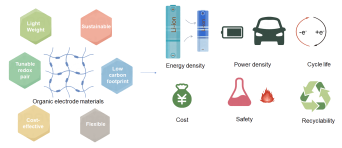
Organic electrode materials (OEMs) primarily consist of elements such as carbon (C), hydrogen (H), oxygen (O), nitrogen (N), and sulfur (S). These elements form organic compounds through specific chemical bonding, enabling redox reactions in electrochemical processes[11-13]. Organic electrode materials offer advantages such as abundant redox sites, structural diversity, and tunability. Their redox motifs can be flexibly adjusted through molecular design, playing a crucial role in enhancing battery performance. By employing chemical modification strategies, such as functional group optimization and molecular structure design, the electronic conductivity, ionic mobility, and structural stability of organic electrode materials can be effectively improved. This approach shows great potential for enhancing battery cycle stability, rate performance, and extending battery life[14-16]. Due to these advantages, researchers have designed various organic electrode materials. Since the 1960s, tricarbonyl compounds have been studied as electrode materials for lithium-ion batteries. With their rich molecular structures and active sites, they suffer from high solubility in non-aqueous electrolytes due to their small molecular size, which has limited their further development and prompted researchers to design new materials[17]. Subsequently, research shifted toward polymeric materials, where polymerization reactions yield high-molecular-weight materials that effectively suppress small-molecule dissolution. Moreover, doping treatments applied to polymeric materials introduce new electronic states, leading to materials with superior electrochemical performance. For example, acid-treated poly(3,4-ethylenedioxythiophene) can achieve an electrical conductivity as high as 4000 S·cm-1; graphene-doped polyaniline can still retain 85% of its initial specific capacity after 100 cycles[18-22]. However, the mobility and overlap of polymer chains during polymerization can hinder efficient ion transport. In contrast, organic sulfides exhibit unique advantages. Through the formation and breaking of S—S bonds, organic sulfides facilitate charge storage and release, offering rapid ion transport capabilities and demonstrating superior cycling performance in lithium-sulfur batteries[23-25]. Nevertheless, during battery charge and discharge, the shuttle effect generated by organic sulfides—the migration and loss of active materials in the electrolyte—hinders electron and ion transport, leading to capacity decay and reduced battery life. Organic radicals, characterized by relatively fast electron transfer rates, have gained attention due to their unpaired electrons, which enable efficient charge transfer during charging and discharging[26-29]. At the same time, the presence of unpaired electrons poses challenges in terms of stability. To address these issues encountered in the development of such materials, novel organic framework materials such as covalent organic frameworks (COFs) and metal–organic frameworks (MOFs) can be integrated into applications. These framework materials can effectively address the challenges faced in practical applications by precisely controlling molecular structure and porosity[30-32].
Organic electrode materials are generally used in lithium-ion batteries; however, the limited reserves and high cost of lithium resources hinder the large-scale application of lithium-ion batteries. Other metal-ion batteries, on the other hand, exhibit unique advantages in terms of electrochemical reaction kinetics and ion diffusion mechanisms, allowing organic electrode materials to be applied in these batteries and to leverage their strengths[33-34]. Among them, monovalent ion batteries (such as potassium-ion batteries) have larger ion radii than lithium ions. This characteristic enables potassium ions to form more stable intercalation structures with organic electrode materials, and in some organic electrode materials, potassium ions exhibit higher diffusion rates than lithium ions, which helps enhance the battery's power performance. Multivalent ion batteries (such as magnesium-ion batteries), through multi-electron transfer processes, achieve energy storage and release; when organic electrode materials are used in these batteries, they can demonstrate greater application potential and achieve higher energy densities[35-37]. Given that metals such as magnesium, zinc, aluminum, and calcium are abundant in the Earth's crust and relatively low in cost, developing these multivalent ion battery systems not only helps alleviate resource pressures but also significantly reduces battery costs. However, other metal-ion batteries also face challenges in application, including kinetic limitations caused by larger ion radii and issues related to interfacial stability. The use of organic electrode materials can effectively address these problems[38].Table 1lists representative application examples of organic electrode materials in other metal-ion batteries. Nevertheless, many issues still exist in the application of organic electrode materials, such as capacity decay caused by high solubility in organic electrolytes, poor rate performance due to low electrical conductivity hindering ion diffusion, and poor cycle stability arising from the high reactivity of the materials—challenges that require appropriate modification strategies for resolution.
表1 有机电极材料在不同类型电池中的应用

Table 1 Applications of organic electrode materials in different types of batteries

Battery category Application ref
Aluminum-ion batteries
(AIB)
Synergistic oxidation-reduction sites; combined with organic frameworks; polymerization of various organic compounds 39~43
Sodium-ion batteries
(SIBs)
Aggregation of various organic compounds; preparation of organic linking agents 44~47
Potassium-ion batteries
(KIBs)
Optimize the composition of organic electrode materials; construct multi-component polymers 48~51
Calcium-ion batteries
(CIBs)
Direct application; constructing organic frameworks; composite application 52~55
In previous studies, the focus was more on the targeted application of organic electrode materials—namely, the use of different organic electrode materials in various types of batteries and the modification of organic materials through design. After introducing organic electrode materials, this review places greater emphasis on presenting typical organic electrode materials, identifying their shortcomings, and summarizing modification strategies such as molecular design, polymerization, and compounding. This article first compares organic electrode materials with inorganic electrode materials to highlight the advantages of organic materials, then introduces the reaction mechanisms of n-type, p-type, and bipolar electrode materials. Next, it presents typical organic electrode materials, outlines the challenges encountered during development, and discusses corresponding modification strategies. Finally, it offers a prospect on the future development of organic electrode materials.

2 Organic electrode materials vs. inorganic electrode materials

From the perspective of elemental composition and resource sustainability, organic electrode materials differ fundamentally from inorganic electrode materials. Organic electrode materials are primarily composed of elements widely present in nature, such as carbon, hydrogen, oxygen, and nitrogen. These elements are not only abundant and readily recyclable in natural environments but also have relatively simple recycling processes with minimal environmental impact[56]. The advantages in elemental composition endow organic electrode materials with great potential in reducing dependence on scarce metal resources, lowering resource extraction and processing costs, and alleviating environmental burdens[57-58]. In contrast, inorganic electrode materials, especially cathode materials commonly used in lithium-ion batteries—such as lithium cobalt oxide and lithium nickel manganese oxide—are highly dependent on rare metal elements like lithium, cobalt, and nickel. The extraction and processing of these metals are not only costly but also associated with severe environmental pollution and ecological damage, including water resource contamination, soil erosion, and loss of biodiversity. Moreover, with the rapid development of global electric vehicles and energy storage systems, the demand for rare metals has surged, further exacerbating resource scarcity and environmental pressure.
In terms of molecular structure, organic electrode materials exhibit exceptionally high flexibility and designability, which are difficult for inorganic electrode materials to match[59-60]. The molecular structure of organic electrode materials can be precisely tuned through chemical synthesis and molecular engineering, enabling optimization of key performance parameters such as redox sites, electronic conductivity, and ionic mobility[61]. For example, by introducing heteroatoms (such as sulfur or phosphorus) and adjusting the length and configuration of molecular chains, the capacity and cycle stability of organic electrode materials can be significantly enhanced; by optimizing intermolecular interactions, such as hydrogen bonding and π-π stacking, the structural stability of the electrode material can be improved while suppressing the dissolution and loss of active materials[62]; for complex structured materials such as MOFs, the catalytic performance and ion conduction pathways of the material can be further optimized by precisely controlling the coordination structure between metal ions and organic ligands, thereby enhancing the overall performance of the battery[63].
In terms of electrochemical mechanisms, organic electrode materials and inorganic electrode materials also exhibit significant differences. The electrochemical reactions of inorganic electrode materials typically involve the insertion/extraction of metal ions, a process constrained by the material’s crystal structure and ion diffusion pathways, which often leads to performance bottlenecks in batteries. In contrast, the electrochemical reactions of organic electrode materials are more diverse, encompassing redox reactions, ion-exchange reactions, charge-transfer reactions, and others. These reaction processes are more flexible and can be tuned through molecular structure design. Moreover, the electrochemical reactions of organic electrode materials generally occur at the molecular level, giving them higher reaction rates and broader potential windows, thereby potentially enabling higher energy densities and power densities.
Compared with inorganic electrode materials, organic electrode materials exhibit unique advantages in terms of elemental composition, molecular structure design, and electrochemical mechanisms (Table 2compares organic and inorganic electrode materials). These advantages offer new perspectives for developing high-performance, low-cost, and environmentally friendly battery materials. In today’s context of green development and the pursuit of sustainability, the development and application of organic electrode materials have become an inevitable trend.
表2 有机电极材料与无机电极材料的比较

Table 2 Comparison of organic and inorganic electrode materials

Electrode materials category Advantages Challenges ref
Organic electrode materials Sustainability; tunability of molecular structure; the molecular skeleton is soft; environmentally friendly and low-carbon; lightweight Low conductivity; unclear charging and discharging mechanism; not balancing high specific capacity and long stable cycling performance 64~69
Inorganic electrode materials Usually insoluble in organic solvents; clear charging and discharging mechanism Rigid structure; volume changes significantly during charging and discharging; unsustainable; environmental pollution 70~75

3 Electrochemical Mechanism

The electrochemical mechanism of organic electrode materials is key to understanding their performance and applications. These materials store and release charge through redox reactions, a process that involves ion migration in the electrolyte and changes in the active sites within the electrode material. The specific electrochemical mechanism is illustrated in Scheme 1.
图式1 有机电极材料中电化学反应机制示意图

Scheme 1 Diagram of electrochemical reaction mechanism in organic electrode materials

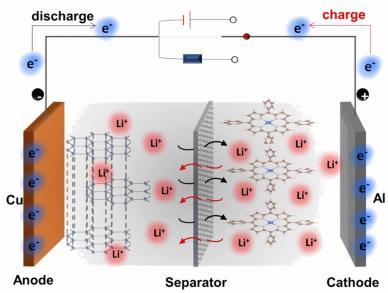
During discharge, the battery’s external circuit is connected to a load, and electrons flow from the negative electrode to the positive electrode. The positive electrode material accepts electrons and undergoes a reduction reaction, forming negatively charged active sites that attract cations (such as lithium ions) from the electrolyte, which then intercalate into or adsorb onto the positive electrode surface to maintain charge balance. Simultaneously, the negative electrode material releases electrons and undergoes an oxidation reaction, forming positively charged active sites that attract anions from the electrolyte or facilitate the extraction of cations. During charging, these processes proceed in reverse: the positive electrode material loses electrons and undergoes an oxidation reaction, causing cations to desorb from the positive electrode and migrate to the negative electrode, while the negative electrode material accepts electrons and undergoes a reduction reaction, with cations intercalating into the negative electrode material[76]..
The redox-active sites of organic electrode materials are typically specific functional groups or structural units within the molecule, such as carbonyl, nitro, and amino groups. During charge and discharge, these functional groups or structural units can reversibly accept or release electrons, undergoing redox reactions that form the basis of the battery's charge and discharge process. The number and nature of these redox-active sites determine the charge storage capacity and electrochemical performance of the organic electrode material. By designing organic molecules with a high density of redox-active sites, the charge storage capacity and energy density of the battery can be significantly enhanced. At the same time, by modulating the chemical properties and spatial structure of the active sites, the cycle stability and rate performance of the battery can be optimized[77].Overall, the fundamental reaction mechanisms of organic and inorganic electrodes are not significantly different; however, inorganic electrodes undergo changes during the reaction, such as structural alterations, whereas most organic electrodes exhibit only minor structural changes. Another contributing factor is that organic electrodes undergo limited bond rearrangements and exhibit smaller structural changes. For these reasons, organic materials are frequently utilized in the development and preparation of electrode materials for practical applications.
In organic electrode materials, the relationship between the lowest unoccupied molecular orbital (LUMO) and the highest occupied molecular orbital (HOMO) energy levels plays a crucial role in determining material performance. These orbitals respectively represent the molecule’s ability to accept and donate electrons. During battery charge and discharge, changes in the LUMO and HOMO energy levels dictate the redox potential and charge storage capacity of the electrode material. By tuning the band gap between the LUMO and HOMO energy levels, the operating voltage and energy density of the battery can be controlled. Molecules with a smaller band gap are more prone to redox reactions, resulting in higher charge storage capacity and lower operating voltage. However, an excessively small band gap may also lead to unwanted side reactions during charge and discharge, thereby compromising the cycling stability of the battery. Therefore, when designing organic electrode materials, it is necessary to comprehensively consider the LUMO and HOMO energy levels as well as the size of the band gap between them, in order to optimize the electrochemical performance of the battery.
According to the different states of active ions in redox reactions, organic electrode materials can be classified into n-type, p-type, and bipolar types. These three types of organic electrode materials exhibit distinct electrochemical mechanisms and charge storage modes. N-type materials have a lower LUMO energy level, making them prone to accepting electrons; during charging, they receive electrons and undergo reduction reactions. Common n-type organic electrode materials include compounds containing functional groups such as nitro and cyano groups. P-type materials have a higher HOMO energy level, making them prone to losing electrons; during charging, they release electrons and undergo oxidation reactions, forming cations. Common p-type organic electrode materials include compounds containing functional groups such as amino and hydroxyl groups. Bipolar organic electrode materials can undergo both oxidation and reduction reactions, thereby exhibiting higher charge storage capacity and a broader operating voltage range. The molecular structures of bipolar materials typically contain extended delocalized π bonds, which facilitate rapid electron transfer and ion migration. Common bipolar organic electrode materials include conductive polymers and metal-organic frameworks[78]..
Regarding the molecular structures of these three types of electrode materials, p-type organic electrode materials exhibit higher stability than n-type electrode materials. For bipolar organic compounds, their chemical structures feature rapid electron transfer and extended delocalized π-bonds, enabling excellent rate performance[79].The reaction mechanisms of these three types of materials will be elaborated in detail in the following section.

4 Types of Organic Electrode Materials

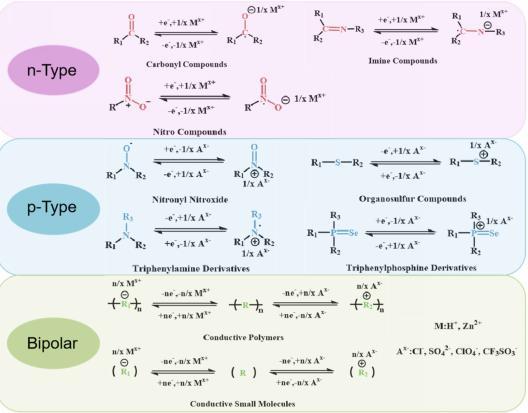
Organic electrode materials can be classified into n-type, p-type, and bipolar types. Each type of electrode material has unique characteristics and reaction mechanisms, so their performance varies depending on the type when used in organic electrode applications. The reaction mechanisms of these three types of electrode materials are shown in Scheme 2.
图式2 三种类型电极材料的电化学反应机制

Scheme 2 Electrochemical reaction mechanism of three types of electrode materials.

4.1 n-Type Organic Electrode Materials

n-Type organic electrode materials have relatively low redox potentials, allowing them to be tailored as either battery cathodes or anodes depending on the chosen potential in practical applications. The redox reactions of n-type organic electrode materials primarily occur between the neutral state and the negatively charged state. During discharge, these materials first undergo a reduction reaction, gaining electrons and transforming into anions. Subsequently, these anions combine with cations from the electrolyte to form stable compounds. The reversibility of this process is crucial for achieving efficient battery cycling[80].The performance of n-type organic electrode materials largely depends on the active functional groups in their molecular structures. Different active functional groups exhibit distinct reaction mechanisms, thereby determining the electrochemical properties of the material. For example, carbonyl compounds, organic sulfides, and azo compounds all possess unique reaction mechanisms.
Carbonyl compounds, with the C=O bond as the active group, often exhibit high redox potentials[81].During discharge/charge processes, electrons and an equivalent amount of metal ions are gained/released via reversible enolization reactions, and as electrode materials they typically provide relatively low redox potentials. For example, benzene diimide, used as a cathode material in calcium-ion batteries, achieves reversible storage of calcium ions through interactions between carbonyl functional groups and aromatic π-electrons[82].Organic sulfides generally possess high theoretical capacities due to the multi-electron reactions involving S—S bonds, with their reaction mechanisms relying on the cleavage and reformation of disulfide bonds and the transfer of multiple electrons. Studies have shown that certain sulfur-containing organic materials, such as bis(4-hydroxy-2,2,6,6-tetramethylpiperidin-1-yl) disulfide (BiTEMPS-OH) and 2,4-thiophene/aromatic copolymers (TAC), exhibit excellent electrochemical performance when used as cathode materials in lithium and sodium batteries[83].The reaction mechanisms of azo compounds depend on the double or triple bonds between nitrogen and carbon. During these reactions, the azo bond is typically oxidatively cleaved, generating a series of oxides. For example, Wang et al.[84] studied three azo compounds for use in sodium-ion batteries and found that the azo group, acting as an electrochemically active site, can reversibly bind with sodium ions, thereby enabling high-performance sodium-ion anodes.
In practical applications, to obtain n-type organic electrode materials with higher performance, it is typically necessary to optimize and integrate the electrode materials. This includes, but is not limited to, adjusting the molecular structure, modifying active functional groups, and optimizing the electrolyte-electrode interface.

4.2 p-type organic electrode materials

Unlike n-type organic electrode materials, p-type organic electrode materials first undergo an oxidation process, reversibly oxidizing into positively charged species while losing electrons and combining with anions from the electrolyte to maintain electrical neutrality. The uniqueness of this process lies in the fact that p-type organic electrode materials typically sustain only a single redox center, resulting in a relatively limited practical capacity[85]. However, due to their lower electronic energy levels, p-type organic electrode materials often exhibit high redox voltages and rapid redox kinetics. Typically, they first undergo oxidation, losing electrons and transforming into cations, which then react with anions (such as Cl-, ClO4 -, SO4 2-, CF3SO3 -, and BF4 -) to maintain electrical neutrality. This characteristic generally makes them suitable for use as cathode materials in batteries[86]. Common p-type organic electrode materials include organic radicals, amine derivatives, and thioethers.
For organic free radicals, the active functional groups are primarily nitroxyl groups, which possess two redox pairs. On the anode side, the nitroxyl groups are oxidized to the corresponding oxammonium state, while on the cathode side they are reduced to amino anions. During charging, the p-type free radicals at the anode are oxidized to the oxammonium state; conversely, the reduction of the oxammonium restores the nitroxyl free radicals. Dong et al.[87]have studied free radical electrode materials for low-temperature conditions, showing that nitroxyl groups play a crucial role in maintaining charge balance. During charging, the nitroxyl free radicals interact with PF6 -anions in the electrolyte to maintain charge balance, and this interaction is broken during discharging. For amine derivatives, during oxidation, the neutral amine group loses an electron to form a positively charged N cation, while simultaneously forming a bond with an active anion; the reverse occurs during reduction[88]. Vlad et al.[89]used conjugated sulfonamide materials as lithium-ion cathode materials: during charging, the amine groups (―NH―) in the conjugated sulfonamide material are oxidized to form imines (―N=) or oxidized amines (―N+―), and the opposite occurs during discharging, thereby enabling charge and discharge. Thioethers are a class of divalent sulfur compounds among organic sulfides; during reactions, the ―S― bond is oxidized to a sulfoxide or further oxidized to a sulfone. However, the thioether bond is a relatively stable single-bond structure, often providing a stable electronic environment and structural framework for connected molecules in practical applications. Zhang et al.[90]studied sulfur-chain carbonyl polymers of phthalimide as an organic cathode material for rechargeable aluminum batteries, finding that thioethers provide the polymer with a stable and flexible structure, thereby enhancing the cyclic stability of the electrode. Different active functional groups play different roles when used as electrode materials, and specific application scenarios must be evaluated based on the actual functions of these active groups.
P-type organic electrode materials typically sustain only a single redox center, resulting in relatively limited practical capacity and limiting their further application in high-energy-density batteries. At the same time, some p-type organic electrode materials may undergo structural changes or decomposition during charge-discharge cycles, leading to a decline in battery performance. Therefore, enhancing the stability of p-type organic electrode materials is one of the key research directions at present.

4.3 Bipolar Organic Electrode Materials

Bipolar organic electrode materials integrate the characteristics of both n-type and p-type organic electrode materials. In their neutral state, they can be reduced during discharge to bind cations and oxidized during charging to bind anions. This dual reaction mechanism endows them with a high specific capacity. In practical applications, the reaction behavior of bipolar electrode materials often depends on the specific properties of their redox-active functional groups. These functional groups determine the material's electron transfer and ion-binding capabilities during charge and discharge, thereby influencing the overall battery performance. In most cases, only 1/2 of the reactions occur at a single electrode; therefore, in practical applications, such materials can also be regarded as either n-type or p-type electrode materials[91].Because bipolar electrode materials can undergo both n-type and p-type reactions simultaneously, they are typically combined with n-type and p-type materials in practical applications to construct composite bipolar electrodes, achieving more optimal reactions.
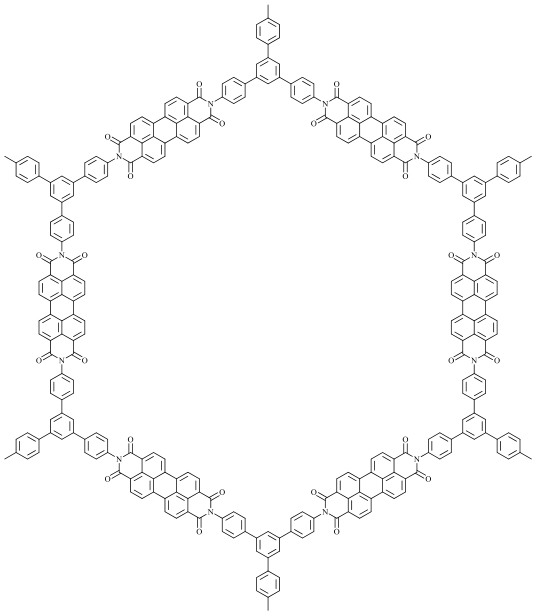
To prepare bipolar electrode materials with superior performance, researchers typically employ a strategy of rationally combining n-type and p-type electrode materials. This combination not only enhances the overall performance of the material through synergistic effects but also reduces the cost of using bipolar electrode materials. For example, Fan et al.[92]successfully prepared a bipolar polymer electrode material by combining an n-type electrode material (such as dibromoanthraquinone) with a p-type electrode material (such as dihydrobenzothiophene). This bipolar material exhibited high energy densities of 511 and 597 Wh·kg-1in Na/K-based half-cells, demonstrating the great potential of bipolar electrode materials in the field of electrochemical energy storage. In addition, Tang et al.[93]developed a bipolar indole-anthraquinone organic electrode material. This composite molecule couples a p-type dihydrobenzimidazole with an n-type anthraquinone redox group, enabling it to simultaneously accommodate both cations and anions. The molecule's conjugated "p-n" structure helps enhance the electrochemical performance of symmetric batteries; at a current density of 2 A·g-1, the battery retained 79% of its initial capacity after 600 charge-discharge cycles. In practical applications, researchers have also leveraged organic frameworks to optimize the comprehensive performance of electrode materials. For instance, Bian et al.[94]developed a bipolar two-dimensional covalent organic framework by synthesizing a condensation product of tetraphenyl-p-phenylenediamine and copper-5,10,15,20-tetra(4-formylphenyl)porphyrin. As a cathode material for batteries, this synthetic framework helps increase the specific capacity of the battery, exhibiting a high specific capacity of 142 mAh·g-1at a current density of 60 mA·g-1.
In practical applications, bipolar electrode materials are typically utilized by constructing bipolar electrode materials or implementing optimization measures to fully leverage the advantages of bipolar materials. In the future, the application prospects of bipolar materials in electrodes will be even broader.

5 Structure, Classification, and Modification

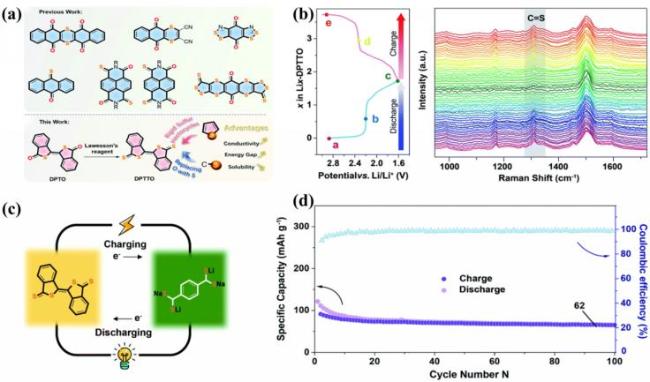
In summary, existing scoring systems have limited predictive capabilities for bleeding events, and their results are inconsistent[25,30,33].According to different active functional groups, organic electrode materials can be classified into various types, such as carbonyl compounds, organic sulfides, and organic radicals. Organic electrode materials exhibit solubility in organic electrolytes, and may undergo structural changes and chemical decomposition during use. They also suffer from issues such as low electrical conductivity and poor stability due to high activity. Consequently, various electrode materials often face challenges related to high solubility, poor conductivity, and inadequate cycling stability. During application, these issues can be addressed through modification methods involving molecular design, such as adjusting molecular structure, expanding conjugated systems, and elemental doping. Additionally, modification strategies like monomer polymerization and material compositing can be employed to tackle these challenges. Table 3presents typical cases of the application of various organic electrode materials and their modification outcomes. The application of these electrode materials and their corresponding modification measures are now discussed in depth.
表3 有机电极材料案例总结

Table 3 Summary of organic electrode material cases

Cassification Molecular structure Modification strategy Specific capacity
(mAh·g-1
Cyclic conditions Capacity Retention (mAh·g-1 Improved capacity performance after cycling Battery type ref
Quinones and their derivatives 2,2′-(1,4-phenylenedithio) bis(1,4-naphthoquinone) (1,4-PNQ)

Molecular design: insertion of benzenedithiol(1,4-BDT) between two NQ molecules 231
(at 1 C)
100 cycles at 1 C 185/80% 1.8 times higher than NQ (103 mAh·g-1 Lithium-ion battery 101
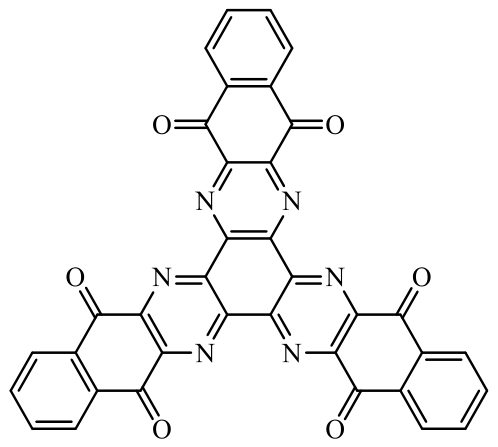
Quinones Hexaazatrianthranylene (HATAQ) Molecular design: the conjugated quinone moiety is introduced into the nucleus of an electron-deficient hexazatribenzene derivative 426
(at 200 mA·g-1
100 cycles at 0.4 C 376/86.4% 1.2 times higher than the general organic cathode small molecule materials Lithium-ion battery 102
Quinones/pyrazine hybrid structure
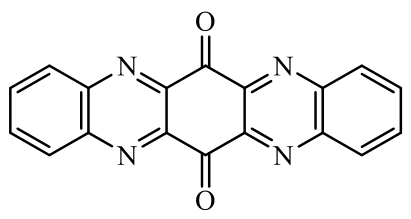
5,7,12,14-Tetraaza-6,13-
Pentacenequinone (TAPQ)
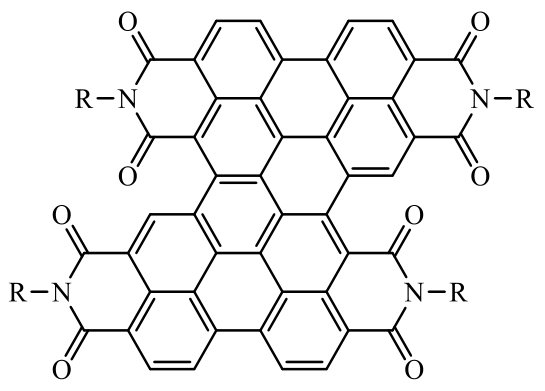
Molecular design: integrating electroactive quinone and pyrazine groups in small molecules 270
(at 50 mA·g-1
250 cycles
at 50 mA·g-1
248/92% - Aqueous Rechargeable Zinc Batteries 104
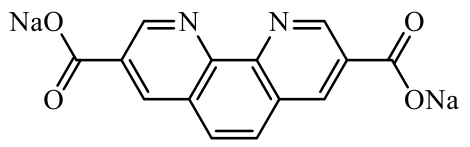
Carboxylic compounds sodium 1,10-phenanthroline-3,8-dicarboxylate (S-PD) Molecular design: incorporating two Na+ ions into the organic small molecule of phenanthroline-3,8-dicarboxylate 252
(at 50 mA·g-1
250 cycles at 2 C 126/50% - Sodium-Ion Battery 112
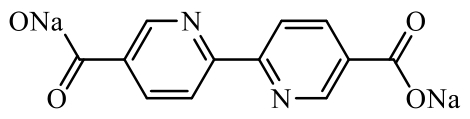
disodium 2,2'-bipyridine-5,5'-
dicarboxylate (2255-Na)
Molecular design: incorporating nitrogen atoms into conjugated structures and regulating the position of carboxylate groups on aromatic rings 210
(at 50 mA·g-1
500 cycles
at 50 mA·g-1
178/85% 1.32 times higher than disodium 4,4’-biphenyl dicarboxylate (BPDC-Na) Sodium-Ion Battery 113
Imine
2,9-dioctylperylene-3,4,9,10-tetracarboxylic diimide (2PDI)
Molecular design: reversible co-insertion Zn2+/H+ at the carbonyl site 72.9
(at 100 mA·g-1
500 cycles
at 100 mA·g-1
70.1/96.2% 4.56 times higher than PTCDA//Zn(21.1%) Aqueous
Zinc-Organic Batteries
117
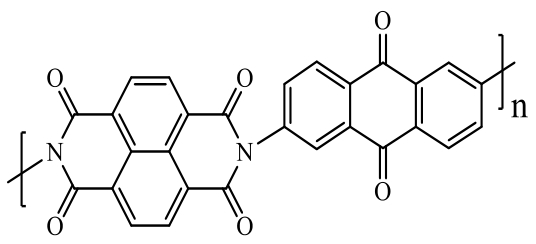
Carbonyl polyquinone imine Polyquinoneimine Sandwiched by Graphene (PQI@Gr) Polymerization and composite: the polymerization of dianhydride and anthraquinone combined with graphene oxide 205
(at 0.1 A·g-1
10000 cycles at 5 A·g-1 87.7/73% 2.34 times higher than PQI Lithium-Ion Battery 119
Organic sulfur compounds
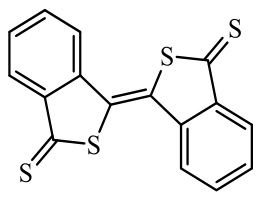
Benzo[c]thiophen-1(3H)-thione (DPTTO)
Molecular design: replacing the oxygen atom in benzo[c]thiophene-1(3H)-one (DPTO) with sulfur atom 162
(at 50 mA·g-1
200 cycles
at 50 mA·g-1
122/75% The initial retention rate is 4.26 times that of DPTO Sulfur-rich All-Organic Lithium-Ion Batteries 125

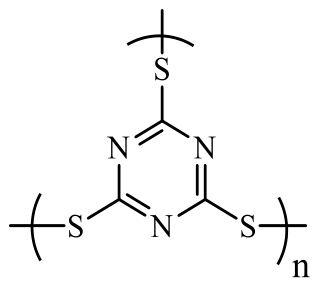
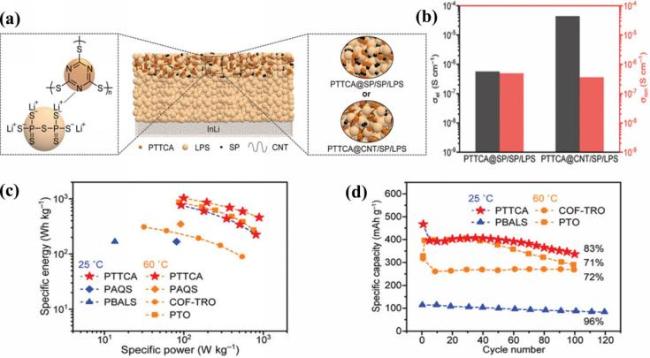
Poly(trithiocyanuric acid (PTTCA)
Composite carbon nanotubes PTTCA@CNT 468
(at 50 mA·g-1
100 cycles
at 50 mA·g-1
388/83% Capacity retention rate increased 2.1 times compared to bare PTTCA All-Solid-State Lithium Battery 126
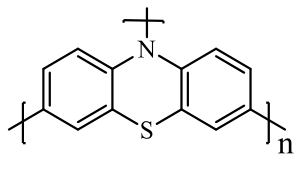
Heterocyclic compound: polythiophene polyphenothiazine (PPTZ) Oxidative polymerization 157
(at 50 mA·g-1
100 cycles at 50 mA·g-1 127/81% 1.37 times higher than phenothiazine monomer (PTZ) Potassium-basedBattery 148
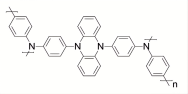
Heterocyclic compound: phenazine Poly(Hyperbranched dihydrophenazine diphenylamine) (PDPAPZ) Cross-coupling polymerization 101
(at 5 A·g-1
100 cycles at 5 A·g-1 87/86% The specific capacity is comparable to that of the best ultra-fast charging polyamine cathode material PDPPD(84mAh·g-1). Potassium-based Battery 149
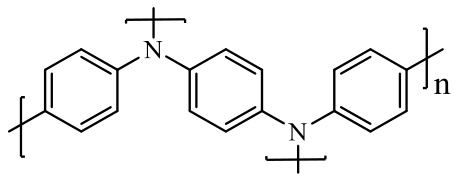
polymer poly(NN′-diphenyl-p-
phenylenediamine) (PDPPD)
Cross-coupling polymerization 102
(at 50 mA·g-1
500 cycles at 50 mA·g-1 79/77% - Lithium-based Battery 150

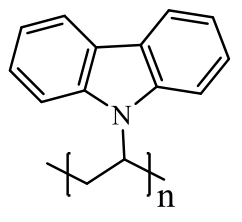
poly(N-vinylcarbazole) (PVK)
polymer 120
(at 20 mA·g-1
400 cycles
at 500 mA·g-1
84/70% - Potassium-basedBattery 151
Covalent organic frameworks (COFs) Perylene-based Imide Covalent Organic Framework (Pe-PICOF) Molecular design: adjusting the size of the imide conjugated units through different coordinating ions (Be, Na, Pe) 91
(at 50 mA·g-1
100 cycles
at 50 mA·g-1
87/96% 1.71 times higher than Be-PICOF Lithium-Ion Batteries 146
Other electrode materials
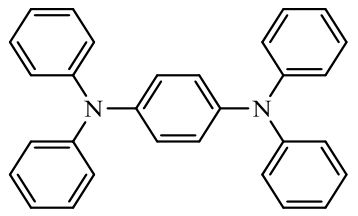
1,4 bis(diphenylamino)benzene (BDB)
Composite: Cellulose Nanocrystal Film 112
(at 390 mA·g-1
500 cycles
at 390 mA·g-1
84/75% - Zinc-based Battery 152

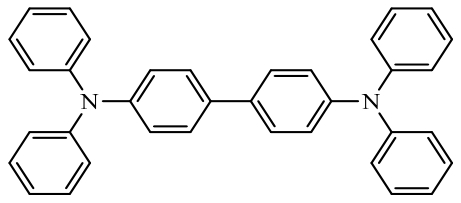
NNN′,N′- tetraphenyl-1,1-biphenyl-4,4′-diamine (TPB)
Injecting and transporting holes into TPB for storing PF6- 77
(at 50 mA·g-1
450 cycles
at 50 mA·g-1
47/61% - Lithium-based Battery 153

5.1 Carbonyl compounds

In summary, existing scoring systems have limited predictive capabilities for bleeding events, and their results are inconsistent[25,30,33].The carbonyl group (C=O) is a structural unit commonly found in organic compounds, and the core of redox reactions lies in the change of charge states between the carbon and oxygen atoms in the carbonyl group. Over the years, carbonyl compounds have achieved great success and are widely used in energy storage systems[95].Carbonyl compounds exhibit excellent redox activity, and the carbonyl group's high electronegativity enables it to attract and accept electrons, thereby undergoing reduction. Consequently, carbonyl compounds are often used as cathode materials in batteries. During charging, the carbonyl group in carbonyl compounds can lose electrons and be oxidized; conversely, during discharging, the oxidation products of carbonyl compounds can regain electrons and be reduced back to their original state.
The tunable structure, renewability, and rapid kinetic properties of carbonyl compounds further expand their application scope in energy storage systems. Their spacious internal structures provide ample storage space for various charged ions (such as H+,Li+,Na+,K+,Mg2+,and Ca2+, among others), enabling carbonyl-based materials to exhibit outstanding performance in a variety of battery types[96].Take lithium-ion batteries as an example: Cui et al.[97] designed conjugated carbonyl organic cathode materials that not only achieved favorable adiabatic redox potentials (ranging from 3.18 to 4.61 V) but also significantly enhanced the battery’s energy density and cycle stability. The exceptional performance of these carbonyl cathode materials—such as 4,5,9,10-tetracarbonylpyridinetetraone, cyano derivatives of 4,5,9,10-tetracarbonylpyridinetetraone, and positional isomers of 4,5,9,10-tetracarbonylpyridinetetraone—fully demonstrates the immense potential of carbonyl-based materials in the field of lithium-ion batteries. In addition to lithium-ion batteries, carbonyl compounds also perform exceptionally well in other metal-ion batteries, such as sodium-ion batteries. Wang et al.[98] prepared the bridged carbonyl-containing conjugated compound isobenzofuran-1,3-dione (SCID), which leverages the structural advantages of carbonyls to achieve efficient sodium-ion insertion, thereby opening up new avenues for enhancing the performance of sodium-ion batteries. Zhang et al.[99] conducted an in-depth study of polycyclic aromatic carbonyl compounds and found that these carbonyl-containing compounds also exhibit excellent performance when used as electrode materials, further validating the broad application prospects of carbonyl-based materials in alkaline ion batteries.
In summary, existing scoring systems have limited predictive capabilities for bleeding events, and their results are inconsistent[25,30,33].

5.1.1 Quinones and Their Derivatives

Quinone compounds and their derivatives are a class of promising electroactive materials, characterized by high specific capacity, high redox reaction activity, and excellent electrochemical reversibility[100].
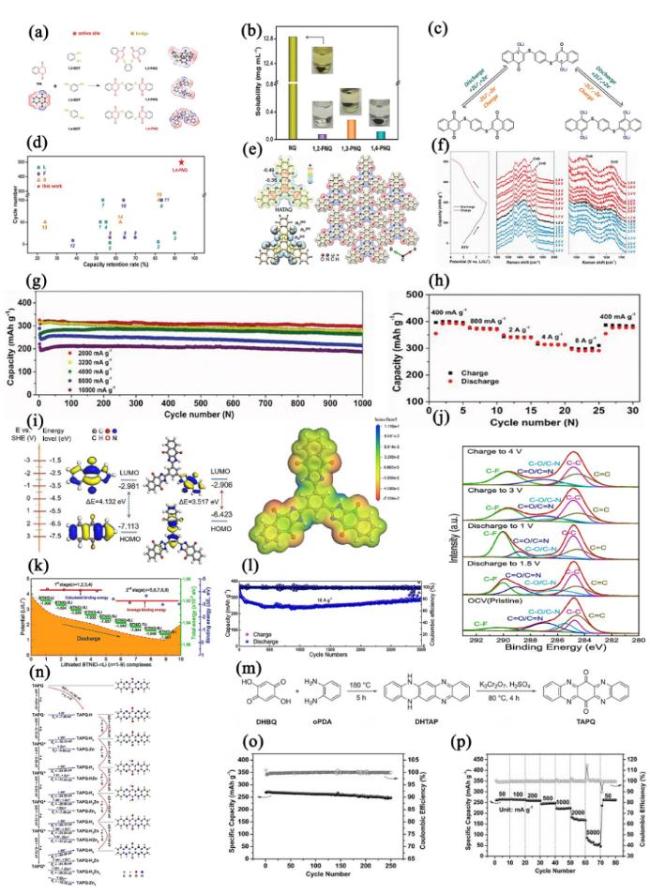
In non-aqueous battery systems, quinone compounds often face the challenge of high solubility due to the use of organic solvents as electrolytes. To address this issue, researchers have employed molecular design strategies. By modifying the composition and structure of the molecules—such as enhancing intermolecular interactions, expanding the molecular framework, and achieving extensive π-conjugation—they have effectively improved the material’s solubility. For example, Fu et al.[101]used a naphthoquinone (NQ) molecule as a building block, leveraging its strong intramolecular interactions with three different benzenedithiols (1,2-BDT, 1,3-BDT, 1,4-BDT) to construct three highly extended five-benzene-ring structures (1,2-PNQ, 1,3-PNQ, 1,4-PNQ) (Fig. 3a). This approach was designed to mitigate the solubility issues of naphthoquinone molecules. As shown in Fig. 3b, the solubility of unmodified NQ was 12.82 mg·mL-1; after modification with benzenedithiols, the solubilities of the newly formed materials 1,2-PNQ, 1,3-PNQ, and 1,4-PNQ decreased to 0.07, 0.28, and 0.11 mg·mL-1, respectively—representing reductions to 1/183, 1/46, and 1/116 of the original value. The underlying reason is that the newly formed materials exhibit larger molecular structures and enhanced intermolecular π–π stacking, which inhibits the dissolution of the molecules in the electrolyte. Among these three molecular structures, 1,4-PNQ possesses the greatest steric hindrance and the highest degree of active-site exposure, resulting in the highest redox activity (Fig. 3c). As illustrated in Fig. 3d, compared with previously reported quinone-based electrode materials, 1,4-PNQ demonstrates nearly 100% carbonyl group utilization in a lithium half-cell. Moreover, due to its unique molecular structure and low solubility, it retains a high capacity of 185 mAh·g-1after 100 charge–discharge cycles—a roughly 1.8-fold improvement over unmodified NQ under the same conditions. The modified 1,4-PNQ exhibits high carbonyl group utilization in lithium-ion batteries, indicating that batteries using this material can store more energy within the same volume and weight. This makes it particularly valuable for devices requiring high energy density, such as electric vehicles, where the material can be used to develop batteries with longer driving ranges, thereby enhancing vehicle performance.
Through further molecular design, the cyclic stability of the material can be effectively enhanced, resulting in a high capacity retention rate. Popovs et al.[102]further introduced conjugated naphthoquinone into the core of an electron-deficient hexaazabenzenederivative (HATA), forming a large polyelectronic acceptor organic cathode material, hexaaza-tri anthracene quinone (HATAQ) (Fig. 3e). The resulting polyelectronic acceptor electrode material features an extended π-conjugation system and a greater number of redox-active sites (Fig. 3f). The introduction of conjugated quinone groups expands the molecule’s π-conjugation system, enhancing its electron-affinity capability. At the same time, the molecule forms a stable two-dimensional layered structure via a “lock-and-key” hydrogen-bond network, thereby facilitating the insertion and extraction of lithium ions. As a result, the HATAQ molecule exhibits an exceptionally high lithium-storage capacity. At 0.4 C, this material delivers a capacity of 426 mAh·g-1, which is higher than that of typical small-molecule organic cathode materials. Even at an ultra-high rate of 19 C, it retains nearly 85% of its initial capacity after 1,000 cycles (Figs. 3g, h). Similarly, Cao et al. used a Schiff base condensation reaction to introduce imidazole units with multiple electron-transfer capabilities and a conjugated structure into naphthoquinone, forming, through core linkage, a C 3-symmetric trimeric imidazole naphthoquinone derivative with dual redox sites: 2,2,2′-(benzene-1,3,5-triyl)tri(1H-naphtho[2,3-d]imidazole-4,9-dione) (BTNID) (Fig. 3i). A strong π–π orbital interaction between the naphthoquinone and imidazole leads to extensive electron delocalization, providing a high density of reversible C=O/C=N redox-active sites for lithium storage (Fig. 3j). Consequently, this material exhibits a high lithium-storage capacity. Density functional theory (DFT) calculations, as shown in Fig. 3k, indicate that as lithium ions are inserted, the total energy of BTNID gradually decreases, and the structure becomes more stable. The high lithium-storage capacity of BTNID, combined with its C 3-symmetric structure, enhances the material’s structural stability and capacity retention. When used as a cathode in lithium batteries, the material achieves a specific capacity of up to 483 mAh·g-1at 0.2 A·g-1, and even after 3,000 cycles at 10 A·g-1, it retains 74.8% of its initial capacity—significantly higher than most previously reported results, as illustrated in Fig. 3l [103]. In addition to serving as a cathode material for lithium batteries, naphthoquinone can also be used as a cathode material for zinc batteries. Song et al.[104]combined 2,5-dihydroxy-1,4-benzoquinone (DHBQ) with o-phenylenediamine (oPDA) to form a structure—5,7,12,14-tetraaza-6,13-pentacondensed tetrabenzoquinoline ketone (TAPQ) (Fig. 3m). This structure likewise possesses multiple redox-active sites, including C=O and C=N. DFT simulations have demonstrated an H+/Zn2+co-insertion mechanism, with H+as the primary participant, as shown in Fig. 3n. This mechanism effectively enhances the material’s cycling stability and yields a high capacity retention rate. Within a voltage range of 0.1–1.6 V, TAPQ exhibits a capacity of 270 mAh·g-1, which is 1.3 times higher than that of DHBQ used alone as an electrode material. At the same time, TAPQ boasts an energy density of 282 Wh·g-1and a high capacity retention rate of 92% (Figs. 3o, p).
图3 (a) NQ、1,2-PNQ、1,3-PNQ和1,4-PNQ的分子设计类型及其静电势图; (b) NQ、1,2-PNQ、1,3-PNQ和1,4-PNQ电极在G4电解液中浸泡3天后的溶解性和数码照片; (c) 1,4-PNQ的电化学氧化还原反应; (d) 1,4-PNQ和其他醌基电极的容量保持率比较[101]; (e) HATAQ(0.005 e/a03等值面)的化学结构和静电势图; HATAQ分子通过C―H···O键连接形成的二维层状单晶结构; HATAQ分子的σ型孤对电子(n(σ))和π型孤对电子(n(π)); (f) HATAQ电极在不同充电状态下的原位拉曼光谱及在1.2~3.9 V电压范围内200 mA·g-1电流密度下的充放电曲线; (g) HATAQ在高倍率下的容量保持率; (h) HATAQ在不同电流密度下的倍率性能[102]; (i) IMNQ、BDNIB和BTNID的计算轨迹图; 由DFT计算得到的BTNID分子静电势图; (j) BTNID中非配位C元素的高分辨XPS谱图; (k) BTNID电极的锂离子传输路径; (l) BTNID//Li电池在10 A·g-1下循环3000次的容量保持率和库仑效率[103]; (m) TAPQ的合成路线; (n) TAPQ-HxZny的结合能; TAPQ相关分子间的吉布斯自由能差; TAPQ分子及其可能还原产物的最优几何结构; (o) 0.5~1.6 V电压范围内、50 mA·g-1电流密度下TAPQ在1 M ZnSO4电解液中循环250次的长循环性能, (p) TAPQ在不同电流密度下的倍率性能[104]

Fig.3 (a) Molecular design types and electrostatic potential maps of NQ, 1,2-PNQ, 1,3-PNQ, and 1,4-PNQ; (b) solubility and digital photos of NQ, 1,2-PNQ, 1,3-PNQ, and 1,4-PNQ electrodes after 3-day immersion in G4 electrolyte; (c) electrochemical redox reactions of 1,4-PNQ; (d) capacity retention comparison of 1,4-PNQ and other quinone-based electrodes. Adapted with permission[101]. (e) Chemical structure and electrostatic potential diagram of HATAQ(0.005 e/a03 isovalue); 2D layered single crystal structure of HATAQ formed by C—H···O bonds;σ-type (n(σ)) and π-type lone pair electrons (n(π)) of HATAQ molecule; (f) in situ Raman spectra of HATAQ electrodes at different charging states, and charge-discharge curves of 200 mA·g-1 within 1.2~3.9 V voltage range; (g) capacity retention rate of HATAQ at high rates; (h) magnification performance of HATAQ at different current densities. Adapted with permission[102]. (i) Computed track maps of IMNQ, BDNIB, and BTNID; Electrostatic potential map of the BTNID molecule obtained from DFT calculations; (j) high-resolution XPS spectra of the off-location C element of BTNID; (k) lithium path of BTNID electrode; (l) capacity retention rate and coulomb efficiency over 3000 cycles at 10 A·g-1 of BTNID//Li battery. Adapted with permission[103]. (m) TAPQ synthesis route; (n) binding energy of TAPQ-HxZny, Gibbs free energy difference among TAPQ related molecules; optimal geometry of TAPQ molecules and possible reduction products; (o) long cycle performance of TAPQ (50 mA·g-1, 250 cycles) with 0.5~1.6 V voltage range in 1 M ZnSO4 electrolyte; (p) magnification performance at different current rates of TAPQ. Adapted with permission[104]

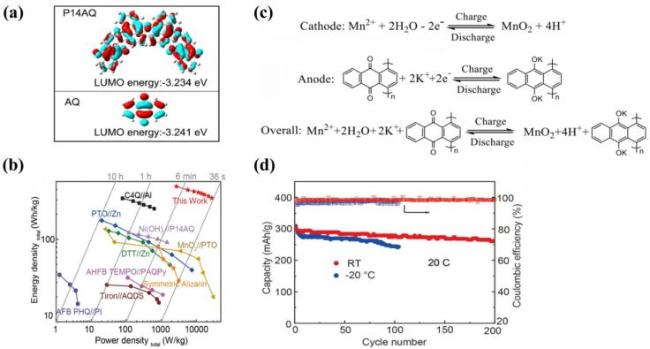
In addition to molecular design, polymerization is also an effective strategy for improving the electrochemical performance of batteries. By linking small-molecule monomers into long-chain polymers, the dissolution of active materials can be reduced, thereby maintaining good cycling stability. Zhao et al.[105]designed an electrochemical redox couple in which anthraquinone (AQ) serves as a dendrite-free anode material, coupled with the Mn2+/MnO2redox reaction to construct an alkaline–acid battery. In practical applications, to further reduce the solubility of AQ, poly(1,4-anthraquinone) (P14AQ) was synthesized, as shown in Figure 4a. Compared with metal anodes such as zinc and lead, anthraquinone exhibits an exceptionally high current density and does not suffer from dendrite growth (Figure 4b). The structure formed through polymerization not only reduces intermolecular voids but also enhances molecular stability through cross-linking via chemical bonds, thereby significantly suppressing the dissolution of the material in the electrolyte. Testing has shown that P14AQ exhibits an initial discharge specific capacity of 295 mAh·g-1, which is 5.9 times that of AQ. Using this redox reaction (Figure 4c), a fully decoupled alkaline–acid P14AQ//MnO2battery was assembled. Figure 4dshows the cycling performance of the battery composed of an MnO2@HGF cathode and a P14AQ anode. At 20C and a low temperature of -20 ℃, after 100 cycles, the battery still retains a high initial capacity of 300 mAh·g-1, with a capacity retention rate of 84%. When electric vehicles and many portable electronic devices are operated at low temperatures, battery performance declines significantly. Batteries incorporating P14AQ, however, can maintain high capacity and cycling stability at low temperatures, making them suitable for these applications and potentially extending the service life of such devices.
图4 (a) 真空条件下P14AQ和AQ的最低未占据分子轨道(LUMO)能量及轨道分布模式; (b) 与其他已报道的使用醌基电极的水系能量存储系统的Ragone图对比; (c) 自制碱酸混合P14AQ//MnO2电池的氧化还原反应; (d) 20 C下P14AQ//MnO2电池在室温和-20 ℃下的循环性能[105]

Fig.4 (a) LUMO energy and orbital distribution of P14AQ and AQ in vacuum; (b) comparison of Ragone plots with other reported aqueous energy storage systems utilizing quinone-based electrodes; (c) redox reactions of fabricated alkali-acid hybrid P14AQ//MnO2 battery; (d) cycle performance of P14AQ//MnO2 battery at room temperature and -20 ℃ at 20 C. Adapted with permission[105]

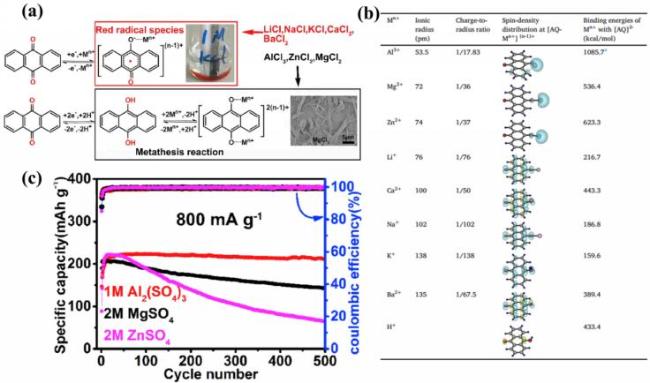
In conventional batteries, organic solvents are used as electrolytes, resulting in high solubility of quinone compounds when used as electrode materials. Since quinone compounds are generally insoluble in water, using quinone- and derivative-based electrode materials in aqueous batteries can effectively mitigate solubility issues. AQ can also serve as a negative electrode material in various aqueous batteries (Zn2+, Mg2+, Al3+). Ling et al.[106]used AQ as a research model to analyze its electrochemical redox behavior in various aqueous metal ion electrolytes (H+, Li+, Na+, K+, Zn2+, Mg2+, Ca2+, Ba2+, Al3+) (Fig. 5a). Simulation calculations revealed the free energy level distribution of AQ, with the spin density distribution of the [AQ-Mn n +] n -1)+radical intermediate leading to irreversible redox behavior for Li+, Na+, K+, Ca2+, and Ba2+. The binding energy between metal ions and AQ anions enables reversible proton-assisted side reactions in Al3+, Zn2+, and Mg2+(Fig. 5b). The performance of this AQ-based negative electrode in aqueous metal ion batteries was investigated; under the same conditions, the electrode exhibited relatively superior performance in aluminum-ion batteries, delivering a reversible capacity of 211.4 mAh·g-1after 500 cycles at 800 mA·g-1, with a capacity retention rate of 94.5%. In contrast, the capacity retention rates in magnesium-ion and zinc-ion batteries were only 68.8% and 44.9%, respectively (Fig. 5c).
图5 (a) AQ在不同水系金属离子电解液中的氧化还原机制; (b) 不同金属离子的离子半径、[AQ-Mn+]n-1)+的自旋密度分布以及Mn+与[AQ]2-的结合能比较; (c) 800 mA·g-1下AQ的循环稳定性[106]

Fig.5 (a) Redox mechanism of AQ in metal ion electrolytes of different water systems; (b) different metal ions of the ionic radius, [AQ-Mn+]n-1)+ spin density distribution and Mn+ and [AQ]2- compare the binding energy; (c) the cyclic stability of AQ at 800 mA·g-1. Adapted with permission[106]

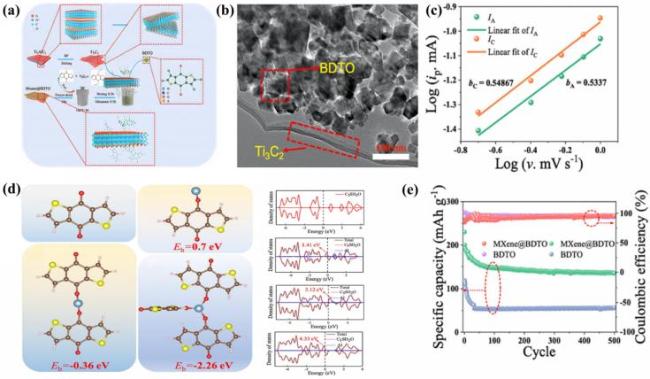
Although the solubility issues faced by quinone compounds in aqueous battery systems have been effectively alleviated, enhancing the cyclic stability of the electrode remains an urgent challenge. By combining quinone compounds with support structures that exhibit excellent performance, such as MXene, the cyclic stability and rate performance of the electrode can be significantly improved. For example, Lv et al.[107]constructed a layered composite structure using the organic anthraquinone derivative benz[1,2-b:4,5-b']dithiophene-4,8-dione (BDTO) and Ti3C2(MXene) as the cathode material for an aluminum organic battery, thereby effectively enhancing the insertion and extraction capability of Al3+(Fig. 6a). Transmission electron microscopy (TEM) images confirmed the formation of the layered composite structure (Fig. 6b). This layered structure effectively reduces the dissolution of BDTO in the electrolyte and provides additional pathways for the diffusion of Al3+, leading to significant improvements in both cyclic stability and the ionic diffusion coefficient, as shown in Fig. 6c. By examining the relationship between the scan rate and current density of the redox peaks, it was found that the layered structure facilitates the deintercalation of Al3+, thereby enhancing ion diffusion. Various characterization methods and DFT calculations revealed that three C=O groups react with one Al3+, thereby defining the battery’s mechanism (Fig. 6d). During the reaction, the C=O groups in the BDTO molecule are partially reduced to C—O—Ti bonds; the formation of these chemical bonds strengthens the interfacial bonding between the two structures, enhancing the stability of the composite. When used as an electrode material, the composite exhibits a high reversible capacity, as shown in Fig. 6e: the reversible capacity of MXene@BDTO reaches 229.8 mAh·g-1, which is 2.1 times that of BDTO under the same conditions, and it still retains a reversible capacity of 134.9 mAh·g-1after 500 cycles, whereas the reversible capacity of BDTO drops to only 54.4 mAh·g-1.
图6 (a) MXene@BDTO的制备过程图; (b) MXene@BDTO的透射电子显微镜图; (c) 氧化峰(1.55 V)和还原峰(1.14 V)处的扫描速率对数值与电流对数值之间的关系; (d) BDTO以不同结合形式与Al3+的吸附能及分子与结合不同数量Al3+时的态密度; (e) MXene@BDTO和BDTO的长循环性能[107]

Fig.6 (a) Preparation process diagram of MXene@BDTO; (b) TEM images of MXene@BDTO; (c) correlation between log(scan rate) and log(current) at 1.55 V oxidation peak and 1.14 V reduction peak; (d) adsorption energy of BDTO in different configurations with Al3+ and density of states for the molecule binding different quantities of Al3+; (e) long cycle of MXene@BDTO and BDTO[107]. Adapted with permission

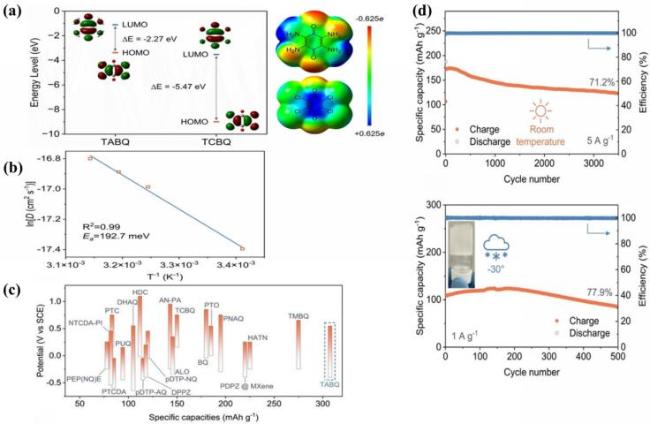
In addition, in aqueous batteries, protons or hydrogen ions can serve as charge carriers, enabling the construction of aqueous proton batteries. Quinone compounds have the ability to absorb protons, and their rational application in proton-based aqueous solution batteries can further enhance cycle stability and rate performance. Zhao et al. introduced a small-molecule benzoquinone derivative (tetraamino-1,4-benzoquinone, TABQ) as the negative electrode material for all-organic aqueous batteries. The strongly electron-donating amino groups effectively narrow the band gap of quinone materials, yielding an electrode material with a lower redox potential (Fig. 7a). The protonation and amorphization of the amino groups facilitate the formation of an intermolecular hydrogen-bond network, which supports Grothuss-type proton conduction within the electrode with a low activation energy of 192.7 meV (Fig. 7b). Electrochemical performance studies of this electrode reveal that, at a current density of 1 A·g-1, the TABQ negative electrode delivers a specific capacity as high as 307 mAh·g-1, representing an approximately 1.54-fold improvement over the 200 mAh·g-1of the conventional electrode material TCBQ (tetrachlorobenzoquinone), and making it one of the highest-performing organic proton electrodes reported to date (Fig. 7c). When used in an all-organic proton battery configuration (TABQ//TCBQ), the battery exhibits exceptional stability, sustaining 3,500 cycles at room temperature and maintaining excellent performance even at sub-zero temperatures (Fig. 7d)[108]. TCBQ tends to undergo structural degradation after multiple charge–discharge cycles, leading to rapid capacity decay and limiting its use in long-life applications. In contrast, TABQ demonstrates superior stability, effectively addressing this challenge and better meeting the demands of modern energy systems.
图7 (a) TABQ和TCBQ分子的轨道能量和分子静电势分布; (b) TABQ的ln(DH)与T-1的关系图; (c) 与近期报道的用于水系质子电池的有机电极材料的性能对比; (d) TABQ//TCBQ全有机全电池在室温和-30 ℃下的倍率性能和循环性能[108]

Fig.7 (a) Orbital energy and electrostatic potential distribution of TABQ and TCBQ molecules; (b) graph of ln(DH) against T-1 of TABQ; (c) performance comparison with recently reported organic electrode materials in aqueous proton batteries; (d) TABQ//TCBQ all-organic all-battery rate capability and cycle stability at room temperature and -30 ℃. Adapted with permission[108]

5.1.2 Carboxylic acid compounds

Carboxylic acid compounds have advantages such as low cost, abundant resources, environmental friendliness, and high sustainability. At the same time, their molecular structures are highly tunable, making them promising electrode materials[109]..
Carboxyl-containing compounds as electrode materials give batteries excellent rate performance. Wang et al.[110]introduced a new organic carboxyl compound, methyl acid organic lithium hexa salt (Li6C12O12), as the negative electrode for lithium batteries, enabling reversible multi-electron redox reactions (Fig. 8a). The electrostatic potential map of this electrode, shown in Fig. 8b, demonstrates that after the reaction products bind with lithium ions, they generate an electrostatic distribution with a structure similar to symmetry. Combined electrochemical and spectroscopic studies further validate the mechanism of reversible coordination reactions based on carboxyl groups and lithium ions. The rapid and reversible nature of these coordination reactions ensures that the material can still effectively facilitate the insertion and extraction of lithium ions at high rates. Specifically, this negative electrode material not only delivers a reversible capacity of 730 mAh·g-1at 0.21 A·g-1but also provides a high reversible capacity of 372 mAh·g-1at 2 A·g-1. This electrode enables LiFePO4//Li6C12O12all-lithium-ion batteries and graphite//Li6C12O12all-dual-ion batteries to exhibit high capacity and good cycling stability. Compared with other reported lithium-ion negative electrode materials, this negative electrode material boasts an exceptionally high energy density (Fig. 8c). Song et al.[111]found that selecting an appropriate electrolyte when using carboxylic acid-based electrodes can significantly enhance the electrode's capacity performance. In the development of carboxyl compound electrodes, various modification strategies have been employed to improve their performance, thereby enabling more optimal applications.
图8 (a) Li6C12O12的合成过程图及其作为锂离子电池电极的储锂机制; (b) Li6C12O12和Li12C12O12的静电势分布; (c) Li6C12O12与其他已报道的锂离子电池负极材料的能量密度对比[110]

Fig.8 (a) Diagram of the synthesis diagram of Li6C12O12 and and its lithium storage mechanism as an electrode in lithium-ion batteries; (b) electrostatic potential distribution of Li6C12O12 and Li12C12O12; (c) energy density of Li6C12O12 compared to reported lithium ion battery anode materials. Adapted with permission[110]

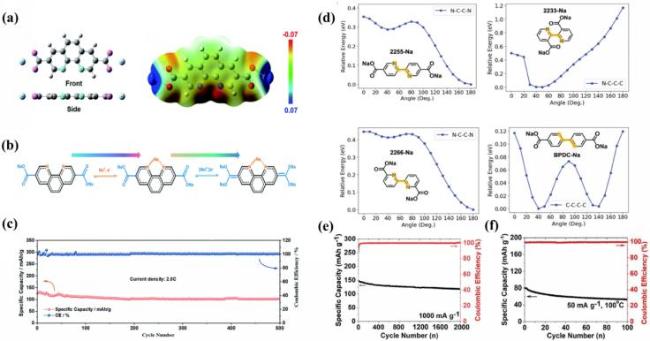
Rational molecular engineering can effectively enhance the conductivity and specific capacity of materials, enabling the efficient application of carboxylate electrode materials. Li et al. used sodium 1,10-phenanthroline-3,8-dicarboxylate (S-PD) as the anode material for sodium-ion batteries. S-PD features a large π-conjugated planar structure with two heteroatoms, N. By extending the molecular conjugation of S-PD, π–π interactions are enhanced, effectively improving electrical conductivity (Fig. 9a).Further studies on this material revealed that, in addition to the carboxylate groups being able to store 2 Na+ions, the N atoms on the phenanthroline ring also provide additional active sites for Na+storage, enabling a 3Na+insertion/extraction process (Fig. 9b). The extension of the molecular structure enhances intermolecular charge-transfer capabilities, while the N atoms on the material also provide additional Na+storage sites. Tests have shown that this material exhibits good diffusion properties and fast reaction kinetics; these two mechanisms work together to effectively enhance the material’s specific capacity. After undergoing long-cycle cycling tests at 2 C, the material achieves a discharge capacity of up to 252 mAh·g-1and a reversible capacity of 126 mAh·g-1(Fig. 9c)[112]. Introducing heteroatoms such as nitrogen or sulfur into the conjugated structure allows them to form covalent bonds with carbon atoms, enhancing the structural stability of the material, improving its cycling stability, and increasing its reversible capacity. Chen et al.[113]designed and synthesized both planar and twisted organic carboxylates by introducing heteroatoms into the conjugated structure and adjusting the positions of carboxylate groups within the aromatic ring, thereby gaining deeper insights into how geometric structure influences the electrochemical performance of carboxylate anodes in sodium-ion batteries (Fig. 9d). The introduction of N atoms not only participates in the molecular conjugation structure but also provides additional Na+storage sites, increasing the material’s specific capacity. At the same time, by carefully designing the molecular structure of the material, these two mechanisms act in concert. Studies have shown that the planar structure reduces steric hindrance among molecules, enhances material stability, and endows the material with a higher specific capacity. At a current density of 50 A·g-1, the initial discharge specific capacity of 2,2′-bipyridine-5,5′-dicarboxylic acid disodium (2255-Na), which has a planar structure, is 210 mAh·g-1, 4.3 times that of the twisted-structure disodium 2,2′-bipyridine-3,3′-dicarboxylate (2233-Na). Testing of these materials reveals that 2255-Na outperforms other carboxylates in terms of highest specific capacity (210 mAh·g-1), longest cycle life (2000 cycles), and best rate performance (up to 5 A·g-1), as shown in Fig. 9e. After 2000 cycles, 2255-Na still maintains a reversible capacity of 123.3 mAh·g-1under conditions of 1 A·g-1. In addition, based on the 2255-Na anode, polyaniline (PANI) cathode, and ether-based electrolyte, high-temperature (up to 100 ℃) all-organic batteries have been realized and exhibit excellent electrochemical performance (Fig. 9f). Many carboxylate electrode materials suffer from a significant decline in electrochemical performance when used in high-temperature industrial equipment; however, the excellent high-temperature performance of 2255-Na makes its application in high-temperature environments feasible and suggests tremendous potential for future applications.
图9 (a) S-PD分子的正视图和侧视图及其静电势分布; (b) S-PD的可逆电化学氧化还原机制; (c) S-PD在2 C倍率下的长期循环稳定性[112]; (d) 在wB97X-D/6-311++G(d,p)理论水平下计算的四个单体的X-C-C′-X二面角的势能面; (e) 2255-Na在钠离子电池中1 A·g-1下的循环寿命和库仑效率; (f) PANI||2255-Na全电池在100 ℃下的循环寿命和库仑效率[113]

Fig.9 (a) Front and side view of S-PD molecule and electrostatic potential distribution; (b) electrochemically reversible redox mechanism of S-PD; (c) long-term cyclic stability of S-PD at 2 C. Adapted with permission[112]. (d) potential energy surfaces of four monomers calculated for X-C-C′-X dihedral angles at wB97X-D/6-311++G(d,p) level; (e) cycle performance and coulomb efficiency of 2255-Na in sodium-ion batteries at 1 A·g-1; (f) cycle performance and Coulomb efficiency of PANI||2255-Na full battery at 100 ℃. Adapted with permission[113]

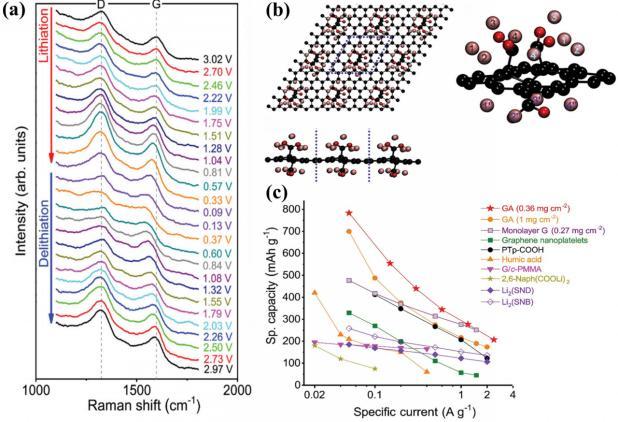
To address the issues of low electrical conductivity and leakage in carboxylic acid electrode materials, Bakandritsos et al.[114]carboxylated conductive graphene to design a densely carboxylated, conductive graphene derivative (graphene acid (GA)) for use as an anode material while maintaining the mechanical and chemical stability of the electrode. By introducing a high density of carboxyl groups onto the graphene framework, multiple lithium ions can be accommodated, significantly increasing the storage sites for lithium ions. Raman measurements and theoretical calculations have revealed that the GA anode exhibits superior charge transport, redox activity, and lithium intercalation properties at the monolayer level, outperforming all previously reported organic anodes (Fig. 10a, b). When the GA anode is compared with other organic anode materials, it demonstrates an actual capacity of 800 mAh·g-1at 0.05 A·g-1, far exceeding that of conventional graphene materials (476 mAh·g-1for monolayer graphene and 330 mAh·g-1for graphene nanosheets). Moreover, at a high current density of 2.0 A·g-1, the GA anode still delivers an actual capacity of 174 mAh·g-1, demonstrating excellent electron transport capabilities and highlighting its potential for practical application in advanced lithium-ion batteries (Fig. 10c).
图10 (a) GA负极在不同电位下的原位拉曼光谱; (b) 锂化GA的顶视图、侧视图和放大视图; (c) 有机材料(PTp-COOH、腐殖酸、G/c-PMMA、2,6-Naph(COOLi)2、Li2(SND)、Li2(SNB))以及使用商业石墨烯(单层和纳米片)制备的电极的性能对比[114]

Fig.10 (a) In situ Raman spectroscopy of GA negative electrode at varying potentials; (b) top, side and enlarged view of lithiated GA; (c) comparison of the properties of organic materials (PTp-COOH,humic acid, G/c-PMMA, 2,6-Naph(COOLi)2, Li2(SND), Li2(SNB)) and electrodes prepared using commercial graphene (single layer and nanosheet)). Adapted with permission[114]

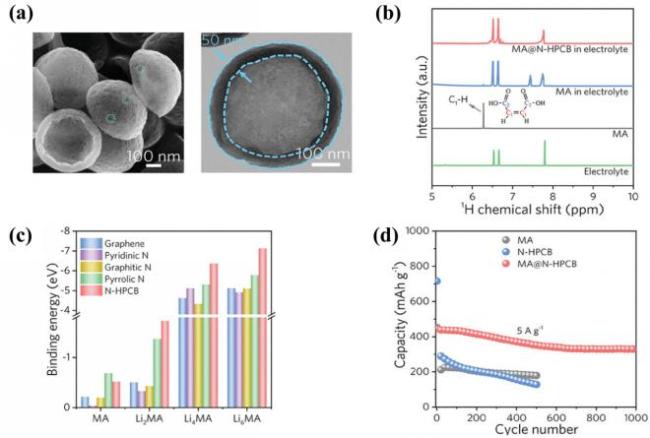
Similarly, to enhance the conductivity and solvent resistance of carboxylic acid compounds, Hu et al.[115]employed a SiO2template-assisted pyrolysis strategy to prepare nitrogen-doped hollow porous carbon bowls (N-HPCBs) as carriers for organic conjugated carboxylic acids (maleic acid, MA), thereby effectively improving the solvent resistance of the organic conjugated carboxylic acid anode (Fig. 11a). As characterized by 1H nuclear magnetic resonance (NMR), as shown in Fig. 11(b), there exists a strong physical interaction between N-HPCBs and MA, which effectively suppresses the dissolution of MA. Fundamentally, this is because N-HPCBs possess a large specific surface area, a well-optimized pore structure, and a high density of nitrogen defect sites. Through physical confinement and chemical bonding, they can inhibit the dissolution of MA and its redox intermediates (LixMA) while promoting the conversion of LixMA (Fig. 11c). Electrochemical performance tests reveal that the MA@N-HPCB electrode delivers a high reversible specific capacity of 1134.9 mAh·g-1at 0.1 A·g-1, whereas pure MA exhibits only 522.8 mAh·g-1of reversible capacity. Moreover, the MA@N-HPCB electrode demonstrates excellent rate capability and outstanding long-term cycling stability: after 985 cycles at 5 A·g-1, it still retains a reversible capacity of 328.8 mAh·g-1, whereas under the same conditions, the reversible capacity of the pure MA electrode drops to 178.6 mAh·g-1after fewer than 500 cycles (Fig. 11d).
图11 (a) N-HPCB的扫描与透射电子显微镜图像; (b) 浸泡在电解液中的MA和MA@N-HPCB的1H核磁共振谱图; (c) 不同物质在LixMA(x=0,2,4,6)上的结合能; (d) MA、N-HPCB和MA@N-HPCB电极在5 A·g-1下的长期循环性能[115]

Fig.11 (a) Scanning and transmission electron microscope images of N-HPCB; (b) 1H NMR spectra of MA and MA@N-HPCB soaked electrolyte; (c) binding energy of different substances on LixMA (x=0,2,4,6); (d) long-cycle performance of MA, N-HPCB and MA@N-HPCB electrodes at 5 A·g-1. Adapted with permission[115]

5.1.3 Imine

Imines are a class of organic compounds containing a carbon-nitrogen double bond, featuring electroactive functional groups and a large π-electron-deficient framework. They hold potential application value as electrode materials in secondary batteries, with high theoretical specific capacity and flexible structural design[116].
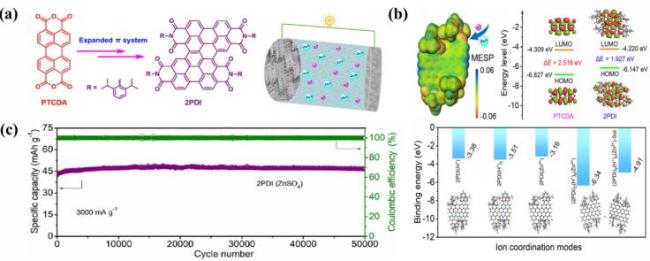
By optimizing the structure of imine molecules, such as by expanding the π-conjugated system, the electron cloud density within the molecule can be increased, thereby enhancing conductivity and capacity. Wang et al.[117]carried out terminal acylation and lateral π-system extension on perylene-3,4,9,10-tetracarboxylic dianhydride (PTCDA), yielding a perylene-based imine derivative (2PDI) with a larger π-conjugated structure, which improved the cycling performance of aqueous zinc-organic batteries (Fig. 12a). Characterization of 2PDI revealed, through molecular electrostatic potential (MESP) maps, that the oxygen atoms of the carbonyl groups in 2PDI exhibit a high negative electrostatic potential, confirming that the carbonyl groups are the electrochemically active centers in this material. At the same time, 2PDI has a relatively narrow band gap, which can promote intrinsic electronic conductivity. DFT calculations further elucidated the adsorption geometries and binding energies of H+and Zn2+ions on the 2PDI molecule, indicating that the interaction between Zn2+and 2PDI enhances battery stability (Fig. 12b). Thanks to the formed π-conjugated structure, 2PDI, as the cathode material for this battery, exhibits high specific capacity and cycling stability: at a current density of 100 mA·g-1, it delivers a discharge capacity of 72.8 mAh·g-1. After 500 cycles, PTCDA retains only 21.2% of its initial capacity, whereas 2PDI, even at a capacity of 3000 mAh·g-1, still retains 99.4% of its capacity after 50,000 cycles (Fig. 12c).
图12 (a) PTCDA和2PDI的分子结构及基于2PDI的水系锌离子电池的示意图; (b) 2PDI分子的范德华表面静电势分布、PTCDA分子的前线分子轨道能量以及分子吸附H+/Zn2+离子的几何构型和计算的结合能; (c) 2PDI电池在3000 mA·g-1下的循环性能和库仑效率[117]

Fig.12 (a) Molecular structure of PTCDA and 2PDI and schematic diagram of water zinc-ion battery based on 2PDI; (b) electrostatic potential distribution on the van der Waals surface of 2PDI, molecular orbital energy levels of PTCDA, and geometries and binding energies of H+/Zn2+ ion adsorption on the molecules; (c) cycle stability and coulomb efficiency of 2PDI battery at 3000 mA·g-1. Adapted with permission[117]

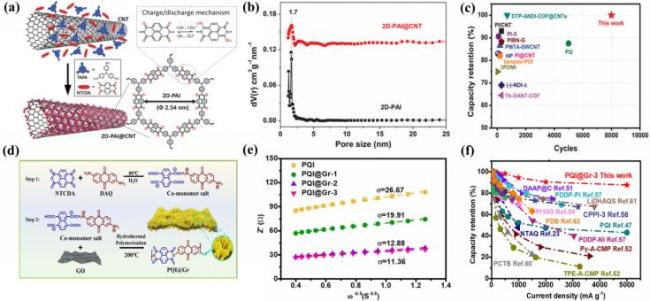
By compositing imine molecules with conductive materials such as graphene and carbon nanotubes, the conductivity and cycling stability of the material can be effectively enhanced. Feng et al.[118]integrated two-dimensional polyarylimide (2D-PAI) with carbon nanotubes (CNTs) and used the resulting composite as an organic cathode material in LIBs (Fig. 13a). The integrated polyarylimide hybrid (2D-PAI@CNT) features abundant π-conjugated redox-active naphthalene diimide units and robust cyclic imide bonds, ensuring material stability. Moreover, the high specific surface area and porous structure of 2D-PAI@CNT facilitate rapid diffusion of lithium ions, enabling high utilization of redox-active sites and fast ion diffusion (Fig. 13b). At a current density of 0.1 A·g-1, the active site utilization of this material reaches 82.9%, which is 3.7 times that of 2D-PAI. In addition, this cathode exhibits high cycling stability: as shown in Fig. 13c, after 8,000 cycles, the capacity retention of the cathode remains at 100%, far exceeding previously reported polyimide electrode materials. In another study, to enhance the conductivity and electrochemical utilization of carbonyl polymers, Zhang et al.[119]in situ incorporated two-dimensional (2D) graphene as a conductive interlayer between 1,4,5,8-naphthalenetetracarboxylic dianhydride (NTCDA) and 2,6-diaminoanthraquinone (DAQ) nanosheets, yielding a three-dimensional open sandwich structure in which conductive graphene sheets are sandwiched between densely interwoven quinone-containing polyimide nanosheets, resulting in a graphene/carbonyl-enriched polyquinoneimide (PQI@Gr) cathode material (Fig. 13d). This three-dimensional open structure features abundant porous channels that provide short diffusion pathways for lithium ions, while its high specific surface area significantly increases the contact area between carbonyl groups and the electrolyte solution, thereby promoting lithium-ion transport and diffusion and enhancing rate performance. The content of graphene in the composite has different effects on the material's performance; as shown in Fig. 13e, PQI@Gr-3, which contains the highest amount of graphene, exhibits the highest lithium-ion diffusion coefficient. Due to these characteristics, compared with pure PQI, the PQI@Gr cathode offers higher capacity: at 5 A·g-1, PQI@Gr-3 delivers a capacity of 179.4 mAh·g-1, which is 1.85 times that of PQI under the same conditions. The superior cycle life and rate performance of this material surpass those of most carbonyl polymer electrodes reported to date (Fig. 13f).
图13 (a) 晶体2D-PAI@CNT合成及能量存储过程示意图; (b) 2D-PAI和2D-PAI@CNT的孔径分布; (c) 与其他聚酰亚胺正极材料的循环性能比较[118]; (d) PQI@Gr的合成路线; (e) PQI和PQI@Gr电极的复阻抗实部与频率平方根(ω-0.5)之间的线性关系; (f) 已报道的PQI@Gr-3以及羰基聚合物正极材料的放大特性[119]

Fig.13 (a) Diagram of crystal 2D-PAI@CNT synthesis and energy storage mechanism; (b) aperture distributions of 2D-PAI and 2D-PAI@CNT; (c) cycle stability comparison against other polyimide cathode materials. Adapted with permission[118]. (d) Preparation pathway of PQI@Gr; (e) linear relationship between the real part of the complex impedance and the square root of the frequency (ω-0.5) of PQI and PQI@Gr electrodes; (f) scalability features of reported PQI@Gr-3 and carbonyl polymer cathode materials. Adapted with permission[119]

5.1.4 Anhydride

Anhydrides, as compounds with high energy density, have structures that can be flexibly adjusted through chemical means, thereby optimizing their performance in electrochemical applications. Importantly, anhydrides contain stable redox-active functional groups, a characteristic that makes them an ideal choice for electrode materials in metal-ion batteries[120].In practical applications, anhydrides can be used as monomers in combination with other monomers, or they can be combined with other monomers to form polymers.
Anhydrides are often used as monomers in combination with other monomers for electrode material applications. Yang et al.[121]incorporated various anhydride monomers into 2,6-diaminoanthraquinone (DAAQ) and successfully synthesized thermally imidized polyimides with different chain structures. Among these, the quinone-containing polyimide (PMAQ) synthesized from phthalic anhydride and DAAQ exhibited a high specific capacity, with PMAQ showing a specific capacity of 160 mAh·g-1as a cathode material at a current density of 0.05 A·g-1.
Anhydride monomers, in conjunction with stable organic frameworks, can yield electrode materials with superior performance. By introducing anhydride monomers and combining them with organic frameworks, the structural stability of the material is enhanced, resulting in a higher capacity retention rate. Li et al.[122]By polymerizing truxene-based triamine with linear anhydrides, two novel polyimide covalent organic frameworks (PI-COFs), COF-JLU85 and COF-JLU86, were synthesized. Covalent organic frameworks can construct more stable elastic structural frameworks and provide open channels for ion transport. Compared with previously used polymer electrode materials, the two materials synthesized by combining the electrode material with this framework exhibit better capacity retention rates, with COF-JLU86 maintaining a capacity retention rate as high as 99.11% after 10,000 cycles at 15 A·g-1.
Although binding to a stable framework helps enhance the stability of electrode materials and maintain their high capacity, the material’s conductivity remains limited. Therefore, incorporating conductive substrates—such as single-walled carbon nanotubes (SWCNTs) or graphene—into the composite has emerged as an effective strategy for improving conductivity. Wu et al. prepared a delaminated polyimide COF composite (P-COF@SWCNT) on the surface of SWCNTs via in-situ condensation of anhydrides and amines, using it as an anode for potassium-ion batteries (Fig. 14a). The open channels provided by the delaminated structure expose more active sites and shorten the ion diffusion pathways, facilitating K+transport. By using single-walled carbon nanotubes as a conductive substrate, this preparation method creates a cross-linked conductive network that facilitates electron transport, ensuring full utilization of electroactive groups. In practical applications, increasing the scan rate reveals a progressively higher capacitance contribution from this electrode, confirming the material’s highly efficient K+storage capability (Fig. 14b). DFT calculations, as shown in Fig. 14c, confirm that K+participates in the carbonylation of imide groups and naphthalene rings via enolization and π-K+interactions. These mechanisms work synergistically to effectively enhance the material’s conductivity, enabling efficient electron transport, accelerating the electrode’s reaction kinetics, and resulting in improved capacity. Before modification, P-COF exhibited an initial capacity of only 121 mAh·g-1at 0.1 A·g-1; in contrast, this anode material achieves an initial capacity of 204 mAh·g-1at 0.7 A·g-1, and also demonstrates extended stability, as illustrated in Fig. 14d [123].
图14 (a) P-COF@SWCNT的合成路线; (b) P-COF@SWCNT在不同扫描速率下电容控制贡献的比例; (c) P-COF插层K+的电荷密度和K+存储机制的示意图; (d) P-COF@SWCNT在0.7 A·g-1下的循环性能以及第1次、第100次和第500次的充放电曲线(示意图)[123]

Fig.14 (a) Preparation method of P-COF@SWCNT; (b) P-COF@SWCNT Ratio of capacitance control contribution at various scan rates; (c) schematic diagram of charge density and K+ storage mechanism of P-COF intercalation K+; (d) cycle stability of P-COF@SWCNT at 0.7 A·g-1 with charge-discharge profiles of the first, 100th, and 500th (illustration). Adapted with permission[123]

5.2 Sulfide

Sulfur-containing organic electrode materials typically consist of compounds containing sulfur, where sulfur atoms can exist in different oxidation states, mainly including sulfides, disulfides, and polysulfides. In applications, the polarity of the electrode (anode or cathode) is determined based on its redox potential and the actual battery design. Sulfides primarily undergo electrochemical reactions through the cleavage and formation of C—S bonds, while disulfides and polysulfides mainly achieve this through the cleavage and formation of S—S bonds. The S—S bond has a relatively low bond energy, making it easier to break and regenerate, thereby facilitating electrochemical reactions. Consequently, disulfides and polysulfides are more widely used in electrode materials[124]..
In general, sulfur’s lower electronegativity imparts sulfides with more flexible and porous structures than oxides, facilitating electron transfer. Benzo[c]thiophene-1(3H)-1(DPTO) exhibits a rigid structure and enhanced conductivity; the introduction of sulfur atoms allows for tunable solubility. Yu et al.[125]replaced the oxygen in DPTO with sulfur to obtain a novel material, benzo[c]thiophene-1(3H)-thione (DPTTO), which serves as a cathode material for lithium-ion batteries (Fig. 15a). Compared to the unmodified DPTO, the sulfide derivative DPTTO exhibits superior conductivity and lower solubility. As shown in Fig. 15b, the C=S vibration peak alternately disappears and reappears during discharge and charge, indicating that lithiation occurs at the C=S bond. At the same time, sulfur’s larger atomic radius and lower electronegativity lead to more extended π-conjugated orbitals, enhancing π–π conjugation, reducing the HOMO–LUMO energy gap, and increasing the material’s electrical conductivity. Studies have found that DPTTO exhibits an electrical conductivity of 1.24 × 10⁻⁷ S·cm-1, significantly higher than that of the unmodified DPTO (2.05 × 10⁻¹⁰ S·cm-1). By pairing a sulfur-rich anode with DPTTO, a fully organic lithium-ion full cell was fabricated, demonstrating superior overall battery performance compared to the unmodified DPTO (Fig. 15c). In the fabricated flexible batteries and sulfur-rich all-organic batteries, the average discharge voltage was 0.65 V, and at a current density of 100 mA·g-1, the average specific capacity after 100 cycles was 75 mAh·g-1 (Fig. 15d). The outstanding electrochemical performance exhibited by DPTTO in both flexible batteries and sulfur-rich all-organic batteries suggests broad application prospects for this material in fields such as flexible electronics, wearable devices, and portable electronic devices.
图15 (a) 含硫正极材料及DPTO的硫化过程; (b) DPTTO在20 mA·g-1下的充放电曲线和原位拉曼光谱; (c) 全有机扣式电池的示意图; (d) 电池在100 mA·g-1下的循环性能[125]

Fig.15 (a) Sulfur-based cathode materials and sulfidation process of DPTO; (b) charge-discharge curve and in-situ Raman spectrum of DPTTO at 20 mA·g-1; (c) illustration of an all-organic button battery; (d) cycle stability of the battery at 100 mA·g-1. Adapted with permission[125]

Organic sulfides can enhance the electrochemical performance of electrode materials when compounded with other materials. Carbon nanotubes exhibit excellent electronic conductivity and can form composites with organic sulfides, thereby improving the overall conductivity of the material. Ai et al.[126]reported on polytrithiocyanuric acid (PTTCA), an organic disulfide cathode material for all-solid-state lithium batteries. PTTCA was compounded with carbon nanotubes to obtain PTTCA@CNT, and a sulfide electrolyte Li7P3S11was used to construct an electrochemically favorable interface (Fig. 16a). The high surface area of CNTs facilitates the formation of an electron transport network, thereby endowing PTTCA@CNT with superior conductivity. As shown in Fig. 16b, the electrical conductivity of PTTCA@CNT/SP/LPS is 4.4×10⁻⁵ S·cm-1, whereas that of PTTCA@SP/SP/LPS is only 5.7×10⁻⁷ S·cm-1. PTTCA also plays a crucial role in this composite material. Experiments have shown that PTTCA exhibits a reversible capacity of 410 mAh·g-1and retains 83% of its capacity after 100 cycles. Compared with previously reported organic cathode materials for all-solid-state lithium batteries based on sulfide electrolytes, this material boasts the highest energy density and cycling performance, making it a high-performance organic cathode material (Figs. 16c and d).
图16 (a) 基于LPS电解质和PTTCA正极的全固态锂金属电池示意图(中间)、正极中LPS与PTTCA的相互作用(左侧)以及使用两种复合材料作为正极的结构(右侧); (b) PTTCA@SP/SP/LPS和PTTCA@CNT/SP/LPS正极颗粒的电子与离子导电性柱状图; (c) 各种阴极材料的Ragone图; (d) 基于硫化物电解质的全固态锂电池中PTTCA与其他有机正极材料的循环性能对比[126]

Fig.16 (a) Diagram of an all-solid-state lithium metal battery featuring LPS electrolyte and PTTCA positive electrode (center), the interaction of LPS and PTTCA in the positive electrode (left) and the structure using two composite materials as the positive electrode (right); (b) bar charts illustrating the electronic and ionic conductivity of PTTCA@SP/SP/LPS and PTTCA@CNT/SP/LPS cathode particles; (c) Ragone chart for different cathode materials; (d) comparison of cycle stability of PTTCA and other organic cathode materials in all-solid-state lithium batteries based on sulfide electrolyte. Adapted with permission[126]

Polysulfides as electrode materials exhibit a pronounced shuttle effect, which adversely affects battery life. Molecular design and composite modification strategies, when employed together, can significantly mitigate this issue. Guo et al.[127]compounded vanadium tetrasulfide (VS4)with CNTs and then introduced diphenyl disulfide (DPDS) as a sulfur acceptor, forming the composite electrode material CNTs/VS4/DPDS (Fig. 17a, b). When charged to 3 V or higher, bis(trifluoromethanesulfonyl)imide (TFSI-) anions can intercalate into VS4, triggering sulfur precipitation. DPDS, acting as a sulfur acceptor, captures the sulfur transferred from VS4, thereby forming diphenyl trisulfide (DPTS) (Fig. 17c). This mechanism effectively reduces the formation and shuttling of polysulfides within the electrode, enhancing the material's energy density and capacity. Compared with the unmodified material, this composite exhibits a higher specific capacity (Fig. 17d). Furthermore, as shown in Fig. 17e, the energy density of the CNTs/VS4/DPDS composite is 575, 507, and 440 Wh·g-1after 50, 150, and 300 cycles, respectively, whereas CNTs/VS4exhibits only 255, 218, and 179 Wh·g-1under the same conditions.
图17 (a) 合成的VS4及CNT/VS4复合物的SEM图像; (b) DPDS电解液添加到CNT/VS4中的示意图; (c) CNTs/VS4/DPDS充放电机制示意图; (d) CNT/VS4/DPDS比容量与CNT/DPDS和CNT/VS4总比容量之间的比较; (e) 三种复合材料在第50、150和300次循环时的质量能量密度的比较[127]

Fig.17 (a) The SEM images of the synthesized VS4 and the CNT/VS4; (b) diagram of adding DPDS electrolyte to CNT/VS4; (c) diagram of the charge-discharge mechanism for CNTs/VS4/DPDS; (d) comparison between the specific capacity of CNT/VS4/DPDS and the sum specific capacity of CNT/DPDS and CNT/VS4; (e) comparison of the mass energy density of the three composite materials at the 50th, 150th, and 300th cycles[127]

5.3 Heterocyclic compounds

Heterocyclic compounds can serve as either cathode or anode materials, depending on their structure. Many heterocyclic compounds exhibit excellent chemical and thermal stability, making them important in electrode materials. Common examples include nitrogen-containing heterocycles such as pyrrole and pyrazine, sulfur-containing heterocycles such as thiophene, and heterocycles containing both types of heteroatoms, such as phenothiazine. When used as electrode materials, these compounds can directly participate in the electrochemical process, as in the case of pyrazine, or they can participate through modification strategies such as metal coordination and compounding[128]..
Heterocyclic compounds such as pyrazine and thiophene-based small molecules are often directly used as electrode materials. These small molecules possess naturally occurring active sites, giving them high redox activity that facilitates electron transfer during battery charge and discharge, thereby endowing the electrodes with superior rate performance. Wang et al.[129]designed and synthesized sodium thiopheno[2-b]thiophene-2,5-dicarboxylate (STTDC), a material containing two thiophene rings connected via a conjugated system to form a backbone structure. The π-conjugated system of the thiophene backbone ring and the highly active sites provided by the sulfur atoms offer rapid electron transport pathways, effectively enhancing the material’s rate performance. Studies have shown that the STTDC electrode exhibits reversible capacities of approximately 412, 356, 298, 251, and 211 mAh·g-1at different current densities (100, 200, 500, 1000, and 2000 mA·g-1), respectively.When the current density is reduced back to 100 mA·g-1, the reversible capacity recovers to 421 mAh·g-1.
In addition to heterocyclic compounds being used as n-type electrode materials as mentioned above, heterocyclic compounds are also commonly used as p-type organic electrode materials, such as phenothiazine derivatives. Single-electron p-type organic materials offer the advantages of high operating voltage and good stability, but their capacity is relatively low. Some multi-electron p-type organic materials have high theoretical capacities but lower stability. Therefore, combining single-electron and multi-electron units can help construct electrode materials with both high capacity and good stability. Wei et al.[130]coupled triphenylamine and phenothiazine molecules to form 4,4′-(10H-phenothiazine-3,7-diyl)bis(N,N-diphenylaniline) (PTZAN). The triphenylamine unit provides additional electron transfer sites, while the phenothiazine unit ensures high voltage and stability. The combined action of these two units gives the PTZAN cathode a high capacity while maintaining stability. Before modification, PTPAN (triphenylamine) had a specific capacity of only 90 mAh·g-1; however, at a current density of 0.1 A·g-1, the PTZAN cathode achieved a specific capacity of 145 mAh·g-1, with a capacity retention rate of 77% after 2000 cycles.
In summary, existing scoring systems have limited predictive capabilities for bleeding events, and their results are inconsistent[25,30,33].
图18 (a) Zn-TPyP、Ni-TPyP、Cu-TPyP和Co-TPyP的原子结构和电荷密度的差异; (b) Zn-TPyP的N 1s XPS谱图; (c) 由不同金属卟啉构建的钠离子电池的循环性能[131]

Fig.18 (a) Variations in atomic structure and charge density of Zn-TPyP, Ni-TPyP, Cu-TPyP and Co-TPyP; (b) N 1s XPS spectrum of Zn-TPyP; (c) cyclic performance of sodium-ion batteries constructed with different metal porphyrins. Adapted with permission[131]

In summary, existing scoring systems have limited predictive capabilities for bleeding events, and their results are inconsistent[25,30,33].
图19 (a) CuTPyP/rGO复合材料中传输锂离子的铜配位和π-π堆叠的示意图; (b) 不同电极材料的循环性能[132]

Fig.19 (a) Diagram of Cu coordination and π-π stacking facilitating Li-ion transport in CuTPyP/rGO composite; (b) cyclic properties of different electrode materials. Adapted with permission[132]

5.4 Organic free radicals

Organic radicals are a class of organic molecules containing unpaired electrons, such as nitroxyl radicals. The presence of unpaired electrons renders organic radicals highly reactive, enabling them to rapidly participate in chemical reactions. Due to their advantages of sustainability, structural flexibility, and potential recyclability, they have attracted widespread attention in the field of organic electrode materials[133].Organic radicals can serve as either cathode or anode materials; most organic radicals are commonly used as cathode materials, losing electrons during charging to form an oxidized state, with the reverse occurring during discharging.
Molecular design is an effective strategy for mitigating high solubility issues by optimizing the structure of different molecules to enhance electrode material performance. Jia et al.[134]introduced a triazole ring into 2,2,6,6-tetramethylpiperidinyloxyl to form DiTEMPO (diTEMPO linked via a 1,2,3-triazole ring). The introduction of the triazole ring increases the molecule's hydrophobicity, thereby reducing its solubility in organic electrolytes and enhancing material stability. Experiments have shown that DiTEMPO has a theoretical capacity of 131.7 mAh·g-1,while its solubility is 9.1 mg·mL-1,which is significantly lower than that of 4-hydroxy-TEMPO (approximately 350 mg·mL-1).
In summary, compositing can effectively enhance material performance. In practical applications, combining organic radicals with conductive materials can yield electrode materials with high rate performance and theoretical capacity. Zhang et al.[135]prepared a PETM/SWNT electrode material by compositing poly(ethylene-alt-2,2,6,6-tetramethyl-1-piperidinyloxy) (PETM) with single-walled carbon nanotubes (SWNTs). The strong affinity between PETM and SWNTs enables the composite material to form a three-dimensional, co-continuous phase network structure. This structure reduces the path length for electron transport while enhancing the structural stability of the material, thereby endowing it with superior cycling stability and rate performance. Testing has shown that after 2000 cycles, the PETM/SWNT electrode retains up to 96% of its initial capacity, and its capacity remains nearly constant over a wide rate range from 5 C (102 mAh·g-1) to 50 C (97 mAh·g-1). When compositing with conductive materials, optimizing the structure of the conductive material can also enhance the performance of the electrode material. Subramaniam et al.[136]created novel composite materials by combining the organic radical TEMPO (2,2,6,6-tetramethyl-1-piperidinylnitroxide) with both pristine and conductive graphene. The active radical can coordinate with lithium ions to form stable complexes, while lithium ions can also adsorb onto the graphene surface via electrostatic interactions. Defective graphene can further increase the number and activity of adsorption sites, enabling the composite material to achieve higher capacity and energy density. Experimental results show that the theoretical specific capacity of the defective graphene (GrDV)-TEMPO composite is 132.14 mAh·g-1, which is higher than that of the pristine graphene-TEMPO composite (127.93 mAh·g-1).

5.5 Other Organic Electrode Materials

Each electrode material has its own unique properties, leading to different modification applications. In addition to the organic electrode materials mentioned above, there are many other electrode materials, such as conjugated polymers, metal–organic frameworks, and covalent organic frameworks, which are also widely used in electrodes.

5.5.1 Conjugated polymers

In the molecular structure of conjugated polymers, there is a spatially extended π-bond system. The long-chain structure and the π-conjugated system endow these materials with excellent flexibility and structural diversity, giving them great application potential in organic electrode materials[137].Among them, three special types of conjugated polymers—donor-acceptor (D-A), acceptor-acceptor (A-A), and donor-acceptor-donor (D-A-D)—have attracted considerable attention in applications due to their unique electronic structures and functional properties.
Donor-acceptor (D-A) polymers consist of alternating electron-donating donor units (D) and electron-withdrawing acceptor units (A). The D-A structure enhances charge transport efficiency, significantly improving the material's conductivity. Ma et al.[138]prepared a donor-acceptor (D-A) conjugated polymer, poly(dihydrophenazine-thiophene) (pTTPZ), using dihydrophenazine (PZ) and thiophene (TT). The D-A structure in this material enables efficient charge transfer between PZ and TT units, allowing electrons to move more smoothly along the polymer chain and thereby enhancing the material's electrical conductivity. Linear sweep voltammetry (LSV) tests revealed that the electrical conductivity of this D-A material is one order of magnitude higher than that of poly(dihydrobenzophenoxazine) (p-DPPZ) and poly(thieno[3,2-b]thiophene) (p-PATT), which do not contain a D-A acceptor. Furthermore, p-TTPZ exhibits excellent rate performance, maintaining a high capacity of 124.2 mAh·g-1 even at a high current density of 10 A·g-1, far exceeding the capacities of p-DPPZ (53.1 mAh·g-1) and p-PATT (14 mAh·g-1) under the same conditions.
On the basis of forming a D-A structure, carbon nanostructures can be further introduced. Marcilla et al.[139]introduced carbon additives (MWCNTs) during the polymerization of D-A type materials RCMPs, forming the composite material IEP-11-Xy, which was further processed into a self-supporting buckypaper electrode, thereby developing high-performance organic electrode materials (Fig. 20a). Carbon nanostructures provide efficient electron transport pathways while enhancing the mechanical stability of the electrode, significantly improving its performance. Studies have found that the discharge capacity of IEP-11@M20, prepared by directly adding MWCNTs via a physical method, is only 30 mAh·g-1, with an active material utilization rate of just 26% (theoretical capacity is 149 mAh·g-1). In contrast, IEP-11-M20 prepared using this strategy (containing 20% by weight of MWCNTs) exhibits a high gravimetric capacity of 83.7 mAh·g-1and a high areal capacity of 6.3 mAh·cm-2, and maintains a capacity retention rate of over 80% after 1000 cycles, demonstrating significant application potential (Fig. 20b).
图20 (a) IEP-11聚合物和IEP-11-Xy复合材料的合成图以及电极制备方法; (b) IEP-11-S5R5@S10巴克纸电极在锂离子半电池中的电化学性能与最先进的高质量负载聚合物电极对比, 包括比容量按活性物质质量(空心符号)/总电极质量(实心符号)计算; 电化学活性位点的质量利用率; 面积容量与质量负载的关系; 面积容量与面积电流的关系[139]

Fig.20 (a) Diagram of IEP-11 polymer and IEP-11-Xy composite materials, and electrode preparation process; (b) electrochemical performance of IEP-11-S5R5@S10 buckypaper electrodes in lithium-ion half-cells compared to state-of-the-art high-mass-loading polymer electrodes, including specific capacity calculated based on the mass of active material (hollow symbols)/total electrode mass (solid symbols); mass utilization rate of electrochemically active sites; relationship between areal capacity and mass loading; and relationship between areal capacity and current density. Adapted with permission[139]

In A-A type polymers, both adjacent units in the polymer chain are acceptors, resulting in a narrow band gap that can effectively enhance electrochemical reactivity. However, the lack of donor units leads to lower charge separation efficiency, limiting their practical applications. In D-A-D type polymers, two donors flank a central acceptor in the polymer chain, providing enhanced charge transfer capabilities and enabling higher energy densities when used in materials. Bhosale et al. studied the D-A-D electrode material 2,3,7,8-tetra(4-(3,6-di-tert-butyl-9H-carbazol-9-yl)phenyl)pyrazino[3-g]quinoxaline quinone (DTC-PQx-DTC). The combination of donors and acceptors broadens the potential window of the electrode material, allowing it to operate over a wider voltage range. Tests have shown that in a 1 M H2SO4electrolyte, the potential window of DTC-PQx-DTC reaches -0.2 V to 1.0 V, which is broader than that of conventional organic electrode materials[140].All three types of conjugated polymers possess unique advantages and occupy an important position in the field of organic electrode materials.

5.5.2 Metal-Organic Frameworks (MOFs)

MOFs are a class of crystalline porous materials formed through the self-assembly of metal ions or metal clusters with organic ligands. MOFs possess numerous advantages, such as an extremely high specific surface area, tunable pore size and shape by selecting different organic ligands and metal ions, and an environmentally friendly synthesis process. Due to these advantages, MOFs have garnered widespread attention in the field of electrode materials[141].When applied, MOFs and their derivatives can serve as precursors for preparing electrode materials and function as molecular sieves, thereby yielding electrode materials with excellent performance.
When MOFs are used as precursors for electrode materials, they can serve as templates to prepare electrode materials with high capacity and long cycle stability. Wu et al.[142]used the imidazole-based zeolite-8 (ZIF-8) as a template to synthesize the cathode material V2O3/V3O5/Zn2VO4@NC composite (referred to as ZnVO-800). During the synthesis process, the porous and hierarchical structure of ZIF-8 was preserved, resulting in a uniform particle size distribution for ZnVO-800, which helps enhance the structural stability of the material. After 3,000 cycles, the ZnVO-800 cathode material exhibited a capacity retention of 90.8%, with a reversible capacity of 100.1 mAh·g-1. The nanoporous structure of MOFs enables them to function as molecular sieves in applications. In lithium–sulfur batteries, the shuttle effect is a significant issue; using MOFs as molecular sieves can prevent polysulfides from migrating from the cathode to the anode, thereby mitigating the shuttle effect and achieving higher capacity. Luo et al. combined dimethylammonium zinc formate (DMAZF), which possesses an antiferroelectric perovskite structure, with CNTs and sulfur to prepare a DMAZF/CNTs/sulfur electrode. The nanostructure of DMAZF acts as a physical molecular sieve to separate polysulfides and prevent their migration, while Zn2+, acting as a Lewis acid site, attracts polysulfides and enhances chemical adsorption. The combined action of these two mechanisms effectively restricts the migration of polysulfides (Fig. 21a). As shown in Fig. 21b, this electrode outperforms two other materials in terms of both capacity and cycle stability. At a sulfur loading of 5 mg·cm-2, the electrode delivers specific capacities of 1260 and 1007 mAh·g-1at 0.05 and 0.1 C, respectively. Even at a high sulfur loading of 7 mg·cm-2, the capacity decay rate is only 0.12% per cycle after 500 cycles at 0.5 C (Fig. 21b)[143].
图21 (a) DMAZF晶体结构堆积图、网络窗口尺寸、金属节点以及描述多硫化物抑制过程和锂离子通过纳米孔传输的机制; (b) DMAZF/硫/碳纳米管、Br-UIO-66/硫/碳纳米管和UIO-66/硫/碳纳米管的循环性能[143]

Fig.21 (a) DMAZF crystal structure accumulation map, network aperture dimensions, metal nodes and mechanisms describing polysulfide inhibition and Li-ion conduction through nanopores; (b) cyclic properties of DMAZF/Sulfur/CNTs, Br-UIO-66/Sulfur/CNTs, and UIO-66/Sulfur/CNTs. Adapted with permission[143]

5.5.3 Covalent Organic Frameworks (COFs)

COFs are crystalline porous polymeric materials formed by organic molecules connected via covalent bonds, featuring ordered pore structures, large framework structures, and strong covalent bonding, thus enabling diverse applications in electrode materials[144].It is precisely due to the molecular structure of COFs that, in practical applications, electrode material performance can be enhanced through molecular engineering strategies such as altering conjugation length and chemical doping.
The strong covalent bonds in COFs can link organic building blocks to form 2D structures, yielding electrode materials with high rate capability. Kim et al. combined an organic building block containing an azo group with a thiazole ring to synthesize a two-dimensional covalent organic framework (AZO-1) based on thiazole ring linkages. This structure features an extended π-conjugated system, and the molecular structural modification design enables a two-electron transfer process to occur in a single step, enhancing electron transport efficiency and improving the battery’s rate performance. Testing has shown that AZO-1 can undergo more than 5,000 cycles at a high rate of 10 C, and achieves a high power density of approximately 2800 W·kg-1 at 40 C[145].
By adjusting the size of the conjugated units, the cyclic stability of COF electrode materials can be enhanced. Zhang et al.[146]demonstrated that modulating the size of the conjugated units allows for the tuning of molecular orbital energies, charge transport capabilities, and spin electron densities in the active units of COFs, thereby optimizing the performance of COF electrodes (Fig. 22a).In this study, polyimide COFs based on benzene, naphthalene, and perylene diimide conjugated units were synthesized, designated as Be-PICOF, Na-PICOF, and Pe-PICOF, respectively. Using ENa-PICOF as a representative sample, the redox mechanism of this material in lithium-ion batteries was investigated, as shown in Fig. 22b. Through schematic diagrams and electron paramagnetic resonance (EPR) spectroscopy, the critical role of imine radicals in the redox process was revealed, indicating that the electrochemical performance of the electrode can be improved by adjusting the size of the imine conjugated units. Increasing the size of the imide conjugated units effectively enhances the cyclic stability of the electrode material. EBe-PICOF has the smallest conjugated unit; experimental results (Fig. 22c) show that at 1000 mA·g-1, after 1200 cycles, EBe-PICOF exhibits rapid capacity decay, whereas ENa-PICOF and EPe-PICOF, with larger conjugated units, still retain 76% and 81% of their initial capacity after 10,000 cycles.
图22 (a) 共价有机框架的化学结构; (b) PICOFs的代表性氧化还原机制以及ENa-PICOF的原位电子顺磁共振光谱; (c) PICOFs在1000 mA·g-1下的循环性能[146]

Fig.22 (a) Chemical structure of covalent organic framework; (b) illustrative redox mechanism of PICOFs and in situ electron paramagnetic resonance spectra of ENa-PICOF; (c) cyclic stability of PICOFs at 1000 mA·g-1. Adapted with permission[146]

Chemical doping can enhance the electrical conductivity of COF electrode materials, resulting in excellent rate performance. Melle-Franco et al.[147]used tetrathiafulvalene (TTF) as a building block and phenyl (ph) linkers to synthesize COF electrode materials. Through chemical doping, the number of free charge carriers was increased, thereby enhancing the material’s electrical conductivity. Taking TTF-Ph-COF as an example, iodine doping resulted in higher electrical conductivity, increasing from 2.66 × 10⁻⁸ S·cm-1before doping modification to 8.50 × 10⁻⁵ S·cm-1after doping.

6 Conclusion and Outlook

Organic electrode materials, with their strong designability, abundant resources, and environmentally friendly nature, have brought new opportunities for the development of the battery field. This article conducts an in-depth study of the characteristics, classification, and applications of organic electrode materials, systematically reviewing the modification and application of different types of organic electrode materials in the battery field. From the perspective of material modification, the main strategies include molecular design, polymerization, and compounding. Molecular design primarily involves elemental doping, expansion of molecular structures, and construction of conjugated structures; polymerization mainly involves linking small-molecule monomers into long-chain polymers; compounding includes combining organic electrode materials with conductive materials (such as graphene and carbon nanotubes) and organic frameworks. These modification methods effectively enhance the electrochemical performance of electrode materials, such as capacity, conductivity, and cycling stability, thereby extending the service life of batteries.
In addition, the modification and enhancement of organic electrode materials also play a crucial role in commercial applications. Thanks to their lightweight nature and high specific capacity, these materials hold great promise for use in portable electronic devices, electric vehicles, and wearable devices. During application, different modification strategies can be employed to optimize performance. From the perspective of material functionality, issues such as insufficient electrical conductivity and poor low-temperature performance can be mitigated by adjusting molecular structures and employing composite approaches. For instance, modifying porphyrin molecules by introducing electron-donating groups (such as methyl) and electron-accepting groups (such as chlorine atoms) yields materials with high capacity and long cycle life, enabling extended battery life in portable electronic devices[154]; combining dibenzothiophene-5,7,12,14-tetrone (DTT) with reduced graphene oxide (r-GO) produces the DTT@r-GO composite material, which exhibits significantly improved low-temperature performance compared to the individual components, allowing it to operate reliably at an extreme low temperature of -50 ℃ when used in zinc-organic batteries, thereby addressing the issue of poor low-temperature performance in electrode materials for electric vehicles[155]; chemically bonding 2,6-diaminoanthraquinone (DAAP) to carbon fiber felt (C) produces a material with higher electrical conductivity than DAAP alone, making it suitable for energy storage systems[156]. From the perspective of external conditions, preparation techniques can be used to adjust electrolyte concentrations and thereby optimize the performance of electrode materials. Ultra-thin micro-batteries fabricated using atomic/molecular layer deposition (ALD/MLD) technology have significant application potential in microelectronic devices[157]; adjusting the electrolyte concentration can improve the cycling stability of poly(2,6-anthraquinonesulfonimide) (PAQS) in metal-ion batteries, providing technical support for the material’s application in low-cost energy storage systems[158]. The practical applications of organic electrode materials extend far beyond these examples. By continuously enhancing material performance from both intrinsic and extrinsic perspectives, the pace of large-scale commercialization can be accelerated.
To further enhance the performance of organic electrode materials, future research could focus on the following aspects:
(1) Advancements in modification technologies. In large-scale practical applications, an ideal organic electrode material should exhibit a high specific capacity, a high operating potential, and long cycle life. However, when organic electrode materials are used in various metal-ion batteries, challenges remain in terms of voltage, capacity, and conductivity. To address voltage issues, electron-withdrawing functional groups can be introduced into the molecular structure to modulate electron density and enhance overall voltage; alternatively, molecular structures can be optimized to expand conjugated systems, increasing electron delocalization and improving electron transport performance. For capacity, multiple electroactive centers can be incorporated into a single organic structure while reducing the weight of electrochemically inactive components. By polymerizing the organic portion of the material into high-molecular-weight, insoluble polymers, the material’s cycle life can be extended; during polymerization, the material’s structure can be adjusted and the length of polymer chains controlled to optimize polymerization effects and prolong material usage. To enhance material conductivity, conductive carbon is often added to the structure, which can result in a relatively high proportion of non-active material in the electrode. This issue can be effectively addressed by utilizing π–π stacking interactions to grow organic materials in situ on the surfaces of graphene and carbon nanotubes. Furthermore, leveraging the high density of redox sites in organic materials and hybridizing them with inorganic electrode materials (such as MXenes, MnO2,and V2O5,etc.) represents another breakthrough, enabling the combination of their respective advantages and leading to substantial performance improvements.
(2) Electrolyte engineering. When electrodes are used, their compatibility with the electrolyte must be considered to ensure optimal performance. In aqueous batteries, the introduction of polar functional groups should be avoided, while in non-aqueous electrolytes, the structural stability of the materials must be ensured to prevent side reactions with the electrolyte. The selection of an appropriate electrolyte requires consideration of the organic electrode material’s compatibility, electrochemical stability window, and solubility in the electrolyte; for example, the material’s operating potential should align with the electrochemical window of the organic electrolyte to avoid electrolyte decomposition. An important trend in electrolyte engineering is the shift from traditional flammable organic liquid electrolytes to more stable and safer alternatives, such as aqueous electrolytes and (quasi-)solid-state electrolytes. In the application of these electrolytes, new electrolyte formulations and additives must be developed to address challenges such as enhancing ion transport, broadening the operating window, and optimizing the electrode/electrolyte interface, thereby enabling organic electrode materials to deliver improved performance in synergy with these electrolytes. Future research in electrolyte engineering must adhere to green and environmentally friendly principles, aiming to enhance battery performance while minimizing environmental impact.
(3) Artificial intelligence and machine learning. Integrating artificial intelligence (AI) and machine learning (ML) into battery research can facilitate material discovery and system optimization. Unlike traditional experiments, AI and ML can predict electrochemical performance metrics such as specific capacity, voltage distribution, and cycle stability. Given the diversity of organic molecules, effectively leveraging these two technologies can support the development of organic electrode materials. AI can be used to explore new materials; by training ML on databases of known compounds, promising new electrode materials can be identified. At the same time, AI can help optimize material synthesis conditions, accelerating the material design and synthesis process and reducing the time required for traditional experimental design. Furthermore, combining characterization methods with AI and ML during experimentation can effectively advance the material R&D process, significantly promoting the development of organic electrode materials.
(4) Battery design and performance evaluation. When designing batteries, experiments are often conducted under relatively mild conditions, which can lead to discrepancies between the performance of electrode materials in real-world applications and the experimental results, thereby hindering their commercialization. Therefore, when testing the performance of batteries based on organic electrode materials, it is essential to conduct tests under more challenging and commercially relevant conditions. This approach can effectively bridge the gap between laboratory results and practical applications.
In summary, organic electrode materials have opened up diverse possibilities for the battery field. Although challenges remain in their application, various modification strategies can effectively address existing issues. With the continuous advancement of technology, it is expected that the application of organic electrode materials will be further promoted, ultimately enhancing battery performance and accelerating the commercialization process.
[1]
Lu Y, Chen J. Nat. Rev. Chem., 2020, 4(3): 127.

[2]
Zhang X H, Li Z, Luo L G, Fan Y L, Du Z Y. Energy, 2022, 238: 121652.

[3]
Chen D Y, Zhao Q, Zheng Y, Xu Y Z, Chen Y H, Ni J S, Zhao Y. Sensors, 2023, 23(12): 5609.

[4]
Mosquera N, Chauque S, Torresi R M, Calderón J A. Electrochim. Acta, 2023, 449: 142210.

[5]
Croguennec L, Palacin M R. J. Am. Chem. Soc., 2015, 137(9): 3140.

[6]
Sarfraz N, Kanwal N, Ali M, Ali K, Hasnain A, Ashraf M, Ayaz M, Ifthikar J, Ali S, Hendi A, Baig N, Ehsan M F, Shah S S, Khan R, Khan I. Energy Storage Mater., 2024, 71: 103619.

[7]
Kitsche D, Strauss F, Tang Y S, Bartnick N, Kim A Y, Ma Y, Kübel C, Janek J, Brezesinski T. Batter. Supercaps, 2022, 5(6): e202100397.

[8]
Seymour I D, Quérel E, Brugge R H, Pesci F M, Aguadero A. ChemSusChem, 2023, 16(12): e202202215.

[9]
Liu Y, Liu S, Zhang L H, Cao F Y, Wang L M. Front. Energy Res., 2021, 9: 626681.

[10]
Puttaswamy R, Kotrappanavar N S, Ghosh D. Mater. Adv., 2021, 2(15): 5006.

[11]
Pavlovskii A A, Pushnitsa K, Kosenko A, Novikov P, Popovich A A. Materials, 2023, 16(1): 177.

[12]
Xu P F, Jin X, Zhang B, Wang X, Liu D. Batteries, 2023, 9(2): 85.

[13]
Kim J, Ling J H, Lai Y H, Milner P J. ACS Mater. Au, 2024, 4(3): 258.

[14]
Jia M, Zhang L X, Yuan Q. Molecules, 2023, 28(16): 5953.

[15]
Ma M Y, Du M, Liu Y, H Y, Yang J L, Hao Z L, Guo J Z, Wu X L. Particuology, 2024, 86: 160.

[16]
Shahsavarifar S, Rezapour M, Mehrpooya M, Ehrlich H, Jesionowski T, Ganjali M R, Luque R, Rahimi-Nasrabadi M. J. Electrochem. Soc., 2024, 171(8): 080536.

[17]
Xiao J, Huang Y, Ma Y W, Li C W, Fu L, Zeng W P, Wang X C, Li X, Wang M S, Guo B S, Lin Y H, Cao H J. Energy Storage Mater., 2023, 63: 103046.

[18]
Aivali S, Beaumont C, Leclerc M. Prog. Polym. Sci., 2024, 148: 101766.

[19]
Kondratiev V V, Holze R. Chem. Pap., 2021, 75(10): 4981.

[20]
Ravikumar K, Dangate M S. Heliyon, 2024, 10(13): e33002.

[21]
Jasper I, Valério T L, Klobukoski V, Pesqueira C M, Massaneiro J, Camargo L P, Dall’ Antonia L H, Vidotti M. Chemosensors, 2023, 11(5): 261.

[22]
Zhu X Q, Ali R N, Song M, Tang Y T, Fan Z W. Polymers, 2022, 14(24): 5538.

[23]
Liu L Y, Chen K, Zhang L G, Ryu B K. Int. J. Energy Res., 2023, 2023: 2601098.

[24]
Cui D Y, Wang R H, Qian C F, Shen H, Xia J J, Sun K W, Liu H, Guo C, Li J F, Yu F, Bao W Z. Materials, 2023, 16(4): 1430.

[25]
Wang Z, Pan F, Zhao Q, Lv M L, Zhang B. Front. Chem., 2022, 10: 1055649.

[26]
Wu S F, Wang W X, Li M C, Cao L J, Lyu F C, Yang M Y, Wang Z Y, Shi Y, Nan B, Yu S C, Sun Z F, Liu Y, Lu Z G. Nat. Commun., 2016, 7: 13318.

[27]
He Y P, Zhao D D, Lin H B, Huang H, Li H D, Guo Z C. Curr. Opin. Electrochem., 2022, 32: 100878.

[28]
Starodub T, Michalkiewicz S. Materials, 2024, 17(23): 5864.

[29]
Chen N, Xu H C. Green Synth. Catal., 2021, 2(2): 165.

[30]
Tong Y F, Wang X H, Zhang Y, Huang W W. Inorg. Chem. Front., 2021, 8(3): 558.

[31]
Shimoga G, Palem R R, Choi D S, Shin E J, Ganesh P S, Saratale G D, Saratale R G, Lee S H, Kim S Y. Metals, 2021, 11(6): 905.

[32]
Sun J L, Xu Y F, Lv Y Q, Zhang Q C, Zhou X S. CCS Chem., 2023, 5(6): 1259.

[33]
Dantas R, Ribeiro C, Souto M. Chem. Commun., 2023, 60(2): 138.

[34]
Yaqoob L, Noor T, Iqbal N. Int. J. Energy Res., 2022, 46(4): 3939.

[35]
Mahamad Yusoff N F, Idris N H, Noerochim L. Int. J. Energy Res., 2022, 46(2): 667.

[36]
Thakur A K, Ahmed M S, Park J, Prabakaran R, Sidney S, Sathyamurthy R, Kim S C, Periasamy S, Kim J, Hwang J Y. Int. J. Energy Res., 2022, 46(4): 4033.

[37]
Mori R. J. Solid State Electrochem., 2023, 27(4): 813.

[38]
Yang Z H, Wang F, Meng P Y, Luo J Y, Fu C P. Energy Storage Mater., 2022, 51: 63.

[39]
Peng X Y, Xie Y, Baktash A, Tang J Y, Lin T E, Huang X, Hu Y X, Jia Z F, Searles D J, Yamauchi Y, Wang L Z, Luo B. Angew. Chem. Int. Ed., 2022, 61(25): e202203646.

[40]
Peng X Y, Baktash A, Huang Y X, Alghamdi N, You J K, Ning J, Xin R J, Hao L, Qiu T F, Wang B, Zhi L J, Wang L Z, Luo B. Energy Storage Mater., 2024, 71: 103674.

[41]
Studer G, Schmidt A, Büttner J, Schmidt M, Fischer A, Krossing I, Esser B. Energy Environ. Sci., 2023, 16(9): 3760.

[42]
Tao F, Wei G K, Xu X Q, Xu W Z, Xie W, Yang J H, Luo Z H, Li X, Qiao J. Ionics, 2023, 29(9): 3619.

[43]
Lu Y, Wu G H, Zhao X H, Wang X X, Zhang W M, Li Z Y. J. Colloid Interface Sci., 2023, 651: 296.

[44]
Desai A V, Ettlinger R, Seleghini H S, Stanzione M G, Cabañero J M, Ashbrook S E, Morris R E, Armstrong A R. J. Mater. Chem. A, 2024, 12(20): 12119.

[45]
Lee J, Kim Y, Park S, Shin K H, Jang G, Hwang M J, Kim D, Min K A, Park H S, Han B, Ng D K P, Lee L Y S. Energy Environ. Mater., 2023, 6(4): e12468.

[46]
Ye H L, Li Y G. Energy Fuels, 2021, 35(9): 7624.

[47]
Wang C G, Ji Q, Chu R R, Ullah Z, Zheng M G, Dong X, Sun Y, Li Q, Liu L W. ACS Appl. Energy Mater., 2021, 4(11): 12641.

[48]
Le Pham P N, Wernert R, Cahu M, Sougrati M T, Aquilanti G, Johansson P, Monconduit L, Stievano L. J. Mater. Chem. A, 2023, 11(6): 3091.

[49]
Mohammadiroudbari M, Huang J H, Kim E Y, Yang Z Z, Chen F, Luo C. J. Mater. Chem. A, 2023, 11(31): 16636.

[50]
Aqil A, Jérôme C, Boschini F, Mahmoud A. Batter. Supercaps, 2021, 4(2): 374.

[51]
Lv S S, Yuan J J, Chen Z, Gao P, Shu H B, Yang X K, Liu E H, Tan S T, Ruben M, Zhao-Karger Z, Fichtner M. ChemSusChem, 2020, 13(9): 2286.

[52]
Li L Y, Zhang G B, Deng X M, Hao J, Zhao X, Li H F, Han C P, Li B H. J. Mater. Chem. A, 2022, 10(39): 20827.

[53]
Li R J, Yu J Y, Chen F Y, Su Y Q, Chan K C, Xu Z-L. Adv. Funct. Mater., 2023, 33(30): 2214304.

[54]
Cang R B, Zhao C L, Ye K, Yin J L, Zhu K, Yan J, Wang G L, Cao D X. ChemSusChem, 2020, 13(15): 3911.

[55]
Das P, Ball B, Sarkar P. Phys. Chem. Chem. Phys., 2022, 24(36): 21729.

[56]
Yuan S Y, Huang X, Kong T Y, Yan L, Wang Y G. Acc. Chem. Res., 2024, 57(10): 1550.

[57]
Guo X L, Apostol P, Zhou X, Wang J D, Lin X D, Rambabu D, Du M Y, Er S, Vlad A. Energy Environ. Sci., 2024, 17(1): 173.

[58]
Smok T, Abouzari-Lotf E, Frentzen S, Diemant T, Fichtner M. Batter. Supercaps, 2023, 6(4): e202300026.

[59]
Ajayi S O, Dolla T H, Sikeyi L L, Akinola A O, Maboya W K, Liu X Y, Makgwane P R, Mathe M K. Mater. Today Sustain., 2024, 27: 100899.

[60]
Guo Y, Guo J P, Li B, Zheng Y, Lei W, Jiang J M, Xu J C, Shen J J, Li J L, Shao H Y. Inorganics, 2023, 11(4): 148.

[61]
Wang Q Y, O’Carroll T, Shi F C, Huang Y F, Chen G R, Yang X X, Nevar A, Dudko N, Tarasenko N, Xie J Y, Shi L Y, Wu G, Zhang D S. Electrochem. Energy Rev., 2024, 7: 15.

[62]
Ding C J, Zhao Y X, Yin W F, Kang F Y, Huang W W, Zhang Q C. Angew. Chem. Int. Ed., 2025, 64(6): e202417988.

[63]
Wang X X, Du D Y, Yan Y, Ren L F, Xu H Y, Wen X J, Zeng T, Tian G L, Liu S, Fan F X, Shu C Z. Energy Storage Mater., 2023, 63: 103033.

[64]
Yang P, Wu Z Z, Wang S Y, Li M, Chen H, Qian S S, Zheng M T, Wang Y, Li S, Qiu J X, Zhang S Q. Angew. Chem. Int. Ed., 2023, 62(49): e202311460.

[65]
Holguin K, Mohammadiroudbari M, Qin K Q, Luo C. J. Mater. Chem. A, 2021, 9(35): 19083.

[66]
Tong Y H, Wei Y, Song A J, Ma Y Y, Yang J P. ChemSusChem, 2024, 17(7): e202301468.

[67]
Zhang W S, Huang W W, Zhang Q C. Chem. Eur. J., 2021, 27(20): 6131.

[68]
Tang M, Sun H, Su L, Gao Y J, Chen F, Wang Z B, Wang C L. Batter. Supercaps, 2023, 6(1): e202200402.

[69]
He Y Y, Wei Q Q, An N, Meng C C, Hu Z A. Molecules, 2022, 27(22): 7692.

[70]
Lakraychi A E, Yao Y. Joule, 2023, 7(5): 858.

[71]
Bhosale M E, Chae S D, Kim J M, Choi J Y. J. Mater. Chem. A, 2018, 6(41): 19885.

[72]
Liu X, Liu C F, Lai W Y, Huang W. Adv. Mater. Technol., 2020, 5(9): 2000154.

[73]
Cui S Z, Miao W X, Peng H, Ma G F, Lei Z Q, Zhu L, Xu Y X. Chem. Eur. J., 2024, 30(12): e202303320.

[74]
Wang Y H, Zhao Y X, Xu X L, Gao W Z, Zhang Q C, Huang W W. Batter. Supercaps, 2024, 7(12): e202400440.

[75]
Li M, Ruan W, Zhang M. Polymer, 2024, 307: 127244.

[76]
Banerjee A, Khossossi N, Luo W, Ahuja R. J. Mater. Chem. A, 2022, 10(29): 15215.

[77]
Li M J, Hicks R P, Chen Z F, Luo C, Guo J C, Wang C S, Xu Y H. Chem. Rev., 2023, 123(4): 1712.

[78]
Shi M M, Das P, Wu Z-S, Liu T-G, Zhang X Y. Adv. Mater., 2023, 35(42): 2302199.

[79]
He X Q, Cheng R Q, Sun X Y, Xu H, Li Z, Sun F Z, Zhan Y, Zou J X, Laine R M. J. Magnes. Alloys, 2023, 11(12): 4359.

[80]
Li Z H, Tan J, Wang Y, Gao C Y, Wang Y G, Ye M X, Shen J F. Energy Environ. Sci., 2023, 16(6): 2398.

[81]
Innocenti A, Adenusi H, Passerini S. InfoMat, 2023, 5(11): e12480.

[82]
Chae M S, Nimkar A, Shpigel N, Gofer Y, Aurbach D. ACS Energy Lett., 2021, 6(8): 2659.

[83]
Fu Q, Zhao L, Luo X L, Hobich J, Döpping D, Rehnlund D, Mutlu H, Dsoke S. Small, 2024, 20(24): 2311800.

[84]
Luo C, Xu G-L, Ji X, Hou S, Chen L, Wang F, Jiang J J, Chen Z H, Ren Y, Amine K, Wang C S. Angew. Chem. Int. Ed., 2018, 57(11): 2879.

[85]
Park H, Kye H, Lee J S, Joo Y C, Min D J, Kim B G, Park S Y, Kwon J E. Energy Environ. Mater., 2024, 7(5): e12694.

[86]
Li D J, Guo Y X, Zhang C X, Chen X H, Zhang W S, Mei S L, Yao C J. Nano-Micro Lett., 2024, 16: 194.

[87]
Xiong Y F, Wang Z H, Li Y J, Chen Y L, Dong L J. J. Am. Chem. Soc., 2024, 146(32): 22777.

[88]
Wu Z Z, Liu Q R, Yang P, Chen H, Zhang Q C, Li S, Tang Y B, Zhang S Q. Electrochem. Energy Rev., 2022, 5(S1): 26.

[89]
Wang J D, Lakraychi A E, Liu X L, Sieuw L, Morari C, Poizot P, Vlad A. Nat. Mater., 2021, 20(5): 665.

[90]
Fang L, Zhou L M, Cui L M, Jiao P X, An Q Y, Zhang K. J. Energy Chem., 2021, 63: 320.

[91]
Song Z P, Zhou H S. Energy Environ. Sci., 2013, 6(8): 2280.

[92]
He X S, Wei B S, Tang W, Guo M C, Hu J H, Lin Z F, Fan C. Adv. Funct. Mater., 2024, 34(13): 2311740.

[93]
Peng C X, Wang F X, Chen Q, Yan X L, Wu C X, Zhang J R, Tang W, Chen L, Wang Y G, Mao J F, Dou S X, Guo Z P. Adv. Funct. Mater., 2024, 34(34): 2401001.

[94]
Gong L, Yang X Y, Gao Y, Yang G X, Yu Z H, Fu X Z, Wang Y H, Qi D D, Bian Y Z, Wang K, Jiang J Z. J. Mater. Chem. A, 2022, 10(31): 16595.

[95]
Yang H Q, Lee J, Cheong J Y, Wang Y F, Duan G G, Hou H Q, Jiang S H, Kim I D. Energy Environ. Sci., 2021, 14(8): 4228.

[96]
Huang J H, Dong X L, Guo Z W, Wang Y G. Angew. Chem. Int. Ed., 2020, 59(42): 18322.

[97]
Liu Z L, Meng X Y, Cui F C, Zhu G S. J. Mater. Chem. A, 2024, 12(35): 23769.

[98]
Wang L Y, Ma C, Wei X, Chang B B, Wang K X, Chen J S. J. Mater. Chem. A, 2020, 8(17): 8469.

[99]
Wang H G, Yuan S, Si Z J, Zhang X B. Energy Environ. Sci., 2015, 8(11): 3160.

[100]
Han C P, Li H F, Shi R Y, Zhang T F, Tong J, Li J Q, Li B H. J. Mater. Chem. A, 2019, 7(41): 23378.

[101]
Zhao B W, Si Y B, Guo W, Fu Y Z. Adv. Funct. Mater., 2022, 32(19): 2112225.

[102]
Wu M S, Luu N T H, Chen T H, Lyu H L, Huang T W, Dai S, Sun X G, Ivanov A S, Lee J C, Popovs I, Kaveevivitchai W. Adv. Energy Mater., 2021, 11(31): 2100330.

[103]
Zhu Y F, Jin W, Gao H G, Chen Y L, Wu T R, Wu D Y, Huang Y C, Guo D F, Chen Z D, Huang Q H, Cao J Y, Xu J. Chem. Eng. J., 2023, 462: 142229.

[104]
Gao Y J, Li G F, Wang F, Chu J, Yu P, Wang B S, Zhan H, Song Z P. Energy Storage Mater., 2021, 40: 31.

[105]
Li Y X, Lu Y, Ni Y X, Zheng S B, Yan Z H, Zhang K, Zhao Q, Chen J. J. Am. Chem. Soc., 2022, 144(18): 8066.

[106]
Yan L J, Zhao C X, Sha Y, Li Z H, Liu T F, Ling M, Zhou S D, Liang C D. Nano Energy, 2020, 73: 104766.

[107]
Wu G H, Lv C C, Lv W R, Li X X, Zhang W M, Li Z Y. J. Energy Chem., 2022, 74: 174.

[108]
Wu S C, Taylor M, Guo H C, Wang S H, Han C, Vongsvivut J, Meyer Q, Sun Q, Ho J, Zhao C. Angew. Chem. Int. Ed., 2024, 63(52): e202412455.

[109]
Wu F, Zhao L J, Wang L, Xie L L, Han Q, Qiu X J, Cao X Y, Zhu L M. Nano Energy, 2025, 134: 110534.

[110]
Zhang F, Wu M M, Wang X C, Xiang Q, Wu Y, Ding J, Sun Y. Chem. Eng. J., 2023, 457: 141335.

[111]
Li G F, Wang J X, Chu J, Li M L, Hu Z J, Wang F, Han Y, Cai T T, Song Z P. Energy Storage Mater., 2022, 47: 1.

[112]
Jia K K, Liu H T, Huang G M, Zhang J W, Liu X R, Li L, Zhu L N, Wu F. J. Mater. Chem. A, 2022, 10(28): 14917.

[113]
Huang J H, Li S, Wang Y, Kim E Y, Yang Z Z, Chen D C, Cheng L, Luo C. Small, 2024, 20(14): 2308113.

[114]
Obraztsov I, Bakandritsos A, Šedajová V, Langer R, Jakubec P, Zoppellaro G, Pykal M, Presser V, Otyepka M, Zbořil R. Adv. Energy Mater., 2022, 12(5): 2103010.

[115]
Zhou J Z, Xu N, Su L H, Chen J, Hu X B, Li S, Hu Z L, Xu Y L, Xu L L, Liu J J, Zhang L. Adv. Funct. Mater., 2024, 34(51): 2409952.

[116]
Li L, Yin Y J, Hei J P, Wan X J, Li M L, Cui Y. Small, 2021, 17(10): 2005752.

[117]
Li L, Wang Y J, Gong W B, Lin M J, Wei L, Li Q W, Zhang Q C, Sun L T. Chem. Eng. J., 2023, 465: 142824.

[118]
Wang G, Chandrasekhar N, Biswal B P, Becker D, Paasch S, Brunner E, Addicoat M, Yu M H, Berger R, Feng X L. Adv. Mater., 2019, 31(28): 1901478.

[119]
Xiao Z, Xiang G, Zhang Q, Wang Y, Yang Y. Energy Environ. Mater., 2023, 6(5): e12399.

[120]
Wang H, Yao C J, Nie H J, Wang K Z, Zhong Y W, Chen P W, Mei S L, Zhang Q C. J. Mater. Chem. A, 2020, 8(24): 11906.

[121]
Zhang Q, He Y, Wang Y L, Lu J, Jiang N, Yang Y K. Adv. Funct. Mater., 2023, 33(5): 2211590.

[122]
Li J L, Zhang J K, Hou Y X, Suo J Q, Liu J C, Li H, Qiu S L, Valtchev V, Fang Q R, Liu X M. Angew. Chem. Int. Ed., 2024, 63(52): e202412452.

[123]
Luo X X, Li W H, Liang H J, Zhang H X, Du K D, Wang X T, Liu X F, Zhang J P, Wu X L. Angew. Chem. Int. Ed., 2022, 61(10): e202117661.

[124]
Zou R, Liu W W, Ran F. InfoMat, 2022, 4(8): e12319.

[125]
Zhang B J, Yang X D, He B, Wang Q Q, Liu Z S, Yu D M, He G. J. Mater. Chem. A, 2021, 9(25): 14444.

[126]
Yang Z H, Wang F, Hu Z J, Chu J, Zhan H, Ai X P, Song Z P. Adv. Energy Mater., 2021, 11(48): 2102962.

[127]
Wang Z Y, Li X, Guo W, Fu Y Z. Adv. Funct. Mater., 2021, 31(16): 2009875.

[128]
Zhang Y, Li Y, Yao S Y, Ali N, Kong X R, Wang J L. Energy Storage Mater., 2024, 71: 103544.

[129]
Ma C, Wang L Y, Shu M H, Hou C C, Wang K X, Chen J S. J. Mater. Chem. A, 2021, 9(19): 11530.

[130]
Qiu X, Xu J, Zhou K, Huang X, Liao M C, Cao Y J, Zhou G, Wei P, Wang Y G. Angew. Chem. Int. Ed., 2023, 62(30): e202304036.

[131]
Yang M Q, Jing Q H, Zhang J J, Teh J J, Chen Y Z, Zhou W J, Hu B, Lin X L, Lee H K, Rosei F, Wang L N. Nano Energy, 2024, 129: 110005.

[132]
Zhou W J, Yang M Q, Chen Y Z, Jing Q H, Fang Q L, Yan Y C, Wang L N. J. Mater. Sci. Technol., 2024, 191: 192.

[133]
Gu S, Chen J J, Hussain I, Wang Z Q, Chen X, Ahmad M, Feng S P, Lu Z G, Zhang K L. Adv. Mater., 2024, 36(17): 2306491.

[134]
Zhang K, Xie Y, Monteiro M J, Jia Z F. Energy Storage Mater., 2021, 35: 122.

[135]
Chen Y G, Liu X, Lao Z Q, Yang K, Li F Z, Chen L, Mai K C, Zhang Z S. J. Mater. Chem. A, 2022, 10(25): 13286.

[136]
Shanmugam S, Nachimuthu S, Subramaniam V. Phys. B Condens. Matter, 2021, 611: 412700.

[137]
Wu Y, Liu Y, Emrick T, Russell T P. Prog. Polym. Sci., 2020, 103: 101222.

[138]
Fu M L, Chen Y, Jin W H, Dai H C, Zhang G Q, Fan K, Gao Y B, Guan L N, Chen J Z, Zhang C Y, Ma J, Wang C L. Angew. Chem. Int. Ed., 2024, 63(5): e202317393.

[139]
Molina A, Patil N, Ventosa E, Liras M, Palma J, Marcilla R. ACS Energy Lett., 2020, 5(9): 2945.

[140]
Ambore S D, Bhosale S V. J. Mol. Struct., 2025, 1328: 141307.

[141]
Shen M H, Ma H L. Coord. Chem. Rev., 2022, 470: 214715.

[142]
Wu X T, Yin C S, Zhang M F, Xie Y Q, Hu J J, Long R L, Wu X M, Wu X W. Chem. Eng. J., 2023, 452: 139573.

[143]
Rana M, AL-Fayaad H A, Luo B, Lin T E, Ran L B, Clegg J K, Gentle I, Knibbe R. Nano Energy, 2020, 75: 105009.

[144]
Zhao X J, Pachfule P, Thomas A. Chem. Soc. Rev., 2021, 50(12): 6871.

[145]
Singh V, Kim J, Kang B, Moon J, Kim S, Kim W Y, Byon H R. Adv. Energy Mater., 2021, 11(17): 2003735.

[146]
Gu S, Ma X X, Chen J J, Hao R, Wang Z Q, Qin N, Zheng W, Gan Q M, Luo W, Li M Q, Li Z Q, Liao K M, Guo H, Liu G Y, Zhang K L, Lu Z G. J. Energy Chem., 2022, 69: 428.

[147]
Valente G, Dantas R, Ferreira P, Grieco R, Patil N, Guillem-Navajas A, Rodríguez-San Miguel D, Zamora F, Guntermann R, Bein T, Rocha J, Braga M H, Strutyński K, Melle-Franco M, Marcilla R, Souto M. J. Mater. Chem. A, 2024, 12(36): 24156.

[148]
Wang X Z, Li G F, Han Y, Wang F, Chu J, Cai T T, Wang B S, Song Z P. ChemSusChem, 2021, 14(15): 3174.

[149]
Obrezkov F A, Somova A I, Fedina E S, Vasil’ev S G, Stevenson K J, Troshin P A. Energy Technol., 2021, 9(1): 2000772.

[150]
Obrezkov F A, Shestakov A F, Traven V F, Stevenson K J, Troshin P A. J. Mater. Chem. A, 2019, 7(18): 11430.

[151]
Li C, Xue J, Huang A, Ma J, Qing F Z, Zhou A J, Wang Z H, Wang Y H, Li J Z. Electrochim. Acta, 2019, 297: 850.

[152]
Glatz H, Lizundia E, Pacifico F, Kundu D P. ACS Appl. Energy Mater., 2019, 2(2): 1288.

[153]
Zhou L, Zhang Y, Amzil S, Qiu T P, Xu W J, Jiang F, Fang Z B, Huang J J, Dai G L. Appl. Surf. Sci., 2021, 542: 148581.

[154]
Huang X H, Zhou Y M, Zeng Y L, Chen X, He F F, Wang T, Lan D H, Liu W, Tan S T, Gao P. Chem. Eng. J., 2023, 470: 144248.

[155]
Zhang R Y, Xu H, Luo D R, Chi J X, Fan Z J, Dou H, Zhang X G. Chem. Eng. J., 2023, 458: 141336.

[156]
Peng H L, Chen P G, Yang X, Xue Z H, Wang S P, Na J, Yu J X, Yamauchi Y. J. Mater. Chem. A, 2020, 8(23): 11521.

[157]
Heiska J, Nisula M, Karppinen M. J. Mater. Chem. A, 2019, 7(32): 18735.

[158]
Hu Y Y, Gao Y, Fan L, Zhang Y N, Wang B, Qin Z H, Zhou J, Lu B G. Adv. Energy Mater., 2020, 10(48): 2002780.

Outlines

/