Home Journals Progress in Chemistry
Progress in Chemistry

Abbreviation (ISO4): Prog Chem      Editor in chief: Jincai ZHAO

About  /  Aim & scope  /  Editorial board  /  Indexed  /  Contact  / 
Review

Synthesis and Application of Water-Soluble D-A-D Type Near Infrared Two-Region Fluorescent Molecules

  • Yongzhen Chu ,
  • Pengfei Sun , * ,
  • Quli Fan , *
Expand
  • State Key Laboratory of Flexible Electronics (LoFE) & Institute of Advanced Materials (IAM), Nanjing University of Posts & Telecommunications, Nanjing 210023, China
* (Pengfei Sun);
(Quli Fan)

Received date: 2025-02-24

  Revised date: 2025-04-18

  Online published: 2025-09-12

Supported by

National Natural Science Foundation of China(22375102)

National Natural Science Foundation of China(52373142)

National Natural Science Foundation of China(U24A2077)

Abstract

D-A-D molecule refers to a class of conjugated structure molecules composed of an electron donor and an electron acceptor. The NIR two-region fluorescence imaging dominated by such molecules has the advantages of good penetration effect and high imaging clarity. It has high application potential in clinical diagnosis. However, such molecules usually contain conjugated benzene ring structures. This means that the water solubility of these molecules is not good, which greatly limits the wider application of NIR-Ⅱregion fluorescence imaging. In recent years, D-A-D molecules have usually been modified to improve their water solubility. This review introduces four methods to improve water solubility by end-modified hydrophilic polyethylene glycol, modified other hydrophilic polymer chains, modified by protein or peptide, and end-ionized modification. The design methods and related applications of water-soluble D-A-D molecules are introduced in detail. Finally, the further development of water-soluble D-A-D small molecules in the field of NIR-Ⅱ region fluorescence imaging is prospect.

Contents

1 Introduction

2 PEG

2.1 Simple modified type

2.2 Targeted imaging

2.3 Drug-carrying

3 Polymer

3.1 Imaging

3.2 Drug-carrying and therapy

4 Protein, peptide

4.1 Targeted imaging

4.2 Therapy

5 Ionize

5.1 Imaging

5.2 Therapy

6 Conclusion and outlook
Cite this article

Yongzhen Chu , Pengfei Sun , Quli Fan . Synthesis and Application of Water-Soluble D-A-D Type Near Infrared Two-Region Fluorescent Molecules[J]. Progress in Chemistry, 2025 , 37(10) : 1555 -1568 . DOI: 10.7536/PC20250210

1 Introduction

Fluorescence imaging, with its non-radioactive nature, rapid feedback, and high sensitivity, holds significant value in clinical applications such as tumor detection[1].In the field of biological fluorescence imaging, light absorption by biological tissues poses numerous challenges. Extensive research has shown that when the wavelength of light reaches the second near-infrared window (NIR-Ⅱ, 1000–1700 nm), light scattering and autofluorescence by biological tissue components are reduced, resulting in lower tissue absorption. Compared to the traditional visible light and first near-infrared window (NIR-Ⅰ, 750–1000 nm), the second near-infrared window offers superior spatial resolution and feature contrast at greater imaging depths. NIR-Ⅱ fluorescence imaging demonstrates great potential in medical imaging, including guiding tumor resection surgeries using NIR-Ⅱ fluorescence imaging[23],lipid-based imaging enabled by fluorescence imaging[4],and clear deep-tissue vascular fluorescence imaging, which opens up new possibilities for monitoring stroke[56].
Currently, commonly used second near-infrared (NIR-II) luminescent materials can be mainly categorized into inorganic materials, organic conjugated polymers, and small molecules. Inorganic materials exhibit favorable optical properties and superior imaging performance; however, their biotoxicity and poor biodegradability hinder their practical application[7-8]. In contrast, organic materials offer better biocompatibility and metabolic rates[9]. After years of research, a series of water-soluble organic molecules with a D-A-D structure, suitable as NIR-II fluorescent agents, have been developed.
D-A-D molecules, or donor–acceptor–donor molecules, are characterized by a molecular architecture in which an electron donor (D: Donor) and an electron acceptor (A: Acceptor) are covalently linked, forming a molecular system with a well-defined energy level structure. The electron donor typically features an electron-rich conjugated system, while the electron acceptor possesses an electron-deficient conjugated system[10]. The luminescence mechanism of D-A-D molecules is primarily based on intramolecular charge transfer processes[11]. When a D-A-D molecule is excited by external light, electrons migrate from the electron donor to the electron acceptor, generating an exciton. Within the molecule, the exciton is transferred between the donor and acceptor, during which energy is converted. This energy conversion ultimately leads to the emission of light. Specifically, as the exciton is transferred between the donor and acceptor, energy is released in the form of light, resulting in luminescence. Generally, D-A-D molecules exhibit poor hydrophilicity due to their inherently hydrophobic conjugated structures. Given that biological environments are aqueous, this presents significant challenges for the application of hydrophobic D-A-D molecules. However, their water solubility can be enhanced by introducing hydrophilic functional groups, such as hydroxyl, sulfonic acid, and amine groups, into the molecular structure. Additionally, the water solubility of D-A-D molecules can be improved by modulating intermolecular interactions, including hydrogen bonding, electrostatic interactions, and van der Waals forces.
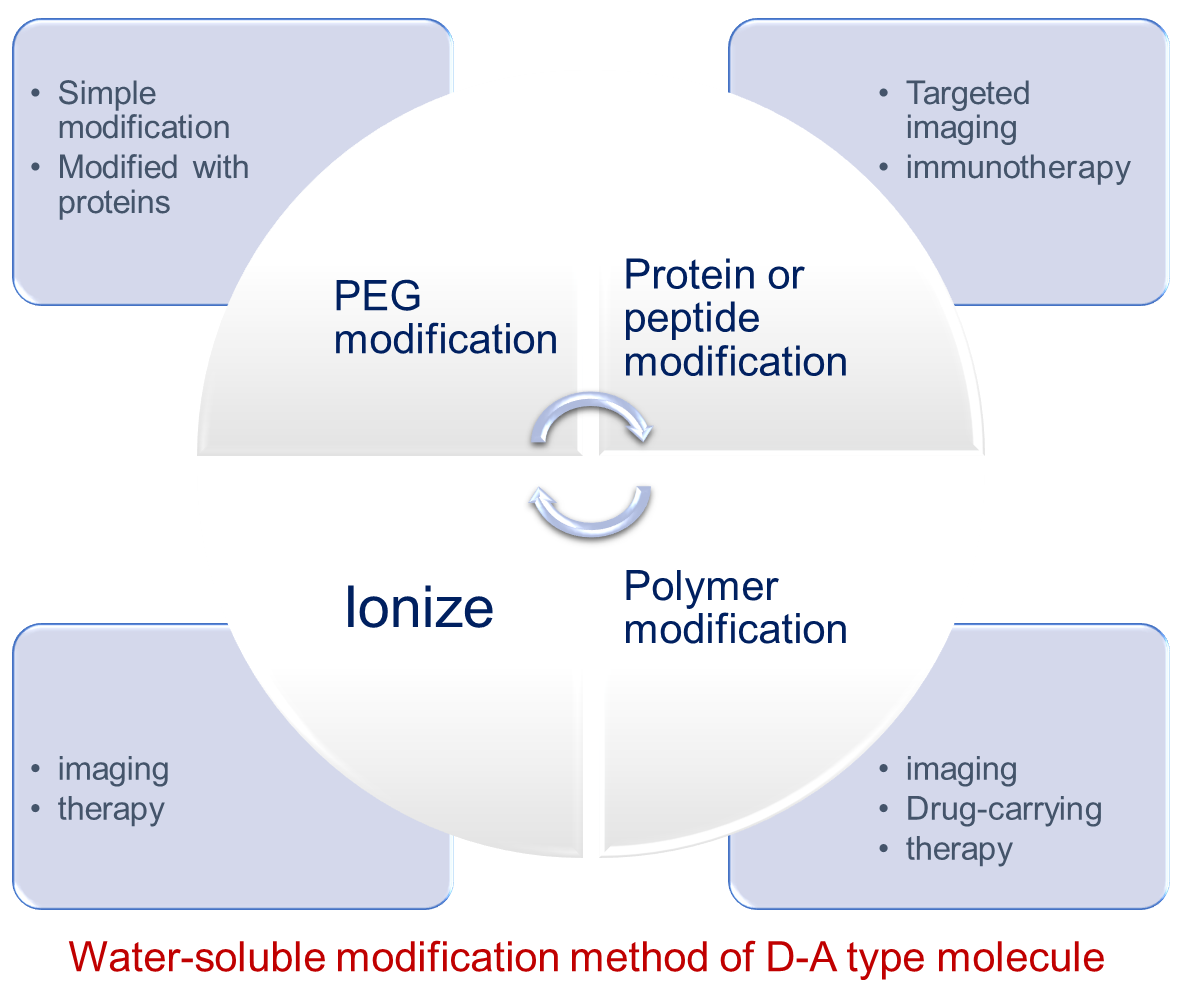
In practical applications, D-A-D-type molecules are often modified by conjugating them with hydrophilic polymers, proteins, or peptides, and by introducing ions to enhance their water solubility. This article will introduce a series of water-soluble D-A-D-type molecules to provide insights for related research.

2 Polyethylene glycol (PEG)

Polyethylene glycol (PEG) is a hydrophilic polymer that is widely used in fields such as drug delivery due to its excellent biocompatibility. Modifying D-A-D-type molecules with PEG is a common approach; PEG can enhance the hydrophilicity and biocompatibility of D-A-D-type molecules and, in some studies, even improve their optical properties.

2.1 Simple modification type

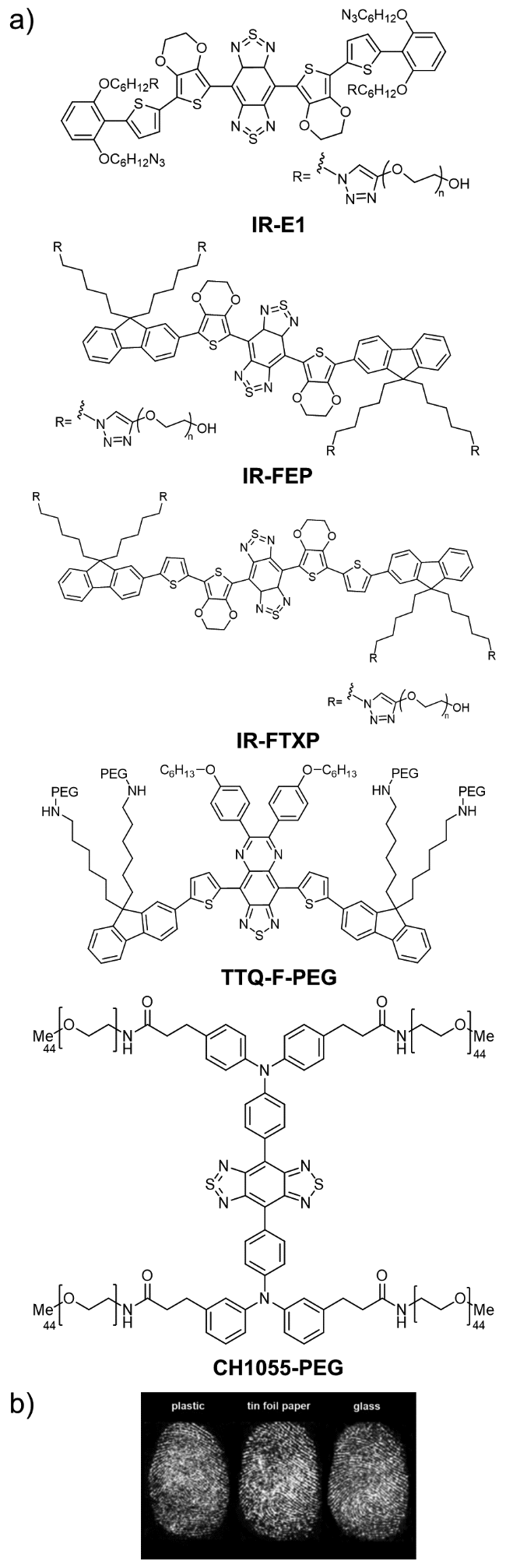
In recent years, some D-A-D-type molecules that have been simply modified with PEG chains have been developed (Fig. 1a).
图1 (a) 利用PEG链简单修饰的D-A-D型分子。 (b) TTQ-F-PEG的指纹成像效果图[16]

Fig.1 (a) D-A-D type molecule simply modified by PEG chain. (b) Fingerprint imaging effect of TTQ-F-PEG[16]

The Dai Hongjie research group[12-14]used molecular engineering and click chemistry to synthesize a series of PEG-modified D-A-D molecules (IR-E1, IR-FEP, IR-FTXP) between 2016 and 2018. These molecules employed the click reaction between azide and alkyne groups to achieve PEG modification, thereby significantly improving their water solubility. Taking molecule IR-E1 as an example, after PEG modification, its hydrodynamic diameter in water is 3.6 nm, with a weight-average molecular weight of approximately 4.5 kDa, and its maximum hydrodynamic diameter does not exceed 5.5 nm. The relatively low molecular weight (~4.5 kDa) and small hydrodynamic diameter (3.6 nm) enable efficient renal excretion via glomerular filtration. Meanwhile, the fluorescence intensity of IR-E1 in water, phosphate-buffered saline, and fetal bovine serum does not diminish over time, indicating high aqueous stability. This molecule can also cross the blood–brain barrier, allowing for brain imaging in the second near-infrared window and demonstrating good performance in detecting brain injuries. The Hong Xuechuan research group[15]developed a D-A-D molecule named CH1055 in 2016. In their study, they also used PEG modification to enhance the water solubility of CH1055 (CH1055-PEG).
Fan Quli’s research group[16]synthesized PEG-modified TTQ-F in 2021. After identifying TTQ-F as the best-performing D-A-D-type molecule among several candidates, they modified TTQ-F with PEG of a molecular weight of 5 kDa, yielding TTQ-F-PEG (Fig. 1a).During the modification process, they employed a rapid reaction between the bromine group at the end of the TTQ-F chain and the amino group of mPEG-NH2. When the concentration of TTQ-F-PEG in water reached 5 mg·L-1, it still exhibited excellent water solubility. TTQ-F-PEG possesses a well-dispersed spherical structure with an average diameter of 140 nm. TTQ-F-PEG demonstrates good photostability in water, fetal bovine serum, culture medium, and phosphate-buffered saline. Notably, solid TTQ-PEG also retains excellent luminescent properties, a feature that makes it potentially applicable to fingerprint imaging (Fig. 1b).

2.2 Targeted Imaging

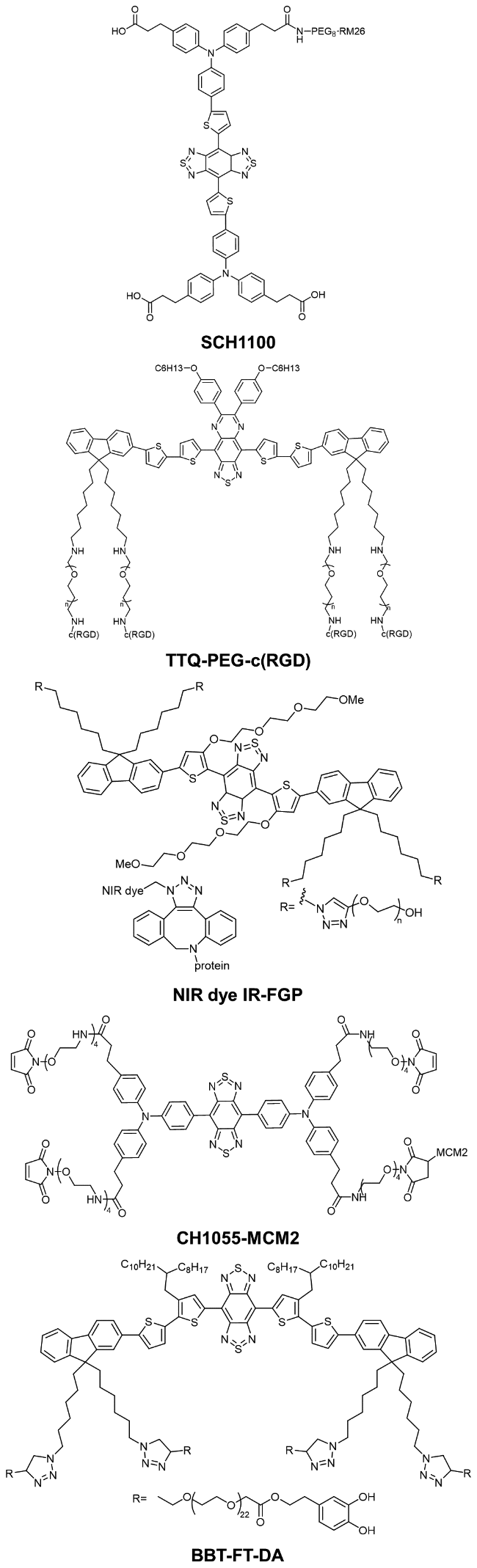
Single PEG modification may not meet the complex requirements of practical applications. Based on PEG modification, substances such as proteins and peptides can be introduced (Figure 2),which can enhance the targeting of D-A-D-type molecules, boost their biological activity, and reduce their immunogenicity. Additional protein modifications can further improve the stability and water solubility of the molecules, especially in complex in vivo biological environments.
图2 具有蛋白或多肽修饰的PEG修饰D-A-D分子

Fig.2 PEG-modified D-A-D molecules with protein or polypeptide modifications

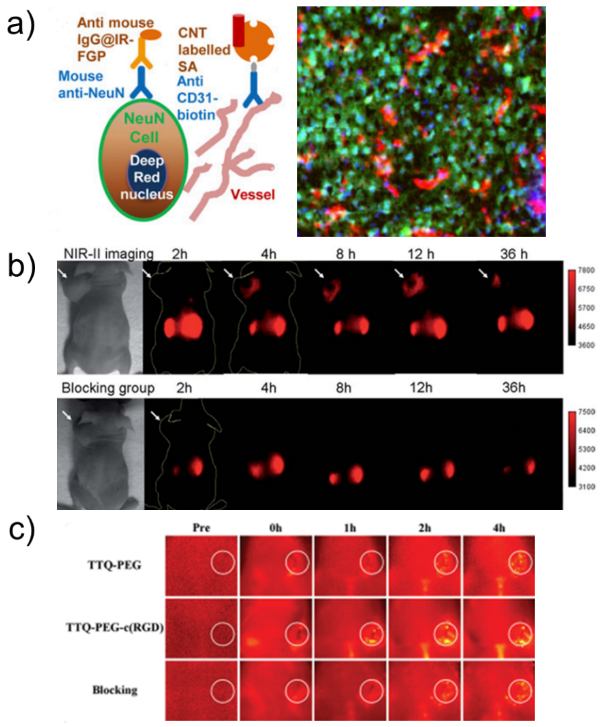
The Dai Hongjie research group[17]designed a D-A-D molecular protein conjugate (IR-FGP) in 2016. They used sodium azide and alkyne-functionalized PEG chains to react with bromine groups at the alkyl chain termini, thereby modifying the ends of IR-FGP with two azide groups and two PEG chains, giving it good water solubility and biocompatibility. The two azide groups can then undergo further bioconjugation via click chemistry. Before coupling IR-FGP with proteins, the proteins must first be treated. The amino groups on the protein are initially linked to dibenzocyclooctyne (DBCO)-PEG4-NHS ester to introduce an alkyne group; the DBCO-modified protein subsequently reacts with the azide-modified IR-FGP to form a dye-protein conjugate. The conjugate is then purified using density gradient centrifugation. After incubating this complex with cells, strong fluorescence with a wavelength exceeding 1100 nm was observed in SCC cells, while almost no fluorescence was observed in U87 cells, demonstrating the complex's excellent selectivity. It also successfully enabled multicolor imaging in mouse brain tissue (Figure 3a).
图3 (a) IR-FGP多色成像。 (b) SCH1100靶向成像。 (c) TTQ-PEG-c(RGD)靶向成像[17-18,20]

Fig.3 (a) IR-FGP multi-color imaging. (b) SCH1100 targeted imaging. (c) TTQ-PEG-c(RGD) targeted imaging[17-18,20]

Hong Xuechuan's research group[18]developed a D-A-D type molecule, SCH1100, in 2016. They screened the best-performing molecule, Q4, from four candidates and used Q4 as the basis to construct SCH1100. To enhance solubility, they first conjugated the targeting peptide RM26 with an NH2-PEG8azide compound, in which the azide end was modified with an amine group. The resulting product was then subjected to amidation with the carboxyl group of Q4-1, yielding SCH1100. SCH1100 exhibited high photostability in phosphate-buffered saline (PBS), water, and mouse serum, with only slight degradation after continuous irradiation for 1 hour. After 24 hours of in vitro incubation at different concentrations, human PCa cell lines (PC3) and NIH-3T3 cells maintained high viability, indicating that SCH1100 has high in vitro biocompatibility. In addition, SCH1100 demonstrated excellent targeting specificity for prostate cancer (Figure 3b).
As mentioned earlier, Hong Xuechuan et al.[19]developed CH1055. In a 2018 study, they modified CH1055 using PEG and antibody proteins via an amidation reaction, yielding the CH1055-MCM2 molecule. They first prepared CH1055-PEG4-SU, which contains a maleimide group, and then directly conjugated it with an MCM2-targeting antibody to produce CH1055-MCM2. The CH1055-MCM2 probe exhibits high MCM2-targeting specificity for HCC tumor tissue, with fluorescence signals in the target organs significantly higher than those in normal organs other than the liver and kidneys.
Fan Quli's research group[20]synthesized the D-A-D type molecule TTQ-PEG-c(RGD) in 2020. To obtain a molecule with both excellent water solubility and targeting properties, they first synthesized TTQ-PEG-NH2and then condensed it with c(RGD) to synthesize TTQ-PEG-c(RGD). The hydrodynamic diameter of the nanoparticles formed by this molecule in water is approximately 50 nm, with no significant change in diameter within 24 hours. After co-incubation with cells at a concentration of 50 mg·mL-1for 24 hours, the cell viability reached over 95%. As shown in Figure 3, with the passage of time, the fluorescence signal of TTQ-PEG-c(RGD) gradually targets the vessel side containing the thrombus, thereby distinguishing thrombotic vessels from healthy vessels and demonstrating the excellent thrombus-targeting ability of TTQ-PEG-c(RGD) (Figure 3c)).

2.3 Drug-loaded

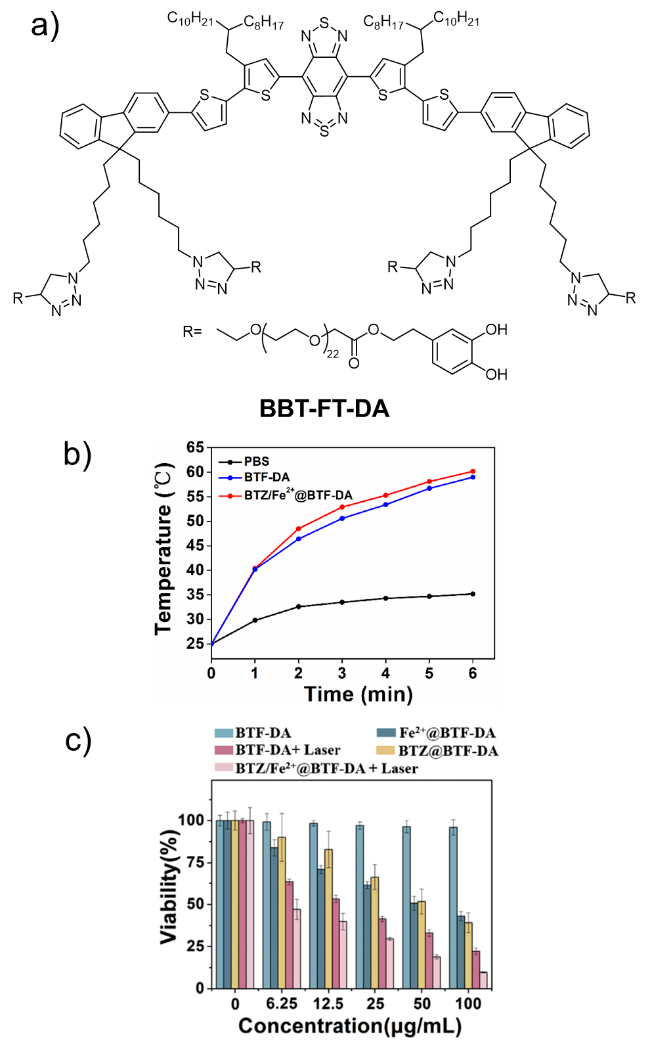
In addition, D-A-D-type molecules with PEG modification can also be used for drug delivery after functionalization with drug-carrying groups. In 2022, the research group led by Fan Quli[21]synthesized the PEG-modified molecule BBT-FT-DA (Fig. 4a). They completed the modification by performing a click reaction between BBT-FT-N3and a PEG bearing an alkyne group. Building on this simple PEG modification, they further reacted dopamine with the carboxyl groups at the PEG chain ends. The introduction of dopamine endowed the molecule with drug-loading capacity. BBT-FT-DA has a hydrodynamic diameter of approximately 90 nm in water. After loading drugs and ferrous ions, BBT-FT-DA, with a diameter of about 240 nm, retained essentially the same molecular weight after being stored in the dark at 4°C for 4 weeks, demonstrating excellent colloidal stability. The molecule exhibits good photothermal effects (Fig. 4b) and can be used for combined drug and photothermal therapy (Fig. 4c). Following injection of drug-loaded BBT-FT-DA, mouse tumors were effectively suppressed under 1064 nm laser irradiation.
图4 (a) BBT-FT-DA分子结构。 (b) BBT-FT-DA光热效果。 (c) BBT-FT-DA联合治疗[21]

Fig.4 (a) Molecular structure of BBT-FT-DA. (b) Photothermal effect of BBT-FT-DA. (c) Combination therapy of BBT-FT-DA[21]

3 Polymer aggregation

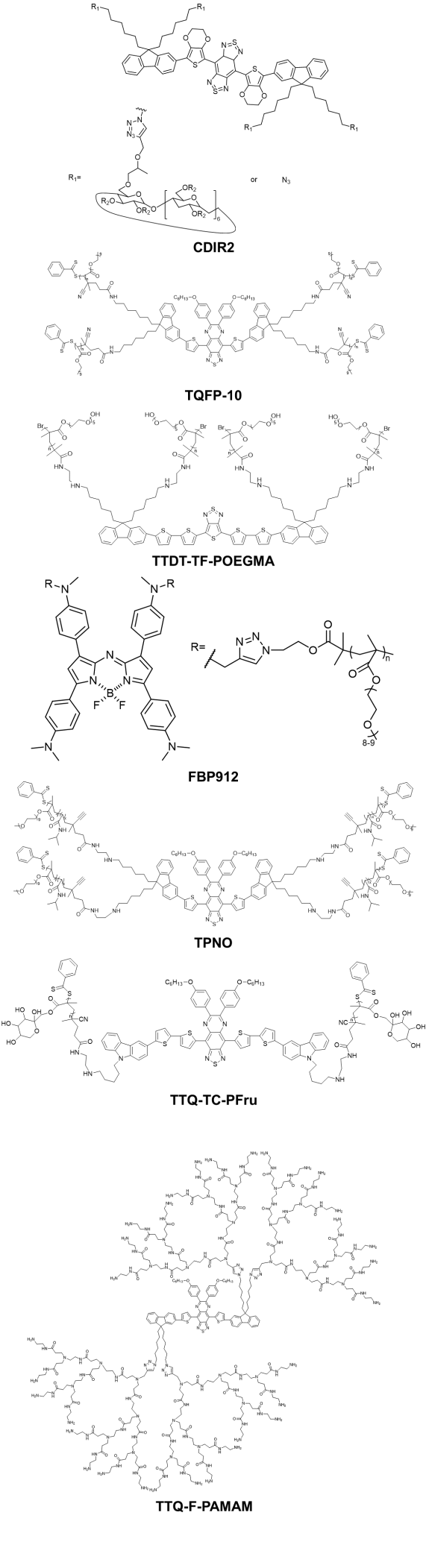
Although PEG modification can improve the water solubility and biocompatibility of molecules, the available modification sites are occupied, and D-A-D-type molecules with PEG side chains typically cannot be further modified with drug-loading functional groups or prodrugs. This makes it difficult to achieve multifunctional signal-activated imaging, drug delivery, and controlled release with tumor targeting. To overcome this limitation, modifying D-A-D molecules with other water-soluble polymers is also an excellent strategy, and a series of such molecules have already been reported (Figure 5).
图5 其他聚合物修饰的D-A-D型分子

Fig.5 D-A-D type molecules modified by other polymers

3.1 Imaging

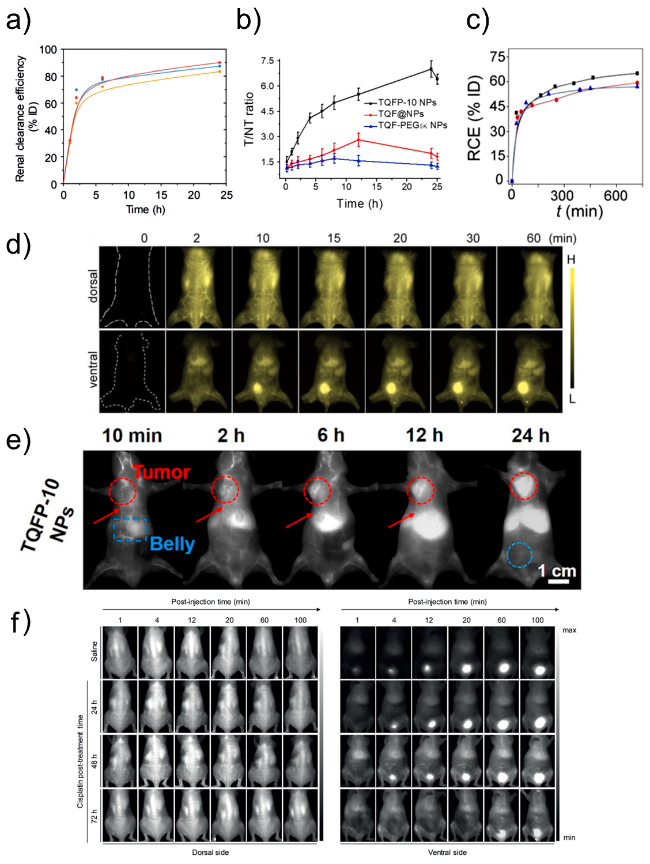
D-A-D molecules modified with these water-soluble polymers also exhibit excellent imaging capabilities. In 2019, the research group led by Pu Kanyi[22]developed a cyclodextrin-modified D-A-D molecule, CDIR2. They employed a click chemistry approach using azide and alkyne groups for modification. Cyclodextrin is a cyclic oligosaccharide that can serve as a renal-clearance scaffold. CDIR2 has a higher fluorescence quantum yield than CH1055-PEG. Compared to ICG, CDIR2 exhibits superior photostability in PBS solution; after 10 minutes of continuous irradiation with an 808 nm laser, CDIR2 showed no decrease in fluorescence intensity. Following systemic administration of CDIR2 to live mice, the molecule is filtered by the glomeruli and enters the urine without being reabsorbed or secreted by the renal tubules, thereby achieving renal metabolism. The molecule exhibits a high renal clearance rate (Fig. 6a), and fluorescence imaging also reveals renal accumulation (Fig. 6f).
图6 (a) CDIR2肾脏清除率。 (b) TQFP-10肿瘤以及正常组织信号比。 (c) FBP912肾脏清除率。 (d) FBP912荧光成像。 (e) TQFP-10脑补肿瘤成像。 (f) CDIR2荧光成像[22-25]

Fig.6 (a) CDIR2 renal clearance. (b) TQFP-10 tumor to normal tissue signal ratio. (c) FBP912 renal clearance. (d) FBP912 fluorescence imaging. (e) TQFP-10 imaging tumor imaging. (f) CDIR2 fluorescence imaging[22-25]

Fan Quli's research group[23-24]developed two D-A-D type molecules, each modified with brush-like polymer chains, in 2021. One of these molecules, TQFP-10, is modified with a star-shaped polymer brush. They first synthesized TTQ-NH2,then synthesized a small-molecule RAFT chain transfer agent (TQF-CTA) via an amidation reaction. Finally, using TQF-CTA as the hydrophobic core, they successfully constructed a star-shaped polymer brush with four dense hydrophilic brush arms. This internal-hydrophobic–external-hydrophilic structure enables TQFP-10 to self-assemble into nanoparticles in water. In aqueous solution, TQFP-10 exhibits higher fluorescence intensity than PEG-modified TQF-PEG. After continuous irradiation with an 808 nm laser for 1 hour, the fluorescence intensity of TQFP-10 remains unchanged, demonstrating excellent photostability. The four dense hydrophilic brush arms of TQFP-10 can maximize the protection of the hydrophobic TQF dye, thereby preventing fluorescence quenching in water. After in situ injection, TQFP-10 exhibits a circulation half-life that is 10 times longer than that of TTQ-PEG. Its tumor-to-normal tissue uptake ratio is also higher than that of TTQ-PEG (Figure 6b). In this approach, the molecule successfully achieved brain tumor imaging (Figure 6e). Another molecule, TTDT-TF-POEGMA, similarly incorporates poly(oligo(ethylene glycol) methacrylate) (POEGMA) via RAFT polymerization. TTDT-TF-POEGMA exhibits good solubility in water (greater than 10 mg·mL-1), has a hydrodynamic diameter of 110 nm in water, and displays a primary emission peak at 1044 nm in water. TTDT-TF-POEGMA also demonstrates excellent performance in terms of fluorescence quantum yield, phot stability, and size stability.
Zhang Fan’s research group[25]synthesized the molecule FBP 912, which also features POEGMA modification, via a click reaction between azide and alkyne groups in 2021. Building on an azaboron dipyrrolidene structure, they introduced poly(ethylene glycol) dimethacrylate to prepare a series of FBP molecules. FBP 912 exhibits a high fluorescence quantum yield in water and can be cleared by the kidneys, demonstrating a relatively high renal clearance rate (Fig. 6c). Similar to the findings discussed earlier, the brush-like structure of POEGMA endows FBP 912 with a longer circulation half-life compared to the control group. Fluorescence imaging indicates that this molecule accumulates in the kidneys (Fig. 6d).
Fan Quli's research group[26]synthesized the molecule TPNO, which is modified with POEGMA, in 2022. This molecule was synthesized based on the TQF-CTA introduced earlier. In addition to the core D-A-D structure, TPNO also contains temperature-sensitive NIPAAm and hydrophilic OEGMA. Under the combined effect of these two components, when the temperature is below the lower critical solution temperature (LCST), TPNO can self-assemble in water into small nanoparticles, at which point TPNO exhibits good solubility. When the temperature exceeds the LCST, TPNO self-assembles in water into larger nanoparticles, at which point TPNO has poor solubility. An increase in temperature causes a blue shift in the main emission peak of TPNO, while the fluorescence intensity also increases.

3.2 Drug Loading and Treatment

In summary, existing scoring systems have limited predictive capabilities for bleeding events, and their results are inconsistent[25,30,33].
Among common cancer therapies, chemotherapy often suffers from limitations such as drug resistance, poor therapeutic efficacy, and high toxicity. A single chemotherapy approach may fail to achieve the desired treatment outcomes; therefore, combining chemotherapy with non-invasive and highly sensitive photothermal therapy represents a viable strategy.
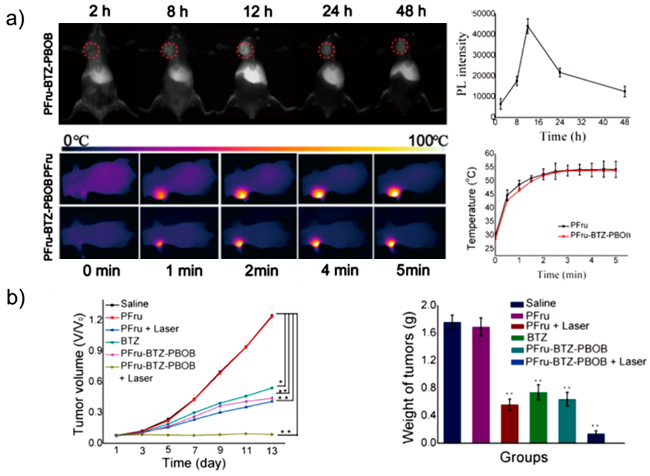
Fan Quli’s research group[28]Based on this, they synthesized the molecule TTQ-TC-PFru, which is modified with a fructose polymer, in 2020. This molecule was synthesized via RAFT polymerization. Before modification, the unmodified TTQ-TC exhibited fluorescence quenching in water due to aggregation. After modification with the fructose polymer, TTQ-TC-PFru formed nanoparticles with an average radius of 50 nm in water and displayed high fluorescence intensity. Subsequently, they added POEGMA and PBOB, which, together with TTQ-TC-PFru, formed nanoparticles with excellent photothermal properties, achieving a photothermal conversion efficiency of 28%. When the laser power was 1 W·cm-1,the temperature of these nanoparticles could rise to 63.8 ℃. In in vivo treatment in mice, the nanoparticles could increase the tumor surface temperature by 26 ℃ (Fig. 7a). The fructose polymer on the side chain of TTQ-TC-PFru can form a conjugate with the drug BTZ, thereby enabling drug loading. Control experiments revealed that the combined BTZ drug delivery and photothermal therapy achieved by this molecule was far more effective than other approaches (Fig. 7b).
图7 (a) TTQ-TC-PFru荧光强度以及光热效果。 (b) TTQ-TC-PFru治疗后肿瘤体积以及质量变化[28]

Fig.7 (a) Fluorescence intensity and photothermal effect of TTQ-TC-PFru. (b) Tumor volume and mass changes after TTQ-TC-PFru treatment[28]

4 Protein, peptide

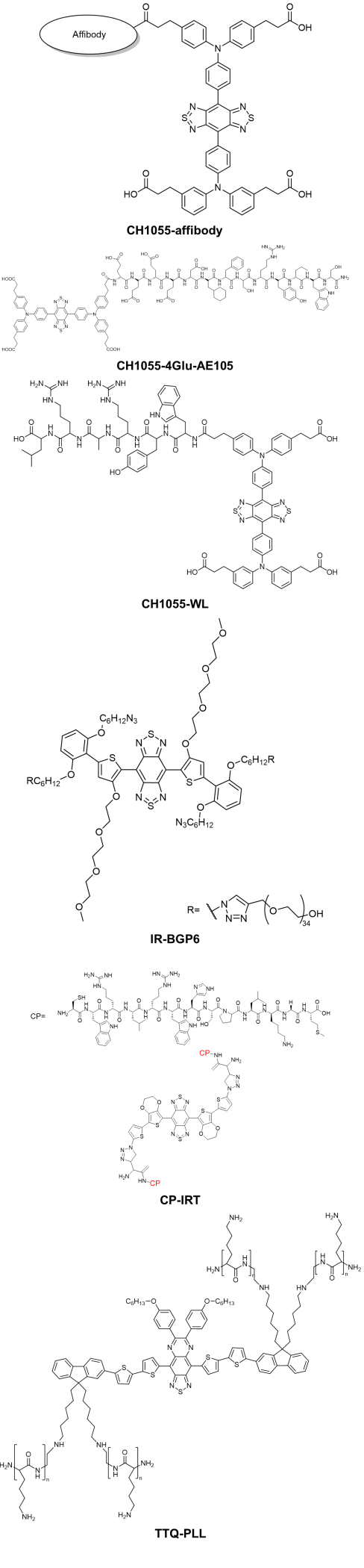
A wide variety of proteins and peptides with complex structures can be obtained from nature. Modifying D-A-D-type molecules (Figure 8) with these highly bioactive substances can significantly enhance the hydrophilicity and biocompatibility of the molecules and enable specific functions such as targeted delivery.
图8 蛋白或肽修饰D-A-D型分子

Fig.8 D-A-D type molecules modified by proteins or peptides

4.1 Targeted Imaging

Some proteins and peptides exhibit targeting properties, and their modification enables D-A-D molecules to achieve targeted imaging. In the aforementioned CH1055 study, in addition to PEG modification of CH1055, Hong Xuechuan's research group[15]also modified CH1055 with anti-EGFR Affibody (an anti-epidermal growth factor small protein), yielding the CH1055-Affibody molecule. They first reacted the hydroxyl groups on CH1055 with maleimide hydrochloride to obtain a molecule modified with maleimide groups. This molecule can then react with sulfhydryl groups on the protein to yield the final product. The anti-EGFR Affibody exhibits strong affinity for EGFR, which is overexpressed in tumor cells, thereby enabling targeted delivery to tumor cells. After injecting CH1055-Affibody into mice, tumors and kidneys exhibited significantly stronger fluorescence compared to other normal tissues, indicating that CH1055-Affibody not only possesses tumor-targeting properties but can also be metabolized via the kidneys.
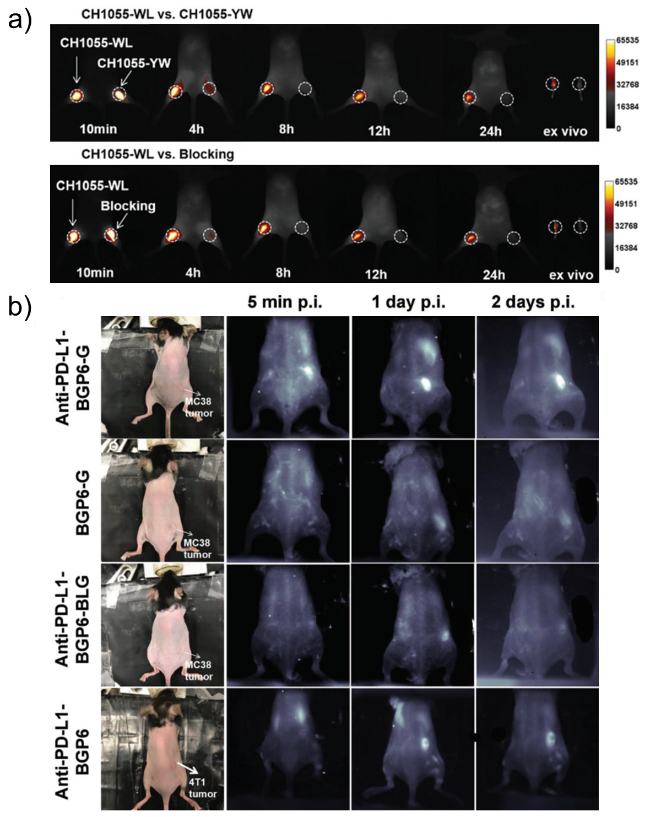
Following the above approach, Cheng Zhen’s research group[29]synthesized CH1055-4Glu-AE105, which is modified with a targeting peptide, in 2018, and Yu Aixi’s research group[30]synthesized CH1055-WL, which is modified with a collagen-binding peptide, in 2019. Due to the different modifying peptides, these two D-A-D molecules exhibit distinct targeting properties: the former targets glioblastoma, while the latter targets articular cartilage. Here, CH1055-WL, which targets articular cartilage, is used as an example to illustrate some of the characteristics of this class of molecules. At 30°C, CH1055-WL exhibits high stability for 36 hours in various media, and its photostability is superior to that of ICG used in clinical applications. Compared with the control probe CH1055-YW (Figure 9a),articular cartilage incubated with CH1055-YW maintains a low fluorescence level over time, whereas the fluorescence intensity of CH1055-WL rises rapidly within 6 hours and reaches a plateau between 6 and 8 hours. This indicates that CH1055-WL specifically binds to articular cartilage and underscores the strong targeting ability of this class of molecules.
图9 (a) CH1055-WL荧光成像。 (b) antiPD-L1-BGP6荧光成像[30-31]

Fig.9 (a) CH1055-WL fluorescence imaging. (b) AntiPD-L1-BGP6 fluorescence imaging[30-31]

D-A-D molecules with BBT as the receptor have also been modified using proteins and peptides. In 2018, Hongjie Dai’s research group[31-32]synthesized the IR-BGP6 and IRT molecules and modified them with antibody proteins and targeting peptides. First, let us consider the former: taking into account both renal excretion and fluorescence quantum efficiency, they selected IR-BGP6 from the three synthesized molecules. Subsequently, they conjugated IR-BGP6 with a PD-L1 antibody protein via a click reaction between azide and alkyne, yielding antiPD-L1-BGP6. Under identical culture conditions, MC38 cells with the highest PD-L1 expression exhibited the strongest fluorescence signal when co-incubated with antiPD-L1-BGP6 (Figure 9b). In in vivo mouse experiments, antiPD-L1-BGP6 also demonstrated a high signal ratio between tumors and normal tissues. As for the latter, compared to antibody proteins, peptides have smaller structures, making CP-IRT more easily cleared from the body. Shortly after intravenous injection of CP-IRT into the tail vein of mice, a fluorescence signal could be detected in the urine. Approximately 6 hours later, 87% of the CP-IRT had been cleared from the mice, reflecting the excellent renal metabolic efficiency of CP-IRT. Due to the targeting specificity of CP for CD133, CP-IRT also exhibits excellent targeting ability toward tumor stem cells.

4.2 Treatment

D-A-D molecules modified with peptides can also exhibit drug-loading capabilities, thereby achieving the goal of integrated diagnosis and therapy. In 2020, Fan Quli’s research group[33]synthesized TTQ-PLL modified with polylysine. They first synthesized TTQ-TF-Br, then replaced the alkyl bromine in TTQ-TF-Br with ethylenediamine to obtain TTQ-NH2. TTQ-NH2initiated NCA polymerization, yielding TTQ-PLL with polylysine chains protected by a trifluoroacetyl group as side chains. TTQ-PLL exhibits good water solubility, with a solubility in water reaching 8 mg·mL-1. Through electrostatic interactions, the PLL chains on TTQ-PLL can load ovalbumin (OVA), and this complex can be effectively phagocytosed by immature dendritic cells (DCs), thereby inducing DC maturation and cytokine secretion. OVA-loaded TTQ-PLL nanoparticles have a hydrodynamic diameter of approximately 45 nm in aqueous solution, and under pH 5.0 conditions, 80% of the OVA is released within 8 hours. Flow cytometry indicates that cells take up OVA-loaded TTQ-PLL nanoparticles more efficiently than they do free OVA alone, highlighting the great potential of peptide-modified D-A-D molecules in drug delivery.

5 Ionization

Water is a highly polar solvent, and introducing charged groups into the side chains of D-A-D-type molecules to form ions can also improve their solubility in water. In addition, ionized D-A-D-type molecules (Fig. 10)are more likely to bind with inorganic salts, which can lead to some interesting targeting properties. At the same time, ionization strengthens charge transfer between the donor and acceptor, greatly enhancing the luminescent performance of the molecule.
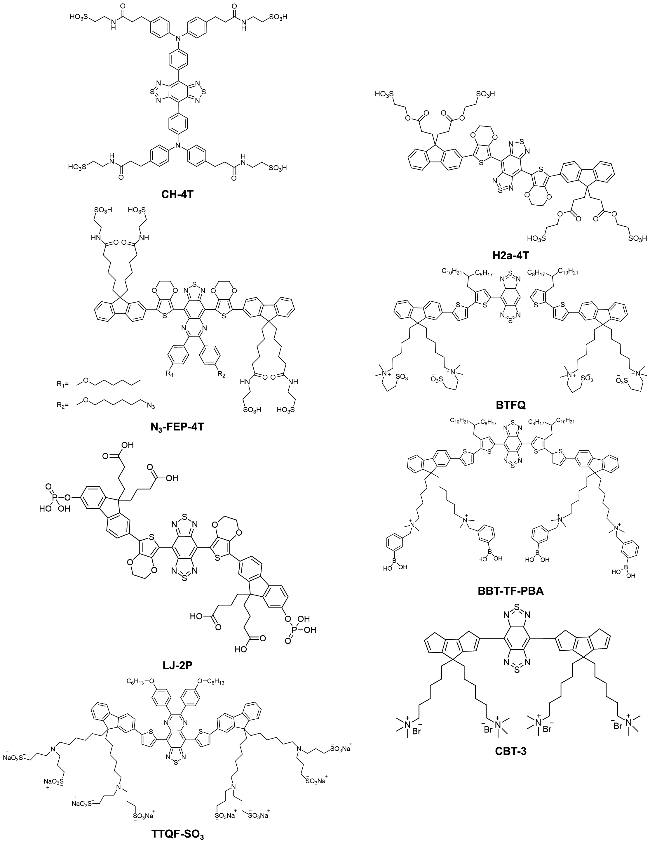
图10 离子化的D-A-D型分子

Fig.10 Ionized D-A-D type molecules

5.1 Imaging

Current research has found that ionization modification of certain known D-A-D molecules can yield better fluorescence brightness. For CH-1055 mentioned earlier, ionization effectively enhances its performance. In 2017, Dai Hongjie’s research group[34]developed a sulfonic acid-modified derivative, CH-4T, based on CH-1055. They achieved this by coupling CH-1055 with taurine, thereby successfully introducing a sulfonic acid group onto the side chain. CH-4T readily forms supramolecular assemblies with plasma proteins, allowing it to dissolve in serum. Compared to CH1055-PEG, the fluorescence brightness of CH-4T in serum is 16 times that of CH1055-PEG. The complex formed between CH-4T and serum proteins exhibits excellent thermal stability; even when heated to 75–85°C, the complex still maintains high fluorescence intensity.
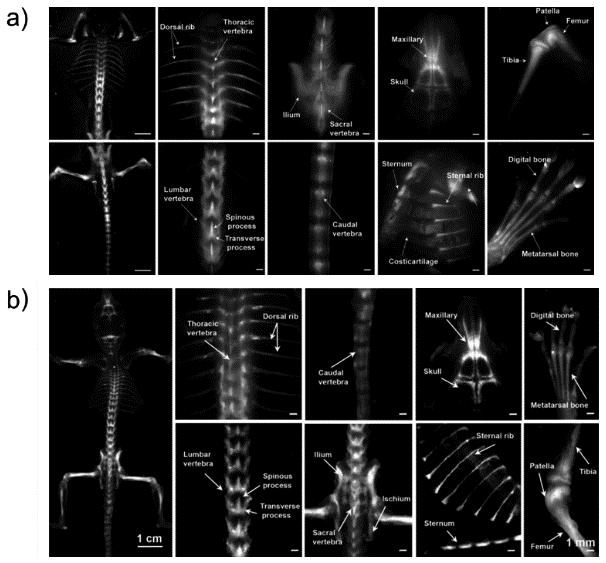
Azides are an important chemical functional group with wide-ranging applications in chemical biology. In 2021, Cheng Zhen’s research group[35]synthesized N3-FEP-4T, a compound modified with an azide group. They constructed the most basic molecular structure via a Suzuki coupling reaction and then introduced the azide group through amide condensation. N3-FEP-4T exhibits excellent photostability in mouse serum, making it suitable for in vivo imaging. The azide group displays strong affinity for various inorganic compounds in vitro, and since human bone tissue contains large amounts of inorganic salts, this suggests that molecules containing azide groups are highly likely to exhibit bone targeting. After co-incubating N3-FEP-4T with cell lines related to bone metabolism, bone-metabolism–related macrophages took up more N3-FEP-4T compared to the control group. In in vivo experiments using mice, N3-FEP-4 also achieved clear bone imaging (Figure 11a)).
图11 (a) N3-FEP-4T骨靶向成像。 (b) TTQF-SO3骨靶向成像[35,37]

Fig.11 (a) N3-FEP-4T bone targeting imaging. (b) TTQF-SO3 bone targeting imaging[35,37]

To obtain organic fluorophores with high fluorescence quantum yield and low liver retention, Li Jianfeng’s research group[36]synthesized LJ-2P modified with phosphate groups in 2022. They constructed a basic structure centered on BBTD and successfully introduced two phosphate groups into the fluorophore by using chlorophosphine for phosphorylation. They co-precipitated LJ-2P with phosphate groups with calcium ions to form a core, then successfully encapsulated it with liposomes to construct LJ-2P nanoparticles. These nanoparticles have a hydrodynamic diameter of approximately 44 nm in water, and their size remained unchanged after one month of storage at 4 ℃. The nanoparticles exhibit a fluorescence quantum yield as high as 5.12% in water, with no fluorescence quenching observed. Following intravenous injection of LJ-2P nanoparticles into nude mice, whole-body fluorescence imaging revealed that 80% of the nanoparticles had already been metabolized by the first day.
The sulfonic acid group also has the potential for bone targeting. In 2023, Fan Quli’s research group[37]synthesized TTQF-SO3, which is modified with a sulfonic acid group.They sulfonated TTQF-NH2 using an excess of propanesulfonic acid to obtain TTQF-SO3.TTQF-SO3 has a solubility in water greater than 100 mg·mL-1 and can self-assemble into ultrasmall structures with an average size of 8.7 nm.TTQF-SO3 exhibits in vitro binding affinity for inorganic calcium salts, with a stronger affinity for carboxylapatite (the main component of bone) than for other calcium salts.TTQF-SO3 demonstrates excellent bone targeting and enables clear bone imaging (Figure 11b)).
At the same time, introducing long alkyl oxy chains along with quaternary ammonium salts can also significantly enhance the fluorescence brightness of D-A-D-type small molecules. In 2024, Fan Quli’s research group[38]developed BBTD-2C-N, which features the aforementioned structure. They first synthesized BBTD-2C with bromine end groups and then treated the bromine groups with a quaternary ammonium salt to obtain the final product. Compared to BBTD-1C-N and BBTD-3C-N, which have one and three alkyl oxy chains, respectively, BBTD-2C-N exhibits superior fluorescence intensity, with an absorption peak at 777 nm and an emission peak at 983 nm. The fluorescence intensity of BBTD-2C-N is 30.62 times that of non-ionized BBTD-2C. Moreover, after being encapsulated in liposomes, BBTD-2C-N displays 1.8 times the brightness in water compared to free BBTD-2C-N in methanol, indicating that BBTD-2C-N can avoid fluorescence quenching caused by aggregation.

5.2 Treatment

In summary, ionized D-A-D-type molecules are often studied for their therapeutic applications due to their outstanding properties. In 2018, Hong Xuechuan’s research group[39]synthesized H2a-4T modified with sulfonic acid groups. They obtained this molecule by amidating H2a-4T with taurine. In serum, H2a-4T forms complexes with proteins, at which point it exhibits excellent thermal stability, and its fluorescence quantum yield can reach 1.1%. Through interactions between the sulfonic acid groups and drugs, H2a-4T can load cetuximab, a drug used to treat colorectal cancer. The H2a-4T@cetuximab complex also serves as an ideal photothermal therapeutic agent, with a photothermal conversion efficiency of 20.6%. Furthermore, the H2a-4T@cetuximab complex demonstrates good tumor-targeting properties. After mice were injected with the H2a-4T@cetuximab complex and the tumor area was irradiated, the tumors were effectively eradicated within four days.
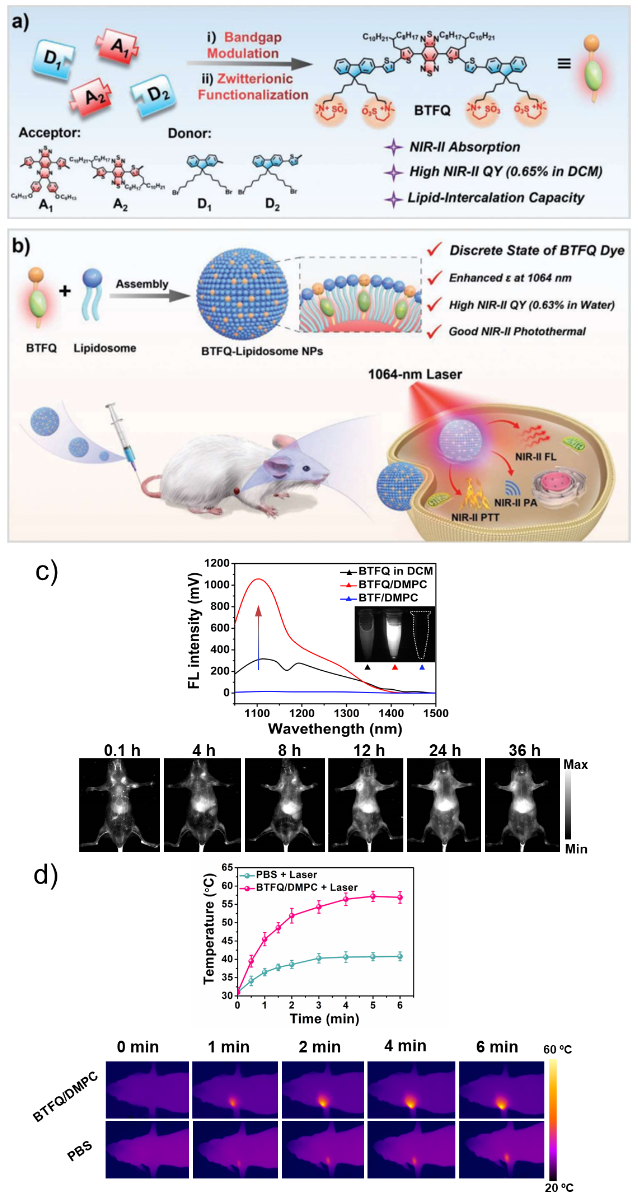
Coincidentally, Fan Quli's research group[40]also synthesized the sulfonate-containing photothermal agent BTFQ in 2022. To prepare D-A-D-type molecules with high brightness, they employed a dual strategy involving bandgap engineering and zwitterionization (Fig. 12a). The sulfonate group on BTFQ was introduced through modification with sulfoxonium betaine, addressing the issue that BTF (the unmodified neutral form) experiences fluorescence quenching in water. After introducing the sulfoxonium betaine, BTFQ adopts a liposome-like structure, enabling it to be embedded in lipid carriers (Fig. 12b). The resulting zwitterion–liposome complex exhibits strong resistance to quenching, with its fluorescence quantum yield in water remaining nearly identical to that in organic solvents. Moreover, the BTFQ/DMPC complex demonstrates an ideal photothermal conversion efficiency (30.8%) and good biocompatibility. Under 1064 nm laser irradiation, tumor suppression in mice reached 80.16% after a 14-day treatment.
图12 (a) BTFQ的两种荧光增强策略。 (b) BTFQ嵌入脂质体。 (c) BTFQ荧光成像。 (d) BTFQ光热[40]

Fig.12 (a) Two fluorescence enhancement strategies for BTFQ. (b) BTFQ embedding in liposomes. (c) BTFQ fluorescence imaging. (d) BTFQ photothermal[40]

As mentioned earlier, the interaction between ionic groups and drugs can endow D-A-D molecules with drug-loading capabilities. In 2023, Fan Quli’s research group[41-42]synthesized BBT-TF-PBA and conducted a series of studies on drug loading using this molecule. They successively attempted to use this molecule to deliver doxorubicin (DOX), ferrous ions, and vancomycin. Regarding the synthesis of this molecule, they first prepared BBT-TF-PBA using a stella coupling reaction, then reacted it with dimethylamine to obtain BBT-TF-Br, and finally modified it with phenylboronic acid to yield BBT-TF-PBA. This molecule can be completely dissolved in water at a concentration of 2 mg·mL-1.In their study on DOX delivery, they found that the boronic acid groups on BBT-TF-PBA can interact with groups on DOX, thereby achieving excellent encapsulation efficiency. They also incorporated DSPE-PEG2000 liposomes into the system to form nanoparticles. These nanoparticles can rapidly release DOX under acidic conditions; at pH 5.5, approximately 51% of the DOX is released. The photothermal effect of these nanoparticles can further promote rapid drug release, enabling combined photothermal and drug therapy. In their studies on the delivery of ferrous ions and vancomycin, they found that vancomycin effectively binds to BBT-TF-PBA through interactions with the boronic acid groups, while ferrous ions bind to the sulfur and nitrogen atoms on the molecule. This enables a single molecule to efficiently transport two different substances simultaneously. When the above system is formulated into nanoparticles, the hydrodynamic diameter is measured to be 168 nm, and no significant change in particle size is observed after four weeks of storage in fetal bovine serum. Similar to the DOX delivery study, under acidic conditions, these nanoparticles can rapidly release both vancomycin and ferrous ions, which holds promise for combined treatment involving photothermal therapy, chemodynamic therapy, and antibiotic therapy.
The quaternary ammonium salt-modified D-A-D small molecules mentioned earlier also show promising potential in immunotherapy. In 2024, Fan Quli’s research group developed CBT-3, a molecule with membrane-anchoring functionality. They selected D-A-D-type molecules with BBTD as the acceptor and varying numbers of thiophene units, then treated them with quaternary ammonium salts, ultimately determining that CBT-3 exhibited the best performance.
After CBT-3 is dissolved in water, it forms nanoscale aggregates with a measured hydrodynamic diameter of 23 nm and a positive charge. This ensures CBT-3’s ability to bind to cancer cell membranes. Under irradiation with a laser source at a wavelength of 1064 nm and a power density of 0.6 W·cm-1,CBT-3 generates a low-temperature photothermal effect of 43 ℃. At a low dose of 50 μM, the cell membrane ruptures rapidly after approximately 15 minutes, highlighting CBT-3’s potential as a novel drug molecule[43].

6 Conclusion and Outlook

Conjugated small molecules with a D-A-D structure have become a research focus in the field of near-infrared second-window fluorescence imaging in recent years due to their good biocompatibility and tunable structure. This article summarizes modification strategies for enhancing the water solubility of D-A-D small molecules, including PEG modification, modification with hydrophilic polymers, modification with proteins or peptides, and terminal ionization. It also introduces the relevant applications of water-soluble D-A-D small molecules. At present, the exploration of the small-molecule conjugated luminescent structure itself has become relatively mature, and future research may increasingly focus on the functional modification of D-A-D small molecules to address issues such as fluorescence quenching and poor water solubility. In addition, through rational design strategies, D-A-D small molecules can be endowed with other functionalities, such as targeted delivery to different organs or drug-loading capabilities.
Regarding research on water-soluble D-A-D small molecules, further exploration can proceed in the following areas: (1) Investigate design strategies to further enhance the biosafety and metabolic profile of D-A-D small molecules. This could involve reducing the hydrodynamic diameter when dissolved in water, employing modification fragments that facilitate renal clearance, and shifting hepatic metabolism toward renal metabolism. (2) Explore strategies to enhance fluorescence intensity and increase the emission wavelength. Currently, the main emission peak of most D-A-D small molecules lies in region a of the second near-infrared window; shifting this peak to region b can significantly improve tissue penetration and imaging clarity. (3) Explore the application of D-A-D small molecules in combination therapies. After undergoing different modifications, D-A-D small molecules may not only be used for fluorescence imaging but also exhibit other functions, such as photothermal effects or drug delivery. Studying the performance of D-A-D small molecules in these areas can enable integrated diagnostic and therapeutic approaches or their combination with other treatment modalities. It is important to note the balance between luminescence performance and heat-generating performance in these molecules.
[1]
Liu Y S, Li Y, Koo S, Sun Y, Liu Y X, Liu X, Pan Y N, Zhang Z Y, Du M X, Lu S Y, Qiao X, Gao J F, Wang X B, Deng Z X, Meng X L, Xiao Y L, Kim J S, Hong X C. Chem. Rev., 2022, 122(1): 209.

[2]
Zhang J, Yang J F, Zeng Y, Li Z S, Zheng X Y. Mater. Chem. Front., 2023, 7(3): 545.

[3]
Li W, Ai S, Zhu H, Lin W. Nat. Commun., 2025, 16(1): 2471.

[4]
Huang R R, University S N, Qiao Q L, Seah D, Shen T R, Wu X, de Moliner F, Wang C, Ding N N, University S N, Chi W J, University H, Sun H M, University S N, Vendrell M, Xu Z C, Fang Y, University S N, Liu X G. J. Am. Chem. Soc., 2025, 147(6): 5258.

[5]
Zeng Y, Qu J M, Wu G H, Zhao Y Y, Hao J M, Dong Y P, Li Z S, Shi J B, Francisco J S, Zheng X Y. J. Am. Chem. Soc., 2024, 146(14): 9888.

[6]
Yang Y W, Chen Y, Pei P, Fan Y, Wang S F, Zhang H X, Zhao D Y, Qian B Z, Zhang F. Nat. Nanotechnol., 2023, 18(10): 1195.

[7]
Chen Y, Chen S Y, Yu H L, Wang Y S, Cui M Y, Wang P, Sun P F, Ji M. Adv. Healthc. Mater., 2022, 11(21): 2270127.

[8]
Li C Y, Wang Q B. ACS Nano, 2018, 12(10): 9654.

[9]
Li B H, Lu L F, Zhao M Y, Lei Z H, Zhang F. Angew. Chem. Int. Ed., 2018, 57(25): 7483.

[10]
Zhang X-D, Wang H S, Antaris A L, Li L L, Diao S, Ma R, Nguyen A, Hong G S, Ma Z R, Wang J, Zhu S J, Castellano J M, Wyss-Coray T, Liang Y Y, Luo J, Dai H J. Adv. Mater., 2016, 28(32): 6872.

[11]
Brédas J. Adv. Mater., 1995, 7(3): 263.

[12]
Sasaki S, Drummen G P C, Konishi G I. J. Mater. Chem. C, 2016, 4(14): 2731.

[13]
Yang Q L, Ma Z R, Wang H S, Zhou B, Zhu S J, Zhong Y T, Wang J Y, Wan H, Antaris A, Ma R, Zhang X, Yang J Y, Zhang X D, Sun H T, Liu W Q, Liang Y Y, Dai H J. Adv. Mater., 2017, 29(12): 1605497.

[14]
Yang Q L, Hu Z B, Zhu S J, Ma R, Ma H L, Ma Z R, Wan H, Zhu T, Jiang Z Y, Liu W Q, Jiao L Y, Sun H T, Liang Y Y, Dai H J. J. Am. Chem. Soc., 2018, 140(5): 1715.

[15]
Antaris A L, Chen H, Cheng K, Sun Y, Hong G S, Qu C R, Diao S, Deng Z X, Hu X M, Zhang B, Zhang X D, Yaghi O K, Alamparambil Z R, Hong X C, Cheng Z, Dai H J. Nat. Mater., 2016, 15(2): 235.

[16]
He K, Chen S Y, Chen Y, Li J W, Sun P F, Lu X M, Fan Q L, Huang W. ACS Appl. Polym. Mater., 2021, 3(6): 3238.

[17]
Zhu S, Yang Q, Antaris A L, Dai H. Proc. Natl. Acad. Sci., 2017, 114(5): 962.

[18]
Sun Y, Qu C R, Chen H, He M M, Tang C, Shou K Q, Hong S, Yang M, Jiang Y X, Ding B B, Xiao Y L, Xing L, Hong X C, Cheng Z. Chem. Sci., 2016, 7(9): 6203.

[19]
Yang J, Xie Q, Zhou H, Chang L, Wei W, Wang Y, Li H, Deng Z X, Xiao Y L, Wu J Z, Xu P, Hong X C. J. Proteome Res., 2018, 17(7): 2428.

[20]
Wu Y P, Wang C, Guo J Q, Carvalho A, Yao Y Y, Sun P F, Fan Q L. Biomater. Sci., 2020, 8(16): 4438.

[21]
Sun P F, Qu F, Zhang C, Cheng P F, Li X Y, Shen Q M, Li D F, Fan Q L. Adv. Sci., 2022, 9(33): 2204718.

[22]
Huang J G, Xie C, Zhang X D, Jiang Y Y, Li J C, Fan Q L, Pu K Y. Angew. Chem. Int. Ed., 2019, 58(42): 15120.

[23]
Chen S Y, Miao H, Jiang X Y, Sun P F, Fan Q L, Huang W. Biomaterials, 2021, 275: 120916.

[24]
He K, Chen S Y, Xu W J, Tai X Y, Chen Y, Sun P F, Fan Q L, Huang W. Biomater. Sci., 2021, 9(19): 6434.

[25]
Yao C, Chen Y, Zhao M, Wang S, Wu B, Yang Y, Yin D, Yu P, Zhang H, Zhang F. Angew.Chem., 2022, 134(5): e202114273.

[26]
Chen S Y, Shen Q M, Sun P F, Fan Q L. Chem. J. Chin. Univ., 2022, 43(12): 324

(陈尚钰, 沈清明, 孙鹏飞, 范曲立. 高等学校化学学报, 2022, 43(12): 324).

[27]
Wang C, Sun P F, Fang Q L. Acta. Polym. Sim., 2022, (002): 053

(王超, 孙鹏飞, 范曲立, 高分子学报, 2022, (002): 053).

[28]
Chen S Y, Sun B, Miao H, Wang G N, Sun P F, Li J W, Wang W J, Fan Q L, Huang W. ACS Mater. Lett., 2020, 2(2): 174.

[29]
Kurbegovic S, Juhl K, Chen H, Qu C R, Ding B B, Leth J M, Drzewiecki K T, Kjaer A, Cheng Z. Bioconjugate Chem., 2018, 29(11): 3833.

[30]
Yi W R, Zhou H, Li A G, Yuan Y, Guo Y Q, Li P C, Qi B W, Xiao Y L, Yu A X, Hu X. Biomater. Sci., 2019, 7(3): 1043.

[31]
Wan H, Ma H L, Zhu S J, Wang F F, Tian Y, Ma R, Yang Q L, Hu Z B, Zhu T, Wang W Z, Ma Z R, Zhang M X, Zhong Y T, Sun H T, Liang Y Y, Dai H J. Adv. Funct. Mater., 2018, 28(50): 1804956.

[32]
Wang W Z, Ma Z R, Zhu S J, Wan H, Yue J Y, Ma H L, Ma R, Yang Q L, Wang Z H, Li Q, Qian Y X, Yue C Y, Wang Y H, Fan L Y, Zhong Y T, Zhou Y, Gao H P, Ruan J S, Hu Z Y, Liang Y Y, Dai H J. Adv. Mater., 2018, 30(22): 1800106.

[33]
Wang C, Sun B, Bao H, Wang T, Xu W J, Sun P F, Fan Q L, Huang W. Sci. China Chem., 2020, 63(9): 1272.

[34]
Antaris A L, Chen H, Diao S, Ma Z R, Zhang Z, Zhu S J, Wang J, Lozano A X, Fan Q L, Chew L, Zhu M, Cheng K, Hong X C, Dai H J, Cheng Z. Nat. Commun., 2017, 8: 15269.

[35]
Zhang X Q, Ji A Y, Wang Z M, Lou H Y, Li J F, Zheng L L, Zhou Y J, Qu C R, Liu X D, Chen H, Cheng Z. J. Med. Chem., 2021, 64(15): 11543.

[36]
Li J W, Pu R H, He X Y, Chen Q, Liu S H, Liu W M, Li J F. Small, 2022, 18(49): 2204153.

[37]
Chen P, Qu F, He L, Li M, Sun P, Fan Q, Zhang C, Li D. J. Nanobiotechnology, 2023, 21(1): 230.

[38]
Xu S C, Sun P F, Yu Z K, Chen K, Chu Y Z, Wang S F, Shen Q M, Chen P F, Yao Y Y, Fan Q L. Small, 2024, 20(51): 2406159.

[39]
Zeng X D, Xiao Y L, Lin J C, Li S S, Zhou H, Nong J X, Xu G Z, Wang H B, Xu F C, Wu J Z, Deng Z X, Hong X C. Adv. Healthc. Mater., 2018, 7(18): 1800589.

[40]
Chen P F, Qu F, Chen S Y, Li J W, Shen Q M, Sun P F, Fan Q L. Adv. Funct. Mater., 2022, 32(52): 2208463.

[41]
Sun P F, Yang W, He J R, He L L, Chen P F, Xu W J, Shen Q M, Li D F, Fan Q L. Adv. Healthc. Mater., 2023, 12(30): 2302099.

[42]
Wang X Z, Zhang C, He L L, Li M F, Chen P F, Yang W, Sun P F, Li D F, Zhang Y. J. Nanobiotechnol., 2023, 21: 446.

[43]
Chen P F, Rong J, Chen K, Huang T, Shen Q M, Sun P F, Tang W W, Fan Q L. Angew. Chem. Int. Ed., 2025, 64(6): e202418081.

Outlines

/