Home Journals Progress in Chemistry
Progress in Chemistry

Abbreviation (ISO4): Prog Chem      Editor in chief: Jincai ZHAO

About  /  Aim & scope  /  Editorial board  /  Indexed  /  Contact  / 
Review

Biochar System for Phosphorus Cycling: Enhanced Recovery from Wastewater and Performance Evaluation of Derived Slow-Release Phosphorus Fertilizers

  • Yunxian Liu ,
  • Xue Zhou ,
  • Hao Xu , * ,
  • Wei Yan
Expand
  • Department of Environmental Science and Engineering, Xi’an Jiaotong University, Xi’an 710049, China

Received date: 2025-06-20

  Revised date: 2025-08-27

  Online published: 2025-12-10

Supported by

National Natural Science Foundation of China(52270078)

Xi'an Jiaotong University Fundamental Research Program(xzy022025024)

Shaanxi Provincial Science Fund for Distinguished Young Scholars(2025JC-JCQN-027)

Abstract

Efficient recovery and recycling of phosphorus are of dual strategic significance to alleviate global phosphorus shortage and eutrophication. As a green, economical and multifunctional porous carbon material, biochar is an ideal carrier for phosphorus recovery and slow-release utilization. This paper discusses the influence of biomass feedstock and pyrolysis process on phosphorus adsorption capacity, and puts forward the principles of feedstock screening and preparation process optimization. Secondly, the metal modification-based enhancement strategy is analyzed in detail, and the mechanism and advantages of metal doping in enhancing phosphorus adsorption performance are clarified. Next, the synergistic effects involving electrostatic attraction, ion exchange, ligand exchange and surface precipitation during biochar phosphorus adsorption are systematically revealed, and functional groups and Lewis acid-base interactions contribute to the selectivity of phosphorus adsorption. The application of slow-release kinetic models to evaluate the phosphorus release mechanism is discussed, and a phosphorus fertilizer efficiency evaluation system is established by integrating slow-release characteristics and agronomic effect assessment. Finally, the future problems and directions are outlined to provide theoretical references for advancing this field.

Contents

1 Introduction

2 Strategies for preparation and modification of biochar-based adsorbents

2.1 Feedstock selection and preparation

2.2 Modification strategies for biochar

3 Biochar-phosphorus recovery mechanism

3.1 Synergistic mechanisms

3.2 Selective adsorption mechanisms

4 Performance evaluation of biochar-based phosphate fertilizer

4.1 Evaluation of phosphorus release kinetics and slow release properties

4.2 Assessment of agronomic effects

5 Conclusions and outlook
Cite this article

Yunxian Liu , Xue Zhou , Hao Xu , Wei Yan . Biochar System for Phosphorus Cycling: Enhanced Recovery from Wastewater and Performance Evaluation of Derived Slow-Release Phosphorus Fertilizers[J]. Progress in Chemistry, 2025 , 37(12) : 1902 -1916 . DOI: 10.7536/PC20250614

1 Introduction

Phosphorus is an essential and irreplaceable element for the growth of all living organisms. With the global population increasing, more than 80% of mined phosphate rock is used for fertilizer production to boost crop yields in order to meet global food production demands[1]. As a non-renewable resource, the rate of phosphate mining far exceeds the natural replenishment rate of geological cycles, leading to a growing phosphorus scarcity crisis[2]. Globally accessible and economically viable phosphate reserves may be exhausted within 100 years[3]. At the same time, excessive phosphorus discharge exacerbates eutrophication in global water bodies, thereby disrupting aquatic ecosystems[4]. Studies indicate that recovering phosphorus from wastewater could meet 15%–29% of global phosphorus demand, thereby establishing a circular economy model for sustainable phosphorus supply[5]. Therefore, developing technologies for phosphorus recovery and reuse from wastewater is crucial.
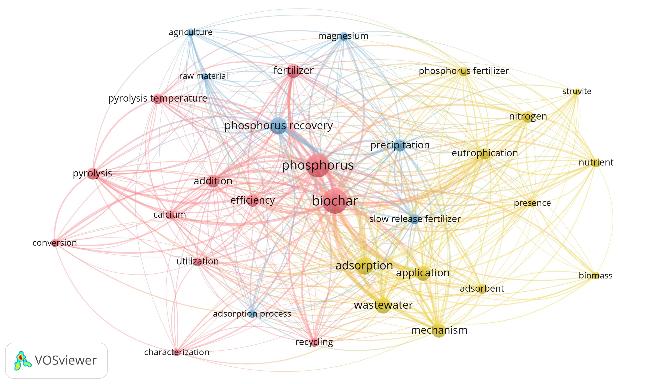
Phosphorus recovery technologies in wastewater include chemical precipitation, membrane separation, and adsorption[6]. Chemical precipitation is the most commonly used technique, where reagents (such as iron, aluminum, magnesium, and calcium salts) are added to convert phosphorus into less soluble or insoluble phosphate minerals; however, this increases recovery costs and generates sludge waste[7]. Although membrane separation technology can achieve selective phosphorus concentration, long-term operation can lead to membrane pore fouling, requiring regular maintenance and resulting in relatively high operating costs[8]. In contrast, adsorption is simple to operate, highly efficient, and more cost-effective for treating low-concentration pollutants[9]. Common adsorbents include activated carbon, layered hydroxides, and nanomaterials; however, they still face limitations such as complex synthesis, high preparation costs, and difficulties in regeneration[10]. Biochar (BC) is obtained through the thermochemical decomposition of biomass under oxygen-limited conditions[11]. Almost all waste biomass (including agricultural residues, sewage sludge, manure, etc.) can be used to produce biochar[12], and phosphorus-loaded biochar can be applied to soil as a slow-release fertilizer. Therefore, biochar adsorbents exhibit three unique advantages in the field of phosphorus recovery: utilization of waste resources, carbon sequestration effects, and material circulation and regeneration. VOSviewer analysis indicates that current research primarily focuses on two aspects (Figure 1): the preparation and modification of biochar (to enhance its phosphorus adsorption performance) and the reuse of phosphorus-rich biochar products.
图1 关键词“生物炭”和“磷回收”的聚类图(数据来源:Web of scienceTM

Fig.1 Cluster diagram for the keywords "biochar" and "phosphorus recovery" (Source: Web of scienceTM

Currently, there have been several review articles on the use of biochar-based adsorbents for phosphorus removal[13-15],with these reviews primarily focusing on novel biochar modification techniques and adsorption mechanisms. In contrast, there remains a lack of systematic reviews on the kinetic behavior of biochar as a slow-release phosphorus fertilizer and its agricultural applications. Accordingly, this article first summarizes the preparation methods, modification strategies, and phosphorus recovery mechanisms of biochar-based materials, with a particular focus on the phosphorus adsorption–release mechanism. It integrates slow-release kinetic models with agronomic effects, emphasizing a comprehensive evaluation of the slow-release performance, fertilizer efficiency, and resource circulation pathways of phosphorus recovery products. This research perspective achieves an integrated approach, moving from pollution control to nutrient recycling. Finally, future research directions are proposed to provide theoretical support and methodological references for the engineering application of biochar–phosphorus fertilizer coupling technologies and for sustainable agricultural practices.

2 Preparation and Modification Strategies of Biochar-Based Adsorbents

2.1 Selection and Preparation of Raw Materials

In summary, the existing scoring systems have limited predictive capabilities for bleeding events, and their results are inconsistent[25,30,33].
Canteral et al.[23]used multivariate analysis to evaluate the relationship between the physicochemical properties of biochar and phosphorus adsorption. Factor analysis indicated that slight increases in ash content, cation exchange capacity, and N content can lead to an increase in P adsorption rate.Table 1 [24-25]The component contents of various biomass feedstocks after pyrolysis were summarized, with aquatic organisms and industrial wastes showing significantly higher ash and N contents. Consequently, biochars derived from marine microalgae[26],sewage sludge[27],and soybean straw[28]exhibit remarkable phosphorus adsorption capacities. Among these, biochar synthesized from sewage sludge at 600 ℃ has the highest adsorption capacity, reaching 303.49 mg (PO4 3-)/g; the phosphorus adsorption by soybean straw biochar is primarily attributed to its high specific surface area and the abundance of Ca2+and Mg2+in its structure. In contrast, biochars prepared from agricultural, food, and woody feedstocks exhibit poorer phosphorus adsorption due to their lower ash content, such as those derived from Napier grass[29],walnut shells[27],woody materials[30],and horse manure[31]. Furthermore, for phosphorus-rich biochars, it is necessary to consider the balance between phosphorus release and adsorption. Melia et al.[32]demonstrated that although sewage sludge biochar has a much higher phosphorus content than rice husk biochar, its phosphorus release is relatively low, resulting in the highest net phosphorus adsorption (0.71 mgP/g). In contrast, rice husk biochar exhibits the highest phosphorus release but no significant phosphorus adsorption, possibly due to its lower metal content.
表1 生物质原料的元素及灰分组成[24-25]

Table 1 Proximate and ultimate composition of various feedstocks[24-25]

Feedstocks C (%) N (%) O (%) Ash (%)
Agriculture 27~65 0.5~4.5 17~49 0.8~12.6
Aquatic 38~54 1~12 26~53 13~43
Food 44~53 0.5~1.3 34~46 0.3~8.1
Forest 49~58 2~3 29~38 5~11
Industrial 78~80 11~15 20~48 0.5~7.8
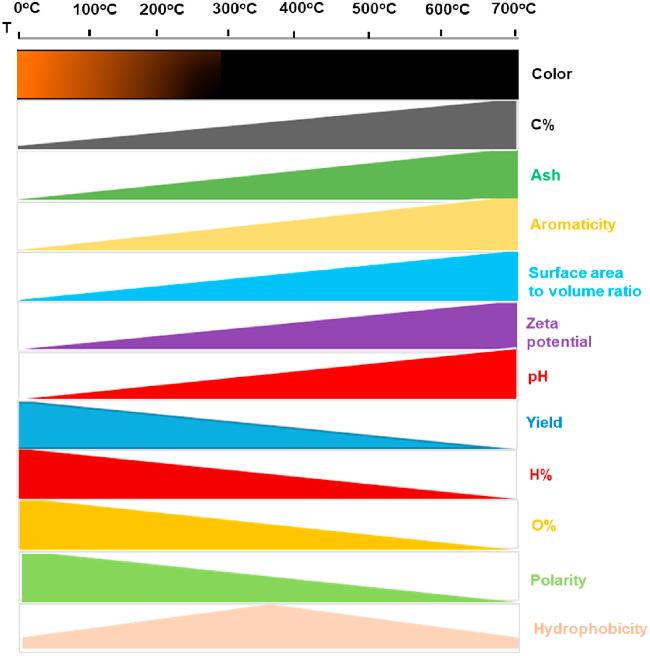
The physicochemical properties of biochar are also influenced by the pyrolysis temperature during preparation. Figure 2shows that as the pyrolysis temperature increases from 200 ℃ to 700 ℃, biochar yield and polarity decrease significantly, while aromaticity, pHPZC,zeta potential, specific surface area, and mineral content gradually increase, enhancing phosphate adsorption capacity[33-34]. However, some studies have reported that when the pyrolysis temperature exceeds the optimal level, biochar pore collapse occurs, leading to a reduction in specific surface area and a decrease in phosphorus adsorption[35-36]. For example, Jung et al.[37]found that when the pyrolysis temperature of seaweed-derived biochar exceeds 400 ℃, the specific surface area and total pore volume decrease, which is detrimental to phosphorus adsorption, as higher pyrolysis temperatures can lead to partial blockage of biochar pores; Melia et al.[32]showed that the phosphorus removal rate of sludge biochar produced at 550 ℃ is higher than that produced at 700 ℃, because increasing the pyrolysis temperature reduces the number of oxygen-containing functional groups, and low-temperature biochar may contain more abundant functional groups. However, this pattern does not apply universally. Song et al.[38]compared the effects of pineapple leaf biochar (PB300, PB500, and PB700) prepared at different temperatures (300, 500, and 700 ℃) on phosphorus adsorption. The study found that 700 ℃ is the optimal pyrolysis temperature for preparing pineapple leaf biochar. The specific surface area of PB700 increased by 65.05 times and 119.26 times compared to PB300 and PB500, respectively, and its adsorption mechanism shifted from chemical adsorption at low temperatures (which relies on functional groups) to physical adsorption dominated by microporous structures. Despite the reduction in functional groups such as C $\stackrel{\mathrm{ }\mathrm{ }\mathrm{ }\mathrm{ }}{=}$O, the highly developed pore structure still enables PB700 to exhibit excellent phosphorus adsorption performance.
图2 热解温度条件下生物炭性质的变化[33]

Fig.2 Changes in biochar properties under pyrolysis temperature conditions[33]

In summary, the pyrolysis temperature plays a regulatory role in the adsorption mechanisms of biochar. Biochar prepared at high temperatures typically has a larger specific surface area, which favors physical adsorption; biochar prepared at low temperatures, due to its richer functional groups, is more prone to chemical adsorption. In existing literature, the range of pyrolysis temperatures is usually set between 300 and 900 ℃. However, because of the significant differences among biomass feedstocks, there is no universally determined optimal temperature. Therefore, the physicochemical properties of the feedstock and energy consumption should be considered comprehensively, and experiments should be conducted to determine the optimal pyrolysis temperature for a specific system.

2.2 Modification Strategies for Biochar

Unmodified biochar has few surface active sites and is typically negatively charged, resulting in limited adsorption capacity and selectivity for phosphorus. Therefore, raw biochar is often used as a carrier, and its surface is modified to load specific phosphorus-adsorbing active sites, thereby significantly enhancing its phosphorus adsorption capacity and selectivity. Table 2summarizes the applicable conditions, advantages, and limitations of biochar modification methods in phosphorus adsorption.
表2 不同改性方法在磷吸附方面的适用条件、优势和局限

Table 2 Applicable conditions, advantages, and limitations of different modification methods in phosphorus adsorption

Modification Method Applicable Conditions Advantages Limitations
Acid Modification Effective in acidic to neutral conditions. 1. Introduces acidic functional groups (e.g.,
—COOH, —OH).
2. Improves pore structure.3. Simple and low-cost.
1. Efficiency declines sharply in alkaline conditions.
2. Limited adsorption capacity and selectivity.
3. Strong acids are hazardous and may degrade pore structure.
Alkali Modification Effective in neutral to alkaline conditions. 1. Significantly increases surface area and porosity.
2. Serves as an effective pre-treatment for further modification.
1. Provides limited direct enhancement of phosphate adsorption.
2. Often requires additional modification to achieve significant results.
3. Strong alkalis are hazardous to handle.
Metal salt Modification Broad pH range (depends on metal type) 1. Highly effective through strong chemical reactions.
2. High adsorption capacity and selectivity.
3. Recovered phosphate products can be utilized as fertilizer.
1. Relatively high cost, especially for rare-earth metals (e.g., La).
2. Potential metal leaching leading to secondary pollution.
3. Excessive metal loading may clog pores.
Multi-metal Modification Broadest pH range and adaptability. 1. Synergistic effects enhance overall performance.
2. Incorporation of low-cost metals helps reduce expenses.
3. Generally superior to single-metal modified biochar.
1. Preparation process is more complex.
2. Interaction mechanisms between metals are not fully understood.

2.2.1 Acid/Base Modification

Raw biochar can be impregnated with acid/alkali solutions (mainly H2SO4, HNO3, and KOH) to modify its surface area and surface structure. Acid modification increases the number of acidic functional groups on the biochar surface and exposes more active sites, thereby enhancing its phosphorus adsorption capacity[39]. Zhang Yuhe et al.[40]modified moso bamboo biochar using 70 wt% sulfuric acid. The intensity of the C―OH peak in the modified biochar increased significantly, and the specific surface area and total pore volume increased by 51.91% and 39.87%, respectively, due to the proton-catalyzed effect of sulfuric acid, which created more micropores. Compared with the raw biochar, the maximum phosphorus adsorption capacity increased by 39.7%.
Alkali modification not only promotes the formation of carbon defect structures but also introduces oxygen-containing functional groups (mainly ―OH and ―COOH), thereby enhancing the surface aromaticity and carbon-to-nitrogen ratio of biochar[41]. Oxygen-containing groups typically serve as water-binding sites on the biochar surface, facilitating the formation of water clusters and enhancing the material's hydrophilicity, which in turn improves its phosphorus adsorption performance[42]. Zhu Yan et al.[43]activated biochar using KOH; at 800 ℃, KOH generates potassium vapor that enters the biochar pores, achieving the purpose of pore expansion. The maximum phosphorus adsorption capacity of KOH-modified biochar is 53.55 mg/g, but it remains lower than that of metal oxide–modified biochar.
In fact, acid/alkali activation can serve as a pretreatment for metal-modified biochar, increasing the biochar’s specific surface area and pore size uniformity[44].It can also improve the distribution of metal elements and introduce additional active sites[36,42].

2.2.2 Metal modification

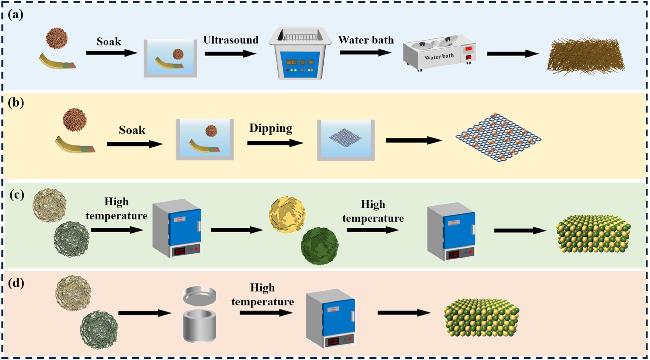
Currently, metal modification technology is a research hotspot for enhancing the phosphorus adsorption performance of biochar. This technology uses biochar as a carrier and significantly improves the material's adsorption capacity and performance by loading metal-based active sites onto its surface. Table 3compares studies on the removal of phosphate using unmodified and metal-modified biochars. It shows that metal-element-modified biochars significantly enhance phosphorus adsorption capacity, primarily due to the unique affinity of metal ions for phosphate ions in solution. Commonly used metal-modifying elements include Mg, Ca, Fe, and La. Studies have shown that the introduction of modified metal ions reduces the surface negative charge of the adsorbent, thereby enhancing the electrostatic attraction between biochar and negatively charged phosphate ions[17].Figure 3illustrates the preparation methods of metal-modified biochar, which mainly include hydrothermal method, impregnation method, sintering method, and one-pot method[45]. The impregnation method does not require heating, but the stability of the synthesized material is relatively low; in contrast, materials synthesized by other methods exhibit higher stability but require heating and have higher requirements for raw materials[46]. Different methods can be used to prepare modified biochar materials with different ordered morphologies, thereby influencing the phosphorus adsorption effect.
图3 金属基吸附剂的常用制备方法:(a) 水热法;(b) 浸渍法;(c) 烧结法;(d) 一锅法[45]

Fig.3 Common methods for the preparation of metal-based adsorbents: (a) hydrothermal method; (b) impregnation method; (c) sintering method; (d) one-pot method[45]

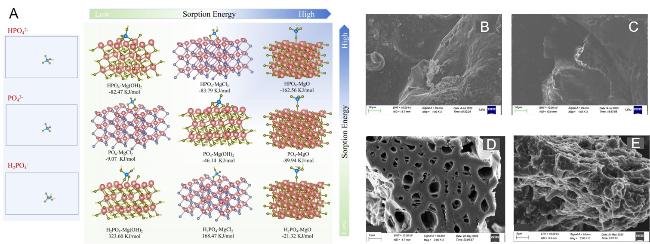
Mg is an alkaline earth metal with a small ionic radius and high charge density, giving it a strong affinity for phosphates[58]. In addition, Mg plays a crucial role in plant photosynthesis and in enhancing crop yield and quality, and Mg-modified biochar (MBC) does not cause secondary pollution[59]. MBC after phosphorus adsorption is a potential slow-release fertilizer that can provide plants with the nutrient element phosphorus as well as Mg. Zhang et al.[60]synthesized MBC from leaves using a slow co-pyrolysis method, achieving a specific surface area of up to 142.5737 m2/g and a saturation adsorption capacity of 119.42 mg/g. The adsorption of phosphorus by MBC is governed by physicochemical adsorption, with pore filling and surface precipitation playing the dominant roles. Guo et al.[61]prepared magnesium-modified algal biochar (Mg@ABB) via an impregnation–pyrolysis method, achieving a phosphorus adsorption capacity of 39.20 mg/g and a phosphorus removal rate of 100%. The specific surface area and total pore volume of Mg@ABB increased significantly to 108.3017 m2/g and 0.1236 cm3/g, nearly 10 times that of the unmodified material. At the same time, a wealth of oxygen-containing functional groups formed on the surface of Mg@ABB, and DFT calculations (see Figure 4A) indicate that the surface reaction between MgO and phosphorus is the core adsorption mechanism. In summary, the MBC prepared by Zhang et al.[60]achieves efficient adsorption through its well-developed pore structure, whereas Mg@ABB relies primarily on the chemical action of surface MgO to remove phosphorus. This suggests that the adsorption performance of magnesium-modified biochar for phosphorus depends not only on its specific surface area and pore structure, but also closely on its surface chemical properties and active sites.
图4 (A) Mg@ABB的DFT计算[61];不同材料的SEM图对比:(B) 原始玉米芯生物炭[62];(C) CaCl2改性玉米芯生物炭[62];(D) 原始荞麦壳生物炭[64];(E) CaCl2改性荞麦壳生物炭[64]

Fig.4 (A) DFT calculations of Mg@ABB[61]; comparison of SEM images of different materials: (B) pristine corn cob biochar[62]; (C) CaCl2-modified corn cob biochar[62]; (D) pristine buckwheat hull biochar[64]; (E) CaCl2-modified buckwheat hull biochar[64]

Ca is non-toxic, inexpensive, and abundant, making it easy to produce at scale. It is widely used in biochar modification to enhance its phosphate adsorption performance. Liu et al.[62]have shown that CaCl2-modified spent coffee grounds-based biochar has a specific surface area nearly 155 times that of the pristine biochar. This is because Ca loading renders the biochar surface rougher (Fig. 4B, C),increasing the number of active sites and enhancing the biochar’s affinity for phosphorus. The material exhibits a theoretical maximum phosphorus adsorption capacity of 70.26 mg/g and demonstrates excellent pH adaptability, maintaining a phosphorus removal rate of over 90% across a broad pH range (3–11). Chang Silu et al.[63]found that after impregnating corn cob biochar with CaCl2,the equilibrium phosphorus adsorption capacity increased from 5.46 mg/g to 9.74 mg/g. Compared with the pristine biochar, the Ca-modified biochar features a well-developed pore structure and a significantly larger specific surface area, which has increased by 137.85%, providing more adsorption sites. However, the modification did not introduce new functional groups; it only altered the content of existing functional groups. Not all Ca modifications, however, lead to improvements in structural parameters. Pan et al.[64]found that the biochar produced by co-pyrolysis of buckwheat husks with CaCl2exhibited a decrease in both specific surface area and pore volume compared to the pristine biochar (Fig. 4D, E).This may be attributed to the blockage of biochar pores by CaO or CaCO3. After modification, CaO and CaCO3 on the carbon surface can effectively adsorb phosphorus, converting it into CaHPO4. The material’s maximum phosphorus adsorption capacity is 75.26 mg/g. The above studies indicate that CaCl2modification has a dual effect on the pore structure of different biochar systems: it can either significantly enhance pore development or lead to a decline in structural performance due to pore-blocking effects, necessitating a comprehensive evaluation during the modification process.
Fe doping is one of the most common strategies for modulating biochar properties to enhance phosphate removal, with the advantage that the resulting adsorbent is magnetic, facilitating collection and recycling. Strawn et al.[65]loaded approximately 2 wt% of iron-based active components onto a biochar support, increasing the maximum phosphorus adsorption capacity by nearly 10-fold compared to unmodified biochar, with phosphorus primarily adsorbed in the form of a P-Fe-biochar ternary complex. Nayun et al.[66]showed that corn stover biochar has almost no effect on phosphorus removal; however, after modification with FeCl2,the phosphorus adsorption rate of the biochar increased by 77%, with a maximum adsorption capacity of 45.57 mg/g, attributed to the direct coordination of Fe2+/Fe3+ on the biochar surface with phosphate. However, excessive Fe loading can block the pore structure of the biochar, which is detrimental to phosphorus removal. In addition, Fe is often combined with other metals to prepare magnetic biochars with high adsorption performance[51,56-57].
In recent years, La-based biochar has garnered increasing attention due to its environmental friendliness, high selectivity for phosphorus, and broad pH tolerance. The strong bonds formed between La in solution and phosphate can inhibit the re-diffusion of phosphate into the solution[67].Mo et al.[68]prepared La-modified sludge-based biochar by combining lanthanum nitrate with dewatered sludge, achieving a maximum phosphorus adsorption capacity of 152.77 mg/g. This study indicates that the key mechanisms underlying phosphorus removal by La-modified biochar include electrostatic attraction, inner-sphere complexation involving La-O-P bonds, and the precipitation of LaPO4. LaPO4 has a low Ksp value (3.7×10⁻²³), reflecting the strong affinity between La3+ and PO43-. Lu et al.[69]used an in-situ liquid-phase precipitation method to prepare a La(OH)3-coated sludge biochar adsorbent, which exhibited a maximum phosphorus adsorption capacity of 76.4 mg/g. This material demonstrates sustained phosphorus removal performance when treating real secondary wastewater, with effluent phosphorus concentrations remaining below 1 mg/L after 120 hours of continuous operation.
In general, the number of active sites on multi-metal-modified biochars is increased, resulting in a significantly enhanced phosphate adsorption performance compared to single-metal-modified biochars. Liu et al.[70]The Mg/Fe-modified biochar prepared via co-pyrolysis exhibits a maximum phosphate adsorption capacity of 206.2 mg/g, which is notably higher than that of single-metal-modified biochars. After five cycles of reuse, the phosphate recovery rate remains above 70%. Chen et al.[71]A low-cost Ca/Mg co-modified coffee grounds biochar (CMBC) was synthesized in a one-step process, achieving a maximum phosphorus adsorption capacity of 144.31 mg/g. Compared to biochars modified with either Ca or Mg alone, CMBC's phosphorus adsorption capacity is doubled. DFT calculations indicate that calcium-based active sites are the primary binding sites for phosphorus.
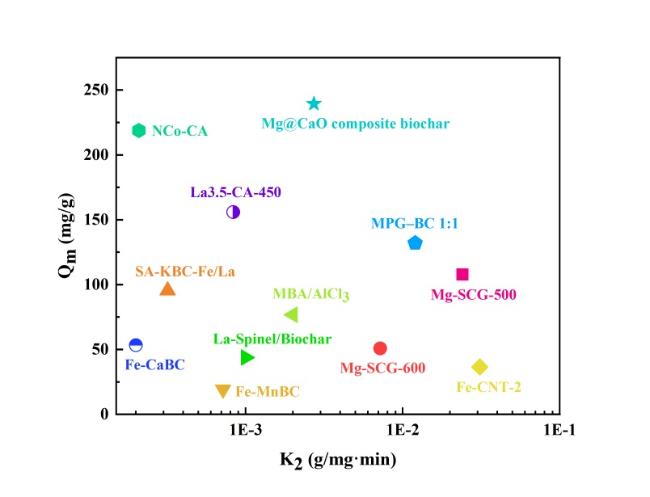
Figure 5compares the maximum phosphorus adsorption capacity and pseudo-second-order kinetic coefficients of different modified biochars. The adsorption kinetics of phosphate by Fe, Ca, Mg, and La generally conform to the pseudo-second-order kinetic model, indicating that chemical adsorption is dominant. In addition, a comparison of the physicochemical properties of different metal adsorbents reveals that the pHPZC of Mg and Alis typically higher than that of Ca, Fe, and La, which can enhance the electrostatic interaction between phosphate and biochar[72]. Compared with other metal materials, Ca and La exhibit less sensitivity to changes in adsorption pH and are more widely applicable in wastewater treatment over a broad pH range, owing to their high affinity for phosphorus and their ability to form poorly soluble Ca3(PO4)2and LaPO4.
图5 基于Langmuir模型的金属基吸附剂最大吸附量与伪二级动力学系数的比较:Mg-SCG-500[74],Mg-SCG-600[74],SA-KBC-Fe/La[75],Fe-MnBC[76],Fe-CNT-2[77],MBA/AlCl3[78],La-Spinel/Biochar[79],NCo-CA[80],Mg@CaO composite biochar[81],MPG-BC 1:1[82],Fe-CaBC[83],La3.5-CA-450[84]

Fig.5 Comparison of the maximum adsorption capacity from the Langmuir model and pseudo-second order kinetic coefficients of reported metal-based adsorbents: Mg-SCG-500[74], Mg-SCG-600[74], SA-KBC-Fe/La[75], Fe-MnBC[76], Fe-CNT-2[77], MBA/AlCl3[78], La-Spinel/Biochar[79], NCo-CA[80], Mg@CaO composite biochar[81], MPG-BC 1:1[82], Fe-CaBC[83], La3.5-CA-450[84]

Kubar et al.[73]Using a variety of quantitative methods, including principal component analysis, regression analysis, path analysis, and Pearson correlation analysis, they systematically investigated the effects of different biochar types, pyrolysis temperatures, and element concentrations on phosphorus adsorption performance. The study showed that increasing the pyrolysis temperature and the dosage of metal salts can significantly enhance phosphorus recovery efficiency, thereby validating from both preparation process and modification strategy perspectives the effectiveness of these approaches in enhancing biochar's adsorption capacity. Melia et al.[32]employed multivariate analysis to reveal the regulatory mechanisms by which biochar structure and composition influence its phosphorus adsorption performance. Principal component analysis indicated that four principal components together account for 89% of the variance in the data, suggesting that the phosphorus adsorption process is governed by the synergistic effects of multiple factors. The study further found that elements such as Ca, Mg, Al, Fe, and Ni, as well as the system pH, are significantly correlated with phosphorus adsorption performance, and identified the metal composition as a decisive characteristic, thereby highlighting the close relationship between metal modification methods and phosphorus adsorption performance. In summary, selecting an appropriate preparation method and modifying metal elements requires considering the feedstock, wastewater characteristics, and the desired performance targets of the adsorbent.
Currently, the environmental risks of metal-modified biochar have not been fully explored. For example, La3+and Fe3+may be released from the solid under low pH conditions. Liao et al.[48]found that when pH = 2, the leaching concentrations of La3+and Fe3+from modified biochar reached as high as 26.48 and 0.336 mg/L, respectively, but the leaching concentrations became negligible when pH > 3. After five cycles, the phosphorus adsorption capacity of Mn/Al-peroxide biochar prepared by Peng et al.[85]decreased by 21.92%, which was attributed to the leaching of metal ions; the leaching amounts of Mn2+and Al3+were 0.087 and 0.126 mg/L, respectively. As the number of cycles increases, the pollution risk associated with the release of metal ions also increases. Wang et al.[86]confirmed that the direct pyrolysis process can limit the release of heavy metals, thereby reducing the ecological risk of toxic sludge feedstocks, with Cr leakage below 0.3 μg/L and Zn leakage below 10 μg/L. Therefore, during the preparation of metal-modified biochar, particular attention should be given to optimizing its stability; metal ion release can be avoided through high-temperature treatment, modification, and selection of water bodies with appropriate pH. In addition, the environmental risks posed by coexisting pollutants in wastewater to biochar adsorbents require further assessment, and enhancing the material’s highly selective adsorption of phosphates is an effective strategy for controlling these risks. Deng et al.[52]found that sulfamethoxazole and norfloxacin had only a minor impact on the phosphorus adsorption performance of Ca/Mg-modified biochar, demonstrating the material’s excellent adsorption selectivity.

3 Biochar-phosphorus recovery mechanism

3.1 Synergistic Mechanism

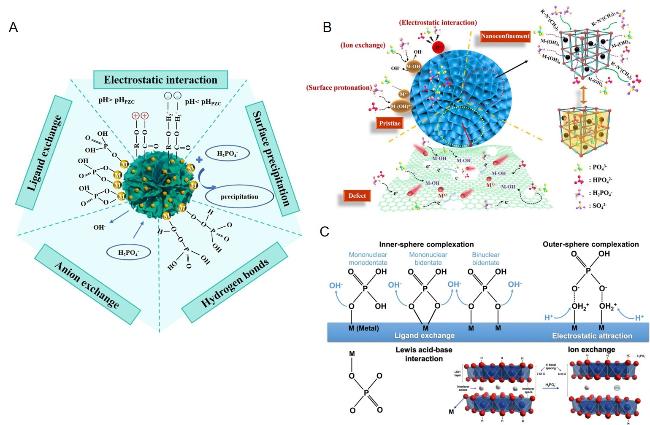
From Table 3,it can be seen that biochar, as an excellent functional carrier, has abundant active functional groups on its surface (such as C $\stackrel{\mathrm{ }\mathrm{ }\mathrm{ }\mathrm{ }}{=}$O, ―COOH, ―OH) and minerals (such as Mg and Ca). Through modification, it can further load multiple active sites, thereby enhancing its phosphorus adsorption capacity and ability. The core mechanism by which oxygen-containing functional groups enhance phosphorus adsorption lies in metal–ligand bridging. Oxygen-containing functional groups anchor metal cations, forming M―O―C interfaces (where M represents a metal), which in turn facilitate the formation of M―O―P bonds. Studies have shown[87]that La forms a strong coordination complex with ―COOH on the biochar surface, resulting in the formation of La―O―C surface complexes and increasing the relative concentration of La on the biochar surface. This metallized surface further forms La―O―P bonds with phosphate via an inner-sphere complexation mechanism, effectively enhancing phosphorus adsorption. The potential mechanisms underlying phosphorus adsorption primarily include electrostatic attraction, ion exchange, ligand exchange, surface precipitation, and hydrogen bonding, as illustrated in Figure 6A [88].
表3 原始生物炭和改性生物炭对磷酸盐的吸附研究

Table 3 Adsorption studies of phosphate on virgin and modified biochar

Feedstocks Modification Initial phosphorus concentration
(mg/L)
Maximum adsorption capacity
(mg PO43-/g)
Specific surface area (m2/g) Functional group Adsorption isotherm Adsorption mechanism Ref
Crawfish char - 2~240 70.6 - CO32-,―OH Langmuir/Freundlich Ion exchange, surface precipitation 47
Pineapple - 100~400 3.9 32.22 ―OH,―CH,
C―O
Langmuir Ion exchange, surface precipitation 48
Eupatorium adenophorum - 20~300 13.6 65.99 CO32-,―OH,
―CH,C―O
Langmuir - 49
Anaerobic digestion residues MgO,Fe2O3 200~1000 149.25 17.53 Fe―O,Mg―O,
C $\stackrel{\mathrm{ }\mathrm{ }\mathrm{ }\mathrm{ }}{=}$O,C $\stackrel{\mathrm{ }\mathrm{ }\mathrm{ }\mathrm{ }}{=}$C
Langmuir Physical adsorption, precipitation, surface complexation, electrostatic attraction 50
Mushroom waste MgCl2,Fe2O3 30 247 396.01 Fe―O,MgOH+,FeOH+,M―OH,―OH,―COOH Langmuir Ion exchange, precipitation, electrostatic attraction 51
Bagasse Marble waste 100 261.37 92.81 Mg―O,
Mg―OH,―OH
Langmuir Electrostatic attraction, co‑precipitation 52
Rape straw Eggshells 10~200 109.7 181.32 C $\stackrel{\mathrm{ }\mathrm{ }\mathrm{ }\mathrm{ }}{=}$C,C $\stackrel{\mathrm{ }\mathrm{ }\mathrm{ }\mathrm{ }}{=}$O,
C $\stackrel{\mathrm{ }\mathrm{ }\mathrm{ }\mathrm{ }}{=}$N
Langmuir Hydrogen bonding, electrostatic attraction, precipitation 53
Potato peels Eggshells 5~250 174.8 - CO32-,―OH Langmuir Chemical adsorption, precipitation 54
Wheat straw Nano‑CaO2 100~400 213.22 1.12 ―OH,C $\stackrel{\mathrm{ }\mathrm{ }\mathrm{ }\mathrm{ }}{=}$C, CO Langmuir Precipitation 55
Corn stalks NaLa(CO32,Fe3O4 50~400 330.86 20.61 La(CO32-
La(HCO3+
Langmuir Electrostatic attraction, ligand exchange, inner sphere complexation 56
Canna La(OH)3,Fe2O3 20~500 101.16 84.89 O―P―O,
―OH,O2-
Langmuir Electrostatic attraction, ion exchange, ligand exchange, inner‑sphere complexation 57
Electrostatic attraction is the force generated between ions in the solution and oppositely charged ions on the adsorbent, primarily influenced by the pH of the solution and the PZC of the adsorbent[56].Typically, electrostatic attraction occurs when pH < pHPZC. Electrostatic interactions take place during both chemical and physical adsorption processes and represent a simple, reversible adsorption step compared to other mechanisms. Electrostatic interactions often act in conjunction with surface complexation and ligand exchange mechanisms, forming various surface complexes and inner-sphere coordination bonds to create a more stable and efficient phosphorus removal system[91]. Ajmal et al.[92] demonstrated that unmodified biochar primarily relies on electrostatic attraction for phosphate adsorption, whereas Fe-modified biochar adsorbs phosphate through the combined effects of electrostatic attraction, surface precipitation, and ligand exchange mechanisms.
Ligand exchange refers to the process in phosphorus-containing wastewater where phosphate ions bind with one or two metal ions to form monodentate or bidentate bonds. This inner-sphere complexation is stable and irreversible, providing a strong driving force for phosphate adsorption even under low-concentration conditions[93].Ligand exchange is the primary mechanism by which metal-based biochar adsorbs phosphate, and it is suitable for explaining the phosphate adsorption process by layered double hydroxide-modified biochar. Yang et al.[94]prepared biochar assembled with different layered double hydroxides and found that the surface-bound hydroxyl groups of metals on the material can form complexes with phosphorus (M―O―P), which is the main reason for the efficient adsorption of phosphorus.
Ion exchange refers to the replacement of anions within the adsorbent by phosphate ions in water; this adsorption process is considered reversible, and the binding strength between biochar and phosphate is weaker than that in ligand exchange mechanisms. Yang et al.[95]have shown that both ion exchange and ligand exchange mechanisms coexist during the adsorption of phosphate by Fe-modified biochar. Intercalated anions such as Cl-,SO4 2-,NO3 -, and CO3 2- can also undergo exchange with phosphate; however, highly charged anions strengthen the adsorbent's structural stability, which is unfavorable for phosphate substitution[72].
In studies on metal-modified biochar, surface precipitation manifests as the formation of mineral deposits through chemical bonding between metal cations and phosphates. Even when the overall solution concentration is low, local supersaturation on the adsorbent surface can still trigger phosphate precipitation[96].Luo et al.[97] indicated that one of the primary mechanisms by which La(OH)₃ nanorods/walnut shell biochar adsorb phosphates is surface precipitation. When the solution pH is 3, the partial dissolution of La(OH)₃ to form LaPO₄ precipitates facilitates phosphate removal. A large body of research[60,98-99] has shown that modifying the surface of biochar carriers with active components such as Ca and Mg can lead to the formation of calcium phosphate and struvite crystals, which serve as effective slow-release phosphate fertilizers.
Existing research further indicates that adsorption mechanisms often exhibit dynamic changes in response to environmental conditions, material properties, and phosphorus concentrations. Among these mechanisms, electrostatic adsorption plays a crucial role in phosphorus adsorption, primarily influenced by how the solution pH regulates the surface charge properties of biochar. Depending on the solution pH, the hydroxylation process on the biochar surface can generate either positive or negative charges, thereby promoting or hindering the approach of phosphate anions[100-101].Therefore, it is necessary to precisely adjust the reaction pH based on the pHpzc of different biochars. In addition to electrostatic interactions, ion exchange and surface complexation are also important adsorption pathways, both of which are significantly influenced by pH. For metal-modified biochars, surface precipitation is typically a key mechanism in the adsorption process. Zhang et al.[102], using machine learning, found that metal-modified biochars exhibit a layered binding mechanism: surface complexation dominates phosphorus adsorption at low concentrations, while at high loading levels, the contribution of the precipitation mechanism becomes significant. Qiu et al.[103] discovered that in Ca-Al-LDH-BC composites, the self-stacking structure of layered double metal hydroxides partially inhibits ligand exchange, with adsorption being primarily driven by inner-sphere ion exchange and supplemented by outer-sphere ligand exchange, indicating that the interfacial structure and local chemical environment jointly influence the relative dominance of different adsorption mechanisms.
In summary, the process of biochar adsorbing phosphorus is a complex system characterized by multiple mechanisms working in synergy and dynamic evolution. The dominant mechanism is typically determined by a combination of factors, including material composition, surface properties, phosphorus concentration, and solution pH, and it undergoes corresponding shifts as conditions change.

3.2 Selective Adsorption Mechanism

In real-world scenarios, wastewater contains a range of non-target ions (such as CO3 2-, NO3 -, Cl-, SO4 2-) and substances (such as humic acid), which compete with phosphate ions for adsorption, thereby affecting phosphorus removal efficiency. Therefore, it is necessary to enhance the adsorption selectivity of biochar for phosphates. The surface charge and functional groups of metal-modified biochar play a crucial role in the selective adsorption of phosphates, with the main selective removal mechanisms including active oxygen-containing functional groups and the Lewis acid-base principle (Fig. 6B, C)[88]. A wealth of functional groups plays an important role in the electrostatic attraction mechanism, influencing the pH range over which phosphorus is adsorbed. According to weak-acid theory, when the solution pH is lower than the pK aof the biochar surface functional groups (primarily ―COOH, ―OH), these groups become protonated (e.g., ―COOH2 +, ―OH2 +) and carry a positive charge, enabling them to adsorb negatively charged phosphate anions via electrostatic attraction[104]. However, the pH range applicable to this mechanism is limited; metal modification is typically employed to increase the surface charge density of carbon-based materials, thereby expanding the pH range for phosphorus adsorption[88]. In addition, the oxygen-containing functional groups on the biochar surface can effectively load metal cations. As strong Lewis acid sites, these metal cations engage in coordination, ion exchange, or surface precipitation with phosphate anions (Lewis bases), thereby achieving highly selective and efficient adsorption of phosphates[105]. Higher-valence metal cations are more readily bound to phosphates than lower-valence metal cations (e.g., La3+> Mg2+)[106]. Furthermore, cations with small ionic radii, due to their higher charge density, exhibit stronger binding affinity to phosphates, which can further enhance the phosphate adsorption performance[107].
图6 (A) 生物炭吸附磷酸盐的潜在机制[88];生物炭选择性吸附磷酸盐的机制:(B) 官能团作用[89];(C) Lewis酸碱作用[90]

Fig.6 (A) Potential mechanism of phosphate adsorption by biochar[88]; mechanisms of selective phosphate adsorption by biochar: (B) functional group interaction[89]; (C) Lewis acid-base interaction[90]

4 Performance Evaluation of Biochar-Based Phosphate Fertilizers

Direct application of phosphorus to soil typically results in chemical reactions with soil minerals, forming insoluble compounds. This fixation process limits plant access to phosphorus, reduces fertilizer efficiency, and contributes to environmental degradation[108].Phosphate adsorbed onto biochar can bind with Mg, Ca, Fe, and other elements on the biochar surface, enabling the slow release of phosphorus and helping to maintain high levels of soil phosphorus availability[38].Therefore, using phosphate-rich spent adsorbents as fertilizers is considered an ideal strategy for phosphorus recycling.

4.1 Phosphorus Release Kinetics and Controlled-Release Characteristics Assessment

Compared to the dissolution of mineral phosphate fertilizers, phosphorus adsorbed onto biochar is released according to an adsorption–desorption equilibrium mechanism: only when phosphorus in the soil is absorbed by crop roots or becomes limited due to soil constituents does the phosphorus adsorbed by biochar get released to replenish the soil[109]. In addition, the slow release of phosphorus from biochar also stems from the following two mechanisms: (1) Phosphorus stored within biochar pores must undergo internal diffusion before it can enter the soil, further slowing the rate of phosphorus release[110]; (2) Phosphorus precipitates formed after adsorption onto biochar require dissolution and reactivation by organic acids, which are primarily derived from organic matter decomposition, root exudates, and microbial metabolic products[111]. Sun et al.[112]found that the phosphorus release rate of Ca-rich eggshell-based biochar was only 46.4% by day 8, significantly lower than that of the KH2PO4control group (99%). Yao et al.[113]demonstrated that the release kinetics of phosphorus from phosphorus-adsorbing biochar as a slow-release fertilizer reached equilibrium after 30 hours. When a new solution (simulating plant growth conditions) was introduced, the release process was reproducible. Over 11 consecutive experiments, the amount of phosphorus released remained similar, demonstrating that biochar can continuously and effectively release nutrients to promote plant growth.
Environmental conditions (such as coexisting anions, pH, initial phosphorus concentration, temperature, etc.) influence the release behavior of phosphorus from biochar by altering the composition of soil nutrients or the concentrations of competing ions[114].Among these factors, pH is one of the most critical regulators of phosphorus release. pH affects the speciation of phosphorus and the surface properties of the adsorbent, while also governing the release and adsorption mechanisms[115].Generally, lower pH favors the release of phosphorus from biochar[116]. In addition, the initial phosphorus concentration also influences the release process. Higher initial phosphorus concentrations typically enable biochar to adsorb more phosphorus, thereby providing a richer phosphorus source during the release phase and leading to increased release amounts and durations[117].
Big data models hold promising potential in advancing research on phosphorus release kinetics. Models commonly used to evaluate the kinetics and mechanisms of controlled phosphorus release include the Hixson-Crowell model, the Elovich model, the Higuchi model, and first- and second-order kinetic models[118]. Table 4lists specific details about these models. Fei et al.[119]fitted the phosphorus release from sludge-derived biochar using the Elovich and second-order kinetic models, indicating that dissolution, desorption, and diffusion are the primary release mechanisms. Pang et al.[120]prepared a slow-release phosphate fertilizer based on lignin and found that the first-order kinetic model is more suitable than the Elovich model for describing the mechanism of phosphorus release into water and soil, with a coefficient of determination R 2exceeding 0.970. An et al.[121]found that cotton stalk/bentonite biochar-based fertilizers better conform to the Higuchi model, suggesting that phosphorus release primarily relies on dissolution and diffusion mechanisms. In addition, An et al.[122]developed an improved Fick model to establish a quantitative relationship between bentonite biochar with different formulations and its phosphorus release kinetics, enabling precise control of phosphorus release to meet the needs of plant growth.
表4 磷缓释动力学模型及相关机理

Table 4 Evaluation models for kinetics and mechanism of phosphorus slow release

Model Mathematical expression Parameter description Scope of application
Elovich ${Q}_{t}=\frac{1}{\alpha }\mathrm{l}\mathrm{n}(1+\alpha \beta t)$ Qt is the release concentration at time tα is the initial release rate;β is the rate change factor Phosphorus adsorption and desorption as influenced by the surface coverage of fertilizer particles; applicable to phosphorus adsorption and desorption processes
First-order ln $(1-\frac{{M}_{t}}{{M}_{\mathrm{\infty }}})=-{\mathrm{k}}_{1}t$ Mt and M are the percentage of phosphorus released at different times, respectively. k1 is the first-order release rate constant The relationship between phosphorus concentration and time is assumed to be linear, and the rate of phosphorus release depends on the initial fertilizer concentration
Second-order kinetics ${Q}_{t}={Q}_{\mathrm{m}\mathrm{a}\mathrm{x}}(1-{\mathrm{e}}^{-{k}_{2}t})$ Qt and Qmax are the phosphorus release concentrations at time t and equilibrium, respectivelyk2 is the second-order release rate constant Chemically dominated phosphorus release process where the rate of phosphorus release depends on the initial fertilizer concentration
Higuchi kinetics $\frac{{M}_{t}}{{M}_{\mathrm{\infty }}}={k}_{3}{t}^{1/2}$ Mt and M are the percentage of phosphorus released at different times, respectively. k3 is the Higuchi release rate constant The initial concentration of phosphorus released into solution is much higher than the solubility, and the diffusion of phosphorus occurs in only one dimension; the phosphorus particles are much smaller than the thickness of the system, and edge effects and matrix solubilization are negligible
Hixson-Crowell $(1-\frac{{M}_{t}}{{M}_{\mathrm{\infty }}})=1-{k}_{4}t$ Mt and M are the percentage of phosphorus released at different times, respectively. k4 is the Hixson-Crowell release rate constant Release process dominated by dissolution of phosphorus particles; dissolution is assumed to occur at the surface of the fertilizer particles, with sufficient agitation and constant particle shape

4.2 Agronomic Effect Assessment

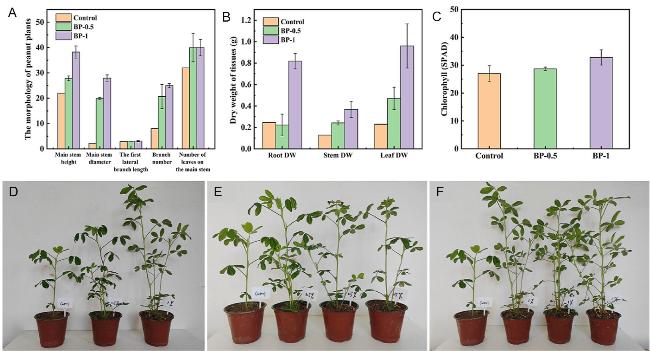
In addition to calculating the slow-release kinetics of phosphorus-adsorbed biochar, pot experiments are also needed to determine its actual impact on plant growth. In the early stages of seedling growth, bioassays can be used to evaluate how the slowly released phosphate from biochar affects plant development. Wan et al.[123]found that after 12 days of growth, lettuce seedlings treated with LDH/biochar adsorbing phosphorus were more robust than the control group, with increases in both seedling length and fresh biomass. Shin et al.[124]synthesized Fe-loaded biochar using waste coffee grounds and steel slag for phosphate adsorption, and the spent adsorbent was shown to effectively promote the germination of watercress seeds (GI: 434%–467%) and root growth (root length: 4.0–5.1 cm), representing increases of 81% and 70%, respectively, compared to the no-adsorbent control. Shao et al.[125]evaluated the potential of Ca-modified biochar-phosphorus as a slow-release phosphate fertilizer through peanut pot experiments, and Figure 7shows that biochar-based fertilizers significantly promoted longitudinal plant growth and leaf development. The total biomass accumulation and net photosynthetic rate of peanuts increased by factors of 2.54 and 4.91, respectively, due to the enhanced metabolic activity and stomatal conductance provided by the phosphorus.
图7 不同处理组对植物生长指标的影响:(A) 形态、(B) 干重、(C) 叶绿素和(D~F) 植株表观[125]

Fig.7 Effects of different treatment groups on plant growth indicators: (A) Morphology, (B) dry weight, (C) chlorophyll and (D~F) plant phenotypic characteristics[125]

Although phosphorus-containing biochar has been observed to have a significant positive effect on plant growth in the above studies, it is necessary to consider the risk of the adsorbent adsorbing other potentially harmful pollutants in complex water quality, as well as the immobilization issue of loaded metals entering the soil. Li et al.[126]found that Ca/Mg biochar simultaneously adsorbing PO4 3-and NH4 +exhibited excellent heavy metal passivation performance, with significantly enhanced adsorption capacities for Cd and Cr compared to non-adsorbed Ca/Mg biochar. In the future, further research combining experimental studies and theoretical modeling should be conducted to monitor the release process of phosphates from used biochar to plants.

5 Conclusion and Outlook

This review analyzes the influence of biochar feedstock types and pyrolysis temperatures on phosphorus adsorption, providing a theoretical basis for the targeted preparation of adsorption materials. The study further demonstrates that doping with metal elements—particularly Mg, Ca, Fe, and La—is a key strategy for significantly enhancing biochar’s phosphate adsorption capacity. In addition, it elaborates in detail on the multiple mechanisms of biochar’s phosphorus adsorption and their synergistic effects. Finally, a performance evaluation system for biochar-based phosphate fertilizers is constructed based on phosphorus slow-release kinetics and agronomic effects, offering a systematic evaluation framework for future research and applications in this field.
Although biochar-based adsorbents have made significant progress in phosphorus removal, the technology is currently mainly confined to laboratory settings. Future research should focus on the following key issues: (1) Existing studies have concentrated on developing novel metal-modified biochars to enhance phosphorus adsorption performance; however, their practical application faces critical environmental risk challenges. During the adsorption/desorption process, metal leaching not only poses a threat to environmental safety but also reduces the quality of recovered phosphorus products. At the same time, biochars prepared from potentially toxic feedstocks such as sewage sludge require systematic assessment of their toxicity and leaching risks. In particular, when the adsorbent is subsequently used as a slow-release phosphorus fertilizer in agricultural fields, long-term soil monitoring is necessary to control secondary pollution. Future research should develop highly stable modification technologies (such as enhancing the bond strength between the adsorbent matrix and the metal) to inhibit metal leaching, and explore the use of environmentally friendly materials like bentonite and cellulose in biochar-based adsorbents to promote environmentally sustainable development. (2) Current research is largely based on simulated wastewater systems, with a lack of real wastewater experiments and pilot-scale trials. Meanwhile, existing studies on the influence of coexisting ions primarily focus on multivalent competing anions (such as Cl-,SO4 2-,CO3 2-), but organic pollutants and heavy metals in complex wastewaters may compete for adsorption sites and alter material surface properties, and should therefore be included in systematic evaluation. In the future, it is necessary to elucidate in depth the mechanisms of multi-ion competitive adsorption commonly found in real wastewater, quantify the effects of coexisting ions on phosphorus adsorption capacity, selectivity, and kinetics, and provide theoretical support for designing adsorbents with high anti-interference capability and selectivity. (3) Molecular simulation has emerged as a cutting-edge tool for revealing the microscopic mechanisms underlying phosphorus adsorption by biochar. First-principles calculations (such as density functional theory) and molecular dynamics simulations can elucidate the interaction mechanisms, electron transfer processes, and structure–activity relationships between phosphate ions and active sites on the biochar surface (such as metal oxides and functional groups), thereby facilitating a shift from conventional qualitative descriptions to more precise quantitative theoretical modeling. It is worth noting that in actual adsorption scenarios, multiple adsorption mechanisms often coexist. By using molecular simulation, it is possible to analyze the synergistic and competitive interactions among different adsorption mechanisms under conditions of multiple components, providing a theoretical basis for the targeted design of highly efficient adsorbents. (4) Future research needs to integrate machine learning into the design and optimization of biochar adsorbents. By systematically analyzing the complex relationships among feedstock composition, modification methods, structural characteristics, adsorption performance, and phosphorus fertilizer efficacy, high-precision predictive models can be developed to accurately estimate phosphorus adsorption capacity, selectivity, and sustained-release performance. Furthermore, preparation schemes for biochar materials with targeted functionalities can be derived, and intelligent control systems can be constructed to provide guidance for the targeted use of biochar adsorbents in various water quality management scenarios. (5) When assessing the cost and environmental benefits of modified biochars, a systematic life cycle assessment (LCA) framework should be established, covering the entire process from raw material acquisition, modification and preparation, adsorption operation, recycling, to final disposal. Among these, biomass feedstock sources and modification processes are the core components. First, biochar feedstocks should prioritize waste streams to reduce environmental burden. Second, the costs of metal-modified biochars should be evaluated rationally, with a preference for metal elements that are abundant and inexpensive (such as Fe, Al, Ca, and Mg). In addition, combining multiple waste feedstocks containing different metal elements for modification is a powerful strategy for reducing costs and increasing efficiency. The environmental benefits of phosphorus recovery products used as fertilizers should also be incorporated into the LCA evaluation system, with product value depending on biochar feedstock sources and yields, phosphorus adsorption capacity, and modification processes. To enhance the reliability and practicality of the assessment, it is necessary in the future to build a database that includes on-site application parameters and a diverse background inventory, thereby enabling a better evaluation of the environmental and economic feasibility of biochar-based phosphorus adsorption technologies.
[1]
Venkiteshwaran K, McNamara P J, Mayer B K. Sci. Total Environ., 2018, 644: 661.

[2]
Amar H, Benzaazoua M, Elghali A, Hakkou R, Taha Y. J. Clean. Prod., 2022, 381: 135151.

[3]
Yu H F, Lu X, Miki T, Matsubae K, Sasaki Y, Nagasaka T. Resour. Conserv. Recycl., 2022, 180: 106203.

[4]
Al-Hazmi H E, Mohammadi A, Hejna A, Majtacz J, Esmaeili A, Habibzadeh S, Saeb M R, Badawi M, Lima E C, Mąkinia J. Environ. Res., 2023, 236: 116711.

[5]
Zhang Y, Wang X, Hu Z Q, Xiao Q Q, Wu Y. Sep. Purif. Technol., 2025, 353: 128453.

[6]
Zhu F Y, Cakmak E K, Cetecioglu Z. Chem. Eng. J., 2023, 454: 140153.

[7]
Rott E, Minke R, Steinmetz H. J. Water Process. Eng., 2017, 17: 188.

[8]
Wang H S, Yang J X, Zhang H, Zhao J, Liu H Z, Wang J L, Li G B, Liang H. Sci. Total Environ., 2024, 908: 168277.

[9]
Biswas B, Rahman T, Sakhakarmy M, Jahromi H, Eisa M, Baltrusaitis J, Lamba J, Torbert A, Adhikari S. Heliyon, 2023, 9(9): e19830.

[10]
Wang Y X, Munir T, Wu X F, Huang Y F, Li B. Sci. Total Environ., 2025, 973: 179143.

[11]
Pereira Lopes R, Astruc D. Coord. Chem. Rev., 2021, 426: 213585.

[12]
Shaheen S M, Niazi N K, Hassan N E E, Bibi I, Wang H L, Tsang D C W, Ok Y S, Bolan N, Rinklebe J. Int. Mater. Rev., 2019, 64(4): 216.

[13]
Zhao J H, Li X X, Li H, Chang J, Li N, Wang S P. Water. Purif. Technol., 2024, 43(6): 44, 70

(赵健慧, 李欣欣, 李欢, 常晶, 李宁, 王少坡. 净水技术, 2024, 43(6): 44, 70.)

[14]
Wang S Y, Zhang X B, Peng A P, Liu Y, NGO H H, Guo W S, Wen H T. Chem. Ind. Eng. Prog., 2023, 42(10): 5459

(王书燕, 张新波, 彭安萍, 刘阳, NGO H H, 郭文珊, 温海涛. 化工进展, 2023, 42(10): 5459)

[15]
Liang W J, Guo P L, Shi S H, Liang H. 山东化工, 2022, 51(6): 137

(梁文洁, 郭盼梁, 石晟昊, 梁海. 山东化工, 2022, 51(6): 137)

[16]
Kumar Mishra R, Jaya Prasanna Kumar D, Narula A, Minnat Chistie S, Ullhas Naik S. Fuel, 2023, 343: 127968.

[17]
Almanassra I W, McKay G, Kochkodan V, Ali Atieh M, Al-Ansari T. Chem. Eng. J., 2021, 409: 128211.

[18]
Krishna Veni D, Kannan P, Jebakumar Immanuel Edison T N, Senthilkumar A. Waste Manag., 2017, 68: 752.

[19]
Dai L C, Tan F R, Li H, Zhu N M, He M X, Zhu Q L, Hu G Q, Wang L, Zhao J. J. Environ. Manag., 2017, 198: 70.

[20]
Jellali S, Khiari B, Al-Balushi M, Al-Sabahi J, Hamdi H, Bengharez Z, Al-Abri M, Al-Nadabi H, Jeguirim M. J. Environ. Manag., 2024, 351: 119926.

[21]
Guo X, Liang S, Zou Z K, Xu X X, Yang F, Quan J D, Li X W, Duan H B, Yu W B, Yang J K. Water Res., 2025, 271: 122901.

[22]
Jung K W, Hwang M J, Ahn K H, Ok Y S. Int. J. Environ. Sci. Technol., 2015, 12(10): 3363.

[23]
Canteral K F F, Dias Y N, Fernandes A R. Water Air Soil Pollut., 2023, 234(6): 376.

[24]
Cheng F, Bayat H, Jena U, Brewer C E. J. Anal. Appl. Pyrolysis, 2020, 147: 104780.

[25]
Shyam S, Arun J, Gopinath K P, Ribhu G, Ashish M, Ajay S. Chemosphere, 2022, 286: 131490.

[26]
Jung K W, Jeong T U, Kang H J, Ahn K H. Bioresour. Technol., 2016, 211: 108.

[27]
Yin Q Q, Liu M T, Ren H P. J. Environ. Manag., 2019, 249: 109410.

[28]
Karunanithi R, Ok Y S, Dharmarajan R, Ahmad M, Seshadri B, Bolan N, Naidu R. Environ. Technol. Innov., 2017, 8: 113.

[29]
Morales M M, Comerford N, Guerrini I A, Falcão N P S, Reeves J B. Soil Use Manag., 2013, 29(3): 306.

[30]
Sarkhot D V, Ghezzehei T A, Berhe A A. J. Environ. Qual., 2013, 42(5): 1545.

[31]
Zhang H, Voroney R P, Price G W. J. Environ. Qual., 2017, 46(4): 889.

[32]
Melia P M, Busquets R, Hooda P S, Cundy A B, Sohi S P. Sci. Total Environ., 2019, 675: 623.

[33]
Ghodake G S, Shinde S K, Kadam A A, Saratale R G, Saratale G D, Kumar M, Palem R R, AL-Shwaiman H A, Elgorban A M, Syed A, Kim D Y. J. Clean. Prod., 2021, 297: 126645.

[34]
Eduah J O, Nartey E K, Abekoe M K, Henriksen S W, Andersen M N. Environ. Technol. Innovation, 2020, 17: 100572.

[35]
Yang Z K, Qin Q R, Qing Z L, Liu Y, Yang X, Zhang S L, Chen J M. New J. Chem., 2025, 49(19): 7758.

[36]
Ruan R H, Hua W J, Yang W J, Jia S Y, Ma J H, Zhao X, Wang J D, Wang X B, Tan H Z. J. Anal. Appl. Pyrolysis, 2025, 187: 107006.

[37]
Jung K W, Kim K, Jeong T U, Ahn K H. Bioresour. Technol., 2016, 200: 1024.

[38]
Song S H, Liu S R, Liu Y N, Shi W Q, Ma H Y. Agronomy, 2024, 14(12): 2923.

[39]
Chen M, Wang F, Zhang D L, Yi W M, Liu Y. Renew. Energy, 2021, 169: 1343.

[40]
Zhang Y H, Zhuang S Y. Environ. Poll. Control., 2020, 42(10): 1216

(张雨禾, 庄舜尧. 环境污染与防治, 2020, 42(10): 1216)

[41]
Ding Z H, Hu X, Wan Y S, Wang S S, Gao B. J. Ind. Eng. Chem., 2016, 33: 239.

[42]
Liu B, Liu F Y, Li W H, Qin W L, Wang M, Jia Y, Wang C, Ma Z L. J. Environ. Chem. Eng., 2025, 13(2): 116100.

[43]
Zhu Y, Xiao Q B, Xi Y L, Gao D, Wang Y X, Du J, Ye X M. Ecol. Environ. Sciences., 2020, 29(9): 1897

(朱艳, 肖清波, 奚永兰, 高娣, 王宇欣, 杜静, 叶小梅. 生态环境学报, 2020, 29(9): 1897)

[44]
Tang Y, Wu T, Gou X, Wang B, Luo T, Xie Y H. Technol. Water Treat., 2021, 47(11): 91

(唐勇, 吴桐, 勾曦, 王波, 罗婷, 谢燕华. 水处理技术, 2021, 47(11): 91)

[45]
Jin X B, Guo J Y, Hossain M F, Lu J J, Lu Q W, Zhou Y, Zhou Y B. Resour. Conserv. Recycl., 2024, 204: 107464.

[46]
Cheng P, Liu Y, Yang L, Ren Q T, Wang X, Chi Y B, Yuan H L, Wang S B, Ren Y X. J. Environ. Chem. Eng., 2023, 11(2): 109377.

[47]
Park J H, Wang J J, Xiao R, Zhou B Y, Delaune R D, Seo D C. J. Colloid Interface Sci., 2018, 525: 143.

[48]
Liao T W, Li T, Su X D, Yu X, Song H Y, Zhu Y, Zhang Y M. Bioresour. Technol., 2018, 263: 207.

[49]
Feng Q W, Chen M, Wu P, Zhang X Y, Wang S S, Yu Z B, Wang B. Chem. Eng. J., 2022, 429: 132166.

[50]
Liu J W, Jiang J G, Aihemaiti A, Meng Y, Yang M, Xu Y W, Gao Y C, Zou Q, Chen X J. J. Environ. Manag., 2019, 250: 109438.

[51]
Alhujaily A, Mao Y Z, Zhang J L, Ifthikar J, Zhang X Y, Ma F Y. J. Taiwan Inst. Chem. Eng., 2020, 117: 75.

[52]
Deng W D, Zhang D Q, Zheng X X, Ye X Y, Niu X J, Lin Z, Fu M L, Zhou S Q. J. Clean. Prod., 2021, 288: 125638.

[53]
Cao H L, Wu X S, Syed-Hassan S S A, Zhang S, Mood S H, Milan Y J, Garcia-Perez M. Bioresour. Technol., 2020, 318: 124063.

[54]
Quisperima A, Pérez S, Flórez E, Acelas N. Bioresour. Technol., 2022, 343: 126106.

[55]
Li X Y, Xie Y H, Jiang F, Wang B, Hu Q L, Tang Y, Luo T, Wu T. Sci. Total Environ., 2020, 709: 136123.

[56]
Qu J H, Akindolie M S, Feng Y, Jiang Z, Zhang G S, Jiang Q, Deng F X, Cao B, Zhang Y. Chem. Eng. J., 2020, 394: 124915.

[57]
Liu L Y, Zhang C H, Chen S R, Ma L, Li Y M, Lu Y F. Chemosphere, 2022, 286: 131773.

[58]
Zhao C, Peng D P, Huang Z J, Wu Z, Huang T. J. Environ. Chem. Eng., 2024, 12(5): 114044.

[59]
Li L, Chen Q F, Zhao C S, Guo B B, Xu X Y, Liu T, Zhao L X. Environ. Technol. Innov., 2022, 26: 102519.

[60]
Zhang L, Yang L B, Chen J B, Zhang Y L, Zhou X F. Sci. Total Environ., 2024, 906: 167293.

[61]
Guo Z Y, Zhang D G, Ma L P, Dai Q X, Yang R, Ao R. J. Water Process. Eng., 2025, 71: 107169.

[62]
Liu Y, Wang S Y, Huo J B, Zhang X B, Wen H T, Zhang D, Zhao Y, Kang D J, Guo W S, Ngo H H. Sci. Total Environ., 2024, 909: 168426.

[63]
Chang L S, Gao Q, Wei J Y, Liu F X, Yan B, Wang W H. Chin. J. Environ. Eng., 2024, 18(2): 481

(常思露, 高茜, 魏佳宇, 刘凤旭, 阎波, 王文华. 环境工程学报, 2024, 18(2): 481)

[64]
Pan F, Wei H, Huang Y L, Song J Q, Gao M J, Zhang Z H, Teng R J, Jing S S. J. Clean. Prod., 2024, 444: 141233.

[65]
Strawn D G, Crump A R, Peak D, Garcia-Perez M, Möller G. PLoS Water, 2023, 2(4): e0000092.

[66]
Na Y, Ma W, Li N, Liu L, Chen R Z. Technol. Water Treat., 2024, 50(11): 31

(纳云, 马巍, 李娜, 刘陆, 陈荣志. 水处理技术, 2024, 50(11): 31.)

[67]
Wang Z H, Shen D K, Shen F, Li T Y. Chemosphere, 2016, 150: 1.

[68]
Mo J J, Li Q, Sun X J, Zhang H X, Xing M Y, Dong B, Zhu H X. Water, 2024, 16(3): 418.

[69]
Lu Y, Wang H, Lu Y Y, Ren Z Q, Gao N, Wang J J, Huang B C, Jin R C. J. Environ. Manag., 2025, 373: 123607.

[70]
Liu H B, Shan J H, Chen Z B, Lichtfouse E. Sci. Total Environ., 2021, 784: 147546.

[71]
Chen M, Liu Y F, Pan J C, Jiang Y L, Zou X Y, Wang Y Y. Chem. Eng. J., 2024, 502: 157993.

[72]
Liu B, Gai S, Lan Y B, Cheng K, Yang F. Environ. Res., 2022, 212: 113353.

[73]
Kubar A A, Huang Q, Ali Kubar K, Khan M A, Sajjad M, Gul S, Yang C, Wang Q Q, Guo G M, Kubar G M, Kubar M I, Wahocho N A. Sustainability. 2022, 14(9): 5617.

[74]
Chen D, Yin Y, Xu Y M, Liu C Q. J. Water Process. Eng., 2023, 51: 103445.

[75]
He D D, Zhang Z Y, Zhang W B, Zhang H, Liu J L. Int. J. Biol. Macromol., 2024, 261: 129732.

[76]
Fu C X, Zhou M H, Song W, Yang G X, Feng P Z, Chulalaksananukul W, Zhu S N, Huang K, Wang Z M. J. Water Process. Eng., 2024, 66: 106051.

[77]
Adil S, Kim J O. Chemosphere, 2023, 313: 137629.

[78]
Mohammadi R, Eshaq G, Winkler M K H, Pihlajamäki A. J. Environ. Chem. Eng., 2025, 13(3): 116815.

[79]
Sun Y Q, Han X, Liu W B, Wang X Z, Shi Z Y, Chen C C, Mao T A, Yin F, Chen Z H. Environ. Technol. Innov., 2025, 37: 104008.

[80]
Luo D, Nan H Y, Zhang Y S, Sher F, Wang C Q. Process. Saf. Environ. Prot., 2025, 194: 1538.

[81]
Zhou L S, Liu D, Li W Y, Zhang J J, Yan F, Zhou W L, Cheng Y R. Mater. Today Commun., 2025, 42: 111580.

[82]
Shan L L, Wang R S, Lai H T, Zhu Z B, Chen Y, Ni Z Y, Pang C L, Zhang Q Z. Environ. Sci. Pollut. Res., 2024, 31(38): 50411.

[83]
Hu A Q, Jiang Y C, An J Q, Huang X D, Elgarhy A H, Cao H F, Liu G L. RSC Adv., 2024, 14(37): 27204.

[84]
Ma X J, Feng J, Li L, Chen Y J, He J, Jiang L, Yan Z Y, Wang J Q. Appl. Surf. Sci., 2025, 682: 161665.

[85]
Peng G F, Jiang S Q, Wang Y X, Zhang Q Y, Cao Y, Sun Y Q, Zhang W Q, Wang L P. J. Clean. Prod., 2020, 251: 119725.

[86]
Wang B, Hu X L, Li L, Wang H Y, Huang H Y, Wang R R, Zhou D, Yuan J P, Chen L. Chem. Eng. J., 2023, 468: 143745.

[87]
Hu M, Liang C H, Zhou H Q, Guo K, Zhu W K, Dai L C. Inorg. Chem., 2023, 62(34): 13985.

[88]
Qu J H, Peng W, Wang M N, Cui K, Zhang J D, Bi F X, Zhang G S, Hu Q, Wang Y F, Zhang Y. Bioresour. Technol., 2024, 407: 131075.

[89]
Du M, Zhang Y Y, Wang Z Y, Lv M R, Tang A Q, Yu Y, Qu X, Chen Z Q, Wen Q X, Li A. Chem. Eng. J., 2022, 442: 136147.

[90]
Zhang P, He M M, Huo S L, Li F K, Li K X. Chem. Eng. J., 2022, 446: 137081.

[91]
Trazzi P A, Leahy J J, Hayes M H B, Kwapinski W. J. Environ. Chem. Eng., 2016, 4(1): 37.

[92]
Ajmal Z, Muhmood A, Dong R J, Wu S B. J. Environ. Manag., 2020, 253: 109730.

[93]
Helfferich F. Nature, 1961, 189(4769): 1001.

[94]
Yang F, Zhang S S, Sun Y Q, Tsang D C W, Cheng K, Ok Y S. J. Hazard. Mater., 2019, 365: 665.

[95]
Yang Q, Wang X L, Luo W, Sun J, Xu Q X, Chen F, Zhao J W, Wang S N, Yao F B, Wang D B, Li X M, Zeng G M. Bioresour. Technol., 2018, 247: 537.

[96]
Li M X, Liu J Y, Xu Y F, Qian G R. Environ. Rev., 2016, 24(3): 319.

[97]
Luo Y, Xie K, Feng Y Y, He Q P, Zhang K Q, Shen S Z, Wang F. Colloids Surf. A Physicochem. Eng. Aspects, 2021, 610: 125736.

[98]
Li R H, Wang J J, Zhang Z Q, Awasthi M K, Du D, Dang P F, Huang Q, Zhang Y C, Wang L. Sci. Total Environ., 2018, 642: 526.

[99]
Ai D, Ma H Q, Meng Y, Wei T Q, Wang B. Sci. Total Environ., 2023, 860: 160502.

[100]
Zhang T, Xu H Y, Li H H, He X Y, Shi Y J, Kruse A. Sci. Total Environ., 2018, 621: 1512.

[101]
Luo D, Wang L Y, Nan H Y, Cao Y J, Wang H, Kumar T V, Wang C Q. Environ. Chem. Lett., 2023, 21(1): 497.

[102]
Zhang R, Cui X T, Chen N H, Sun X L, Yang X, Xu J T, He W H, Xing D F, Feng Y J, Yang W L, Tian Y S. Sep. Purif. Technol., 2025, 363: 132066.

[103]
Qiu S K, Yuan M Y, Li M M, Han W J, Zhang L S, Zhao D, Li X, Zhang K Q, Wang F. Environ. Sci. Pollut. Res., 2023, 30(41): 93986.

[104]
Song W, Zhang L, Guo B, Sun Q Y, Yu Z H, Xu X, Zhao Y X, Yan L G. Sep. Purif. Technol., 2023, 324: 124500.

[105]
Huang Y M, Lee X Q, Grattieri M, Yuan M W, Cai R, Macazo F C, Minteer S D. Chem. Eng. J., 2020, 380: 122375.

[106]
He J J, Pei C H, Yang Y, Lai B, Sun Y, Yang L W. J. Clean. Prod., 2021, 321: 128778.

[107]
Bo S F, Luo J M, An Q D, Xiao Z Y, Wang H S, Cai W J, Zhai S R, Li Z C. J. Clean. Prod., 2020, 250: 119585.

[108]
Pierzynski J, Hettiarachchi G M. Soil Sci. Soc. Am. J., 2018, 82(5): 1124.

[109]
Li H X, Li Y X, Xu Y, Lu X Q. Chemosphere, 2020, 244: 125471.

[110]
Koopmans G F, Chardon W J, de Willigen P, van Riemsdijk W H. J. Environ. Qual., 2004, 33(4): 1393.

[111]
Zhang H Y, Li Q Y, Zhang X, Chen W F, Ni J Z, Yang L M, Wei R. Sci. Total Environ., 2020, 742: 140416.

[112]
Sun C Y, Cao H, Huang C, Wang P, Yin J L, Liu H, Tian H R, Xu H Y, Zhu J, Liu Z M. Bioresour. Technol., 2022, 362: 127851.

[113]
Yao Y, Gao B, Chen J J, Yang L Y. Environ. Sci. Technol., 2013, 47(15): 8700.

[114]
Wang Y L, Lambers H. Plant Soil, 2020, 447(1/2): 135.

[115]
Hou L, Liang Q B, Wang F. RSC Adv., 2020, 10(4): 2378.

[116]
Osman A I, Zhang Y B, Lai Z Y, Rashwan A K, Farghali M, Ahmed A A, Liu Y F, Fang B B, Chen Z H, Al-Fatesh A, Rooney D W, Yiin C L, Yap P S. Environ. Chem. Lett., 2023, 21(6): 3159.

[117]
Cui H B, Dong T T, Hu L L, Xia R Z, Zhou J, Zhou J. Sci. Total Environ., 2022, 824: 153957.

[118]
Chen Z S, Liu T, Dong J F, Chen G L, Li Z X, Zhou J L, Chen Z. ACS Sustainable Chem. Eng., 2023, 11(1): 1.

[119]
Fei Y H, Zhao D, Cao Y D, Huot H, Tang Y-T, Zhang H G, Xiao T F. J. Environ. Qual., 2019, 48(2): 502.

[120]
Pang W C, Hou D J, Wang H, Sai S, Wang B R, Ke J W, Wu G B, Li Q, Holtzapple M. J. Braz. Chem. Soc., 2018, 29(11): 3297.

[121]
An X F, Wu Z S, Qin H H, Liu X, He Y H, Xu X L, Li T, Yu B. J. Clean. Prod., 2021, 283: 124642.

[122]
An X F, Wu Z S, Yu J Z, Ge L H, Li T, Liu X C, Yu B. ACS Sustainable Chem. Eng., 2020, 8(15): 6090.

[123]
Wan S, Wang S S, Li Y C, Gao B. J. Ind. Eng. Chem., 2017, 47: 246.

[124]
Shin J, Kwak J, Kim S, Son C, Lee Y G, Kim J, Bae S, Park Y, Lee S H, Chon K. Chem. Eng. J., 2023, 451: 138978.

[125]
Shao X, Sun X, Yuan J, Zhu Y, Wang J, Dai Y, Zhang T, Qiu F. ACS Sustain. Chem. Eng., 2025, 13(17): 6451.

[126]
Li H B, Wang Y W, Zhao Y W, Wang L, Feng J T, Sun F. J. Environ. Chem. Eng., 2023, 11(5): 110875.

Outlines

/