Automatic pick-up method of strata reflection information for tomography
Received date: 2024-01-24
Online published: 2024-09-29
Copyright
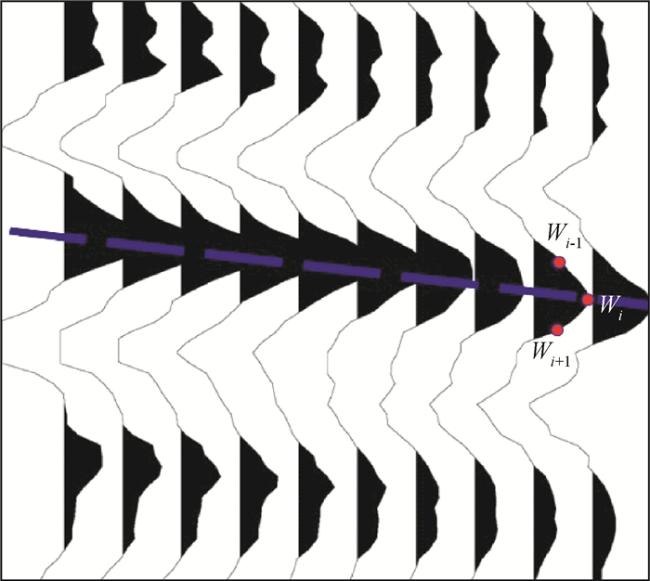
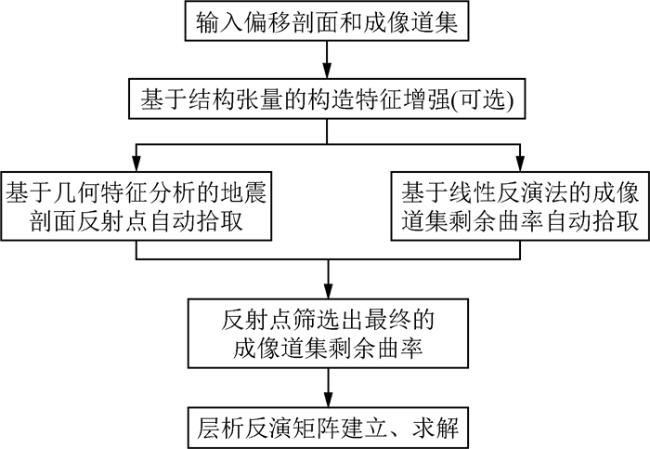
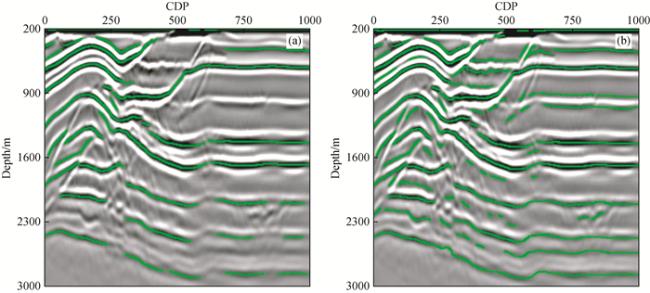
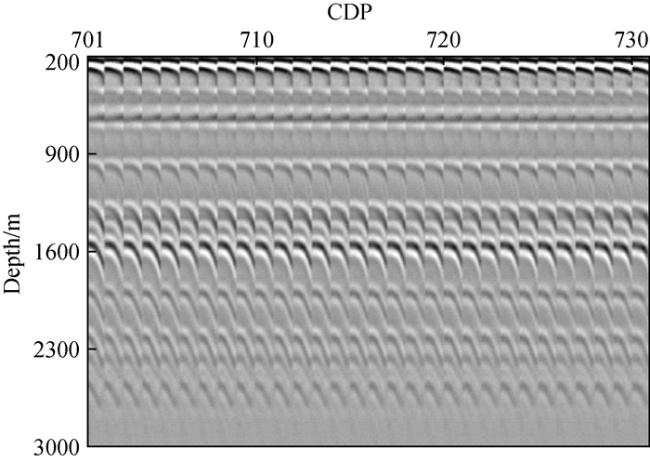
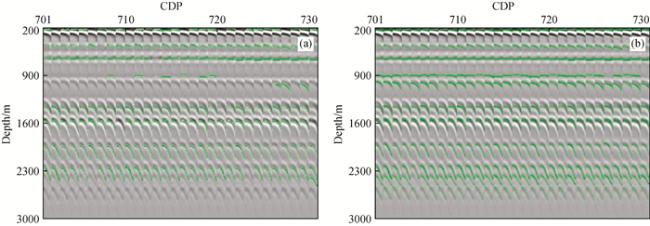
The input data of reflection wave velocity tomography is the subsurface reflection information, which usually includes the reflection point of seismic section and the residual movement of common imaging gathers(CIGs). In the process, the key step is to pick intensively and automatically. To be specific, firstly structure tensor method is introduced to filter seismic data along structural features, so as to enhance the feature of the seismic section and the CIGs, improving the recognition of the reflection information. After that, the reflection information can be extracted more easily. In addition, based on the wavelet geometric feature of the seismic data and the spatial continuity of the seismic events, wave peak (trough) discrimination criteria can be established to pick the reflection points automatically, based on which the accurate reflection position picking results can be obtained. Finally, according to the reflection point pickup of seismic section, linear inversion method is introduced to calculate vertical shifts on each offset of the CIGs, which is used as the residual movement of the CIGs. The accuracy and effectiveness of this technique are verified by synthetics and field data.
Hao ZHENG , GuoFa LI , Kai GUO . Automatic pick-up method of strata reflection information for tomography[J]. Progress in Geophysics, 2024 , 39(4) : 1586 -1596 . DOI: 10.6038/pg2024II0037
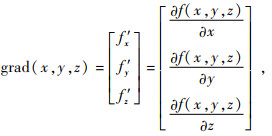
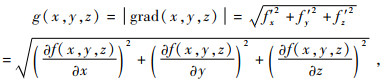




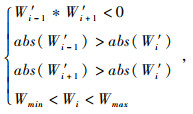


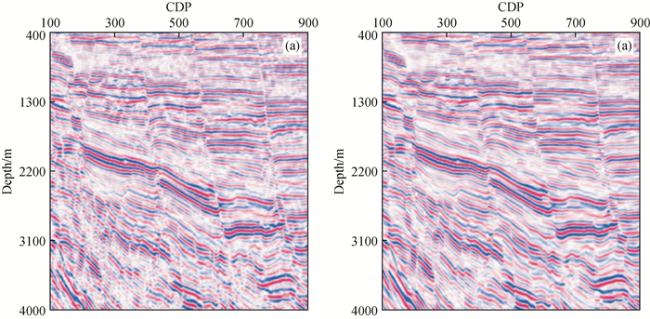
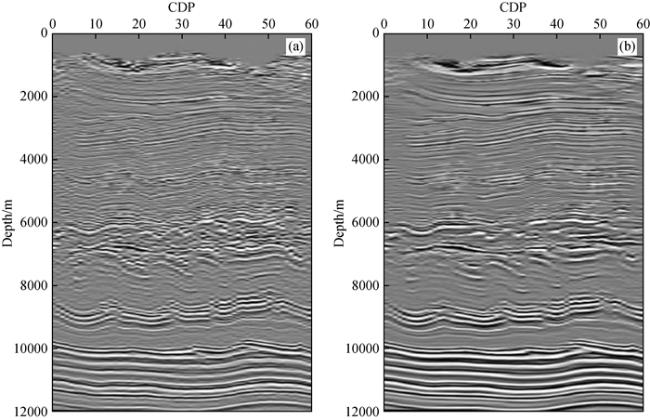
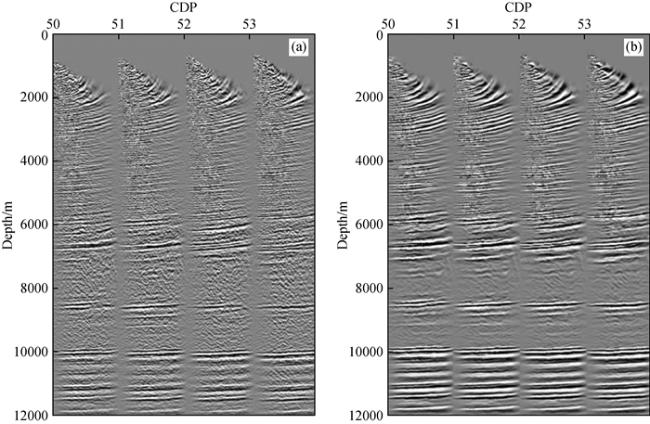
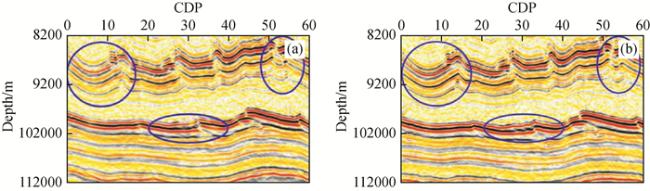
图8 原始地震剖面(a)与构造增强后的地震剖面(b)效果对比Fig 8 The seismic section comparison before (a) and after (b) structural feature enhancement of the field data |
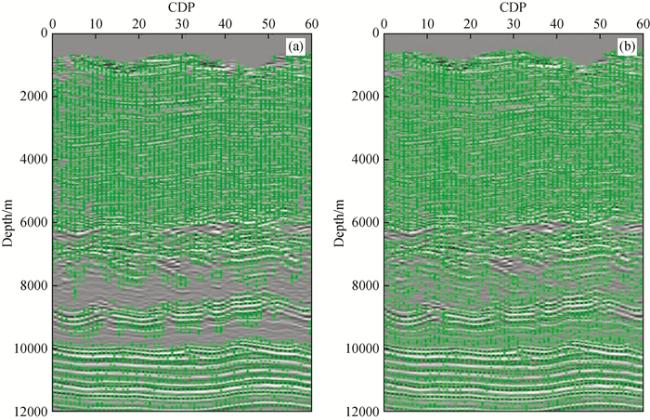
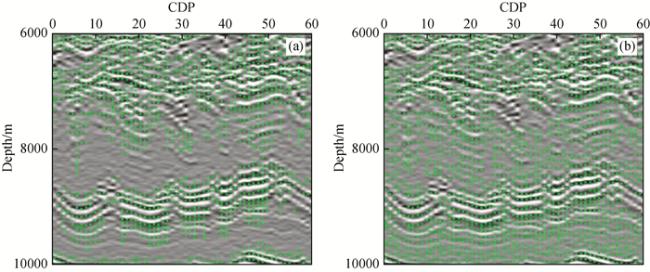
图10 实际资料地震剖面反射点拾取结果(a)传统方法;(b)本文方法. Fig 10 Reflection points picking results from seismic profile of field data (a) Conventional method; (b) New method. |
感谢审稿专家提出的修改意见和编辑部的大力支持!
|
|
|
|
|
|
|
|
|
|
|
|
|
|
|
|
|
|
|
|
|
|
|
|
|
|
|
|
|
|
|
|
|
|
|
|
|
|
|
|
|
|
|
|
|
|
|
|
|
|
|
|
|
|
/
| 〈 |
|
〉 |