Time-frequency analysis method of fusing sequence stratigraphy identifies favorable sand bodies: taking Weizhou A tectonic lake bottom fan as an example
Received date: 2023-11-03
Online published: 2024-12-19
Copyright
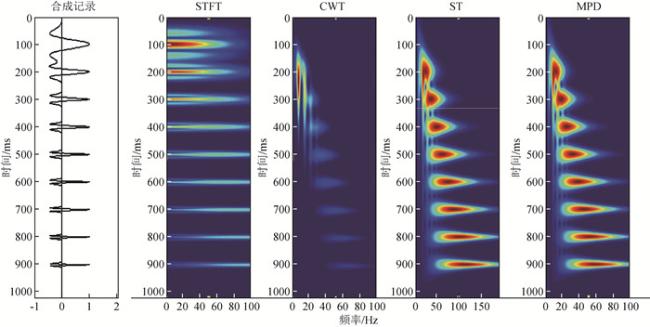
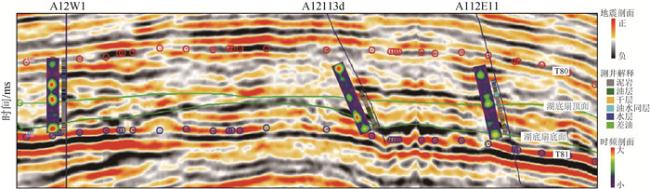
Aimed at the complicated situations faced by oil-gas exploration, such as small size of traps and fast geological sedimentary phase transitions.It is urgent to research by insufficient seismic resolution, time-frequency analysis technology can be used to focus fine seismic signals in the time and frequency domains, in order to improve the accuracy of identifying small oil-gas targets. On the basis of explaining the principle of time-frequency analysis technology and organically combining it with sequence stratigraphy analysis, this article establishes the directionality and response intensity of the energy cluster of favorable sand bodies in the lake bottom fan with frequency changes, and reveals the differences in time-frequency characteristics caused by changes in lithology, physical properties, or pore fluid properties of the sand bodies in the lake bottom fan. The research results show that based on the frequency response distribution characteristics of the lake bottom fan, using time-frequency analysis technology to analogize the instantaneous frequency change characteristics of sweet spots in each lobe of the A lake bottom fan in Weizhou that can reflect the dominant frequency change pattern of favorable sand bodies in the lake bottom fan, and can qualitatively predict the lithological combination information of sweet spots in each lobe reservoir of the lake bottom fan. In addition, it can reduced the ambiguity of lithological interpretation of sweet spots in the lobe, which provided technical supports for the discovery of favorable sandstones and oil-gas development.
Qi LUO , Ming LI , ShiZhuo HUANG , LiBo JIAO . Time-frequency analysis method of fusing sequence stratigraphy identifies favorable sand bodies: taking Weizhou A tectonic lake bottom fan as an example[J]. Progress in Geophysics, 2024 , 39(5) : 2090 -2098 . DOI: 10.6038/pg2024HH0392


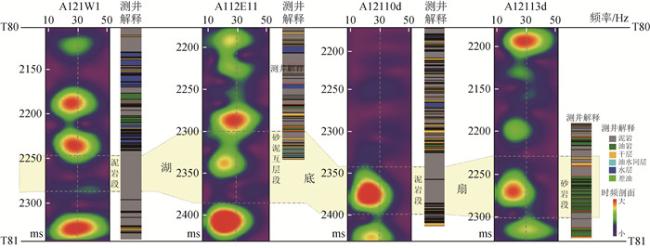
表1 湖底扇钻井时频特征与岩性信息分析表Table 1 Analysis of time-frequency characteristics and lithological information of drilling in the lake bottom fan |
| 井名 | 湖底扇发育的测井油气解释 | 纵向能量团变化 | 岩性组合 | ||||||||||||||
| 砂岩发育段 | 砂泥互层段(砂岩百分含量低) | 砂泥互层段(砂岩百分含量高) | 泥岩发育段 | ||||||||||||||
| 主频 | 频带 | 低频能量 | 主频 | 频带 | 低频能量 | 主频 | 频带 | 低频能量 | 主频 | 频带 | 低频能量 | ||||||
| A12110d | 油水同层,差油 | 低频~高频~低频 | 偏高 | 宽 | 偏弱 | ||||||||||||
| A12113d | 油层 | 低频~高频~低频 | 偏低 | 宽 | 强 | ||||||||||||
| A121W1 | 泥岩 | 低频~高频~低频 | 偏高 | 宽 | 减弱 | ||||||||||||
| A112E11 | 油水同层,干层 | 低频~高频~低频 | 偏低 | 窄 | 减弱 | ||||||||||||
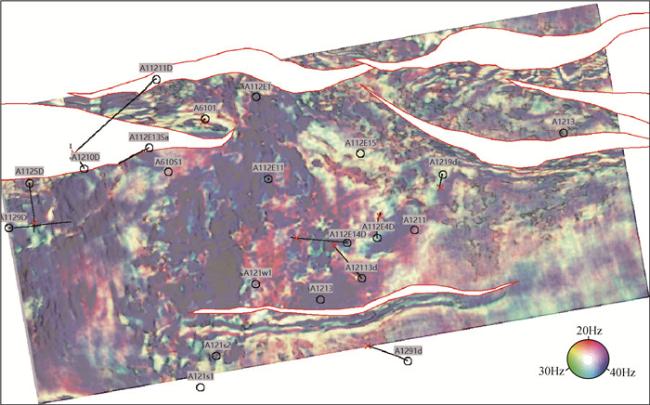
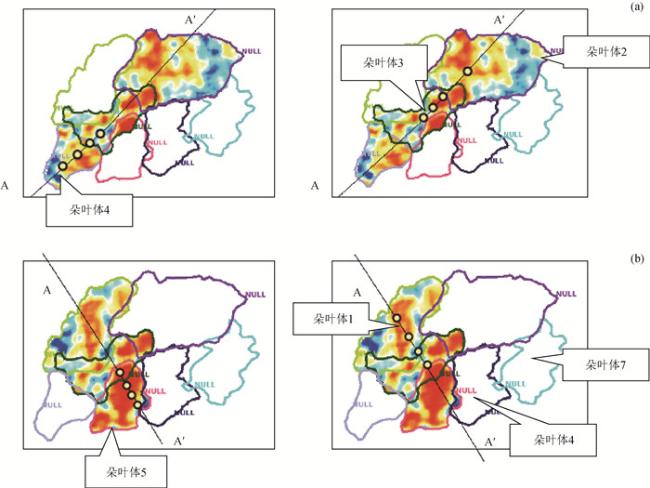
图5 过湖底扇朵叶体反射强度属性变化测线分布图Fig 5 Distribution map of profile measurement lines for changes in reflection intensity attributes of fan leaves passing through the sublacustrine fan |
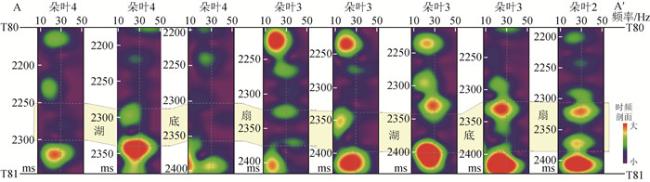
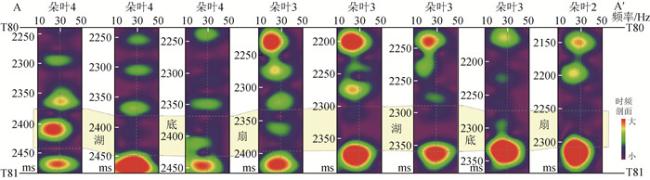
图6 过湖底扇朵叶体测线1的时频分析图Fig 6 Time frequency analysis diagram of the fan blade body passing through the sublacustrine fan, line 1 |
感谢审稿专家提出的修改意见和编辑部的大力支持!
|
|
|
|
|
|
|
|
|
|
|
|
|
|
|
|
|
|
|
|
|
|
|
|
|
|
|
|
|
|
|
|
|
|
|
|
|
|
|
|
|
|
|
|
|
|
|
|
|
|
|
|
|
|
|
|
/
| 〈 |
|
〉 |